
Parking barrier with accident event logging and self-diagnostic control system
a technology of self-diagnostic control and accident event, which is applied in the field of parking barriers with accident event logging and self-diagnostic control systems, can solve the problems of property damage and liability claims, large damage to my property and my person, and many drawbacks of barriers
Patent Information
- Authority / Receiving Office
- US · United States
- Patent Type
- Patents(United States)
- Current Assignee / Owner
- Publication Date
- 2006-12-05
- Estimated Expiration
- Not applicable · inactive patent
Smart Images
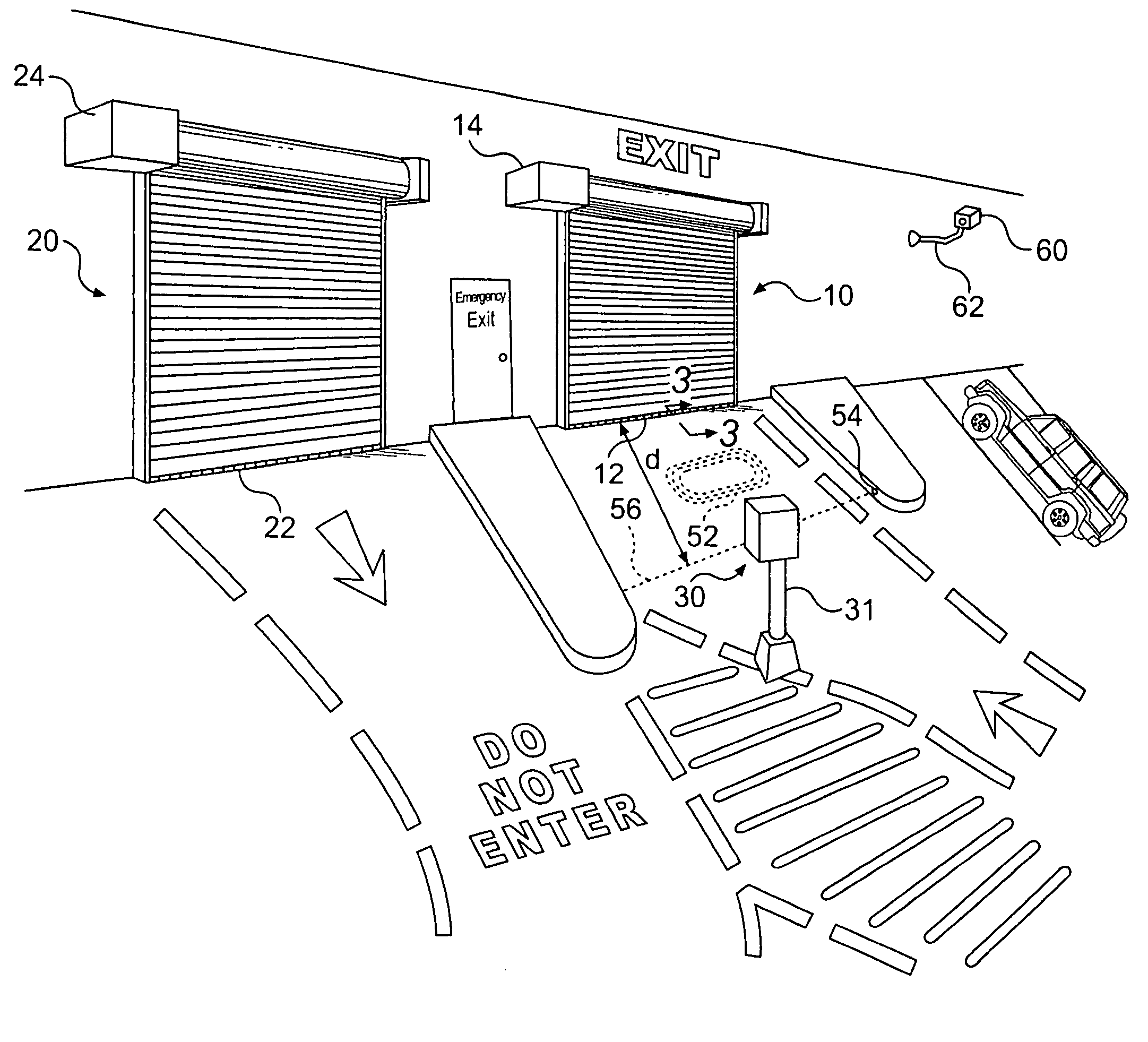
Figure 1 
Figure 2 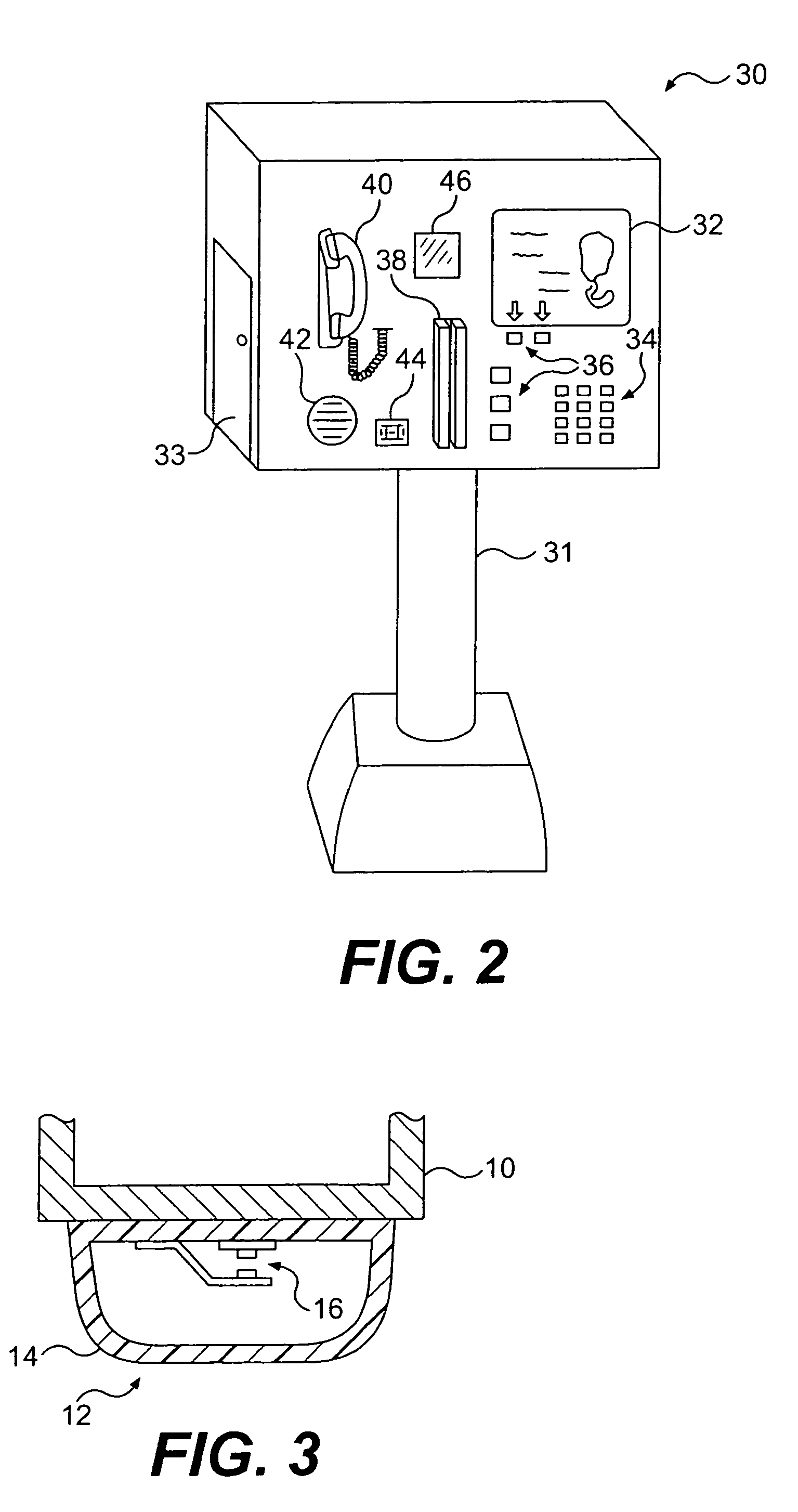
Figure 3
Abstract
Description
[0001] This application is a continuation-in-part of U.S. application Ser. No. 09 / 644,901, filed Aug. 24, 2000, now U.S. Pat. No. 6,484,784, issued Nov. 26, 2002, the entire contents of which are hereby incorporated by reference.BACKGROUND OF THE INVENTION
[0002] 1. Field of the Invention
[0003] The present invention relates to a device for controlling and monitoring one or more entrances or exits of one or more controlled parking areas.
[0004] 2. Description of the Relevant Art
[0005] Automated, motor-driven barriers, such as overhead rolling doors or gates, which close access to, and / or exit from, parking areas, are common in society. For example, a public parking lot or enclosed parking garage usually includes a gate or door (hereinafter collectively referred to as a barrier) at each entrance and at each exit. Typically, the barrier is closed. When a person driving a vehicle desires to enter or exit the parking area, the barrier is opened if certain conditions are met, e.g., a fee is paid...
Examples
Embodiment Construction
[0045]FIG. 1 illustrates an interior view of a parking garage, in accordance with the present invention. A first barrier 10 is provided for blocking an exit from the parking garage. A second barrier 20 is provided for blocking an entrance to the parking garage. A first actuator 14 is provided for controlling movement of the first barrier 10. Likewise, a second actuator 24 is provided for controlling movement of the second barrier 20.
[0046]As illustrated in FIG. 1, the parking garage is controlled by automated machinery, in the form of a first customer terminal 30 and a second customer terminal provided on the other side of the second barrier 20 (not shown in FIG. 1). When a customer's vehicle approaches the exit of the parking garage, the customer must stop at a customer acknowledgement device, such as the first customer terminal 30. The first customer terminal 30 is provided on pole 31, or similar structure, so that the first customer terminal 30 is presented to a driver's window o...