
Cross-grade spin welding apparatus and method
a technology of cross-grade spin welding and welding apparatus, which is applied in the field of new systems and methods for joining plastics, can solve the problems of less cost-effective, more complicated and less cost-effective, and the inability to use mold release in the fabrication of such parts, so as to encourage the melting of the surface of the tube, the effect of increasing the thermal load
Patent Information
- Authority / Receiving Office
- US · United States
- Patent Type
- Patents(United States)
- Current Assignee / Owner
- Publication Date
- 2009-05-19
Smart Images
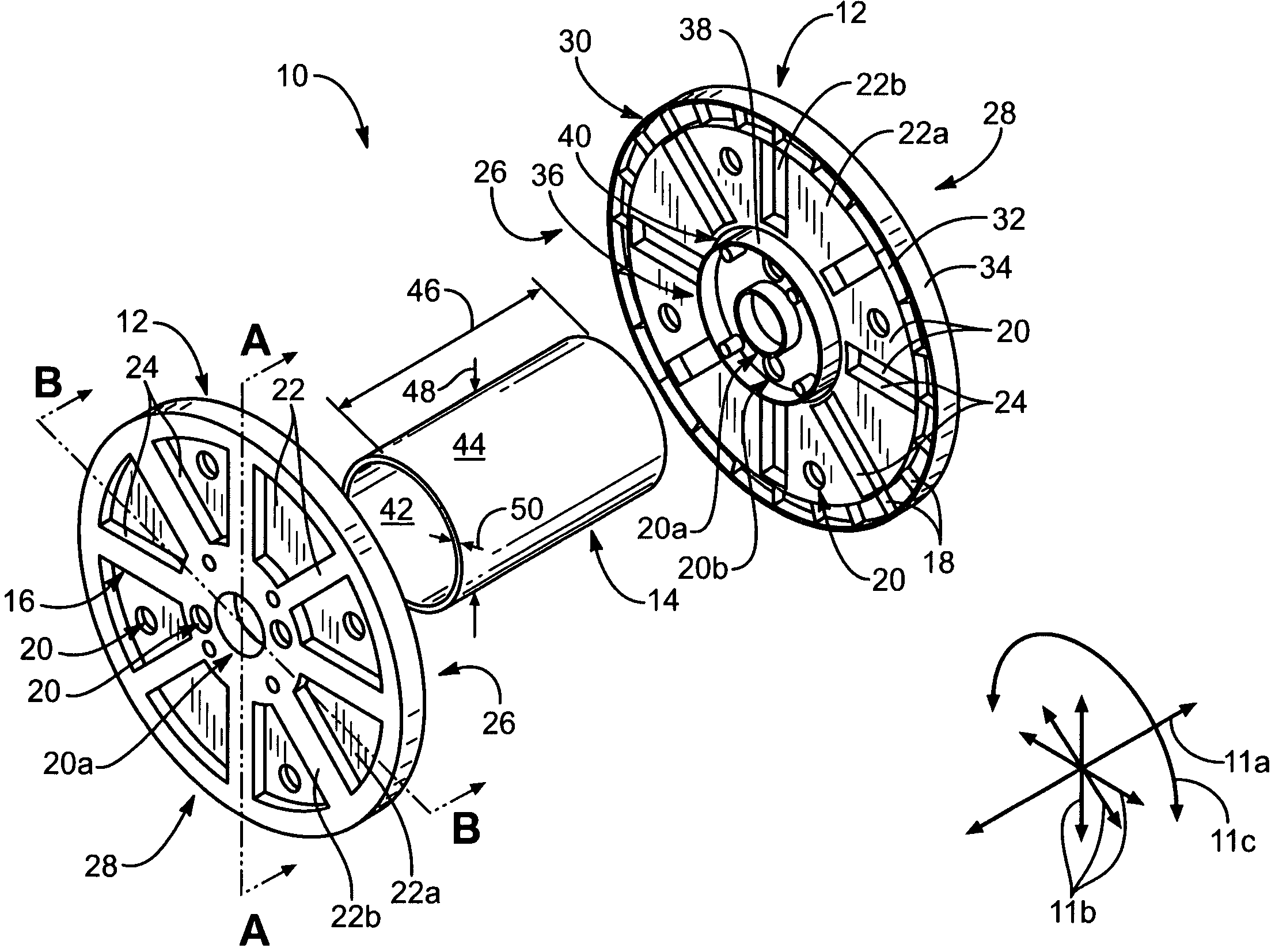
Figure 1 
Figure 2 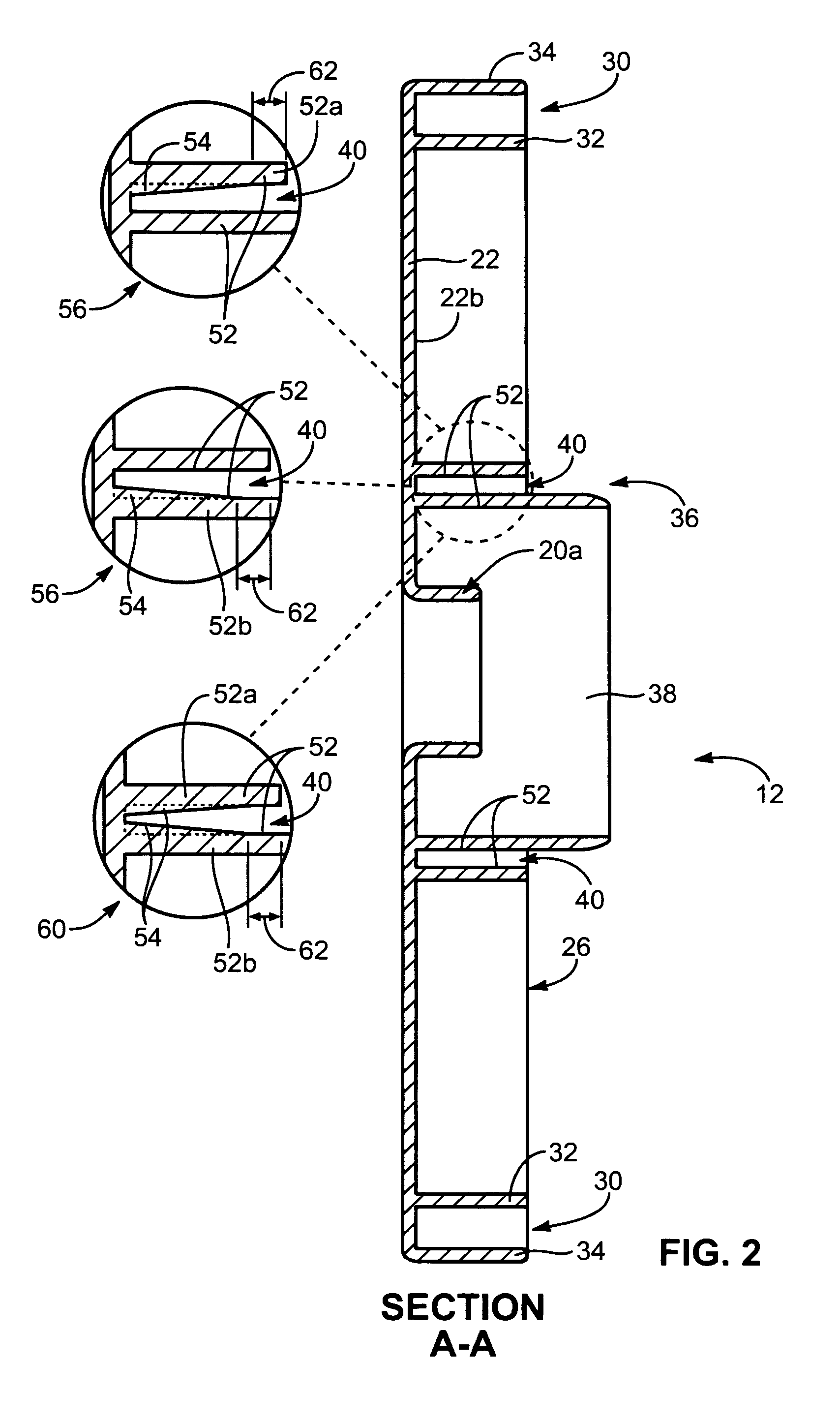
Figure 3
Abstract
Description
RELATED APPLICATIONS
[0001] This application claims the benefit of U.S. Provisional Patent Application Ser. No. 60 / 580,567, filed Jun. 17, 2004 for CROSS-GRADE SPIN WELDING APPARATUS AND METHOD.BACKGROUND
[0002] 1. The Field of the Invention
[0003] This invention relates to joining plastics and, more particularly, to novel systems and methods for joining plastics of dissimilar grade.
[0004] 2. The Background Art
[0005] In spin welding two parts together, also known as rotary friction welding, one part is typically held stationary, while the other part is rotated in relative rotation thereagainst. The heat generated by the friction between the two parts causes portions of both to melt. Accordingly, once relative rotation between the parts ceases, the melted material cool sand solidifies, leaving the parts chemically bonded together.
[0006] It has been discovered that the processes for friction welding or spin welding of polymeric resins of similar grade operate within certain parameters. For exa...
Examples
Embodiment Construction
[0045]It will be readily understood that the components of the present invention, as generally described and illustrated in the drawings herein, could be arranged and designed in a wide variety of different configurations. Thus, the following more detailed description of the embodiments of the system and method of the present invention, as represented in the drawings, is not intended to limit the scope of the invention, as claimed, but is merely representative of various embodiments of apparatus and methods in accordance with the invention. The illustrated embodiments of the invention will be best understood by reference to the drawings, wherein like parts are designated by like numerals throughout.
[0046]In certain embodiments, an apparatus and method in accordance with the invention may involve structural systems formed of two or more individual parts made using polymeric resins of differing grades. For example, one part may be made from an injection grade polymeric resin, while an...