
Method for treating withdrawal symptoms due to opiate consumption
a technology of opiate consumption and withdrawal symptoms, applied in the field of medical treatment, can solve the problems of opiate tolerance being very complex, specific cellular and molecular mechanisms underlying opioid tolerance, withdrawal-induced pain enhancement remain elusive, etc., and achieve the effect of preventing or treating opiate tolerance and dependen
Patent Information
- Authority / Receiving Office
- US · United States
- Patent Type
- Patents(United States)
- Current Assignee / Owner
- Publication Date
- 2011-06-28
- Estimated Expiration
- Not applicable · inactive patent
Smart Images
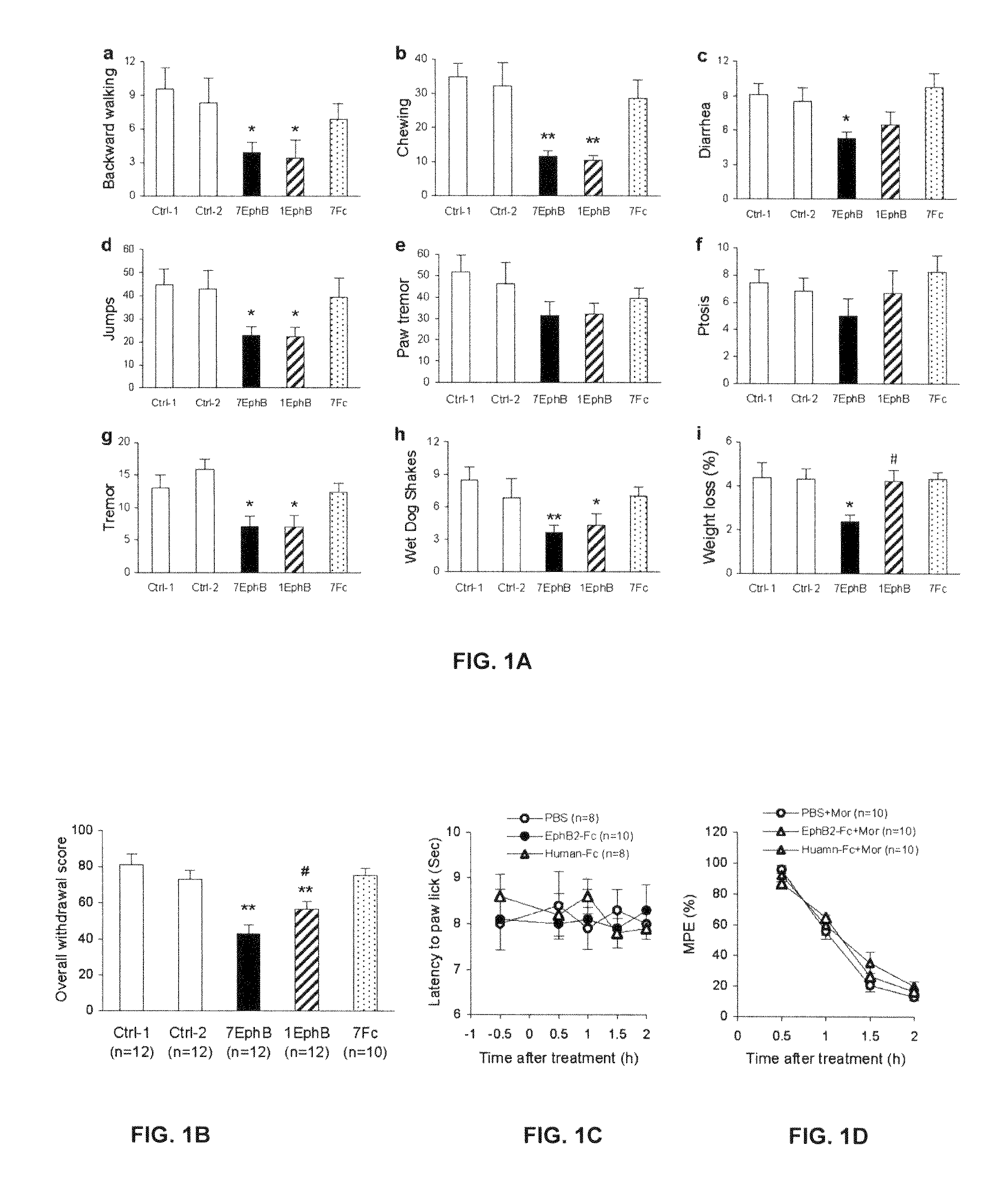
Figure 1 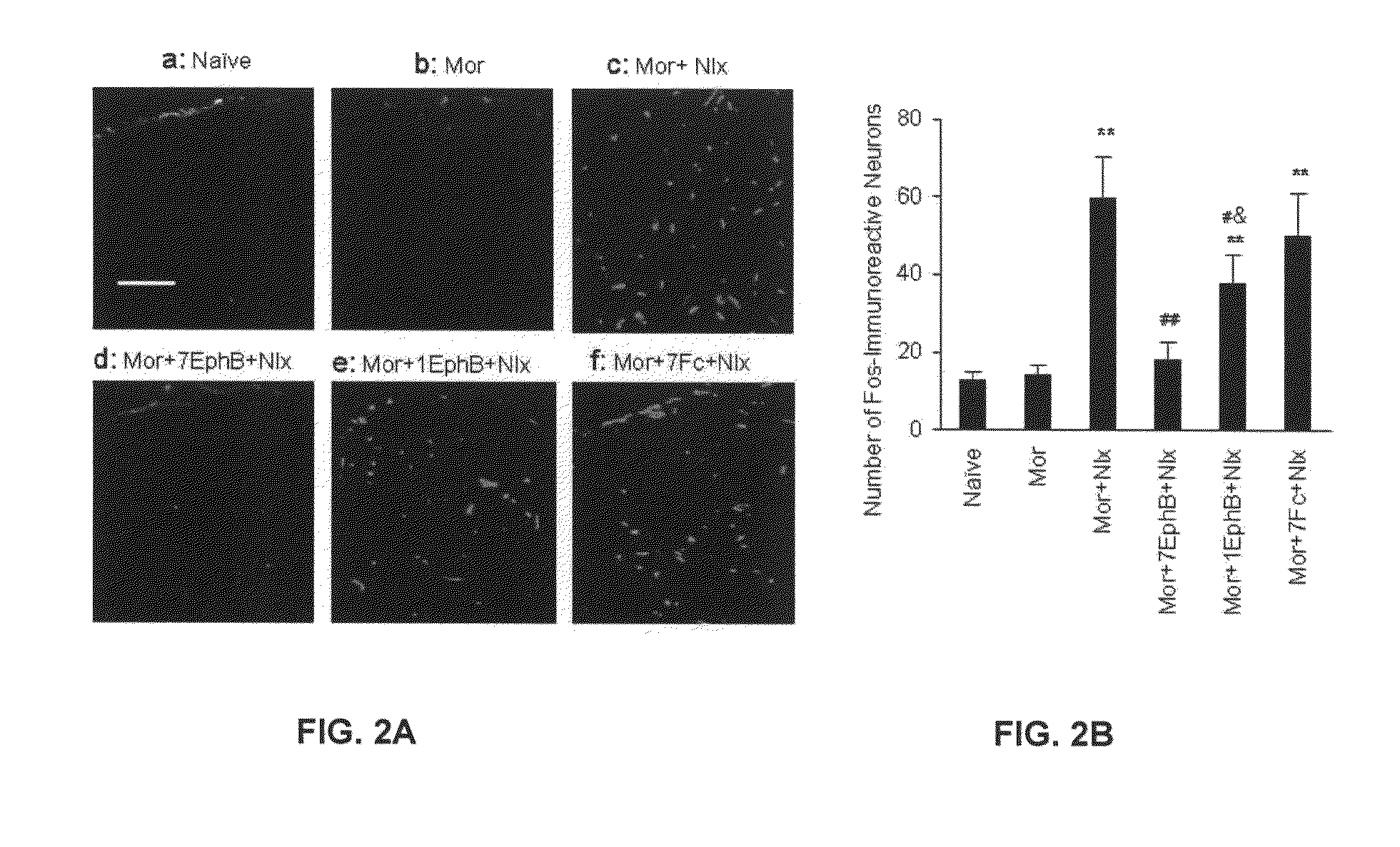
Figure 2 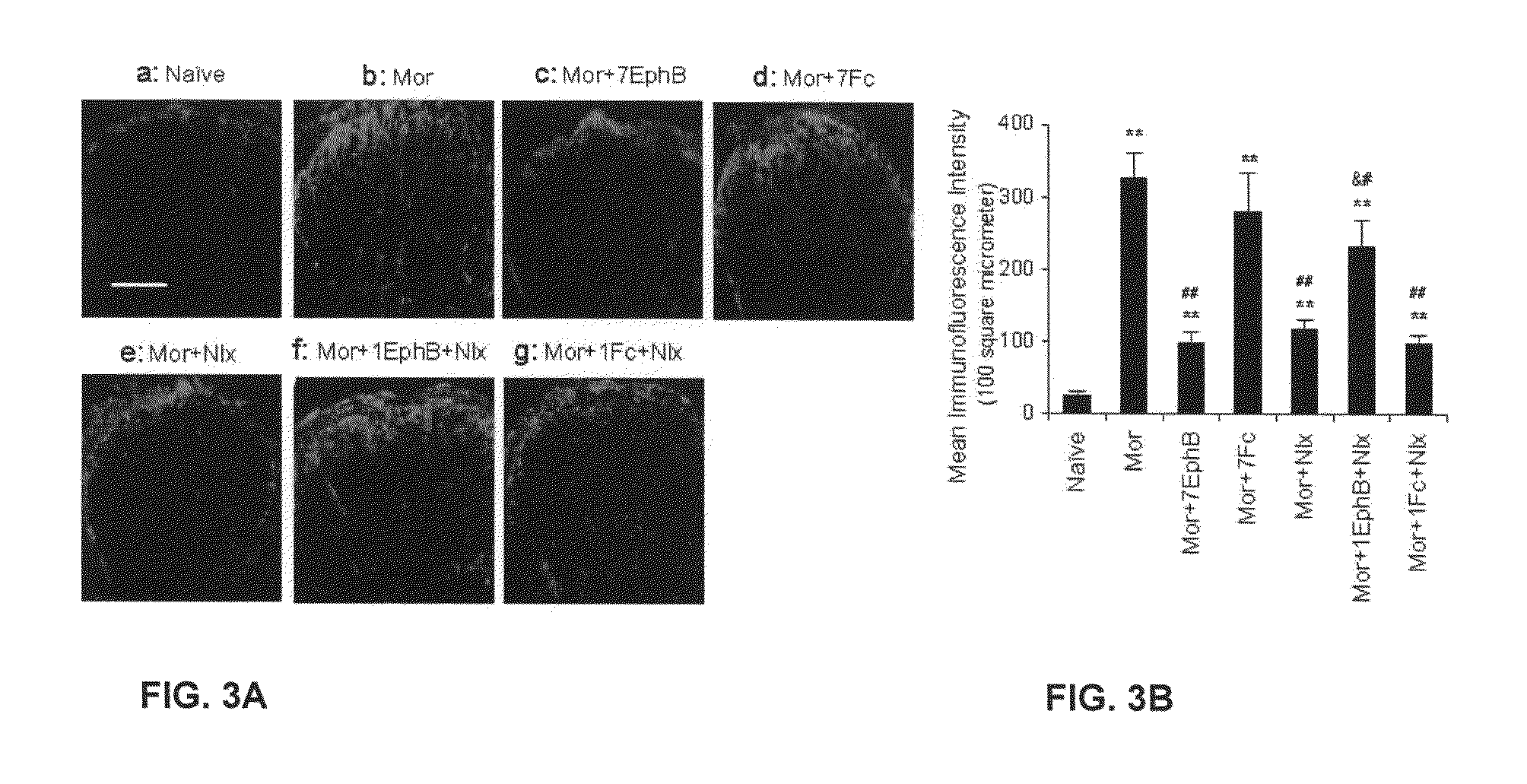
Figure 3
Abstract
Description
BACKGROUND OF THE INVENTION
[0001] 1. Field of the Invention
[0002] The present invention generally relates to medical treatment. Particularly, the present invention relates to a method for preventing or treating the development of opiate tolerance and dependence using a blocking reagent for ephrinB-EphB signaling.
[0003] 2. Description of the Related Art
[0004] Opioid drugs are used and abused for their analgesic and rewarding properties. Repeated use of opioids such as morphine for relief of chronic pain can lead to opiate tolerance and dependence. Mechanisms of opiate tolerance are very complex and involve factors at the levels of the drug receptor, the cell, and neural networks. Roles of diverse neurotransmitter and receptor systems and intracellular signaling proteins in acute and chronic opioid actions have been demonstrated (Bailey & Connor, 2005; Bohn et al, 2000; Collier, 1980; King et al, 2001; Muscoli et al, 2007; Pasternak, 2007; Roerig et al, 1984; Zachariou et al, 2003). The m...
Examples
examples
Materials and Methods
Animals
[0024]Male CD-1 mice (25-30 g, n=237, Charles River Laboratories, MA) were used in this study. The mice were housed in plastic cages with soft bedding and free access to food and water under a 12 h day / 12 h night cycle. All the experimental procedures were conducted in accordance with the regulations of the ethics committee of the International Association for the Study of Pain and approved by the Parker Research Institute Animal Care and Use Committee.
Opiate Withdrawal
[0025]Mice were injected i.p. with repeated pulses of morphine (Sigma, MO) given in 7 escalating doses every 8 h (20, 40, 60, 80, 100, 100, and 100 mg / kg). Two hours after the last morphine injection, mice were injected with naloxone (Sigma, MO) (1 mg / kg, s.c.), and withdrawal symptoms (jumping, wet-dog shakes, backward walking, paw tremor, tremor, diarrhea, ptosis, and weight loss) were monitored for 30 min after naloxone administration. In addition to measuring individual withdrawal signs...