
Assisted take-off method for aircraft
a technology for aircraft and take-off, applied in aircraft navigation control, process and machine control, navigation instruments, etc., can solve the problems of complicated rules, negative effect of aircraft performance, and aircraft inclination to turn very easily, so as to eliminate or reduce the effect of parameter variation
Patent Information
- Authority / Receiving Office
- US · United States
- Current Assignee / Owner
- Publication Date
- 2011-09-06
Smart Images
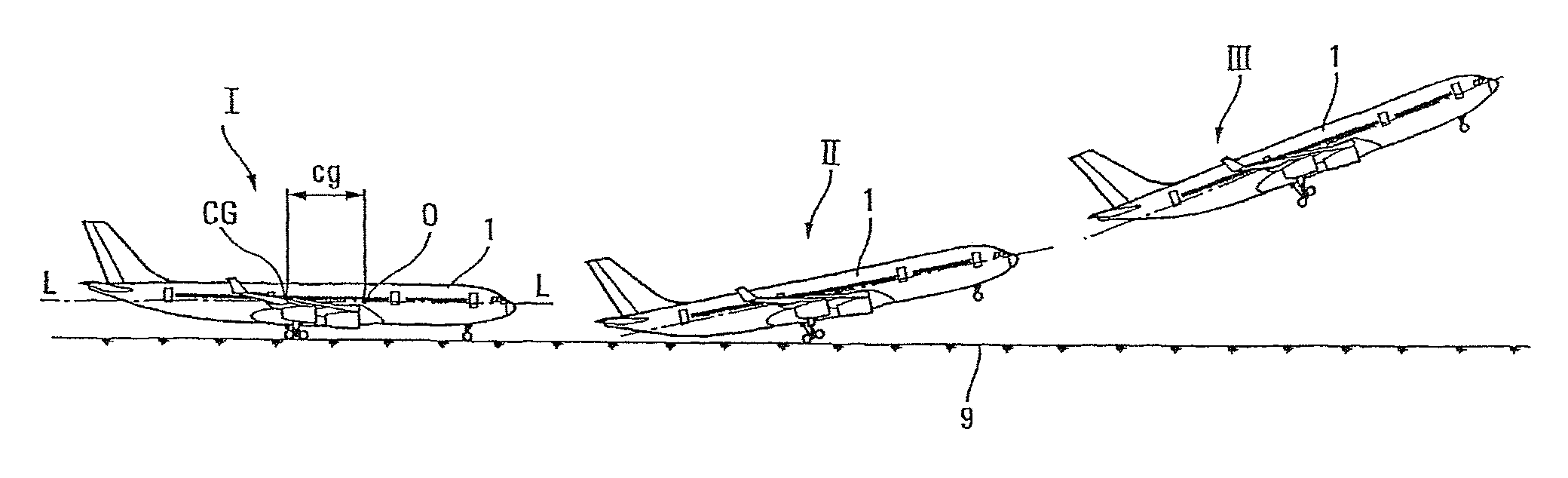
Figure 1 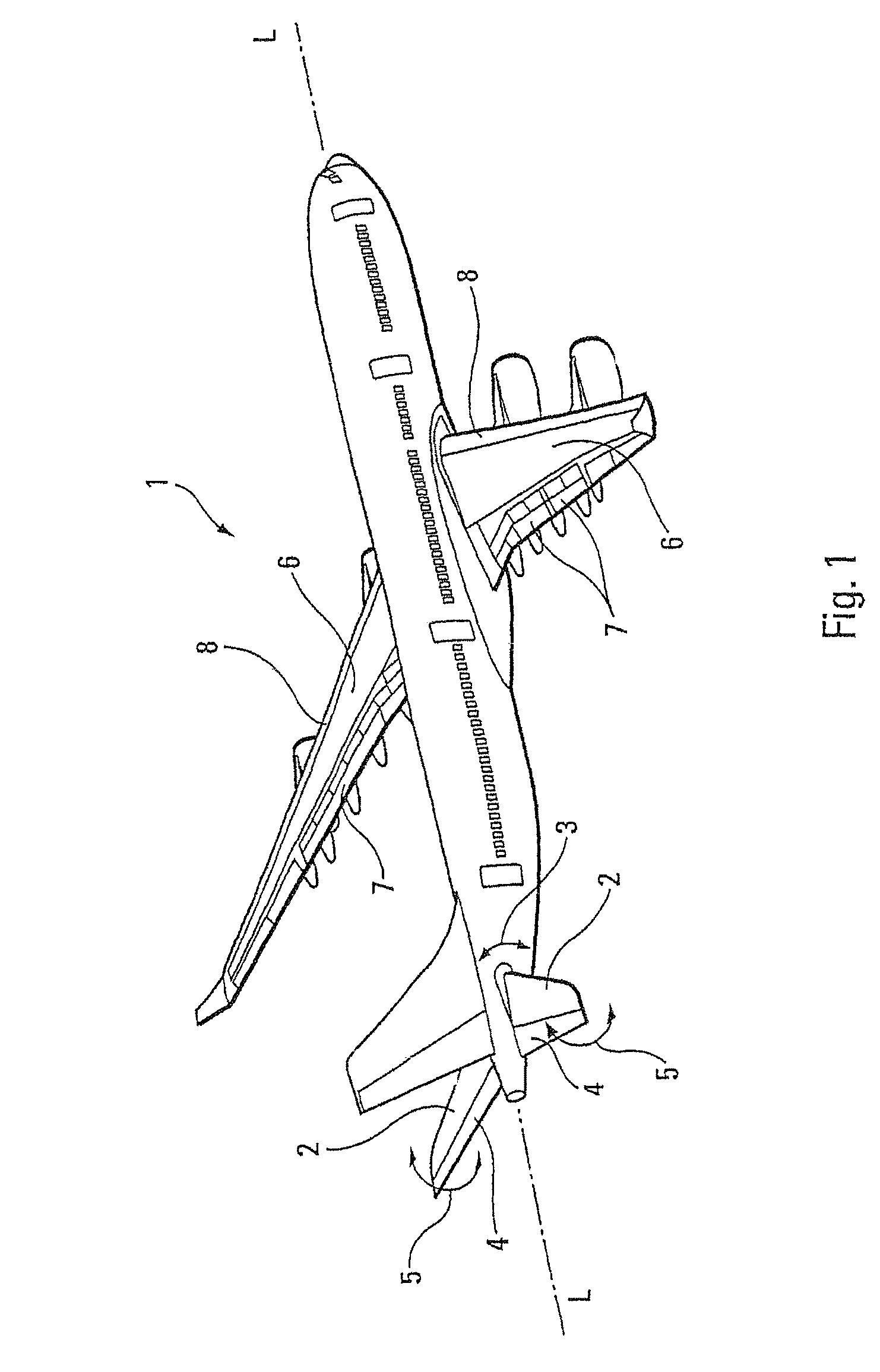
Figure 2 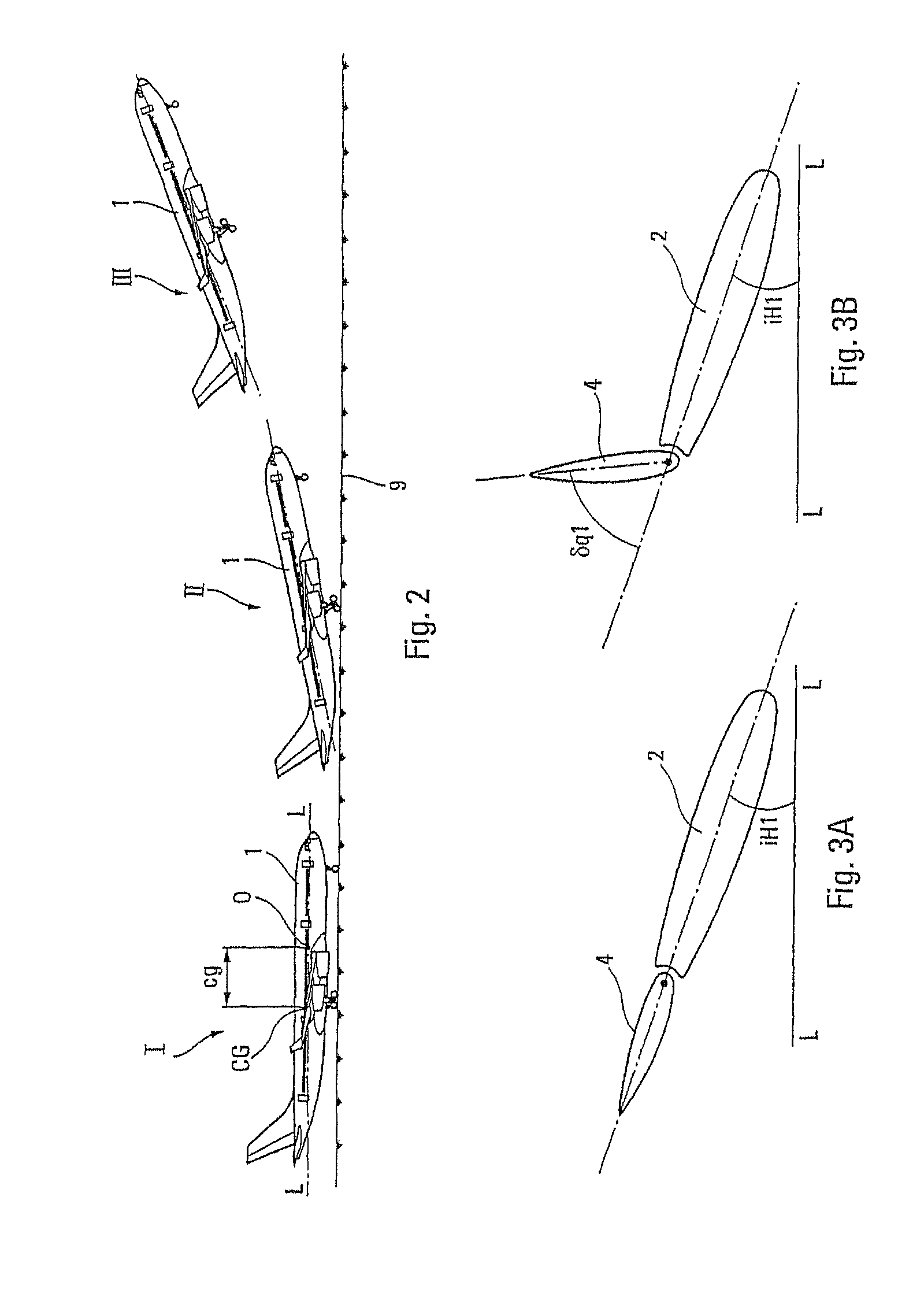
Figure 3
Abstract
Description
FIELD OF THE INVENTION
[0001] The present invention relates to an assisted take-off method for aircraft making it possible to make the behavior of said aircraft uniform during take-off rotations and to eliminate, or at least to reduce, the influence of variations of certain parameters of the aircraft, such as mass, configuration of leading edge slats and of trailing edge flaps, thrust, speed at the time of rotation, etc.BACKGROUND OF THE RELATED ART
[0002] It is known that, prior to an aircraft take-off, the pilot determines a value VR of the speed of the aircraft, called the rotation speed, at which the take-off rotation must start, at the end of the acceleration phase during which said aircraft runs on the take-off runway whilst accelerating. This rotation speed VR is a calculation of optimization of the take-off of the aircraft taking into account both the characteristics of said aircraft (mass, thrust, configuration of slats and flaps, etc) and the characteristics of the take-off ru...
Examples
Embodiment Construction
[0045]The large capacity aircraft 1, shown diagrammatically in FIG. 1, has a longitudinal axis L-L and comprises a horizontal stabilizer 2 with adjustable inclination, as illustrated by the double-headed arrow 3. At the rear edge of said trimmable horizontal stabilizer 2 are articulated elevators 4 able to rotate with respect to said stabilizer 2, as illustrated by the two-headed arrows 5.
[0046]Moreover, on its wings 6, the aircraft 1 comprises trailing edge flaps 7 and leading edge slats 8.
[0047]In the prior art, when the aircraft 1, standing on the take-off runway 9, prepares for take-off, there is determined, according to at least certain of the parameters mentioned above, on the one hand, the speed VR at which the take-off rotation must begin and which must be within a range of speed values imposed by regulations and, on the other hand, a value iH1 of the deflection angle iH of the trimmable horizontal stabilizer 2 and the inclination of the latter is adjusted to that value iH1 ...