
Cell-free protein synthesis method with the use of linear template DNA and cell extract therefor
a cell-free protein and synthesis method technology, applied in the direction of peptides/protein ingredients, peptides, immunoglobulins, etc., can solve the problems of insufficient extraction of strains, reduced growth capacity of mutant strains, and decreased activity of linear dna in i>e. coli /i>mutant strains of recbcd, etc., to achieve the effect of efficient synthesizing and reducing the synthesis amount of protein per
Patent Information
- Authority / Receiving Office
- US · United States
- Patent Type
- Patents(United States)
- Current Assignee / Owner
- Publication Date
- 2014-03-04
Smart Images
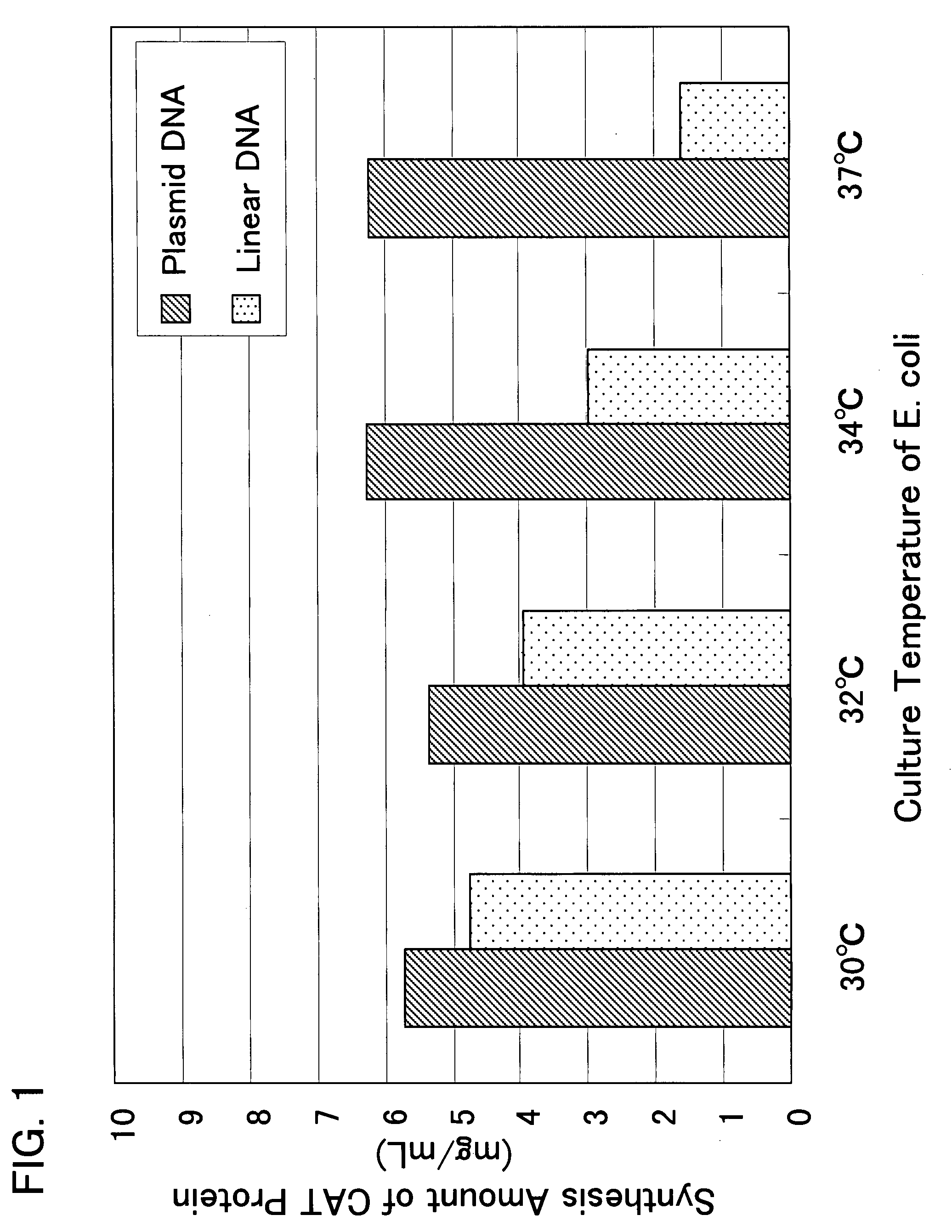
Figure 1 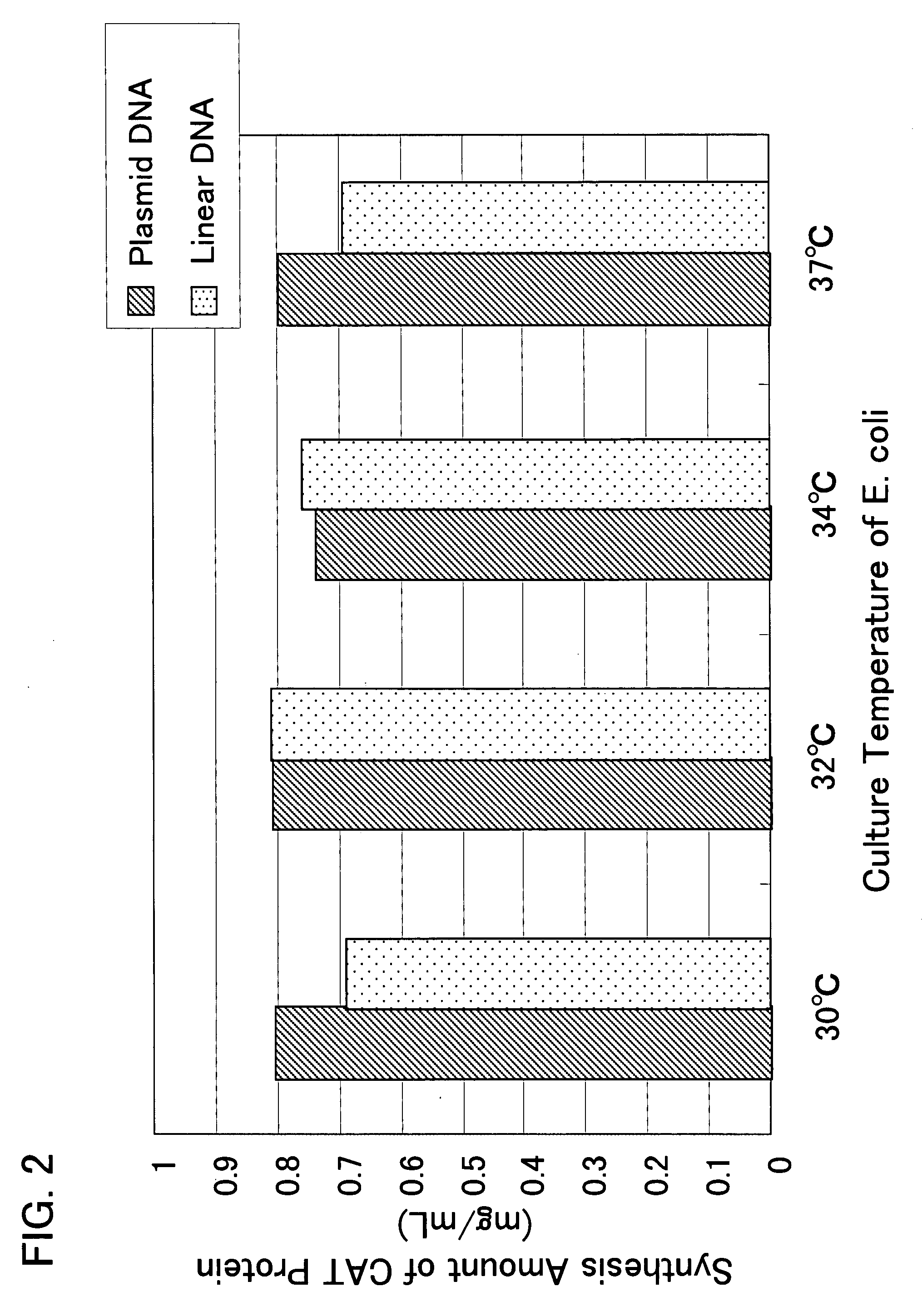
Figure 2 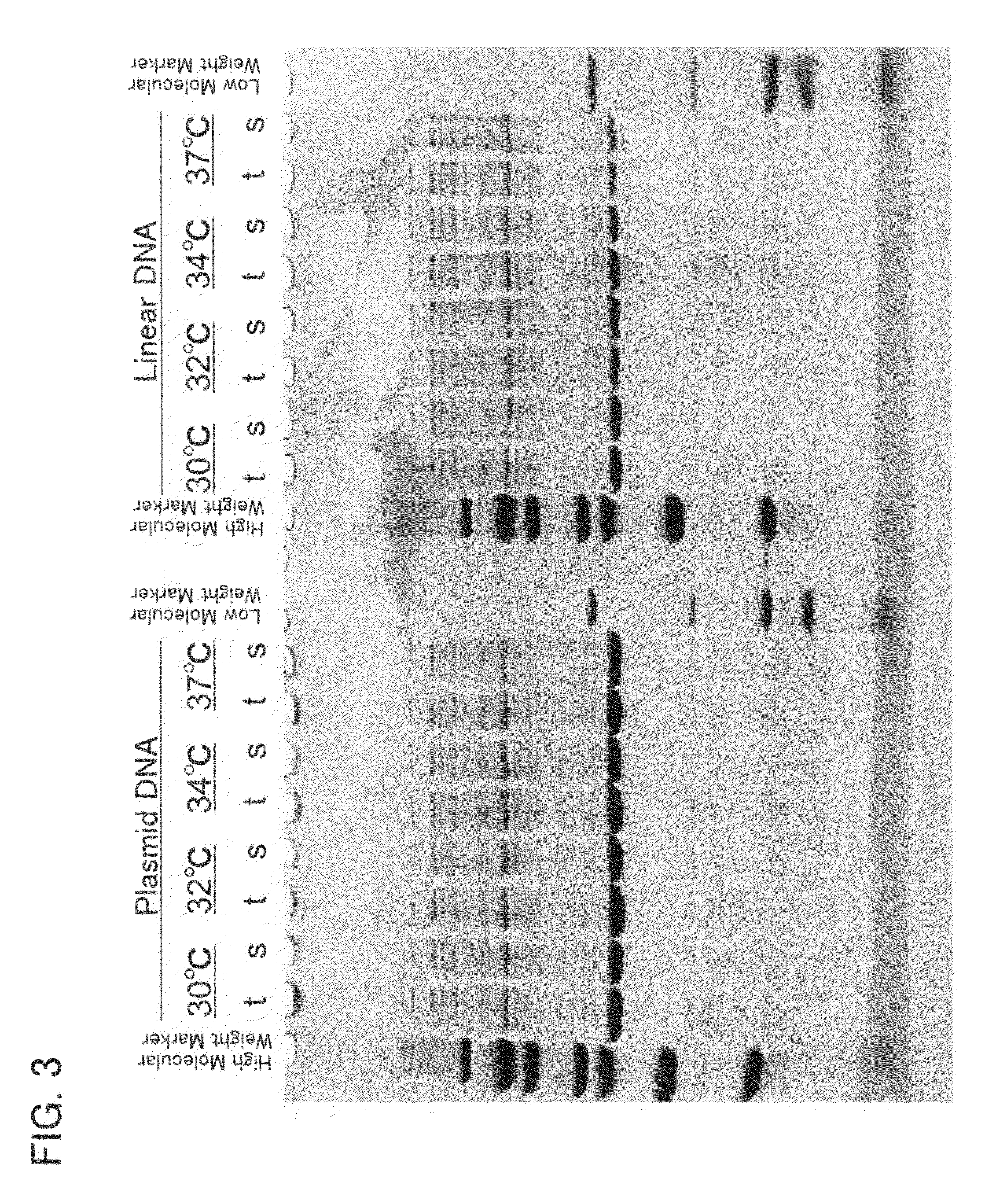
Figure 3
Abstract
Description
[0001] This application is a continuation of International Application PCT / JP2005 / 021265, filed on Nov. 18, 2005, and claims priority to Japanese Patent Application No.2004-335514, filed on Nov. 19, 2004, both of which are incorporated herein by reference in their entireties.TECHNICAL FIELD
[0002] The present invention relates to a process for synthesizing a protein using a cell-free protein synthesis system, in particular, a process for synthesizing a protein in a cell-free system using a linear DNA as a template, and a kit therefore.BACKGROUND ART
[0003] Protein synthesis with a cell-free protein synthesis system has been developed not only in a basic study but also in a practical field such as molecular diagnostics and high-throughput discovery of drug target. In recent years, several techniques of drastically increasing the amount of protein synthesis in this system have been explored (Japanese Patent Kokoku Publication No. JP-B-7-110236, Japanese Patent Kokai Publication No. JP-A-4-...
Examples
examples
[Synthesis of CAT Protein Using E. coli S30 Extracts Cultured at Various Temperatures]
[0029]E. coli strain BL21 codon plus was cultured for overnight in a typical liquid medium to prepare a seed culture. The seed culture was inoculated into a fermentor containing 7L of 2×YT medium (16 g / l bactotryptone, 10 g / l yeast extract and 5 g / l NaCl), and cultured at each temperature of 30° C., 32° C., 34° C. and 37° C. with sufficient aeration by stirring at 400 rpm. The cell number was estimated using turbidity (absorbance at 600 nm) of the culture solution. The cells were recovered at a later stage of logarithmic growth phase (when absorbance at 600 nm was approximately 3 and the cell number was approximately 109 cells / ml), and E. coli S30 extracts were prepared according to the method of Zubay et al (supra).
[0030]As a template DNA in a protein synthesis reaction, both of a plasmid vector for CAT expression, pK7-CAT (refer to Kim et al., Eur. J. Biochem. 239, 881-886, 1996) and a linear dou...