
Noodle maker
a noodle maker and extruder technology, applied in the field of noodle makers, can solve the problems of buckwheat loss flavor, inferior texture, short noodles, etc., and achieve the effects of convenient cleaning of the then shell interior, suitable pressure regulation, and light weight of the noodle maker
Patent Information
- Authority / Receiving Office
- US · United States
- Patent Type
- Patents(United States)
- Current Assignee / Owner
- Publication Date
- 2014-05-13
- Estimated Expiration
- Not applicable · inactive patent
Smart Images
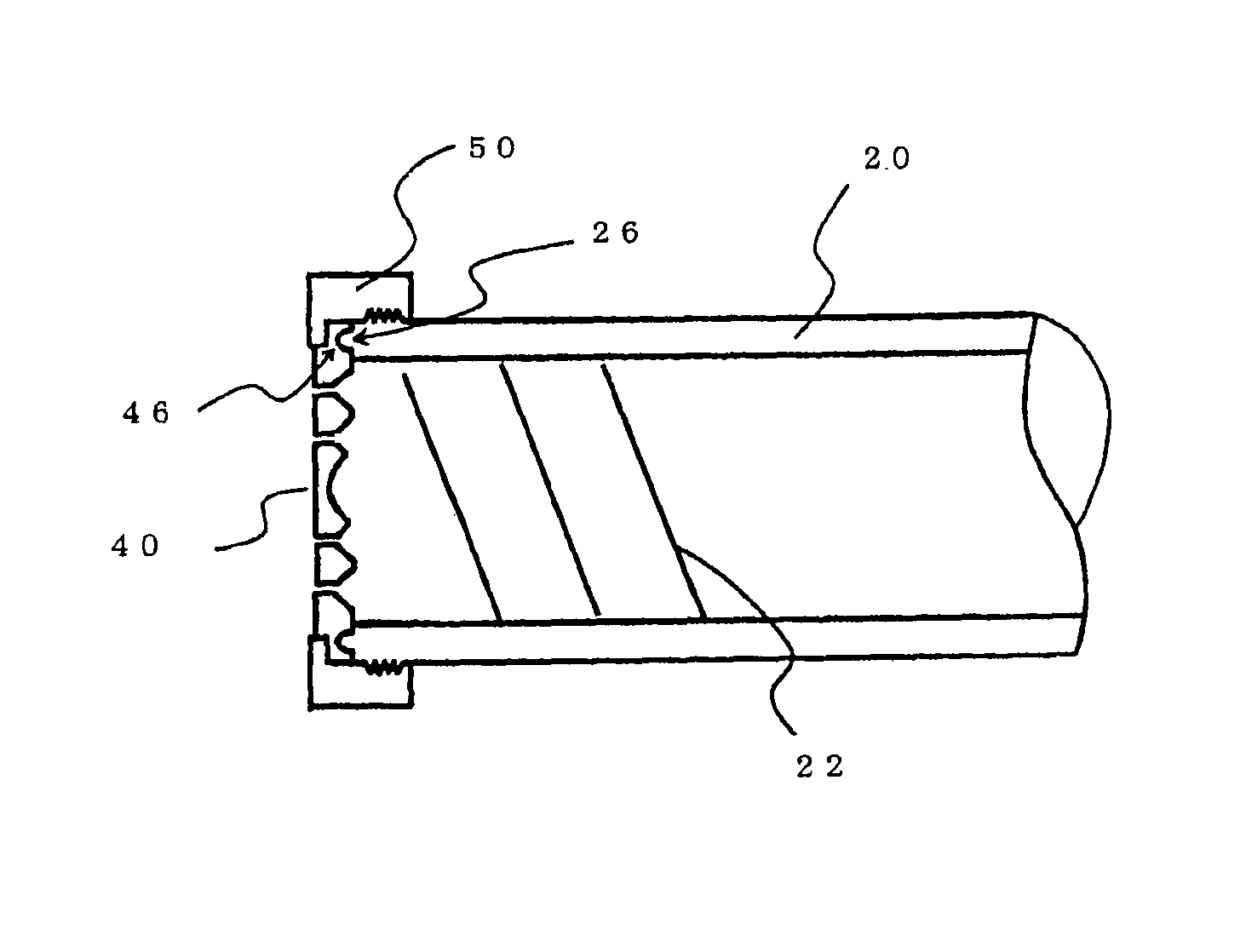
Figure 1 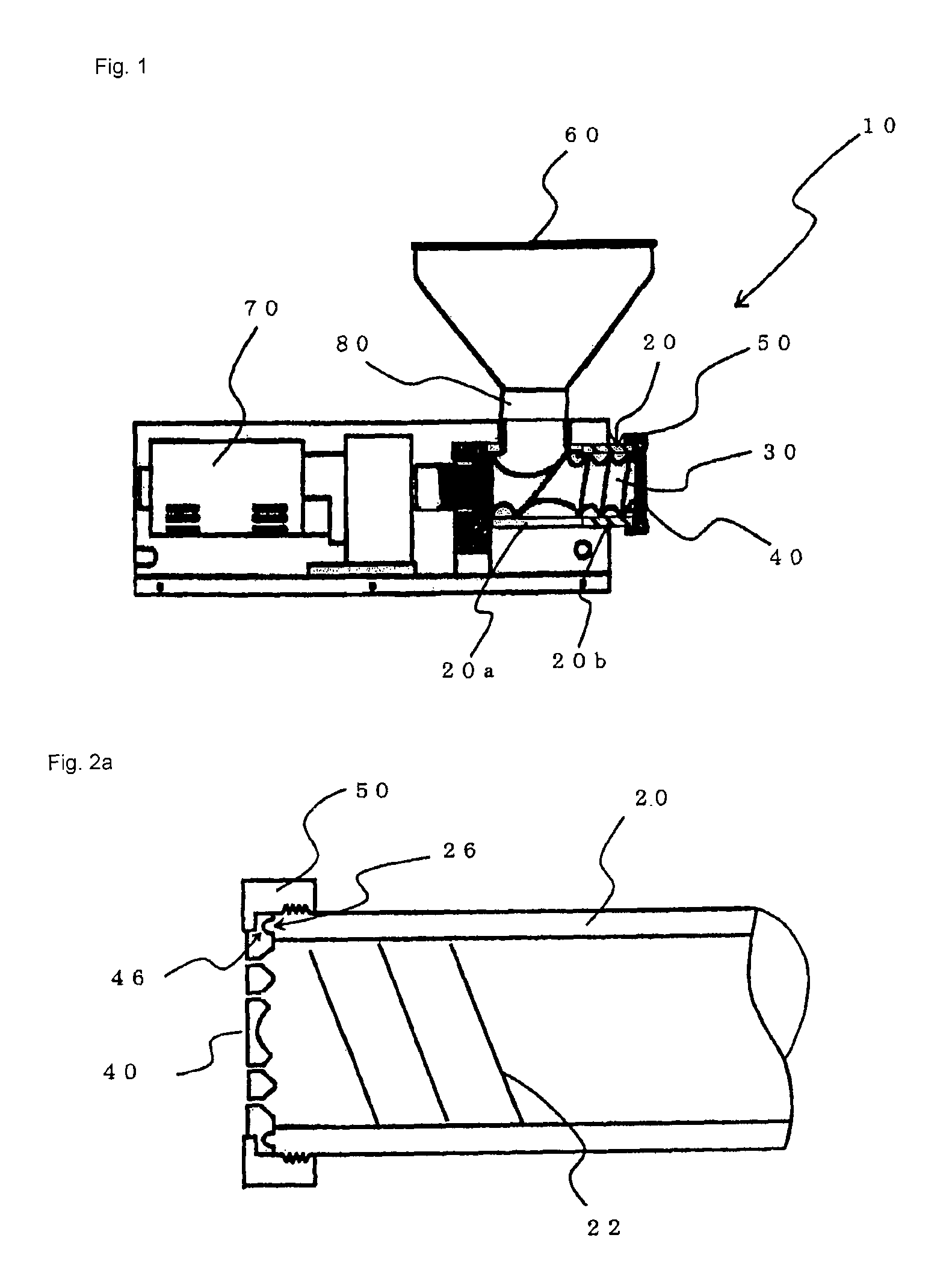
Figure 2 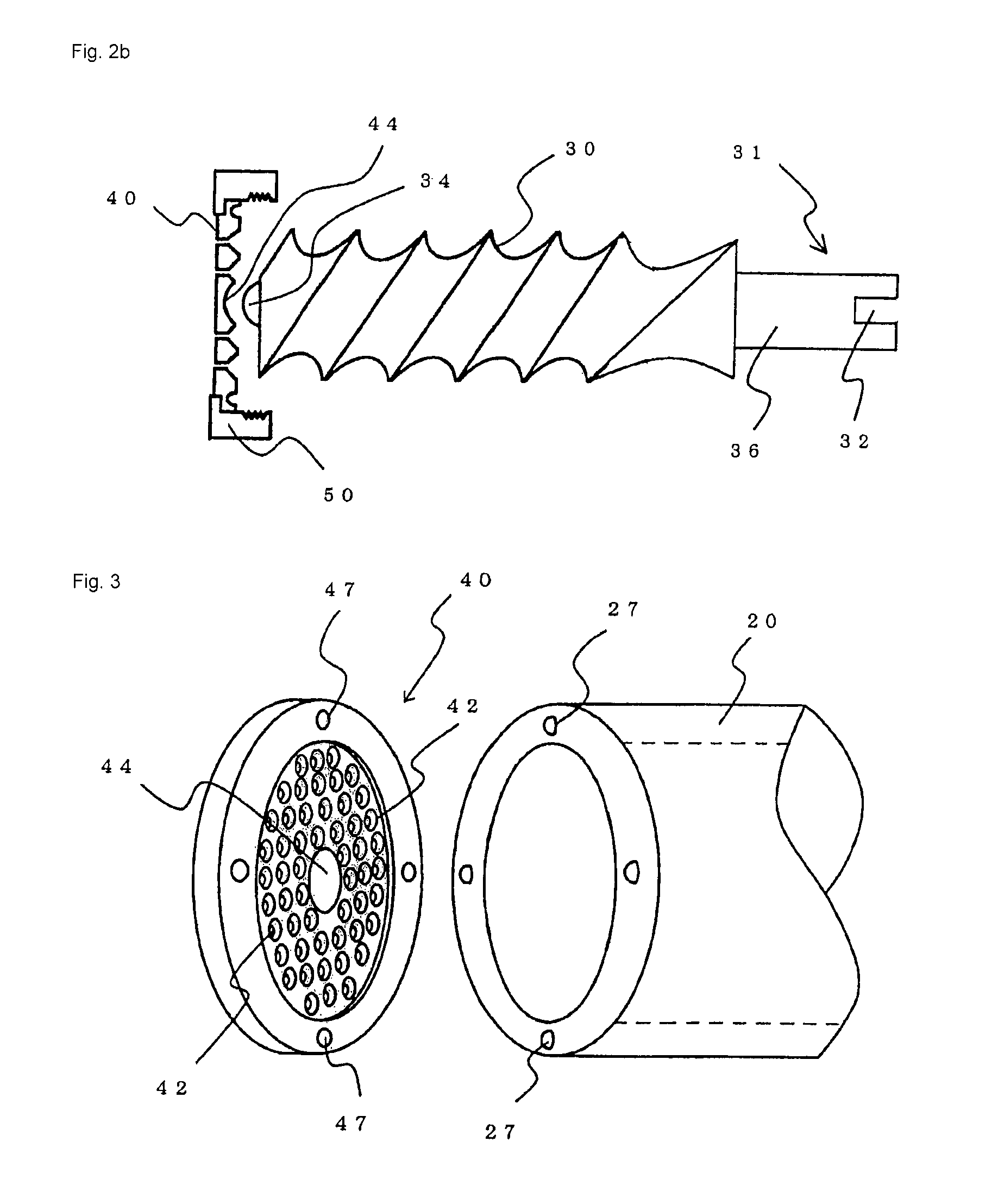
Figure 3
Abstract
Description
TECHNICAL FIELD
[0001] This invention relates to an extruder-type noodle maker for making spaghetti, buckwheat soba noodles, plain wheat noodles and other noodle and pasta products, in which small holes at the distal end of a nozzle unit are formed to taper in a funnel-like shape and which is notable in that the casing of the extruder-type noodle maker is made of resin and the interlocking engagement between the screw and drive unit is reinforced.BACKGROUND ART
[0002] Noodle makers having an extruder-type structure are powered by a powerful rotary drive unit. Many therefore have a structure that comes under more pressure than necessary. Although this is because the noodle raw material must be extruded after being adequately kneaded and transformed to alpha starch (gelatinized), a palatable texture must be maintained by conducting the operation so as to avoid excessive noodle material kneading that causes an overdone condition. The pressure must therefore be controlled to prevent excessi...
Examples
Embodiment Construction
[0029]As shown in FIG. 1, the extruder-type noodle maker 10 of the present invention comprises a casing 20, screw 30, nozzle unit 40, connector 50, hopper 60, drive unit 70, and connecting cylinder 80.
[0030]The casing 20 is a cylindrical body that internally accommodates the helical screw 30 to be rotatable therein. A proximal end section 20a of the casing 20 located under the hopper as illustrated in FIG. 1 is formed of resin, and a distal end section 20b thereof located toward the outlet is formed of metal. The cylindrical casing 20 of this embodiment is formed unitarily with an upper connecting cylinder 80. The resin portion and metal portion are connected together, and the pressure applied to knead the ingredients is adjusted by varying the friction in the region extending from the bottom of the hopper to the outlet, thereby releasing excess moisture produced by the application of pressure.
[0031]Alternatively, the casing 20 can be formed totally of resin. A casing 20 formed enti...