
Modified conjugated diene-based polymer, modified rubber composition containing same, and method for preparing modified conjugated diene-based polymer
a conjugated diene-based polymer and rubber composition technology, applied in the field of modified conjugated diene-based polymers, can solve the problems of limited productivity, difficult mixing with silica, and difficult to obtain high modification efficiency, and achieve high modification efficiency, improved heat build-up, and high tensile strength.
Patent Information
- Authority / Receiving Office
- US · United States
- Patent Type
- Patents(United States)
- Current Assignee / Owner
- Publication Date
- 2017-12-05
Smart Images
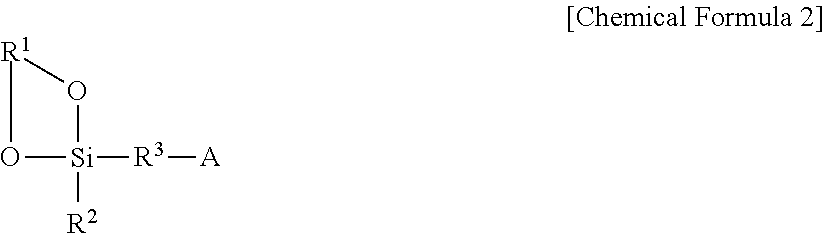
Figure 1 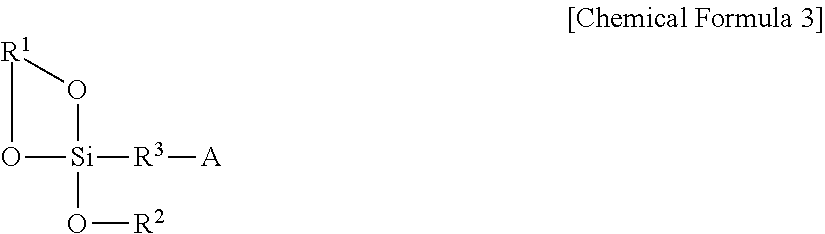
Figure 2 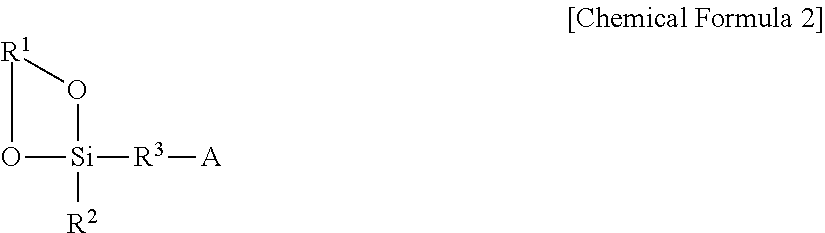
Figure 3
Abstract
Description
CROSS-REFERENCE TO RELATED APPLICATION
[0001] This application is a national phase entry under 35 U.S.C. §371 of International Application No. PCT / KR2015 / 005843, filed Jun. 10, 2015, which claims priority to Korean Patent Application No. 10-2014-0072848, filed Jun. 16, 2014, the disclosures of which are incorporated herein by reference.TECHNICAL FIELD
[0002] The present invention relates to a modified conjugated diene-based polymer, a modified rubber composition comprising the same, and a method of preparing the same and, more particularly, to a modified conjugated diene-based polymer, a modified rubber composition comprising the modified conjugated diene-based polymer, and a method of preparing the modified conjugated diene-based polymer, in which the rubber component includes diene-based rubber having high tensile strength, wear resistance, and wet skid resistance, as well as improved heat build-up when mixed with silica as a reinforcing agent.BACKGROUND ART
[0003] Recently, the demand ...
Examples
example 1
[0072]Three 10 L reactors with stirrers and jackets were connected in series and dried with nitrogen, after which butadiene at 318 g / hr, styrene at 183 g / hr, hexane at 2500 g / hr, and a polar material, TMEDA, at 0.76 g / hr, were placed in the first reactor without impurities. The multifunctional anionic polymerization initiator obtained in Synthesis Example was fed at 0.947 g / hr based on lithium content into the reactor. Here, the temperature inside the reactor was maintained at 80° C. After the initiation of the reaction, the temperature inside the reactor began to rise due to the heat generated due to the polymerization, and thus the final temperature inside the reactor was 80° C. While passing through the second reactor, the monomers were consumed in amounts of 99% or more, and a modifier, namely 3-(2-ethoxy-5,5-dimethyl-1,3,2-dioxasilinan-2-yl)-N,N-dimethylpropan-1-amine (Compound A) was fed at 2.5 g / hr into the third reactor, and the modification was carried out at a temperature ...
example 2
[0074]A styrene-butadiene copolymer was obtained in the same manner as in Example 1, with the exception that 3-(7-(2-ethoxyethoxy)-3,6,8,11-tetraoxa-7-silatridecan-7-yl)-N,N-diethylpropan-1-amine (Compound B) was used as the modifier, in lieu of Compound A.
[0075]Based on the results of analysis of the amounts of bound styrene monomer and vinyl of the copolymer using a Varian VNMRS 500 Mhz NMR, the amount of bound styrene was 36 mass % and the amount of bound butadiene was 64 mass %. Also, the amount of bound 1,2-vinyl of the microstructure in the butadiene was 26% relative to the total butadiene chain, based on the calculated results, rather than the results of measurement using an IR spectrophotometer.
example 3
[0076]Three 10 L reactors with stirrers and jackets were connected in series and dried with nitrogen, after which butadiene at 318 g / hr, styrene at 183 g / hr, hexane at 2500 g / hr, and a polar material, TMEDA, at 1.63 g / hr, were placed in the first reactor without impurities. The multifunctional anionic polymerization initiator obtained in Synthesis Example was fed at 1.353 g / hr based on lithium content into the reactor. Here, the temperature inside the reactor was maintained at 80° C. After the initiation of the reaction, the temperature inside the reactor began to rise due to the heat generated due to the polymerization, and thus the final temperature inside the reactor was 80° C. While passing through the second reactor, the monomers were consumed in amounts of 99% or more, and a modifier, namely Compound A, was fed at 3.5 g / hr into the third reactor, and the modification was carried out at a temperature of 80° C.
[0077]The polymer solution output from the third reactor was added wi...