

Benchmarking GC-MS Chromatographic Peak Resolution
SEP 22, 20259 MIN READ
Generate Your Research Report Instantly with AI Agent
PatSnap Eureka helps you evaluate technical feasibility & market potential.
GC-MS Peak Resolution Technology Background and Objectives
Gas Chromatography-Mass Spectrometry (GC-MS) has evolved significantly since its inception in the mid-20th century, becoming an indispensable analytical technique across various scientific disciplines. The technology combines the separation capabilities of gas chromatography with the detection specificity of mass spectrometry, enabling precise identification and quantification of complex chemical mixtures. Peak resolution, a critical parameter in chromatographic analysis, directly impacts the accuracy and reliability of analytical results.
The evolution of GC-MS technology has been marked by continuous improvements in column technology, detector sensitivity, and data processing algorithms. Early systems from the 1950s and 1960s offered limited resolution capabilities, while modern instruments can achieve peak resolution values that allow for the separation of compounds differing by less than one atomic mass unit. This progression has been driven by advances in stationary phase chemistry, column manufacturing techniques, and the miniaturization of components.
Current technological trends in GC-MS peak resolution focus on enhancing separation efficiency through multidimensional chromatography, developing novel stationary phases with improved selectivity, and implementing advanced mathematical algorithms for peak deconvolution. The integration of artificial intelligence and machine learning approaches for automated peak identification and resolution optimization represents a significant frontier in the field.
The primary objective of benchmarking GC-MS chromatographic peak resolution is to establish standardized metrics and methodologies for evaluating system performance across different instruments, laboratories, and applications. This standardization is essential for ensuring data comparability, method transferability, and quality control in analytical procedures. Additionally, benchmarking serves to identify performance bottlenecks and guide targeted improvements in hardware and software components.
From a research perspective, comprehensive benchmarking studies aim to correlate theoretical models of chromatographic separation with empirical results, thereby advancing our fundamental understanding of the physicochemical processes underlying peak resolution. This knowledge is crucial for predicting separation behavior and optimizing analytical methods for specific applications.
The ultimate goal of peak resolution technology development is to achieve complete separation of all components in increasingly complex mixtures, while simultaneously reducing analysis time, sample requirements, and operational costs. This balance between resolution, speed, and efficiency represents the central challenge in modern GC-MS development, driving innovation across instrumental design, materials science, and computational approaches.
The evolution of GC-MS technology has been marked by continuous improvements in column technology, detector sensitivity, and data processing algorithms. Early systems from the 1950s and 1960s offered limited resolution capabilities, while modern instruments can achieve peak resolution values that allow for the separation of compounds differing by less than one atomic mass unit. This progression has been driven by advances in stationary phase chemistry, column manufacturing techniques, and the miniaturization of components.
Current technological trends in GC-MS peak resolution focus on enhancing separation efficiency through multidimensional chromatography, developing novel stationary phases with improved selectivity, and implementing advanced mathematical algorithms for peak deconvolution. The integration of artificial intelligence and machine learning approaches for automated peak identification and resolution optimization represents a significant frontier in the field.
The primary objective of benchmarking GC-MS chromatographic peak resolution is to establish standardized metrics and methodologies for evaluating system performance across different instruments, laboratories, and applications. This standardization is essential for ensuring data comparability, method transferability, and quality control in analytical procedures. Additionally, benchmarking serves to identify performance bottlenecks and guide targeted improvements in hardware and software components.
From a research perspective, comprehensive benchmarking studies aim to correlate theoretical models of chromatographic separation with empirical results, thereby advancing our fundamental understanding of the physicochemical processes underlying peak resolution. This knowledge is crucial for predicting separation behavior and optimizing analytical methods for specific applications.
The ultimate goal of peak resolution technology development is to achieve complete separation of all components in increasingly complex mixtures, while simultaneously reducing analysis time, sample requirements, and operational costs. This balance between resolution, speed, and efficiency represents the central challenge in modern GC-MS development, driving innovation across instrumental design, materials science, and computational approaches.
Market Demand Analysis for High-Resolution GC-MS Systems
The global market for high-resolution GC-MS systems has experienced significant growth in recent years, driven primarily by increasing demands in pharmaceutical research, environmental monitoring, food safety testing, and forensic applications. Current market estimates value the high-resolution GC-MS sector at approximately 2.5 billion USD, with projections indicating a compound annual growth rate of 6.8% through 2028.
Pharmaceutical and biotechnology sectors represent the largest market segment, accounting for nearly 35% of the total demand. These industries require increasingly sensitive analytical tools for drug discovery, metabolomics research, and quality control processes. The ability to detect and identify trace compounds at sub-ppb levels has become a critical requirement rather than a luxury feature.
Environmental monitoring applications have shown the fastest growth trajectory, expanding at nearly 8% annually. This surge is largely attributed to stricter regulatory frameworks worldwide concerning pollutants, pesticides, and emerging contaminants. Government agencies and environmental testing laboratories are increasingly investing in high-resolution systems capable of detecting complex environmental matrices with minimal sample preparation.
Food safety testing represents another substantial market driver, particularly in developed economies with stringent food quality regulations. The need to identify pesticide residues, mycotoxins, and adulterants at ever-lower detection limits has created steady demand for advanced chromatographic resolution capabilities.
Regional analysis reveals North America as the dominant market, holding approximately 38% market share, followed by Europe (31%) and Asia-Pacific (24%). However, the Asia-Pacific region demonstrates the highest growth potential, with China and India making substantial investments in analytical infrastructure for both regulatory and research purposes.
Customer surveys indicate that peak resolution capabilities rank among the top three purchasing criteria for GC-MS systems, alongside sensitivity and software usability. End-users specifically highlight the need for systems capable of resolving structurally similar compounds and isomers in complex matrices without extensive sample preparation steps.
Market trends suggest increasing demand for integrated solutions that combine high chromatographic resolution with advanced data processing capabilities. Customers are seeking systems that not only provide superior peak resolution but also incorporate artificial intelligence and machine learning algorithms to assist with peak identification and quantification in complex samples.
The competitive landscape shows that manufacturers who can demonstrate superior benchmarked performance in chromatographic resolution gain significant market advantage, particularly in high-value segments such as pharmaceutical research and forensic toxicology.
Pharmaceutical and biotechnology sectors represent the largest market segment, accounting for nearly 35% of the total demand. These industries require increasingly sensitive analytical tools for drug discovery, metabolomics research, and quality control processes. The ability to detect and identify trace compounds at sub-ppb levels has become a critical requirement rather than a luxury feature.
Environmental monitoring applications have shown the fastest growth trajectory, expanding at nearly 8% annually. This surge is largely attributed to stricter regulatory frameworks worldwide concerning pollutants, pesticides, and emerging contaminants. Government agencies and environmental testing laboratories are increasingly investing in high-resolution systems capable of detecting complex environmental matrices with minimal sample preparation.
Food safety testing represents another substantial market driver, particularly in developed economies with stringent food quality regulations. The need to identify pesticide residues, mycotoxins, and adulterants at ever-lower detection limits has created steady demand for advanced chromatographic resolution capabilities.
Regional analysis reveals North America as the dominant market, holding approximately 38% market share, followed by Europe (31%) and Asia-Pacific (24%). However, the Asia-Pacific region demonstrates the highest growth potential, with China and India making substantial investments in analytical infrastructure for both regulatory and research purposes.
Customer surveys indicate that peak resolution capabilities rank among the top three purchasing criteria for GC-MS systems, alongside sensitivity and software usability. End-users specifically highlight the need for systems capable of resolving structurally similar compounds and isomers in complex matrices without extensive sample preparation steps.
Market trends suggest increasing demand for integrated solutions that combine high chromatographic resolution with advanced data processing capabilities. Customers are seeking systems that not only provide superior peak resolution but also incorporate artificial intelligence and machine learning algorithms to assist with peak identification and quantification in complex samples.
The competitive landscape shows that manufacturers who can demonstrate superior benchmarked performance in chromatographic resolution gain significant market advantage, particularly in high-value segments such as pharmaceutical research and forensic toxicology.
Current Challenges in Chromatographic Peak Resolution
Despite significant advancements in GC-MS technology, chromatographic peak resolution remains a persistent challenge in analytical chemistry. The fundamental issue stems from the complexity of sample matrices encountered in environmental, pharmaceutical, and food safety applications, where closely eluting compounds with similar chemical properties create overlapping peaks that compromise accurate identification and quantification.
Current resolution limitations are primarily attributed to three factors: instrumental constraints, method development challenges, and data processing limitations. Modern GC columns, despite improvements in stationary phase technology, still struggle with resolving structurally similar isomers and compounds with nearly identical retention behaviors. Even high-efficiency capillary columns with theoretical plate counts exceeding 100,000 cannot fully separate certain critical pairs in complex mixtures.
Method development presents another significant hurdle, as optimizing temperature programs, carrier gas flow rates, and injection parameters requires extensive expertise and time-consuming trial-and-error approaches. The traditional one-factor-at-a-time optimization strategy often fails to identify truly optimal conditions due to complex parameter interactions. Additionally, the compromise between analysis time and resolution forces analysts to accept suboptimal separation in high-throughput environments.
Data processing challenges further complicate peak resolution efforts. Current deconvolution algorithms, while sophisticated, still struggle with extremely complex chromatograms containing hundreds of compounds. False positives and negatives remain problematic, particularly when signal-to-noise ratios are low or when dealing with trace-level analytes in the presence of high-abundance interferents.
Matrix effects represent another significant challenge, as co-extracted compounds can alter analyte retention behavior unpredictably. This phenomenon is particularly problematic in biological and environmental samples, where matrix composition varies significantly between specimens, making standardized methods difficult to implement consistently across different sample types.
The integration of mass spectrometry, while providing an additional dimension for compound identification, introduces its own challenges. Mass spectral similarity among structural isomers and fragments often necessitates baseline chromatographic separation that cannot always be achieved. Additionally, the data volume generated by modern high-resolution MS systems creates computational bottlenecks in real-time data processing.
Emerging techniques like comprehensive two-dimensional gas chromatography (GC×GC) offer promising solutions but introduce new challenges in method standardization, data handling, and instrument complexity that limit widespread adoption. The lack of standardized benchmarking protocols for peak resolution across different instrument platforms further complicates technology assessment and method transfer between laboratories.
Current resolution limitations are primarily attributed to three factors: instrumental constraints, method development challenges, and data processing limitations. Modern GC columns, despite improvements in stationary phase technology, still struggle with resolving structurally similar isomers and compounds with nearly identical retention behaviors. Even high-efficiency capillary columns with theoretical plate counts exceeding 100,000 cannot fully separate certain critical pairs in complex mixtures.
Method development presents another significant hurdle, as optimizing temperature programs, carrier gas flow rates, and injection parameters requires extensive expertise and time-consuming trial-and-error approaches. The traditional one-factor-at-a-time optimization strategy often fails to identify truly optimal conditions due to complex parameter interactions. Additionally, the compromise between analysis time and resolution forces analysts to accept suboptimal separation in high-throughput environments.
Data processing challenges further complicate peak resolution efforts. Current deconvolution algorithms, while sophisticated, still struggle with extremely complex chromatograms containing hundreds of compounds. False positives and negatives remain problematic, particularly when signal-to-noise ratios are low or when dealing with trace-level analytes in the presence of high-abundance interferents.
Matrix effects represent another significant challenge, as co-extracted compounds can alter analyte retention behavior unpredictably. This phenomenon is particularly problematic in biological and environmental samples, where matrix composition varies significantly between specimens, making standardized methods difficult to implement consistently across different sample types.
The integration of mass spectrometry, while providing an additional dimension for compound identification, introduces its own challenges. Mass spectral similarity among structural isomers and fragments often necessitates baseline chromatographic separation that cannot always be achieved. Additionally, the data volume generated by modern high-resolution MS systems creates computational bottlenecks in real-time data processing.
Emerging techniques like comprehensive two-dimensional gas chromatography (GC×GC) offer promising solutions but introduce new challenges in method standardization, data handling, and instrument complexity that limit widespread adoption. The lack of standardized benchmarking protocols for peak resolution across different instrument platforms further complicates technology assessment and method transfer between laboratories.
Current Benchmarking Methodologies for Peak Resolution
01 Column technology for improved GC-MS peak resolution
Advanced column technologies are crucial for enhancing chromatographic peak resolution in GC-MS analysis. These include specialized stationary phases, capillary columns with optimized dimensions, and temperature-programmable columns that allow for better separation of complex mixtures. The column design affects parameters such as theoretical plate number, peak capacity, and resolution, enabling more accurate identification and quantification of compounds in complex samples.- Column technology for improved peak resolution: Advanced column technologies are crucial for enhancing chromatographic peak resolution in GC-MS analysis. These include specialized column coatings, optimized stationary phases, and column dimensions that minimize peak broadening. Innovations in column design focus on reducing internal diameter, optimizing film thickness, and using novel materials that provide better separation of closely eluting compounds, resulting in sharper peaks and improved resolution of complex mixtures.
- Temperature programming and control systems: Precise temperature programming and control systems significantly impact chromatographic peak resolution in GC-MS. These systems enable controlled temperature ramping during analysis, which helps separate compounds with similar properties. Advanced temperature control technologies allow for rapid heating and cooling rates, temperature stability, and reproducible thermal gradients across the column, resulting in consistent retention times and improved peak shapes for better resolution of complex samples.
- Sample preparation and injection techniques: Optimized sample preparation and injection techniques are essential for achieving high chromatographic peak resolution in GC-MS analysis. These include advanced extraction methods, sample concentration techniques, and precise injection systems that minimize band broadening at the column inlet. Specialized injection modes such as splitless, pulsed splitless, and programmed temperature vaporization help deliver narrow sample bands to the column, resulting in improved peak shape and resolution.
- Data processing and peak deconvolution algorithms: Sophisticated data processing and peak deconvolution algorithms enhance the resolution of overlapping peaks in GC-MS chromatograms. These computational methods apply mathematical models to separate co-eluting compounds based on their unique mass spectral signatures. Advanced software solutions implement techniques such as curve fitting, multivariate analysis, and machine learning to extract individual component information from complex chromatograms, effectively improving the apparent chromatographic resolution without physical separation.
- Carrier gas optimization and flow control: Carrier gas selection and precise flow control significantly impact chromatographic peak resolution in GC-MS systems. Optimizing carrier gas parameters such as type (hydrogen, helium, or nitrogen), pressure, and flow rate affects the efficiency of analyte transfer through the column. Electronic pressure control systems that maintain constant flow or pressure throughout temperature programs help achieve consistent linear velocity, resulting in narrower peaks and improved resolution, particularly for compounds with similar retention characteristics.
02 Ionization and detection techniques for enhanced mass spectrometry resolution
Various ionization and detection techniques significantly impact the resolution of GC-MS analysis. These include electron impact ionization, chemical ionization, and advanced detector technologies that improve signal-to-noise ratios. Optimized ion source parameters, detector sensitivity adjustments, and mass analyzer configurations contribute to better peak resolution, allowing for more precise compound identification and structural elucidation in complex mixtures.Expand Specific Solutions03 Data processing algorithms for peak deconvolution
Sophisticated data processing algorithms play a vital role in resolving overlapping peaks in GC-MS chromatograms. These computational methods include mathematical deconvolution techniques, baseline correction algorithms, and advanced peak detection methods. Machine learning approaches and statistical models help separate co-eluting compounds, extract pure component spectra, and improve the overall resolution of chromatographic data, particularly in complex matrices with numerous analytes.Expand Specific Solutions04 Sample preparation techniques for improved chromatographic separation
Effective sample preparation methods significantly enhance GC-MS peak resolution by reducing matrix interference and concentrating analytes of interest. Techniques include solid-phase extraction, liquid-liquid extraction, derivatization, and headspace sampling. These approaches help eliminate contaminants, reduce column overloading, and improve the chromatographic behavior of target compounds, resulting in sharper peaks and better resolution between closely eluting substances.Expand Specific Solutions05 Instrument parameter optimization for enhanced resolution
Optimizing instrumental parameters is essential for achieving high chromatographic peak resolution in GC-MS analysis. Key parameters include carrier gas flow rate, temperature programming, injection techniques, and interface conditions between the GC and MS components. Advanced methods like pressure-programmed GC, split/splitless injection optimization, and transfer line temperature control help minimize peak broadening and improve separation efficiency, particularly for thermally labile compounds and isomers with similar properties.Expand Specific Solutions
Leading Manufacturers and Research Institutions in GC-MS
The GC-MS chromatographic peak resolution benchmarking field is currently in a mature growth phase, with an estimated global market size of $5-7 billion. Technological maturity varies across key players, with established leaders like Shimadzu Corp. and Thermo Finnigan demonstrating advanced capabilities in high-resolution chromatography systems. JEOL Ltd. and Waters Technology Corp. have made significant innovations in mass spectrometry integration, while pharmaceutical companies like F. Hoffmann-La Roche Ltd. focus on application-specific optimizations. Research institutions such as Kumamoto University and Beijing Institute of Technology are contributing novel algorithms for peak detection. The competitive landscape shows a blend of specialized instrumentation companies and diversified technology corporations, with increasing emphasis on AI-enhanced data processing capabilities.
Shimadzu Corp.
Technical Solution: Shimadzu Corporation has developed advanced GC-MS systems with proprietary Smart MRM technology for chromatographic peak resolution benchmarking. Their GCMS-TQ8050 NX triple quadrupole system achieves industry-leading sensitivity with detection limits in the femtogram range and enhanced chromatographic resolution through narrow peak technology. The system incorporates advanced algorithms for peak deconvolution that can separate closely eluting compounds with similar mass spectra. Shimadzu's LabSolutions software includes dedicated tools for quantitative assessment of chromatographic resolution, including automated calculation of resolution factors, peak capacity, and tailing factors. Their patented Advanced Scanning Speed Protocol (ASSP) allows for acquisition rates up to 20,000 u/sec, ensuring proper characterization of narrow chromatographic peaks without compromising spectral quality or mass accuracy.
Strengths: Superior sensitivity in femtogram range allows detection of trace compounds that might be missed by competitors; proprietary peak deconvolution algorithms provide excellent resolution of complex mixtures. Weaknesses: Systems tend to be more expensive than some competitors; software has steeper learning curve for new users; requires more frequent maintenance for optimal performance.
F. Hoffmann-La Roche Ltd.
Technical Solution: Roche has developed a comprehensive GC-MS benchmarking platform specifically designed for pharmaceutical applications. Their approach combines hardware optimization with sophisticated software algorithms to evaluate chromatographic peak resolution. The company's proprietary COBAS GC-MS systems incorporate automated column selection technology that systematically tests multiple stationary phases to optimize separation parameters for complex biological samples. Roche's benchmarking methodology includes standardized performance tests using reference compound mixtures with known resolution challenges, allowing for objective comparison between different analytical methods. Their software suite includes advanced statistical tools for peak resolution assessment, including 3D resolution mapping that visualizes separation quality across multiple dimensions. Roche has also pioneered the use of machine learning algorithms to predict chromatographic behavior and optimize method parameters for improved peak resolution in complex biological matrices.
Strengths: Highly specialized for pharmaceutical and clinical applications; excellent integration with other Roche analytical platforms; robust validation protocols ensure reliable performance. Weaknesses: Systems are primarily optimized for clinical/pharmaceutical workflows rather than general research applications; proprietary nature limits compatibility with third-party components.
Key Patents and Literature on Resolution Optimization
Capillary furnace for improved peak resolution in gas isotope chromatography
PatentInactiveUS5783741A
Innovation
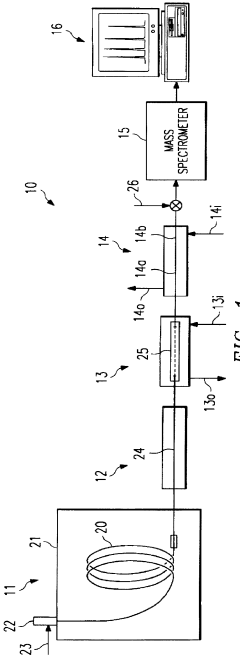
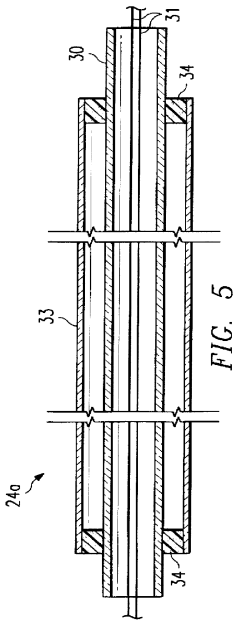
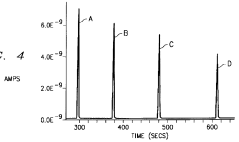
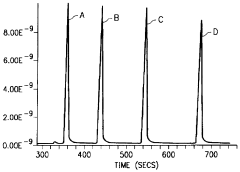
- The use of a capillary tube with a 0.25 mm inner diameter as the combustion reactor flowpath, matching the capillary column, reduces 'dead volume' by providing a continuous capillary flowpath from the GC column to the mass spectrometer, eliminating broadening and enhancing peak resolution.
Gas chromatography-mass spectrogram retrieval method based on vector model
PatentInactiveCN104572910A
Innovation
- A mass spectrum retrieval method based on a vector model is adopted. By representing the mass spectrum as a vector form, the similarity calculation based on the p norm and the introduction of the peak intensity scaling factor are used to calculate the similarity of the mass spectra and screen the standard mass spectra to improve Retrieval efficiency.




Standardization and Quality Control in GC-MS Analysis
Standardization and quality control are fundamental aspects of GC-MS analysis, particularly when benchmarking chromatographic peak resolution. The establishment of robust standardization protocols ensures reproducibility and reliability of analytical results across different laboratories and instruments.
Quality control in GC-MS analysis begins with the implementation of system suitability tests (SSTs) that evaluate critical performance parameters including peak resolution, retention time stability, and signal-to-noise ratios. These tests should be performed regularly to verify that the analytical system maintains optimal performance throughout the analysis period.
Reference standards play a crucial role in standardization efforts. The use of certified reference materials (CRMs) with known chemical compositions and purities allows for accurate calibration of instruments and validation of analytical methods. For peak resolution benchmarking specifically, standard mixtures containing compounds with similar chemical properties and known elution behaviors are essential.
Method validation represents another cornerstone of quality control in GC-MS analysis. This process involves the systematic assessment of method parameters such as linearity, accuracy, precision, limit of detection (LOD), limit of quantification (LOQ), and robustness. Validation ensures that the analytical method consistently delivers reliable results for peak resolution measurements.
Statistical quality control tools, including control charts and trend analysis, should be employed to monitor system performance over time. These tools help identify systematic errors and drift in chromatographic resolution before they significantly impact analytical results. Implementation of internal quality control samples at defined intervals during analytical runs provides continuous verification of system stability.
Interlaboratory comparison studies serve as external quality assessment mechanisms that evaluate the consistency of peak resolution measurements across different laboratories. Participation in proficiency testing programs allows laboratories to benchmark their performance against peers and identify areas for improvement in their standardization practices.
Documentation and standard operating procedures (SOPs) are essential components of a comprehensive quality control system. Detailed protocols for instrument calibration, sample preparation, data acquisition, and data processing ensure consistency in analytical workflows and minimize variability in peak resolution measurements.
Automated data processing systems with built-in quality control checks can significantly enhance standardization efforts by reducing operator-dependent variability. These systems should incorporate algorithms for peak detection, integration, and resolution calculation that align with established industry standards and guidelines.
Quality control in GC-MS analysis begins with the implementation of system suitability tests (SSTs) that evaluate critical performance parameters including peak resolution, retention time stability, and signal-to-noise ratios. These tests should be performed regularly to verify that the analytical system maintains optimal performance throughout the analysis period.
Reference standards play a crucial role in standardization efforts. The use of certified reference materials (CRMs) with known chemical compositions and purities allows for accurate calibration of instruments and validation of analytical methods. For peak resolution benchmarking specifically, standard mixtures containing compounds with similar chemical properties and known elution behaviors are essential.
Method validation represents another cornerstone of quality control in GC-MS analysis. This process involves the systematic assessment of method parameters such as linearity, accuracy, precision, limit of detection (LOD), limit of quantification (LOQ), and robustness. Validation ensures that the analytical method consistently delivers reliable results for peak resolution measurements.
Statistical quality control tools, including control charts and trend analysis, should be employed to monitor system performance over time. These tools help identify systematic errors and drift in chromatographic resolution before they significantly impact analytical results. Implementation of internal quality control samples at defined intervals during analytical runs provides continuous verification of system stability.
Interlaboratory comparison studies serve as external quality assessment mechanisms that evaluate the consistency of peak resolution measurements across different laboratories. Participation in proficiency testing programs allows laboratories to benchmark their performance against peers and identify areas for improvement in their standardization practices.
Documentation and standard operating procedures (SOPs) are essential components of a comprehensive quality control system. Detailed protocols for instrument calibration, sample preparation, data acquisition, and data processing ensure consistency in analytical workflows and minimize variability in peak resolution measurements.
Automated data processing systems with built-in quality control checks can significantly enhance standardization efforts by reducing operator-dependent variability. These systems should incorporate algorithms for peak detection, integration, and resolution calculation that align with established industry standards and guidelines.
Environmental Applications and Green Chemistry Considerations
GC-MS chromatographic techniques have evolved significantly in environmental monitoring and analysis, establishing themselves as critical tools for detecting pollutants in various ecosystems. The application of peak resolution benchmarking in environmental science enables more accurate identification of complex mixtures of contaminants in air, water, and soil samples. This precision is particularly valuable when analyzing persistent organic pollutants (POPs), pesticide residues, and emerging contaminants at trace levels in environmental matrices.
The integration of green chemistry principles into GC-MS methodologies represents a paradigm shift in analytical chemistry. Traditional chromatographic methods often rely on hazardous solvents and generate significant waste. Modern approaches focus on minimizing environmental impact through reduced solvent consumption, lower energy requirements, and decreased waste generation. Miniaturized sample preparation techniques such as solid-phase microextraction (SPME) and microextraction by packed sorbent (MEPS) align with green chemistry objectives while maintaining or improving chromatographic peak resolution.
Environmental applications of optimized GC-MS peak resolution extend to climate change research through the analysis of atmospheric volatile organic compounds (VOCs) and their transformation products. These compounds play crucial roles in atmospheric chemistry and can serve as indicators of anthropogenic activities. Enhanced peak resolution enables scientists to differentiate between structurally similar compounds that may have vastly different environmental impacts.
Water quality monitoring represents another critical application area where benchmarking peak resolution delivers tangible benefits. The detection of pharmaceutical residues, personal care products, and endocrine-disrupting compounds at environmentally relevant concentrations requires exceptional chromatographic performance. Improved resolution translates directly to more reliable risk assessments and more effective environmental protection measures.
The development of bio-based stationary phases for GC columns exemplifies the convergence of green chemistry and performance optimization. These sustainable alternatives to traditional polysiloxane phases can offer unique selectivity while reducing dependence on petroleum-derived materials. Research indicates that certain bio-based phases can enhance resolution for specific environmental contaminant classes while maintaining thermal stability and column longevity.
Regulatory frameworks increasingly recognize the importance of green analytical chemistry, with some jurisdictions beginning to incorporate sustainability metrics into method validation requirements. This trend is driving innovation in GC-MS methodologies that balance analytical performance with environmental responsibility, creating opportunities for technologies that optimize peak resolution while minimizing ecological footprint.
The integration of green chemistry principles into GC-MS methodologies represents a paradigm shift in analytical chemistry. Traditional chromatographic methods often rely on hazardous solvents and generate significant waste. Modern approaches focus on minimizing environmental impact through reduced solvent consumption, lower energy requirements, and decreased waste generation. Miniaturized sample preparation techniques such as solid-phase microextraction (SPME) and microextraction by packed sorbent (MEPS) align with green chemistry objectives while maintaining or improving chromatographic peak resolution.
Environmental applications of optimized GC-MS peak resolution extend to climate change research through the analysis of atmospheric volatile organic compounds (VOCs) and their transformation products. These compounds play crucial roles in atmospheric chemistry and can serve as indicators of anthropogenic activities. Enhanced peak resolution enables scientists to differentiate between structurally similar compounds that may have vastly different environmental impacts.
Water quality monitoring represents another critical application area where benchmarking peak resolution delivers tangible benefits. The detection of pharmaceutical residues, personal care products, and endocrine-disrupting compounds at environmentally relevant concentrations requires exceptional chromatographic performance. Improved resolution translates directly to more reliable risk assessments and more effective environmental protection measures.
The development of bio-based stationary phases for GC columns exemplifies the convergence of green chemistry and performance optimization. These sustainable alternatives to traditional polysiloxane phases can offer unique selectivity while reducing dependence on petroleum-derived materials. Research indicates that certain bio-based phases can enhance resolution for specific environmental contaminant classes while maintaining thermal stability and column longevity.
Regulatory frameworks increasingly recognize the importance of green analytical chemistry, with some jurisdictions beginning to incorporate sustainability metrics into method validation requirements. This trend is driving innovation in GC-MS methodologies that balance analytical performance with environmental responsibility, creating opportunities for technologies that optimize peak resolution while minimizing ecological footprint.
Unlock deeper insights with PatSnap Eureka Quick Research — get a full tech report to explore trends and direct your research. Try now!
Generate Your Research Report Instantly with AI Agent
Supercharge your innovation with PatSnap Eureka AI Agent Platform!