

Best Practices for Coil Whine Reduction in Computing Systems
AUG 13, 20259 MIN READ
Generate Your Research Report Instantly with AI Agent
PatSnap Eureka helps you evaluate technical feasibility & market potential.
Coil Whine Origins and Reduction Objectives
Coil whine, a high-frequency noise emanating from electronic components, has become an increasingly prevalent issue in modern computing systems. This phenomenon originates from the rapid switching of electrical currents in coils and inductors, causing mechanical vibrations that produce audible sounds. As computing devices continue to evolve with higher processing power and more compact designs, the challenge of mitigating coil whine has gained significant importance in the tech industry.
The primary sources of coil whine in computing systems are power supply units (PSUs), voltage regulator modules (VRMs), and graphics processing units (GPUs). These components undergo frequent and rapid changes in electrical load, leading to electromagnetic fluctuations that result in the characteristic high-pitched noise. The intensity and frequency of coil whine can vary depending on factors such as component quality, system load, and environmental conditions.
Historically, coil whine was less noticeable in older computing systems due to lower power requirements and slower switching frequencies. However, as modern devices push the boundaries of performance and energy efficiency, the problem has become more pronounced. This evolution has necessitated a renewed focus on developing effective strategies for coil whine reduction.
The objectives of coil whine reduction in computing systems are multifaceted. Primarily, manufacturers aim to enhance user experience by minimizing audible noise, which can be particularly disruptive in quiet environments or during resource-intensive tasks. Additionally, reducing coil whine can contribute to improved system reliability and longevity, as excessive vibrations may lead to component fatigue over time.
Another critical goal is to maintain or improve system performance while implementing coil whine reduction techniques. This balance is crucial, as some mitigation strategies may potentially impact power efficiency or thermal management. Therefore, the challenge lies in developing solutions that effectively reduce coil whine without compromising the overall performance and functionality of the computing system.
From a market perspective, addressing coil whine has become a competitive advantage for hardware manufacturers. Consumers are increasingly aware of this issue and often consider noise levels as a factor in their purchasing decisions. As such, companies that successfully implement effective coil whine reduction techniques can differentiate their products in a crowded market and potentially command premium pricing for quieter systems.
The primary sources of coil whine in computing systems are power supply units (PSUs), voltage regulator modules (VRMs), and graphics processing units (GPUs). These components undergo frequent and rapid changes in electrical load, leading to electromagnetic fluctuations that result in the characteristic high-pitched noise. The intensity and frequency of coil whine can vary depending on factors such as component quality, system load, and environmental conditions.
Historically, coil whine was less noticeable in older computing systems due to lower power requirements and slower switching frequencies. However, as modern devices push the boundaries of performance and energy efficiency, the problem has become more pronounced. This evolution has necessitated a renewed focus on developing effective strategies for coil whine reduction.
The objectives of coil whine reduction in computing systems are multifaceted. Primarily, manufacturers aim to enhance user experience by minimizing audible noise, which can be particularly disruptive in quiet environments or during resource-intensive tasks. Additionally, reducing coil whine can contribute to improved system reliability and longevity, as excessive vibrations may lead to component fatigue over time.
Another critical goal is to maintain or improve system performance while implementing coil whine reduction techniques. This balance is crucial, as some mitigation strategies may potentially impact power efficiency or thermal management. Therefore, the challenge lies in developing solutions that effectively reduce coil whine without compromising the overall performance and functionality of the computing system.
From a market perspective, addressing coil whine has become a competitive advantage for hardware manufacturers. Consumers are increasingly aware of this issue and often consider noise levels as a factor in their purchasing decisions. As such, companies that successfully implement effective coil whine reduction techniques can differentiate their products in a crowded market and potentially command premium pricing for quieter systems.
Market Demand for Quiet Computing Systems
The demand for quiet computing systems has been steadily increasing in recent years, driven by various factors in both consumer and professional markets. In home and office environments, users are becoming increasingly sensitive to noise pollution, seeking devices that operate silently or with minimal acoustic disturbance. This trend is particularly evident in the growing popularity of fanless designs and passive cooling solutions in personal computers, laptops, and small form factor devices.
The professional sector, including recording studios, video production facilities, and scientific research laboratories, requires ultra-quiet computing systems to maintain pristine acoustic environments. These industries often demand high-performance systems that can operate without introducing any audible interference to sensitive equipment or recordings. As a result, there is a significant market opportunity for manufacturers who can deliver powerful yet silent computing solutions.
In data centers and server rooms, the cumulative noise from multiple systems can create challenging work conditions for IT professionals. This has led to increased interest in noise reduction technologies for server and networking equipment. Companies are investing in quieter cooling solutions and acoustic dampening materials to create more comfortable and productive work environments for their staff.
The rise of remote work and home offices has further amplified the need for quiet computing systems. As more people work from home, the demand for silent or near-silent computers has grown to accommodate shared living spaces and to minimize disruptions during video conferences and calls. This shift has created a new market segment for quiet, high-performance home office equipment.
In the consumer electronics market, there is a growing preference for devices that seamlessly integrate into living spaces without contributing to ambient noise. This trend extends beyond traditional computing devices to include smart home systems, media centers, and gaming consoles. Manufacturers who can address coil whine and other sources of electronic noise are likely to gain a competitive edge in this market.
The automotive industry is another sector driving demand for quiet computing systems. As vehicles become more electrified and autonomous, the number of onboard computers and electronic systems increases. Consumers expect these systems to operate silently, maintaining the quiet cabin environment of modern vehicles. This presents opportunities for cross-industry collaboration between automotive and computing technology providers.
Overall, the market demand for quiet computing systems is robust and diverse, spanning multiple industries and use cases. As awareness of noise pollution and its effects on productivity and well-being continues to grow, the value proposition of silent computing solutions is likely to strengthen, creating sustained demand for innovative noise reduction technologies in computing systems.
The professional sector, including recording studios, video production facilities, and scientific research laboratories, requires ultra-quiet computing systems to maintain pristine acoustic environments. These industries often demand high-performance systems that can operate without introducing any audible interference to sensitive equipment or recordings. As a result, there is a significant market opportunity for manufacturers who can deliver powerful yet silent computing solutions.
In data centers and server rooms, the cumulative noise from multiple systems can create challenging work conditions for IT professionals. This has led to increased interest in noise reduction technologies for server and networking equipment. Companies are investing in quieter cooling solutions and acoustic dampening materials to create more comfortable and productive work environments for their staff.
The rise of remote work and home offices has further amplified the need for quiet computing systems. As more people work from home, the demand for silent or near-silent computers has grown to accommodate shared living spaces and to minimize disruptions during video conferences and calls. This shift has created a new market segment for quiet, high-performance home office equipment.
In the consumer electronics market, there is a growing preference for devices that seamlessly integrate into living spaces without contributing to ambient noise. This trend extends beyond traditional computing devices to include smart home systems, media centers, and gaming consoles. Manufacturers who can address coil whine and other sources of electronic noise are likely to gain a competitive edge in this market.
The automotive industry is another sector driving demand for quiet computing systems. As vehicles become more electrified and autonomous, the number of onboard computers and electronic systems increases. Consumers expect these systems to operate silently, maintaining the quiet cabin environment of modern vehicles. This presents opportunities for cross-industry collaboration between automotive and computing technology providers.
Overall, the market demand for quiet computing systems is robust and diverse, spanning multiple industries and use cases. As awareness of noise pollution and its effects on productivity and well-being continues to grow, the value proposition of silent computing solutions is likely to strengthen, creating sustained demand for innovative noise reduction technologies in computing systems.
Current Challenges in Coil Whine Mitigation
Despite significant advancements in computing systems, coil whine remains a persistent challenge for manufacturers and users alike. This high-frequency noise, typically emanating from electronic components under load, continues to be a source of frustration and a barrier to achieving optimal user experience in various computing devices.
One of the primary challenges in mitigating coil whine is the complexity of its root causes. The phenomenon can arise from multiple sources within a system, including power supply units, voltage regulators, and graphics cards. This multifaceted nature makes it difficult to implement a one-size-fits-all solution, requiring manufacturers to address the issue on multiple fronts simultaneously.
The miniaturization trend in computing devices further exacerbates the coil whine problem. As components are packed more tightly into smaller form factors, the proximity of electrical components increases the likelihood of electromagnetic interference and resonance, potentially amplifying coil whine effects. This challenge is particularly pronounced in ultrabooks, tablets, and other compact devices where space constraints limit the implementation of traditional noise reduction techniques.
Another significant hurdle is the variability of coil whine across individual units of the same model. Due to manufacturing tolerances and slight differences in component quality, some devices may exhibit more pronounced coil whine than others, making it challenging for manufacturers to guarantee consistent noise levels across their product lines. This variability also complicates quality control processes and customer satisfaction management.
The dynamic nature of coil whine poses additional challenges. The noise can vary depending on system load, temperature, and even the specific tasks being performed. This variability makes it difficult to replicate and address the issue consistently during testing and development phases, often leading to solutions that may not be effective across all usage scenarios.
Cost considerations present another obstacle in coil whine mitigation. While there are known techniques to reduce coil whine, such as using higher-quality components or implementing advanced shielding, these solutions often come at a premium. Manufacturers must balance the desire for noise reduction with the need to maintain competitive pricing, especially in the consumer market where price sensitivity is high.
Lastly, the increasing demand for energy efficiency in computing systems introduces additional complexities. Many energy-saving techniques, such as dynamic voltage and frequency scaling, can inadvertently contribute to coil whine by causing rapid changes in component load. Balancing power efficiency with noise reduction remains a significant challenge for system designers and engineers.
One of the primary challenges in mitigating coil whine is the complexity of its root causes. The phenomenon can arise from multiple sources within a system, including power supply units, voltage regulators, and graphics cards. This multifaceted nature makes it difficult to implement a one-size-fits-all solution, requiring manufacturers to address the issue on multiple fronts simultaneously.
The miniaturization trend in computing devices further exacerbates the coil whine problem. As components are packed more tightly into smaller form factors, the proximity of electrical components increases the likelihood of electromagnetic interference and resonance, potentially amplifying coil whine effects. This challenge is particularly pronounced in ultrabooks, tablets, and other compact devices where space constraints limit the implementation of traditional noise reduction techniques.
Another significant hurdle is the variability of coil whine across individual units of the same model. Due to manufacturing tolerances and slight differences in component quality, some devices may exhibit more pronounced coil whine than others, making it challenging for manufacturers to guarantee consistent noise levels across their product lines. This variability also complicates quality control processes and customer satisfaction management.
The dynamic nature of coil whine poses additional challenges. The noise can vary depending on system load, temperature, and even the specific tasks being performed. This variability makes it difficult to replicate and address the issue consistently during testing and development phases, often leading to solutions that may not be effective across all usage scenarios.
Cost considerations present another obstacle in coil whine mitigation. While there are known techniques to reduce coil whine, such as using higher-quality components or implementing advanced shielding, these solutions often come at a premium. Manufacturers must balance the desire for noise reduction with the need to maintain competitive pricing, especially in the consumer market where price sensitivity is high.
Lastly, the increasing demand for energy efficiency in computing systems introduces additional complexities. Many energy-saving techniques, such as dynamic voltage and frequency scaling, can inadvertently contribute to coil whine by causing rapid changes in component load. Balancing power efficiency with noise reduction remains a significant challenge for system designers and engineers.
Existing Coil Whine Reduction Solutions
01 Noise reduction techniques for coil whine
Various methods are employed to reduce coil whine noise levels in electronic devices. These techniques include using specialized materials, optimizing coil design, and implementing noise cancellation technologies. By addressing the root causes of coil whine, manufacturers can significantly decrease the audible noise produced by electronic components.- Noise reduction techniques for coil whine: Various methods are employed to reduce coil whine noise levels in electronic devices. These techniques include using specialized materials, optimizing coil design, and implementing noise cancellation technologies. By addressing the root causes of coil whine, such as electromagnetic vibrations, manufacturers can significantly decrease the audible noise produced by electronic components.
- Measurement and analysis of coil whine: Accurate measurement and analysis of coil whine noise levels are crucial for developing effective solutions. Advanced acoustic testing equipment and methodologies are used to quantify and characterize the noise produced by coils in various operating conditions. This data helps engineers identify problematic frequencies and design appropriate countermeasures.
- Coil design optimization for noise reduction: Optimizing coil design is a key approach to minimizing coil whine. This includes adjusting coil geometry, winding patterns, and core materials to reduce electromagnetic vibrations. Advanced simulation tools are used to model and predict coil behavior, allowing designers to create quieter coils without compromising performance.
- Active noise control systems for coil whine: Active noise control systems are implemented to counteract coil whine in real-time. These systems use advanced signal processing algorithms and acoustic transducers to generate anti-noise that cancels out the unwanted coil whine. This approach is particularly effective for addressing persistent noise issues in complex electronic systems.
- Enclosure and isolation techniques: Physical enclosure and isolation methods are employed to contain and dampen coil whine noise. This includes using specialized acoustic materials, designing resonance-free enclosures, and implementing vibration isolation mounts. These techniques help prevent the propagation of coil whine noise to the surrounding environment, effectively reducing perceived noise levels.
02 Measurement and analysis of coil whine
Accurate measurement and analysis of coil whine noise levels are crucial for developing effective solutions. Advanced sensors and signal processing techniques are used to quantify and characterize the noise produced by coils in various operating conditions. This data helps engineers identify problematic frequencies and design appropriate countermeasures.Expand Specific Solutions03 Electromagnetic shielding for coil whine reduction
Electromagnetic shielding is an effective approach to minimize coil whine noise levels. By enclosing the coils or entire circuits in specially designed shielding materials, the electromagnetic interference that contributes to coil whine can be significantly reduced. This technique is particularly useful in sensitive electronic devices and audio equipment.Expand Specific Solutions04 Coil design optimization for noise reduction
Optimizing the design of coils themselves can lead to reduced noise levels. This includes considerations such as coil geometry, winding techniques, and material selection. By carefully engineering these aspects, manufacturers can create coils that are less prone to producing audible whine while maintaining their intended functionality.Expand Specific Solutions05 Active noise control for coil whine
Active noise control systems can be implemented to counteract coil whine. These systems use advanced signal processing and acoustic technologies to generate anti-noise that cancels out the unwanted coil whine. This approach is particularly effective for dealing with persistent noise issues in complex electronic systems.Expand Specific Solutions
Key Players in Silent Computing Industry
The market for coil whine reduction in computing systems is in a growth phase, driven by increasing demand for quieter and more efficient electronic devices. The global market size is expanding, fueled by the proliferation of personal computers, gaming consoles, and data centers. Technologically, solutions are advancing but still evolving, with major players like IBM, Intel, and Samsung Electronics leading innovation. Companies such as Murata Manufacturing, TDK Corp, and Fujitsu are developing specialized components and materials to address this issue. While progress has been made, there's still room for improvement in noise reduction techniques, indicating a moderate level of technological maturity in this field.
Murata Manufacturing Co. Ltd.
Technical Solution: Murata Manufacturing, as a leading component manufacturer, has developed several key technologies to address coil whine in computing systems. They focus on producing high-quality inductors and capacitors specifically designed to minimize acoustic noise. Murata's approach includes the development of low-noise ferrite materials for inductors, which reduce magnetostriction and subsequent vibrations[13]. They also produce specialized multilayer ceramic capacitors (MLCCs) with reduced microphonic effects, helping to minimize coil whine in voltage regulator circuits[14]. Additionally, Murata offers EMI suppression filters and common mode chokes that help reduce high-frequency noise in power delivery networks, further contributing to coil whine reduction in overall system designs[15].
Strengths: Specialized expertise in passive components critical for coil whine reduction; solutions applicable across various types of computing systems. Weaknesses: As a component manufacturer, Murata's solutions may require integration efforts from system designers to fully realize their benefits.
Samsung Electronics Co., Ltd.
Technical Solution: Samsung has implemented several strategies to mitigate coil whine in their computing systems, particularly in their high-performance SSDs and mobile devices. They utilize advanced power management ICs (PMICs) with integrated noise reduction features, such as spread spectrum clocking and dynamic frequency scaling[4]. Samsung's approach also includes the use of high-quality, low-ESR capacitors and optimized PCB layouts to minimize electromagnetic interference (EMI) and reduce coil whine[5]. In their mobile devices, Samsung employs a combination of software-based power management and hardware solutions, including carefully selected inductors and capacitors with low acoustic noise profiles[6].
Strengths: Extensive experience in mobile and storage technologies; integrated approach combining hardware and software solutions. Weaknesses: May focus more on mobile and storage applications, potentially overlooking some aspects of desktop or server systems.
Innovative Approaches to Coil Whine Suppression
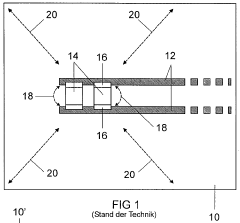
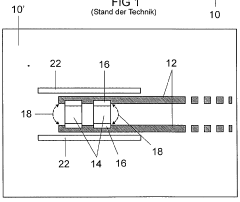
Printed circuit board with vibration-generating electronic component
PatentWO2008009308A1
Innovation
- Incorporating slots in the circuit board that prevent vibration propagation by interrupting surface waves and transverse vibrations, with slots running parallel to the electronic component's side walls to suppress vibrations efficiently.
Vibration reduction of electronic components using vibroacoustic metamaterials
PatentPendingDE102022204790A1
Innovation
- Utilizing vibroacoustic metamaterials with locally tuned resonators to create stop bands that dampen mechanical vibrations, reducing wave propagation in specific frequency ranges while minimizing space and weight.


Acoustic Standards and Regulations
Acoustic standards and regulations play a crucial role in addressing coil whine issues in computing systems. These guidelines establish acceptable noise levels and measurement methodologies, ensuring a consistent approach to evaluating and mitigating acoustic disturbances.
The International Organization for Standardization (ISO) has developed several standards relevant to coil whine reduction. ISO 7779 specifies methods for measuring and reporting noise emissions of information technology and telecommunications equipment. This standard is particularly applicable to computing systems and provides a framework for assessing coil whine-related noise.
Another significant standard is ISO 9296, which defines declared noise emission values for computer and business equipment. This standard helps manufacturers communicate the acoustic performance of their products to consumers, promoting transparency and enabling informed decision-making.
In the United States, the American National Standards Institute (ANSI) has adopted these ISO standards, creating ANSI/ASA S12.10 for measurement of airborne noise emitted by information technology and telecommunications equipment. This standard aligns with international practices while addressing specific regional requirements.
The European Union has implemented the Machinery Directive 2006/42/EC, which includes provisions for noise reduction in equipment design. While primarily focused on industrial machinery, its principles can be applied to computing systems, encouraging manufacturers to consider noise reduction techniques during the design phase.
In addition to these general standards, specific regulations exist for certain computing environments. For instance, the Telecommunication Industry Association (TIA) has developed standards like TIA-942, which includes acoustic requirements for data centers. These guidelines help ensure that noise levels in data center environments, including those generated by coil whine, remain within acceptable limits.
The Energy Star program, while primarily focused on energy efficiency, also incorporates noise level requirements for certain product categories. This demonstrates the growing recognition of acoustic performance as an important aspect of overall product quality and user experience.
Compliance with these standards and regulations often requires sophisticated measurement techniques and equipment. Sound pressure level meters, anechoic chambers, and specialized software are commonly used to accurately assess and quantify coil whine and other acoustic emissions from computing systems.
As technology evolves, these standards and regulations are periodically reviewed and updated to reflect advancements in both computing systems and acoustic measurement techniques. This ongoing process ensures that the guidelines remain relevant and effective in addressing emerging challenges in coil whine reduction and overall acoustic performance of computing systems.
The International Organization for Standardization (ISO) has developed several standards relevant to coil whine reduction. ISO 7779 specifies methods for measuring and reporting noise emissions of information technology and telecommunications equipment. This standard is particularly applicable to computing systems and provides a framework for assessing coil whine-related noise.
Another significant standard is ISO 9296, which defines declared noise emission values for computer and business equipment. This standard helps manufacturers communicate the acoustic performance of their products to consumers, promoting transparency and enabling informed decision-making.
In the United States, the American National Standards Institute (ANSI) has adopted these ISO standards, creating ANSI/ASA S12.10 for measurement of airborne noise emitted by information technology and telecommunications equipment. This standard aligns with international practices while addressing specific regional requirements.
The European Union has implemented the Machinery Directive 2006/42/EC, which includes provisions for noise reduction in equipment design. While primarily focused on industrial machinery, its principles can be applied to computing systems, encouraging manufacturers to consider noise reduction techniques during the design phase.
In addition to these general standards, specific regulations exist for certain computing environments. For instance, the Telecommunication Industry Association (TIA) has developed standards like TIA-942, which includes acoustic requirements for data centers. These guidelines help ensure that noise levels in data center environments, including those generated by coil whine, remain within acceptable limits.
The Energy Star program, while primarily focused on energy efficiency, also incorporates noise level requirements for certain product categories. This demonstrates the growing recognition of acoustic performance as an important aspect of overall product quality and user experience.
Compliance with these standards and regulations often requires sophisticated measurement techniques and equipment. Sound pressure level meters, anechoic chambers, and specialized software are commonly used to accurately assess and quantify coil whine and other acoustic emissions from computing systems.
As technology evolves, these standards and regulations are periodically reviewed and updated to reflect advancements in both computing systems and acoustic measurement techniques. This ongoing process ensures that the guidelines remain relevant and effective in addressing emerging challenges in coil whine reduction and overall acoustic performance of computing systems.
Thermal Management Considerations
Thermal management plays a crucial role in mitigating coil whine in computing systems. As electronic components generate heat during operation, thermal expansion and contraction can exacerbate the mechanical vibrations that cause coil whine. Effective thermal management strategies can help minimize these temperature fluctuations and reduce the likelihood of coil whine occurrence.
One key consideration is the proper design and placement of heat sinks and cooling systems. By efficiently dissipating heat from components prone to coil whine, such as voltage regulators and power supply units, the thermal stress on these components can be reduced. This can be achieved through the use of high-quality thermal interface materials and optimized heat sink designs that maximize surface area for heat dissipation.
Active cooling solutions, such as fans and liquid cooling systems, can also contribute to coil whine reduction. By maintaining consistent temperatures across the system, these cooling methods help prevent thermal cycling that can lead to mechanical stress and vibration. However, it is essential to balance cooling performance with noise levels, as poorly designed or excessively powerful cooling solutions may introduce their own acoustic issues.
The layout and arrangement of components within the system can significantly impact thermal management and coil whine reduction. Proper spacing between heat-generating components and strategic placement of cooling elements can help create more uniform temperature distributions. This approach minimizes localized hot spots that could contribute to thermal expansion and contraction cycles.
Thermal monitoring and adaptive cooling strategies can further enhance coil whine reduction efforts. By implementing temperature sensors and intelligent fan control algorithms, systems can dynamically adjust cooling performance based on real-time thermal conditions. This approach helps maintain optimal operating temperatures while minimizing unnecessary fan noise and power consumption.
Material selection also plays a vital role in thermal management for coil whine reduction. Using components and materials with similar thermal expansion coefficients can help reduce mechanical stress caused by temperature changes. Additionally, incorporating thermally conductive materials in PCB designs can improve heat distribution and reduce localized temperature variations.
By addressing thermal management considerations in the context of coil whine reduction, system designers can create more stable and quieter computing environments. These strategies not only contribute to reduced coil whine but also improve overall system reliability and performance by maintaining optimal operating temperatures for all components.
One key consideration is the proper design and placement of heat sinks and cooling systems. By efficiently dissipating heat from components prone to coil whine, such as voltage regulators and power supply units, the thermal stress on these components can be reduced. This can be achieved through the use of high-quality thermal interface materials and optimized heat sink designs that maximize surface area for heat dissipation.
Active cooling solutions, such as fans and liquid cooling systems, can also contribute to coil whine reduction. By maintaining consistent temperatures across the system, these cooling methods help prevent thermal cycling that can lead to mechanical stress and vibration. However, it is essential to balance cooling performance with noise levels, as poorly designed or excessively powerful cooling solutions may introduce their own acoustic issues.
The layout and arrangement of components within the system can significantly impact thermal management and coil whine reduction. Proper spacing between heat-generating components and strategic placement of cooling elements can help create more uniform temperature distributions. This approach minimizes localized hot spots that could contribute to thermal expansion and contraction cycles.
Thermal monitoring and adaptive cooling strategies can further enhance coil whine reduction efforts. By implementing temperature sensors and intelligent fan control algorithms, systems can dynamically adjust cooling performance based on real-time thermal conditions. This approach helps maintain optimal operating temperatures while minimizing unnecessary fan noise and power consumption.
Material selection also plays a vital role in thermal management for coil whine reduction. Using components and materials with similar thermal expansion coefficients can help reduce mechanical stress caused by temperature changes. Additionally, incorporating thermally conductive materials in PCB designs can improve heat distribution and reduce localized temperature variations.
By addressing thermal management considerations in the context of coil whine reduction, system designers can create more stable and quieter computing environments. These strategies not only contribute to reduced coil whine but also improve overall system reliability and performance by maintaining optimal operating temperatures for all components.
Unlock deeper insights with PatSnap Eureka Quick Research — get a full tech report to explore trends and direct your research. Try now!
Generate Your Research Report Instantly with AI Agent
Supercharge your innovation with PatSnap Eureka AI Agent Platform!