Carboxylic Acid Applications in Nanotechnology: Future Insights
JUL 31, 20259 MIN READ
Generate Your Research Report Instantly with AI Agent
Patsnap Eureka helps you evaluate technical feasibility & market potential.
Carboxylic Acid Nanotechnology Background
Carboxylic acids have emerged as a pivotal class of organic compounds in the rapidly evolving field of nanotechnology. These versatile molecules, characterized by their -COOH functional group, have been instrumental in advancing various aspects of nanoscale science and engineering. The integration of carboxylic acids into nanotechnology applications stems from their unique chemical properties and ability to form strong covalent and non-covalent interactions.
The journey of carboxylic acids in nanotechnology began in the late 20th century, with initial applications focusing on surface modification of nanoparticles. As research progressed, scientists discovered the potential of these compounds in stabilizing colloidal suspensions, enhancing biocompatibility, and facilitating targeted drug delivery systems. The carboxyl group's ability to form hydrogen bonds and coordinate with metal ions has made it invaluable in the synthesis and functionalization of nanomaterials.
Over the past two decades, the role of carboxylic acids in nanotechnology has expanded significantly. They have become essential in the development of self-assembled monolayers (SAMs) on metal surfaces, which find applications in molecular electronics and biosensors. The controlled aggregation of nanoparticles, crucial for creating advanced materials with tailored properties, often relies on carboxylic acid-mediated interactions.
In the realm of carbon nanomaterials, carboxylic acids have played a transformative role. The functionalization of carbon nanotubes and graphene with carboxylic groups has led to improved solubility, processability, and integration into composite materials. This has opened up new avenues in areas such as energy storage, environmental remediation, and nanoelectronics.
The biomedical applications of carboxylic acid-functionalized nanomaterials have seen remarkable growth. These modified nanostructures have shown promise in drug delivery, bioimaging, and tissue engineering. The carboxyl groups provide anchor points for attaching biomolecules, drugs, and targeting ligands, enhancing the specificity and efficacy of nanomedicine approaches.
As nanotechnology continues to advance, the exploration of carboxylic acid applications is expected to intensify. Emerging trends include the development of stimuli-responsive nanomaterials, where carboxylic acids can facilitate pH-dependent behavior, and the creation of nanoscale molecular machines that utilize carboxyl groups for controlled movements and interactions.
The future of carboxylic acids in nanotechnology holds great promise, with potential breakthroughs in areas such as quantum dot technology, nanoscale catalysis, and smart materials for environmental sensing. As researchers delve deeper into the molecular-level control of nanomaterials, the versatility and functionality of carboxylic acids will undoubtedly play a crucial role in shaping the next generation of nanotechnological innovations.
The journey of carboxylic acids in nanotechnology began in the late 20th century, with initial applications focusing on surface modification of nanoparticles. As research progressed, scientists discovered the potential of these compounds in stabilizing colloidal suspensions, enhancing biocompatibility, and facilitating targeted drug delivery systems. The carboxyl group's ability to form hydrogen bonds and coordinate with metal ions has made it invaluable in the synthesis and functionalization of nanomaterials.
Over the past two decades, the role of carboxylic acids in nanotechnology has expanded significantly. They have become essential in the development of self-assembled monolayers (SAMs) on metal surfaces, which find applications in molecular electronics and biosensors. The controlled aggregation of nanoparticles, crucial for creating advanced materials with tailored properties, often relies on carboxylic acid-mediated interactions.
In the realm of carbon nanomaterials, carboxylic acids have played a transformative role. The functionalization of carbon nanotubes and graphene with carboxylic groups has led to improved solubility, processability, and integration into composite materials. This has opened up new avenues in areas such as energy storage, environmental remediation, and nanoelectronics.
The biomedical applications of carboxylic acid-functionalized nanomaterials have seen remarkable growth. These modified nanostructures have shown promise in drug delivery, bioimaging, and tissue engineering. The carboxyl groups provide anchor points for attaching biomolecules, drugs, and targeting ligands, enhancing the specificity and efficacy of nanomedicine approaches.
As nanotechnology continues to advance, the exploration of carboxylic acid applications is expected to intensify. Emerging trends include the development of stimuli-responsive nanomaterials, where carboxylic acids can facilitate pH-dependent behavior, and the creation of nanoscale molecular machines that utilize carboxyl groups for controlled movements and interactions.
The future of carboxylic acids in nanotechnology holds great promise, with potential breakthroughs in areas such as quantum dot technology, nanoscale catalysis, and smart materials for environmental sensing. As researchers delve deeper into the molecular-level control of nanomaterials, the versatility and functionality of carboxylic acids will undoubtedly play a crucial role in shaping the next generation of nanotechnological innovations.
Market Demand Analysis
The market demand for carboxylic acid applications in nanotechnology is experiencing significant growth, driven by the increasing adoption of nanomaterials across various industries. The versatility of carboxylic acids in nanotechnology has led to a surge in research and development activities, particularly in sectors such as healthcare, electronics, and advanced materials.
In the healthcare sector, carboxylic acid-functionalized nanoparticles show promising potential for drug delivery systems and diagnostic tools. The ability to precisely control the surface properties of nanoparticles using carboxylic acids has opened new avenues for targeted drug delivery and improved biocompatibility. This has resulted in a growing demand from pharmaceutical companies and research institutions seeking to develop more effective and less invasive treatment methods.
The electronics industry is another key driver of market demand for carboxylic acid applications in nanotechnology. As the push for miniaturization and improved performance of electronic devices continues, carboxylic acids play a crucial role in the development of advanced nanomaterials for semiconductors, sensors, and energy storage devices. The demand for high-performance, compact electronic components is expected to fuel the growth of carboxylic acid-based nanotechnology solutions in this sector.
Environmental applications represent an emerging market for carboxylic acid nanotechnology. The development of nanostructured materials for water purification, air filtration, and environmental remediation has gained traction in recent years. Carboxylic acid-functionalized nanomaterials have shown exceptional capabilities in removing pollutants and contaminants, driving demand from both governmental agencies and private sector companies focused on sustainability and environmental protection.
The automotive and aerospace industries are also contributing to the market demand for carboxylic acid nanotechnology. These sectors are exploring the use of nanocomposites and smart materials to enhance the performance and efficiency of vehicles and aircraft. Carboxylic acids play a vital role in the development of lightweight, durable, and multifunctional materials that can significantly improve fuel efficiency and reduce environmental impact.
As the global focus on sustainable and eco-friendly technologies intensifies, the demand for green nanotechnology solutions incorporating carboxylic acids is expected to rise. This trend is particularly evident in the development of biodegradable nanomaterials and environmentally friendly production processes, aligning with the growing consumer preference for sustainable products across various industries.
The market potential for carboxylic acid applications in nanotechnology is further amplified by the increasing investments in research and development by both public and private entities. Government initiatives and funding programs aimed at advancing nanotechnology capabilities are creating a favorable environment for innovation and commercialization of carboxylic acid-based nanomaterials and applications.
In the healthcare sector, carboxylic acid-functionalized nanoparticles show promising potential for drug delivery systems and diagnostic tools. The ability to precisely control the surface properties of nanoparticles using carboxylic acids has opened new avenues for targeted drug delivery and improved biocompatibility. This has resulted in a growing demand from pharmaceutical companies and research institutions seeking to develop more effective and less invasive treatment methods.
The electronics industry is another key driver of market demand for carboxylic acid applications in nanotechnology. As the push for miniaturization and improved performance of electronic devices continues, carboxylic acids play a crucial role in the development of advanced nanomaterials for semiconductors, sensors, and energy storage devices. The demand for high-performance, compact electronic components is expected to fuel the growth of carboxylic acid-based nanotechnology solutions in this sector.
Environmental applications represent an emerging market for carboxylic acid nanotechnology. The development of nanostructured materials for water purification, air filtration, and environmental remediation has gained traction in recent years. Carboxylic acid-functionalized nanomaterials have shown exceptional capabilities in removing pollutants and contaminants, driving demand from both governmental agencies and private sector companies focused on sustainability and environmental protection.
The automotive and aerospace industries are also contributing to the market demand for carboxylic acid nanotechnology. These sectors are exploring the use of nanocomposites and smart materials to enhance the performance and efficiency of vehicles and aircraft. Carboxylic acids play a vital role in the development of lightweight, durable, and multifunctional materials that can significantly improve fuel efficiency and reduce environmental impact.
As the global focus on sustainable and eco-friendly technologies intensifies, the demand for green nanotechnology solutions incorporating carboxylic acids is expected to rise. This trend is particularly evident in the development of biodegradable nanomaterials and environmentally friendly production processes, aligning with the growing consumer preference for sustainable products across various industries.
The market potential for carboxylic acid applications in nanotechnology is further amplified by the increasing investments in research and development by both public and private entities. Government initiatives and funding programs aimed at advancing nanotechnology capabilities are creating a favorable environment for innovation and commercialization of carboxylic acid-based nanomaterials and applications.
Current Challenges
Despite the promising applications of carboxylic acids in nanotechnology, several significant challenges currently hinder their full potential. One of the primary obstacles is the precise control of carboxylic acid functionalization on nanoparticle surfaces. The density and distribution of carboxylic acid groups can significantly impact the properties and performance of nanomaterials, yet achieving uniform and reproducible functionalization remains difficult.
Another challenge lies in the stability of carboxylic acid-functionalized nanomaterials under various environmental conditions. pH fluctuations, temperature changes, and the presence of competing ions can all affect the stability and functionality of these materials. This instability can lead to unpredictable behavior and reduced efficacy in practical applications, particularly in biological systems or harsh industrial environments.
The scalability of carboxylic acid-based nanotechnology also presents a significant hurdle. While laboratory-scale synthesis and functionalization processes have shown promise, translating these methods to industrial-scale production while maintaining quality and consistency is complex. This challenge is particularly evident in the production of carboxylic acid-functionalized graphene and carbon nanotubes, where large-scale, defect-free synthesis remains elusive.
Furthermore, the characterization of carboxylic acid-modified nanomaterials poses technical difficulties. Current analytical techniques often struggle to provide accurate quantification and spatial distribution information of carboxylic acid groups on nanoparticle surfaces. This limitation hampers the development of structure-property relationships and impedes the optimization of nanomaterial design for specific applications.
The biocompatibility and long-term effects of carboxylic acid-functionalized nanomaterials in biological systems are also areas of concern. While these materials show promise in drug delivery and biosensing applications, their potential toxicity and impact on cellular functions over extended periods require further investigation. The lack of standardized testing protocols and comprehensive long-term studies creates uncertainty in their safe application in medical and environmental fields.
Lastly, the integration of carboxylic acid-functionalized nanomaterials into existing manufacturing processes and products presents both technical and economic challenges. Many industries are hesitant to adopt these novel materials due to concerns about compatibility with current production methods, potential increased costs, and uncertain regulatory landscapes. Overcoming these barriers requires not only technological advancements but also collaborative efforts between researchers, industry partners, and regulatory bodies to establish clear guidelines and demonstrate the value proposition of these innovative materials.
Another challenge lies in the stability of carboxylic acid-functionalized nanomaterials under various environmental conditions. pH fluctuations, temperature changes, and the presence of competing ions can all affect the stability and functionality of these materials. This instability can lead to unpredictable behavior and reduced efficacy in practical applications, particularly in biological systems or harsh industrial environments.
The scalability of carboxylic acid-based nanotechnology also presents a significant hurdle. While laboratory-scale synthesis and functionalization processes have shown promise, translating these methods to industrial-scale production while maintaining quality and consistency is complex. This challenge is particularly evident in the production of carboxylic acid-functionalized graphene and carbon nanotubes, where large-scale, defect-free synthesis remains elusive.
Furthermore, the characterization of carboxylic acid-modified nanomaterials poses technical difficulties. Current analytical techniques often struggle to provide accurate quantification and spatial distribution information of carboxylic acid groups on nanoparticle surfaces. This limitation hampers the development of structure-property relationships and impedes the optimization of nanomaterial design for specific applications.
The biocompatibility and long-term effects of carboxylic acid-functionalized nanomaterials in biological systems are also areas of concern. While these materials show promise in drug delivery and biosensing applications, their potential toxicity and impact on cellular functions over extended periods require further investigation. The lack of standardized testing protocols and comprehensive long-term studies creates uncertainty in their safe application in medical and environmental fields.
Lastly, the integration of carboxylic acid-functionalized nanomaterials into existing manufacturing processes and products presents both technical and economic challenges. Many industries are hesitant to adopt these novel materials due to concerns about compatibility with current production methods, potential increased costs, and uncertain regulatory landscapes. Overcoming these barriers requires not only technological advancements but also collaborative efforts between researchers, industry partners, and regulatory bodies to establish clear guidelines and demonstrate the value proposition of these innovative materials.
Existing Applications
01 Synthesis of carboxylic acids
Various methods for synthesizing carboxylic acids are described, including oxidation of primary alcohols or aldehydes, hydrolysis of nitriles, and carbonylation reactions. These processes often involve catalysts and specific reaction conditions to achieve high yields and selectivity.- Synthesis of carboxylic acids: Various methods for synthesizing carboxylic acids are described, including oxidation of primary alcohols or aldehydes, hydrolysis of nitriles, and carbonylation reactions. These processes often involve catalysts and specific reaction conditions to achieve high yields and selectivity.
- Derivatives and applications of carboxylic acids: Carboxylic acids serve as precursors for various derivatives such as esters, amides, and anhydrides. These compounds find applications in pharmaceuticals, polymers, and industrial processes. The synthesis and properties of these derivatives are explored in several patents.
- Purification and separation techniques: Methods for purifying and separating carboxylic acids from reaction mixtures or natural sources are described. These techniques include crystallization, distillation, extraction, and chromatography, aimed at obtaining high-purity carboxylic acids for various applications.
- Carboxylic acids in polymer chemistry: The use of carboxylic acids in polymer synthesis and modification is explored. This includes their role as monomers, chain terminators, and functional groups for post-polymerization modifications. Applications in adhesives, coatings, and biodegradable materials are discussed.
- Green chemistry approaches: Environmentally friendly methods for producing and using carboxylic acids are presented. These include bio-based production routes, catalytic processes with reduced waste, and the use of renewable feedstocks. The focus is on sustainable practices in carboxylic acid chemistry.
02 Carboxylic acid derivatives and applications
Carboxylic acids can be converted into various derivatives such as esters, amides, and anhydrides. These derivatives have wide-ranging applications in industries including pharmaceuticals, polymers, and fine chemicals. The synthesis and properties of these derivatives are explored in several patents.Expand Specific Solutions03 Purification and separation of carboxylic acids
Methods for purifying and separating carboxylic acids from reaction mixtures or natural sources are described. These include techniques such as crystallization, distillation, extraction, and chromatography. The focus is on achieving high purity and efficient separation of target compounds.Expand Specific Solutions04 Carboxylic acids in polymer chemistry
Carboxylic acids play a crucial role in polymer chemistry, serving as monomers or modifiers in various polymerization processes. Patents describe the use of carboxylic acids in the production of polyesters, polyamides, and other functional polymers with specific properties.Expand Specific Solutions05 Industrial applications of carboxylic acids
Carboxylic acids find diverse applications in industries such as food, cosmetics, pharmaceuticals, and agriculture. Patents describe their use as preservatives, flavoring agents, pH regulators, and intermediates in the synthesis of various compounds with specific functionalities.Expand Specific Solutions
Key Industry Players
The field of carboxylic acid applications in nanotechnology is in a dynamic growth phase, with a rapidly expanding market and increasing technological maturity. The global market for nanotechnology-enabled products utilizing carboxylic acids is projected to reach significant value in the coming years. Key players like Evonik Operations GmbH, Intel Corp., and 3M Innovative Properties Co. are driving innovation in this space, developing advanced materials and processes. Universities such as South China University of Technology and East China Normal University are contributing to fundamental research, while government entities like the US Government and Council of Scientific & Industrial Research are supporting development through funding and policy initiatives. The technology is progressing from lab-scale to commercial applications, with companies like LANXESS and Wanhua Chemical Group Co., Ltd. scaling up production capabilities.
Evonik Operations GmbH
Technical Solution: Evonik has developed innovative carboxylic acid-based nanocoatings for various applications in nanotechnology. Their approach involves using carboxylic acid functionalized nanoparticles to create self-assembled monolayers (SAMs) on surfaces, enhancing properties such as corrosion resistance, hydrophobicity, and biocompatibility[1]. The company has also explored the use of carboxylic acid-modified carbon nanotubes for improved dispersion in polymer matrices, leading to enhanced mechanical and electrical properties of nanocomposites[3]. Additionally, Evonik has invested in research on carboxylic acid-based metal-organic frameworks (MOFs) for gas storage and separation applications in nanotechnology[5].
Strengths: Diverse applications across multiple industries, strong research and development capabilities. Weaknesses: Potential scalability challenges for some nanotech applications, competition from other major chemical companies.
3M Innovative Properties Co.
Technical Solution: 3M has developed advanced carboxylic acid-based technologies for nanotechnology applications, focusing on surface modification and functionalization. Their approach includes the use of carboxylic acid-terminated self-assembled monolayers (SAMs) for controlling surface properties of nanostructures[2]. 3M has also pioneered the development of carboxylic acid-functionalized nanoparticles for applications in adhesives, coatings, and filtration technologies[4]. The company's research extends to carboxylic acid-modified graphene oxide for enhanced electrical and thermal properties in nanocomposites[6]. Additionally, 3M has explored the use of carboxylic acid ligands in quantum dot synthesis for improved stability and optical properties in display technologies[8].
Strengths: Broad range of applications, strong intellectual property portfolio, established market presence. Weaknesses: Potential regulatory challenges in some nanotech applications, competition from specialized nanotech firms.
Core Innovations
Dispensing device for dispensing a plurality of different preparations
PatentInactiveUS20090277928A1
Innovation
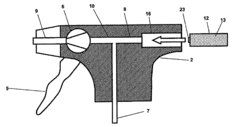
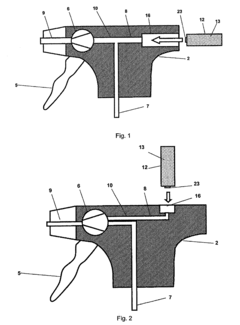
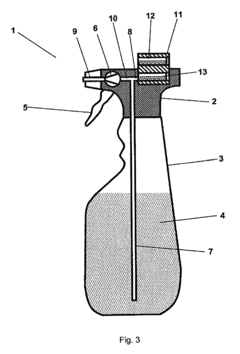
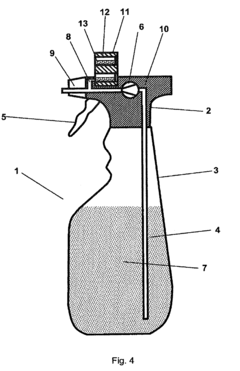
- A dispensing device with a receiving element for portion cartridges that can be detachably coupled, allowing users to select and mix different additive substances, such as fragrances and cleaning agents, without requiring design changes to single-chambered bottles, using a delivery element like a pump or aerosol package to dispense preparations from separate cartridges.
A one-pot method for the oxidation of unsaturated organic compounds
PatentInactiveEP2409962A1
Innovation
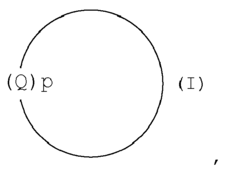
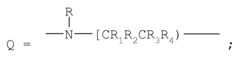
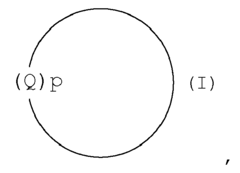
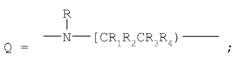
- A one-pot method using a manganese transition metal catalyst with a specific ligand structure, in combination with hydrogen peroxide, to oxidatively cleave unsaturated carbon-carbon bonds, producing carboxylic acids or ketones directly from aliphatic and aromatic compounds, with the option to form dicarboxylic acids like adipic acid from cyclohexene.
Environmental Impact
The environmental impact of carboxylic acid applications in nanotechnology is a critical aspect that requires thorough examination. As these nanomaterials become increasingly prevalent in various industries, their potential effects on ecosystems and human health must be carefully evaluated.
Carboxylic acid-functionalized nanoparticles have shown promising results in environmental remediation efforts. Their ability to adsorb heavy metals and organic pollutants from water and soil has positioned them as potential eco-friendly solutions for contamination issues. However, the long-term effects of introducing these nanomaterials into the environment remain uncertain and require further investigation.
One primary concern is the potential bioaccumulation of nanoparticles in living organisms. Studies have shown that some carboxylic acid-modified nanoparticles can be taken up by plants and aquatic organisms, potentially entering the food chain. While initial research suggests limited toxicity, the cumulative effects of prolonged exposure are not yet fully understood.
The biodegradability of carboxylic acid-functionalized nanomaterials is another crucial factor to consider. Some studies indicate that these materials may undergo natural degradation processes, reducing their environmental persistence. However, the rate and extent of degradation can vary significantly depending on environmental conditions and the specific nanoparticle composition.
The release of carboxylic acid-modified nanoparticles during manufacturing, use, and disposal poses potential risks to air and water quality. While filtration systems can mitigate some of these risks, the development of more efficient containment and recovery methods is essential to minimize environmental contamination.
Interactions between carboxylic acid-functionalized nanoparticles and other pollutants in the environment may lead to unforeseen consequences. These interactions could potentially alter the toxicity or mobility of existing contaminants, necessitating comprehensive risk assessments and monitoring strategies.
As nanotechnology continues to advance, the development of sustainable and environmentally benign synthesis methods for carboxylic acid-modified nanomaterials becomes increasingly important. Green chemistry approaches, such as using renewable resources and minimizing hazardous waste generation, are being explored to reduce the environmental footprint of nanoparticle production.
In conclusion, while carboxylic acid applications in nanotechnology offer significant potential benefits, their environmental impact must be carefully managed. Ongoing research, rigorous testing, and the implementation of appropriate regulations are essential to ensure that these innovative materials contribute positively to environmental sustainability without introducing new ecological challenges.
Carboxylic acid-functionalized nanoparticles have shown promising results in environmental remediation efforts. Their ability to adsorb heavy metals and organic pollutants from water and soil has positioned them as potential eco-friendly solutions for contamination issues. However, the long-term effects of introducing these nanomaterials into the environment remain uncertain and require further investigation.
One primary concern is the potential bioaccumulation of nanoparticles in living organisms. Studies have shown that some carboxylic acid-modified nanoparticles can be taken up by plants and aquatic organisms, potentially entering the food chain. While initial research suggests limited toxicity, the cumulative effects of prolonged exposure are not yet fully understood.
The biodegradability of carboxylic acid-functionalized nanomaterials is another crucial factor to consider. Some studies indicate that these materials may undergo natural degradation processes, reducing their environmental persistence. However, the rate and extent of degradation can vary significantly depending on environmental conditions and the specific nanoparticle composition.
The release of carboxylic acid-modified nanoparticles during manufacturing, use, and disposal poses potential risks to air and water quality. While filtration systems can mitigate some of these risks, the development of more efficient containment and recovery methods is essential to minimize environmental contamination.
Interactions between carboxylic acid-functionalized nanoparticles and other pollutants in the environment may lead to unforeseen consequences. These interactions could potentially alter the toxicity or mobility of existing contaminants, necessitating comprehensive risk assessments and monitoring strategies.
As nanotechnology continues to advance, the development of sustainable and environmentally benign synthesis methods for carboxylic acid-modified nanomaterials becomes increasingly important. Green chemistry approaches, such as using renewable resources and minimizing hazardous waste generation, are being explored to reduce the environmental footprint of nanoparticle production.
In conclusion, while carboxylic acid applications in nanotechnology offer significant potential benefits, their environmental impact must be carefully managed. Ongoing research, rigorous testing, and the implementation of appropriate regulations are essential to ensure that these innovative materials contribute positively to environmental sustainability without introducing new ecological challenges.
Regulatory Framework
The regulatory framework surrounding carboxylic acid applications in nanotechnology is evolving rapidly to keep pace with technological advancements. Governments and international organizations are developing guidelines and regulations to ensure the safe and responsible use of nanomaterials containing carboxylic acids.
In the United States, the Environmental Protection Agency (EPA) plays a crucial role in regulating nanomaterials under the Toxic Substances Control Act (TSCA). The EPA has implemented specific reporting and recordkeeping requirements for manufacturers and processors of nanoscale materials, including those involving carboxylic acids. These regulations aim to gather information on the potential environmental and health impacts of these materials.
The European Union has established the Registration, Evaluation, Authorization, and Restriction of Chemicals (REACH) regulation, which applies to nanomaterials containing carboxylic acids. REACH requires manufacturers and importers to register their substances and provide safety data, ensuring a comprehensive assessment of potential risks associated with these materials.
In addition to national regulations, international organizations such as the Organization for Economic Co-operation and Development (OECD) have developed guidelines for the testing and assessment of manufactured nanomaterials. These guidelines provide a framework for evaluating the safety and environmental impact of carboxylic acid-based nanomaterials.
The regulatory landscape also addresses specific applications of carboxylic acids in nanotechnology. For instance, in the food industry, the use of nanocarriers containing carboxylic acids is subject to strict regulations by food safety authorities. The U.S. Food and Drug Administration (FDA) has issued guidance on the use of nanotechnology in food and cosmetics, which includes considerations for carboxylic acid-based nanomaterials.
As research in this field progresses, regulatory bodies are continuously updating their frameworks to address emerging concerns and applications. This includes the development of standardized testing methods for nanomaterials and the establishment of exposure limits for workers handling these substances.
The regulatory framework also emphasizes the importance of risk assessment and management throughout the lifecycle of carboxylic acid-based nanomaterials. This includes considerations for production, use, and disposal, with a focus on minimizing potential environmental and health impacts.
Collaboration between industry, academia, and regulatory bodies is crucial in shaping the regulatory landscape. Many countries have established nanotechnology initiatives that bring together stakeholders to address regulatory challenges and promote responsible development in the field.
In the United States, the Environmental Protection Agency (EPA) plays a crucial role in regulating nanomaterials under the Toxic Substances Control Act (TSCA). The EPA has implemented specific reporting and recordkeeping requirements for manufacturers and processors of nanoscale materials, including those involving carboxylic acids. These regulations aim to gather information on the potential environmental and health impacts of these materials.
The European Union has established the Registration, Evaluation, Authorization, and Restriction of Chemicals (REACH) regulation, which applies to nanomaterials containing carboxylic acids. REACH requires manufacturers and importers to register their substances and provide safety data, ensuring a comprehensive assessment of potential risks associated with these materials.
In addition to national regulations, international organizations such as the Organization for Economic Co-operation and Development (OECD) have developed guidelines for the testing and assessment of manufactured nanomaterials. These guidelines provide a framework for evaluating the safety and environmental impact of carboxylic acid-based nanomaterials.
The regulatory landscape also addresses specific applications of carboxylic acids in nanotechnology. For instance, in the food industry, the use of nanocarriers containing carboxylic acids is subject to strict regulations by food safety authorities. The U.S. Food and Drug Administration (FDA) has issued guidance on the use of nanotechnology in food and cosmetics, which includes considerations for carboxylic acid-based nanomaterials.
As research in this field progresses, regulatory bodies are continuously updating their frameworks to address emerging concerns and applications. This includes the development of standardized testing methods for nanomaterials and the establishment of exposure limits for workers handling these substances.
The regulatory framework also emphasizes the importance of risk assessment and management throughout the lifecycle of carboxylic acid-based nanomaterials. This includes considerations for production, use, and disposal, with a focus on minimizing potential environmental and health impacts.
Collaboration between industry, academia, and regulatory bodies is crucial in shaping the regulatory landscape. Many countries have established nanotechnology initiatives that bring together stakeholders to address regulatory challenges and promote responsible development in the field.
Unlock deeper insights with Patsnap Eureka Quick Research — get a full tech report to explore trends and direct your research. Try now!
Generate Your Research Report Instantly with AI Agent
Supercharge your innovation with Patsnap Eureka AI Agent Platform!