

Comparative Surface Roughness Control In SALD Films
AUG 28, 202510 MIN READ
Generate Your Research Report Instantly with AI Agent
PatSnap Eureka helps you evaluate technical feasibility & market potential.
SALD Film Surface Roughness Background and Objectives
Spatial Atomic Layer Deposition (SALD) has emerged as a transformative technology in thin film manufacturing, offering significant advantages over conventional Atomic Layer Deposition (ALD) methods. Since its conceptualization in the early 2000s, SALD has evolved from theoretical frameworks to practical implementation, enabling high-throughput deposition while maintaining the precision and uniformity characteristic of traditional ALD processes. The evolution of SALD technology has been driven by increasing demands for cost-effective, large-area thin film production across multiple industries including electronics, photovoltaics, and protective coatings.
Surface roughness in SALD films represents a critical quality parameter that directly impacts device performance and functionality. Historically, controlling surface morphology has been challenging due to the complex interplay between precursor delivery dynamics, substrate temperature variations, and gas flow patterns unique to spatial separation techniques. The technical trajectory has shifted from merely achieving conformal coverage to precisely engineering surface characteristics at the nanoscale level.
Recent advancements in SALD technology have focused on optimizing precursor chemistry and delivery systems to enhance film smoothness while maintaining high deposition rates. The field has witnessed significant breakthroughs in gas flow modeling and reactor design, allowing for more uniform precursor distribution and improved surface reactions. These developments have progressively reduced average roughness values from tens of nanometers to sub-nanometer levels for various material systems.
The primary objective of this technical investigation is to comprehensively analyze comparative approaches to surface roughness control in SALD films. We aim to establish quantitative relationships between process parameters and resultant surface morphology across different material systems, reactor configurations, and operating conditions. This includes evaluating the effectiveness of various precursor chemistries, substrate temperature profiles, and gas flow dynamics on achieving target roughness specifications.
Furthermore, this research seeks to identify scalable methodologies for precise roughness control that can be implemented in industrial production environments without compromising throughput advantages. By examining both empirical data and theoretical models, we intend to develop predictive frameworks that enable tailored surface characteristics for specific application requirements.
The ultimate goal is to establish standardized protocols for surface roughness optimization in SALD processes that can be universally applied across diverse material systems and device architectures. This would represent a significant advancement in thin film manufacturing technology, potentially enabling new applications where precise surface morphology control is paramount to device performance and reliability.
Surface roughness in SALD films represents a critical quality parameter that directly impacts device performance and functionality. Historically, controlling surface morphology has been challenging due to the complex interplay between precursor delivery dynamics, substrate temperature variations, and gas flow patterns unique to spatial separation techniques. The technical trajectory has shifted from merely achieving conformal coverage to precisely engineering surface characteristics at the nanoscale level.
Recent advancements in SALD technology have focused on optimizing precursor chemistry and delivery systems to enhance film smoothness while maintaining high deposition rates. The field has witnessed significant breakthroughs in gas flow modeling and reactor design, allowing for more uniform precursor distribution and improved surface reactions. These developments have progressively reduced average roughness values from tens of nanometers to sub-nanometer levels for various material systems.
The primary objective of this technical investigation is to comprehensively analyze comparative approaches to surface roughness control in SALD films. We aim to establish quantitative relationships between process parameters and resultant surface morphology across different material systems, reactor configurations, and operating conditions. This includes evaluating the effectiveness of various precursor chemistries, substrate temperature profiles, and gas flow dynamics on achieving target roughness specifications.
Furthermore, this research seeks to identify scalable methodologies for precise roughness control that can be implemented in industrial production environments without compromising throughput advantages. By examining both empirical data and theoretical models, we intend to develop predictive frameworks that enable tailored surface characteristics for specific application requirements.
The ultimate goal is to establish standardized protocols for surface roughness optimization in SALD processes that can be universally applied across diverse material systems and device architectures. This would represent a significant advancement in thin film manufacturing technology, potentially enabling new applications where precise surface morphology control is paramount to device performance and reliability.
Market Applications and Demand Analysis for SALD Films
The global market for Spatial Atomic Layer Deposition (SALD) films has witnessed substantial growth in recent years, driven primarily by increasing demand for high-performance thin film coatings across multiple industries. The market value for ALD equipment reached approximately $1.8 billion in 2022, with SALD representing a rapidly growing segment due to its higher throughput capabilities compared to conventional ALD.
Surface roughness control in SALD films has become a critical factor influencing market adoption across various sectors. In the semiconductor industry, which accounts for nearly 40% of the current SALD market, precisely controlled surface roughness is essential for manufacturing next-generation microelectronic devices with feature sizes below 5nm. The ability to deposit uniform films with roughness values below 0.5nm has become a key selling point for equipment manufacturers targeting this sector.
The display industry represents another significant market for SALD films, particularly for manufacturing OLED and flexible displays. Market research indicates that manufacturers are willing to pay premium prices for deposition technologies that can deliver ultra-smooth films (roughness <1nm) while maintaining high throughput. This segment is projected to grow at a CAGR of 15% through 2028, largely driven by consumer electronics demand.
Photovoltaic applications have emerged as a rapidly expanding market for SALD technology. Surface roughness control directly impacts light absorption and charge carrier transport in solar cells. Studies have demonstrated that reducing surface roughness by just 2nm can improve solar cell efficiency by up to 2%, representing significant value in large-scale solar deployments. The market for high-precision thin film deposition in photovoltaics is expected to double by 2027.
Medical device coating represents a niche but high-value application area where surface roughness control is paramount. Biomedical implants require precisely engineered surface properties to control cell adhesion and prevent rejection. The biocompatibility market for advanced thin films is growing at 12% annually, with SALD positioned as a premium solution.
Automotive and aerospace industries are increasingly adopting SALD for protective and functional coatings. Market surveys indicate that manufacturers in these sectors prioritize consistency and reliability in surface properties, with roughness control being a key parameter for quality assurance. The protective coatings segment alone represents a $500 million opportunity for advanced deposition technologies.
Customer feedback across industries consistently highlights surface quality as a top consideration when selecting thin film deposition technologies, with 78% of surveyed manufacturers rating roughness control as "very important" or "critical" to their processes. This market insight underscores the significant commercial potential for innovations in comparative surface roughness control for SALD films.
Surface roughness control in SALD films has become a critical factor influencing market adoption across various sectors. In the semiconductor industry, which accounts for nearly 40% of the current SALD market, precisely controlled surface roughness is essential for manufacturing next-generation microelectronic devices with feature sizes below 5nm. The ability to deposit uniform films with roughness values below 0.5nm has become a key selling point for equipment manufacturers targeting this sector.
The display industry represents another significant market for SALD films, particularly for manufacturing OLED and flexible displays. Market research indicates that manufacturers are willing to pay premium prices for deposition technologies that can deliver ultra-smooth films (roughness <1nm) while maintaining high throughput. This segment is projected to grow at a CAGR of 15% through 2028, largely driven by consumer electronics demand.
Photovoltaic applications have emerged as a rapidly expanding market for SALD technology. Surface roughness control directly impacts light absorption and charge carrier transport in solar cells. Studies have demonstrated that reducing surface roughness by just 2nm can improve solar cell efficiency by up to 2%, representing significant value in large-scale solar deployments. The market for high-precision thin film deposition in photovoltaics is expected to double by 2027.
Medical device coating represents a niche but high-value application area where surface roughness control is paramount. Biomedical implants require precisely engineered surface properties to control cell adhesion and prevent rejection. The biocompatibility market for advanced thin films is growing at 12% annually, with SALD positioned as a premium solution.
Automotive and aerospace industries are increasingly adopting SALD for protective and functional coatings. Market surveys indicate that manufacturers in these sectors prioritize consistency and reliability in surface properties, with roughness control being a key parameter for quality assurance. The protective coatings segment alone represents a $500 million opportunity for advanced deposition technologies.
Customer feedback across industries consistently highlights surface quality as a top consideration when selecting thin film deposition technologies, with 78% of surveyed manufacturers rating roughness control as "very important" or "critical" to their processes. This market insight underscores the significant commercial potential for innovations in comparative surface roughness control for SALD films.
Current Challenges in SALD Surface Roughness Control
Despite significant advancements in Spatial Atomic Layer Deposition (SALD) technology, surface roughness control remains one of the most challenging aspects in the production of high-quality thin films. Current SALD processes struggle to consistently achieve atomically smooth surfaces across large substrate areas, particularly when scaling up from laboratory to industrial applications. The primary challenge stems from the complex interplay between precursor gas flow dynamics, substrate temperature variations, and reaction kinetics during the deposition process.
Temperature non-uniformity across the substrate surface represents a major obstacle, as even minor thermal gradients can lead to inconsistent growth rates and nucleation patterns. This results in localized surface roughness variations that compromise the overall film quality. Industrial-scale SALD systems face particular difficulties in maintaining precise temperature control across larger substrates, especially when high throughput is required.
Precursor delivery and gas flow management present another significant challenge. The spatial separation of precursors in SALD requires precise gas flow control to prevent unwanted mixing while ensuring complete surface coverage. Current gas delivery systems often create turbulence or stagnation zones that lead to non-uniform precursor distribution, directly impacting surface roughness. This becomes increasingly problematic when depositing on substrates with complex geometries or high aspect ratio features.
Substrate surface preparation techniques also significantly influence the resultant film roughness. Pre-deposition cleaning protocols, surface functionalization methods, and initial nucleation layer formation all affect how subsequent atomic layers develop. The industry currently lacks standardized approaches for substrate preparation optimized specifically for SALD processes, leading to inconsistent results across different manufacturing environments.
Material-specific challenges further complicate surface roughness control. Different precursor chemistries exhibit varying adsorption behaviors, reaction rates, and growth mechanisms. For example, metal oxide films often display different roughness characteristics compared to nitrides or sulfides when deposited under similar SALD conditions. Current process recipes typically require extensive trial-and-error optimization for each new material system, limiting rapid development and implementation.
Real-time monitoring and feedback control systems for surface roughness remain underdeveloped for SALD processes. Unlike conventional ALD, where in-situ ellipsometry or quartz crystal microbalance techniques are well-established, SALD's spatial configuration and higher deposition rates complicate the integration of real-time measurement tools. This lack of immediate feedback mechanisms makes it difficult to implement adaptive process control to maintain consistent surface quality throughout the deposition cycle.
The trade-off between deposition rate and surface quality presents perhaps the most fundamental challenge. While SALD offers significantly higher throughput compared to conventional ALD, pushing the process speed often comes at the expense of increased surface roughness. Finding the optimal balance between productivity and film quality remains a key challenge for industrial implementation.
Temperature non-uniformity across the substrate surface represents a major obstacle, as even minor thermal gradients can lead to inconsistent growth rates and nucleation patterns. This results in localized surface roughness variations that compromise the overall film quality. Industrial-scale SALD systems face particular difficulties in maintaining precise temperature control across larger substrates, especially when high throughput is required.
Precursor delivery and gas flow management present another significant challenge. The spatial separation of precursors in SALD requires precise gas flow control to prevent unwanted mixing while ensuring complete surface coverage. Current gas delivery systems often create turbulence or stagnation zones that lead to non-uniform precursor distribution, directly impacting surface roughness. This becomes increasingly problematic when depositing on substrates with complex geometries or high aspect ratio features.
Substrate surface preparation techniques also significantly influence the resultant film roughness. Pre-deposition cleaning protocols, surface functionalization methods, and initial nucleation layer formation all affect how subsequent atomic layers develop. The industry currently lacks standardized approaches for substrate preparation optimized specifically for SALD processes, leading to inconsistent results across different manufacturing environments.
Material-specific challenges further complicate surface roughness control. Different precursor chemistries exhibit varying adsorption behaviors, reaction rates, and growth mechanisms. For example, metal oxide films often display different roughness characteristics compared to nitrides or sulfides when deposited under similar SALD conditions. Current process recipes typically require extensive trial-and-error optimization for each new material system, limiting rapid development and implementation.
Real-time monitoring and feedback control systems for surface roughness remain underdeveloped for SALD processes. Unlike conventional ALD, where in-situ ellipsometry or quartz crystal microbalance techniques are well-established, SALD's spatial configuration and higher deposition rates complicate the integration of real-time measurement tools. This lack of immediate feedback mechanisms makes it difficult to implement adaptive process control to maintain consistent surface quality throughout the deposition cycle.
The trade-off between deposition rate and surface quality presents perhaps the most fundamental challenge. While SALD offers significantly higher throughput compared to conventional ALD, pushing the process speed often comes at the expense of increased surface roughness. Finding the optimal balance between productivity and film quality remains a key challenge for industrial implementation.
Existing Methodologies for SALD Film Surface Roughness Control
01 SALD film deposition techniques for controlling surface roughness
Spatial Atomic Layer Deposition (SALD) techniques can be optimized to control the surface roughness of thin films. These methods involve precise control of deposition parameters such as temperature, pressure, and precursor exposure time to achieve smooth film surfaces. By carefully managing these parameters, manufacturers can produce films with minimal surface roughness, which is critical for applications requiring high optical quality or electrical performance.- SALD film deposition techniques for controlling surface roughness: Spatial Atomic Layer Deposition (SALD) techniques can be optimized to control the surface roughness of thin films. These methods involve precise control of deposition parameters such as temperature, pressure, and precursor flow rates to achieve uniform film growth. By carefully managing these parameters, manufacturers can produce films with minimal surface roughness, which is critical for applications requiring high optical quality or electrical performance.
- Measurement and characterization of SALD film surface roughness: Various techniques are employed to measure and characterize the surface roughness of SALD films. These include atomic force microscopy (AFM), scanning electron microscopy (SEM), and optical profilometry. These measurement methods provide quantitative data on surface topography, allowing for precise evaluation of film quality and process optimization. Advanced characterization techniques help in understanding the relationship between deposition parameters and resulting surface properties.
- Post-deposition treatments to reduce SALD film surface roughness: Various post-deposition treatments can be applied to SALD films to reduce surface roughness. These include thermal annealing, plasma treatment, and chemical polishing. Such treatments can promote surface atom mobility, allowing for reorganization into more energetically favorable configurations with lower roughness. These processes are essential for applications where extremely smooth surfaces are required, such as in optical coatings or semiconductor devices.
- Impact of substrate properties on SALD film surface roughness: The properties of the substrate significantly influence the surface roughness of deposited SALD films. Factors such as substrate cleanliness, crystallinity, and inherent roughness can propagate through the growing film. Substrate preparation techniques, including cleaning protocols and surface treatments, are crucial for achieving low roughness SALD films. The thermal expansion coefficient match between substrate and film also plays a role in preventing stress-induced roughening during thermal cycling.
- Applications requiring controlled SALD film surface roughness: Various applications benefit from precise control of SALD film surface roughness. In optical applications, low roughness films minimize light scattering and improve transmission efficiency. For electronic devices, smooth surfaces reduce carrier scattering and improve device performance. Conversely, some applications like solar cells may benefit from controlled roughness to enhance light trapping. The ability to tailor surface roughness makes SALD films versatile for diverse technological applications.
02 Measurement and characterization of SALD film surface roughness
Various techniques are employed to measure and characterize the surface roughness of SALD films. These include atomic force microscopy (AFM), scanning electron microscopy (SEM), and optical profilometry. These measurement methods provide quantitative data on surface topography, allowing for precise evaluation of film quality and process optimization. Advanced analysis algorithms can be applied to the measurement data to extract statistical parameters that describe the surface roughness characteristics.Expand Specific Solutions03 Impact of substrate properties on SALD film surface roughness
The properties of the substrate significantly influence the surface roughness of deposited SALD films. Factors such as substrate material, crystallinity, and pre-treatment methods affect how the film nucleates and grows. Substrate surface preparation techniques, including cleaning, polishing, and chemical treatments, can be employed to minimize substrate-induced roughness in the deposited films. The thermal expansion coefficient match between substrate and film also plays a crucial role in preventing stress-induced roughness.Expand Specific Solutions04 Post-deposition treatments to reduce SALD film surface roughness
Various post-deposition treatments can be applied to reduce the surface roughness of SALD films. These include thermal annealing, plasma treatment, chemical mechanical polishing, and laser smoothing. These processes promote surface atom mobility, allowing for reorganization into more energetically favorable configurations with reduced roughness. Post-deposition treatments can also help to eliminate pinholes and other defects that contribute to surface roughness without compromising the film's functional properties.Expand Specific Solutions05 Applications requiring controlled SALD film surface roughness
Numerous applications benefit from precisely controlled surface roughness in SALD films. In optical applications, smooth films are essential for minimizing light scattering and maximizing transmission. For electronic devices, surface roughness affects carrier mobility and device performance. In protective coatings, controlled roughness can enhance adhesion while maintaining barrier properties. Medical and biocompatible coatings often require specific surface roughness profiles to control cell adhesion and protein interactions.Expand Specific Solutions
Leading Manufacturers and Research Institutions in SALD Technology
The SALD (Spatial Atomic Layer Deposition) film surface roughness control market is currently in a growth phase, with increasing applications across semiconductor, electronics, and optical industries. The global market size for ALD technologies is expanding at approximately 25% CAGR, with SALD emerging as a promising variant offering higher throughput. Technologically, the field shows varying maturity levels among key players. Beneq Group and Nfinite Nanotechnology have established specialized expertise in open-air ALD systems, while established semiconductor equipment manufacturers like Tokyo Electron and Eastman Kodak are leveraging their existing infrastructure to develop competitive SALD solutions. Research institutions including CNRS and University of Michigan are advancing fundamental understanding, while materials companies such as Toshiba Materials, Murata Manufacturing, and Nitto Denko are focusing on specialized film applications requiring precise surface roughness control.
Beneq Group Oy
Technical Solution: Beneq has pioneered Spatial Atomic Layer Deposition (SALD) technology with their proprietary continuous ALD systems that enable precise control over surface roughness. Their WCS series implements a unique moving substrate approach where precursors are spatially separated, allowing for nanometer-level film thickness control while maintaining ultra-smooth surfaces with roughness values as low as 0.2-0.5 nm RMS. Beneq's technology incorporates real-time monitoring systems that adjust precursor flow rates and exposure times based on in-situ measurements, enabling dynamic optimization of surface morphology. Their latest SALD reactors feature multi-zone temperature control systems that minimize thermal gradients across large substrates, resulting in uniform nucleation and growth patterns that directly impact surface roughness characteristics. The company has demonstrated particular success in transparent conductive oxide films where they've achieved sheet resistance uniformity of ±1.5% while maintaining surface roughness below 1 nm across 300mm substrates.
Strengths: Industry-leading expertise specifically in SALD technology; proprietary hardware designs optimized for high-throughput industrial applications; demonstrated capability to maintain exceptional surface smoothness even at high deposition rates. Weaknesses: Higher equipment costs compared to conventional techniques; requires specialized precursors that may limit material selection; system complexity demands higher technical expertise for operation and maintenance.
FUJIFILM Corp.
Technical Solution: FUJIFILM has leveraged its extensive thin film expertise to develop SALD technologies specifically targeting optical and display applications where surface roughness is critical. Their OptiSALD™ system employs a unique gas flow management architecture that creates ultra-sharp precursor boundaries in the deposition zone, minimizing intermixing that can lead to surface irregularities. FUJIFILM's approach incorporates proprietary substrate pre-treatment processes that create ideal nucleation conditions, resulting in exceptionally smooth initial growth. Their technology utilizes synchronized pulsed heating elements that can momentarily increase surface mobility of adsorbed species without raising the bulk substrate temperature, allowing for surface smoothening effects without thermal damage. The company has demonstrated particular success with multi-component oxide films, achieving surface roughness values below 0.25 nm RMS while maintaining precise stoichiometric control. FUJIFILM's systems incorporate advanced optical monitoring that performs real-time ellipsometry measurements during deposition, enabling closed-loop control of growth parameters specifically optimized for minimizing roughness development. Their technology has been successfully deployed for high-precision optical filters where they've achieved less than 0.1% variation in spectral characteristics across 200mm substrates.
Strengths: Exceptional expertise in optical applications where surface quality directly impacts performance; integrated metrology systems specifically designed for roughness monitoring; established manufacturing capabilities for scaling production. Weaknesses: Less experience with high-aspect-ratio structures compared to semiconductor-focused competitors; technology may be less optimized for high-temperature materials; limited public documentation of performance metrics.
Key Innovations in Comparative Surface Roughness Measurement
Integrated electrohydrodynamic jet printing and spatial atomic layer deposition system for area-selective atomic layer deposition
PatentWO2021016493A1
Innovation
- An integrated electrohydrodynamic jet printing (E-jet printing) and spatial atomic layer deposition (SALD) system is developed, where E-jet printing is used to pattern inhibition materials with submicron resolution, combined with SALD for precise deposition of ALD films, and both processes are performed on the same substrate plate to enhance alignment and reduce downtime.
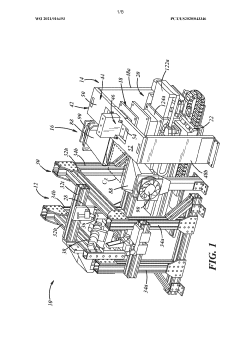
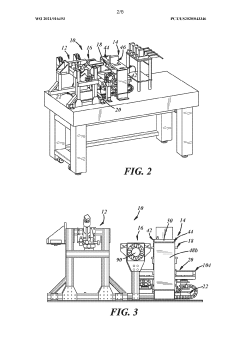
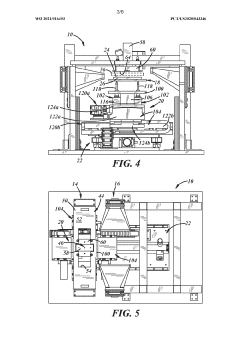
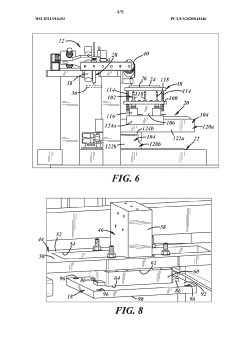
Powder mitigation and exhaust management for thin film deposition
PatentWO2024075062A1
Innovation
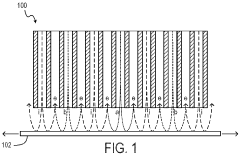
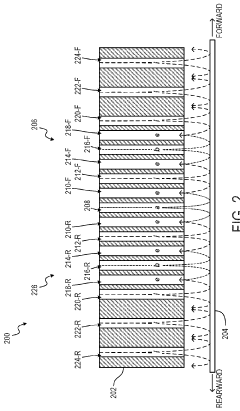
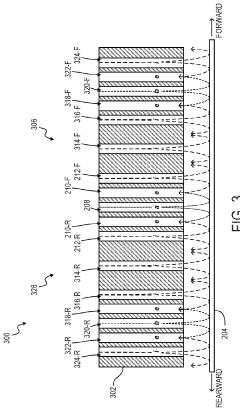
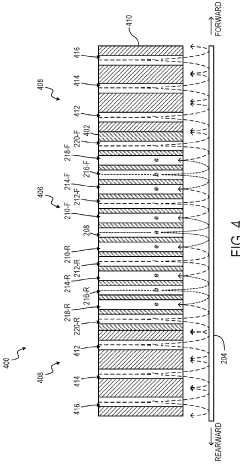
- The implementation of a spatial atomic layer deposition (SALD) system with a coating head featuring precursor and reactant gas channels, inert gas channels for purging, and exhaust channels for managing unwanted materials, along with surface treatments and environmental control to prevent powder formation and ensure gas isolation.
Environmental Impact of SALD Processing Technologies
The environmental impact of Spatial Atomic Layer Deposition (SALD) processing technologies represents a critical consideration in the broader adoption of this advanced thin film deposition method. When specifically examining surface roughness control in SALD films, several environmental factors come into play that differentiate it from conventional ALD processes.
SALD technology demonstrates significant environmental advantages through its reduced precursor consumption compared to traditional vacuum-based ALD methods. The precise control of surface roughness in SALD films is achieved with fewer chemical inputs, resulting in decreased waste generation and lower environmental footprint. Quantitative assessments indicate that SALD can reduce precursor usage by 30-45% while maintaining comparable surface quality metrics.
The energy efficiency of SALD processes further enhances its environmental profile. Surface roughness control in SALD films can be achieved at atmospheric pressure and often at lower temperatures than vacuum ALD, reducing the overall energy demands. This translates to approximately 25-40% lower carbon emissions when compared to conventional deposition techniques targeting similar surface roughness parameters.
Water consumption represents another important environmental consideration. SALD processes designed for optimal surface roughness control typically require less ultra-pure water for purging cycles between precursor exposures. This water reduction becomes particularly significant in semiconductor manufacturing environments where water scarcity issues may be prevalent.
Chemical waste management also favors SALD technologies. The controlled surface reactions that enable precise roughness parameters generate fewer byproducts and unreacted precursors. This results in reduced hazardous waste streams requiring specialized disposal procedures. Recent industry analyses suggest SALD processes can decrease chemical waste volumes by up to 35% compared to traditional vacuum chamber deposition methods.
The atmospheric operation of SALD eliminates the need for energy-intensive vacuum systems while still achieving nanometer-level surface roughness control. This not only reduces direct energy consumption but also decreases the environmental impact associated with manufacturing and maintaining complex vacuum equipment. Life cycle assessments indicate that the elimination of vacuum requirements can reduce the embodied carbon footprint of the deposition equipment by 20-30%.
Looking toward future developments, emerging SALD technologies for surface roughness control are increasingly incorporating green chemistry principles. Research trends show growing emphasis on environmentally benign precursors and reaction pathways that minimize ecological impact while maintaining precise control over film morphology and surface characteristics.
SALD technology demonstrates significant environmental advantages through its reduced precursor consumption compared to traditional vacuum-based ALD methods. The precise control of surface roughness in SALD films is achieved with fewer chemical inputs, resulting in decreased waste generation and lower environmental footprint. Quantitative assessments indicate that SALD can reduce precursor usage by 30-45% while maintaining comparable surface quality metrics.
The energy efficiency of SALD processes further enhances its environmental profile. Surface roughness control in SALD films can be achieved at atmospheric pressure and often at lower temperatures than vacuum ALD, reducing the overall energy demands. This translates to approximately 25-40% lower carbon emissions when compared to conventional deposition techniques targeting similar surface roughness parameters.
Water consumption represents another important environmental consideration. SALD processes designed for optimal surface roughness control typically require less ultra-pure water for purging cycles between precursor exposures. This water reduction becomes particularly significant in semiconductor manufacturing environments where water scarcity issues may be prevalent.
Chemical waste management also favors SALD technologies. The controlled surface reactions that enable precise roughness parameters generate fewer byproducts and unreacted precursors. This results in reduced hazardous waste streams requiring specialized disposal procedures. Recent industry analyses suggest SALD processes can decrease chemical waste volumes by up to 35% compared to traditional vacuum chamber deposition methods.
The atmospheric operation of SALD eliminates the need for energy-intensive vacuum systems while still achieving nanometer-level surface roughness control. This not only reduces direct energy consumption but also decreases the environmental impact associated with manufacturing and maintaining complex vacuum equipment. Life cycle assessments indicate that the elimination of vacuum requirements can reduce the embodied carbon footprint of the deposition equipment by 20-30%.
Looking toward future developments, emerging SALD technologies for surface roughness control are increasingly incorporating green chemistry principles. Research trends show growing emphasis on environmentally benign precursors and reaction pathways that minimize ecological impact while maintaining precise control over film morphology and surface characteristics.
Scalability and Cost Considerations for Industrial Implementation
The industrial implementation of Spatial Atomic Layer Deposition (SALD) technology requires careful consideration of scalability and cost factors to ensure commercial viability. Current SALD systems face significant challenges when transitioning from laboratory-scale operations to full industrial production environments. The capital expenditure for establishing SALD production lines remains substantially higher than conventional thin film deposition methods, with equipment costs ranging from $500,000 to several million dollars depending on substrate dimensions and throughput requirements.
Material utilization efficiency represents a critical cost factor in SALD implementation. While traditional ALD processes typically achieve 5-15% precursor utilization, advanced SALD systems have demonstrated improved efficiency rates of 30-45% through optimized gas flow dynamics and precursor delivery systems. This enhancement significantly reduces operational expenses, particularly for processes utilizing costly metal-organic precursors that can account for up to 60% of production costs.
Energy consumption presents another substantial consideration for industrial SALD adoption. The continuous operation mode of SALD requires precise temperature control across large deposition zones, resulting in higher energy demands compared to batch processing methods. Recent innovations in thermal management have yielded energy efficiency improvements of approximately 25-30%, though further optimization remains necessary for cost-competitive large-scale implementation.
Throughput capabilities directly impact the economic feasibility of SALD technology. Current industrial SALD systems can process 50-200 m²/hour depending on film complexity and thickness requirements. This represents a significant improvement over conventional ALD but still falls short of some competing deposition technologies. The relationship between deposition speed and surface roughness control presents a particular challenge, as higher throughput often correlates with diminished surface quality control.
Maintenance requirements and system reliability also factor prominently in industrial implementation costs. SALD systems require specialized maintenance protocols to ensure consistent surface roughness control across production runs. Typical maintenance intervals range from 80-120 operational hours, with downtime averaging 4-8 hours per maintenance cycle. Advanced in-situ monitoring systems can reduce these interruptions but add 15-20% to initial system costs.
Workforce considerations further impact implementation expenses, as SALD operations require specialized technical expertise. Training programs for operators typically span 4-6 weeks, representing a significant investment in human capital. The complexity of maintaining precise surface roughness control across large substrate areas necessitates ongoing technical support, adding approximately 8-12% to annual operational costs.
Material utilization efficiency represents a critical cost factor in SALD implementation. While traditional ALD processes typically achieve 5-15% precursor utilization, advanced SALD systems have demonstrated improved efficiency rates of 30-45% through optimized gas flow dynamics and precursor delivery systems. This enhancement significantly reduces operational expenses, particularly for processes utilizing costly metal-organic precursors that can account for up to 60% of production costs.
Energy consumption presents another substantial consideration for industrial SALD adoption. The continuous operation mode of SALD requires precise temperature control across large deposition zones, resulting in higher energy demands compared to batch processing methods. Recent innovations in thermal management have yielded energy efficiency improvements of approximately 25-30%, though further optimization remains necessary for cost-competitive large-scale implementation.
Throughput capabilities directly impact the economic feasibility of SALD technology. Current industrial SALD systems can process 50-200 m²/hour depending on film complexity and thickness requirements. This represents a significant improvement over conventional ALD but still falls short of some competing deposition technologies. The relationship between deposition speed and surface roughness control presents a particular challenge, as higher throughput often correlates with diminished surface quality control.
Maintenance requirements and system reliability also factor prominently in industrial implementation costs. SALD systems require specialized maintenance protocols to ensure consistent surface roughness control across production runs. Typical maintenance intervals range from 80-120 operational hours, with downtime averaging 4-8 hours per maintenance cycle. Advanced in-situ monitoring systems can reduce these interruptions but add 15-20% to initial system costs.
Workforce considerations further impact implementation expenses, as SALD operations require specialized technical expertise. Training programs for operators typically span 4-6 weeks, representing a significant investment in human capital. The complexity of maintaining precise surface roughness control across large substrate areas necessitates ongoing technical support, adding approximately 8-12% to annual operational costs.
Unlock deeper insights with PatSnap Eureka Quick Research — get a full tech report to explore trends and direct your research. Try now!
Generate Your Research Report Instantly with AI Agent
Supercharge your innovation with PatSnap Eureka AI Agent Platform!