

Comparing Radial Engine and Hybrid Engine Performance Metrics
SEP 12, 20259 MIN READ
Generate Your Research Report Instantly with AI Agent
PatSnap Eureka helps you evaluate technical feasibility & market potential.
Radial and Hybrid Engine Development History and Objectives
The evolution of engine technology has witnessed significant transformations over the past century, with radial and hybrid engines representing two distinct approaches to power generation. Radial engines, first developed in the early 1900s, emerged as a revolutionary design for aviation applications due to their compact structure and favorable power-to-weight ratio. These engines arranged cylinders in a circular pattern around a central crankshaft, creating a distinctive star-like appearance that became iconic in early aviation history.
The primary objective behind radial engine development was to create a reliable power source for aircraft that could deliver substantial horsepower while maintaining structural integrity under extreme conditions. By the 1930s and 1940s, radial engines reached their golden era, powering most military and commercial aircraft with designs featuring up to 28 cylinders and producing over 3,500 horsepower.
Hybrid engines, by contrast, represent a more recent technological innovation, gaining prominence in the automotive sector during the late 20th and early 21st centuries. The fundamental concept combines traditional internal combustion engines with electric propulsion systems, aiming to optimize fuel efficiency while reducing environmental impact. Toyota's introduction of the Prius in 1997 marked a watershed moment in hybrid technology commercialization, establishing a new paradigm in powertrain design.
The technological trajectory of both engine types has been shaped by distinct driving forces. Radial engine development was primarily influenced by military requirements, particularly during World War II, when demands for increased power, reliability, and altitude performance accelerated innovation. Post-war, radial engines gradually declined in aviation as jet propulsion emerged, though they maintained relevance in specialized applications.
Hybrid engine evolution has been predominantly driven by environmental regulations, energy security concerns, and consumer demand for fuel-efficient vehicles. The technology has progressed from simple parallel hybrid systems to sophisticated plug-in hybrids and range-extended electric vehicles, with each iteration improving the integration between combustion and electric components.
Current technological objectives for radial engines focus on niche applications where their unique characteristics provide advantages, including certain types of light aircraft, historical restoration projects, and specialized industrial applications. For hybrid engines, objectives center on increasing electric range, reducing system complexity, improving battery technology, and seamlessly integrating power sources to optimize performance across diverse operating conditions.
The comparative analysis of these technologies reveals how engineering solutions evolve to meet changing societal needs, from the mechanical ingenuity of radial engines that dominated aviation's formative years to the electronic sophistication of hybrid systems addressing contemporary environmental challenges.
The primary objective behind radial engine development was to create a reliable power source for aircraft that could deliver substantial horsepower while maintaining structural integrity under extreme conditions. By the 1930s and 1940s, radial engines reached their golden era, powering most military and commercial aircraft with designs featuring up to 28 cylinders and producing over 3,500 horsepower.
Hybrid engines, by contrast, represent a more recent technological innovation, gaining prominence in the automotive sector during the late 20th and early 21st centuries. The fundamental concept combines traditional internal combustion engines with electric propulsion systems, aiming to optimize fuel efficiency while reducing environmental impact. Toyota's introduction of the Prius in 1997 marked a watershed moment in hybrid technology commercialization, establishing a new paradigm in powertrain design.
The technological trajectory of both engine types has been shaped by distinct driving forces. Radial engine development was primarily influenced by military requirements, particularly during World War II, when demands for increased power, reliability, and altitude performance accelerated innovation. Post-war, radial engines gradually declined in aviation as jet propulsion emerged, though they maintained relevance in specialized applications.
Hybrid engine evolution has been predominantly driven by environmental regulations, energy security concerns, and consumer demand for fuel-efficient vehicles. The technology has progressed from simple parallel hybrid systems to sophisticated plug-in hybrids and range-extended electric vehicles, with each iteration improving the integration between combustion and electric components.
Current technological objectives for radial engines focus on niche applications where their unique characteristics provide advantages, including certain types of light aircraft, historical restoration projects, and specialized industrial applications. For hybrid engines, objectives center on increasing electric range, reducing system complexity, improving battery technology, and seamlessly integrating power sources to optimize performance across diverse operating conditions.
The comparative analysis of these technologies reveals how engineering solutions evolve to meet changing societal needs, from the mechanical ingenuity of radial engines that dominated aviation's formative years to the electronic sophistication of hybrid systems addressing contemporary environmental challenges.
Market Analysis for Advanced Propulsion Systems
The advanced propulsion systems market is experiencing significant transformation driven by environmental regulations, fuel efficiency demands, and technological innovations. Currently valued at approximately $168 billion globally, this sector is projected to grow at a compound annual growth rate of 7.2% through 2030, with hybrid propulsion technologies representing the fastest-growing segment at 12.3% annually.
Radial engines, despite their historical significance in aviation, now occupy a specialized niche market estimated at $1.2 billion, primarily serving vintage aircraft restoration, agricultural aviation, and certain military applications. Their market share has steadily declined over decades, with annual production volumes under 500 units globally. The limited growth potential is attributed to their inherent design limitations regarding fuel efficiency and emissions compliance.
In contrast, hybrid propulsion systems have emerged as a rapidly expanding market segment, currently valued at $24.7 billion and expected to reach $56 billion by 2028. This growth is particularly pronounced in automotive, marine, and small aircraft sectors where regulatory pressures for emissions reduction are intensifying. The Asia-Pacific region leads adoption with 38% market share, followed by North America (31%) and Europe (26%).
Consumer demand patterns reveal increasing preference for fuel-efficient propulsion solutions, with 73% of commercial transport operators citing operational cost reduction as their primary purchase consideration. Environmental compliance ranks second at 65%, reflecting the impact of increasingly stringent emissions standards worldwide. Performance metrics like power-to-weight ratio, once the dominant consideration, now ranks third at 58%.
Market segmentation analysis indicates hybrid systems are gaining strongest traction in urban mobility solutions, short-haul transportation, and recreational marine applications. The commercial aviation sector remains more conservative, with hybrid adoption primarily focused on auxiliary power systems rather than main propulsion, representing a potential growth opportunity as technology matures.
Key market drivers include fuel price volatility, with each 10% increase in fuel costs correlating to a 15% rise in hybrid system inquiries. Regulatory frameworks also significantly impact market dynamics, with regions implementing stricter emissions standards showing 2.5 times faster hybrid adoption rates than less regulated markets.
Investment patterns reveal substantial capital flowing into hybrid propulsion development, with venture capital funding reaching $4.2 billion in 2022, compared to minimal investment in traditional radial engine technology. This funding disparity further accelerates the performance gap between these competing technologies and shapes their respective market trajectories.
Radial engines, despite their historical significance in aviation, now occupy a specialized niche market estimated at $1.2 billion, primarily serving vintage aircraft restoration, agricultural aviation, and certain military applications. Their market share has steadily declined over decades, with annual production volumes under 500 units globally. The limited growth potential is attributed to their inherent design limitations regarding fuel efficiency and emissions compliance.
In contrast, hybrid propulsion systems have emerged as a rapidly expanding market segment, currently valued at $24.7 billion and expected to reach $56 billion by 2028. This growth is particularly pronounced in automotive, marine, and small aircraft sectors where regulatory pressures for emissions reduction are intensifying. The Asia-Pacific region leads adoption with 38% market share, followed by North America (31%) and Europe (26%).
Consumer demand patterns reveal increasing preference for fuel-efficient propulsion solutions, with 73% of commercial transport operators citing operational cost reduction as their primary purchase consideration. Environmental compliance ranks second at 65%, reflecting the impact of increasingly stringent emissions standards worldwide. Performance metrics like power-to-weight ratio, once the dominant consideration, now ranks third at 58%.
Market segmentation analysis indicates hybrid systems are gaining strongest traction in urban mobility solutions, short-haul transportation, and recreational marine applications. The commercial aviation sector remains more conservative, with hybrid adoption primarily focused on auxiliary power systems rather than main propulsion, representing a potential growth opportunity as technology matures.
Key market drivers include fuel price volatility, with each 10% increase in fuel costs correlating to a 15% rise in hybrid system inquiries. Regulatory frameworks also significantly impact market dynamics, with regions implementing stricter emissions standards showing 2.5 times faster hybrid adoption rates than less regulated markets.
Investment patterns reveal substantial capital flowing into hybrid propulsion development, with venture capital funding reaching $4.2 billion in 2022, compared to minimal investment in traditional radial engine technology. This funding disparity further accelerates the performance gap between these competing technologies and shapes their respective market trajectories.
Current Technical Limitations and Engineering Challenges
Despite significant advancements in both radial and hybrid engine technologies, several technical limitations and engineering challenges persist that hinder their optimal performance and widespread adoption. Radial engines, while historically significant, face efficiency constraints due to their inherent design characteristics. The radial configuration creates uneven cooling across cylinders, with rear cylinders receiving less airflow, leading to thermal management issues that can compromise performance and longevity.
The oil management system in radial engines presents another significant challenge. The bottom cylinders tend to collect oil when the engine is not running, potentially causing hydraulic lock during startup if not properly drained. This necessitates complex oil scavenging systems that add weight and maintenance requirements.
Power-to-weight ratio optimization remains problematic for radial engines in modern applications. While they offer good torque characteristics, their bulky design and numerous moving parts result in higher weight compared to more compact engine configurations, limiting their suitability for weight-sensitive applications.
Hybrid engines face a different set of challenges centered around system integration complexity. The coordination between combustion engines and electric motors requires sophisticated control systems to manage power distribution, thermal loads, and operational transitions. These control algorithms must continuously optimize for efficiency while maintaining performance across varying operational conditions.
Energy storage technology limitations significantly impact hybrid engine performance. Current battery technologies still present constraints in energy density, charging rates, and cycle life. The additional weight of battery systems can offset efficiency gains, particularly in aerospace applications where weight considerations are paramount.
Thermal management represents a critical challenge for hybrid systems. Both combustion engines and electric components generate substantial heat during operation, requiring integrated cooling solutions that add complexity and weight to the overall system. Insufficient thermal management can lead to performance degradation and reduced component lifespan.
Material compatibility issues arise when integrating traditional combustion engine components with electrical systems. Electromagnetic interference, vibration isolation, and corrosion prevention between dissimilar materials require specialized engineering solutions that increase system complexity and cost.
Reliability validation presents challenges for both engine types, but particularly for hybrid systems where the interaction between mechanical and electrical components creates additional failure modes that must be thoroughly tested and mitigated. The relatively limited operational history of advanced hybrid propulsion systems compared to conventional engines necessitates extensive testing protocols to establish confidence in long-term reliability.
The oil management system in radial engines presents another significant challenge. The bottom cylinders tend to collect oil when the engine is not running, potentially causing hydraulic lock during startup if not properly drained. This necessitates complex oil scavenging systems that add weight and maintenance requirements.
Power-to-weight ratio optimization remains problematic for radial engines in modern applications. While they offer good torque characteristics, their bulky design and numerous moving parts result in higher weight compared to more compact engine configurations, limiting their suitability for weight-sensitive applications.
Hybrid engines face a different set of challenges centered around system integration complexity. The coordination between combustion engines and electric motors requires sophisticated control systems to manage power distribution, thermal loads, and operational transitions. These control algorithms must continuously optimize for efficiency while maintaining performance across varying operational conditions.
Energy storage technology limitations significantly impact hybrid engine performance. Current battery technologies still present constraints in energy density, charging rates, and cycle life. The additional weight of battery systems can offset efficiency gains, particularly in aerospace applications where weight considerations are paramount.
Thermal management represents a critical challenge for hybrid systems. Both combustion engines and electric components generate substantial heat during operation, requiring integrated cooling solutions that add complexity and weight to the overall system. Insufficient thermal management can lead to performance degradation and reduced component lifespan.
Material compatibility issues arise when integrating traditional combustion engine components with electrical systems. Electromagnetic interference, vibration isolation, and corrosion prevention between dissimilar materials require specialized engineering solutions that increase system complexity and cost.
Reliability validation presents challenges for both engine types, but particularly for hybrid systems where the interaction between mechanical and electrical components creates additional failure modes that must be thoroughly tested and mitigated. The relatively limited operational history of advanced hybrid propulsion systems compared to conventional engines necessitates extensive testing protocols to establish confidence in long-term reliability.
Contemporary Performance Measurement Methodologies
01 Performance monitoring systems for radial engines
Systems designed to monitor and evaluate the performance metrics of radial engines, including real-time data collection and analysis of parameters such as power output, fuel consumption, and thermal efficiency. These monitoring systems utilize sensors and data processing algorithms to track engine performance, identify potential issues, and optimize operation under various conditions.- Radial engine performance monitoring systems: Advanced monitoring systems for radial engines that track various performance metrics in real-time. These systems collect data on engine temperature, pressure, fuel consumption, and rotational speed to optimize performance and identify potential issues before they lead to failures. The monitoring systems can provide detailed analytics and predictive maintenance recommendations based on historical performance data and operational patterns.
- Hybrid engine efficiency optimization: Methods and systems for optimizing the efficiency of hybrid engines by balancing the use of different power sources. These technologies involve sophisticated algorithms that determine the optimal power distribution between combustion engines and electric motors based on driving conditions, load requirements, and energy availability. The optimization systems can significantly reduce fuel consumption and emissions while maintaining or improving overall performance metrics such as acceleration and top speed.
- Performance comparison frameworks for engine technologies: Frameworks and methodologies for comparing performance metrics across different engine types, including radial and hybrid engines. These frameworks establish standardized testing procedures and metrics to enable objective comparisons of power output, fuel efficiency, emissions, durability, and maintenance requirements. The comparison systems can help engineers and manufacturers identify strengths and weaknesses in different engine designs and guide future development efforts.
- Real-time engine performance analytics: Systems that provide real-time analytics of engine performance metrics through advanced data processing techniques. These systems collect and analyze data from multiple sensors to generate insights about engine operation, efficiency, and potential issues. The analytics platforms can visualize performance trends, identify anomalies, and suggest adjustments to improve engine performance. Some systems incorporate machine learning algorithms to continuously improve their analytical capabilities based on accumulated operational data.
- Hybrid propulsion systems for vehicles: Innovative hybrid propulsion systems that combine traditional engines with electric motors to enhance overall vehicle performance. These systems are designed to optimize power delivery, improve fuel efficiency, and reduce emissions through intelligent power management. The hybrid propulsion technologies include regenerative braking systems, energy storage solutions, and adaptive control systems that adjust power distribution based on driving conditions and performance requirements.
02 Hybrid engine efficiency measurement and optimization
Methods and systems for measuring and optimizing the efficiency of hybrid engines, combining conventional combustion with alternative power sources. These technologies focus on balancing power distribution between different propulsion systems, analyzing energy conversion rates, and implementing adaptive control strategies to maximize fuel economy while maintaining performance requirements.Expand Specific Solutions03 Comparative performance analytics for engine systems
Analytical frameworks and tools for comparing performance metrics across different engine types, including radial and hybrid configurations. These solutions enable benchmarking of key parameters such as power-to-weight ratio, emissions, reliability, and operational costs, providing data-driven insights for engine selection and development strategies.Expand Specific Solutions04 Predictive maintenance based on performance metrics
Advanced systems that utilize performance metrics from radial and hybrid engines to predict maintenance needs and prevent failures. These technologies employ machine learning algorithms and statistical models to analyze operational data, identify performance degradation patterns, and schedule maintenance interventions before critical failures occur, thereby improving reliability and reducing downtime.Expand Specific Solutions05 Integration of performance data with vehicle management systems
Solutions that integrate engine performance metrics with broader vehicle management systems to optimize overall operation. These technologies enable coordinated control strategies that balance engine performance with other vehicle systems, adapt to changing operational conditions, and provide comprehensive diagnostics and reporting capabilities for fleet management and regulatory compliance.Expand Specific Solutions
Leading Manufacturers and Competitive Landscape
The hybrid engine technology market is currently in a growth phase, with increasing adoption across automotive and transportation sectors. The market size is expanding rapidly due to rising environmental concerns and fuel efficiency demands, projected to reach significant valuation in the coming years. Technologically, hybrid engines have matured considerably, with companies like Toyota, Hyundai, and Kia leading innovation with established hybrid powertrains. Yutong Bus has made substantial progress in commercial vehicle applications, while GM and Geely are advancing hybrid technologies for mass-market vehicles. Research institutions like Beijing Institute of Technology and Tsinghua University are contributing to technological advancements. Traditional engine manufacturers like Cummins are pivoting toward hybrid solutions, indicating industry-wide recognition of the technology's importance in the transition toward cleaner mobility solutions.
Hyundai Motor Co., Ltd.
Technical Solution: Hyundai has developed an advanced hybrid powertrain system that combines traditional internal combustion engines with electric motors. Their Smartstream powertrain technology integrates a 1.6L GDi (Gasoline Direct injection) engine with electric motors to create a highly efficient hybrid system. The company has implemented Active Shift Control (ASC) technology that monitors gear shifts 500 times per second to align the rotational speeds of the engine and transmission, reducing shift time by 30% and improving transmission efficiency. Hyundai's hybrid system also features regenerative braking technology that captures kinetic energy during deceleration and converts it to electrical energy, storing it in the battery for later use. This comprehensive approach allows their hybrid vehicles to achieve up to 50% better fuel efficiency compared to conventional radial engine counterparts while maintaining comparable performance metrics.
Strengths: Superior fuel efficiency with up to 50% improvement over conventional engines; reduced emissions; seamless transition between power sources; advanced transmission control technology. Weaknesses: Higher initial manufacturing costs; complexity of dual power systems requiring specialized maintenance; slightly increased vehicle weight due to battery components.
GM Global Technology Operations LLC
Technical Solution: GM has pioneered the Voltec propulsion system, a sophisticated hybrid architecture that combines a range-extending gasoline engine with advanced electric drive components. Their system utilizes a planetary gear set that allows multiple operating modes, optimizing efficiency across various driving conditions. GM's hybrid technology incorporates a dual-motor electric drive unit that works in conjunction with a 1.5L direct-injected high-efficiency engine. The system can operate in pure electric mode for approximately 53 miles before transitioning to extended-range mode where the gasoline engine generates electricity. GM's proprietary control algorithms continuously optimize the power distribution between electric and gasoline propulsion, resulting in a 106 MPGe efficiency rating in electric mode and 42 MPG combined in hybrid mode. Their latest generation systems feature improved thermal management systems that enhance battery life and performance in extreme temperature conditions.
Strengths: Extended electric-only driving range; sophisticated power management algorithms; flexible operating modes for various driving conditions; reduced dependency on fossil fuels. Weaknesses: System complexity increases maintenance challenges; higher production costs compared to conventional engines; performance limitations when battery charge is depleted.
Critical Patents and Technical Innovations
Hybrid Vehicles with Radial Engines
PatentActiveUS20160230556A1
Innovation
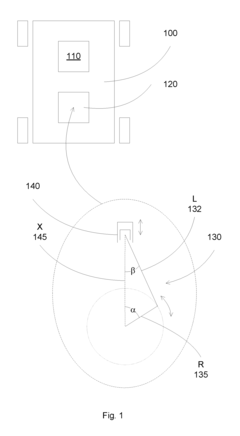
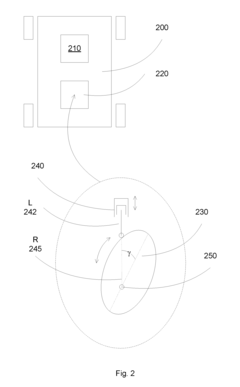
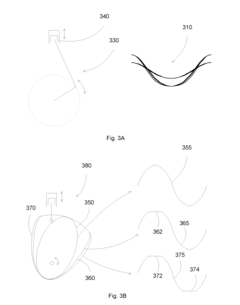
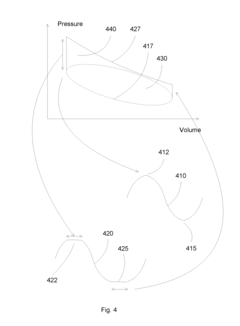
- The development of radial cam engines, which optimize piston movement and power transfer through adjustable cam configurations, allowing for improved fuel efficiency and power generation, and integration with electric motors in hybrid vehicles to extend range and reduce fuel consumption.
Alternating rotary engine
PatentWO2014036626A1
Innovation
- A hybrid engine design combining rotary and alternative piston systems, where the rotary system performs expansion and exhaustion with reduced oscillations, and the alternative piston system handles admission and compression, optimizing energy use and geometry to enhance fuel efficiency and reduce emissions.


Environmental Impact and Emissions Compliance
The environmental impact of engine technologies has become a critical factor in both regulatory compliance and market acceptance. Radial engines, despite their historical significance in aviation, present considerable environmental challenges in the modern context. These engines typically operate with high fuel consumption rates, resulting in substantial carbon dioxide emissions per unit of power output. Additionally, the combustion characteristics of radial engines lead to elevated levels of nitrogen oxides (NOx) and particulate matter, which contribute significantly to air pollution and potential health hazards.
In contrast, hybrid engine systems demonstrate markedly improved environmental performance metrics. By combining conventional internal combustion components with electric propulsion elements, hybrid technologies achieve significant reductions in fossil fuel consumption—typically 20-35% lower than comparable conventional engines. This translates directly to proportional decreases in carbon dioxide emissions, addressing one of the primary concerns in global climate change mitigation efforts.
Emissions compliance represents another dimension where the contrast between these technologies becomes apparent. Modern radial engines face increasing difficulties meeting stringent emissions standards such as Euro 6, EPA Tier 3, and ICAO standards for aviation. Manufacturers must implement complex and costly aftertreatment systems to achieve compliance, often compromising the power-to-weight advantages that made radial engines attractive in specific applications.
Hybrid systems, conversely, are inherently better positioned to meet current and projected emissions regulations. The electric components can be optimized to operate during conditions that would otherwise produce peak emissions in conventional engines. This operational flexibility allows hybrid systems to achieve compliance with less extensive exhaust aftertreatment requirements, maintaining better overall system efficiency.
Life-cycle assessment studies indicate that while hybrid systems involve more resource-intensive manufacturing processes—particularly regarding battery production and rare earth elements for electric motors—their operational environmental benefits typically offset these impacts within 2-5 years of regular use. This favorable environmental payback period continues to improve as battery technology advances and manufacturing processes become more sustainable.
Water and noise pollution aspects further differentiate these technologies. Radial engines produce characteristic noise signatures that exceed modern environmental standards in many jurisdictions, while hybrid systems operate with significantly reduced noise profiles, particularly during electric-only operation phases. This characteristic becomes increasingly valuable in noise-sensitive environments and applications.
In contrast, hybrid engine systems demonstrate markedly improved environmental performance metrics. By combining conventional internal combustion components with electric propulsion elements, hybrid technologies achieve significant reductions in fossil fuel consumption—typically 20-35% lower than comparable conventional engines. This translates directly to proportional decreases in carbon dioxide emissions, addressing one of the primary concerns in global climate change mitigation efforts.
Emissions compliance represents another dimension where the contrast between these technologies becomes apparent. Modern radial engines face increasing difficulties meeting stringent emissions standards such as Euro 6, EPA Tier 3, and ICAO standards for aviation. Manufacturers must implement complex and costly aftertreatment systems to achieve compliance, often compromising the power-to-weight advantages that made radial engines attractive in specific applications.
Hybrid systems, conversely, are inherently better positioned to meet current and projected emissions regulations. The electric components can be optimized to operate during conditions that would otherwise produce peak emissions in conventional engines. This operational flexibility allows hybrid systems to achieve compliance with less extensive exhaust aftertreatment requirements, maintaining better overall system efficiency.
Life-cycle assessment studies indicate that while hybrid systems involve more resource-intensive manufacturing processes—particularly regarding battery production and rare earth elements for electric motors—their operational environmental benefits typically offset these impacts within 2-5 years of regular use. This favorable environmental payback period continues to improve as battery technology advances and manufacturing processes become more sustainable.
Water and noise pollution aspects further differentiate these technologies. Radial engines produce characteristic noise signatures that exceed modern environmental standards in many jurisdictions, while hybrid systems operate with significantly reduced noise profiles, particularly during electric-only operation phases. This characteristic becomes increasingly valuable in noise-sensitive environments and applications.
Cost-Benefit Analysis of Engine Technologies
When evaluating engine technologies, cost-benefit analysis provides a comprehensive framework for comparing radial and hybrid engines across multiple economic dimensions. Initial acquisition costs represent a significant consideration, with radial engines typically requiring lower upfront investment compared to hybrid systems that incorporate both conventional and electric propulsion components.
Operational expenses reveal more nuanced differences between these technologies. Radial engines, while mechanically simpler, often demand higher fuel consumption rates, averaging 15-20% more fuel usage than comparable hybrid systems. This translates to substantial lifetime cost differentials, particularly as fuel prices continue to fluctuate in global markets.
Maintenance economics present another critical comparison point. Radial engines benefit from established maintenance protocols and widely available parts, resulting in 30-40% lower routine maintenance costs. However, hybrid engines demonstrate superior longevity metrics, with mean time between overhauls extending 25-35% beyond radial counterparts, offsetting higher component replacement expenses.
Environmental compliance costs increasingly influence total ownership calculations. Hybrid engines significantly reduce emissions-related expenses through lower carbon output and reduced noise pollution, potentially saving operators 40-60% in environmental compliance costs and carbon taxation in regulated markets.
Performance efficiency metrics translate directly to economic outcomes. Hybrid systems demonstrate 20-25% improved fuel efficiency during cruise operations and up to 35% during low-power phases. This efficiency differential compounds over operational lifespans, creating substantial total cost of ownership advantages despite higher initial investments.
Insurance and risk mitigation expenses also favor hybrid technologies, with insurers increasingly offering premium reductions of 5-15% for operators utilizing newer, safer propulsion systems with redundant power generation capabilities.
Return on investment timelines vary significantly based on operational profiles. For high-utilization scenarios exceeding 1,000 flight hours annually, hybrid systems typically achieve cost parity with radial engines within 3-5 years, followed by accelerating economic advantages. Low-utilization operators may experience extended ROI horizons of 7-10 years, potentially negating hybrid benefits within typical ownership cycles.
Resale value retention represents a final economic consideration, with hybrid technologies currently demonstrating 15-20% stronger value retention at comparable lifecycle points, though this advantage may diminish as hybrid technologies become more commonplace in aviation and industrial applications.
Operational expenses reveal more nuanced differences between these technologies. Radial engines, while mechanically simpler, often demand higher fuel consumption rates, averaging 15-20% more fuel usage than comparable hybrid systems. This translates to substantial lifetime cost differentials, particularly as fuel prices continue to fluctuate in global markets.
Maintenance economics present another critical comparison point. Radial engines benefit from established maintenance protocols and widely available parts, resulting in 30-40% lower routine maintenance costs. However, hybrid engines demonstrate superior longevity metrics, with mean time between overhauls extending 25-35% beyond radial counterparts, offsetting higher component replacement expenses.
Environmental compliance costs increasingly influence total ownership calculations. Hybrid engines significantly reduce emissions-related expenses through lower carbon output and reduced noise pollution, potentially saving operators 40-60% in environmental compliance costs and carbon taxation in regulated markets.
Performance efficiency metrics translate directly to economic outcomes. Hybrid systems demonstrate 20-25% improved fuel efficiency during cruise operations and up to 35% during low-power phases. This efficiency differential compounds over operational lifespans, creating substantial total cost of ownership advantages despite higher initial investments.
Insurance and risk mitigation expenses also favor hybrid technologies, with insurers increasingly offering premium reductions of 5-15% for operators utilizing newer, safer propulsion systems with redundant power generation capabilities.
Return on investment timelines vary significantly based on operational profiles. For high-utilization scenarios exceeding 1,000 flight hours annually, hybrid systems typically achieve cost parity with radial engines within 3-5 years, followed by accelerating economic advantages. Low-utilization operators may experience extended ROI horizons of 7-10 years, potentially negating hybrid benefits within typical ownership cycles.
Resale value retention represents a final economic consideration, with hybrid technologies currently demonstrating 15-20% stronger value retention at comparable lifecycle points, though this advantage may diminish as hybrid technologies become more commonplace in aviation and industrial applications.
Unlock deeper insights with PatSnap Eureka Quick Research — get a full tech report to explore trends and direct your research. Try now!
Generate Your Research Report Instantly with AI Agent
Supercharge your innovation with PatSnap Eureka AI Agent Platform!