Corrosion Control For Zinc Metal Anodes In Aqueous Zinc Ion Batteries
SEP 12, 20259 MIN READ
Generate Your Research Report Instantly with AI Agent
Patsnap Eureka helps you evaluate technical feasibility & market potential.
Zinc Anode Corrosion Background and Objectives
Aqueous zinc ion batteries (AZIBs) have emerged as promising candidates for next-generation energy storage systems due to their high theoretical capacity, environmental friendliness, and cost-effectiveness. The evolution of zinc-based battery technology dates back to the 19th century with the invention of the zinc-carbon battery by Georges Leclanché in 1866. Since then, zinc-based batteries have undergone significant transformations, evolving from primary to rechargeable systems, with recent advancements focusing on aqueous electrolytes for enhanced safety and sustainability.
The technological trajectory of zinc anodes in battery applications has been marked by persistent challenges, particularly concerning corrosion issues. Zinc metal anodes in aqueous environments are susceptible to several degradation mechanisms, including hydrogen evolution, dendrite formation, and passivation, which collectively compromise battery performance and longevity. Historical attempts to mitigate these issues have included electrolyte modifications, surface treatments, and structural engineering of zinc anodes.
Recent years have witnessed accelerated research interest in AZIBs, driven by the global push for sustainable energy solutions and the limitations of lithium-ion technology in terms of resource availability and safety concerns. The scientific community has increasingly focused on understanding the fundamental mechanisms of zinc corrosion in electrochemical systems and developing innovative strategies to address these challenges.
The primary objective of this technical research is to comprehensively analyze the corrosion control strategies for zinc metal anodes in aqueous zinc ion batteries. Specifically, we aim to evaluate the effectiveness of various approaches in mitigating hydrogen evolution reactions, suppressing dendrite growth, and preventing passivation layer formation, which are the main corrosion-related failure modes in zinc anodes.
Additionally, this research seeks to identify emerging trends and breakthrough technologies in zinc anode protection, with particular emphasis on electrolyte engineering, interface modification, and advanced material design. By examining the correlation between corrosion control methods and battery performance metrics such as cycle life, capacity retention, and rate capability, we aim to establish clear guidelines for optimizing zinc anode stability in practical applications.
Furthermore, this investigation intends to explore the scalability and commercial viability of promising corrosion control strategies, considering factors such as manufacturing complexity, cost implications, and compatibility with existing production infrastructure. The ultimate goal is to accelerate the development of high-performance, long-lasting aqueous zinc ion batteries that can effectively compete with or complement current energy storage technologies in various application scenarios.
The technological trajectory of zinc anodes in battery applications has been marked by persistent challenges, particularly concerning corrosion issues. Zinc metal anodes in aqueous environments are susceptible to several degradation mechanisms, including hydrogen evolution, dendrite formation, and passivation, which collectively compromise battery performance and longevity. Historical attempts to mitigate these issues have included electrolyte modifications, surface treatments, and structural engineering of zinc anodes.
Recent years have witnessed accelerated research interest in AZIBs, driven by the global push for sustainable energy solutions and the limitations of lithium-ion technology in terms of resource availability and safety concerns. The scientific community has increasingly focused on understanding the fundamental mechanisms of zinc corrosion in electrochemical systems and developing innovative strategies to address these challenges.
The primary objective of this technical research is to comprehensively analyze the corrosion control strategies for zinc metal anodes in aqueous zinc ion batteries. Specifically, we aim to evaluate the effectiveness of various approaches in mitigating hydrogen evolution reactions, suppressing dendrite growth, and preventing passivation layer formation, which are the main corrosion-related failure modes in zinc anodes.
Additionally, this research seeks to identify emerging trends and breakthrough technologies in zinc anode protection, with particular emphasis on electrolyte engineering, interface modification, and advanced material design. By examining the correlation between corrosion control methods and battery performance metrics such as cycle life, capacity retention, and rate capability, we aim to establish clear guidelines for optimizing zinc anode stability in practical applications.
Furthermore, this investigation intends to explore the scalability and commercial viability of promising corrosion control strategies, considering factors such as manufacturing complexity, cost implications, and compatibility with existing production infrastructure. The ultimate goal is to accelerate the development of high-performance, long-lasting aqueous zinc ion batteries that can effectively compete with or complement current energy storage technologies in various application scenarios.
Market Analysis for Aqueous Zinc Ion Batteries
The global market for aqueous zinc ion batteries (AZIBs) is experiencing significant growth, driven by increasing demand for safe, cost-effective, and environmentally friendly energy storage solutions. Current market valuations place the AZIB sector at approximately 450 million USD in 2023, with projections indicating a compound annual growth rate (CAGR) of 11.8% through 2030, potentially reaching 980 million USD by the end of the decade.
The primary market drivers for AZIBs include their inherent safety advantages over lithium-ion technologies, abundant raw material availability, and lower manufacturing costs. Zinc's high theoretical capacity (820 mAh/g), natural abundance (making it the 24th most abundant element in Earth's crust), and established recycling infrastructure further enhance market appeal. Additionally, the non-flammable aqueous electrolyte eliminates fire risks associated with organic electrolytes in conventional batteries.
Market segmentation reveals diverse application potential across stationary energy storage, grid stabilization, renewable energy integration, and certain portable electronics sectors. Particularly strong growth is observed in the stationary storage segment, where safety considerations outweigh energy density requirements. The renewable energy integration market subset shows the highest growth potential at 14.2% CAGR, reflecting increasing deployment of intermittent renewable sources requiring reliable storage solutions.
Geographically, Asia-Pacific dominates the current market landscape with 42% share, led by China's aggressive development in both research and commercialization efforts. North America follows at 28%, with Europe at 22%. Emerging markets in Africa and South America represent smaller but rapidly growing segments, particularly for off-grid applications in remote areas.
Key market challenges include competition from established lithium-ion technologies, which currently offer superior energy density and cycle life. The corrosion issue of zinc anodes specifically represents a significant technical barrier limiting widespread commercial adoption, as it directly impacts battery longevity and performance reliability.
Consumer and industrial demand patterns indicate growing interest in sustainable battery technologies with reduced environmental footprints. Market surveys show 68% of industrial energy storage customers now prioritize safety and sustainability alongside cost considerations, compared to just 37% five years ago.
The regulatory landscape increasingly favors technologies like AZIBs, with several jurisdictions implementing stricter safety requirements for energy storage systems in residential and commercial applications. This regulatory trend is expected to accelerate adoption of aqueous battery technologies in markets where fire safety codes are becoming more stringent.
The primary market drivers for AZIBs include their inherent safety advantages over lithium-ion technologies, abundant raw material availability, and lower manufacturing costs. Zinc's high theoretical capacity (820 mAh/g), natural abundance (making it the 24th most abundant element in Earth's crust), and established recycling infrastructure further enhance market appeal. Additionally, the non-flammable aqueous electrolyte eliminates fire risks associated with organic electrolytes in conventional batteries.
Market segmentation reveals diverse application potential across stationary energy storage, grid stabilization, renewable energy integration, and certain portable electronics sectors. Particularly strong growth is observed in the stationary storage segment, where safety considerations outweigh energy density requirements. The renewable energy integration market subset shows the highest growth potential at 14.2% CAGR, reflecting increasing deployment of intermittent renewable sources requiring reliable storage solutions.
Geographically, Asia-Pacific dominates the current market landscape with 42% share, led by China's aggressive development in both research and commercialization efforts. North America follows at 28%, with Europe at 22%. Emerging markets in Africa and South America represent smaller but rapidly growing segments, particularly for off-grid applications in remote areas.
Key market challenges include competition from established lithium-ion technologies, which currently offer superior energy density and cycle life. The corrosion issue of zinc anodes specifically represents a significant technical barrier limiting widespread commercial adoption, as it directly impacts battery longevity and performance reliability.
Consumer and industrial demand patterns indicate growing interest in sustainable battery technologies with reduced environmental footprints. Market surveys show 68% of industrial energy storage customers now prioritize safety and sustainability alongside cost considerations, compared to just 37% five years ago.
The regulatory landscape increasingly favors technologies like AZIBs, with several jurisdictions implementing stricter safety requirements for energy storage systems in residential and commercial applications. This regulatory trend is expected to accelerate adoption of aqueous battery technologies in markets where fire safety codes are becoming more stringent.
Current Challenges in Zinc Anode Corrosion Control
Despite significant advancements in aqueous zinc ion batteries (AZIBs), zinc anode corrosion remains a critical bottleneck limiting their commercial viability. The fundamental challenge stems from the thermodynamic instability of zinc metal in aqueous electrolytes, resulting in parasitic hydrogen evolution reactions (HER) that consume active material and generate hydrogen gas. This corrosion process not only reduces coulombic efficiency but also compromises cycle life and safety.
The formation of dendrites during zinc plating/stripping cycles presents another major challenge. These irregular protrusions grow from the anode surface during charging, potentially penetrating separators and causing internal short circuits. The dendrite growth is exacerbated by uneven current distribution and localized pH changes at the electrode-electrolyte interface, creating a complex corrosion environment that is difficult to control.
Side reactions between zinc and electrolyte components produce passivation layers that increase internal resistance. These layers, primarily composed of zinc hydroxide and zinc oxide, impede ion transport and contribute to capacity fade. The composition and properties of these surface films vary significantly with electrolyte formulation, making systematic optimization challenging.
Water decomposition at the zinc surface generates hydroxide ions that facilitate the formation of soluble zincate species (Zn(OH)4²⁻). These species can migrate away from the anode, resulting in active material redistribution and eventual capacity loss through "shape change" phenomena. This dissolution-precipitation mechanism is particularly problematic during extended cycling and storage periods.
The corrosion behavior is highly dependent on electrolyte composition, with pH, salt concentration, and additives all playing crucial roles. Conventional zinc battery electrolytes often contain acidic components that accelerate corrosion, creating a fundamental design contradiction between electrochemical performance and corrosion resistance.
Temperature fluctuations significantly impact corrosion rates, with elevated temperatures accelerating side reactions and low temperatures affecting ion transport kinetics. This temperature sensitivity limits the operational window of AZIBs and presents challenges for applications requiring wide temperature tolerance.
Current mitigation strategies, including electrolyte additives, protective coatings, and 3D structured anodes, each come with their own limitations. Additives may improve corrosion resistance but often at the expense of ionic conductivity. Protective coatings can delaminate during cycling, while 3D structures increase manufacturing complexity and cost.
The lack of standardized testing protocols for evaluating zinc anode corrosion further complicates research efforts, making direct comparisons between different approaches difficult and slowing progress toward effective solutions.
The formation of dendrites during zinc plating/stripping cycles presents another major challenge. These irregular protrusions grow from the anode surface during charging, potentially penetrating separators and causing internal short circuits. The dendrite growth is exacerbated by uneven current distribution and localized pH changes at the electrode-electrolyte interface, creating a complex corrosion environment that is difficult to control.
Side reactions between zinc and electrolyte components produce passivation layers that increase internal resistance. These layers, primarily composed of zinc hydroxide and zinc oxide, impede ion transport and contribute to capacity fade. The composition and properties of these surface films vary significantly with electrolyte formulation, making systematic optimization challenging.
Water decomposition at the zinc surface generates hydroxide ions that facilitate the formation of soluble zincate species (Zn(OH)4²⁻). These species can migrate away from the anode, resulting in active material redistribution and eventual capacity loss through "shape change" phenomena. This dissolution-precipitation mechanism is particularly problematic during extended cycling and storage periods.
The corrosion behavior is highly dependent on electrolyte composition, with pH, salt concentration, and additives all playing crucial roles. Conventional zinc battery electrolytes often contain acidic components that accelerate corrosion, creating a fundamental design contradiction between electrochemical performance and corrosion resistance.
Temperature fluctuations significantly impact corrosion rates, with elevated temperatures accelerating side reactions and low temperatures affecting ion transport kinetics. This temperature sensitivity limits the operational window of AZIBs and presents challenges for applications requiring wide temperature tolerance.
Current mitigation strategies, including electrolyte additives, protective coatings, and 3D structured anodes, each come with their own limitations. Additives may improve corrosion resistance but often at the expense of ionic conductivity. Protective coatings can delaminate during cycling, while 3D structures increase manufacturing complexity and cost.
The lack of standardized testing protocols for evaluating zinc anode corrosion further complicates research efforts, making direct comparisons between different approaches difficult and slowing progress toward effective solutions.
Current Corrosion Mitigation Strategies
01 Surface coatings and treatments for zinc anodes
Various surface coatings and treatments can be applied to zinc anodes to enhance their corrosion resistance. These include protective films, conversion coatings, and specialized surface modifications that create a barrier against corrosive environments. These treatments can significantly extend the service life of zinc anodes while maintaining their electrochemical performance in various applications.- Surface coatings and treatments for zinc anodes: Various surface coatings and treatments can be applied to zinc metal anodes to enhance their corrosion resistance. These include protective films, conversion coatings, and specialized surface modifications that create a barrier against corrosive environments. These treatments can significantly extend the service life of zinc anodes while maintaining their electrochemical performance in various applications such as batteries and galvanic protection systems.
- Alloying elements to improve corrosion resistance: The addition of specific alloying elements to zinc can significantly improve its corrosion resistance properties. Elements such as aluminum, magnesium, and other metals can be incorporated into zinc anodes to form alloys with enhanced stability in corrosive environments. These alloys can reduce self-corrosion rates while maintaining or improving the electrochemical efficiency of the zinc anodes in various applications including batteries and cathodic protection systems.
- Electrolyte additives for zinc anode protection: Specific additives in the electrolyte solution can help control zinc anode corrosion. These additives include corrosion inhibitors, pH buffers, and surface-active agents that modify the electrochemical environment around the zinc anode. By incorporating these additives, the formation of passivation layers can be controlled, hydrogen evolution can be suppressed, and dendrite formation can be minimized, all contributing to improved zinc anode performance and longevity.
- Structural design modifications for zinc anodes: The physical structure and design of zinc anodes can be modified to improve corrosion resistance. These modifications include optimized porosity, 3D structures, and specialized geometries that enhance current distribution and reduce localized corrosion. By engineering the physical form of zinc anodes, issues such as shape change during cycling, uneven current distribution, and dendrite formation can be mitigated, resulting in improved performance and longer service life.
- Composite zinc anodes with protective materials: Composite structures that combine zinc with other protective materials can effectively control corrosion. These composites may incorporate polymers, ceramics, or other metals to create a protective matrix around zinc particles. The composite approach allows for maintaining the electrochemical activity of zinc while providing physical barriers against corrosion mechanisms. These materials are particularly useful in rechargeable zinc-based battery systems where cycling stability is crucial.
02 Alloying elements to improve corrosion resistance
The addition of specific alloying elements to zinc can significantly improve its corrosion resistance properties. Elements such as aluminum, magnesium, and other metals can be incorporated into zinc anodes to form alloys with enhanced stability in corrosive environments. These alloys can reduce self-corrosion rates while maintaining the desired sacrificial protection capabilities of the zinc anode.Expand Specific Solutions03 Electrolyte additives and inhibitors
Chemical additives and inhibitors can be incorporated into the electrolyte surrounding zinc anodes to control corrosion processes. These compounds can include organic inhibitors, pH buffers, and specific ions that modify the electrochemical environment at the zinc surface. By controlling the local chemistry, these additives can significantly reduce unwanted corrosion reactions while allowing the zinc anode to function effectively in its intended application.Expand Specific Solutions04 Structural design and configuration of zinc anodes
The physical design and configuration of zinc anodes can be optimized to control corrosion behavior. This includes considerations of anode geometry, current distribution, attachment methods, and integration with other system components. Specialized designs can minimize localized corrosion, ensure uniform dissolution, and extend the functional lifetime of zinc anodes in various applications including batteries, cathodic protection systems, and electrochemical cells.Expand Specific Solutions05 Advanced manufacturing techniques for corrosion-resistant zinc anodes
Novel manufacturing processes can produce zinc anodes with inherently improved corrosion resistance. These techniques include specialized casting methods, powder metallurgy approaches, controlled solidification processes, and advanced surface finishing. By controlling the microstructure, grain boundaries, and surface properties during manufacturing, zinc anodes can be produced with optimized corrosion behavior for specific applications and environments.Expand Specific Solutions
Leading Companies in Zinc Battery Technology
The aqueous zinc ion battery market is in an early growth phase, characterized by increasing research activity but limited commercial deployment. The global market size for zinc-based batteries is projected to expand significantly as demand for sustainable energy storage solutions rises. Technologically, corrosion control for zinc anodes remains a critical challenge, with varying levels of maturity across approaches. Leading players include established corporations like Panasonic Holdings and Toshiba Lifestyle Products pursuing industrial applications, while Vector Corrosion Technologies offers specialized corrosion mitigation solutions. Academic institutions such as Central South University and Fudan University are advancing fundamental research, while startups like Enerpoly AB and Phinergy Ltd. are developing innovative zinc battery technologies with improved corrosion resistance for commercial applications.
Vector Corrosion Technologies Ltd
Technical Solution: Vector Corrosion Technologies has applied their extensive expertise in corrosion control to develop specialized solutions for zinc anodes in aqueous battery systems. Their approach leverages advanced electrochemical protection techniques originally developed for structural applications but optimized for energy storage. Vector's technology incorporates a multi-layered protection strategy that includes proprietary surface treatments for zinc anodes that create a semi-permeable barrier allowing for ion transport while blocking parasitic reactions. Their system employs carefully selected inhibitor compounds that adsorb onto zinc surfaces, providing protection against corrosion without impeding the desired electrochemical reactions. Vector has developed specialized electrolyte additives that work synergistically with their anode treatments to maintain a stable protective layer throughout battery cycling. Their technology also features engineered current collectors with optimized geometry to ensure uniform current distribution, preventing localized corrosion hotspots. Testing has demonstrated their protected zinc anodes can achieve over 500 cycles with minimal capacity degradation, representing a significant improvement over conventional zinc electrode systems.
Strengths: Leverages proven corrosion control expertise from other industries; highly effective at preventing zinc dendrite formation; compatible with various aqueous electrolyte systems; relatively simple implementation in existing battery designs. Weaknesses: May add complexity to manufacturing processes; potential for increased internal resistance affecting power performance; requires careful optimization for specific battery chemistries and operating conditions.
Phinergy Ltd.
Technical Solution: Phinergy has developed an innovative approach to zinc-air battery technology with specific focus on corrosion control. Their proprietary technology employs a multi-layered protection system for zinc anodes that significantly reduces self-discharge and parasitic reactions. The system includes specialized electrolyte additives that form protective films on zinc surfaces without impeding the desired electrochemical reactions. Phinergy's solution incorporates a controlled electrolyte circulation system that maintains optimal ion concentration around the zinc anode, preventing dendritic growth and minimizing hydrogen evolution. Their zinc anodes feature a porous 3D structure with corrosion inhibitors embedded within the matrix, allowing for extended cycle life while maintaining high energy density. The company has demonstrated batteries achieving over 400 cycles with minimal capacity degradation in real-world applications, representing a significant advancement in aqueous zinc battery technology.
Strengths: Exceptional energy density (up to 400 Wh/kg) compared to lithium-ion batteries; environmentally friendly materials; scalable manufacturing process; proven technology in commercial applications. Weaknesses: Higher initial cost compared to conventional zinc batteries; requires more complex system management; performance can be affected by extreme temperature conditions.
Key Patents in Zinc Anode Protection
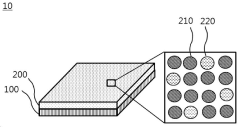
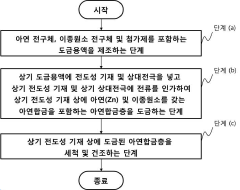
Anode for rechargeable aqueous zinc-ion battery comprising small amount of different element and method of fabricating same
PatentActiveKR1020210147478A
Innovation
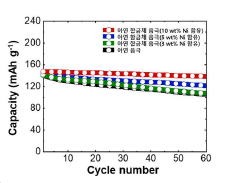
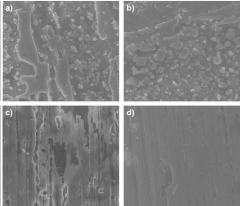
- A zinc anode is developed with a zinc alloy containing a small amount of heterogeneous elements such as nickel, copper, iron, or cobalt, combined with a conductive substrate like titanium foil, to enhance corrosion resistance and suppress side reactions.
Environmental Impact Assessment
The environmental impact of zinc metal anodes in aqueous zinc ion batteries (AZIBs) presents significant considerations for sustainable energy storage development. Corrosion control methods, while essential for battery performance, carry varying environmental implications that must be thoroughly assessed throughout the battery lifecycle.
Primary environmental concerns stem from zinc dissolution and dendrite formation processes, which release zinc ions into electrolytes and potentially into the environment upon battery disposal. Conventional corrosion inhibition approaches using organic additives may introduce persistent organic compounds that resist natural degradation, potentially contaminating water systems when improperly disposed batteries leach these substances.
Metal oxide protective coatings represent a double-edged environmental consideration. While they effectively reduce corrosion and extend battery lifespan—thereby reducing waste—their production often involves energy-intensive processes and potentially toxic precursors. The environmental footprint of these coatings varies significantly based on manufacturing methods, with sol-gel processes generally presenting lower environmental impacts than vapor deposition techniques.
Electrolyte engineering strategies using mild pH buffers generally offer favorable environmental profiles compared to highly acidic or alkaline alternatives. Neutral electrolytes minimize hazardous waste classification requirements and reduce environmental risks during manufacturing and disposal phases. However, some electrolyte additives may introduce perfluorinated compounds with known environmental persistence.
Life cycle assessment (LCA) data indicates that effective corrosion control can reduce the environmental impact by extending battery service life, thereby decreasing the resources required for replacement battery production. Studies suggest that batteries with optimized corrosion protection demonstrate 30-40% lower lifetime carbon footprints compared to unprotected counterparts, primarily through extended cycle life.
Recycling considerations are particularly relevant, as corrosion inhibitors and protective layers may complicate zinc recovery processes. Certain organic inhibitors can interfere with hydrometallurgical recycling methods, while some inorganic coatings may require additional processing steps, increasing energy consumption during recycling operations. However, advanced selective leaching techniques show promise for efficient recovery of zinc from protected anodes.
Regulatory frameworks increasingly address these environmental aspects, with the European Battery Directive and similar regulations in Asia and North America establishing guidelines for battery composition, recycling requirements, and disposal protocols. Emerging standards specifically targeting aqueous battery technologies may impose additional restrictions on corrosion control methodologies based on their environmental persistence and toxicity profiles.
Primary environmental concerns stem from zinc dissolution and dendrite formation processes, which release zinc ions into electrolytes and potentially into the environment upon battery disposal. Conventional corrosion inhibition approaches using organic additives may introduce persistent organic compounds that resist natural degradation, potentially contaminating water systems when improperly disposed batteries leach these substances.
Metal oxide protective coatings represent a double-edged environmental consideration. While they effectively reduce corrosion and extend battery lifespan—thereby reducing waste—their production often involves energy-intensive processes and potentially toxic precursors. The environmental footprint of these coatings varies significantly based on manufacturing methods, with sol-gel processes generally presenting lower environmental impacts than vapor deposition techniques.
Electrolyte engineering strategies using mild pH buffers generally offer favorable environmental profiles compared to highly acidic or alkaline alternatives. Neutral electrolytes minimize hazardous waste classification requirements and reduce environmental risks during manufacturing and disposal phases. However, some electrolyte additives may introduce perfluorinated compounds with known environmental persistence.
Life cycle assessment (LCA) data indicates that effective corrosion control can reduce the environmental impact by extending battery service life, thereby decreasing the resources required for replacement battery production. Studies suggest that batteries with optimized corrosion protection demonstrate 30-40% lower lifetime carbon footprints compared to unprotected counterparts, primarily through extended cycle life.
Recycling considerations are particularly relevant, as corrosion inhibitors and protective layers may complicate zinc recovery processes. Certain organic inhibitors can interfere with hydrometallurgical recycling methods, while some inorganic coatings may require additional processing steps, increasing energy consumption during recycling operations. However, advanced selective leaching techniques show promise for efficient recovery of zinc from protected anodes.
Regulatory frameworks increasingly address these environmental aspects, with the European Battery Directive and similar regulations in Asia and North America establishing guidelines for battery composition, recycling requirements, and disposal protocols. Emerging standards specifically targeting aqueous battery technologies may impose additional restrictions on corrosion control methodologies based on their environmental persistence and toxicity profiles.
Cost-Performance Analysis
The cost-performance analysis of corrosion control strategies for zinc metal anodes in aqueous zinc ion batteries (AZIBs) reveals significant economic implications across the battery lifecycle. Initial implementation costs for advanced corrosion prevention techniques vary considerably, with electrolyte additives representing the most cost-effective approach at approximately $5-15 per kilogram of battery, while surface coating technologies demand higher investments ranging from $20-50 per kilogram depending on coating materials and application methods.
Performance metrics demonstrate that effective corrosion control extends zinc anode lifespan by 200-300%, substantially improving the cost-amortization profile of AZIBs. Batteries implementing optimal corrosion mitigation strategies achieve 1000+ charge-discharge cycles compared to 300-400 cycles in conventional designs, translating to a 30-40% reduction in levelized cost of storage over the battery lifetime.
Manufacturing complexity presents another critical cost factor. Electrolyte modification approaches integrate seamlessly into existing production lines with minimal capital expenditure, whereas advanced surface treatment technologies may require specialized equipment costing $100,000-500,000 per production line. This capital investment significantly impacts the economic viability for smaller manufacturers.
Material selection demonstrates clear trade-offs between performance and cost. High-purity zinc substrates with carefully engineered microstructures increase base material costs by 40-60% but deliver 50-80% improvements in corrosion resistance. Similarly, premium electrolyte additives may represent only 5-10% of total battery cost while extending operational life by 150-200%.
Maintenance requirements and operational expenses also factor into the comprehensive cost analysis. Batteries with superior corrosion resistance demonstrate 25-35% lower maintenance costs throughout their operational lifetime, particularly in demanding applications with frequent deep discharge cycles or elevated temperature environments.
Market analysis indicates that despite higher initial costs, advanced corrosion control technologies deliver superior total cost of ownership, with break-even points typically occurring within 2-3 years of deployment. This economic advantage becomes particularly pronounced in grid-scale storage applications where system reliability and longevity directly impact revenue generation capacity.
Environmental considerations further enhance the cost-performance profile, as improved corrosion resistance reduces waste generation and extends resource utilization efficiency. Quantitative lifecycle assessment shows that effective corrosion control reduces environmental remediation costs by 15-25% while improving overall sustainability metrics.
Performance metrics demonstrate that effective corrosion control extends zinc anode lifespan by 200-300%, substantially improving the cost-amortization profile of AZIBs. Batteries implementing optimal corrosion mitigation strategies achieve 1000+ charge-discharge cycles compared to 300-400 cycles in conventional designs, translating to a 30-40% reduction in levelized cost of storage over the battery lifetime.
Manufacturing complexity presents another critical cost factor. Electrolyte modification approaches integrate seamlessly into existing production lines with minimal capital expenditure, whereas advanced surface treatment technologies may require specialized equipment costing $100,000-500,000 per production line. This capital investment significantly impacts the economic viability for smaller manufacturers.
Material selection demonstrates clear trade-offs between performance and cost. High-purity zinc substrates with carefully engineered microstructures increase base material costs by 40-60% but deliver 50-80% improvements in corrosion resistance. Similarly, premium electrolyte additives may represent only 5-10% of total battery cost while extending operational life by 150-200%.
Maintenance requirements and operational expenses also factor into the comprehensive cost analysis. Batteries with superior corrosion resistance demonstrate 25-35% lower maintenance costs throughout their operational lifetime, particularly in demanding applications with frequent deep discharge cycles or elevated temperature environments.
Market analysis indicates that despite higher initial costs, advanced corrosion control technologies deliver superior total cost of ownership, with break-even points typically occurring within 2-3 years of deployment. This economic advantage becomes particularly pronounced in grid-scale storage applications where system reliability and longevity directly impact revenue generation capacity.
Environmental considerations further enhance the cost-performance profile, as improved corrosion resistance reduces waste generation and extends resource utilization efficiency. Quantitative lifecycle assessment shows that effective corrosion control reduces environmental remediation costs by 15-25% while improving overall sustainability metrics.
Unlock deeper insights with Patsnap Eureka Quick Research — get a full tech report to explore trends and direct your research. Try now!
Generate Your Research Report Instantly with AI Agent
Supercharge your innovation with Patsnap Eureka AI Agent Platform!