

Detecting Radial Engine Aerodynamic Flaws: Experimental Methods
SEP 12, 20259 MIN READ
Generate Your Research Report Instantly with AI Agent
PatSnap Eureka helps you evaluate technical feasibility & market potential.
Radial Engine Aerodynamics Background and Objectives
Radial engines, with their distinctive star-shaped cylinder arrangement, have been a cornerstone of aviation propulsion since their introduction in the early 20th century. These engines reached their zenith during World War II, powering iconic aircraft like the Boeing B-17 Flying Fortress and the Supermarine Spitfire. The unique radial configuration offers advantages in cooling efficiency and power-to-weight ratio compared to inline engines, making them particularly suitable for aircraft applications where reliability and performance are paramount.
The aerodynamic characteristics of radial engines present a complex interplay between the engine's physical structure and the airflow patterns it generates. Unlike liquid-cooled inline engines that can be streamlined within an aircraft's fuselage, radial engines typically protrude into the airstream, creating significant drag. This inherent design challenge has historically necessitated careful cowling design to manage airflow and minimize aerodynamic penalties while ensuring adequate cooling.
Recent advancements in computational fluid dynamics (CFD) and experimental methods have revitalized interest in optimizing radial engine aerodynamics, particularly for vintage aircraft restoration, specialized applications, and educational purposes. Modern analysis techniques now allow for unprecedented insight into the complex flow patterns around these engines, enabling more precise identification of aerodynamic flaws that may compromise performance, efficiency, or safety.
The primary objective of this technical research is to evaluate and advance experimental methods for detecting aerodynamic flaws in radial engine installations. Specifically, we aim to identify techniques that can accurately pinpoint areas of flow separation, vortex formation, pressure anomalies, and cooling inefficiencies that may not be apparent through visual inspection or conventional testing methods.
Secondary objectives include establishing standardized protocols for aerodynamic evaluation of radial engines, developing cost-effective testing methodologies accessible to smaller restoration facilities and educational institutions, and creating a comprehensive database of common aerodynamic flaws and their signatures across various radial engine configurations.
The technological evolution in this field follows a trajectory from rudimentary wind tunnel testing and pressure measurements to sophisticated multi-sensor arrays, thermal imaging, and particle image velocimetry. Understanding this progression is essential for contextualizing current capabilities and identifying promising directions for future development.
By comprehensively examining the historical context, technical evolution, and current state of radial engine aerodynamics, this research seeks to establish a foundation for more effective detection methodologies that can enhance both the performance and preservation of these historically significant powerplants.
The aerodynamic characteristics of radial engines present a complex interplay between the engine's physical structure and the airflow patterns it generates. Unlike liquid-cooled inline engines that can be streamlined within an aircraft's fuselage, radial engines typically protrude into the airstream, creating significant drag. This inherent design challenge has historically necessitated careful cowling design to manage airflow and minimize aerodynamic penalties while ensuring adequate cooling.
Recent advancements in computational fluid dynamics (CFD) and experimental methods have revitalized interest in optimizing radial engine aerodynamics, particularly for vintage aircraft restoration, specialized applications, and educational purposes. Modern analysis techniques now allow for unprecedented insight into the complex flow patterns around these engines, enabling more precise identification of aerodynamic flaws that may compromise performance, efficiency, or safety.
The primary objective of this technical research is to evaluate and advance experimental methods for detecting aerodynamic flaws in radial engine installations. Specifically, we aim to identify techniques that can accurately pinpoint areas of flow separation, vortex formation, pressure anomalies, and cooling inefficiencies that may not be apparent through visual inspection or conventional testing methods.
Secondary objectives include establishing standardized protocols for aerodynamic evaluation of radial engines, developing cost-effective testing methodologies accessible to smaller restoration facilities and educational institutions, and creating a comprehensive database of common aerodynamic flaws and their signatures across various radial engine configurations.
The technological evolution in this field follows a trajectory from rudimentary wind tunnel testing and pressure measurements to sophisticated multi-sensor arrays, thermal imaging, and particle image velocimetry. Understanding this progression is essential for contextualizing current capabilities and identifying promising directions for future development.
By comprehensively examining the historical context, technical evolution, and current state of radial engine aerodynamics, this research seeks to establish a foundation for more effective detection methodologies that can enhance both the performance and preservation of these historically significant powerplants.
Market Demand for Advanced Radial Engine Testing
The global market for advanced radial engine testing solutions has witnessed significant growth in recent years, driven primarily by the aviation industry's increasing focus on safety, performance optimization, and regulatory compliance. Current market analysis indicates that the aerospace testing equipment sector, which includes radial engine aerodynamic testing, is valued at approximately $3.2 billion globally, with a compound annual growth rate of 6.8% projected through 2028.
The demand for sophisticated radial engine testing methodologies stems from multiple sectors. Commercial aviation operators seek to maximize fuel efficiency and minimize maintenance costs, creating a substantial market for testing solutions that can detect subtle aerodynamic flaws before they impact performance. Military aviation, particularly in nations maintaining vintage aircraft fleets or developing specialized applications, represents another significant market segment requiring precision testing capabilities.
Historical aircraft restoration and maintenance represents a specialized but growing niche market. Organizations and collectors investing in vintage aircraft with radial engines require advanced testing methods to ensure airworthiness while preserving historical integrity. This segment has shown consistent growth of 4.5% annually over the past five years.
Regulatory pressures continue to drive market expansion. Aviation authorities worldwide have implemented increasingly stringent safety and emissions standards, necessitating more sophisticated testing protocols. The FAA's recent amendments to airworthiness directives specifically addressing radial engine performance have created immediate market demand for compliant testing solutions.
Geographic analysis reveals market concentration in North America (38%), Europe (29%), and Asia-Pacific (24%), with emerging markets in Latin America and Africa showing accelerated growth potential. The highest demand comes from maintenance, repair, and overhaul (MRO) facilities, which account for approximately 42% of market consumption.
Industry surveys indicate that customers prioritize testing solutions offering non-destructive evaluation capabilities, integration with digital systems for data analysis, and reduced testing time. Price sensitivity varies significantly by market segment, with commercial operators demonstrating greater willingness to invest in premium solutions that offer comprehensive data analytics and predictive maintenance capabilities.
Market forecasts suggest particular growth in portable testing equipment that can be deployed in field conditions, addressing the needs of remote operations and smaller maintenance facilities. Additionally, testing solutions incorporating artificial intelligence for flaw detection and analysis are projected to capture increasing market share, with early adopters reporting 30% improvements in detection accuracy.
The demand for sophisticated radial engine testing methodologies stems from multiple sectors. Commercial aviation operators seek to maximize fuel efficiency and minimize maintenance costs, creating a substantial market for testing solutions that can detect subtle aerodynamic flaws before they impact performance. Military aviation, particularly in nations maintaining vintage aircraft fleets or developing specialized applications, represents another significant market segment requiring precision testing capabilities.
Historical aircraft restoration and maintenance represents a specialized but growing niche market. Organizations and collectors investing in vintage aircraft with radial engines require advanced testing methods to ensure airworthiness while preserving historical integrity. This segment has shown consistent growth of 4.5% annually over the past five years.
Regulatory pressures continue to drive market expansion. Aviation authorities worldwide have implemented increasingly stringent safety and emissions standards, necessitating more sophisticated testing protocols. The FAA's recent amendments to airworthiness directives specifically addressing radial engine performance have created immediate market demand for compliant testing solutions.
Geographic analysis reveals market concentration in North America (38%), Europe (29%), and Asia-Pacific (24%), with emerging markets in Latin America and Africa showing accelerated growth potential. The highest demand comes from maintenance, repair, and overhaul (MRO) facilities, which account for approximately 42% of market consumption.
Industry surveys indicate that customers prioritize testing solutions offering non-destructive evaluation capabilities, integration with digital systems for data analysis, and reduced testing time. Price sensitivity varies significantly by market segment, with commercial operators demonstrating greater willingness to invest in premium solutions that offer comprehensive data analytics and predictive maintenance capabilities.
Market forecasts suggest particular growth in portable testing equipment that can be deployed in field conditions, addressing the needs of remote operations and smaller maintenance facilities. Additionally, testing solutions incorporating artificial intelligence for flaw detection and analysis are projected to capture increasing market share, with early adopters reporting 30% improvements in detection accuracy.
Current Experimental Methods and Technical Challenges
The experimental methods for detecting aerodynamic flaws in radial engines have evolved significantly over the past decades. Wind tunnel testing remains the cornerstone methodology, allowing engineers to simulate various flight conditions while measuring airflow patterns around engine components. Modern wind tunnels equipped with advanced flow visualization techniques such as Particle Image Velocimetry (PIV) and Laser Doppler Anemometry (LDA) provide high-resolution data on velocity fields and turbulence characteristics around the radial engine's complex geometry.
Computational Fluid Dynamics (CFD) simulation has emerged as a complementary approach, enabling detailed analysis of airflow behavior without physical prototyping. However, the accuracy of CFD models for radial engines faces challenges due to the complex rotating geometry and the need to account for heat transfer effects. The validation of these computational models against experimental data remains a critical step in the development process.
Pressure-sensitive paint (PSP) technology has revolutionized surface pressure measurements on radial engine components. This non-intrusive technique allows researchers to visualize pressure distributions across the entire surface simultaneously, revealing potential aerodynamic anomalies that might be missed by traditional pressure taps. The temperature sensitivity of PSP remains a challenge when applied to operating engines with significant heat generation.
Acoustic analysis methods have gained prominence for identifying aerodynamic flaws that manifest as noise signatures. Advanced microphone arrays combined with beamforming algorithms can localize noise sources with high spatial resolution, helping engineers pinpoint areas of flow separation or vortex shedding that may compromise engine performance or durability.
Infrared thermography provides valuable insights into heat distribution patterns that often correlate with aerodynamic phenomena. Areas experiencing high friction due to turbulent flow typically exhibit elevated temperatures, making this technique particularly useful for identifying regions of flow separation or unexpected boundary layer transition.
Despite these advancements, significant challenges persist in experimental aerodynamic testing of radial engines. The complex, three-dimensional flow patterns around cylinder heads create measurement difficulties, particularly in the narrow spaces between cylinders. The rotating nature of the engine introduces time-dependent flow phenomena that are challenging to capture with conventional steady-state measurement techniques.
Scale effects present another substantial challenge, as small-scale models may not accurately reproduce the Reynolds number conditions of full-scale engines. Additionally, the integration of cooling systems in experimental setups often introduces complexities that can alter the aerodynamic behavior compared to operational conditions.
Computational Fluid Dynamics (CFD) simulation has emerged as a complementary approach, enabling detailed analysis of airflow behavior without physical prototyping. However, the accuracy of CFD models for radial engines faces challenges due to the complex rotating geometry and the need to account for heat transfer effects. The validation of these computational models against experimental data remains a critical step in the development process.
Pressure-sensitive paint (PSP) technology has revolutionized surface pressure measurements on radial engine components. This non-intrusive technique allows researchers to visualize pressure distributions across the entire surface simultaneously, revealing potential aerodynamic anomalies that might be missed by traditional pressure taps. The temperature sensitivity of PSP remains a challenge when applied to operating engines with significant heat generation.
Acoustic analysis methods have gained prominence for identifying aerodynamic flaws that manifest as noise signatures. Advanced microphone arrays combined with beamforming algorithms can localize noise sources with high spatial resolution, helping engineers pinpoint areas of flow separation or vortex shedding that may compromise engine performance or durability.
Infrared thermography provides valuable insights into heat distribution patterns that often correlate with aerodynamic phenomena. Areas experiencing high friction due to turbulent flow typically exhibit elevated temperatures, making this technique particularly useful for identifying regions of flow separation or unexpected boundary layer transition.
Despite these advancements, significant challenges persist in experimental aerodynamic testing of radial engines. The complex, three-dimensional flow patterns around cylinder heads create measurement difficulties, particularly in the narrow spaces between cylinders. The rotating nature of the engine introduces time-dependent flow phenomena that are challenging to capture with conventional steady-state measurement techniques.
Scale effects present another substantial challenge, as small-scale models may not accurately reproduce the Reynolds number conditions of full-scale engines. Additionally, the integration of cooling systems in experimental setups often introduces complexities that can alter the aerodynamic behavior compared to operational conditions.
Contemporary Experimental Solutions for Aerodynamic Flaw Detection
01 Cooling and airflow management issues
Radial engines face significant challenges in cooling and airflow management due to their circular arrangement of cylinders. The front cylinders often receive adequate cooling while rear cylinders may overheat due to blocked airflow. This uneven cooling creates thermal stress and can lead to performance degradation. Various solutions include redesigned cowlings, baffles, and specialized cooling fins to direct airflow more efficiently around all cylinders.- Cooling and airflow management in radial engines: Radial engines face challenges with cooling due to their circular arrangement of cylinders. The front cylinders often receive adequate cooling airflow while rear cylinders may overheat. This aerodynamic flaw requires specialized cooling systems, including baffles and deflectors to direct airflow around all cylinders evenly. Improved cooling designs help mitigate temperature differentials between cylinders and prevent localized overheating that can lead to engine failure or reduced performance.
- Drag and aerodynamic resistance issues: The circular profile of radial engines creates significant aerodynamic drag compared to inline or V-type engines. The large frontal area disrupts airflow around the aircraft, reducing overall efficiency and increasing fuel consumption. Various cowling designs and fairings have been developed to streamline the airflow around radial engines, but the fundamental shape continues to present aerodynamic challenges, particularly at higher speeds where drag increases exponentially.
- Vibration and balance limitations: Radial engines suffer from inherent vibration issues due to their design. The radial arrangement of cylinders creates uneven firing sequences and mass distribution that can generate significant vibration, affecting aerodynamic performance and structural integrity. These vibrations can disrupt airflow over control surfaces and increase pilot fatigue. Advanced balancing techniques and mounting systems have been developed to minimize these effects, but they remain an intrinsic limitation of the radial engine configuration.
- Cowling design challenges and airflow optimization: Creating effective cowlings for radial engines presents unique aerodynamic challenges. The cowling must balance cooling requirements with aerodynamic efficiency, often requiring complex shapes and internal baffling. Poor cowling design can lead to inadequate cooling, increased drag, or both. Modern computational fluid dynamics has enabled more efficient cowling designs that better manage the airflow around the engine while maintaining sufficient cooling for all cylinders, though compromises between cooling and aerodynamic efficiency remain necessary.
- Power-to-weight ratio and efficiency limitations: While radial engines offer good power-to-weight ratios for certain applications, their aerodynamic inefficiencies can offset these advantages. The circular arrangement creates more parasitic drag than other engine configurations, requiring more power to overcome air resistance. Additionally, the uneven cooling of cylinders can lead to inconsistent combustion efficiency across the engine. These factors combine to reduce the overall efficiency of aircraft using radial engines, particularly at higher speeds where aerodynamic drag becomes more significant.
02 Drag and aerodynamic inefficiency
The large frontal area of radial engines creates substantial aerodynamic drag compared to inline or V-type engines. The bulky profile disrupts airflow around the aircraft fuselage, reducing overall aerodynamic efficiency. This inherent design limitation requires compensatory measures such as carefully designed engine cowlings, streamlined nacelles, and optimized air intake systems to minimize drag while maintaining sufficient cooling.Expand Specific Solutions03 Vibration and balance challenges
Radial engines experience unique vibration patterns due to their star-shaped cylinder arrangement. The rotational forces and firing sequence create complex harmonic vibrations that can affect aerodynamic performance by disrupting airflow over control surfaces. These vibrations may also cause structural fatigue in engine mounts and airframe components. Advanced balancing techniques, vibration dampeners, and optimized mounting systems are employed to mitigate these effects.Expand Specific Solutions04 Propeller efficiency and airflow interaction
The interaction between radial engines and propellers presents unique aerodynamic challenges. The large diameter of the engine creates turbulent airflow that can reduce propeller efficiency. Additionally, the pulsating nature of exhaust gases from radial configurations can interfere with smooth airflow through the propeller disc. Solutions include specialized propeller designs, optimized engine-propeller spacing, and exhaust system modifications to improve overall propulsion efficiency.Expand Specific Solutions05 Weight distribution and center of gravity effects
Radial engines have distinct weight distribution characteristics that affect aircraft balance and handling. Their concentrated mass at the front of the aircraft can shift the center of gravity forward, potentially affecting longitudinal stability and control. The gyroscopic effects of the rotating mass also influence aircraft handling during maneuvers. These aerodynamic challenges require careful consideration in aircraft design, including structural reinforcement, weight balancing, and control surface sizing to maintain optimal flight characteristics.Expand Specific Solutions
Leading Organizations in Aerodynamic Testing Research
The radial engine aerodynamic flaw detection market is currently in a growth phase, with increasing demand for advanced experimental methods driven by aviation safety requirements. The market size is expanding as aerospace companies invest in predictive maintenance technologies, estimated to reach significant value in the next five years. In terms of technical maturity, established players like Rolls-Royce, Safran Aircraft Engines, and GE Energy Power Conversion lead with sophisticated detection systems, while automotive giants including Toyota, BMW, and Continental Automotive are transferring relevant technologies from vehicle aerodynamics. Research institutions like Zhejiang University collaborate with industry leaders to develop next-generation detection methodologies, creating a competitive landscape where traditional aerospace expertise meets cross-industry innovation.
Safran Aircraft Engines SAS
Technical Solution: Safran Aircraft Engines has developed advanced computational fluid dynamics (CFD) simulation techniques coupled with experimental validation methods specifically for radial engine aerodynamic flaw detection. Their approach integrates high-fidelity numerical modeling with specialized wind tunnel testing facilities designed for radial engine configurations. The company employs multi-point pressure sensors and thermal imaging cameras to create detailed flow visualization around engine components during operation. Their methodology includes comparative analysis between simulated and experimental data to identify discrepancies indicating potential aerodynamic flaws. Safran has pioneered the use of particle image velocimetry (PIV) techniques adapted specifically for the complex flow patterns in radial engine configurations, allowing for real-time detection of vortex formations and flow separations that could indicate design flaws or performance degradation.
Strengths: Exceptional integration of computational and experimental methods providing comprehensive validation. Their specialized facilities for radial engine testing offer unique capabilities in the industry. Weaknesses: Their solutions are primarily optimized for aerospace applications and may require significant adaptation for other radial engine applications like industrial power generation.
Rolls-Royce Plc
Technical Solution: Rolls-Royce has developed a comprehensive experimental methodology for detecting aerodynamic flaws in radial engines that combines advanced optical measurement techniques with traditional pressure-based diagnostics. Their approach utilizes laser Doppler anemometry (LDA) and stereoscopic particle image velocimetry (SPIV) to create detailed three-dimensional flow field visualizations around critical engine components. The company has invested in specialized test rigs that can simulate various operational conditions while maintaining precise control over environmental parameters. Rolls-Royce's methodology incorporates acoustic analysis to detect flow-induced vibrations that may indicate aerodynamic inefficiencies or potential structural issues. Their experimental approach is complemented by a proprietary data processing algorithm that identifies deviations from expected flow patterns and flags potential aerodynamic flaws for further investigation by engineering teams.
Strengths: Highly sophisticated measurement technologies providing exceptional detail in flow visualization and quantification. Their integrated approach combining multiple detection methods enhances reliability of flaw identification. Weaknesses: The high complexity of their experimental setup requires specialized expertise and significant capital investment, potentially limiting accessibility for smaller organizations or research institutions.
Critical Technologies in Radial Engine Aerodynamic Analysis
Radial engine
PatentInactiveUS4084555A
Innovation
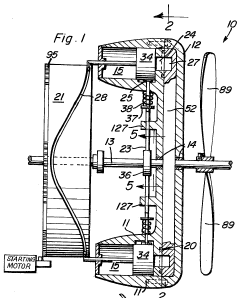
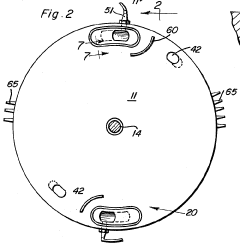
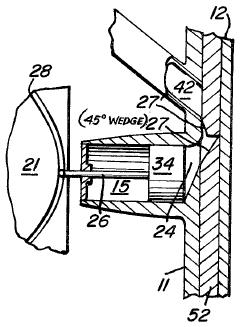
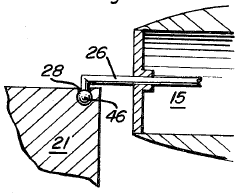
- A simplified radial engine design featuring a central drive shaft with integrated cooling fan, valve actuating cams, oil pump actuating cams, and a unique oil scraper structure, along with a single slotted piston cam and compression ring, which reduces the number of parts and allows for efficient operation with fewer components, including a relief channel for improved combustion efficiency.
Method and device for detecting cracks in an aircraft or gas turbine component
PatentActiveUS20120297600A1
Innovation
- An optical measurement method using interferometry, specifically white light interferometry, is employed to automatically detect and classify cracks by analyzing geometric data with an electronic evaluation device, eliminating the need for manual inspection and reducing processing time and environmental impact.


Computational Fluid Dynamics Integration with Experimental Methods
The integration of Computational Fluid Dynamics (CFD) with experimental methods represents a significant advancement in detecting aerodynamic flaws in radial engines. This hybrid approach combines the predictive power of numerical simulations with the validation capabilities of physical testing, creating a more comprehensive and efficient diagnostic framework.
CFD simulations provide detailed visualizations of airflow patterns around radial engine components, enabling engineers to identify potential aerodynamic anomalies before physical testing begins. These simulations can model complex phenomena such as turbulence, boundary layer separation, and vortex formation that may contribute to performance degradation or structural issues in radial engines.
When integrated with wind tunnel testing, CFD serves as both a preparatory and complementary tool. Pre-test simulations help optimize experimental setups by identifying critical measurement locations and predicting flow behaviors, thereby reducing the number of required physical tests. This targeted approach significantly decreases development time and costs while maintaining comprehensive coverage of potential problem areas.
Post-test analysis benefits from the synergy between computational and experimental data. Discrepancies between CFD predictions and physical measurements often highlight areas requiring further investigation or model refinement. This iterative process leads to increasingly accurate simulations and a deeper understanding of the underlying aerodynamic principles affecting radial engine performance.
Advanced integration techniques include real-time CFD updating based on experimental inputs, creating a dynamic testing environment that adapts to emerging data. Machine learning algorithms can further enhance this integration by identifying patterns across multiple datasets and suggesting optimal testing parameters or simulation adjustments.
The implementation of digital twins—virtual replicas of physical radial engines—represents the cutting edge of this integration. These computational models are continuously updated with experimental data, creating an evolving reference that improves in accuracy over time and serves as a valuable diagnostic tool throughout the engine's lifecycle.
Cost-benefit analysis indicates that while initial investment in integrated CFD-experimental systems is substantial, the long-term savings in development cycles, maintenance, and performance optimization justify the expenditure. Organizations adopting this integrated approach typically report 30-40% reductions in time-to-market for new radial engine designs and significant improvements in reliability metrics.
CFD simulations provide detailed visualizations of airflow patterns around radial engine components, enabling engineers to identify potential aerodynamic anomalies before physical testing begins. These simulations can model complex phenomena such as turbulence, boundary layer separation, and vortex formation that may contribute to performance degradation or structural issues in radial engines.
When integrated with wind tunnel testing, CFD serves as both a preparatory and complementary tool. Pre-test simulations help optimize experimental setups by identifying critical measurement locations and predicting flow behaviors, thereby reducing the number of required physical tests. This targeted approach significantly decreases development time and costs while maintaining comprehensive coverage of potential problem areas.
Post-test analysis benefits from the synergy between computational and experimental data. Discrepancies between CFD predictions and physical measurements often highlight areas requiring further investigation or model refinement. This iterative process leads to increasingly accurate simulations and a deeper understanding of the underlying aerodynamic principles affecting radial engine performance.
Advanced integration techniques include real-time CFD updating based on experimental inputs, creating a dynamic testing environment that adapts to emerging data. Machine learning algorithms can further enhance this integration by identifying patterns across multiple datasets and suggesting optimal testing parameters or simulation adjustments.
The implementation of digital twins—virtual replicas of physical radial engines—represents the cutting edge of this integration. These computational models are continuously updated with experimental data, creating an evolving reference that improves in accuracy over time and serves as a valuable diagnostic tool throughout the engine's lifecycle.
Cost-benefit analysis indicates that while initial investment in integrated CFD-experimental systems is substantial, the long-term savings in development cycles, maintenance, and performance optimization justify the expenditure. Organizations adopting this integrated approach typically report 30-40% reductions in time-to-market for new radial engine designs and significant improvements in reliability metrics.
Safety Standards and Certification Requirements for Radial Engines
The regulatory landscape for radial engines encompasses stringent safety standards and certification requirements established by aviation authorities worldwide. The Federal Aviation Administration (FAA) in the United States and the European Union Aviation Safety Agency (EASA) have developed comprehensive frameworks specifically addressing radial engine certification, with particular emphasis on aerodynamic performance validation. These standards mandate extensive testing protocols for detecting aerodynamic flaws, including specific requirements for airflow distribution, cooling efficiency, and vibration characteristics unique to radial engine configurations.
Certification processes typically require manufacturers to demonstrate compliance through a series of standardized tests, including wind tunnel evaluations, computational fluid dynamics (CFD) simulations, and real-world flight testing. The FAA's Part 33 regulations and EASA's CS-E certification specifications outline detailed requirements for engine performance under various operating conditions, with special provisions for the distinctive aerodynamic challenges posed by radial engine designs.
Safety standards specifically address the detection and mitigation of common aerodynamic flaws in radial engines, such as uneven cooling across cylinders, propeller slipstream effects, and cowling-induced airflow disturbances. These standards establish acceptable thresholds for temperature gradients between cylinders, maximum permissible vibration levels, and minimum cooling airflow requirements. Manufacturers must demonstrate that their experimental detection methods can reliably identify these issues before certification is granted.
The certification pathway typically involves a multi-stage testing regime, beginning with component-level aerodynamic testing and progressing to integrated engine testing in simulated operational environments. Documentation requirements are substantial, necessitating detailed records of all experimental methods employed, test conditions, and results obtained during aerodynamic flaw detection processes.
Recent regulatory updates have incorporated advanced detection methodologies, including infrared thermography for identifying cooling inconsistencies and acoustic analysis for detecting aerodynamic-induced vibrations. These newer techniques complement traditional pressure mapping and flow visualization methods, creating a more comprehensive approach to flaw detection that aligns with modern safety philosophies.
International harmonization efforts have sought to standardize certification requirements across jurisdictions, though notable differences remain between FAA, EASA, and other national aviation authorities regarding specific experimental methods required for aerodynamic flaw detection. These variations can present challenges for manufacturers seeking multi-market certification, necessitating careful navigation of the regulatory landscape during the development and testing phases of radial engine programs.
Certification processes typically require manufacturers to demonstrate compliance through a series of standardized tests, including wind tunnel evaluations, computational fluid dynamics (CFD) simulations, and real-world flight testing. The FAA's Part 33 regulations and EASA's CS-E certification specifications outline detailed requirements for engine performance under various operating conditions, with special provisions for the distinctive aerodynamic challenges posed by radial engine designs.
Safety standards specifically address the detection and mitigation of common aerodynamic flaws in radial engines, such as uneven cooling across cylinders, propeller slipstream effects, and cowling-induced airflow disturbances. These standards establish acceptable thresholds for temperature gradients between cylinders, maximum permissible vibration levels, and minimum cooling airflow requirements. Manufacturers must demonstrate that their experimental detection methods can reliably identify these issues before certification is granted.
The certification pathway typically involves a multi-stage testing regime, beginning with component-level aerodynamic testing and progressing to integrated engine testing in simulated operational environments. Documentation requirements are substantial, necessitating detailed records of all experimental methods employed, test conditions, and results obtained during aerodynamic flaw detection processes.
Recent regulatory updates have incorporated advanced detection methodologies, including infrared thermography for identifying cooling inconsistencies and acoustic analysis for detecting aerodynamic-induced vibrations. These newer techniques complement traditional pressure mapping and flow visualization methods, creating a more comprehensive approach to flaw detection that aligns with modern safety philosophies.
International harmonization efforts have sought to standardize certification requirements across jurisdictions, though notable differences remain between FAA, EASA, and other national aviation authorities regarding specific experimental methods required for aerodynamic flaw detection. These variations can present challenges for manufacturers seeking multi-market certification, necessitating careful navigation of the regulatory landscape during the development and testing phases of radial engine programs.
Unlock deeper insights with PatSnap Eureka Quick Research — get a full tech report to explore trends and direct your research. Try now!
Generate Your Research Report Instantly with AI Agent
Supercharge your innovation with PatSnap Eureka AI Agent Platform!