
Dynamic Light Scattering in Cosmetics for Emulsion Stability
SEP 5, 20259 MIN READ
Generate Your Research Report Instantly with AI Agent
Patsnap Eureka helps you evaluate technical feasibility & market potential.
DLS Technology Evolution and Objectives
Dynamic Light Scattering (DLS) technology has evolved significantly since its theoretical foundations were established in the early 20th century. Initially developed as a scientific tool for studying Brownian motion, DLS has transformed into a sophisticated analytical technique with diverse applications across multiple industries. The evolution of DLS technology accelerated in the 1960s with the advent of lasers, which provided coherent light sources necessary for precise scattering measurements.
In the cosmetics industry specifically, DLS technology integration began in the 1980s but gained substantial momentum in the early 2000s as manufacturers sought more reliable methods to assess emulsion stability. This technological progression coincided with increasing consumer demands for longer-lasting and more stable cosmetic formulations, particularly in high-value segments like anti-aging products and sunscreens.
The miniaturization of DLS equipment represents a significant milestone in its evolution. Early DLS systems were bulky laboratory instruments requiring specialized operation, whereas modern systems offer benchtop or even portable solutions with user-friendly interfaces. This transformation has democratized access to DLS technology across cosmetic research and development departments of varying sizes and resources.
Computational advancements have similarly revolutionized DLS applications in cosmetics. Contemporary DLS systems incorporate sophisticated algorithms that can process complex scattering data from polydisperse emulsions—a critical capability for cosmetic formulations that typically contain multiple particle populations. Machine learning integration, emerging since 2015, has further enhanced the predictive capabilities of DLS for long-term emulsion stability assessment.
The primary technological objective for DLS in cosmetics centers on achieving real-time monitoring capabilities for production environments. Current research focuses on developing in-line DLS systems that can continuously assess emulsion characteristics during manufacturing, enabling immediate adjustments to formulation parameters. This would represent a paradigm shift from traditional quality control approaches that rely on periodic sampling and retrospective analysis.
Another crucial objective involves expanding DLS applicability across diverse cosmetic matrices. While DLS performs reliably with simple emulsions, complex formulations containing multiple active ingredients, thickeners, and optical modifiers present significant analytical challenges. Researchers aim to develop specialized sample preparation protocols and advanced data interpretation models to overcome these limitations.
Looking forward, the integration of DLS with complementary analytical techniques represents a promising frontier. Hybrid systems combining DLS with rheological measurements or spectroscopic methods could provide comprehensive characterization of both physical stability and chemical composition, offering unprecedented insights into emulsion behavior under various environmental conditions.
In the cosmetics industry specifically, DLS technology integration began in the 1980s but gained substantial momentum in the early 2000s as manufacturers sought more reliable methods to assess emulsion stability. This technological progression coincided with increasing consumer demands for longer-lasting and more stable cosmetic formulations, particularly in high-value segments like anti-aging products and sunscreens.
The miniaturization of DLS equipment represents a significant milestone in its evolution. Early DLS systems were bulky laboratory instruments requiring specialized operation, whereas modern systems offer benchtop or even portable solutions with user-friendly interfaces. This transformation has democratized access to DLS technology across cosmetic research and development departments of varying sizes and resources.
Computational advancements have similarly revolutionized DLS applications in cosmetics. Contemporary DLS systems incorporate sophisticated algorithms that can process complex scattering data from polydisperse emulsions—a critical capability for cosmetic formulations that typically contain multiple particle populations. Machine learning integration, emerging since 2015, has further enhanced the predictive capabilities of DLS for long-term emulsion stability assessment.
The primary technological objective for DLS in cosmetics centers on achieving real-time monitoring capabilities for production environments. Current research focuses on developing in-line DLS systems that can continuously assess emulsion characteristics during manufacturing, enabling immediate adjustments to formulation parameters. This would represent a paradigm shift from traditional quality control approaches that rely on periodic sampling and retrospective analysis.
Another crucial objective involves expanding DLS applicability across diverse cosmetic matrices. While DLS performs reliably with simple emulsions, complex formulations containing multiple active ingredients, thickeners, and optical modifiers present significant analytical challenges. Researchers aim to develop specialized sample preparation protocols and advanced data interpretation models to overcome these limitations.
Looking forward, the integration of DLS with complementary analytical techniques represents a promising frontier. Hybrid systems combining DLS with rheological measurements or spectroscopic methods could provide comprehensive characterization of both physical stability and chemical composition, offering unprecedented insights into emulsion behavior under various environmental conditions.
Cosmetic Emulsion Market Analysis
The global cosmetic emulsion market has been experiencing robust growth, valued at approximately $8.7 billion in 2022 and projected to reach $13.2 billion by 2028, representing a compound annual growth rate (CAGR) of 7.2%. This growth is primarily driven by increasing consumer demand for high-performance skincare and haircare products, particularly in emerging economies across Asia-Pacific and Latin America.
The market segmentation reveals distinct categories based on emulsion types, with oil-in-water (O/W) emulsions dominating the market share at 65%, followed by water-in-oil (W/O) emulsions at 25%, and multiple emulsions accounting for the remaining 10%. This distribution reflects consumer preferences for lighter textures and improved sensory experiences in cosmetic formulations.
From an application perspective, skincare products represent the largest segment (42%), followed by haircare (28%), color cosmetics (18%), and others (12%). Within the skincare category, anti-aging formulations and moisturizers are witnessing particularly strong demand, with consumers increasingly seeking products that offer multiple benefits simultaneously.
Regional analysis indicates that North America and Europe currently hold the largest market shares at 32% and 30% respectively, though Asia-Pacific is the fastest-growing region with a CAGR of 8.5%. This growth is attributed to rising disposable incomes, increasing urbanization, and growing awareness of personal care products in countries like China, India, and Indonesia.
Key market drivers include growing consumer preference for natural and organic ingredients, increasing demand for multifunctional products, and rising awareness about the importance of product stability and efficacy. The COVID-19 pandemic has further accelerated certain trends, particularly the demand for products with longer shelf life and proven stability.
Market challenges include regulatory pressures regarding ingredient safety, sustainability concerns about certain emulsifiers, and technical difficulties in formulating stable emulsions with natural ingredients. Additionally, manufacturers face increasing pressure to develop products with extended shelf life without compromising on texture or efficacy.
Dynamic Light Scattering (DLS) technology is increasingly being adopted by cosmetic manufacturers for quality control and product development, with the market for DLS equipment in cosmetics estimated to grow at 9.3% annually. This growth underscores the industry's recognition of emulsion stability as a critical factor in product performance and consumer satisfaction.
The market segmentation reveals distinct categories based on emulsion types, with oil-in-water (O/W) emulsions dominating the market share at 65%, followed by water-in-oil (W/O) emulsions at 25%, and multiple emulsions accounting for the remaining 10%. This distribution reflects consumer preferences for lighter textures and improved sensory experiences in cosmetic formulations.
From an application perspective, skincare products represent the largest segment (42%), followed by haircare (28%), color cosmetics (18%), and others (12%). Within the skincare category, anti-aging formulations and moisturizers are witnessing particularly strong demand, with consumers increasingly seeking products that offer multiple benefits simultaneously.
Regional analysis indicates that North America and Europe currently hold the largest market shares at 32% and 30% respectively, though Asia-Pacific is the fastest-growing region with a CAGR of 8.5%. This growth is attributed to rising disposable incomes, increasing urbanization, and growing awareness of personal care products in countries like China, India, and Indonesia.
Key market drivers include growing consumer preference for natural and organic ingredients, increasing demand for multifunctional products, and rising awareness about the importance of product stability and efficacy. The COVID-19 pandemic has further accelerated certain trends, particularly the demand for products with longer shelf life and proven stability.
Market challenges include regulatory pressures regarding ingredient safety, sustainability concerns about certain emulsifiers, and technical difficulties in formulating stable emulsions with natural ingredients. Additionally, manufacturers face increasing pressure to develop products with extended shelf life without compromising on texture or efficacy.
Dynamic Light Scattering (DLS) technology is increasingly being adopted by cosmetic manufacturers for quality control and product development, with the market for DLS equipment in cosmetics estimated to grow at 9.3% annually. This growth underscores the industry's recognition of emulsion stability as a critical factor in product performance and consumer satisfaction.
Current DLS Applications and Limitations
Dynamic Light Scattering (DLS) has established itself as a valuable analytical technique in the cosmetics industry, particularly for evaluating emulsion stability. Currently, DLS is widely employed for particle size analysis in various cosmetic formulations, including creams, lotions, and serums. The technique provides rapid, non-destructive measurements that allow formulators to assess the size distribution of dispersed droplets in emulsions, typically in the range of 1 nm to 10 μm.
In quality control processes, DLS serves as an essential tool for monitoring batch-to-batch consistency and product stability during shelf-life testing. Manufacturers utilize DLS to detect early signs of emulsion destabilization, such as coalescence or flocculation, by tracking changes in particle size distribution over time. This application has proven particularly valuable for accelerated stability testing protocols, where products are subjected to stress conditions to predict long-term stability.
Despite its widespread adoption, DLS faces several significant limitations when applied to cosmetic emulsions. The technique struggles with highly concentrated samples due to multiple scattering effects, often requiring substantial dilution that may alter the original emulsion properties. This dilution step introduces uncertainties about whether the measured properties accurately reflect the behavior of the undiluted product.
Another major limitation is DLS's difficulty in analyzing polydisperse systems, which are common in cosmetic formulations. When particles of vastly different sizes coexist in an emulsion, larger particles can dominate the scattering signal, potentially masking the presence of smaller particles and skewing size distribution results. This becomes particularly problematic when monitoring subtle changes in formulations during stability testing.
The technique also faces challenges with opaque or colored samples, which are prevalent in cosmetic products. High sample opacity can lead to excessive light absorption rather than scattering, reducing measurement accuracy. Additionally, fluorescent ingredients commonly found in cosmetics can interfere with DLS measurements by generating background signals that complicate data interpretation.
Temperature sensitivity represents another limitation, as DLS measurements are significantly affected by temperature fluctuations. Since viscosity changes with temperature and directly impacts Brownian motion—the physical phenomenon DLS measures—maintaining precise temperature control during analysis is critical but often challenging in practical settings.
Finally, DLS provides limited information about particle shape and surface properties, which are crucial factors affecting emulsion stability. The technique assumes spherical particles in its calculations, which may not accurately represent the complex structures present in many cosmetic emulsions, potentially leading to misinterpretation of stability data.
In quality control processes, DLS serves as an essential tool for monitoring batch-to-batch consistency and product stability during shelf-life testing. Manufacturers utilize DLS to detect early signs of emulsion destabilization, such as coalescence or flocculation, by tracking changes in particle size distribution over time. This application has proven particularly valuable for accelerated stability testing protocols, where products are subjected to stress conditions to predict long-term stability.
Despite its widespread adoption, DLS faces several significant limitations when applied to cosmetic emulsions. The technique struggles with highly concentrated samples due to multiple scattering effects, often requiring substantial dilution that may alter the original emulsion properties. This dilution step introduces uncertainties about whether the measured properties accurately reflect the behavior of the undiluted product.
Another major limitation is DLS's difficulty in analyzing polydisperse systems, which are common in cosmetic formulations. When particles of vastly different sizes coexist in an emulsion, larger particles can dominate the scattering signal, potentially masking the presence of smaller particles and skewing size distribution results. This becomes particularly problematic when monitoring subtle changes in formulations during stability testing.
The technique also faces challenges with opaque or colored samples, which are prevalent in cosmetic products. High sample opacity can lead to excessive light absorption rather than scattering, reducing measurement accuracy. Additionally, fluorescent ingredients commonly found in cosmetics can interfere with DLS measurements by generating background signals that complicate data interpretation.
Temperature sensitivity represents another limitation, as DLS measurements are significantly affected by temperature fluctuations. Since viscosity changes with temperature and directly impacts Brownian motion—the physical phenomenon DLS measures—maintaining precise temperature control during analysis is critical but often challenging in practical settings.
Finally, DLS provides limited information about particle shape and surface properties, which are crucial factors affecting emulsion stability. The technique assumes spherical particles in its calculations, which may not accurately represent the complex structures present in many cosmetic emulsions, potentially leading to misinterpretation of stability data.
Modern DLS Methods for Emulsion Characterization
01 DLS techniques for emulsion stability assessment
Dynamic Light Scattering (DLS) is used to assess emulsion stability by measuring particle size distribution and monitoring changes over time. This technique allows for real-time analysis of emulsion droplet sizes, providing insights into stability mechanisms and potential destabilization processes. The method is particularly valuable for detecting early signs of coalescence, flocculation, or Ostwald ripening in emulsion systems.- DLS techniques for emulsion stability assessment: Dynamic Light Scattering (DLS) is used as a primary technique for evaluating the stability of emulsions by measuring particle size distribution and monitoring changes over time. This method allows for real-time analysis of emulsion droplet sizes, providing insights into coalescence, flocculation, and Ostwald ripening processes. The technique is particularly valuable for detecting early signs of instability before visible separation occurs, making it essential for formulation development and quality control.
- Advanced DLS algorithms for complex emulsion systems: Advanced algorithms and mathematical models have been developed to interpret DLS data from complex emulsion systems. These algorithms can distinguish between different particle populations in polydisperse emulsions, account for multiple scattering effects, and provide more accurate size distributions. Machine learning approaches are increasingly being integrated with DLS to improve data analysis and prediction of emulsion stability, particularly for systems with high droplet concentrations or those containing multiple phases.
- Combined DLS and rheological measurements for stability prediction: The combination of DLS with rheological measurements provides comprehensive insights into emulsion stability. While DLS offers information about particle size and distribution, rheological parameters such as viscosity, elasticity, and yield stress correlate with the structural network of the emulsion. This integrated approach enables better prediction of long-term stability and shelf-life by establishing relationships between microstructural changes detected by DLS and macroscopic properties measured through rheology.
- Temperature-controlled DLS for stability testing under variable conditions: Temperature-controlled DLS systems allow for the evaluation of emulsion stability under various environmental conditions. These systems can simulate temperature fluctuations during storage, transportation, or use, providing data on how thermal stress affects droplet size distribution and coalescence rates. This approach is particularly valuable for products that may be exposed to temperature variations, enabling formulators to develop more robust emulsions with enhanced stability across a range of conditions.
- In-line DLS monitoring for continuous emulsion production: In-line DLS monitoring systems have been developed for continuous real-time assessment of emulsion stability during production processes. These systems integrate DLS technology directly into manufacturing lines, allowing for immediate detection of instability issues and enabling rapid adjustments to process parameters. This approach supports quality-by-design principles, reduces batch-to-batch variations, and improves manufacturing efficiency by minimizing the production of out-of-specification emulsions.
02 Advanced DLS instrumentation for emulsion characterization
Specialized DLS instruments have been developed specifically for emulsion stability analysis, featuring improved sensitivity and resolution for polydisperse systems. These instruments incorporate advanced optical configurations, detection systems, and data processing algorithms to accurately characterize complex emulsion systems. Some innovations include multi-angle detection, backscattering technology, and automated measurement protocols for long-term stability studies.Expand Specific Solutions03 Correlation of DLS data with emulsion formulation parameters
Research has established relationships between DLS measurements and emulsion formulation parameters such as surfactant concentration, oil-water ratio, and processing conditions. By analyzing DLS data, formulators can optimize emulsion compositions to enhance stability. This approach enables systematic development of stable emulsions by correlating particle size distributions and zeta potential measurements with formulation variables.Expand Specific Solutions04 Combined DLS and rheological analysis for comprehensive stability assessment
Integrating DLS with rheological measurements provides a more comprehensive understanding of emulsion stability. While DLS reveals information about particle size and distribution, rheological analysis offers insights into viscoelastic properties and structural characteristics of the emulsion. This combined approach allows for correlation between microscopic droplet behavior and macroscopic flow properties, enabling better prediction of long-term stability and performance under various conditions.Expand Specific Solutions05 Automated DLS monitoring systems for industrial applications
Automated DLS systems have been developed for continuous monitoring of emulsion stability in industrial settings. These systems enable real-time quality control and early detection of stability issues during manufacturing processes. Features include in-line sampling, automated data analysis, and integration with production control systems. Such technologies are particularly valuable in industries where emulsion stability is critical, such as food, cosmetics, and pharmaceuticals.Expand Specific Solutions
Leading Companies in DLS Instrumentation
Dynamic Light Scattering (DLS) technology in cosmetics for emulsion stability is currently in a growth phase, with the global market expanding due to increasing demand for stable, high-performance cosmetic formulations. The market size is projected to grow significantly as cosmetic manufacturers prioritize product quality and shelf-life. Technologically, DLS has reached moderate maturity, with leading companies like L'Oréal, Shiseido, and Unilever implementing advanced applications for real-time emulsion monitoring. BASF and W.R. Grace have developed specialized DLS instruments for cosmetic applications, while Amorepacific and Beiersdorf are integrating this technology into their R&D processes. LG H&H and COSMAX are emerging players, focusing on DLS for innovative formulation development, creating a competitive landscape where technical expertise in colloidal stability provides significant market advantage.
L'Oréal SA
Technical Solution: L'Oréal has developed advanced Dynamic Light Scattering (DLS) methodologies specifically optimized for cosmetic emulsion stability assessment. Their proprietary system combines multi-angle DLS with temperature-controlled sample chambers to monitor particle size distribution changes in real-time during accelerated aging tests. The technology employs correlation spectroscopy algorithms that can distinguish between different particle populations in complex cosmetic formulations, allowing for precise characterization of emulsion droplets ranging from 10nm to 5μm. L'Oréal's approach integrates machine learning models trained on historical stability data to predict long-term emulsion behavior based on early DLS measurements, reducing product development cycles by up to 60% compared to conventional stability testing methods[1]. Their system also incorporates rheological measurements alongside DLS to establish correlations between microstructural changes and macroscopic properties.
Strengths: Superior predictive capabilities through AI integration; comprehensive particle characterization across wide size ranges; reduced development timelines. Weaknesses: Requires significant computational resources; complex data interpretation necessitating specialized expertise; higher implementation costs compared to conventional stability testing methods.
Shiseido Co., Ltd.
Technical Solution: Shiseido has pioneered a multi-modal DLS approach for cosmetic emulsion stability that combines traditional scattering techniques with advanced optical imaging. Their system utilizes polarized light DLS to differentiate between various structural elements in complex formulations, particularly effective for analyzing the stability of oil-in-water emulsions containing active ingredients. Shiseido's technology employs temperature-gradient DLS measurements to simulate various environmental conditions and predict stability across different storage scenarios. The company has developed proprietary algorithms that can detect early signs of emulsion destabilization by identifying subtle changes in particle size distribution before visible separation occurs[2]. Their approach incorporates a database of over 10,000 formulation profiles to benchmark new products against historically stable formulations, allowing for rapid optimization of problematic formulations. Shiseido also utilizes time-resolved DLS to monitor dynamic changes in emulsion microstructure during application to skin surfaces.
Strengths: Exceptional sensitivity to early destabilization indicators; comprehensive historical database for comparative analysis; ability to simulate real-world application conditions. Weaknesses: System requires frequent calibration for accurate measurements; limited effectiveness with highly opaque formulations; relatively high equipment maintenance requirements.
Key Patents in DLS Emulsion Analysis
Cosmetics for ultraviolet light protection
PatentInactiveUS20040247542A1
Innovation
- Coating ultraviolet light scattering agents with inorganic oxides like silica, alumina, or zirconium oxide, combined with water-soluble polymers as dispersants, prevents aggregation and ensures homogeneous dispersion, enhancing stability and protective efficacy.
Emulsion cosmetic
PatentInactiveJP2015063477A
Innovation
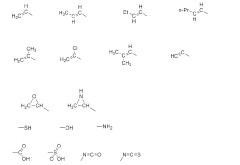
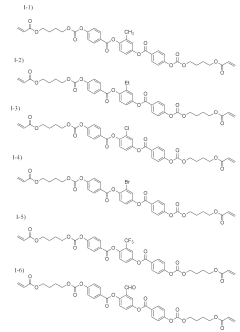
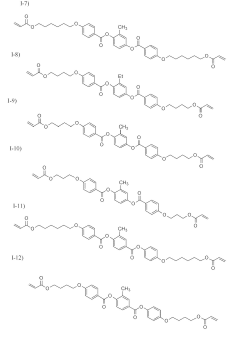
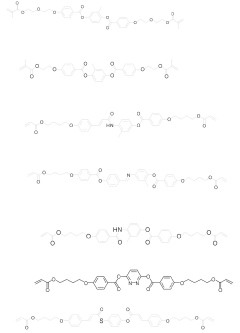
- The use of cholesteric liquid crystal particles, combined with a lower alcohol and an emulsifier, to create a stable emulsified cosmetic that provides a fresh feel and effective UV protection without causing skin whitening, achieved by pulverizing a light-reflecting layer of fixed cholesteric liquid crystal phases and incorporating them into an emulsion with an oil agent.
Regulatory Framework for Cosmetic Testing
The regulatory landscape for cosmetic testing involving Dynamic Light Scattering (DLS) technology is complex and varies significantly across global markets. In the European Union, the Cosmetic Products Regulation (EC) No 1223/2009 establishes comprehensive guidelines for safety assessment methodologies, including analytical techniques like DLS for emulsion stability testing. This regulation specifically emphasizes the importance of physicochemical characterization of cosmetic formulations before market approval, with DLS recognized as a validated method for particle size distribution analysis.
In the United States, the FDA's regulatory framework under the Federal Food, Drug, and Cosmetic Act provides less prescriptive guidance on specific testing methodologies but requires manufacturers to ensure product safety. The FDA's Voluntary Cosmetic Registration Program (VCRP) encourages companies to submit data on testing methodologies, with DLS increasingly appearing in submissions for emulsion-based products. The agency has published several guidance documents acknowledging the value of light scattering techniques in quality control processes.
Japan's regulatory system, administered by the Ministry of Health, Labour and Welfare, has incorporated specific provisions for nanomaterials in cosmetics, directly implicating DLS as a preferred measurement technique. The Japanese Cosmetic Standards require detailed particle characterization for certain product categories, particularly those making stability or longevity claims based on emulsion properties.
International Organization for Standardization (ISO) has developed several standards relevant to DLS application in cosmetics, including ISO 22412 for particle size analysis by dynamic light scattering and ISO 13320 for particle size analysis methods. These standards provide harmonized protocols that facilitate global compliance and cross-border trade of cosmetic products tested with DLS technology.
Recent regulatory trends indicate increasing scrutiny of nanomaterials in cosmetics, with the European Commission's Scientific Committee on Consumer Safety (SCCS) recommending DLS as one of the primary methods for characterizing nanomaterials in cosmetic formulations. This has implications for labeling requirements and safety dossiers, particularly for products containing novel delivery systems or claiming enhanced stability through advanced emulsion technology.
Compliance challenges for manufacturers include maintaining consistent testing protocols across different regulatory jurisdictions and addressing the variability in reporting requirements. Many regulatory bodies now require stability data throughout the claimed shelf-life of cosmetic products, making DLS an essential component of ongoing quality assurance programs rather than merely pre-market testing.
In the United States, the FDA's regulatory framework under the Federal Food, Drug, and Cosmetic Act provides less prescriptive guidance on specific testing methodologies but requires manufacturers to ensure product safety. The FDA's Voluntary Cosmetic Registration Program (VCRP) encourages companies to submit data on testing methodologies, with DLS increasingly appearing in submissions for emulsion-based products. The agency has published several guidance documents acknowledging the value of light scattering techniques in quality control processes.
Japan's regulatory system, administered by the Ministry of Health, Labour and Welfare, has incorporated specific provisions for nanomaterials in cosmetics, directly implicating DLS as a preferred measurement technique. The Japanese Cosmetic Standards require detailed particle characterization for certain product categories, particularly those making stability or longevity claims based on emulsion properties.
International Organization for Standardization (ISO) has developed several standards relevant to DLS application in cosmetics, including ISO 22412 for particle size analysis by dynamic light scattering and ISO 13320 for particle size analysis methods. These standards provide harmonized protocols that facilitate global compliance and cross-border trade of cosmetic products tested with DLS technology.
Recent regulatory trends indicate increasing scrutiny of nanomaterials in cosmetics, with the European Commission's Scientific Committee on Consumer Safety (SCCS) recommending DLS as one of the primary methods for characterizing nanomaterials in cosmetic formulations. This has implications for labeling requirements and safety dossiers, particularly for products containing novel delivery systems or claiming enhanced stability through advanced emulsion technology.
Compliance challenges for manufacturers include maintaining consistent testing protocols across different regulatory jurisdictions and addressing the variability in reporting requirements. Many regulatory bodies now require stability data throughout the claimed shelf-life of cosmetic products, making DLS an essential component of ongoing quality assurance programs rather than merely pre-market testing.
Sustainability Aspects of DLS Testing
The sustainability aspects of Dynamic Light Scattering (DLS) testing in cosmetic emulsion stability represent a critical dimension of modern analytical practices. As environmental concerns gain prominence across industries, DLS methodologies have evolved to align with sustainable development goals while maintaining analytical precision.
DLS testing offers inherent sustainability advantages through its non-destructive nature, requiring minimal sample volumes compared to traditional stability assessment methods. This characteristic significantly reduces waste generation in cosmetic formulation development, where numerous iterations may be necessary before achieving optimal stability profiles. Typical DLS analyses require only microliters of sample, contrasting sharply with conventional methods that consume substantially larger quantities.
Energy efficiency constitutes another key sustainability attribute of modern DLS instrumentation. Contemporary DLS systems incorporate low-power lasers and energy-efficient detection technologies, substantially reducing the carbon footprint associated with stability testing operations. Many manufacturers have redesigned their equipment to operate with reduced power requirements while maintaining or improving measurement sensitivity and accuracy.
The chemical sustainability profile of DLS testing presents notable advantages over alternative techniques. Unlike certain stability assessment methods requiring chemical indicators or dyes, DLS operates on physical principles that eliminate the need for additional reagents. This characteristic minimizes chemical waste streams and reduces exposure risks for laboratory personnel, contributing to greener laboratory practices in cosmetic development facilities.
Lifecycle assessment studies of DLS equipment reveal opportunities for further sustainability improvements. Manufacturers increasingly incorporate recyclable components and modular designs that facilitate repairs rather than complete system replacement. Extended instrument lifespans, often exceeding ten years with proper maintenance, enhance the sustainability proposition of DLS technology investments for cosmetic manufacturers.
Digital transformation has further enhanced the sustainability profile of DLS testing through remote monitoring capabilities and cloud-based data management. These advancements reduce the need for physical presence in laboratories and enable more efficient resource allocation. Automated testing sequences optimize instrument utilization while minimizing energy consumption during idle periods.
Looking forward, emerging trends in sustainable DLS practices include the development of miniaturized systems with further reduced resource requirements and integration with other analytical techniques to maximize information yield per test. These innovations promise to strengthen the position of DLS as an environmentally responsible approach to ensuring emulsion stability in cosmetic formulations while meeting increasingly stringent sustainability requirements across the beauty industry.
DLS testing offers inherent sustainability advantages through its non-destructive nature, requiring minimal sample volumes compared to traditional stability assessment methods. This characteristic significantly reduces waste generation in cosmetic formulation development, where numerous iterations may be necessary before achieving optimal stability profiles. Typical DLS analyses require only microliters of sample, contrasting sharply with conventional methods that consume substantially larger quantities.
Energy efficiency constitutes another key sustainability attribute of modern DLS instrumentation. Contemporary DLS systems incorporate low-power lasers and energy-efficient detection technologies, substantially reducing the carbon footprint associated with stability testing operations. Many manufacturers have redesigned their equipment to operate with reduced power requirements while maintaining or improving measurement sensitivity and accuracy.
The chemical sustainability profile of DLS testing presents notable advantages over alternative techniques. Unlike certain stability assessment methods requiring chemical indicators or dyes, DLS operates on physical principles that eliminate the need for additional reagents. This characteristic minimizes chemical waste streams and reduces exposure risks for laboratory personnel, contributing to greener laboratory practices in cosmetic development facilities.
Lifecycle assessment studies of DLS equipment reveal opportunities for further sustainability improvements. Manufacturers increasingly incorporate recyclable components and modular designs that facilitate repairs rather than complete system replacement. Extended instrument lifespans, often exceeding ten years with proper maintenance, enhance the sustainability proposition of DLS technology investments for cosmetic manufacturers.
Digital transformation has further enhanced the sustainability profile of DLS testing through remote monitoring capabilities and cloud-based data management. These advancements reduce the need for physical presence in laboratories and enable more efficient resource allocation. Automated testing sequences optimize instrument utilization while minimizing energy consumption during idle periods.
Looking forward, emerging trends in sustainable DLS practices include the development of miniaturized systems with further reduced resource requirements and integration with other analytical techniques to maximize information yield per test. These innovations promise to strengthen the position of DLS as an environmentally responsible approach to ensuring emulsion stability in cosmetic formulations while meeting increasingly stringent sustainability requirements across the beauty industry.
Unlock deeper insights with Patsnap Eureka Quick Research — get a full tech report to explore trends and direct your research. Try now!
Generate Your Research Report Instantly with AI Agent
Supercharge your innovation with Patsnap Eureka AI Agent Platform!