

Evaluate Design Variability in Topology Optimization for Enhanced Customization
SEP 16, 202510 MIN READ
Generate Your Research Report Instantly with AI Agent
PatSnap Eureka helps you evaluate technical feasibility & market potential.
Topology Optimization Background and Objectives
Topology optimization has emerged as a transformative approach in engineering design since its inception in the late 1980s. Originally developed for structural optimization problems, this computational methodology systematically determines the optimal material distribution within a design space to achieve specific performance criteria while satisfying given constraints. The evolution of topology optimization has been marked by significant advancements in mathematical algorithms, computational efficiency, and integration with manufacturing processes, particularly with the rise of additive manufacturing technologies.
The fundamental principle of topology optimization involves dividing a design domain into finite elements and iteratively adjusting material density in each element based on sensitivity analysis. This process has evolved from simple compliance minimization problems to addressing multi-physics, multi-objective scenarios that consider factors such as thermal management, fluid flow, and electromagnetic performance. Recent developments have focused on incorporating manufacturing constraints and material nonlinearities to enhance practical applicability.
Current technological trends indicate a growing emphasis on design variability within topology optimization frameworks. This shift reflects the increasing demand for customized products across industries including aerospace, automotive, medical devices, and consumer goods. Traditional topology optimization typically produces a single optimal solution for a specific set of conditions, which limits its utility in scenarios requiring design adaptability to varying user preferences, environmental conditions, or functional requirements.
The primary objective of evaluating design variability in topology optimization is to develop methodologies that can generate families of optimized designs rather than singular solutions. This approach aims to maintain performance efficiency while accommodating customization parameters. By incorporating variability metrics and design space exploration techniques, engineers seek to understand the sensitivity of optimized structures to changes in input parameters and identify robust design regions that maintain performance across variations.
Another critical goal is to establish frameworks that balance computational efficiency with design flexibility. As customization demands increase, the ability to rapidly generate and evaluate multiple optimized designs becomes essential for practical implementation. This necessitates the development of reduced-order models, machine learning approaches, and efficient parameterization techniques that can capture design variability without prohibitive computational costs.
The ultimate aim is to transform topology optimization from a tool that produces isolated optimal designs to an integrated system capable of supporting mass customization paradigms. This evolution requires not only technical advancements in optimization algorithms but also seamless integration with modern manufacturing systems and design workflows to enable responsive, customer-centric product development processes.
The fundamental principle of topology optimization involves dividing a design domain into finite elements and iteratively adjusting material density in each element based on sensitivity analysis. This process has evolved from simple compliance minimization problems to addressing multi-physics, multi-objective scenarios that consider factors such as thermal management, fluid flow, and electromagnetic performance. Recent developments have focused on incorporating manufacturing constraints and material nonlinearities to enhance practical applicability.
Current technological trends indicate a growing emphasis on design variability within topology optimization frameworks. This shift reflects the increasing demand for customized products across industries including aerospace, automotive, medical devices, and consumer goods. Traditional topology optimization typically produces a single optimal solution for a specific set of conditions, which limits its utility in scenarios requiring design adaptability to varying user preferences, environmental conditions, or functional requirements.
The primary objective of evaluating design variability in topology optimization is to develop methodologies that can generate families of optimized designs rather than singular solutions. This approach aims to maintain performance efficiency while accommodating customization parameters. By incorporating variability metrics and design space exploration techniques, engineers seek to understand the sensitivity of optimized structures to changes in input parameters and identify robust design regions that maintain performance across variations.
Another critical goal is to establish frameworks that balance computational efficiency with design flexibility. As customization demands increase, the ability to rapidly generate and evaluate multiple optimized designs becomes essential for practical implementation. This necessitates the development of reduced-order models, machine learning approaches, and efficient parameterization techniques that can capture design variability without prohibitive computational costs.
The ultimate aim is to transform topology optimization from a tool that produces isolated optimal designs to an integrated system capable of supporting mass customization paradigms. This evolution requires not only technical advancements in optimization algorithms but also seamless integration with modern manufacturing systems and design workflows to enable responsive, customer-centric product development processes.
Market Analysis for Customized Design Solutions
The customization market for design solutions has experienced significant growth over the past decade, driven by increasing consumer demand for personalized products and services. The global market for customized manufacturing solutions reached $175 billion in 2022 and is projected to grow at a CAGR of 15.3% through 2028, according to recent industry reports. This growth trajectory highlights the economic potential of topology optimization technologies that enable enhanced customization capabilities.
Consumer preferences have shifted dramatically toward personalized products across multiple sectors. In automotive manufacturing, 67% of consumers express willingness to pay premium prices for customized features. Similarly, in medical device manufacturing, patient-specific implants and prosthetics have shown improved clinical outcomes while commanding 30-40% higher market prices compared to standard alternatives.
The industrial equipment sector represents another substantial market opportunity, with companies increasingly seeking customized machinery components that optimize performance for specific operational conditions. This sector alone accounts for approximately $45 billion of the customization market, with topology optimization being a key enabling technology for weight reduction and performance enhancement.
Regional analysis reveals varying levels of market maturity. North America and Europe currently lead in adoption of advanced customization technologies, collectively representing 58% of the global market. However, the Asia-Pacific region is experiencing the fastest growth rate at 18.7% annually, driven by rapid industrialization and increasing technological capabilities in countries like China, Japan, and South Korea.
Key market segments benefiting from topology optimization include aerospace (22% of market share), automotive (19%), medical devices (17%), consumer products (15%), and industrial equipment (27%). The aerospace segment demonstrates particularly strong growth potential due to the critical importance of weight optimization and the high value of customized components.
Customer willingness to pay premium prices for customized solutions varies by industry but averages 15-25% above standard product pricing. This premium pricing potential creates significant revenue opportunities for companies that can effectively implement topology optimization technologies to enable mass customization at scale.
Market barriers include the high initial investment costs for implementation, technical expertise requirements, and integration challenges with existing manufacturing systems. However, the decreasing cost of computational resources and the development of more user-friendly optimization software are gradually reducing these barriers to entry.
Consumer preferences have shifted dramatically toward personalized products across multiple sectors. In automotive manufacturing, 67% of consumers express willingness to pay premium prices for customized features. Similarly, in medical device manufacturing, patient-specific implants and prosthetics have shown improved clinical outcomes while commanding 30-40% higher market prices compared to standard alternatives.
The industrial equipment sector represents another substantial market opportunity, with companies increasingly seeking customized machinery components that optimize performance for specific operational conditions. This sector alone accounts for approximately $45 billion of the customization market, with topology optimization being a key enabling technology for weight reduction and performance enhancement.
Regional analysis reveals varying levels of market maturity. North America and Europe currently lead in adoption of advanced customization technologies, collectively representing 58% of the global market. However, the Asia-Pacific region is experiencing the fastest growth rate at 18.7% annually, driven by rapid industrialization and increasing technological capabilities in countries like China, Japan, and South Korea.
Key market segments benefiting from topology optimization include aerospace (22% of market share), automotive (19%), medical devices (17%), consumer products (15%), and industrial equipment (27%). The aerospace segment demonstrates particularly strong growth potential due to the critical importance of weight optimization and the high value of customized components.
Customer willingness to pay premium prices for customized solutions varies by industry but averages 15-25% above standard product pricing. This premium pricing potential creates significant revenue opportunities for companies that can effectively implement topology optimization technologies to enable mass customization at scale.
Market barriers include the high initial investment costs for implementation, technical expertise requirements, and integration challenges with existing manufacturing systems. However, the decreasing cost of computational resources and the development of more user-friendly optimization software are gradually reducing these barriers to entry.
Current Challenges in Design Variability Implementation
Despite the significant advancements in topology optimization (TO) techniques, implementing design variability remains challenging. Current TO algorithms typically converge toward a single optimal solution based on predefined constraints and objectives, limiting the exploration of design alternatives. This deterministic approach fails to accommodate the growing demand for customization in industries such as automotive, aerospace, and consumer products.
One fundamental challenge is the mathematical formulation of variability within optimization frameworks. Traditional TO formulations are inherently focused on finding the single best solution rather than generating families of solutions with controlled variations. The objective functions and constraints are typically rigid, making it difficult to incorporate flexibility parameters that would allow for meaningful design variations while maintaining performance requirements.
Computational complexity presents another significant hurdle. Generating multiple viable design alternatives requires substantially more computational resources than producing a single optimized design. Each design variation necessitates a complete optimization cycle, and the computational burden increases exponentially when exploring multidimensional design spaces. This becomes particularly problematic for complex 3D structures where a single optimization run may already take hours or days to complete.
The lack of effective parameterization methods for controlling design variability also impedes progress. Current approaches struggle to define parameters that can meaningfully influence design outcomes while preserving structural integrity and performance. The challenge lies in identifying which aspects of a design can be varied and to what extent, without compromising functional requirements or manufacturing constraints.
Manufacturing feasibility adds another layer of complexity. While TO can generate numerous theoretical design variations, not all are practically manufacturable. Different manufacturing processes impose distinct constraints, and ensuring that all design variations remain manufacturable across different production methods requires sophisticated constraint handling that current systems lack.
User interface and experience issues further complicate implementation. Design engineers need intuitive tools to explore, evaluate, and select from multiple design alternatives. Current software interfaces are predominantly built around single-solution paradigms and lack effective visualization and interaction mechanisms for navigating design variation spaces.
Integration with existing CAD/CAM workflows remains problematic. Design variations generated through TO often require significant post-processing before they can be incorporated into standard engineering workflows. This translation process can be time-consuming and may compromise the integrity of the optimized designs, particularly when variations need to be managed across multiple iterations.
One fundamental challenge is the mathematical formulation of variability within optimization frameworks. Traditional TO formulations are inherently focused on finding the single best solution rather than generating families of solutions with controlled variations. The objective functions and constraints are typically rigid, making it difficult to incorporate flexibility parameters that would allow for meaningful design variations while maintaining performance requirements.
Computational complexity presents another significant hurdle. Generating multiple viable design alternatives requires substantially more computational resources than producing a single optimized design. Each design variation necessitates a complete optimization cycle, and the computational burden increases exponentially when exploring multidimensional design spaces. This becomes particularly problematic for complex 3D structures where a single optimization run may already take hours or days to complete.
The lack of effective parameterization methods for controlling design variability also impedes progress. Current approaches struggle to define parameters that can meaningfully influence design outcomes while preserving structural integrity and performance. The challenge lies in identifying which aspects of a design can be varied and to what extent, without compromising functional requirements or manufacturing constraints.
Manufacturing feasibility adds another layer of complexity. While TO can generate numerous theoretical design variations, not all are practically manufacturable. Different manufacturing processes impose distinct constraints, and ensuring that all design variations remain manufacturable across different production methods requires sophisticated constraint handling that current systems lack.
User interface and experience issues further complicate implementation. Design engineers need intuitive tools to explore, evaluate, and select from multiple design alternatives. Current software interfaces are predominantly built around single-solution paradigms and lack effective visualization and interaction mechanisms for navigating design variation spaces.
Integration with existing CAD/CAM workflows remains problematic. Design variations generated through TO often require significant post-processing before they can be incorporated into standard engineering workflows. This translation process can be time-consuming and may compromise the integrity of the optimized designs, particularly when variations need to be managed across multiple iterations.
Existing Approaches to Design Variability in Optimization
01 Robust topology optimization methods for design variability
Robust topology optimization methods address design variability by considering uncertainties in manufacturing processes, material properties, and loading conditions. These methods incorporate statistical approaches to ensure that optimized designs maintain performance across variations. Techniques include sensitivity analysis, Monte Carlo simulations, and reliability-based optimization to create designs that are less susceptible to performance degradation due to variability factors.- Robust topology optimization methods for design variability: Robust topology optimization methods address design variability by considering uncertainties in manufacturing processes, material properties, and loading conditions. These methods incorporate statistical approaches to ensure that optimized designs maintain performance across various scenarios. By accounting for potential variations early in the design process, engineers can create structures that are less sensitive to manufacturing tolerances and operational fluctuations, resulting in more reliable final products.
- Multi-objective topology optimization for design flexibility: Multi-objective topology optimization techniques enable designers to balance competing design goals while maintaining flexibility in the final structure. These approaches simultaneously consider multiple performance criteria such as weight reduction, stiffness, thermal management, and manufacturability. By generating Pareto-optimal solutions, engineers can evaluate trade-offs between different objectives and select designs that best meet project requirements while accommodating potential design changes or adaptations.
- Additive manufacturing-specific topology optimization: Specialized topology optimization methods have been developed to address the unique capabilities and constraints of additive manufacturing processes. These methods account for build orientation, support structures, thermal distortion, and other process-specific variables that affect final part quality. By incorporating manufacturing constraints directly into the optimization algorithm, designers can create structures that fully leverage the design freedom of additive manufacturing while ensuring printability and minimizing post-processing requirements.
- Machine learning approaches for topology optimization: Machine learning techniques are increasingly applied to topology optimization to handle design variability and improve computational efficiency. These approaches use neural networks, genetic algorithms, and other AI methods to predict optimization outcomes, identify patterns in design spaces, and accelerate convergence. By learning from previous optimization results, these systems can suggest design modifications that account for manufacturing constraints and performance requirements while reducing the computational burden of traditional optimization methods.
- Sensitivity analysis in topology optimization: Sensitivity analysis techniques are essential for understanding how design variables affect optimization outcomes and managing variability in topology optimization. These methods quantify the impact of parameter changes on structural performance, helping engineers identify critical design features and potential failure modes. By systematically evaluating design sensitivities, optimization algorithms can be tuned to produce more robust solutions that maintain performance despite variations in loading conditions, material properties, or manufacturing processes.
02 Multi-objective optimization for balancing design constraints
Multi-objective topology optimization approaches balance competing design requirements while accounting for variability. These methods simultaneously optimize for multiple performance criteria such as weight, stiffness, thermal properties, and manufacturability. By incorporating Pareto optimization techniques and weighted objective functions, designers can explore trade-offs between different performance metrics and select designs that maintain robustness across various operating conditions.Expand Specific Solutions03 Machine learning integration for design variability prediction
Machine learning algorithms are integrated into topology optimization workflows to predict and manage design variability. These approaches use neural networks, deep learning, and other AI techniques to identify patterns in design performance across variable conditions. By training on simulation data, these systems can rapidly evaluate design alternatives, predict performance under uncertainty, and recommend modifications to improve robustness without extensive computational resources.Expand Specific Solutions04 Lattice and cellular structure optimization for consistent performance
Optimization of lattice and cellular structures provides consistent mechanical performance despite manufacturing and material variabilities. These approaches focus on creating periodic or semi-periodic internal architectures with controlled density distributions. By optimizing unit cell geometries and their spatial arrangement, designers can create structures that maintain desired mechanical properties even when subject to local variations in manufacturing precision or material properties.Expand Specific Solutions05 Manufacturing constraint integration in topology optimization
Integration of manufacturing constraints into topology optimization processes ensures that design variability is addressed from the production perspective. These methods incorporate specific manufacturing limitations such as minimum feature size, build orientation, support structure requirements, and material anisotropy directly into the optimization algorithm. This approach produces designs that are not only theoretically optimal but also practically manufacturable with consistent quality across production batches.Expand Specific Solutions
Leading Companies and Research Institutions in the Field
Topology optimization for enhanced customization is currently in a growth phase, with the market expanding as industries seek more personalized manufacturing solutions. The technology is maturing rapidly, with key players demonstrating varying levels of expertise. Academic institutions like Zhejiang University, Georgia Tech, and Northwestern University are advancing theoretical frameworks, while commercial entities including Siemens AG, ANSYS, and Autodesk are developing practical applications. The competitive landscape features established engineering software providers (Dassault Systèmes, Synopsys) alongside automotive manufacturers (Toyota, Honda) investing in customization capabilities. The technology sits at the intersection of computational design, additive manufacturing, and AI, with increasing focus on design variability to enable mass customization across industries.
ANSYS, Inc.
Technical Solution: ANSYS has pioneered an advanced topology optimization platform that specifically addresses design variability challenges through their Mechanical and Discovery Live products. Their approach combines traditional topology optimization with sensitivity analysis to evaluate how design variations impact performance metrics. The system employs non-parametric optimization techniques that allow for free-form geometry exploration while maintaining manufacturability constraints. ANSYS's technology incorporates multi-physics simulations to evaluate designs across thermal, structural, and fluid domains simultaneously, ensuring optimized performance across multiple operating conditions. Their platform features real-time visualization of design sensitivity, allowing engineers to interactively explore the design space and understand the impact of geometric modifications on performance variability. The system also includes automated workflows for transitioning optimized topologies to parametric CAD models, facilitating downstream manufacturing and customization processes.
Strengths: Real-time feedback on design changes, excellent multi-physics capabilities, and seamless integration with verification workflows. Weaknesses: High computational requirements for complex models, steep learning curve for advanced features, and occasional challenges with geometry interpretation for manufacturing.
Autodesk, Inc.
Technical Solution: Autodesk has developed Fusion 360 with generative design capabilities that specifically address design variability in topology optimization. Their platform utilizes cloud computing to explore thousands of design alternatives simultaneously, evaluating performance across multiple objectives and constraints. The system incorporates manufacturing method constraints (including additive, subtractive, and formative processes) directly into the optimization algorithm, ensuring that generated designs are manufacturable. Autodesk's approach employs machine learning techniques to identify patterns in successful designs and guide the exploration of the design space more efficiently. Their technology allows engineers to specify design variability parameters and evaluate how these variations affect performance, enabling robust designs that can accommodate manufacturing tolerances and operational uncertainties. The platform also features automated post-processing tools that convert optimized topologies into parametric models suitable for further refinement and customization.
Strengths: Exceptional cloud-based computational capabilities, intuitive user interface for non-experts, and strong integration with manufacturing workflows. Weaknesses: Subscription-based cost model may be prohibitive for smaller organizations, limited control over advanced optimization parameters, and occasional connectivity issues with cloud-based processing.
Key Algorithms and Mathematical Frameworks
System for Machine Learning-Based Acceleration of a Topology Optimization Process
PatentPendingUS20220092240A1
Innovation
- A machine learning-based framework that uses a fully connected deep neural network to predict sensitivity values, reducing the number of two-scale optimizations by learning from current iterations and continuously updating the model with new data, thereby accelerating the topology optimization process.


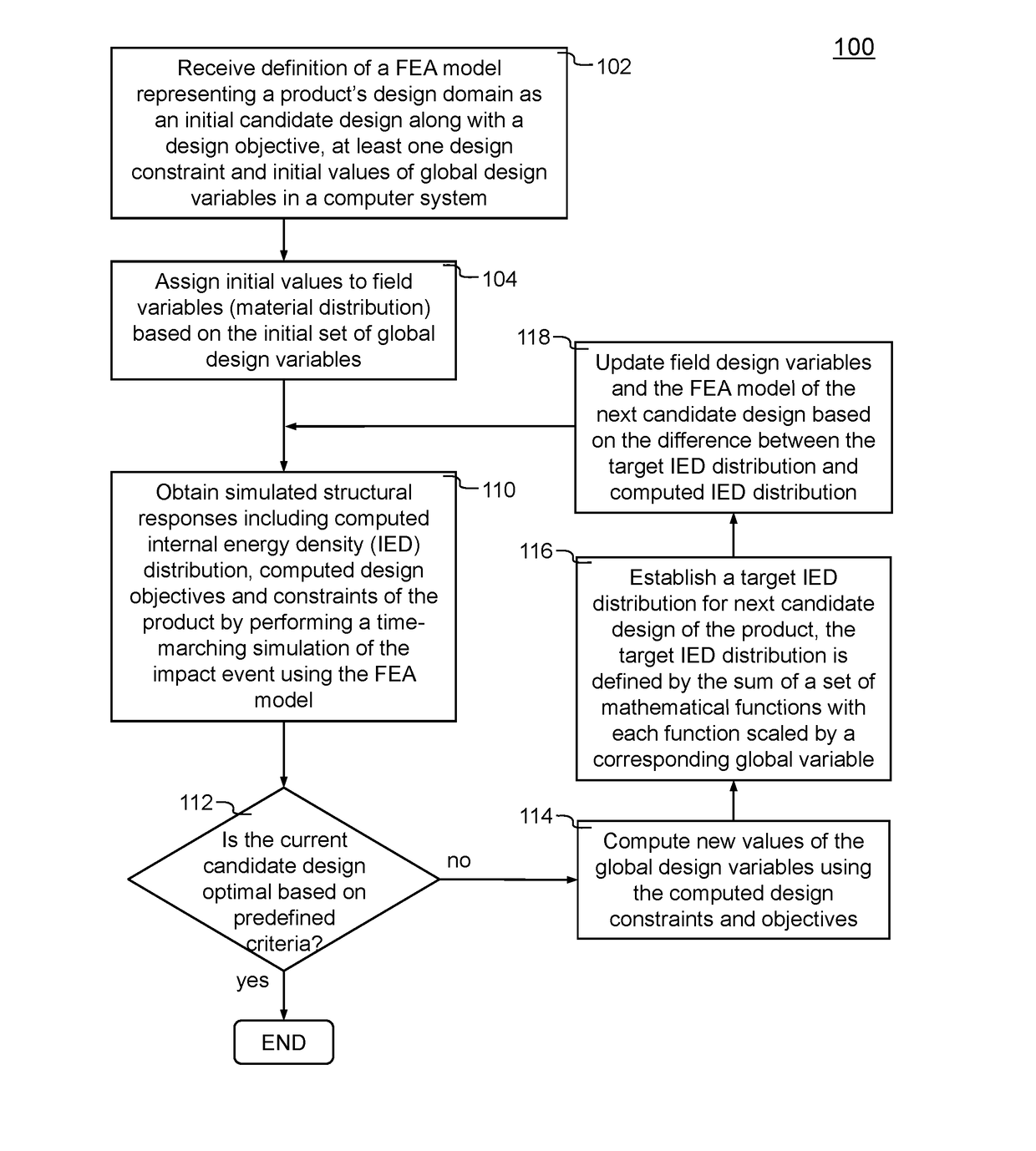
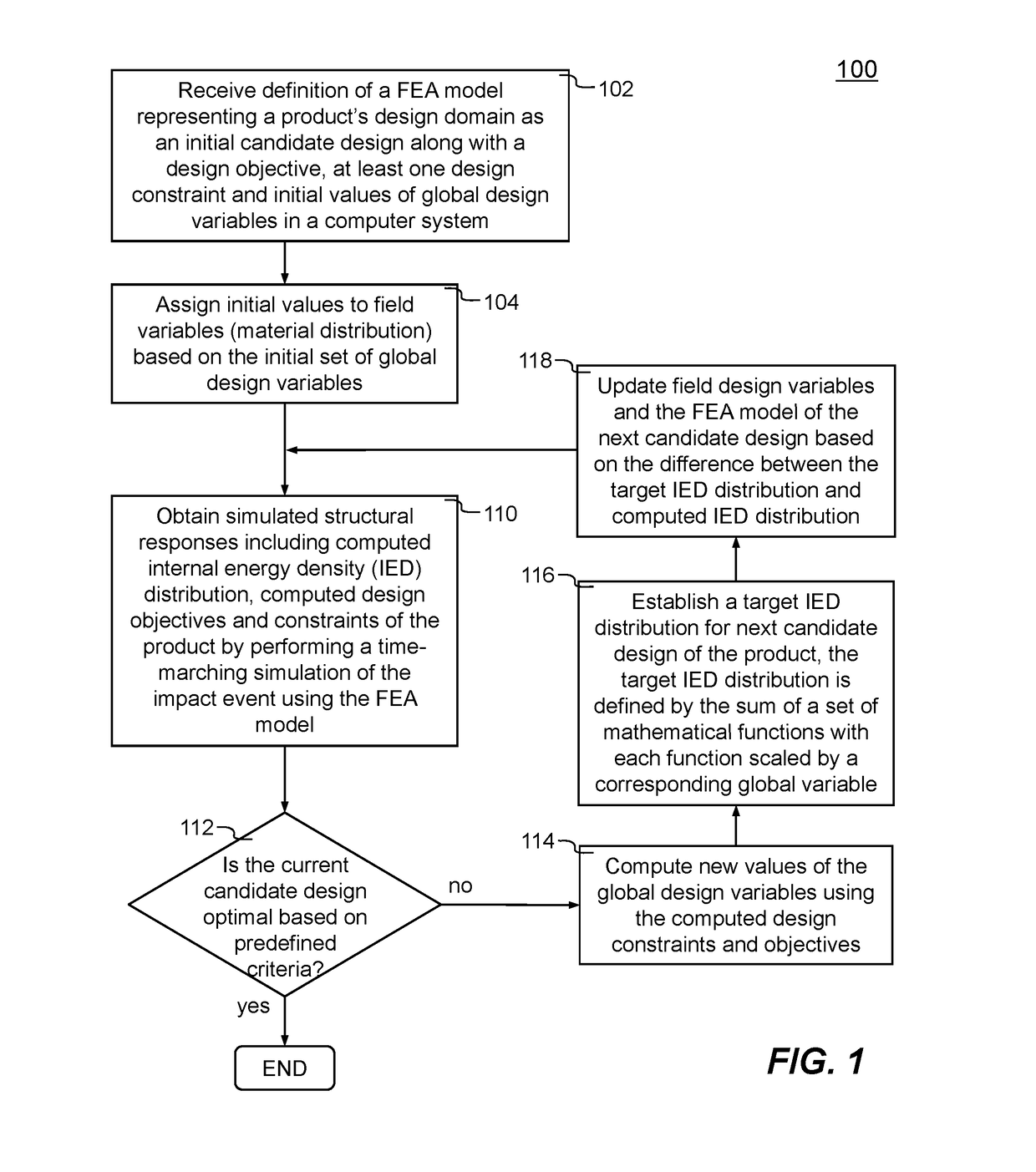
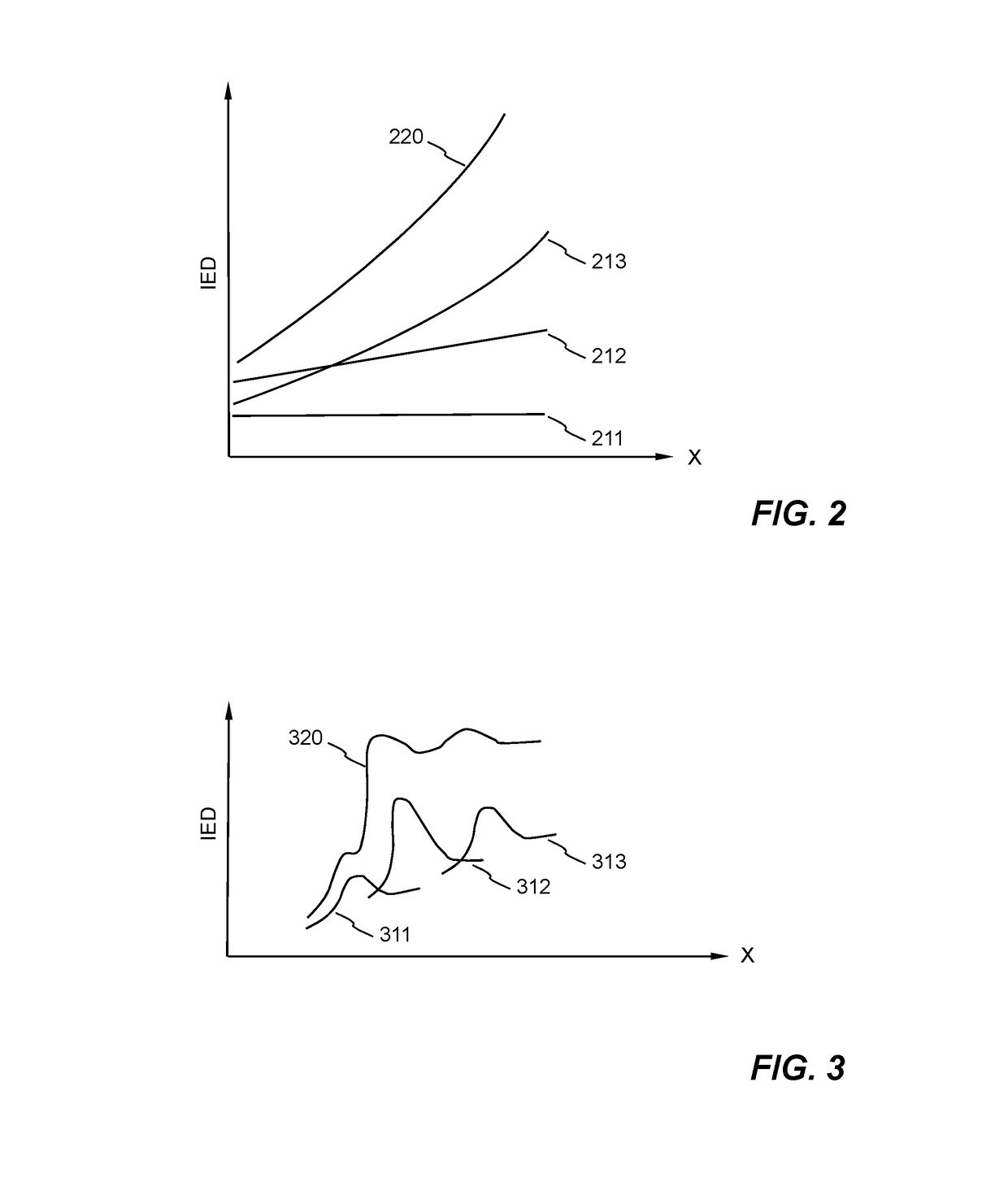
Enhanced Global Design Variables Used In Structural Topology Optimization Of A Product In An Impact Event
PatentInactiveUS20170255724A1
Innovation
- The use of enhanced global design variables in a computer-aided engineering system that performs finite element analysis (FEA) simulations to iteratively optimize structural responses, updating field design variables based on computed internal energy density distributions and predefined criteria, allowing for the control of stiffness and safety in impact scenarios.

Manufacturing Constraints and Practical Implementation
The implementation of topology optimization in manufacturing processes faces significant constraints that must be addressed for practical application. Traditional manufacturing methods often struggle with the complex geometries generated by topology optimization algorithms. Subtractive manufacturing techniques like CNC machining may be unable to access internal features, while conventional molding processes face challenges with intricate lattice structures. These limitations necessitate careful consideration of manufacturing constraints during the optimization process rather than as post-processing steps.
Additive manufacturing (AM) technologies have emerged as natural partners for topology optimization, offering greater design freedom. However, even AM processes impose constraints that must be incorporated into optimization workflows. These include minimum feature size requirements, support structure considerations, build orientation limitations, and material-specific constraints. For metal AM processes, thermal management during printing becomes critical to prevent warping and residual stresses, requiring specific design adaptations.
Design for manufacturability (DFM) principles must be integrated directly into topology optimization algorithms to ensure practical implementation. This integration involves mathematical formulations that account for manufacturing constraints while maintaining design performance. Recent advances include overhang angle constraints for support-free AM designs, minimum length scale controls to prevent fragile features, and symmetry constraints to improve manufacturability and reduce post-processing requirements.
Multi-material and functionally graded material (FGM) manufacturing capabilities present both opportunities and challenges for topology optimization. While these technologies enable more sophisticated designs with locally tailored properties, they require specialized optimization approaches that can handle material distribution alongside structural topology. The computational complexity increases significantly when optimizing for both geometry and material composition simultaneously.
Cost considerations represent another crucial aspect of practical implementation. The economic viability of topology-optimized designs depends on balancing material savings against increased manufacturing complexity. In industrial applications, production volume significantly impacts this equation—highly optimized designs may be justified for high-value, low-volume components but become impractical for mass production scenarios. Comprehensive cost models that incorporate material usage, manufacturing time, post-processing requirements, and equipment utilization are essential for realistic implementation decisions.
Quality assurance and verification methods must evolve alongside topology optimization techniques. Non-destructive testing approaches for complex internal geometries remain challenging, requiring advanced inspection technologies such as industrial CT scanning. Developing standardized verification protocols for topology-optimized parts represents a critical need for widespread industrial adoption, particularly in regulated industries like aerospace and medical devices.
Additive manufacturing (AM) technologies have emerged as natural partners for topology optimization, offering greater design freedom. However, even AM processes impose constraints that must be incorporated into optimization workflows. These include minimum feature size requirements, support structure considerations, build orientation limitations, and material-specific constraints. For metal AM processes, thermal management during printing becomes critical to prevent warping and residual stresses, requiring specific design adaptations.
Design for manufacturability (DFM) principles must be integrated directly into topology optimization algorithms to ensure practical implementation. This integration involves mathematical formulations that account for manufacturing constraints while maintaining design performance. Recent advances include overhang angle constraints for support-free AM designs, minimum length scale controls to prevent fragile features, and symmetry constraints to improve manufacturability and reduce post-processing requirements.
Multi-material and functionally graded material (FGM) manufacturing capabilities present both opportunities and challenges for topology optimization. While these technologies enable more sophisticated designs with locally tailored properties, they require specialized optimization approaches that can handle material distribution alongside structural topology. The computational complexity increases significantly when optimizing for both geometry and material composition simultaneously.
Cost considerations represent another crucial aspect of practical implementation. The economic viability of topology-optimized designs depends on balancing material savings against increased manufacturing complexity. In industrial applications, production volume significantly impacts this equation—highly optimized designs may be justified for high-value, low-volume components but become impractical for mass production scenarios. Comprehensive cost models that incorporate material usage, manufacturing time, post-processing requirements, and equipment utilization are essential for realistic implementation decisions.
Quality assurance and verification methods must evolve alongside topology optimization techniques. Non-destructive testing approaches for complex internal geometries remain challenging, requiring advanced inspection technologies such as industrial CT scanning. Developing standardized verification protocols for topology-optimized parts represents a critical need for widespread industrial adoption, particularly in regulated industries like aerospace and medical devices.
Multi-objective Optimization for Design Flexibility
Multi-objective optimization approaches have emerged as a critical framework for addressing design flexibility challenges in topology optimization. Traditional topology optimization methods often focus on a single objective, typically minimizing compliance or weight, which can lead to designs that perform well for specific conditions but lack adaptability. In contrast, multi-objective optimization considers multiple, often competing criteria simultaneously, creating a Pareto front of solutions that represent different trade-offs between objectives.
The implementation of multi-objective optimization in topology optimization typically involves weighted sum methods, ε-constraint methods, or evolutionary algorithms such as NSGA-II (Non-dominated Sorting Genetic Algorithm II). These approaches enable designers to explore a diverse set of solutions that balance structural performance, manufacturing constraints, material usage, and customization requirements. For instance, a multi-objective framework might simultaneously optimize for stiffness, thermal conductivity, and manufacturing cost, providing designers with a spectrum of viable options.
Recent advancements in this field have incorporated preference articulation mechanisms, allowing designers to interactively guide the optimization process based on evolving requirements. This interactive approach facilitates real-time exploration of the design space, enabling rapid assessment of how different objective weightings affect the final design. Machine learning techniques have further enhanced this capability by predicting performance metrics across the design space, reducing computational overhead and accelerating the exploration process.
The integration of uncertainty quantification into multi-objective topology optimization has also gained significant attention. By accounting for uncertainties in loading conditions, material properties, or manufacturing processes, robust designs can be generated that maintain performance across various scenarios. This robustness is particularly valuable for customized products that may encounter diverse operating conditions or user preferences.
Case studies across industries demonstrate the efficacy of multi-objective approaches. In aerospace applications, components optimized for both structural integrity and thermal management show superior performance compared to single-objective counterparts. Similarly, in medical device design, multi-objective optimization has enabled the creation of patient-specific implants that balance biocompatibility, mechanical performance, and manufacturing feasibility.
The computational challenges associated with multi-objective topology optimization remain substantial, particularly as the number of objectives increases. High-performance computing strategies, including parallel processing and GPU acceleration, have become essential for practical implementation. Additionally, surrogate modeling techniques offer promising avenues for reducing computational burden while maintaining solution quality.
The implementation of multi-objective optimization in topology optimization typically involves weighted sum methods, ε-constraint methods, or evolutionary algorithms such as NSGA-II (Non-dominated Sorting Genetic Algorithm II). These approaches enable designers to explore a diverse set of solutions that balance structural performance, manufacturing constraints, material usage, and customization requirements. For instance, a multi-objective framework might simultaneously optimize for stiffness, thermal conductivity, and manufacturing cost, providing designers with a spectrum of viable options.
Recent advancements in this field have incorporated preference articulation mechanisms, allowing designers to interactively guide the optimization process based on evolving requirements. This interactive approach facilitates real-time exploration of the design space, enabling rapid assessment of how different objective weightings affect the final design. Machine learning techniques have further enhanced this capability by predicting performance metrics across the design space, reducing computational overhead and accelerating the exploration process.
The integration of uncertainty quantification into multi-objective topology optimization has also gained significant attention. By accounting for uncertainties in loading conditions, material properties, or manufacturing processes, robust designs can be generated that maintain performance across various scenarios. This robustness is particularly valuable for customized products that may encounter diverse operating conditions or user preferences.
Case studies across industries demonstrate the efficacy of multi-objective approaches. In aerospace applications, components optimized for both structural integrity and thermal management show superior performance compared to single-objective counterparts. Similarly, in medical device design, multi-objective optimization has enabled the creation of patient-specific implants that balance biocompatibility, mechanical performance, and manufacturing feasibility.
The computational challenges associated with multi-objective topology optimization remain substantial, particularly as the number of objectives increases. High-performance computing strategies, including parallel processing and GPU acceleration, have become essential for practical implementation. Additionally, surrogate modeling techniques offer promising avenues for reducing computational burden while maintaining solution quality.
Unlock deeper insights with PatSnap Eureka Quick Research — get a full tech report to explore trends and direct your research. Try now!
Generate Your Research Report Instantly with AI Agent
Supercharge your innovation with PatSnap Eureka AI Agent Platform!