

How to Implement Topology Optimization for Aerospace Efficiency
SEP 15, 202510 MIN READ
Generate Your Research Report Instantly with AI Agent
PatSnap Eureka helps you evaluate technical feasibility & market potential.
Topology Optimization Background and Objectives
Topology optimization has emerged as a revolutionary approach in aerospace engineering, evolving from theoretical mathematical concepts to practical design methodology over the past three decades. This computational method determines the optimal material distribution within a given design space, subject to specified constraints and load conditions, to maximize performance criteria such as stiffness-to-weight ratio—a critical factor in aerospace applications.
The historical development of topology optimization traces back to the seminal work of Bendsøe and Kikuchi in 1988, who introduced the homogenization method. Subsequently, the Solid Isotropic Material with Penalization (SIMP) method gained prominence in the 1990s, offering a more straightforward implementation approach. The level set method, introduced in the early 2000s, further enhanced the capability to generate clear structural boundaries, addressing manufacturing constraints more effectively.
In aerospace engineering, weight reduction directly correlates with fuel efficiency, operational range, and payload capacity. Traditional design methodologies often relied on intuition and iterative testing, resulting in suboptimal structures. Topology optimization represents a paradigm shift, enabling engineers to discover non-intuitive designs that outperform conventional solutions while meeting stringent aerospace requirements.
The primary objective of implementing topology optimization in aerospace applications is to achieve significant weight reduction while maintaining or enhancing structural performance. Studies indicate potential weight savings of 30-50% compared to traditional designs, translating to substantial operational cost reductions and environmental benefits through decreased fuel consumption and emissions.
Current technological trends show increasing integration of topology optimization with additive manufacturing techniques, particularly selective laser melting and electron beam melting, which can fabricate complex geometries previously impossible with conventional manufacturing methods. This synergy has accelerated the adoption of topology-optimized components in next-generation aircraft and spacecraft.
The aerospace industry faces unique challenges in implementing topology optimization, including certification requirements, fatigue considerations, and multi-physics interactions. Recent advancements aim to incorporate these factors into optimization algorithms, expanding from purely structural considerations to include thermal, aerodynamic, and acoustic performance parameters.
Looking forward, the trajectory of topology optimization in aerospace points toward multi-scale approaches that can simultaneously address macro-structural efficiency and material microstructure, potentially unlocking unprecedented performance improvements through hierarchical optimization across different length scales.
The historical development of topology optimization traces back to the seminal work of Bendsøe and Kikuchi in 1988, who introduced the homogenization method. Subsequently, the Solid Isotropic Material with Penalization (SIMP) method gained prominence in the 1990s, offering a more straightforward implementation approach. The level set method, introduced in the early 2000s, further enhanced the capability to generate clear structural boundaries, addressing manufacturing constraints more effectively.
In aerospace engineering, weight reduction directly correlates with fuel efficiency, operational range, and payload capacity. Traditional design methodologies often relied on intuition and iterative testing, resulting in suboptimal structures. Topology optimization represents a paradigm shift, enabling engineers to discover non-intuitive designs that outperform conventional solutions while meeting stringent aerospace requirements.
The primary objective of implementing topology optimization in aerospace applications is to achieve significant weight reduction while maintaining or enhancing structural performance. Studies indicate potential weight savings of 30-50% compared to traditional designs, translating to substantial operational cost reductions and environmental benefits through decreased fuel consumption and emissions.
Current technological trends show increasing integration of topology optimization with additive manufacturing techniques, particularly selective laser melting and electron beam melting, which can fabricate complex geometries previously impossible with conventional manufacturing methods. This synergy has accelerated the adoption of topology-optimized components in next-generation aircraft and spacecraft.
The aerospace industry faces unique challenges in implementing topology optimization, including certification requirements, fatigue considerations, and multi-physics interactions. Recent advancements aim to incorporate these factors into optimization algorithms, expanding from purely structural considerations to include thermal, aerodynamic, and acoustic performance parameters.
Looking forward, the trajectory of topology optimization in aerospace points toward multi-scale approaches that can simultaneously address macro-structural efficiency and material microstructure, potentially unlocking unprecedented performance improvements through hierarchical optimization across different length scales.
Aerospace Industry Demand Analysis
The aerospace industry is experiencing a significant transformation driven by the need for greater efficiency, reduced environmental impact, and enhanced performance capabilities. Market analysis indicates that global commercial aircraft deliveries are projected to reach 40,000 units over the next 20 years, representing a market value exceeding $6 trillion. Within this context, topology optimization has emerged as a critical technology for aerospace manufacturers seeking competitive advantages through weight reduction and performance enhancement.
Current market demands in aerospace engineering are primarily focused on fuel efficiency improvements, with airlines and aircraft manufacturers targeting 15-20% reductions in fuel consumption for next-generation aircraft. This demand is directly linked to both economic factors and increasingly stringent environmental regulations, including the International Civil Aviation Organization's Carbon Offsetting and Reduction Scheme for International Aviation (CORSIA), which aims to stabilize CO2 emissions at 2020 levels.
Weight reduction represents one of the most significant opportunities for efficiency gains, with industry estimates suggesting that a 1% reduction in aircraft weight can yield approximately 0.75% improvement in fuel efficiency. Topology optimization directly addresses this need by enabling the design of components that maintain structural integrity while minimizing material usage. The market for lightweight aerospace components is growing at a compound annual growth rate of 7.3%, reflecting the industry's commitment to this approach.
Defense aerospace applications present another substantial market segment for topology optimization technologies. Military aircraft programs increasingly emphasize extended range, enhanced payload capacity, and improved maneuverability—all attributes that benefit from optimized structural designs. The defense aerospace sector's annual spending on advanced materials and manufacturing technologies exceeds $4.5 billion globally, with topology optimization tools representing a growing portion of this investment.
Regional market analysis reveals varying adoption rates of topology optimization technologies. North America and Europe lead in implementation, driven by the presence of major aerospace manufacturers and substantial R&D investments. The Asia-Pacific region is experiencing the fastest growth rate in adoption, particularly in China and Japan, where government initiatives are actively promoting aerospace manufacturing capabilities.
Customer requirements are evolving beyond pure weight reduction to include multifunctional optimization objectives. Aerospace manufacturers now seek solutions that simultaneously address thermal management, vibration damping, and acoustic performance alongside structural efficiency. This trend is creating new market opportunities for advanced topology optimization tools that can handle multiple physics domains and manufacturing constraints.
The economic value proposition for topology optimization in aerospace applications is compelling, with case studies demonstrating return on investment periods typically under two years when considering the full product lifecycle costs and performance benefits. This favorable economic outlook is accelerating market adoption across both commercial and military aerospace sectors.
Current market demands in aerospace engineering are primarily focused on fuel efficiency improvements, with airlines and aircraft manufacturers targeting 15-20% reductions in fuel consumption for next-generation aircraft. This demand is directly linked to both economic factors and increasingly stringent environmental regulations, including the International Civil Aviation Organization's Carbon Offsetting and Reduction Scheme for International Aviation (CORSIA), which aims to stabilize CO2 emissions at 2020 levels.
Weight reduction represents one of the most significant opportunities for efficiency gains, with industry estimates suggesting that a 1% reduction in aircraft weight can yield approximately 0.75% improvement in fuel efficiency. Topology optimization directly addresses this need by enabling the design of components that maintain structural integrity while minimizing material usage. The market for lightweight aerospace components is growing at a compound annual growth rate of 7.3%, reflecting the industry's commitment to this approach.
Defense aerospace applications present another substantial market segment for topology optimization technologies. Military aircraft programs increasingly emphasize extended range, enhanced payload capacity, and improved maneuverability—all attributes that benefit from optimized structural designs. The defense aerospace sector's annual spending on advanced materials and manufacturing technologies exceeds $4.5 billion globally, with topology optimization tools representing a growing portion of this investment.
Regional market analysis reveals varying adoption rates of topology optimization technologies. North America and Europe lead in implementation, driven by the presence of major aerospace manufacturers and substantial R&D investments. The Asia-Pacific region is experiencing the fastest growth rate in adoption, particularly in China and Japan, where government initiatives are actively promoting aerospace manufacturing capabilities.
Customer requirements are evolving beyond pure weight reduction to include multifunctional optimization objectives. Aerospace manufacturers now seek solutions that simultaneously address thermal management, vibration damping, and acoustic performance alongside structural efficiency. This trend is creating new market opportunities for advanced topology optimization tools that can handle multiple physics domains and manufacturing constraints.
The economic value proposition for topology optimization in aerospace applications is compelling, with case studies demonstrating return on investment periods typically under two years when considering the full product lifecycle costs and performance benefits. This favorable economic outlook is accelerating market adoption across both commercial and military aerospace sectors.
Current Challenges in Aerospace Topology Optimization
Despite significant advancements in topology optimization for aerospace applications, several critical challenges continue to impede its widespread implementation. Computational complexity remains a primary obstacle, with high-fidelity models requiring substantial processing power and time. Current algorithms struggle to efficiently handle the complex multi-physics environments characteristic of aerospace applications, where structural, thermal, and aerodynamic considerations must be simultaneously addressed.
Manufacturing constraints present another significant hurdle. While topology optimization often generates organic, complex geometries that are theoretically optimal, these designs frequently conflict with traditional manufacturing capabilities. The gap between optimized designs and producible components necessitates substantial post-optimization modifications that can compromise performance benefits. Although additive manufacturing offers promising solutions, it introduces its own limitations regarding material properties, build size, and production costs.
Multi-objective optimization represents a persistent challenge in aerospace applications. Engineers must balance competing requirements such as weight reduction, structural integrity, thermal management, and aerodynamic performance. Current algorithms often struggle to effectively navigate these trade-offs, particularly when objectives conflict fundamentally. The difficulty in quantifying certain performance metrics further complicates this balancing act.
Material anisotropy considerations pose additional complications. Many aerospace materials exhibit directional properties that significantly impact structural performance. Incorporating these anisotropic characteristics into topology optimization frameworks remains computationally intensive and mathematically complex, often leading to simplified assumptions that reduce solution accuracy.
Validation and certification processes present regulatory challenges. The aerospace industry's stringent safety requirements demand extensive testing and verification of optimized components. Current certification pathways are primarily designed for traditionally engineered parts, creating regulatory uncertainty for topology-optimized components with their non-conventional geometries and load paths.
Integration with existing design workflows represents a practical implementation barrier. Many aerospace organizations have established CAD/CAE processes that do not seamlessly accommodate topology optimization outputs. The translation between optimization results and parametric CAD models often requires significant manual intervention, creating workflow inefficiencies and potential for design intent loss.
Dynamic loading conditions and fatigue considerations introduce additional complexity. Aerospace components experience variable loading scenarios throughout their operational life. Current topology optimization approaches often focus on static load cases, with limited capability to address fatigue performance, vibration characteristics, and dynamic loading responses simultaneously.
Manufacturing constraints present another significant hurdle. While topology optimization often generates organic, complex geometries that are theoretically optimal, these designs frequently conflict with traditional manufacturing capabilities. The gap between optimized designs and producible components necessitates substantial post-optimization modifications that can compromise performance benefits. Although additive manufacturing offers promising solutions, it introduces its own limitations regarding material properties, build size, and production costs.
Multi-objective optimization represents a persistent challenge in aerospace applications. Engineers must balance competing requirements such as weight reduction, structural integrity, thermal management, and aerodynamic performance. Current algorithms often struggle to effectively navigate these trade-offs, particularly when objectives conflict fundamentally. The difficulty in quantifying certain performance metrics further complicates this balancing act.
Material anisotropy considerations pose additional complications. Many aerospace materials exhibit directional properties that significantly impact structural performance. Incorporating these anisotropic characteristics into topology optimization frameworks remains computationally intensive and mathematically complex, often leading to simplified assumptions that reduce solution accuracy.
Validation and certification processes present regulatory challenges. The aerospace industry's stringent safety requirements demand extensive testing and verification of optimized components. Current certification pathways are primarily designed for traditionally engineered parts, creating regulatory uncertainty for topology-optimized components with their non-conventional geometries and load paths.
Integration with existing design workflows represents a practical implementation barrier. Many aerospace organizations have established CAD/CAE processes that do not seamlessly accommodate topology optimization outputs. The translation between optimization results and parametric CAD models often requires significant manual intervention, creating workflow inefficiencies and potential for design intent loss.
Dynamic loading conditions and fatigue considerations introduce additional complexity. Aerospace components experience variable loading scenarios throughout their operational life. Current topology optimization approaches often focus on static load cases, with limited capability to address fatigue performance, vibration characteristics, and dynamic loading responses simultaneously.
Current Topology Optimization Algorithms and Approaches
01 Algorithmic improvements for topology optimization
Advanced algorithms can significantly enhance the efficiency of topology optimization processes. These include parallel computing techniques, machine learning approaches, and novel mathematical formulations that reduce computational complexity. By implementing these algorithmic improvements, the time required for topology optimization can be substantially reduced while maintaining or even improving the quality of the results.- Computational methods for improving topology optimization efficiency: Advanced computational methods can significantly enhance the efficiency of topology optimization processes. These include parallel computing techniques, GPU acceleration, and optimized algorithms that reduce calculation time while maintaining solution quality. By implementing these computational approaches, engineers can perform complex topology optimization tasks more rapidly, enabling faster design iterations and more efficient use of computational resources.
- Machine learning and AI-based approaches for topology optimization: Machine learning and artificial intelligence techniques are being applied to topology optimization to improve efficiency. These approaches can predict optimal designs based on training data, reducing the need for extensive iterative calculations. Neural networks and other AI models can learn from previous optimization results to accelerate convergence and suggest near-optimal starting points, significantly reducing computational time while maintaining or even improving design quality.
- Multi-objective and constraint handling techniques: Efficient handling of multiple objectives and constraints is crucial for practical topology optimization. Advanced techniques include adaptive constraint methods, multi-objective optimization algorithms, and efficient sensitivity analysis approaches. These methods allow for simultaneous consideration of various design requirements such as structural performance, manufacturing constraints, and material usage, leading to more efficient optimization processes and more practical design outcomes.
- Integration with manufacturing constraints and processes: Incorporating manufacturing constraints directly into the topology optimization process improves overall efficiency by eliminating the need for extensive post-optimization redesign. Methods that account for additive manufacturing limitations, traditional manufacturing processes, or material-specific constraints during the optimization phase lead to designs that are both optimized and manufacturable. This integration reduces design iterations and shortens the path from concept to production.
- Adaptive mesh refinement and multi-resolution techniques: Adaptive mesh refinement and multi-resolution approaches can significantly improve topology optimization efficiency. These techniques focus computational resources on critical regions of the design domain while using coarser representations elsewhere. By dynamically adjusting the resolution during the optimization process, these methods reduce the total number of design variables and computational complexity while maintaining accuracy in important areas, resulting in faster convergence and more efficient resource utilization.
02 Multi-scale and multi-physics optimization approaches
Multi-scale and multi-physics approaches enable more comprehensive topology optimization by considering different physical phenomena and structural scales simultaneously. These methods integrate thermal, mechanical, and other physical properties into the optimization process, leading to more efficient designs that perform better under real-world conditions. This holistic approach helps in creating structures that are optimized across multiple performance criteria.Expand Specific Solutions03 Lattice and cellular structure optimization
Optimization of lattice and cellular structures offers significant efficiency improvements in topology optimization. These structures provide excellent strength-to-weight ratios and can be precisely tailored for specific applications. By optimizing the geometry and arrangement of lattice elements, designers can create lightweight yet strong components that minimize material usage while maintaining structural integrity.Expand Specific Solutions04 Integration with additive manufacturing processes
Integrating topology optimization with additive manufacturing processes enables the production of complex, optimized structures that would be impossible to create using traditional manufacturing methods. This integration allows for design constraints specific to additive manufacturing to be incorporated directly into the optimization process, resulting in parts that are both optimized for performance and manufacturable. The synergy between these technologies leads to more efficient design-to-production workflows.Expand Specific Solutions05 Real-time optimization and feedback systems
Real-time optimization and feedback systems allow for dynamic adjustments during the topology optimization process. These systems continuously monitor the optimization progress and make adjustments based on intermediate results, leading to faster convergence and better outcomes. By incorporating real-time feedback, the efficiency of topology optimization can be significantly improved, especially for complex problems with multiple constraints and objectives.Expand Specific Solutions
Leading Aerospace and TO Software Companies
Topology optimization for aerospace efficiency is currently in a growth phase, with the market expanding due to increasing demands for lightweight, fuel-efficient aircraft structures. The global market size is estimated to reach significant value as aerospace manufacturers seek competitive advantages through advanced design methodologies. Technologically, the field shows varying maturity levels across players. Industry leaders like Boeing, Siemens, and Altair Engineering have developed sophisticated commercial solutions, while academic institutions including Georgia Tech, Northwestern University, and Beihang University contribute fundamental research advancements. Emerging players such as Dassault Systèmes and IHI Corporation are rapidly developing capabilities, creating a competitive landscape where software integration with manufacturing processes represents the next frontier for aerospace applications.
Siemens AG
Technical Solution: Siemens has developed an integrated topology optimization platform within their Simcenter software suite specifically tailored for aerospace applications. Their approach combines structural optimization with computational fluid dynamics (CFD) to simultaneously optimize for both structural integrity and aerodynamic efficiency. Siemens' technology employs advanced algorithms that can handle complex aerospace constraints including manufacturing limitations, certification requirements, and multi-physics interactions. Their solution incorporates level-set methods and SIMP (Solid Isotropic Material with Penalization) techniques that have demonstrated weight reductions of up to 40% in aerospace components while maintaining performance requirements. Siemens has pioneered the integration of topology optimization with additive manufacturing workflows, creating a seamless digital thread from design to production. Their latest developments include AI-assisted optimization that leverages machine learning to predict optimal starting points and reduce computational time by up to 60%.
Strengths: Comprehensive digital twin approach integrating design, simulation, and manufacturing; robust multi-physics capabilities; extensive validation across aerospace applications; seamless integration with manufacturing systems. Weaknesses: Complex software ecosystem requires significant training; computational demands can be substantial; implementation requires significant organizational change management.
Dassault Systèmes SE
Technical Solution: Dassault Systèmes has developed TOSCA, an advanced topology optimization solution integrated within their 3DEXPERIENCE platform specifically enhanced for aerospace applications. Their approach combines structural optimization with aerodynamic performance analysis in a unified framework. Dassault's technology employs sophisticated mathematical algorithms that can handle complex aerospace constraints including manufacturing limitations, certification requirements, and multi-physics interactions. Their solution incorporates both density-based and level-set methods that have demonstrated weight reductions of 25-45% in aerospace components while maintaining or improving performance characteristics. Dassault has pioneered the integration of topology optimization with knowledge-based engineering, allowing the capture and reuse of optimization strategies across multiple projects. Their latest developments include cloud-based optimization capabilities that leverage distributed computing to tackle extremely large design spaces and complex multi-disciplinary optimization problems that would be impractical on traditional workstations.
Strengths: Seamless integration with CATIA and other Dassault design tools; comprehensive PLM integration allowing optimization throughout product lifecycle; strong validation across aerospace industry; robust handling of manufacturing constraints. Weaknesses: Complex ecosystem requires significant expertise to fully leverage; substantial investment in software infrastructure; optimization workflows can be challenging to customize for specialized applications.
Key Patents and Research in Aerospace TO
Performing topology optimization fully with deep learning networks
PatentWO2023027700A1
Innovation
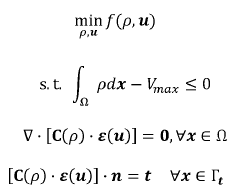
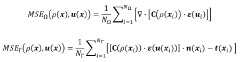
- A novel framework using deep learning neural networks (DNNs) to output density and displacement fields, trained with a loss function that includes design constraints, allowing for simultaneous analysis and design without the need for a finite element mesh, leveraging the capabilities of PINNs to eliminate the requirement for discrete element meshes.


Designing assistance system, designing assistance method, and computer readable medium
PatentActiveUS20200035036A1
Innovation
- A designing assistance system and method that identifies bar-shaped parts in three-dimensional shape models obtained through topology optimization calculations and modifies them to undented shape models, simplifying the shapes to be manufacturable by defining transverse-sectional shapes as ellipses or polygons, and creating a modified three-dimensional shape model suitable for manufacturing.


Materials Science Considerations for TO Implementation
Material selection is a critical factor in the successful implementation of topology optimization (TO) for aerospace applications. The unique demands of aerospace structures require materials that offer an optimal balance of strength, weight, and durability under extreme operating conditions. Traditional aerospace materials such as aluminum alloys, titanium alloys, and high-performance steels continue to serve as baseline options, but their application in TO-designed components presents specific challenges related to manufacturability and performance characteristics.
Advanced composite materials, particularly carbon fiber reinforced polymers (CFRPs), have emerged as excellent candidates for TO implementation due to their exceptional strength-to-weight ratios and the ability to tailor material properties through fiber orientation. These composites enable designers to create structures with directional strength properties that align with the load paths identified through topology optimization algorithms, resulting in even greater efficiency gains compared to isotropic materials.
Metal matrix composites (MMCs) and ceramic matrix composites (CMCs) represent another frontier in materials science for aerospace TO applications. These materials combine the lightweight properties of traditional composites with enhanced temperature resistance and mechanical stability, making them suitable for high-temperature applications such as engine components where conventional composites would fail.
Additive manufacturing has expanded the material palette available for TO implementation, introducing specialized metal powders and polymer formulations designed specifically for 3D printing processes. These materials must meet stringent aerospace requirements while remaining compatible with the layer-by-layer building process inherent to additive manufacturing. The development of printable high-performance alloys, including nickel-based superalloys and titanium aluminides, has been particularly significant for aerospace TO applications.
Material homogeneity and isotropy assumptions built into many TO algorithms must be reconsidered when implementing designs with advanced materials. For instance, the anisotropic nature of composites requires specialized optimization approaches that account for directional material properties. Similarly, the microstructural characteristics of additively manufactured materials can vary based on build orientation and process parameters, necessitating careful consideration during the TO process.
Multimaterial topology optimization represents an emerging approach that allows designers to simultaneously optimize both the structural layout and material selection. This technique is particularly valuable for aerospace applications where different sections of a component may experience vastly different operating conditions, requiring localized material property optimization to achieve maximum efficiency.
Environmental considerations also influence material selection for TO implementation in aerospace. Materials must maintain their performance characteristics across extreme temperature ranges, resist corrosion in various atmospheric conditions, and withstand radiation exposure at high altitudes. Additionally, increasing industry focus on sustainability has driven interest in recyclable and environmentally friendly materials that can still meet the demanding requirements of aerospace applications.
Advanced composite materials, particularly carbon fiber reinforced polymers (CFRPs), have emerged as excellent candidates for TO implementation due to their exceptional strength-to-weight ratios and the ability to tailor material properties through fiber orientation. These composites enable designers to create structures with directional strength properties that align with the load paths identified through topology optimization algorithms, resulting in even greater efficiency gains compared to isotropic materials.
Metal matrix composites (MMCs) and ceramic matrix composites (CMCs) represent another frontier in materials science for aerospace TO applications. These materials combine the lightweight properties of traditional composites with enhanced temperature resistance and mechanical stability, making them suitable for high-temperature applications such as engine components where conventional composites would fail.
Additive manufacturing has expanded the material palette available for TO implementation, introducing specialized metal powders and polymer formulations designed specifically for 3D printing processes. These materials must meet stringent aerospace requirements while remaining compatible with the layer-by-layer building process inherent to additive manufacturing. The development of printable high-performance alloys, including nickel-based superalloys and titanium aluminides, has been particularly significant for aerospace TO applications.
Material homogeneity and isotropy assumptions built into many TO algorithms must be reconsidered when implementing designs with advanced materials. For instance, the anisotropic nature of composites requires specialized optimization approaches that account for directional material properties. Similarly, the microstructural characteristics of additively manufactured materials can vary based on build orientation and process parameters, necessitating careful consideration during the TO process.
Multimaterial topology optimization represents an emerging approach that allows designers to simultaneously optimize both the structural layout and material selection. This technique is particularly valuable for aerospace applications where different sections of a component may experience vastly different operating conditions, requiring localized material property optimization to achieve maximum efficiency.
Environmental considerations also influence material selection for TO implementation in aerospace. Materials must maintain their performance characteristics across extreme temperature ranges, resist corrosion in various atmospheric conditions, and withstand radiation exposure at high altitudes. Additionally, increasing industry focus on sustainability has driven interest in recyclable and environmentally friendly materials that can still meet the demanding requirements of aerospace applications.
Certification and Validation Frameworks for TO Components
The aerospace industry faces unique challenges when implementing topology optimization (TO) components due to stringent safety requirements. Certification and validation frameworks for TO-designed parts must be robust and comprehensive to ensure these innovative components meet or exceed traditional safety standards. Currently, the industry relies on a multi-tiered approach that combines computational validation with physical testing protocols specifically adapted for the complex geometries resulting from TO processes.
The Federal Aviation Administration (FAA) and European Union Aviation Safety Agency (EASA) have developed preliminary guidelines for certifying additively manufactured parts, which often incorporate TO principles. These frameworks typically require extensive material characterization, process qualification, and part-specific testing. For TO components, certification processes must address the inherent variability in material properties that can occur in the thin-walled, complex structures that often result from optimization algorithms.
Non-destructive testing (NDT) methodologies have been adapted specifically for TO components, including advanced CT scanning protocols capable of detecting internal defects in complex geometries. These are complemented by standardized mechanical testing procedures that account for the anisotropic properties often present in TO parts manufactured through additive processes. The Aerospace Materials Specification committee has published several standards (AMS 7000 series) that provide guidance on testing and quality assurance for such components.
Digital twin technology has emerged as a critical element in validation frameworks, allowing continuous comparison between the as-designed, as-manufactured, and as-operated states of TO components. This approach enables real-time monitoring of part performance against design predictions, creating a feedback loop that strengthens the validation process. Companies like Airbus and Boeing have implemented digital thread methodologies that maintain traceability throughout the component lifecycle, from initial optimization through service life.
Statistical process control methods have been adapted for TO manufacturing processes, establishing process capability indices specific to the unique geometries and material distributions found in optimized components. These statistical frameworks help manufacturers demonstrate process stability and repeatability, which are essential requirements for certification.
Qualification equivalency approaches are being developed to streamline certification of TO components by establishing relationships between traditional designs and their optimized counterparts. This allows manufacturers to leverage existing certification data when possible, reducing the burden of full recertification for every TO implementation. The SAE International Committee G-22 is currently developing standards that will formalize these equivalency methodologies, potentially accelerating the adoption of TO in critical aerospace applications.
The Federal Aviation Administration (FAA) and European Union Aviation Safety Agency (EASA) have developed preliminary guidelines for certifying additively manufactured parts, which often incorporate TO principles. These frameworks typically require extensive material characterization, process qualification, and part-specific testing. For TO components, certification processes must address the inherent variability in material properties that can occur in the thin-walled, complex structures that often result from optimization algorithms.
Non-destructive testing (NDT) methodologies have been adapted specifically for TO components, including advanced CT scanning protocols capable of detecting internal defects in complex geometries. These are complemented by standardized mechanical testing procedures that account for the anisotropic properties often present in TO parts manufactured through additive processes. The Aerospace Materials Specification committee has published several standards (AMS 7000 series) that provide guidance on testing and quality assurance for such components.
Digital twin technology has emerged as a critical element in validation frameworks, allowing continuous comparison between the as-designed, as-manufactured, and as-operated states of TO components. This approach enables real-time monitoring of part performance against design predictions, creating a feedback loop that strengthens the validation process. Companies like Airbus and Boeing have implemented digital thread methodologies that maintain traceability throughout the component lifecycle, from initial optimization through service life.
Statistical process control methods have been adapted for TO manufacturing processes, establishing process capability indices specific to the unique geometries and material distributions found in optimized components. These statistical frameworks help manufacturers demonstrate process stability and repeatability, which are essential requirements for certification.
Qualification equivalency approaches are being developed to streamline certification of TO components by establishing relationships between traditional designs and their optimized counterparts. This allows manufacturers to leverage existing certification data when possible, reducing the burden of full recertification for every TO implementation. The SAE International Committee G-22 is currently developing standards that will formalize these equivalency methodologies, potentially accelerating the adoption of TO in critical aerospace applications.
Unlock deeper insights with PatSnap Eureka Quick Research — get a full tech report to explore trends and direct your research. Try now!
Generate Your Research Report Instantly with AI Agent
Supercharge your innovation with PatSnap Eureka AI Agent Platform!