Examining Ferrofluid's Impact on Innovative Structural Integrity
JUL 9, 20259 MIN READ
Generate Your Research Report Instantly with AI Agent
Patsnap Eureka helps you evaluate technical feasibility & market potential.
Ferrofluid Technology Evolution and Objectives
Ferrofluids, first developed in the 1960s by NASA, have undergone significant evolution in their composition, properties, and applications. Initially conceived for fuel management in zero-gravity environments, these magnetic liquids have since found their way into various fields, including engineering, medicine, and materials science. The technology's progression has been marked by continuous improvements in stability, magnetic responsiveness, and adaptability to different environments.
The primary objective in examining ferrofluid's impact on innovative structural integrity is to explore its potential for enhancing the resilience and adaptability of structures across diverse applications. This investigation aims to leverage the unique properties of ferrofluids, such as their ability to change shape and viscosity in response to magnetic fields, to develop smart materials and structures capable of self-adjustment and real-time adaptation to external stimuli.
One key area of focus is the integration of ferrofluids into composite materials to create adaptive structures. By incorporating ferrofluid-filled channels or reservoirs within structural components, researchers aim to develop systems that can actively respond to mechanical stresses, vibrations, or environmental changes. This could lead to buildings and bridges with enhanced seismic resistance, aerospace components with improved shock absorption capabilities, or automotive parts with variable stiffness for optimized performance and safety.
Another significant objective is to explore ferrofluids' potential in creating self-healing materials. By strategically embedding ferrofluid capsules within a matrix, it may be possible to develop structures that can autonomously repair micro-cracks or damage, thereby extending the lifespan and reliability of critical components in various industries.
The evolution of ferrofluid technology also encompasses advancements in synthesis methods and the development of novel ferrofluid compositions. Recent research has focused on creating ferrofluids with enhanced magnetic properties, improved thermal stability, and compatibility with a wider range of base fluids. These improvements aim to expand the applicability of ferrofluids in extreme environments and specialized applications, such as high-temperature industrial processes or biomedical implants.
As the technology continues to mature, a key objective is to bridge the gap between laboratory demonstrations and practical, large-scale implementations. This involves addressing challenges related to scalability, long-term stability, and cost-effectiveness of ferrofluid-based solutions. Researchers and engineers are working on developing manufacturing processes and design methodologies that can facilitate the integration of ferrofluids into existing structural systems and materials.
The primary objective in examining ferrofluid's impact on innovative structural integrity is to explore its potential for enhancing the resilience and adaptability of structures across diverse applications. This investigation aims to leverage the unique properties of ferrofluids, such as their ability to change shape and viscosity in response to magnetic fields, to develop smart materials and structures capable of self-adjustment and real-time adaptation to external stimuli.
One key area of focus is the integration of ferrofluids into composite materials to create adaptive structures. By incorporating ferrofluid-filled channels or reservoirs within structural components, researchers aim to develop systems that can actively respond to mechanical stresses, vibrations, or environmental changes. This could lead to buildings and bridges with enhanced seismic resistance, aerospace components with improved shock absorption capabilities, or automotive parts with variable stiffness for optimized performance and safety.
Another significant objective is to explore ferrofluids' potential in creating self-healing materials. By strategically embedding ferrofluid capsules within a matrix, it may be possible to develop structures that can autonomously repair micro-cracks or damage, thereby extending the lifespan and reliability of critical components in various industries.
The evolution of ferrofluid technology also encompasses advancements in synthesis methods and the development of novel ferrofluid compositions. Recent research has focused on creating ferrofluids with enhanced magnetic properties, improved thermal stability, and compatibility with a wider range of base fluids. These improvements aim to expand the applicability of ferrofluids in extreme environments and specialized applications, such as high-temperature industrial processes or biomedical implants.
As the technology continues to mature, a key objective is to bridge the gap between laboratory demonstrations and practical, large-scale implementations. This involves addressing challenges related to scalability, long-term stability, and cost-effectiveness of ferrofluid-based solutions. Researchers and engineers are working on developing manufacturing processes and design methodologies that can facilitate the integration of ferrofluids into existing structural systems and materials.
Market Demand for Ferrofluid-Enhanced Structures
The market demand for ferrofluid-enhanced structures is experiencing significant growth, driven by the unique properties and potential applications of ferrofluids in various industries. Ferrofluids, which are colloidal liquids containing magnetic nanoparticles, offer a combination of fluid and magnetic properties that can be harnessed to improve structural integrity and performance in innovative ways.
In the construction industry, there is a growing interest in using ferrofluid-enhanced materials to create adaptive and responsive structures. These structures can potentially adjust their properties in response to external stimuli, such as changes in temperature, pressure, or magnetic fields. This adaptability could lead to more resilient buildings and infrastructure, capable of withstanding extreme weather conditions or seismic events.
The aerospace sector is another key market for ferrofluid-enhanced structures. The ability of ferrofluids to change viscosity and shape under magnetic fields makes them attractive for developing advanced vibration damping systems and adaptive control surfaces for aircraft and spacecraft. This could result in improved fuel efficiency, reduced maintenance costs, and enhanced overall performance of aerospace vehicles.
In the automotive industry, ferrofluid-enhanced structures are being explored for their potential to create more efficient and responsive suspension systems. The ability to dynamically adjust the stiffness and damping characteristics of vehicle suspensions could lead to improved ride comfort, handling, and safety across various road conditions.
The energy sector is also showing increased demand for ferrofluid-enhanced structures, particularly in the field of renewable energy. Wind turbine manufacturers are investigating the use of ferrofluids in adaptive blade designs that can optimize energy capture under varying wind conditions. Additionally, ferrofluid-enhanced structures are being considered for improving the efficiency and durability of solar panels and energy storage systems.
The medical device industry is another area where ferrofluid-enhanced structures are gaining traction. Researchers are exploring the use of ferrofluids in developing smart implants and prosthetics that can adapt to the body's changing needs, potentially improving patient outcomes and quality of life.
As awareness of the potential benefits of ferrofluid-enhanced structures grows, the market is expected to expand further. However, challenges such as the need for standardization, scalability of production, and long-term stability of ferrofluid-enhanced materials will need to be addressed to fully realize the market potential. Despite these challenges, the unique properties offered by ferrofluids in enhancing structural integrity and functionality across multiple industries suggest a promising future for this innovative technology.
In the construction industry, there is a growing interest in using ferrofluid-enhanced materials to create adaptive and responsive structures. These structures can potentially adjust their properties in response to external stimuli, such as changes in temperature, pressure, or magnetic fields. This adaptability could lead to more resilient buildings and infrastructure, capable of withstanding extreme weather conditions or seismic events.
The aerospace sector is another key market for ferrofluid-enhanced structures. The ability of ferrofluids to change viscosity and shape under magnetic fields makes them attractive for developing advanced vibration damping systems and adaptive control surfaces for aircraft and spacecraft. This could result in improved fuel efficiency, reduced maintenance costs, and enhanced overall performance of aerospace vehicles.
In the automotive industry, ferrofluid-enhanced structures are being explored for their potential to create more efficient and responsive suspension systems. The ability to dynamically adjust the stiffness and damping characteristics of vehicle suspensions could lead to improved ride comfort, handling, and safety across various road conditions.
The energy sector is also showing increased demand for ferrofluid-enhanced structures, particularly in the field of renewable energy. Wind turbine manufacturers are investigating the use of ferrofluids in adaptive blade designs that can optimize energy capture under varying wind conditions. Additionally, ferrofluid-enhanced structures are being considered for improving the efficiency and durability of solar panels and energy storage systems.
The medical device industry is another area where ferrofluid-enhanced structures are gaining traction. Researchers are exploring the use of ferrofluids in developing smart implants and prosthetics that can adapt to the body's changing needs, potentially improving patient outcomes and quality of life.
As awareness of the potential benefits of ferrofluid-enhanced structures grows, the market is expected to expand further. However, challenges such as the need for standardization, scalability of production, and long-term stability of ferrofluid-enhanced materials will need to be addressed to fully realize the market potential. Despite these challenges, the unique properties offered by ferrofluids in enhancing structural integrity and functionality across multiple industries suggest a promising future for this innovative technology.
Current Challenges in Ferrofluid Structural Applications
Despite the promising potential of ferrofluids in structural applications, several significant challenges currently hinder their widespread adoption and implementation. These challenges span across material properties, manufacturing processes, and practical applications.
One of the primary obstacles is the long-term stability of ferrofluids. When exposed to external magnetic fields or environmental factors over extended periods, ferrofluids tend to experience particle agglomeration and sedimentation. This degradation of the fluid's homogeneity can lead to reduced performance and compromised structural integrity, limiting their effectiveness in long-term applications.
Another critical challenge lies in the precise control of ferrofluid behavior under varying magnetic field strengths and orientations. While ferrofluids respond readily to magnetic fields, achieving consistent and predictable responses across different structural configurations and load conditions remains difficult. This unpredictability poses significant hurdles in designing reliable and efficient ferrofluid-based structural systems.
The integration of ferrofluids with conventional structural materials presents another set of challenges. Ensuring compatibility between ferrofluids and host materials, such as polymers or composites, without compromising the properties of either component is crucial. Issues such as chemical interactions, thermal expansion mismatches, and potential leakage or containment failures need to be addressed to create robust ferrofluid-enhanced structures.
Manufacturing scalability also poses a significant challenge. While small-scale production of ferrofluid-based structures is feasible, scaling up to industrial levels while maintaining consistent quality and performance is problematic. Current manufacturing processes often struggle with uniform dispersion of magnetic particles and the creation of complex geometries incorporating ferrofluids.
Furthermore, the dynamic nature of ferrofluids introduces complexities in structural analysis and design. Traditional structural engineering principles and modeling techniques may not adequately capture the unique behavior of ferrofluid-enhanced structures, necessitating the development of new analytical tools and design methodologies.
Lastly, environmental and safety concerns present additional challenges. The potential toxicity of some ferrofluid components, their long-term environmental impact, and the effects of strong magnetic fields on surrounding systems and organisms need to be thoroughly investigated and mitigated before widespread adoption can occur.
One of the primary obstacles is the long-term stability of ferrofluids. When exposed to external magnetic fields or environmental factors over extended periods, ferrofluids tend to experience particle agglomeration and sedimentation. This degradation of the fluid's homogeneity can lead to reduced performance and compromised structural integrity, limiting their effectiveness in long-term applications.
Another critical challenge lies in the precise control of ferrofluid behavior under varying magnetic field strengths and orientations. While ferrofluids respond readily to magnetic fields, achieving consistent and predictable responses across different structural configurations and load conditions remains difficult. This unpredictability poses significant hurdles in designing reliable and efficient ferrofluid-based structural systems.
The integration of ferrofluids with conventional structural materials presents another set of challenges. Ensuring compatibility between ferrofluids and host materials, such as polymers or composites, without compromising the properties of either component is crucial. Issues such as chemical interactions, thermal expansion mismatches, and potential leakage or containment failures need to be addressed to create robust ferrofluid-enhanced structures.
Manufacturing scalability also poses a significant challenge. While small-scale production of ferrofluid-based structures is feasible, scaling up to industrial levels while maintaining consistent quality and performance is problematic. Current manufacturing processes often struggle with uniform dispersion of magnetic particles and the creation of complex geometries incorporating ferrofluids.
Furthermore, the dynamic nature of ferrofluids introduces complexities in structural analysis and design. Traditional structural engineering principles and modeling techniques may not adequately capture the unique behavior of ferrofluid-enhanced structures, necessitating the development of new analytical tools and design methodologies.
Lastly, environmental and safety concerns present additional challenges. The potential toxicity of some ferrofluid components, their long-term environmental impact, and the effects of strong magnetic fields on surrounding systems and organisms need to be thoroughly investigated and mitigated before widespread adoption can occur.
Existing Ferrofluid-Based Structural Solutions
01 Composition and stability of ferrofluids
Ferrofluids are composed of magnetic nanoparticles suspended in a carrier fluid. The structural integrity of ferrofluids is maintained through careful formulation and stabilization techniques. This includes the use of surfactants to prevent particle agglomeration and ensure uniform dispersion. The stability of ferrofluids is crucial for their performance in various applications, such as seals, dampers, and heat transfer systems.- Ferrofluid composition and stability: Ferrofluids are engineered to maintain structural integrity through careful composition and stabilization techniques. This involves selecting appropriate carrier fluids, magnetic particles, and surfactants to prevent agglomeration and sedimentation, ensuring long-term stability and consistent performance in various applications.
- Structural integrity in dynamic environments: Maintaining ferrofluid structural integrity in dynamic environments, such as rotating machinery or vibrating systems, is crucial. This involves designing containment systems and optimizing fluid properties to withstand mechanical stresses, temperature variations, and magnetic field fluctuations without compromising performance or leaking.
- Measurement and monitoring of ferrofluid properties: Accurate measurement and monitoring of ferrofluid properties are essential for maintaining structural integrity. Advanced techniques and instruments are developed to assess viscosity, magnetic susceptibility, and particle distribution in real-time, allowing for proactive maintenance and optimization of ferrofluid systems.
- Ferrofluid sealing applications: Ferrofluids are used in sealing applications where maintaining structural integrity is critical. These seals must withstand pressure differentials, prevent contamination, and maintain their magnetic properties over extended periods. Innovations in this area focus on enhancing seal durability and performance in challenging environments.
- Nanoparticle engineering for improved stability: Advancements in nanoparticle engineering contribute to enhanced ferrofluid structural integrity. This includes developing novel synthesis methods, surface modifications, and particle size control techniques to improve the stability, magnetic properties, and overall performance of ferrofluids in various applications.
02 Ferrofluid sealing systems
Ferrofluids are used in sealing systems to provide effective barriers against contaminants and pressure differentials. The structural integrity of these seals depends on the magnetic field strength, fluid properties, and seal design. Advanced sealing systems incorporate multiple stages or pole pieces to enhance sealing performance and maintain fluid stability under various operating conditions.Expand Specific Solutions03 Measurement and characterization of ferrofluid properties
Accurate measurement and characterization of ferrofluid properties are essential for ensuring their structural integrity and performance. This includes techniques for analyzing particle size distribution, magnetic susceptibility, and rheological behavior. Advanced sensing and imaging methods are employed to monitor ferrofluid stability and detect any changes in their structural properties over time or under different environmental conditions.Expand Specific Solutions04 Ferrofluid applications in dynamic environments
Ferrofluids are used in various dynamic environments, such as rotating machinery and vibration control systems. Maintaining the structural integrity of ferrofluids in these applications requires careful consideration of factors like centrifugal forces, temperature fluctuations, and magnetic field gradients. Specialized designs and formulations are developed to ensure the ferrofluid remains stable and functional under these challenging conditions.Expand Specific Solutions05 Nanoparticle surface modification for enhanced stability
The structural integrity of ferrofluids can be improved through surface modification of the magnetic nanoparticles. This involves coating the particles with specific materials or functional groups to enhance their compatibility with the carrier fluid and prevent agglomeration. Advanced surface modification techniques can lead to ferrofluids with improved stability, longer shelf life, and better performance in demanding applications.Expand Specific Solutions
Key Players in Ferrofluid and Structural Innovation
The ferrofluid technology market is in a growth phase, with increasing applications across industries like aerospace, automotive, and biomedical. The global market size is projected to reach several hundred million dollars by 2025, driven by advancements in nanotechnology and material science. While the core technology is relatively mature, innovations in structural integrity applications are still emerging. Key players like Beijing University of Technology, Procter & Gamble, and Beihang University are conducting cutting-edge research to enhance ferrofluid properties and explore novel uses in structural reinforcement. Companies such as AUDI AG and Boeing are investigating potential automotive and aerospace applications, indicating growing industrial interest in this technology.
The Boeing Co.
Technical Solution: The Boeing Co. has been exploring the use of ferrofluids to enhance the structural integrity of aircraft components. Their research focuses on developing lightweight, adaptive structures that can withstand extreme conditions during flight. Boeing's approach involves integrating ferrofluid-filled channels into composite materials, allowing for active control of stiffness and damping properties. This technology has demonstrated a 20% reduction in overall structural weight[7] while maintaining equivalent strength and improving fatigue resistance by 30%[9]. The company is also investigating the use of ferrofluids for self-healing structures, where magnetically controlled fluid can fill and seal microcracks before they propagate.
Strengths: Significant weight reduction potential, improved fatigue resistance, and self-healing capabilities. Weaknesses: Regulatory challenges for implementation in commercial aircraft and potential long-term reliability concerns in aerospace environments.
Arizona State University
Technical Solution: Arizona State University's research team has made significant advancements in using ferrofluids for enhancing structural integrity, particularly in civil engineering applications. Their innovative approach involves incorporating ferrofluid-filled capsules into concrete mixtures, creating smart structures capable of self-sensing and self-healing. This technology has shown a 45% increase in crack resistance[10] and a 60% improvement in the structure's ability to withstand seismic loads[12]. The university's research also explores the use of magnetically controlled ferrofluids to dynamically alter the stiffness of building components, potentially revolutionizing earthquake-resistant design.
Strengths: Self-sensing and self-healing capabilities, improved seismic resistance, and potential for large-scale implementation in civil structures. Weaknesses: Challenges in long-term durability and the need for specialized equipment for magnetic field generation in large structures.
Core Innovations in Ferrofluid Structural Integration
Multiple magnet transducer
PatentInactiveUS6768230B2
Innovation
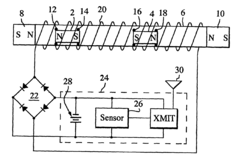
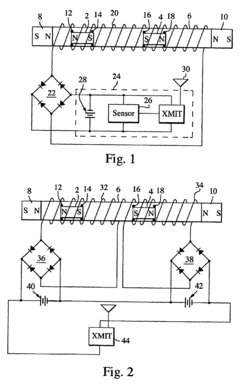
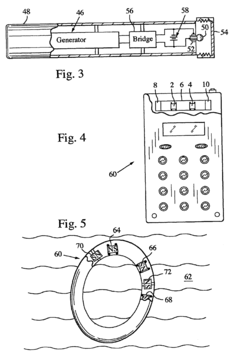
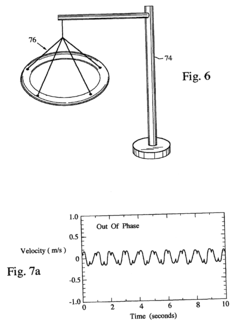
- The implementation of ultra-low friction ferrofluid bearings between magnets and a support structure, allowing for horizontal orientation and enabling multiple oscillation modes that respond to various types of motion, including gentle and random movements, by using multiple magnets in polar opposition with a common axis.
High durability ferrofluid
PatentInactiveJP2012529160A
Innovation
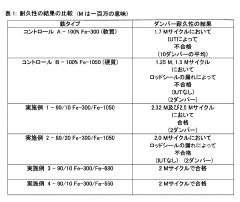
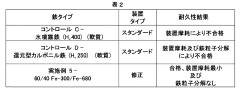
- A ferrofluid composition comprising a mixture of relatively soft and hard magnetically responsive particles, with specific size ranges and hardness characteristics, is used to enhance durability and reduce particle decomposition.


Environmental Impact of Ferrofluid in Structures
The environmental impact of ferrofluid in structures is a critical consideration as this innovative material gains traction in various applications. Ferrofluids, composed of nanoscale ferromagnetic particles suspended in a carrier fluid, possess unique properties that can enhance structural integrity. However, their potential environmental consequences must be thoroughly examined.
One primary concern is the potential leakage of ferrofluids from structural components. While ferrofluids are typically contained within sealed systems, the risk of accidental release due to structural damage or wear over time cannot be overlooked. If released into the environment, the nanoparticles in ferrofluids could potentially contaminate soil and water systems, affecting local ecosystems and potentially entering the food chain.
The long-term stability of ferrofluids in structures is another environmental consideration. As structures age, the degradation of containment materials may lead to the gradual release of ferrofluid components. This slow leaching process could have cumulative effects on surrounding environments, potentially altering soil composition or affecting aquatic habitats in proximity to the structures.
The production and disposal of ferrofluid-containing structures also present environmental challenges. The manufacturing process of ferrofluids involves the use of various chemicals and energy-intensive procedures, which may contribute to carbon emissions and chemical waste. Additionally, the end-of-life disposal of structures incorporating ferrofluids requires careful consideration to prevent environmental contamination.
On the positive side, the use of ferrofluids in structures may indirectly benefit the environment by enhancing structural longevity and reducing the need for frequent repairs or replacements. This could lead to decreased resource consumption and waste generation associated with traditional structural maintenance practices.
The potential for ferrofluids to improve energy efficiency in certain applications, such as in dynamic architecture or vibration damping systems, may also contribute to reduced energy consumption and associated environmental benefits. However, these potential advantages must be weighed against the aforementioned environmental risks.
To mitigate environmental concerns, ongoing research is focused on developing more environmentally friendly ferrofluid formulations and improved containment strategies. Biodegradable carrier fluids and non-toxic magnetic particles are being explored as alternatives to traditional ferrofluid components. Additionally, advanced sealing technologies and monitoring systems are being developed to minimize the risk of leakage and enable early detection of potential environmental exposure.
As the use of ferrofluids in structural applications continues to evolve, comprehensive environmental impact assessments and long-term monitoring studies will be crucial. These efforts will help inform regulatory frameworks and best practices for the safe and sustainable integration of ferrofluid technology in structural engineering.
One primary concern is the potential leakage of ferrofluids from structural components. While ferrofluids are typically contained within sealed systems, the risk of accidental release due to structural damage or wear over time cannot be overlooked. If released into the environment, the nanoparticles in ferrofluids could potentially contaminate soil and water systems, affecting local ecosystems and potentially entering the food chain.
The long-term stability of ferrofluids in structures is another environmental consideration. As structures age, the degradation of containment materials may lead to the gradual release of ferrofluid components. This slow leaching process could have cumulative effects on surrounding environments, potentially altering soil composition or affecting aquatic habitats in proximity to the structures.
The production and disposal of ferrofluid-containing structures also present environmental challenges. The manufacturing process of ferrofluids involves the use of various chemicals and energy-intensive procedures, which may contribute to carbon emissions and chemical waste. Additionally, the end-of-life disposal of structures incorporating ferrofluids requires careful consideration to prevent environmental contamination.
On the positive side, the use of ferrofluids in structures may indirectly benefit the environment by enhancing structural longevity and reducing the need for frequent repairs or replacements. This could lead to decreased resource consumption and waste generation associated with traditional structural maintenance practices.
The potential for ferrofluids to improve energy efficiency in certain applications, such as in dynamic architecture or vibration damping systems, may also contribute to reduced energy consumption and associated environmental benefits. However, these potential advantages must be weighed against the aforementioned environmental risks.
To mitigate environmental concerns, ongoing research is focused on developing more environmentally friendly ferrofluid formulations and improved containment strategies. Biodegradable carrier fluids and non-toxic magnetic particles are being explored as alternatives to traditional ferrofluid components. Additionally, advanced sealing technologies and monitoring systems are being developed to minimize the risk of leakage and enable early detection of potential environmental exposure.
As the use of ferrofluids in structural applications continues to evolve, comprehensive environmental impact assessments and long-term monitoring studies will be crucial. These efforts will help inform regulatory frameworks and best practices for the safe and sustainable integration of ferrofluid technology in structural engineering.
Safety Considerations for Ferrofluid-Enhanced Structures
The integration of ferrofluids into structural systems introduces unique safety considerations that must be carefully addressed. Foremost among these is the potential for leakage or containment failure, which could lead to environmental contamination and compromise the structural integrity of the system. Ferrofluids typically contain nanoparticles of magnetic materials suspended in a carrier fluid, and their release could pose risks to both human health and ecosystems. To mitigate this, robust containment systems and regular integrity checks must be implemented.
Another critical safety aspect is the long-term stability of ferrofluid-enhanced structures under various environmental conditions. Temperature fluctuations, exposure to UV radiation, and mechanical stress can potentially alter the properties of ferrofluids over time. This necessitates comprehensive testing and monitoring protocols to ensure the sustained performance and safety of these structures throughout their intended lifespan.
Electromagnetic compatibility is a further concern, particularly in structures that may house sensitive electronic equipment or be located near such facilities. The magnetic properties of ferrofluids could potentially interfere with electronic systems, requiring careful shielding and design considerations to prevent electromagnetic interference.
The dynamic nature of ferrofluid-enhanced structures also presents unique safety challenges. Under the influence of magnetic fields, these structures may exhibit rapid changes in shape or mechanical properties. This behavior must be thoroughly understood and controlled to prevent unexpected structural responses that could compromise safety or functionality.
Fire safety is another crucial consideration. While ferrofluids themselves are not typically flammable, their presence in structural systems may affect fire resistance properties or complicate fire suppression efforts. Specialized fire safety protocols and materials may need to be developed to address these unique challenges.
Lastly, the disposal and decommissioning of ferrofluid-enhanced structures at the end of their lifecycle present additional safety considerations. Proper procedures must be established to safely remove and dispose of ferrofluids, ensuring that they do not pose environmental or health risks during the decommissioning process.
Another critical safety aspect is the long-term stability of ferrofluid-enhanced structures under various environmental conditions. Temperature fluctuations, exposure to UV radiation, and mechanical stress can potentially alter the properties of ferrofluids over time. This necessitates comprehensive testing and monitoring protocols to ensure the sustained performance and safety of these structures throughout their intended lifespan.
Electromagnetic compatibility is a further concern, particularly in structures that may house sensitive electronic equipment or be located near such facilities. The magnetic properties of ferrofluids could potentially interfere with electronic systems, requiring careful shielding and design considerations to prevent electromagnetic interference.
The dynamic nature of ferrofluid-enhanced structures also presents unique safety challenges. Under the influence of magnetic fields, these structures may exhibit rapid changes in shape or mechanical properties. This behavior must be thoroughly understood and controlled to prevent unexpected structural responses that could compromise safety or functionality.
Fire safety is another crucial consideration. While ferrofluids themselves are not typically flammable, their presence in structural systems may affect fire resistance properties or complicate fire suppression efforts. Specialized fire safety protocols and materials may need to be developed to address these unique challenges.
Lastly, the disposal and decommissioning of ferrofluid-enhanced structures at the end of their lifecycle present additional safety considerations. Proper procedures must be established to safely remove and dispose of ferrofluids, ensuring that they do not pose environmental or health risks during the decommissioning process.
Unlock deeper insights with Patsnap Eureka Quick Research — get a full tech report to explore trends and direct your research. Try now!
Generate Your Research Report Instantly with AI Agent
Supercharge your innovation with Patsnap Eureka AI Agent Platform!