Exploring Advanced Ferrofluid Materials for Innovative Design
JUL 9, 20259 MIN READ
Generate Your Research Report Instantly with AI Agent
Patsnap Eureka helps you evaluate technical feasibility & market potential.
Ferrofluid Evolution
Ferrofluids have undergone a remarkable evolution since their inception in the 1960s. Initially developed by NASA for rocket fuel control in zero gravity, these magnetic liquids have since found applications across various industries. The evolution of ferrofluids can be traced through several key stages, each marked by significant advancements in material science and engineering.
In the early stages, ferrofluids were primarily composed of magnetite nanoparticles suspended in carrier fluids like water or oil. These basic formulations laid the groundwork for future developments but had limited stability and magnetic responsiveness. The 1970s and 1980s saw improvements in synthesis techniques, leading to more stable ferrofluids with enhanced magnetic properties.
A major breakthrough came in the 1990s with the development of surfactant-coated nanoparticles. This innovation greatly improved the colloidal stability of ferrofluids, preventing particle agglomeration and extending their shelf life. This period also saw the exploration of different magnetic materials, such as cobalt and iron-based nanoparticles, to achieve stronger magnetic responses.
The turn of the millennium brought about a new era in ferrofluid evolution, characterized by the integration of advanced nanomaterials. Carbon nanotubes and graphene were incorporated into ferrofluids, enhancing their thermal and electrical properties. This period also saw the development of biocompatible ferrofluids, opening up new possibilities in medical applications.
Recent years have witnessed a focus on smart ferrofluids with tunable properties. Researchers have developed ferrofluids that can change their viscosity, magnetic susceptibility, or even color in response to external stimuli. This has been achieved through the use of complex nanoparticle architectures and responsive polymer coatings.
The latest frontier in ferrofluid evolution involves the creation of multi-functional ferrofluids. These advanced materials combine magnetic properties with other functionalities such as optical, catalytic, or self-healing capabilities. This multifunctionality is driving innovation in fields ranging from energy harvesting to adaptive optics.
As we look to the future, the evolution of ferrofluids is likely to continue along several promising paths. One area of focus is the development of environmentally friendly ferrofluids using biodegradable carriers and non-toxic magnetic materials. Another exciting direction is the creation of ferrofluids with extreme magnetic properties, potentially revolutionizing applications in magnetic shielding and high-performance actuators.
In the early stages, ferrofluids were primarily composed of magnetite nanoparticles suspended in carrier fluids like water or oil. These basic formulations laid the groundwork for future developments but had limited stability and magnetic responsiveness. The 1970s and 1980s saw improvements in synthesis techniques, leading to more stable ferrofluids with enhanced magnetic properties.
A major breakthrough came in the 1990s with the development of surfactant-coated nanoparticles. This innovation greatly improved the colloidal stability of ferrofluids, preventing particle agglomeration and extending their shelf life. This period also saw the exploration of different magnetic materials, such as cobalt and iron-based nanoparticles, to achieve stronger magnetic responses.
The turn of the millennium brought about a new era in ferrofluid evolution, characterized by the integration of advanced nanomaterials. Carbon nanotubes and graphene were incorporated into ferrofluids, enhancing their thermal and electrical properties. This period also saw the development of biocompatible ferrofluids, opening up new possibilities in medical applications.
Recent years have witnessed a focus on smart ferrofluids with tunable properties. Researchers have developed ferrofluids that can change their viscosity, magnetic susceptibility, or even color in response to external stimuli. This has been achieved through the use of complex nanoparticle architectures and responsive polymer coatings.
The latest frontier in ferrofluid evolution involves the creation of multi-functional ferrofluids. These advanced materials combine magnetic properties with other functionalities such as optical, catalytic, or self-healing capabilities. This multifunctionality is driving innovation in fields ranging from energy harvesting to adaptive optics.
As we look to the future, the evolution of ferrofluids is likely to continue along several promising paths. One area of focus is the development of environmentally friendly ferrofluids using biodegradable carriers and non-toxic magnetic materials. Another exciting direction is the creation of ferrofluids with extreme magnetic properties, potentially revolutionizing applications in magnetic shielding and high-performance actuators.
Market Applications
Ferrofluids, with their unique magnetic properties and fluid characteristics, have found applications across various industries, driving innovation and technological advancements. The market for ferrofluid-based products and solutions continues to expand, offering significant opportunities for growth and development.
In the medical field, ferrofluids have shown promising applications in targeted drug delivery systems. By encapsulating drugs within magnetic nanoparticles, researchers have developed methods to guide medications to specific areas of the body using external magnetic fields. This approach has the potential to revolutionize cancer treatments, allowing for more precise and effective drug administration while minimizing side effects on healthy tissues.
The electronics industry has also embraced ferrofluid technology, particularly in the development of advanced cooling systems for high-performance devices. Ferrofluid-based heat sinks and thermal management solutions offer improved heat dissipation capabilities, enabling the design of more compact and efficient electronic components. This application is particularly relevant in the rapidly growing markets of data centers, telecommunications equipment, and high-end consumer electronics.
In the automotive sector, ferrofluids are being explored for use in adaptive suspension systems and shock absorbers. By utilizing the magnetic properties of ferrofluids, engineers can create dynamic damping systems that respond in real-time to road conditions, enhancing vehicle stability and ride comfort. This technology has the potential to improve safety and performance across a wide range of vehicles, from passenger cars to heavy-duty trucks.
The aerospace industry has shown interest in ferrofluids for their potential in developing advanced sealing and lubrication systems. Magnetic fluid seals offer superior performance in high-vacuum environments and rotating shaft applications, providing longer operational life and reduced maintenance requirements for critical aerospace components.
In the field of renewable energy, ferrofluids are being investigated for use in next-generation solar thermal collectors. By incorporating ferrofluids into the heat transfer systems of concentrated solar power plants, researchers aim to improve energy conversion efficiency and reduce operational costs. This application could contribute significantly to the advancement of sustainable energy technologies.
The consumer products market has also seen innovative applications of ferrofluids, particularly in the realm of interactive art and design. Ferrofluid-based sculptures, displays, and decorative items have gained popularity for their mesmerizing visual effects and dynamic properties, opening up new avenues for creative expression and product development.
As research into advanced ferrofluid materials continues, new applications are likely to emerge across various sectors. The unique combination of magnetic responsiveness and fluid behavior offers endless possibilities for innovative design solutions, driving further market expansion and technological progress.
In the medical field, ferrofluids have shown promising applications in targeted drug delivery systems. By encapsulating drugs within magnetic nanoparticles, researchers have developed methods to guide medications to specific areas of the body using external magnetic fields. This approach has the potential to revolutionize cancer treatments, allowing for more precise and effective drug administration while minimizing side effects on healthy tissues.
The electronics industry has also embraced ferrofluid technology, particularly in the development of advanced cooling systems for high-performance devices. Ferrofluid-based heat sinks and thermal management solutions offer improved heat dissipation capabilities, enabling the design of more compact and efficient electronic components. This application is particularly relevant in the rapidly growing markets of data centers, telecommunications equipment, and high-end consumer electronics.
In the automotive sector, ferrofluids are being explored for use in adaptive suspension systems and shock absorbers. By utilizing the magnetic properties of ferrofluids, engineers can create dynamic damping systems that respond in real-time to road conditions, enhancing vehicle stability and ride comfort. This technology has the potential to improve safety and performance across a wide range of vehicles, from passenger cars to heavy-duty trucks.
The aerospace industry has shown interest in ferrofluids for their potential in developing advanced sealing and lubrication systems. Magnetic fluid seals offer superior performance in high-vacuum environments and rotating shaft applications, providing longer operational life and reduced maintenance requirements for critical aerospace components.
In the field of renewable energy, ferrofluids are being investigated for use in next-generation solar thermal collectors. By incorporating ferrofluids into the heat transfer systems of concentrated solar power plants, researchers aim to improve energy conversion efficiency and reduce operational costs. This application could contribute significantly to the advancement of sustainable energy technologies.
The consumer products market has also seen innovative applications of ferrofluids, particularly in the realm of interactive art and design. Ferrofluid-based sculptures, displays, and decorative items have gained popularity for their mesmerizing visual effects and dynamic properties, opening up new avenues for creative expression and product development.
As research into advanced ferrofluid materials continues, new applications are likely to emerge across various sectors. The unique combination of magnetic responsiveness and fluid behavior offers endless possibilities for innovative design solutions, driving further market expansion and technological progress.
Technical Challenges
The development of advanced ferrofluid materials for innovative design faces several significant technical challenges. One of the primary obstacles is achieving precise control over the magnetic properties of ferrofluids. While ferrofluids respond to magnetic fields, fine-tuning their behavior for specific applications remains complex. Engineers must balance factors such as magnetic susceptibility, saturation magnetization, and viscosity to create ferrofluids with desired characteristics.
Another challenge lies in enhancing the stability of ferrofluids over extended periods. Current formulations often suffer from particle aggregation and sedimentation, which can lead to performance degradation over time. Developing methods to maintain the uniform dispersion of magnetic nanoparticles in the carrier fluid is crucial for long-term reliability in various applications.
The biocompatibility of ferrofluids presents a significant hurdle, particularly for biomedical applications. While ferrofluids show promise in targeted drug delivery and medical imaging, ensuring their safety for in vivo use requires extensive research. This includes developing non-toxic carrier fluids and surface coatings for the magnetic particles that prevent adverse reactions within the body.
Thermal management is another critical challenge in ferrofluid technology. As ferrofluids are often used in heat transfer applications, improving their thermal conductivity and heat capacity without compromising their magnetic properties is essential. This requires a delicate balance of material composition and nanoparticle design.
The scalability of ferrofluid production poses a significant technical hurdle. While small-scale synthesis methods are well-established, scaling up to industrial production levels while maintaining consistent quality and properties is challenging. This includes developing cost-effective methods for large-scale nanoparticle synthesis and uniform dispersion in carrier fluids.
Environmental concerns also present challenges in ferrofluid development. As the use of ferrofluids expands, addressing their potential environmental impact becomes crucial. This includes developing biodegradable carrier fluids and ensuring the safe disposal or recycling of ferrofluid-based products at the end of their lifecycle.
Lastly, the integration of ferrofluids into complex systems and devices presents unique engineering challenges. Designing interfaces between ferrofluids and other materials, as well as creating mechanisms for precise ferrofluid manipulation in various environments, requires innovative approaches in materials science and mechanical engineering.
Another challenge lies in enhancing the stability of ferrofluids over extended periods. Current formulations often suffer from particle aggregation and sedimentation, which can lead to performance degradation over time. Developing methods to maintain the uniform dispersion of magnetic nanoparticles in the carrier fluid is crucial for long-term reliability in various applications.
The biocompatibility of ferrofluids presents a significant hurdle, particularly for biomedical applications. While ferrofluids show promise in targeted drug delivery and medical imaging, ensuring their safety for in vivo use requires extensive research. This includes developing non-toxic carrier fluids and surface coatings for the magnetic particles that prevent adverse reactions within the body.
Thermal management is another critical challenge in ferrofluid technology. As ferrofluids are often used in heat transfer applications, improving their thermal conductivity and heat capacity without compromising their magnetic properties is essential. This requires a delicate balance of material composition and nanoparticle design.
The scalability of ferrofluid production poses a significant technical hurdle. While small-scale synthesis methods are well-established, scaling up to industrial production levels while maintaining consistent quality and properties is challenging. This includes developing cost-effective methods for large-scale nanoparticle synthesis and uniform dispersion in carrier fluids.
Environmental concerns also present challenges in ferrofluid development. As the use of ferrofluids expands, addressing their potential environmental impact becomes crucial. This includes developing biodegradable carrier fluids and ensuring the safe disposal or recycling of ferrofluid-based products at the end of their lifecycle.
Lastly, the integration of ferrofluids into complex systems and devices presents unique engineering challenges. Designing interfaces between ferrofluids and other materials, as well as creating mechanisms for precise ferrofluid manipulation in various environments, requires innovative approaches in materials science and mechanical engineering.
Current Solutions
01 Composition and preparation of ferrofluid materials
Ferrofluids are colloidal suspensions of magnetic nanoparticles in a carrier fluid. They typically consist of magnetite or other ferromagnetic particles coated with surfactants to prevent agglomeration. The preparation process involves careful control of particle size, surfactant selection, and carrier fluid properties to achieve stable and responsive ferrofluids.- Composition and preparation of ferrofluids: Ferrofluids are colloidal suspensions of magnetic nanoparticles in a carrier fluid. They typically consist of magnetite or other ferromagnetic materials coated with surfactants to prevent agglomeration. The preparation process involves careful control of particle size and distribution to maintain stability and magnetic properties.
- Applications in sealing and lubrication: Ferrofluids are widely used in sealing and lubrication applications, particularly in rotating shaft seals. They provide a liquid barrier that can be controlled by magnetic fields, offering advantages in terms of low friction, long life, and the ability to operate in vacuum environments.
- Magnetic separation and filtration: Ferrofluids can be used in magnetic separation processes to remove contaminants or separate materials based on their magnetic properties. This technology has applications in waste treatment, mineral processing, and biotechnology.
- Heat transfer and cooling applications: Ferrofluids exhibit enhanced heat transfer properties due to their ability to be manipulated by magnetic fields. They are used in cooling systems for electronic devices, transformers, and other high-heat applications where conventional cooling methods are insufficient.
- Biomedical and diagnostic applications: Ferrofluids have emerging applications in biomedicine, including targeted drug delivery, magnetic hyperthermia for cancer treatment, and as contrast agents in magnetic resonance imaging (MRI). Their unique properties allow for precise control and localization within the body.
02 Applications in sealing and lubrication
Ferrofluids are widely used in sealing and lubrication applications, particularly in rotating shaft seals and bearings. Their unique properties allow them to form liquid seals that can be controlled by magnetic fields, providing effective containment of gases and liquids while reducing friction and wear in mechanical systems.Expand Specific Solutions03 Magnetic separation and filtration
Ferrofluids can be employed in magnetic separation processes for purifying liquids or gases. By applying magnetic fields, ferrofluid-based systems can efficiently capture and remove magnetic particles or magnetically tagged substances from a fluid stream, making them useful in various industrial and environmental applications.Expand Specific Solutions04 Heat transfer and cooling applications
Ferrofluids exhibit enhanced heat transfer properties due to their magnetic nature. They can be used in cooling systems for electronic devices, transformers, and other heat-generating equipment. Magnetic fields can be applied to control the flow and distribution of the ferrofluid, allowing for efficient and targeted heat dissipation.Expand Specific Solutions05 Biomedical and diagnostic applications
Ferrofluids have potential applications in biomedicine and diagnostics. They can be used as contrast agents in magnetic resonance imaging (MRI), targeted drug delivery systems, and hyperthermia treatment for cancer. The ability to manipulate ferrofluids using external magnetic fields makes them valuable tools in various medical procedures and diagnostic techniques.Expand Specific Solutions
Industry Leaders
The exploration of advanced ferrofluid materials for innovative design is currently in a growth phase, with increasing market potential across various industries. The global ferrofluid market is expanding, driven by applications in electronics, medical devices, and mechanical engineering. Technological maturity varies among key players, with companies like TDK Corp. and Ferrotec (USA) Corp. leading in research and development. These firms, along with others such as LORD Corp. and General Electric Company, are investing in enhancing ferrofluid properties and exploring novel applications. Academic institutions like Delft University of Technology and Cornell University are contributing to fundamental research, potentially accelerating innovation in this field. The collaboration between industry and academia is crucial for advancing ferrofluid technology and expanding its commercial viability.
TDK Corp.
Technical Solution: TDK Corp. has developed advanced ferrofluid materials with enhanced magnetic properties and stability. Their innovative approach involves synthesizing nanoparticles with controlled size distribution and surface modification, resulting in ferrofluids with improved magnetization and reduced agglomeration[1]. TDK's ferrofluids exhibit exceptional thermal and chemical stability, making them suitable for a wide range of applications, including electronic cooling, damping systems, and biomedical devices[2]. The company has also focused on developing environmentally friendly ferrofluids by using bio-compatible carrier fluids and reducing the use of harmful surfactants[3].
Strengths: High-performance ferrofluids with enhanced stability and magnetization. Versatile applications across industries. Environmentally friendly formulations. Weaknesses: Potentially higher production costs due to advanced synthesis methods. Limited long-term data on biocompatibility for medical applications.
General Electric Company
Technical Solution: General Electric has focused on developing high-performance ferrofluids for energy and power applications. Their research has led to the creation of ferrofluids with enhanced magnetic and rheological properties, suitable for use in advanced electrical transformers and generators[10]. GE's ferrofluids exhibit improved heat transfer capabilities and electrical insulation properties, contributing to increased efficiency and reliability of power systems. The company has also explored the use of ferrofluids in renewable energy technologies, such as wind turbines, where they can be used for improved cooling and vibration damping[11]. Additionally, GE has made progress in developing ferrofluids with self-healing properties, which can automatically repair minor defects in electrical insulation systems[12].
Strengths: High-performance ferrofluids for energy and power applications. Improved efficiency and reliability of electrical systems. Potential for self-healing properties in insulation systems. Weaknesses: May require significant modifications to existing infrastructure for implementation. High development costs for specialized applications.
Key Innovations
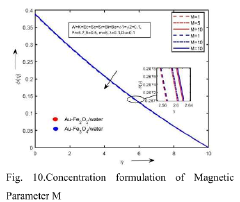
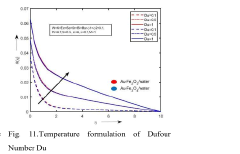
Comparative study of au-fe2o3 and au-cofe3o4 hybrid ferro fluid over a permeable plate with convective boundaries
PatentPendingIN202311068536A
Innovation
- A comparative study of Au-Fe2O3 and Au-CoFe4 hybrid ferrofluids is conducted using numerical simulations and experimental investigations to assess their heat transfer performance, flow dynamics, and temperature distribution over a permeable plate with convective boundaries, leveraging parameters like Nusselt number, Sherwood number, and skin friction coefficient.


Optical limiting ferromagnetic nanoparticles and device thereof
PatentInactiveIN1981CHE2007A
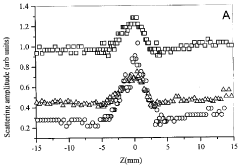
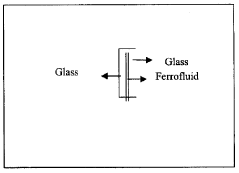
Innovation
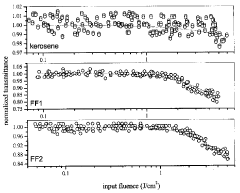
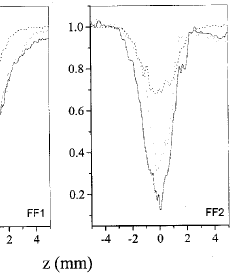
- Synthesizing ferromagnetic nanoparticles of specific sizes (4-6 nm) using an optimized co-precipitation technique and incorporating them into a ferrofluid, which is then encapsulated between glass plates without air gaps for enhanced thermal stability and optical limiting performance.
Environmental Impact
The environmental impact of ferrofluids is a critical consideration in their development and application. These unique materials, composed of nanoscale magnetic particles suspended in a carrier fluid, offer innovative design possibilities but also raise concerns about their potential effects on ecosystems and human health.
One of the primary environmental considerations is the fate of ferrofluid nanoparticles in natural systems. When released into the environment, these particles may interact with various organisms and ecosystems. Studies have shown that some nanoparticles can accumulate in aquatic environments, potentially affecting the food chain and aquatic life. The small size of ferrofluid particles allows them to penetrate cell membranes, raising questions about their long-term impact on living organisms.
The production process of ferrofluids also warrants attention from an environmental perspective. The synthesis of magnetic nanoparticles often involves chemical processes that may generate hazardous waste or consume significant energy. As research into advanced ferrofluid materials progresses, there is a growing emphasis on developing more sustainable and environmentally friendly production methods, such as green synthesis techniques using plant extracts or microorganisms.
Disposal and recycling of ferrofluid-containing products present another environmental challenge. As these materials find applications in various industries, including electronics, automotive, and medical devices, proper end-of-life management becomes crucial. Developing effective recycling processes for ferrofluids and products containing them is essential to minimize environmental impact and recover valuable materials.
On the positive side, ferrofluids have the potential to contribute to environmental solutions. Their unique properties make them suitable for applications in environmental remediation, such as oil spill cleanup and wastewater treatment. Advanced ferrofluid materials could enhance the efficiency of these processes, potentially reducing the environmental impact of industrial activities.
As research in this field advances, it is imperative to conduct comprehensive life cycle assessments of ferrofluid materials and their applications. This approach will help identify potential environmental risks and benefits throughout the entire lifecycle of ferrofluid-based products, from production to disposal. Such assessments can guide the development of more sustainable ferrofluid formulations and inform regulatory frameworks to ensure their safe use and management.
One of the primary environmental considerations is the fate of ferrofluid nanoparticles in natural systems. When released into the environment, these particles may interact with various organisms and ecosystems. Studies have shown that some nanoparticles can accumulate in aquatic environments, potentially affecting the food chain and aquatic life. The small size of ferrofluid particles allows them to penetrate cell membranes, raising questions about their long-term impact on living organisms.
The production process of ferrofluids also warrants attention from an environmental perspective. The synthesis of magnetic nanoparticles often involves chemical processes that may generate hazardous waste or consume significant energy. As research into advanced ferrofluid materials progresses, there is a growing emphasis on developing more sustainable and environmentally friendly production methods, such as green synthesis techniques using plant extracts or microorganisms.
Disposal and recycling of ferrofluid-containing products present another environmental challenge. As these materials find applications in various industries, including electronics, automotive, and medical devices, proper end-of-life management becomes crucial. Developing effective recycling processes for ferrofluids and products containing them is essential to minimize environmental impact and recover valuable materials.
On the positive side, ferrofluids have the potential to contribute to environmental solutions. Their unique properties make them suitable for applications in environmental remediation, such as oil spill cleanup and wastewater treatment. Advanced ferrofluid materials could enhance the efficiency of these processes, potentially reducing the environmental impact of industrial activities.
As research in this field advances, it is imperative to conduct comprehensive life cycle assessments of ferrofluid materials and their applications. This approach will help identify potential environmental risks and benefits throughout the entire lifecycle of ferrofluid-based products, from production to disposal. Such assessments can guide the development of more sustainable ferrofluid formulations and inform regulatory frameworks to ensure their safe use and management.
Safety Regulations
Safety regulations play a crucial role in the development and application of advanced ferrofluid materials for innovative design. As these materials gain prominence in various industries, it is essential to establish comprehensive safety guidelines to protect workers, consumers, and the environment.
Ferrofluids, being a unique combination of magnetic nanoparticles suspended in a carrier fluid, present specific safety concerns that must be addressed. The primary focus of safety regulations revolves around the potential health risks associated with exposure to nanoparticles and the magnetic properties of ferrofluids.
Occupational safety is a key consideration in the manufacturing and handling of ferrofluids. Regulations typically mandate the use of personal protective equipment (PPE) such as gloves, goggles, and respiratory protection to minimize direct contact and inhalation of nanoparticles. Proper ventilation systems and containment measures are also required to prevent the release of nanoparticles into the air.
Environmental safety is another critical aspect of ferrofluid regulations. Guidelines often address the proper disposal of ferrofluids and any waste materials generated during production or use. This may include specific protocols for treating and neutralizing ferrofluids before disposal to prevent contamination of soil and water resources.
Consumer safety regulations focus on the end-use applications of ferrofluid-based products. These may include requirements for product labeling, safety warnings, and usage instructions. For medical applications, stringent regulations govern the biocompatibility and long-term safety of ferrofluids used in diagnostic or therapeutic devices.
Electromagnetic safety is a unique concern for ferrofluid applications. Regulations may specify safe exposure limits to magnetic fields generated by ferrofluid-based devices, particularly in consumer electronics or medical equipment.
Transportation and storage of ferrofluids are subject to specific safety regulations. These may include requirements for specialized containers, handling procedures, and documentation to ensure safe transport and storage of these magnetic materials.
As the field of advanced ferrofluid materials continues to evolve, safety regulations must adapt to address new challenges and applications. Ongoing research and collaboration between industry, academia, and regulatory bodies are essential to develop and refine safety standards that keep pace with technological advancements in ferrofluid design and implementation.
Ferrofluids, being a unique combination of magnetic nanoparticles suspended in a carrier fluid, present specific safety concerns that must be addressed. The primary focus of safety regulations revolves around the potential health risks associated with exposure to nanoparticles and the magnetic properties of ferrofluids.
Occupational safety is a key consideration in the manufacturing and handling of ferrofluids. Regulations typically mandate the use of personal protective equipment (PPE) such as gloves, goggles, and respiratory protection to minimize direct contact and inhalation of nanoparticles. Proper ventilation systems and containment measures are also required to prevent the release of nanoparticles into the air.
Environmental safety is another critical aspect of ferrofluid regulations. Guidelines often address the proper disposal of ferrofluids and any waste materials generated during production or use. This may include specific protocols for treating and neutralizing ferrofluids before disposal to prevent contamination of soil and water resources.
Consumer safety regulations focus on the end-use applications of ferrofluid-based products. These may include requirements for product labeling, safety warnings, and usage instructions. For medical applications, stringent regulations govern the biocompatibility and long-term safety of ferrofluids used in diagnostic or therapeutic devices.
Electromagnetic safety is a unique concern for ferrofluid applications. Regulations may specify safe exposure limits to magnetic fields generated by ferrofluid-based devices, particularly in consumer electronics or medical equipment.
Transportation and storage of ferrofluids are subject to specific safety regulations. These may include requirements for specialized containers, handling procedures, and documentation to ensure safe transport and storage of these magnetic materials.
As the field of advanced ferrofluid materials continues to evolve, safety regulations must adapt to address new challenges and applications. Ongoing research and collaboration between industry, academia, and regulatory bodies are essential to develop and refine safety standards that keep pace with technological advancements in ferrofluid design and implementation.
Unlock deeper insights with Patsnap Eureka Quick Research — get a full tech report to explore trends and direct your research. Try now!
Generate Your Research Report Instantly with AI Agent
Supercharge your innovation with Patsnap Eureka AI Agent Platform!