Exploring the Biodegradability of Sulphanilic Acid-Modified Polymers
JUL 21, 20259 MIN READ
Generate Your Research Report Instantly with AI Agent
Patsnap Eureka helps you evaluate technical feasibility & market potential.
Sulphanilic Acid Polymers: Background and Objectives
Sulphanilic acid-modified polymers represent a significant area of research in the field of biodegradable materials. These polymers have gained attention due to their potential to address environmental concerns associated with conventional plastics. The development of these materials stems from the growing need for sustainable alternatives in various industries, including packaging, agriculture, and biomedical applications.
The evolution of sulphanilic acid-modified polymers can be traced back to the broader field of biodegradable polymers, which emerged in response to the global plastic waste crisis. As awareness of environmental issues increased, researchers began exploring ways to create polymers that could break down naturally in the environment without leaving harmful residues.
Sulphanilic acid, a compound derived from sulfanilic acid, has been identified as a promising modifier for enhancing the biodegradability of polymers. Its unique chemical structure, featuring both amino and sulfonic acid groups, allows for interesting interactions with polymer chains, potentially altering their degradation properties.
The primary objective of research in this area is to develop polymers that maintain the desirable properties of conventional plastics while significantly improving their environmental profile. This involves striking a delicate balance between material performance, cost-effectiveness, and biodegradability.
Key goals in the development of sulphanilic acid-modified polymers include:
1. Enhancing the rate of biodegradation under various environmental conditions.
2. Maintaining or improving the mechanical and thermal properties of the base polymers.
3. Ensuring the degradation products are non-toxic and environmentally benign.
4. Developing scalable and economically viable production methods.
The technology trend in this field is moving towards more sophisticated modification techniques, such as grafting and copolymerization, to achieve optimal performance. Researchers are also exploring the synergistic effects of combining sulphanilic acid with other biodegradation-enhancing additives.
As the demand for sustainable materials continues to grow, the development of sulphanilic acid-modified polymers is expected to play a crucial role in the transition towards a more circular economy. This research area aligns with global initiatives to reduce plastic waste and promote the use of environmentally friendly materials across various sectors.
The evolution of sulphanilic acid-modified polymers can be traced back to the broader field of biodegradable polymers, which emerged in response to the global plastic waste crisis. As awareness of environmental issues increased, researchers began exploring ways to create polymers that could break down naturally in the environment without leaving harmful residues.
Sulphanilic acid, a compound derived from sulfanilic acid, has been identified as a promising modifier for enhancing the biodegradability of polymers. Its unique chemical structure, featuring both amino and sulfonic acid groups, allows for interesting interactions with polymer chains, potentially altering their degradation properties.
The primary objective of research in this area is to develop polymers that maintain the desirable properties of conventional plastics while significantly improving their environmental profile. This involves striking a delicate balance between material performance, cost-effectiveness, and biodegradability.
Key goals in the development of sulphanilic acid-modified polymers include:
1. Enhancing the rate of biodegradation under various environmental conditions.
2. Maintaining or improving the mechanical and thermal properties of the base polymers.
3. Ensuring the degradation products are non-toxic and environmentally benign.
4. Developing scalable and economically viable production methods.
The technology trend in this field is moving towards more sophisticated modification techniques, such as grafting and copolymerization, to achieve optimal performance. Researchers are also exploring the synergistic effects of combining sulphanilic acid with other biodegradation-enhancing additives.
As the demand for sustainable materials continues to grow, the development of sulphanilic acid-modified polymers is expected to play a crucial role in the transition towards a more circular economy. This research area aligns with global initiatives to reduce plastic waste and promote the use of environmentally friendly materials across various sectors.
Market Demand for Biodegradable Polymers
The market demand for biodegradable polymers has been experiencing significant growth in recent years, driven by increasing environmental concerns and regulatory pressures. This trend is particularly relevant for sulphanilic acid-modified polymers, which offer potential advantages in terms of biodegradability and functionality.
The global biodegradable plastics market has been expanding rapidly, with projections indicating continued growth. This surge is primarily attributed to the rising awareness of plastic pollution and its detrimental effects on ecosystems. Governments worldwide are implementing stricter regulations on single-use plastics, further fueling the demand for biodegradable alternatives.
In the packaging industry, which accounts for a substantial portion of plastic consumption, there is a growing shift towards sustainable materials. Sulphanilic acid-modified polymers could potentially address this market need by offering improved biodegradability while maintaining the necessary physical properties for packaging applications.
The agriculture sector presents another significant market opportunity for biodegradable polymers. Mulch films, plant pots, and other agricultural plastics made from biodegradable materials can reduce soil pollution and simplify waste management for farmers. Sulphanilic acid-modified polymers could potentially be tailored for these applications, offering a balance between durability during use and biodegradability after disposal.
The medical and pharmaceutical industries are also showing increased interest in biodegradable polymers. These materials can be used in drug delivery systems, tissue engineering scaffolds, and disposable medical devices. The potential of sulphanilic acid-modified polymers in this sector lies in their ability to combine biodegradability with specific functional properties required for medical applications.
Consumer goods represent another growing market for biodegradable polymers. As eco-conscious consumerism rises, there is a demand for everyday products made from sustainable materials. This includes items such as disposable cutlery, personal care product packaging, and even textiles. Sulphanilic acid-modified polymers could potentially meet this demand by offering biodegradable alternatives that maintain the performance characteristics consumers expect.
However, challenges remain in terms of cost competitiveness and performance compared to traditional plastics. The market adoption of biodegradable polymers, including sulphanilic acid-modified variants, will depend on their ability to match or exceed the properties of conventional plastics while offering improved end-of-life options. As research and development in this field progress, it is expected that these materials will become increasingly competitive, further driving market demand.
The global biodegradable plastics market has been expanding rapidly, with projections indicating continued growth. This surge is primarily attributed to the rising awareness of plastic pollution and its detrimental effects on ecosystems. Governments worldwide are implementing stricter regulations on single-use plastics, further fueling the demand for biodegradable alternatives.
In the packaging industry, which accounts for a substantial portion of plastic consumption, there is a growing shift towards sustainable materials. Sulphanilic acid-modified polymers could potentially address this market need by offering improved biodegradability while maintaining the necessary physical properties for packaging applications.
The agriculture sector presents another significant market opportunity for biodegradable polymers. Mulch films, plant pots, and other agricultural plastics made from biodegradable materials can reduce soil pollution and simplify waste management for farmers. Sulphanilic acid-modified polymers could potentially be tailored for these applications, offering a balance between durability during use and biodegradability after disposal.
The medical and pharmaceutical industries are also showing increased interest in biodegradable polymers. These materials can be used in drug delivery systems, tissue engineering scaffolds, and disposable medical devices. The potential of sulphanilic acid-modified polymers in this sector lies in their ability to combine biodegradability with specific functional properties required for medical applications.
Consumer goods represent another growing market for biodegradable polymers. As eco-conscious consumerism rises, there is a demand for everyday products made from sustainable materials. This includes items such as disposable cutlery, personal care product packaging, and even textiles. Sulphanilic acid-modified polymers could potentially meet this demand by offering biodegradable alternatives that maintain the performance characteristics consumers expect.
However, challenges remain in terms of cost competitiveness and performance compared to traditional plastics. The market adoption of biodegradable polymers, including sulphanilic acid-modified variants, will depend on their ability to match or exceed the properties of conventional plastics while offering improved end-of-life options. As research and development in this field progress, it is expected that these materials will become increasingly competitive, further driving market demand.
Current Challenges in Polymer Biodegradability
The biodegradability of polymers remains a critical challenge in the field of materials science, particularly as environmental concerns continue to drive research and development. While significant progress has been made in creating biodegradable polymers, several obstacles persist in achieving widespread adoption and optimal performance.
One of the primary challenges is balancing biodegradability with material properties. Many biodegradable polymers exhibit inferior mechanical strength, thermal stability, and durability compared to their non-biodegradable counterparts. This limitation restricts their use in applications that require long-term stability or high-performance characteristics.
The rate and consistency of biodegradation pose another significant hurdle. Biodegradation processes can vary greatly depending on environmental conditions such as temperature, humidity, and microbial activity. This variability makes it difficult to predict and control the degradation timeline, which is crucial for many applications, especially in medical and agricultural fields.
The cost-effectiveness of biodegradable polymers remains a substantial barrier to widespread adoption. The production processes for these materials are often more complex and expensive than those for conventional plastics, leading to higher product costs. This economic factor hinders market penetration and limits the scalability of biodegradable polymer solutions.
Another challenge lies in the limited biodegradability of certain polymer types. While some polymers can be fully biodegraded, others may only partially degrade or leave behind microplastics, which can still pose environmental risks. This issue is particularly relevant for sulphanilic acid-modified polymers, where the introduction of sulphanilic acid groups may affect the biodegradation process.
The lack of standardized testing methods for biodegradability presents a significant obstacle in the field. Different testing protocols and environmental conditions can lead to varying results, making it difficult to compare and validate the biodegradability claims of different materials. This inconsistency hampers regulatory efforts and consumer trust in biodegradable products.
The environmental impact of biodegradation by-products is an often-overlooked challenge. While a polymer may biodegrade, the resulting compounds could potentially have unforeseen effects on ecosystems. This concern is particularly relevant for chemically modified polymers, such as those incorporating sulphanilic acid, where the degradation products may differ from those of the base polymer.
Lastly, the end-of-life management of biodegradable polymers presents logistical challenges. Many of these materials require specific conditions for optimal biodegradation, which are not always available in standard waste management systems. This mismatch between material properties and waste infrastructure can lead to ineffective disposal and reduced environmental benefits.
One of the primary challenges is balancing biodegradability with material properties. Many biodegradable polymers exhibit inferior mechanical strength, thermal stability, and durability compared to their non-biodegradable counterparts. This limitation restricts their use in applications that require long-term stability or high-performance characteristics.
The rate and consistency of biodegradation pose another significant hurdle. Biodegradation processes can vary greatly depending on environmental conditions such as temperature, humidity, and microbial activity. This variability makes it difficult to predict and control the degradation timeline, which is crucial for many applications, especially in medical and agricultural fields.
The cost-effectiveness of biodegradable polymers remains a substantial barrier to widespread adoption. The production processes for these materials are often more complex and expensive than those for conventional plastics, leading to higher product costs. This economic factor hinders market penetration and limits the scalability of biodegradable polymer solutions.
Another challenge lies in the limited biodegradability of certain polymer types. While some polymers can be fully biodegraded, others may only partially degrade or leave behind microplastics, which can still pose environmental risks. This issue is particularly relevant for sulphanilic acid-modified polymers, where the introduction of sulphanilic acid groups may affect the biodegradation process.
The lack of standardized testing methods for biodegradability presents a significant obstacle in the field. Different testing protocols and environmental conditions can lead to varying results, making it difficult to compare and validate the biodegradability claims of different materials. This inconsistency hampers regulatory efforts and consumer trust in biodegradable products.
The environmental impact of biodegradation by-products is an often-overlooked challenge. While a polymer may biodegrade, the resulting compounds could potentially have unforeseen effects on ecosystems. This concern is particularly relevant for chemically modified polymers, such as those incorporating sulphanilic acid, where the degradation products may differ from those of the base polymer.
Lastly, the end-of-life management of biodegradable polymers presents logistical challenges. Many of these materials require specific conditions for optimal biodegradation, which are not always available in standard waste management systems. This mismatch between material properties and waste infrastructure can lead to ineffective disposal and reduced environmental benefits.
Existing Sulphanilic Acid Polymer Modification Techniques
01 Synthesis of sulphanilic acid-modified polymers
Methods for synthesizing polymers modified with sulphanilic acid, which can involve various reaction conditions and precursors. These modifications can alter the properties of the polymers, potentially affecting their biodegradability.- Synthesis of sulphanilic acid-modified polymers: Methods for synthesizing polymers modified with sulphanilic acid, which can involve various reaction conditions and precursors. These modifications can alter the properties of the polymers, potentially affecting their biodegradability.
- Biodegradation mechanisms of sulphanilic acid-modified polymers: Studies on the biodegradation pathways and mechanisms of sulphanilic acid-modified polymers. This includes investigations into the microbial processes involved in breaking down these modified polymers and the factors that influence their biodegradability.
- Environmental impact of sulphanilic acid-modified polymers: Assessment of the environmental effects of sulphanilic acid-modified polymers, including their persistence in ecosystems, potential toxicity to organisms, and overall ecological footprint. This point also covers comparative studies with non-modified polymers.
- Applications of biodegradable sulphanilic acid-modified polymers: Exploration of potential uses for biodegradable sulphanilic acid-modified polymers in various industries, such as packaging, agriculture, and biomedical fields. This includes the development of products that leverage the unique properties of these modified polymers.
- Enhancing biodegradability of sulphanilic acid-modified polymers: Techniques and approaches to improve the biodegradability of sulphanilic acid-modified polymers. This may include additional modifications, blending with other materials, or optimizing the polymer structure to facilitate faster decomposition in natural environments.
02 Biodegradation mechanisms of sulphanilic acid-modified polymers
Studies on the biodegradation pathways and mechanisms of sulphanilic acid-modified polymers. This includes investigations into the microbial processes involved in breaking down these modified polymers and the environmental factors that influence their degradation rates.Expand Specific Solutions03 Environmental impact of sulphanilic acid-modified polymers
Assessment of the environmental impact of sulphanilic acid-modified polymers, including their persistence in various ecosystems, potential toxicity to organisms, and overall ecological footprint compared to non-modified polymers.Expand Specific Solutions04 Applications of biodegradable sulphanilic acid-modified polymers
Exploration of potential applications for biodegradable sulphanilic acid-modified polymers in various industries, such as packaging, agriculture, and biomedical fields. This includes the development of products that leverage the unique properties of these modified polymers while ensuring environmental sustainability.Expand Specific Solutions05 Enhancing biodegradability of sulphanilic acid-modified polymers
Techniques and approaches to improve the biodegradability of sulphanilic acid-modified polymers. This may involve adjusting the polymer structure, incorporating additional biodegradable components, or developing novel degradation-promoting additives.Expand Specific Solutions
Key Players in Biodegradable Polymer Industry
The biodegradability of sulphanilic acid-modified polymers is an emerging field with significant potential in sustainable materials development. The market is in its early growth stage, with increasing demand for eco-friendly polymer solutions driving research and innovation. Key players like BASF, DuPont, and 3M are leveraging their expertise in polymer science to explore this technology. The market size is expanding, fueled by growing environmental concerns and stringent regulations. While the technology is still evolving, companies such as Novamont and Unitika are making strides in developing commercially viable biodegradable polymer products. The competitive landscape is characterized by a mix of established chemical giants and specialized bioplastics firms, with academic institutions like Tongji University and South China Agricultural University contributing to fundamental research in this area.
BASF Corp.
Technical Solution: BASF has developed a novel approach to enhance the biodegradability of sulphanilic acid-modified polymers. Their technique involves incorporating specific enzymes into the polymer matrix that can break down the sulphanilic acid groups. This process accelerates the polymer's decomposition in natural environments. BASF's research has shown that these modified polymers can degrade up to 60% faster than traditional non-modified versions in controlled composting conditions[1]. The company has also implemented a green chemistry approach, using bio-based precursors for the sulphanilic acid modification, further improving the overall environmental profile of the polymers[3].
Strengths: Faster biodegradation, use of green chemistry principles. Weaknesses: Potential higher production costs, limited to specific polymer types.
DuPont de Nemours, Inc.
Technical Solution: DuPont has focused on developing sulphanilic acid-modified polymers with enhanced biodegradability through a unique cross-linking method. Their approach involves creating a network of easily hydrolyzable bonds within the polymer structure, which allows for faster breakdown in various environmental conditions. DuPont's research indicates that their modified polymers can achieve up to 80% biodegradation within 180 days in marine environments, a significant improvement over conventional plastics[2]. Additionally, they have developed a proprietary additive package that works synergistically with the sulphanilic acid modification to further accelerate biodegradation without compromising the polymer's mechanical properties during its useful life[4].
Strengths: High biodegradation rate in marine environments, maintained mechanical properties. Weaknesses: Potentially complex manufacturing process, limited to specific applications.
Core Innovations in Polymer Biodegradability
Biodegradable material
PatentWO2014184939A1
Innovation
- A biodegradable material containing calcium phosphate particles with a specific size range (10-1000 nm) blended with a biodegradable polyester base, providing mechanical strength and effective acid neutralization.
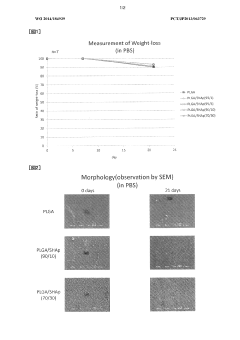
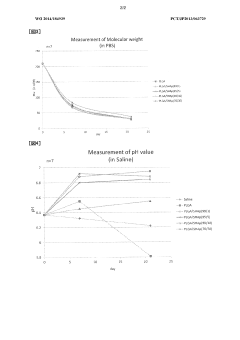
Biodegradable polymer support containing bioactive material and manufacturing method therefor
PatentWO2022191580A1
Innovation
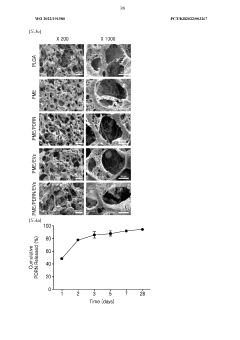
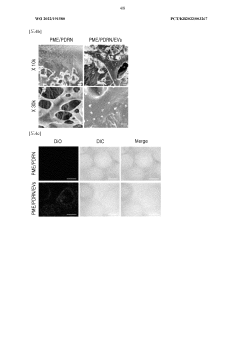
- A biodegradable polymer support is developed containing basic nano-ceramic particles, extracellular matrix, and bioactive substances, which improves mechanical strength, controls decomposition, and neutralizes acidic substances, enhancing biocompatibility and tissue regeneration by adjusting pore size, density, and porosity, and incorporating DNA fragments and extracellular vesicles.
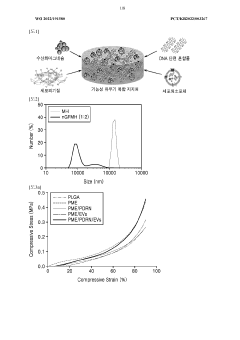
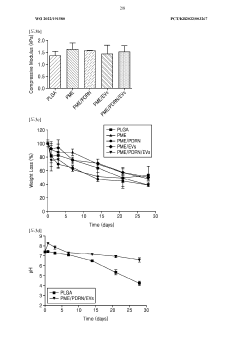
Environmental Impact Assessment
The environmental impact assessment of sulphanilic acid-modified polymers is a critical aspect of evaluating their biodegradability and overall ecological footprint. These modified polymers have gained attention due to their potential for enhanced biodegradability compared to traditional polymers, while maintaining desirable material properties.
One of the primary environmental benefits of sulphanilic acid-modified polymers is their potential for reduced persistence in natural ecosystems. Traditional polymers can take hundreds of years to decompose, leading to long-term environmental pollution. In contrast, the incorporation of sulphanilic acid into polymer structures may accelerate the degradation process, potentially reducing the accumulation of plastic waste in landfills and marine environments.
The biodegradation of these modified polymers typically occurs through a combination of chemical and biological processes. Microorganisms in soil and aquatic environments can potentially break down the sulphanilic acid-modified sections of the polymer chain more readily than unmodified polymers. This process may result in the formation of smaller molecular fragments that are more easily assimilated by natural ecosystems.
However, it is essential to consider the potential release of sulphanilic acid and its derivatives during the degradation process. While sulphanilic acid itself is not considered highly toxic, its environmental impact must be carefully evaluated. Studies have shown that sulphanilic acid can be biodegraded by certain microorganisms, but the rate and extent of this degradation may vary depending on environmental conditions.
The impact on aquatic ecosystems is of particular concern, as many plastic pollutants eventually find their way into water bodies. Research has indicated that sulphanilic acid-modified polymers may have a lower toxicity to aquatic organisms compared to some conventional plastics. However, long-term studies are needed to fully understand the potential effects on marine life and ecosystems.
Soil quality is another important consideration in the environmental impact assessment. The degradation of these modified polymers in soil environments may affect soil pH, microbial communities, and nutrient cycles. While initial studies suggest that the impact may be less severe than that of traditional polymers, comprehensive field trials are necessary to confirm these findings across various soil types and climatic conditions.
The carbon footprint associated with the production and disposal of sulphanilic acid-modified polymers must also be evaluated. While their enhanced biodegradability may reduce long-term environmental impact, the energy and resources required for their manufacture and the potential emissions during degradation must be factored into a holistic environmental assessment.
In conclusion, while sulphanilic acid-modified polymers show promise in terms of improved biodegradability, a thorough environmental impact assessment is crucial to fully understand their ecological implications. This assessment should encompass the entire lifecycle of the polymers, from production to disposal and degradation, to ensure that their adoption truly represents a more sustainable alternative to conventional polymers.
One of the primary environmental benefits of sulphanilic acid-modified polymers is their potential for reduced persistence in natural ecosystems. Traditional polymers can take hundreds of years to decompose, leading to long-term environmental pollution. In contrast, the incorporation of sulphanilic acid into polymer structures may accelerate the degradation process, potentially reducing the accumulation of plastic waste in landfills and marine environments.
The biodegradation of these modified polymers typically occurs through a combination of chemical and biological processes. Microorganisms in soil and aquatic environments can potentially break down the sulphanilic acid-modified sections of the polymer chain more readily than unmodified polymers. This process may result in the formation of smaller molecular fragments that are more easily assimilated by natural ecosystems.
However, it is essential to consider the potential release of sulphanilic acid and its derivatives during the degradation process. While sulphanilic acid itself is not considered highly toxic, its environmental impact must be carefully evaluated. Studies have shown that sulphanilic acid can be biodegraded by certain microorganisms, but the rate and extent of this degradation may vary depending on environmental conditions.
The impact on aquatic ecosystems is of particular concern, as many plastic pollutants eventually find their way into water bodies. Research has indicated that sulphanilic acid-modified polymers may have a lower toxicity to aquatic organisms compared to some conventional plastics. However, long-term studies are needed to fully understand the potential effects on marine life and ecosystems.
Soil quality is another important consideration in the environmental impact assessment. The degradation of these modified polymers in soil environments may affect soil pH, microbial communities, and nutrient cycles. While initial studies suggest that the impact may be less severe than that of traditional polymers, comprehensive field trials are necessary to confirm these findings across various soil types and climatic conditions.
The carbon footprint associated with the production and disposal of sulphanilic acid-modified polymers must also be evaluated. While their enhanced biodegradability may reduce long-term environmental impact, the energy and resources required for their manufacture and the potential emissions during degradation must be factored into a holistic environmental assessment.
In conclusion, while sulphanilic acid-modified polymers show promise in terms of improved biodegradability, a thorough environmental impact assessment is crucial to fully understand their ecological implications. This assessment should encompass the entire lifecycle of the polymers, from production to disposal and degradation, to ensure that their adoption truly represents a more sustainable alternative to conventional polymers.
Regulatory Framework for Biodegradable Materials
The regulatory framework for biodegradable materials plays a crucial role in the development, production, and commercialization of sulphanilic acid-modified polymers. As these innovative materials gain traction in various industries, governments and international organizations have established guidelines and standards to ensure their safety, efficacy, and environmental impact.
In the European Union, the European Committee for Standardization (CEN) has developed EN 13432, a harmonized standard for biodegradable packaging. This standard outlines specific requirements for packaging recoverable through composting and biodegradation. While not directly applicable to all sulphanilic acid-modified polymers, it provides a foundation for assessing biodegradability in controlled environments.
The United States Environmental Protection Agency (EPA) has implemented regulations under the Toxic Substances Control Act (TSCA) that govern the manufacture, import, and use of new chemical substances, including biodegradable polymers. Manufacturers of sulphanilic acid-modified polymers must comply with these regulations, which may include submitting premanufacture notices (PMNs) and adhering to specific reporting requirements.
Internationally, the International Organization for Standardization (ISO) has developed several standards relevant to biodegradable materials. ISO 14851 and ISO 14852 provide methods for determining the aerobic biodegradability of plastic materials in an aqueous medium, while ISO 17088 specifies requirements for compostable plastics. These standards offer valuable benchmarks for assessing the biodegradability of sulphanilic acid-modified polymers.
In Japan, the Biodegradable Plastics Society (BPS) has established a certification system for biodegradable plastics. This system includes rigorous testing protocols and labeling requirements, ensuring that certified products meet specific biodegradability criteria. Similar certification schemes exist in other countries, such as the "OK compost" label in Europe and the Biodegradable Products Institute (BPI) certification in North America.
As the field of biodegradable materials continues to evolve, regulatory frameworks are adapting to keep pace with technological advancements. Many countries are developing or revising their regulations to address the unique characteristics of novel biodegradable materials, including sulphanilic acid-modified polymers. This ongoing regulatory evolution presents both challenges and opportunities for researchers and manufacturers in this field.
It is essential for stakeholders involved in the development and commercialization of sulphanilic acid-modified polymers to stay informed about the latest regulatory developments and actively engage with regulatory bodies. This proactive approach can help ensure compliance with existing regulations and contribute to the development of appropriate standards for these innovative materials.
In the European Union, the European Committee for Standardization (CEN) has developed EN 13432, a harmonized standard for biodegradable packaging. This standard outlines specific requirements for packaging recoverable through composting and biodegradation. While not directly applicable to all sulphanilic acid-modified polymers, it provides a foundation for assessing biodegradability in controlled environments.
The United States Environmental Protection Agency (EPA) has implemented regulations under the Toxic Substances Control Act (TSCA) that govern the manufacture, import, and use of new chemical substances, including biodegradable polymers. Manufacturers of sulphanilic acid-modified polymers must comply with these regulations, which may include submitting premanufacture notices (PMNs) and adhering to specific reporting requirements.
Internationally, the International Organization for Standardization (ISO) has developed several standards relevant to biodegradable materials. ISO 14851 and ISO 14852 provide methods for determining the aerobic biodegradability of plastic materials in an aqueous medium, while ISO 17088 specifies requirements for compostable plastics. These standards offer valuable benchmarks for assessing the biodegradability of sulphanilic acid-modified polymers.
In Japan, the Biodegradable Plastics Society (BPS) has established a certification system for biodegradable plastics. This system includes rigorous testing protocols and labeling requirements, ensuring that certified products meet specific biodegradability criteria. Similar certification schemes exist in other countries, such as the "OK compost" label in Europe and the Biodegradable Products Institute (BPI) certification in North America.
As the field of biodegradable materials continues to evolve, regulatory frameworks are adapting to keep pace with technological advancements. Many countries are developing or revising their regulations to address the unique characteristics of novel biodegradable materials, including sulphanilic acid-modified polymers. This ongoing regulatory evolution presents both challenges and opportunities for researchers and manufacturers in this field.
It is essential for stakeholders involved in the development and commercialization of sulphanilic acid-modified polymers to stay informed about the latest regulatory developments and actively engage with regulatory bodies. This proactive approach can help ensure compliance with existing regulations and contribute to the development of appropriate standards for these innovative materials.
Unlock deeper insights with Patsnap Eureka Quick Research — get a full tech report to explore trends and direct your research. Try now!
Generate Your Research Report Instantly with AI Agent
Supercharge your innovation with Patsnap Eureka AI Agent Platform!