GC-MS vs Flame Ionization: Hydrocarbon Analysis
SEP 22, 20259 MIN READ
Generate Your Research Report Instantly with AI Agent
Patsnap Eureka helps you evaluate technical feasibility & market potential.
Hydrocarbon Analysis Technology Evolution and Objectives
Hydrocarbon analysis has evolved significantly over the past century, transitioning from rudimentary chemical tests to sophisticated instrumental techniques. The journey began in the early 20th century with simple distillation and chemical reactivity tests that provided limited qualitative information about hydrocarbon compositions. By the 1950s, the introduction of gas chromatography marked a revolutionary advancement, enabling scientists to separate complex hydrocarbon mixtures effectively for the first time.
The 1960s witnessed the emergence of flame ionization detection (FID), which quickly became the industry standard for quantitative hydrocarbon analysis due to its exceptional sensitivity to carbon-hydrogen bonds. This technology provided reliable quantification capabilities but offered limited structural information about the compounds being analyzed.
The 1970s and 1980s saw the development and commercialization of gas chromatography-mass spectrometry (GC-MS), which combined the separation power of gas chromatography with the identification capabilities of mass spectrometry. This technological convergence represented a paradigm shift in hydrocarbon analysis, allowing for both quantification and definitive structural identification of compounds.
Recent decades have focused on enhancing sensitivity, resolution, and automation of these core technologies. Modern GC-MS systems can detect hydrocarbons at parts-per-trillion levels, while advanced FID systems have improved linearity and dynamic range. The integration of computer systems has transformed data processing capabilities, enabling more sophisticated analysis of complex hydrocarbon mixtures.
The primary objective in hydrocarbon analysis technology development has been to achieve increasingly accurate quantification alongside definitive compound identification. Secondary goals include improving detection limits, expanding the range of analyzable compounds, reducing analysis time, and minimizing sample preparation requirements.
Current technological evolution is focused on miniaturization, portability, and real-time monitoring capabilities. Portable GC-MS and FID systems are being developed for field applications in environmental monitoring, petroleum exploration, and industrial quality control. Simultaneously, there is significant interest in developing hybrid techniques that combine the strengths of both GC-MS and FID methodologies.
Looking forward, the field aims to develop more sustainable analytical approaches with reduced solvent usage, lower energy consumption, and minimal waste generation. Additionally, there is growing emphasis on creating integrated analytical platforms that can provide comprehensive hydrocarbon fingerprinting for complex environmental and industrial samples, supporting both regulatory compliance and process optimization objectives.
The 1960s witnessed the emergence of flame ionization detection (FID), which quickly became the industry standard for quantitative hydrocarbon analysis due to its exceptional sensitivity to carbon-hydrogen bonds. This technology provided reliable quantification capabilities but offered limited structural information about the compounds being analyzed.
The 1970s and 1980s saw the development and commercialization of gas chromatography-mass spectrometry (GC-MS), which combined the separation power of gas chromatography with the identification capabilities of mass spectrometry. This technological convergence represented a paradigm shift in hydrocarbon analysis, allowing for both quantification and definitive structural identification of compounds.
Recent decades have focused on enhancing sensitivity, resolution, and automation of these core technologies. Modern GC-MS systems can detect hydrocarbons at parts-per-trillion levels, while advanced FID systems have improved linearity and dynamic range. The integration of computer systems has transformed data processing capabilities, enabling more sophisticated analysis of complex hydrocarbon mixtures.
The primary objective in hydrocarbon analysis technology development has been to achieve increasingly accurate quantification alongside definitive compound identification. Secondary goals include improving detection limits, expanding the range of analyzable compounds, reducing analysis time, and minimizing sample preparation requirements.
Current technological evolution is focused on miniaturization, portability, and real-time monitoring capabilities. Portable GC-MS and FID systems are being developed for field applications in environmental monitoring, petroleum exploration, and industrial quality control. Simultaneously, there is significant interest in developing hybrid techniques that combine the strengths of both GC-MS and FID methodologies.
Looking forward, the field aims to develop more sustainable analytical approaches with reduced solvent usage, lower energy consumption, and minimal waste generation. Additionally, there is growing emphasis on creating integrated analytical platforms that can provide comprehensive hydrocarbon fingerprinting for complex environmental and industrial samples, supporting both regulatory compliance and process optimization objectives.
Market Applications and Industry Demand for Hydrocarbon Analysis
Hydrocarbon analysis represents a critical analytical capability across multiple industries, with market demand driven by both regulatory requirements and quality control needs. The global market for hydrocarbon analysis instrumentation and services was valued at approximately $2.5 billion in 2022, with projections indicating growth to reach $3.4 billion by 2027, representing a compound annual growth rate of 6.3%.
The petroleum and petrochemical industries remain the largest consumers of hydrocarbon analysis technologies, accounting for roughly 45% of the total market. These sectors rely heavily on both GC-MS and flame ionization detection (FID) for quality control throughout the production chain, from crude oil assessment to final product verification. The ability to accurately quantify hydrocarbon components directly impacts product pricing and regulatory compliance.
Environmental monitoring constitutes the second-largest application segment, representing approximately 28% of the market. Government agencies and environmental consultancies utilize hydrocarbon analysis to detect and measure pollutants in soil, water, and air samples. GC-MS is particularly valued in this sector for its ability to identify specific compounds in complex environmental matrices.
The pharmaceutical industry has emerged as a rapidly growing market segment, currently accounting for about 15% of hydrocarbon analysis applications. Here, the focus is primarily on detecting residual solvents and impurities in drug formulations, with GC-MS preferred for its superior identification capabilities when analyzing trace contaminants.
Food and beverage testing represents another significant market segment (approximately 8%), where hydrocarbon analysis is employed to detect contaminants, authenticate products, and ensure compliance with food safety regulations. The remaining market share is distributed across diverse applications including forensic analysis, academic research, and materials testing.
Regionally, North America dominates the market with approximately 35% share, followed by Europe (30%) and Asia-Pacific (25%). However, the Asia-Pacific region is experiencing the fastest growth rate, driven by expanding industrial activities, strengthening environmental regulations, and increasing investments in analytical infrastructure.
Market trends indicate growing demand for integrated analytical systems that combine the identification power of mass spectrometry with the quantitative precision of flame ionization. Additionally, there is increasing interest in portable and field-deployable hydrocarbon analysis solutions, particularly for environmental monitoring and on-site industrial quality control applications.
The petroleum and petrochemical industries remain the largest consumers of hydrocarbon analysis technologies, accounting for roughly 45% of the total market. These sectors rely heavily on both GC-MS and flame ionization detection (FID) for quality control throughout the production chain, from crude oil assessment to final product verification. The ability to accurately quantify hydrocarbon components directly impacts product pricing and regulatory compliance.
Environmental monitoring constitutes the second-largest application segment, representing approximately 28% of the market. Government agencies and environmental consultancies utilize hydrocarbon analysis to detect and measure pollutants in soil, water, and air samples. GC-MS is particularly valued in this sector for its ability to identify specific compounds in complex environmental matrices.
The pharmaceutical industry has emerged as a rapidly growing market segment, currently accounting for about 15% of hydrocarbon analysis applications. Here, the focus is primarily on detecting residual solvents and impurities in drug formulations, with GC-MS preferred for its superior identification capabilities when analyzing trace contaminants.
Food and beverage testing represents another significant market segment (approximately 8%), where hydrocarbon analysis is employed to detect contaminants, authenticate products, and ensure compliance with food safety regulations. The remaining market share is distributed across diverse applications including forensic analysis, academic research, and materials testing.
Regionally, North America dominates the market with approximately 35% share, followed by Europe (30%) and Asia-Pacific (25%). However, the Asia-Pacific region is experiencing the fastest growth rate, driven by expanding industrial activities, strengthening environmental regulations, and increasing investments in analytical infrastructure.
Market trends indicate growing demand for integrated analytical systems that combine the identification power of mass spectrometry with the quantitative precision of flame ionization. Additionally, there is increasing interest in portable and field-deployable hydrocarbon analysis solutions, particularly for environmental monitoring and on-site industrial quality control applications.
GC-MS and FID Technical Limitations and Challenges
Gas Chromatography-Mass Spectrometry (GC-MS) and Flame Ionization Detection (FID) represent two cornerstone analytical techniques in hydrocarbon analysis, each with distinct technical limitations that impact their application scope and reliability. Despite their widespread adoption, both methodologies face significant challenges that researchers and industry professionals must navigate.
GC-MS systems encounter sensitivity limitations when analyzing certain hydrocarbon compounds, particularly those with similar mass fragmentation patterns. The technique struggles with distinguishing structural isomers that produce nearly identical mass spectra, leading to potential misidentification in complex hydrocarbon mixtures. Additionally, the ionization process in mass spectrometry can cause molecular fragmentation, complicating the interpretation of results for certain hydrocarbon classes.
Matrix effects present substantial challenges for GC-MS analysis, as co-eluting compounds from complex petroleum samples can suppress or enhance ionization, resulting in quantification errors. The technique also demonstrates limited dynamic range, making simultaneous analysis of high and low concentration hydrocarbons problematic without sample dilution or concentration steps.
FID technology, while highly sensitive to carbon-containing compounds, lacks the structural identification capabilities of mass spectrometry. This fundamental limitation means FID can detect hydrocarbons but cannot definitively identify unknown compounds without reference standards or additional analytical techniques. The detector's response factors vary significantly between different hydrocarbon classes, necessitating careful calibration for accurate quantification.
Temperature stability issues affect both techniques but manifest differently. GC-MS performance can deteriorate at elevated temperatures required for higher molecular weight hydrocarbons, while FID flame stability may fluctuate with changing carrier gas flows or when analyzing compounds with unusual combustion properties.
Carryover effects represent another shared challenge, where residual hydrocarbons from previous injections contaminate subsequent analyses. This issue is particularly problematic when transitioning between samples with vastly different concentration levels or when analyzing sticky, high-boiling point hydrocarbons.
Maintenance requirements constitute a significant operational challenge for both technologies. GC-MS systems demand regular ion source cleaning, filament replacement, and vacuum system maintenance. FID requires consistent attention to flame optimization, jet cleaning, and gas supply purity monitoring to maintain detection stability and sensitivity.
Data processing complexities further complicate hydrocarbon analysis. GC-MS generates enormous datasets requiring sophisticated algorithms for compound identification and quantification, while FID data interpretation relies heavily on retention time comparisons that can shift with column aging or instrument conditions.
These technical limitations highlight the complementary nature of these technologies in comprehensive hydrocarbon analysis, suggesting that integrated approaches leveraging the strengths of both methodologies may provide more robust analytical solutions.
GC-MS systems encounter sensitivity limitations when analyzing certain hydrocarbon compounds, particularly those with similar mass fragmentation patterns. The technique struggles with distinguishing structural isomers that produce nearly identical mass spectra, leading to potential misidentification in complex hydrocarbon mixtures. Additionally, the ionization process in mass spectrometry can cause molecular fragmentation, complicating the interpretation of results for certain hydrocarbon classes.
Matrix effects present substantial challenges for GC-MS analysis, as co-eluting compounds from complex petroleum samples can suppress or enhance ionization, resulting in quantification errors. The technique also demonstrates limited dynamic range, making simultaneous analysis of high and low concentration hydrocarbons problematic without sample dilution or concentration steps.
FID technology, while highly sensitive to carbon-containing compounds, lacks the structural identification capabilities of mass spectrometry. This fundamental limitation means FID can detect hydrocarbons but cannot definitively identify unknown compounds without reference standards or additional analytical techniques. The detector's response factors vary significantly between different hydrocarbon classes, necessitating careful calibration for accurate quantification.
Temperature stability issues affect both techniques but manifest differently. GC-MS performance can deteriorate at elevated temperatures required for higher molecular weight hydrocarbons, while FID flame stability may fluctuate with changing carrier gas flows or when analyzing compounds with unusual combustion properties.
Carryover effects represent another shared challenge, where residual hydrocarbons from previous injections contaminate subsequent analyses. This issue is particularly problematic when transitioning between samples with vastly different concentration levels or when analyzing sticky, high-boiling point hydrocarbons.
Maintenance requirements constitute a significant operational challenge for both technologies. GC-MS systems demand regular ion source cleaning, filament replacement, and vacuum system maintenance. FID requires consistent attention to flame optimization, jet cleaning, and gas supply purity monitoring to maintain detection stability and sensitivity.
Data processing complexities further complicate hydrocarbon analysis. GC-MS generates enormous datasets requiring sophisticated algorithms for compound identification and quantification, while FID data interpretation relies heavily on retention time comparisons that can shift with column aging or instrument conditions.
These technical limitations highlight the complementary nature of these technologies in comprehensive hydrocarbon analysis, suggesting that integrated approaches leveraging the strengths of both methodologies may provide more robust analytical solutions.
Current Methodologies for Hydrocarbon Compound Identification
01 Combined GC-MS and FID techniques for hydrocarbon analysis
The integration of Gas Chromatography-Mass Spectrometry (GC-MS) with Flame Ionization Detection (FID) provides comprehensive analysis of hydrocarbons. This combination allows for both qualitative identification through mass spectrometry and accurate quantification through FID. The dual detection system enhances the reliability of hydrocarbon analysis by leveraging the sensitivity of FID for quantification and the specificity of MS for compound identification.- Combined GC-MS and FID techniques for hydrocarbon analysis: The integration of Gas Chromatography-Mass Spectrometry (GC-MS) with Flame Ionization Detection (FID) provides comprehensive analysis of hydrocarbons. This combined approach allows for both qualitative identification through mass spectrometry and quantitative measurement through flame ionization detection. The dual detection system enhances the accuracy and reliability of hydrocarbon analysis, particularly for complex mixtures containing various hydrocarbon compounds.
- Automated systems for hydrocarbon analysis: Automated systems have been developed to streamline the process of hydrocarbon analysis using GC-MS and FID. These systems incorporate automated sample preparation, injection, and data processing to improve efficiency and reduce human error. The automation allows for high-throughput analysis of multiple samples, making it suitable for industrial applications where large numbers of samples need to be analyzed regularly.
- Specialized methods for specific hydrocarbon fractions: Various specialized methods have been developed for analyzing specific hydrocarbon fractions using GC-MS and FID. These methods are tailored to detect and quantify particular hydrocarbon groups such as aromatic compounds, aliphatic hydrocarbons, or volatile organic compounds. By optimizing chromatographic conditions and detection parameters, these specialized methods enhance the sensitivity and selectivity for target hydrocarbon compounds in complex matrices.
- Sample preparation techniques for hydrocarbon analysis: Effective sample preparation techniques are crucial for accurate hydrocarbon analysis using GC-MS and FID. These techniques include extraction methods, clean-up procedures, and concentration steps to isolate hydrocarbons from complex matrices. Proper sample preparation enhances the detection limits and reduces interference from non-target compounds, leading to more reliable analytical results for hydrocarbon determination.
- Data processing and interpretation methods: Advanced data processing and interpretation methods have been developed to handle the complex data generated by GC-MS and FID in hydrocarbon analysis. These methods include algorithms for peak identification, quantification, and pattern recognition. Statistical tools and software solutions help analysts interpret chromatographic and spectral data, enabling the characterization of hydrocarbon mixtures and the identification of unknown components in various samples.
02 Automated sample preparation and analysis systems
Automated systems for hydrocarbon analysis incorporate sample preparation, injection, and detection processes. These systems integrate robotic sample handling, automated calibration, and data processing to improve efficiency and reduce human error. The automation extends to temperature programming, carrier gas control, and detector optimization, enabling high-throughput analysis of multiple samples with minimal operator intervention.Expand Specific Solutions03 Specialized detection methods for complex hydrocarbon mixtures
Advanced detection methods have been developed for analyzing complex hydrocarbon mixtures such as petroleum products, environmental samples, and industrial chemicals. These methods employ specialized column configurations, temperature ramping protocols, and detector settings to separate and identify closely related hydrocarbon compounds. Techniques include selective ion monitoring in MS and response factor calibration in FID to enhance detection specificity for target hydrocarbons.Expand Specific Solutions04 Data processing and interpretation algorithms
Sophisticated algorithms and software solutions have been developed for processing and interpreting GC-MS and FID data from hydrocarbon analysis. These computational tools perform peak deconvolution, compound identification through spectral matching, and quantitative analysis through calibration curves. Machine learning approaches are increasingly being applied to handle complex chromatographic data and identify patterns in hydrocarbon distributions.Expand Specific Solutions05 Portable and field-deployable hydrocarbon analysis systems
Compact and portable GC-MS and FID systems have been developed for field-based hydrocarbon analysis. These systems feature miniaturized components, ruggedized designs, and battery operation for on-site analysis in environmental monitoring, petroleum exploration, and industrial settings. Field-deployable systems incorporate simplified sample preparation methods and rapid analysis protocols to provide timely results outside of traditional laboratory environments.Expand Specific Solutions
Leading Manufacturers and Research Institutions in Analytical Instrumentation
The hydrocarbon analysis market demonstrates a mature technological landscape with GC-MS and Flame Ionization Detection representing established analytical methodologies. Currently in a growth phase, the market is expanding due to increasing demands in petrochemical, environmental, and pharmaceutical sectors, with an estimated global value exceeding $3 billion. Leading players include specialized analytical instrument manufacturers like Shimadzu, Agilent Technologies, and LECO Corporation, alongside energy giants such as ExxonMobil and Sinopec who leverage these technologies for R&D. Recent innovations focus on improving sensitivity, automation, and data integration capabilities, with companies like Activated Research Company introducing hybrid systems that combine the quantitative strengths of FID with the qualitative advantages of mass spectrometry, positioning the technology for continued evolution in precision hydrocarbon characterization.
Shimadzu Corp.
Technical Solution: Shimadzu has pioneered dual-detection systems that combine both GC-MS and FID capabilities in a single analytical platform. Their GCMS-QP2020 NX system features their Advanced Flow Technology that allows simultaneous analysis with both detectors without compromising sensitivity. Shimadzu's proprietary Smart SIM technology automatically optimizes MS detection parameters for target hydrocarbons, improving detection limits while maintaining wide analytical range. Their LabSolutions software includes specialized hydrocarbon analysis packages with PIONA (Paraffins, Isoparaffins, Olefins, Naphthenes, Aromatics) classification capabilities. Shimadzu has also developed unique ion source technology that reduces maintenance requirements while maintaining sensitivity, addressing one of the traditional drawbacks of GC-MS compared to FID for routine hydrocarbon analysis. Their systems incorporate AOC-20i autosampler technology with specialized hydrocarbon handling capabilities to prevent discrimination of heavy hydrocarbons during injection.
Strengths: Versatile dual-detection capability combining benefits of both techniques; excellent software integration for hydrocarbon classification; reduced maintenance requirements compared to traditional MS systems. Weaknesses: Complex system setup requires more expertise to optimize; higher initial cost than single-detector systems; potential for MS contamination when analyzing high-concentration hydrocarbon samples.
LECO Corp.
Technical Solution: LECO has developed specialized GC×GC-TOF-MS systems that provide unprecedented separation power for complex hydrocarbon mixtures. Their Pegasus BT 4D system combines comprehensive two-dimensional gas chromatography with time-of-flight mass spectrometry, allowing for separation of thousands of hydrocarbon compounds that would coelute in traditional single-dimension systems. LECO's ChromaTOF software includes automated peak finding algorithms specifically optimized for petroleum analysis, with specialized tools for hydrocarbon type analysis. Their systems feature True Signal Deconvolution technology that can mathematically separate overlapping hydrocarbon peaks, providing accurate quantification even in extremely complex matrices. LECO has also pioneered the use of soft ionization techniques in GC-MS for hydrocarbon analysis, which preserves molecular ions and simplifies spectral interpretation compared to traditional electron ionization. Their systems incorporate specialized thermal modulation technology that enhances sensitivity for trace hydrocarbons while maintaining linearity across a wide concentration range.
Strengths: Unmatched separation power for complex hydrocarbon mixtures; superior compound identification capabilities through high-resolution MS; excellent software tools for petroleum-specific analysis. Weaknesses: Significantly higher cost than conventional GC-MS or FID systems; requires highly trained operators; more complex maintenance requirements; longer analysis times for comprehensive separations.
Key Technical Innovations in GC-MS and FID Technologies
Method and system for filtering gas chromatography-mass spectrometry data
PatentWO2013144790A1
Innovation
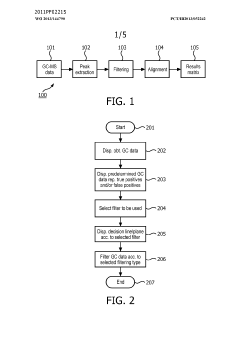
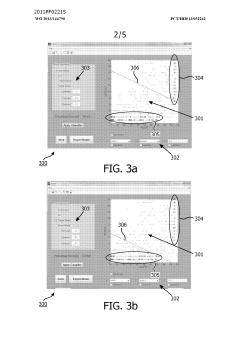
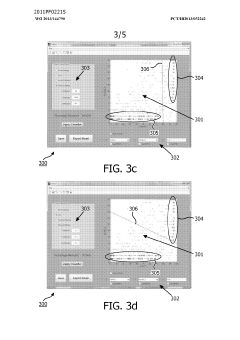
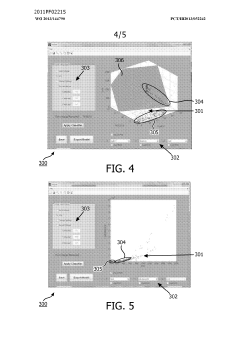
- A method and system for filtering GC-MS data that distinguishes between true and false positives, allowing users to visually select filtering methods based on predetermined data structures and decision lines or planes, reducing data noise and improving processing efficiency.
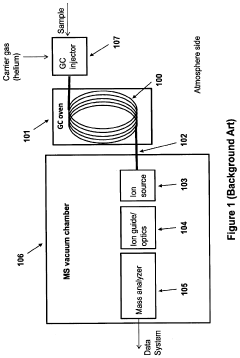
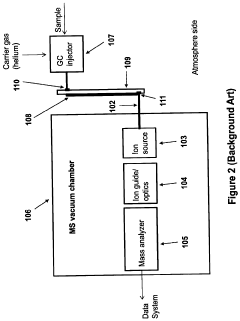
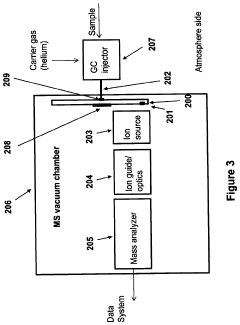
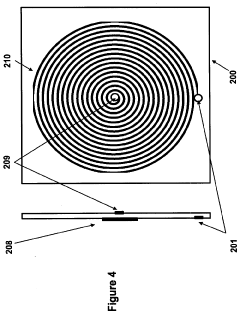
Portable MEMS GC-ms system
PatentActiveUS20200378930A1
Innovation
- The integration of a MEMS GC column with an integrated heater inside the MS vacuum system, leveraging the high thermal isolation properties of a vacuum to minimize heating power losses, and incorporating non-active cooling methods like a periodically activated cold finger for efficient temperature control.
Environmental and Regulatory Compliance Considerations
Environmental regulations governing hydrocarbon analysis have become increasingly stringent worldwide, requiring analytical methods that can meet specific detection limits and reporting requirements. GC-MS and Flame Ionization Detection (FID) systems face different regulatory challenges based on their technical capabilities and applications. The U.S. Environmental Protection Agency (EPA) methods, such as EPA Method 8260 for volatile organic compounds, often specify GC-MS as the preferred technique due to its superior compound identification capabilities, particularly when analyzing complex environmental samples where positive identification is crucial for legal compliance.
Regulatory bodies in Europe, including those enforcing REACH (Registration, Evaluation, Authorization and Restriction of Chemicals) regulations, typically require detailed compositional analysis of hydrocarbon mixtures, where GC-MS offers advantages through its ability to identify specific compounds rather than just total hydrocarbon content. However, for routine monitoring of total petroleum hydrocarbons (TPH), many jurisdictions accept FID methods due to their cost-effectiveness and established standardization.
The detection limits required by various environmental regulations often influence method selection. GC-MS can achieve lower detection limits for many compounds, making it suitable for drinking water analysis under the Safe Drinking Water Act, which requires detection at parts-per-billion levels. Conversely, FID remains acceptable for industrial emissions monitoring where higher detection limits are permissible under air quality regulations.
Calibration and quality control requirements differ significantly between regulatory frameworks. The ISO/IEC 17025 laboratory accreditation standard imposes strict validation requirements that both techniques must meet, though validation of GC-MS methods typically requires more extensive documentation due to the complexity of mass spectral interpretation and potential matrix effects.
Chain-of-custody and data reporting requirements for environmental compliance often favor GC-MS when results may be used in litigation, as mass spectral data provides defensible compound identification. However, this comes with increased documentation requirements and more complex data management systems compared to FID methods.
Emerging regulations concerning previously unregulated compounds, particularly in drinking water and soil remediation, increasingly favor GC-MS due to its adaptability to new target analytes without significant method modification. This flexibility provides a future-proofing advantage as regulatory frameworks continue to evolve and expand their scope to include emerging contaminants of concern.
Regulatory bodies in Europe, including those enforcing REACH (Registration, Evaluation, Authorization and Restriction of Chemicals) regulations, typically require detailed compositional analysis of hydrocarbon mixtures, where GC-MS offers advantages through its ability to identify specific compounds rather than just total hydrocarbon content. However, for routine monitoring of total petroleum hydrocarbons (TPH), many jurisdictions accept FID methods due to their cost-effectiveness and established standardization.
The detection limits required by various environmental regulations often influence method selection. GC-MS can achieve lower detection limits for many compounds, making it suitable for drinking water analysis under the Safe Drinking Water Act, which requires detection at parts-per-billion levels. Conversely, FID remains acceptable for industrial emissions monitoring where higher detection limits are permissible under air quality regulations.
Calibration and quality control requirements differ significantly between regulatory frameworks. The ISO/IEC 17025 laboratory accreditation standard imposes strict validation requirements that both techniques must meet, though validation of GC-MS methods typically requires more extensive documentation due to the complexity of mass spectral interpretation and potential matrix effects.
Chain-of-custody and data reporting requirements for environmental compliance often favor GC-MS when results may be used in litigation, as mass spectral data provides defensible compound identification. However, this comes with increased documentation requirements and more complex data management systems compared to FID methods.
Emerging regulations concerning previously unregulated compounds, particularly in drinking water and soil remediation, increasingly favor GC-MS due to its adaptability to new target analytes without significant method modification. This flexibility provides a future-proofing advantage as regulatory frameworks continue to evolve and expand their scope to include emerging contaminants of concern.
Cost-Benefit Analysis of GC-MS vs FID Implementation
When evaluating the implementation of GC-MS versus Flame Ionization Detection (FID) for hydrocarbon analysis, a comprehensive cost-benefit analysis reveals significant differences in initial investment, operational expenses, and long-term value proposition.
The initial capital expenditure for GC-MS systems typically ranges from $50,000 to $150,000, substantially higher than FID systems which generally cost between $15,000 and $40,000. This price differential represents a significant barrier to entry for smaller laboratories or organizations with limited budgets. However, the higher initial investment in GC-MS may be justified through its broader analytical capabilities and reduced need for multiple specialized instruments.
Operational costs also differ markedly between these technologies. GC-MS systems require more expensive consumables, including high-purity carrier gases and specialized columns. Additionally, GC-MS maintenance costs average $5,000-$10,000 annually, compared to $2,000-$4,000 for FID systems. The more complex MS detector components, such as vacuum pumps and electron multipliers, require regular replacement and skilled technicians for maintenance.
Personnel considerations represent another significant cost factor. GC-MS operation and data interpretation demand higher levels of expertise, often requiring staff with advanced degrees or specialized training. This translates to higher labor costs, with GC-MS analysts commanding salaries approximately 15-25% higher than those operating simpler FID systems.
Return on investment calculations must account for the enhanced capabilities of GC-MS, including compound identification and structural elucidation that FID cannot provide. For laboratories conducting diverse analyses or requiring definitive compound identification, GC-MS offers superior long-term value despite higher initial costs. Conversely, facilities focused solely on quantifying known hydrocarbons may achieve better ROI with FID systems.
Throughput and efficiency metrics reveal that FID systems generally offer faster analysis times and higher sample throughput for routine hydrocarbon quantification. This operational efficiency can translate to lower per-sample costs in high-volume testing environments. GC-MS systems, while slower, provide more comprehensive data that may reduce the need for secondary confirmation testing.
Regulatory compliance requirements may ultimately dictate technology selection, particularly in environmental monitoring, forensic analysis, or pharmaceutical applications where compound identification certainty is mandated by governing bodies. In these scenarios, the additional cost of GC-MS implementation becomes a necessary investment rather than an optional upgrade.
The initial capital expenditure for GC-MS systems typically ranges from $50,000 to $150,000, substantially higher than FID systems which generally cost between $15,000 and $40,000. This price differential represents a significant barrier to entry for smaller laboratories or organizations with limited budgets. However, the higher initial investment in GC-MS may be justified through its broader analytical capabilities and reduced need for multiple specialized instruments.
Operational costs also differ markedly between these technologies. GC-MS systems require more expensive consumables, including high-purity carrier gases and specialized columns. Additionally, GC-MS maintenance costs average $5,000-$10,000 annually, compared to $2,000-$4,000 for FID systems. The more complex MS detector components, such as vacuum pumps and electron multipliers, require regular replacement and skilled technicians for maintenance.
Personnel considerations represent another significant cost factor. GC-MS operation and data interpretation demand higher levels of expertise, often requiring staff with advanced degrees or specialized training. This translates to higher labor costs, with GC-MS analysts commanding salaries approximately 15-25% higher than those operating simpler FID systems.
Return on investment calculations must account for the enhanced capabilities of GC-MS, including compound identification and structural elucidation that FID cannot provide. For laboratories conducting diverse analyses or requiring definitive compound identification, GC-MS offers superior long-term value despite higher initial costs. Conversely, facilities focused solely on quantifying known hydrocarbons may achieve better ROI with FID systems.
Throughput and efficiency metrics reveal that FID systems generally offer faster analysis times and higher sample throughput for routine hydrocarbon quantification. This operational efficiency can translate to lower per-sample costs in high-volume testing environments. GC-MS systems, while slower, provide more comprehensive data that may reduce the need for secondary confirmation testing.
Regulatory compliance requirements may ultimately dictate technology selection, particularly in environmental monitoring, forensic analysis, or pharmaceutical applications where compound identification certainty is mandated by governing bodies. In these scenarios, the additional cost of GC-MS implementation becomes a necessary investment rather than an optional upgrade.
Unlock deeper insights with Patsnap Eureka Quick Research — get a full tech report to explore trends and direct your research. Try now!
Generate Your Research Report Instantly with AI Agent
Supercharge your innovation with Patsnap Eureka AI Agent Platform!