GC-MS vs Liquid Chromatography: Volatility Test
SEP 22, 20259 MIN READ
Generate Your Research Report Instantly with AI Agent
Patsnap Eureka helps you evaluate technical feasibility & market potential.
Analytical Separation Technology Evolution and Objectives
Analytical separation technologies have evolved significantly over the past century, transforming from rudimentary techniques to sophisticated methodologies capable of identifying and quantifying complex chemical compounds with remarkable precision. The journey began with simple distillation and extraction methods in the early 20th century, progressing through paper chromatography in the 1940s, thin-layer chromatography in the 1950s, and eventually to the development of gas chromatography (GC) and liquid chromatography (LC) systems that revolutionized analytical chemistry.
Gas Chromatography-Mass Spectrometry (GC-MS) emerged in the 1960s as a powerful hybrid technique, combining the separation capabilities of gas chromatography with the identification power of mass spectrometry. This integration allowed scientists to analyze complex mixtures with unprecedented accuracy. Concurrently, High-Performance Liquid Chromatography (HPLC) evolved to address the limitations of GC, particularly for analyzing non-volatile and thermally unstable compounds.
The 1990s witnessed the introduction of Ultra-High Performance Liquid Chromatography (UHPLC), which significantly enhanced separation efficiency and reduced analysis time compared to conventional HPLC. The continuous refinement of these technologies has been driven by demands for greater sensitivity, selectivity, and throughput across various industries including pharmaceuticals, environmental monitoring, food safety, and forensic science.
In the context of volatility testing, both GC-MS and LC technologies serve distinct yet complementary roles. GC-MS excels in analyzing volatile and semi-volatile organic compounds, leveraging the compound's ability to vaporize without decomposition. This makes it particularly valuable for applications in environmental analysis, flavor and fragrance profiling, and petroleum product characterization. Liquid chromatography, conversely, has become the method of choice for non-volatile, polar, and thermally labile compounds that cannot be directly analyzed by GC-MS.
The technological objectives in this field are increasingly focused on developing more sensitive, selective, and efficient analytical methods that can detect lower concentrations of analytes in complex matrices. There is a growing emphasis on miniaturization, automation, and the integration of artificial intelligence to enhance data interpretation. Additionally, the development of green analytical chemistry approaches aims to reduce solvent consumption and waste generation, aligning with broader sustainability goals.
Future technological trajectories point toward the convergence of multiple analytical techniques, creating comprehensive analytical platforms capable of providing more complete chemical profiles. The evolution of hybrid systems that combine the strengths of both GC-MS and LC methodologies represents a promising frontier in analytical separation technology, potentially offering solutions to complex analytical challenges across diverse scientific disciplines.
Gas Chromatography-Mass Spectrometry (GC-MS) emerged in the 1960s as a powerful hybrid technique, combining the separation capabilities of gas chromatography with the identification power of mass spectrometry. This integration allowed scientists to analyze complex mixtures with unprecedented accuracy. Concurrently, High-Performance Liquid Chromatography (HPLC) evolved to address the limitations of GC, particularly for analyzing non-volatile and thermally unstable compounds.
The 1990s witnessed the introduction of Ultra-High Performance Liquid Chromatography (UHPLC), which significantly enhanced separation efficiency and reduced analysis time compared to conventional HPLC. The continuous refinement of these technologies has been driven by demands for greater sensitivity, selectivity, and throughput across various industries including pharmaceuticals, environmental monitoring, food safety, and forensic science.
In the context of volatility testing, both GC-MS and LC technologies serve distinct yet complementary roles. GC-MS excels in analyzing volatile and semi-volatile organic compounds, leveraging the compound's ability to vaporize without decomposition. This makes it particularly valuable for applications in environmental analysis, flavor and fragrance profiling, and petroleum product characterization. Liquid chromatography, conversely, has become the method of choice for non-volatile, polar, and thermally labile compounds that cannot be directly analyzed by GC-MS.
The technological objectives in this field are increasingly focused on developing more sensitive, selective, and efficient analytical methods that can detect lower concentrations of analytes in complex matrices. There is a growing emphasis on miniaturization, automation, and the integration of artificial intelligence to enhance data interpretation. Additionally, the development of green analytical chemistry approaches aims to reduce solvent consumption and waste generation, aligning with broader sustainability goals.
Future technological trajectories point toward the convergence of multiple analytical techniques, creating comprehensive analytical platforms capable of providing more complete chemical profiles. The evolution of hybrid systems that combine the strengths of both GC-MS and LC methodologies represents a promising frontier in analytical separation technology, potentially offering solutions to complex analytical challenges across diverse scientific disciplines.
Market Applications and Demand Analysis for Volatility Testing
Volatility testing represents a critical analytical procedure across multiple industries, with market demand driven by stringent quality control requirements and regulatory compliance needs. The global analytical testing market, which encompasses volatility testing, was valued at approximately $37.1 billion in 2022 and is projected to grow at a compound annual growth rate of 5.8% through 2030, indicating robust demand for these technologies.
The pharmaceutical industry constitutes the largest market segment for volatility testing, where GC-MS and liquid chromatography techniques are essential for drug development, stability testing, and quality assurance. Pharmaceutical companies require precise volatility data to ensure medication efficacy, safety, and shelf-life, particularly for compounds with volatile active ingredients. This sector's demand is further amplified by increasingly stringent regulatory frameworks from agencies like the FDA and EMA.
Environmental monitoring represents another significant market application, with government agencies and environmental consultancies utilizing volatility testing to detect and quantify volatile organic compounds (VOCs) in air, water, and soil samples. The growing public concern over environmental pollution has led to expanded monitoring programs worldwide, creating sustained demand for advanced analytical technologies.
The food and beverage industry relies heavily on volatility testing for flavor analysis, quality control, and detection of contaminants. Consumer preference for natural ingredients and clean labels has intensified the need for sophisticated analytical methods to authenticate product composition and identify unwanted volatile compounds. This trend is particularly evident in premium food categories and the expanding functional food market.
Petrochemical and energy sectors employ volatility testing for product quality control, process optimization, and environmental compliance. As these industries face increasing pressure to reduce environmental impact, the demand for precise volatility analysis continues to grow, especially for monitoring emissions and ensuring fuel quality standards.
The cosmetics and personal care industry represents an emerging market for volatility testing, with manufacturers seeking to analyze fragrance stability, ingredient authenticity, and potential allergens. Consumer demand for natural and sustainable products has created new testing requirements to verify product claims and ensure regulatory compliance.
Academic and research institutions constitute a stable market segment, utilizing volatility testing technologies for fundamental research across chemistry, materials science, environmental studies, and pharmaceutical development. This sector drives innovation in analytical methodologies and often serves as an early adopter of new technological approaches.
The pharmaceutical industry constitutes the largest market segment for volatility testing, where GC-MS and liquid chromatography techniques are essential for drug development, stability testing, and quality assurance. Pharmaceutical companies require precise volatility data to ensure medication efficacy, safety, and shelf-life, particularly for compounds with volatile active ingredients. This sector's demand is further amplified by increasingly stringent regulatory frameworks from agencies like the FDA and EMA.
Environmental monitoring represents another significant market application, with government agencies and environmental consultancies utilizing volatility testing to detect and quantify volatile organic compounds (VOCs) in air, water, and soil samples. The growing public concern over environmental pollution has led to expanded monitoring programs worldwide, creating sustained demand for advanced analytical technologies.
The food and beverage industry relies heavily on volatility testing for flavor analysis, quality control, and detection of contaminants. Consumer preference for natural ingredients and clean labels has intensified the need for sophisticated analytical methods to authenticate product composition and identify unwanted volatile compounds. This trend is particularly evident in premium food categories and the expanding functional food market.
Petrochemical and energy sectors employ volatility testing for product quality control, process optimization, and environmental compliance. As these industries face increasing pressure to reduce environmental impact, the demand for precise volatility analysis continues to grow, especially for monitoring emissions and ensuring fuel quality standards.
The cosmetics and personal care industry represents an emerging market for volatility testing, with manufacturers seeking to analyze fragrance stability, ingredient authenticity, and potential allergens. Consumer demand for natural and sustainable products has created new testing requirements to verify product claims and ensure regulatory compliance.
Academic and research institutions constitute a stable market segment, utilizing volatility testing technologies for fundamental research across chemistry, materials science, environmental studies, and pharmaceutical development. This sector drives innovation in analytical methodologies and often serves as an early adopter of new technological approaches.
Current Capabilities and Limitations of GC-MS and LC Technologies
Gas Chromatography-Mass Spectrometry (GC-MS) and Liquid Chromatography (LC) represent two cornerstone analytical technologies in modern chemical analysis, each with distinct capabilities and limitations particularly relevant to volatility testing. GC-MS excels in analyzing volatile and semi-volatile compounds with molecular weights typically below 600 Da. Its primary strength lies in superior separation efficiency, with theoretical plate counts often exceeding 100,000, enabling resolution of complex mixtures with similar components.
GC-MS offers exceptional sensitivity, routinely achieving detection limits in the picogram range, making it ideal for trace analysis in environmental monitoring, forensics, and food safety applications. The extensive mass spectral libraries available for GC-MS compounds significantly enhance identification capabilities, with databases containing over 200,000 reference spectra.
However, GC-MS faces fundamental limitations regarding sample volatility. Compounds must be thermally stable and sufficiently volatile to traverse the gas phase without decomposition. This requirement excludes approximately 80% of known organic compounds, including many biologically significant molecules like proteins, nucleic acids, and large polysaccharides.
Liquid Chromatography, particularly when coupled with mass spectrometry (LC-MS), addresses many GC-MS limitations by operating at ambient or near-ambient temperatures. This enables analysis of thermally labile, high molecular weight, and polar compounds without derivatization. LC systems demonstrate remarkable versatility through various separation mechanisms (reverse phase, normal phase, ion exchange, size exclusion), expanding the analytical scope considerably.
LC technologies typically offer lower separation efficiency than GC, with plate counts generally between 10,000-25,000. However, recent ultra-high-performance liquid chromatography (UHPLC) systems utilizing sub-2μm particles have narrowed this performance gap significantly, achieving efficiencies approaching 100,000 theoretical plates.
A critical limitation of traditional LC is the lack of comprehensive spectral libraries comparable to those available for GC-MS, though this gap is gradually diminishing with expanding LC-MS databases. Additionally, LC systems generally exhibit more complex matrix effects and ion suppression phenomena, particularly in electrospray ionization interfaces.
For volatility testing specifically, GC-MS remains the gold standard for compounds with sufficient vapor pressure, offering superior resolution and reproducibility. LC technologies provide complementary capabilities for analyzing non-volatile or thermally sensitive compounds, though quantification may be more challenging due to variable ionization efficiencies.
Recent technological advances have focused on expanding the operational boundaries of both techniques, with developments in derivatization strategies for GC-MS and ambient ionization techniques for LC-MS progressively blurring the traditional demarcation between their application domains.
GC-MS offers exceptional sensitivity, routinely achieving detection limits in the picogram range, making it ideal for trace analysis in environmental monitoring, forensics, and food safety applications. The extensive mass spectral libraries available for GC-MS compounds significantly enhance identification capabilities, with databases containing over 200,000 reference spectra.
However, GC-MS faces fundamental limitations regarding sample volatility. Compounds must be thermally stable and sufficiently volatile to traverse the gas phase without decomposition. This requirement excludes approximately 80% of known organic compounds, including many biologically significant molecules like proteins, nucleic acids, and large polysaccharides.
Liquid Chromatography, particularly when coupled with mass spectrometry (LC-MS), addresses many GC-MS limitations by operating at ambient or near-ambient temperatures. This enables analysis of thermally labile, high molecular weight, and polar compounds without derivatization. LC systems demonstrate remarkable versatility through various separation mechanisms (reverse phase, normal phase, ion exchange, size exclusion), expanding the analytical scope considerably.
LC technologies typically offer lower separation efficiency than GC, with plate counts generally between 10,000-25,000. However, recent ultra-high-performance liquid chromatography (UHPLC) systems utilizing sub-2μm particles have narrowed this performance gap significantly, achieving efficiencies approaching 100,000 theoretical plates.
A critical limitation of traditional LC is the lack of comprehensive spectral libraries comparable to those available for GC-MS, though this gap is gradually diminishing with expanding LC-MS databases. Additionally, LC systems generally exhibit more complex matrix effects and ion suppression phenomena, particularly in electrospray ionization interfaces.
For volatility testing specifically, GC-MS remains the gold standard for compounds with sufficient vapor pressure, offering superior resolution and reproducibility. LC technologies provide complementary capabilities for analyzing non-volatile or thermally sensitive compounds, though quantification may be more challenging due to variable ionization efficiencies.
Recent technological advances have focused on expanding the operational boundaries of both techniques, with developments in derivatization strategies for GC-MS and ambient ionization techniques for LC-MS progressively blurring the traditional demarcation between their application domains.
Comparative Analysis of GC-MS and LC Methodologies for Volatility Testing
01 GC-MS analysis techniques for volatile compounds
Gas Chromatography-Mass Spectrometry (GC-MS) is widely used for analyzing volatile compounds due to its high sensitivity and specificity. This technique separates complex mixtures based on volatility and then identifies individual components through mass spectrometry. The method is particularly effective for compounds that can be vaporized without decomposition, making it ideal for analyzing volatile organic compounds in various samples.- GC-MS analysis techniques for volatile compounds: Gas chromatography-mass spectrometry (GC-MS) is widely used for analyzing volatile compounds due to its high sensitivity and separation capabilities. These techniques involve sample preparation methods specific for volatile compounds, optimization of temperature programs, and specialized detection parameters to enhance the identification and quantification of volatile substances across various matrices.
- Liquid chromatography methods for semi-volatile compounds: Liquid chromatography techniques have been developed to analyze semi-volatile compounds that may not be suitable for traditional GC-MS analysis. These methods employ specialized columns, mobile phase compositions, and detection systems to separate and identify compounds with varying volatility profiles, particularly those that might decompose at high temperatures required for gas chromatography.
- Combined GC-MS and LC techniques for comprehensive analysis: Hybrid analytical approaches combining both gas chromatography-mass spectrometry and liquid chromatography provide comprehensive analysis of compounds with different volatility characteristics. These integrated systems allow for the simultaneous or sequential analysis of volatile, semi-volatile, and non-volatile compounds in complex samples, offering broader analytical coverage than either technique alone.
- Sample preparation methods for volatility analysis: Specialized sample preparation techniques have been developed to effectively capture and analyze compounds with different volatility profiles. These include headspace sampling, solid-phase microextraction (SPME), thermal desorption, and derivatization methods that enhance the volatility of certain compounds for GC-MS analysis or modify compounds for improved liquid chromatography separation.
- Instrumentation advancements for volatility-based separations: Recent innovations in analytical instrumentation have improved the analysis of compounds based on their volatility characteristics. These advancements include specialized detectors, column technologies, temperature and pressure control systems, and software algorithms that enhance the separation, identification, and quantification of compounds across the volatility spectrum in both GC-MS and liquid chromatography applications.
02 Liquid Chromatography methods for semi-volatile compounds
Liquid Chromatography techniques are employed for analyzing semi-volatile and non-volatile compounds that cannot be directly analyzed by GC-MS. These methods include High-Performance Liquid Chromatography (HPLC) and Ultra-High-Performance Liquid Chromatography (UHPLC), which separate compounds based on their interactions with a stationary phase. For compounds with limited volatility, liquid chromatography provides an effective alternative to gas-based separation methods.Expand Specific Solutions03 Combined GC-MS and LC-MS approaches for comprehensive analysis
Combining Gas Chromatography-Mass Spectrometry (GC-MS) with Liquid Chromatography-Mass Spectrometry (LC-MS) provides comprehensive analysis of samples containing compounds with varying volatility. This complementary approach allows for the detection and identification of both volatile and non-volatile components in complex mixtures. The integration of these techniques enhances the analytical capabilities for samples containing compounds with diverse physicochemical properties.Expand Specific Solutions04 Sample preparation techniques for volatility analysis
Specialized sample preparation methods are crucial for accurate volatility analysis in both GC-MS and liquid chromatography. These techniques include headspace sampling, solid-phase microextraction (SPME), thermal desorption, and derivatization procedures that enhance the volatility of certain compounds. Proper sample preparation ensures efficient extraction and preservation of volatile compounds before analysis, minimizing loss and degradation during the analytical process.Expand Specific Solutions05 Instrumentation advancements for volatility detection
Recent advancements in instrumentation have significantly improved the detection and analysis of compounds with varying volatility. These innovations include specialized detectors, column technologies, and interface systems that enhance the sensitivity and resolution of both GC-MS and liquid chromatography methods. Modern instruments feature improved temperature control, advanced ionization techniques, and sophisticated software for data analysis, enabling more accurate characterization of volatile and semi-volatile compounds.Expand Specific Solutions
Leading Manufacturers and Research Institutions in Analytical Chemistry
The GC-MS vs Liquid Chromatography volatility testing market is in a mature growth phase, with an estimated global market size exceeding $10 billion. The technology landscape is dominated by established analytical instrument manufacturers, with Thermo Finnigan, Waters Technology, Shimadzu, and Agilent Technologies leading innovation in both platforms. These companies have developed sophisticated systems with enhanced sensitivity and automation capabilities. Academic and research institutions like the Chinese Academy of Sciences and Broad Institute are driving application-specific advancements, particularly in metabolomics and environmental testing. The competitive dynamics show a trend toward integrated solutions that combine both technologies, with major players investing in software improvements and miniaturization to address emerging point-of-need testing requirements across pharmaceutical, environmental, and food safety sectors.
Thermo Finnigan Corp.
Technical Solution: Thermo Finnigan (now part of Thermo Fisher Scientific) has developed an integrated volatility testing platform combining both GC-MS and LC technologies. Their TRACE 1300 Series GC coupled with ISQ 7000 single quadrupole MS system provides high-sensitivity analysis of volatile compounds with specialized headspace sampling technology that automates the extraction and concentration of volatile analytes[2]. For semi-volatile and non-volatile compounds, their Vanquish UHPLC system paired with Q Exactive Orbitrap MS delivers exceptional mass accuracy and resolution. Their unique approach includes a unified software platform (Chromeleon CDS) that enables researchers to seamlessly transition between both technologies based on compound volatility profiles[4]. Thermo has also developed specialized column chemistries optimized for different volatility ranges, allowing for comprehensive characterization across the volatility spectrum with minimal sample preparation requirements[6].
Strengths: Exceptional mass accuracy with Orbitrap technology for complex sample identification; unified software platform streamlining workflow between GC-MS and LC methods; automated method development tools that optimize separation parameters based on compound volatility. Weaknesses: Higher cost compared to standalone systems; complex integration between platforms may require specialized technical support; larger laboratory footprint required for dual-system implementation.
Waters Technology Corp.
Technical Solution: Waters has pioneered an innovative approach to volatility testing through their integrated GC-MS and UPLC-MS systems. Their ACQUITY UPLC system features sub-2-micron particle technology that enables superior separation of semi-volatile compounds with significantly reduced analysis times compared to traditional LC methods[1]. For highly volatile compounds, Waters offers the Xevo TQ-GC system with advanced electron ionization sources that enhance sensitivity for trace-level volatile analytes. Their unique contribution is the development of atmospheric pressure GC (APGC) technology, which bridges the gap between traditional GC-MS and LC-MS by allowing GC separations to be interfaced with their high-performance Xevo mass spectrometers[3]. This approach provides a more unified analytical platform for compounds across the volatility spectrum. Waters' Unifi software platform enables seamless method transfer between GC-MS and LC-MS workflows, with intelligent data processing algorithms that automatically classify compounds based on their volatility characteristics[5].
Strengths: Industry-leading UPLC technology providing faster analysis times for semi-volatile compounds; innovative APGC interface bridging traditional technology gaps; comprehensive software integration with automated volatility classification. Weaknesses: Proprietary technology ecosystem may limit compatibility with third-party components; higher initial investment compared to conventional systems; specialized training required for optimal utilization of advanced features.
Key Technical Innovations in Chromatographic Separation Science
Method and system for filtering gas chromatography-mass spectrometry data
PatentWO2013144790A1
Innovation
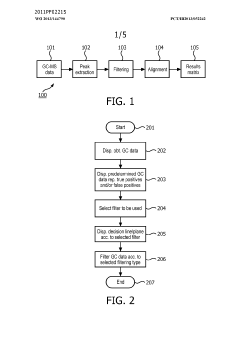
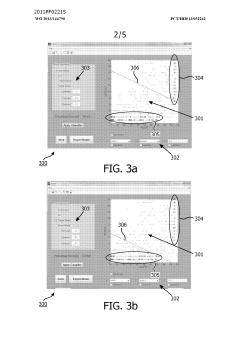
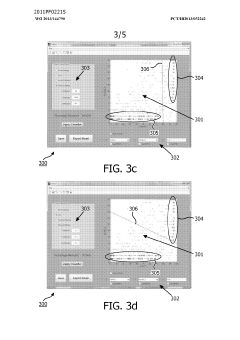
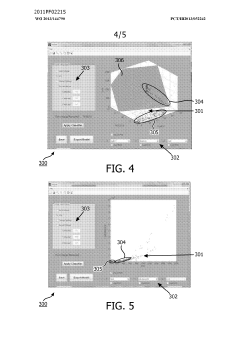
- A method and system for filtering GC-MS data that distinguishes between true and false positives, allowing users to visually select filtering methods based on predetermined data structures and decision lines or planes, reducing data noise and improving processing efficiency.
Phospholipid containing garlic, curry leaves and turmeric extracts for treatment of adipogenesis
PatentPendingIN202141048482A
Innovation
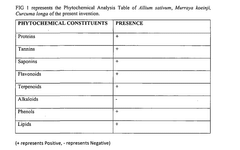
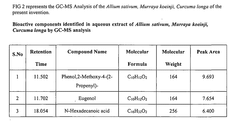
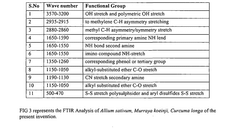
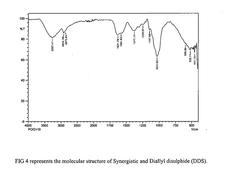
- A synergistic extract derived from Allium sativum, Murraya koenji, and Curcuma longa, combined with phospholipid as a Phytosome complex, is developed for enhanced bioavailability and therapeutic potential, involving a method of extraction, purification, and characterization using GC-MS, FTIR, and SEM, demonstrating the presence of bioactive compounds and antioxidant activity.
Sample Preparation Techniques for Optimizing Volatility Analysis
Sample preparation is a critical determinant in the success of volatility analysis, whether using GC-MS or liquid chromatography techniques. The choice of preparation method significantly impacts the recovery, sensitivity, and accuracy of volatile compound detection. For GC-MS applications, headspace sampling techniques have emerged as particularly effective, allowing direct extraction of volatile compounds from the gaseous phase above liquid or solid samples without extensive sample manipulation.
Solid-phase microextraction (SPME) represents a significant advancement in sample preparation for volatility testing. This solvent-free technique utilizes a fused-silica fiber coated with an appropriate stationary phase to adsorb volatile analytes, which are subsequently desorbed in the GC injection port. The selection of fiber coating material—ranging from polydimethylsiloxane (PDMS) for non-polar compounds to polyacrylate for polar analytes—must be carefully matched to the target volatiles.
For liquid chromatography applications, particularly when analyzing semi-volatile compounds, liquid-liquid extraction (LLE) and solid-phase extraction (SPE) remain standard preparation techniques. Recent innovations in QuEChERS (Quick, Easy, Cheap, Effective, Rugged, and Safe) methodology have streamlined sample preparation for complex matrices, incorporating both extraction and clean-up steps to minimize matrix interference while maintaining good recovery of volatile compounds.
Temperature control during sample preparation represents a critical yet often overlooked parameter. Volatile compounds can be easily lost during preparation steps if thermal conditions are not carefully managed. Implementing cold-chain protocols throughout the preparation process, from sample collection to analysis, can significantly improve the retention of highly volatile analytes that might otherwise be lost.
Derivatization strategies have proven valuable for enhancing the chromatographic behavior of certain volatile compounds, particularly those with poor thermal stability or inadequate volatility for direct GC analysis. Silylation, acylation, and alkylation reactions can modify functional groups to improve volatility characteristics, peak shape, and detector response, though these additional steps must be balanced against the risk of analyte loss or transformation.
Automation of sample preparation workflows has demonstrated substantial benefits for volatility testing, reducing human error while improving reproducibility. Robotic systems capable of precise liquid handling, temperature control, and timing can execute complex preparation protocols with high consistency, particularly valuable for high-throughput environments where manual preparation would introduce significant variability.
Solid-phase microextraction (SPME) represents a significant advancement in sample preparation for volatility testing. This solvent-free technique utilizes a fused-silica fiber coated with an appropriate stationary phase to adsorb volatile analytes, which are subsequently desorbed in the GC injection port. The selection of fiber coating material—ranging from polydimethylsiloxane (PDMS) for non-polar compounds to polyacrylate for polar analytes—must be carefully matched to the target volatiles.
For liquid chromatography applications, particularly when analyzing semi-volatile compounds, liquid-liquid extraction (LLE) and solid-phase extraction (SPE) remain standard preparation techniques. Recent innovations in QuEChERS (Quick, Easy, Cheap, Effective, Rugged, and Safe) methodology have streamlined sample preparation for complex matrices, incorporating both extraction and clean-up steps to minimize matrix interference while maintaining good recovery of volatile compounds.
Temperature control during sample preparation represents a critical yet often overlooked parameter. Volatile compounds can be easily lost during preparation steps if thermal conditions are not carefully managed. Implementing cold-chain protocols throughout the preparation process, from sample collection to analysis, can significantly improve the retention of highly volatile analytes that might otherwise be lost.
Derivatization strategies have proven valuable for enhancing the chromatographic behavior of certain volatile compounds, particularly those with poor thermal stability or inadequate volatility for direct GC analysis. Silylation, acylation, and alkylation reactions can modify functional groups to improve volatility characteristics, peak shape, and detector response, though these additional steps must be balanced against the risk of analyte loss or transformation.
Automation of sample preparation workflows has demonstrated substantial benefits for volatility testing, reducing human error while improving reproducibility. Robotic systems capable of precise liquid handling, temperature control, and timing can execute complex preparation protocols with high consistency, particularly valuable for high-throughput environments where manual preparation would introduce significant variability.
Environmental and Safety Considerations in Chromatographic Testing
Chromatographic techniques, while essential for analytical chemistry, present several environmental and safety considerations that must be addressed in laboratory settings. Both Gas Chromatography-Mass Spectrometry (GC-MS) and Liquid Chromatography methods utilize solvents and generate waste that require proper management protocols to minimize environmental impact.
GC-MS systems primarily use helium as a carrier gas, which presents minimal environmental hazards but raises sustainability concerns due to global helium shortages. Alternative carrier gases like hydrogen offer environmental benefits but introduce explosion risks that necessitate robust safety systems. The volatile organic compounds (VOCs) analyzed in GC-MS volatility testing often require special handling procedures due to their flammability, toxicity, and potential carcinogenic properties.
Liquid Chromatography methods typically consume larger volumes of organic solvents compared to GC-MS, creating significant waste management challenges. Common solvents like acetonitrile, methanol, and tetrahydrofuran pose environmental concerns due to their toxicity to aquatic organisms and potential for groundwater contamination. Modern laboratories increasingly implement solvent recycling systems and explore greener alternatives such as ethanol or water-based mobile phases.
Laboratory ventilation systems represent a critical safety component for both techniques. Proper fume hood operation prevents analyst exposure to harmful vapors during sample preparation and analysis. Additionally, chromatographic laboratories must maintain appropriate chemical storage facilities with segregation protocols based on compatibility to prevent hazardous reactions.
Waste disposal practices for chromatographic testing require compliance with local regulations and environmental protection standards. This includes proper segregation of waste streams, neutralization of acidic or basic mobile phases before disposal, and specialized handling for samples containing biological or radioactive materials. Many facilities now implement waste minimization strategies through method optimization to reduce solvent consumption.
Energy consumption presents another environmental consideration, particularly for GC-MS systems that operate at high temperatures. Implementation of sleep modes during idle periods and selection of energy-efficient models can significantly reduce the carbon footprint of analytical laboratories. Similarly, water consumption in liquid chromatography cooling systems can be minimized through recirculation designs.
Personal protective equipment requirements differ between techniques, with GC-MS volatility testing often demanding additional precautions due to the hazardous nature of volatile compounds. Regular safety training, documented standard operating procedures, and emergency response protocols specific to chromatographic hazards are essential components of a comprehensive laboratory safety program.
GC-MS systems primarily use helium as a carrier gas, which presents minimal environmental hazards but raises sustainability concerns due to global helium shortages. Alternative carrier gases like hydrogen offer environmental benefits but introduce explosion risks that necessitate robust safety systems. The volatile organic compounds (VOCs) analyzed in GC-MS volatility testing often require special handling procedures due to their flammability, toxicity, and potential carcinogenic properties.
Liquid Chromatography methods typically consume larger volumes of organic solvents compared to GC-MS, creating significant waste management challenges. Common solvents like acetonitrile, methanol, and tetrahydrofuran pose environmental concerns due to their toxicity to aquatic organisms and potential for groundwater contamination. Modern laboratories increasingly implement solvent recycling systems and explore greener alternatives such as ethanol or water-based mobile phases.
Laboratory ventilation systems represent a critical safety component for both techniques. Proper fume hood operation prevents analyst exposure to harmful vapors during sample preparation and analysis. Additionally, chromatographic laboratories must maintain appropriate chemical storage facilities with segregation protocols based on compatibility to prevent hazardous reactions.
Waste disposal practices for chromatographic testing require compliance with local regulations and environmental protection standards. This includes proper segregation of waste streams, neutralization of acidic or basic mobile phases before disposal, and specialized handling for samples containing biological or radioactive materials. Many facilities now implement waste minimization strategies through method optimization to reduce solvent consumption.
Energy consumption presents another environmental consideration, particularly for GC-MS systems that operate at high temperatures. Implementation of sleep modes during idle periods and selection of energy-efficient models can significantly reduce the carbon footprint of analytical laboratories. Similarly, water consumption in liquid chromatography cooling systems can be minimized through recirculation designs.
Personal protective equipment requirements differ between techniques, with GC-MS volatility testing often demanding additional precautions due to the hazardous nature of volatile compounds. Regular safety training, documented standard operating procedures, and emergency response protocols specific to chromatographic hazards are essential components of a comprehensive laboratory safety program.
Unlock deeper insights with Patsnap Eureka Quick Research — get a full tech report to explore trends and direct your research. Try now!
Generate Your Research Report Instantly with AI Agent
Supercharge your innovation with Patsnap Eureka AI Agent Platform!