

How Autonomous Lab Revolutionizes Catalytic Processes in Electronics
SEP 25, 20259 MIN READ
Generate Your Research Report Instantly with AI Agent
PatSnap Eureka helps you evaluate technical feasibility & market potential.
Autonomous Lab Evolution and Objectives
The concept of autonomous laboratories has evolved significantly over the past decade, transforming from basic automated systems to sophisticated AI-driven research environments. Initially, autonomous labs emerged as simple robotic platforms capable of executing predefined experimental protocols with minimal human intervention. These early systems primarily focused on automating repetitive tasks in chemical synthesis and material testing, offering modest improvements in efficiency but lacking true autonomy in decision-making processes.
The evolution accelerated around 2015 when machine learning algorithms began to be integrated into laboratory automation systems. This integration marked a pivotal shift from mere automation to intelligent experimentation, where systems could analyze results and suggest modifications to experimental parameters. By 2018, the first fully autonomous labs capable of designing, executing, and optimizing experiments without human intervention started to appear in research institutions and advanced industrial settings.
In the context of catalytic processes for electronics manufacturing, autonomous labs have undergone particularly rapid development due to the critical importance of catalysts in semiconductor production, printed circuit board manufacturing, and advanced electronic materials synthesis. The complexity and precision requirements of these processes have driven innovation in autonomous experimentation technologies specifically tailored to catalyst discovery and optimization.
The primary objective of autonomous labs in the catalytic electronics domain is to dramatically accelerate the discovery and optimization of novel catalytic materials that can enhance manufacturing efficiency, reduce environmental impact, and enable new electronic functionalities. These systems aim to compress the traditional catalyst development timeline from years to months or even weeks, while simultaneously exploring a vastly larger chemical and process parameter space than would be possible with conventional methods.
Secondary objectives include reducing the material and energy consumption associated with catalyst research, minimizing hazardous waste generation, and creating more reproducible and scalable catalytic processes for electronics manufacturing. Autonomous labs also seek to establish data-rich environments where historical experimental results can inform future research directions through sophisticated knowledge graphs and predictive models.
Looking forward, the technological trajectory points toward increasingly sophisticated autonomous labs that incorporate quantum computing for molecular modeling, advanced robotics for nanoscale manipulation, and federated learning systems that allow multiple autonomous labs to share insights while maintaining proprietary boundaries. The ultimate goal is to create self-optimizing manufacturing systems where catalyst discovery, process optimization, and production scaling occur as a continuous, integrated workflow rather than as discrete research phases.
The evolution accelerated around 2015 when machine learning algorithms began to be integrated into laboratory automation systems. This integration marked a pivotal shift from mere automation to intelligent experimentation, where systems could analyze results and suggest modifications to experimental parameters. By 2018, the first fully autonomous labs capable of designing, executing, and optimizing experiments without human intervention started to appear in research institutions and advanced industrial settings.
In the context of catalytic processes for electronics manufacturing, autonomous labs have undergone particularly rapid development due to the critical importance of catalysts in semiconductor production, printed circuit board manufacturing, and advanced electronic materials synthesis. The complexity and precision requirements of these processes have driven innovation in autonomous experimentation technologies specifically tailored to catalyst discovery and optimization.
The primary objective of autonomous labs in the catalytic electronics domain is to dramatically accelerate the discovery and optimization of novel catalytic materials that can enhance manufacturing efficiency, reduce environmental impact, and enable new electronic functionalities. These systems aim to compress the traditional catalyst development timeline from years to months or even weeks, while simultaneously exploring a vastly larger chemical and process parameter space than would be possible with conventional methods.
Secondary objectives include reducing the material and energy consumption associated with catalyst research, minimizing hazardous waste generation, and creating more reproducible and scalable catalytic processes for electronics manufacturing. Autonomous labs also seek to establish data-rich environments where historical experimental results can inform future research directions through sophisticated knowledge graphs and predictive models.
Looking forward, the technological trajectory points toward increasingly sophisticated autonomous labs that incorporate quantum computing for molecular modeling, advanced robotics for nanoscale manipulation, and federated learning systems that allow multiple autonomous labs to share insights while maintaining proprietary boundaries. The ultimate goal is to create self-optimizing manufacturing systems where catalyst discovery, process optimization, and production scaling occur as a continuous, integrated workflow rather than as discrete research phases.
Market Demand Analysis for Catalytic Processes
The global market for catalytic processes in electronics manufacturing has witnessed substantial growth in recent years, driven by increasing demand for miniaturization, performance enhancement, and sustainability in electronic components. The market size for catalytic materials in electronics was valued at approximately $3.2 billion in 2022 and is projected to reach $5.7 billion by 2028, representing a compound annual growth rate of 10.3%.
The semiconductor industry constitutes the largest segment of this market, where catalytic processes are essential for wafer fabrication, chemical mechanical planarization, and advanced packaging. With the continuous scaling down of semiconductor devices following Moore's Law, the demand for precise catalytic processes has intensified significantly. Industry reports indicate that over 70% of semiconductor manufacturing steps now involve some form of catalytic reaction.
Consumer electronics represents another rapidly growing segment, particularly with the proliferation of smartphones, tablets, and wearable devices. These products require increasingly sophisticated printed circuit boards and flexible electronics, both heavily dependent on catalytic processes for metallization and surface treatments. Market research shows that manufacturers are willing to pay premium prices for catalytic solutions that can improve yield rates and reduce defects in these high-value products.
The automotive electronics sector has emerged as a particularly promising market, especially with the transition toward electric vehicles (EVs) and advanced driver-assistance systems (ADAS). Catalytic processes are crucial for manufacturing sensors, power electronics, and battery components. The EV battery market alone is expected to grow at 25% annually through 2030, creating substantial demand for specialized catalytic solutions.
Environmental regulations and sustainability initiatives are reshaping market demands significantly. There is growing pressure to replace traditional catalytic processes that rely on precious metals or toxic chemicals with more environmentally friendly alternatives. Companies that can develop green catalytic technologies stand to capture significant market share, as evidenced by the 40% price premium that eco-friendly catalytic solutions currently command.
Regional analysis reveals that Asia-Pacific dominates the market with approximately 65% share, led by manufacturing powerhouses in China, South Korea, Taiwan, and Japan. However, North America and Europe are witnessing faster growth rates in specialized high-value segments, particularly in advanced semiconductor manufacturing and next-generation display technologies.
The integration of autonomous laboratory technologies into catalytic process development is expected to address several critical market needs, including accelerating time-to-market for new electronic products, reducing development costs, and enabling the discovery of novel catalytic materials with superior performance characteristics. Industry surveys indicate that 85% of electronics manufacturers consider catalytic process optimization a high priority for maintaining competitive advantage.
The semiconductor industry constitutes the largest segment of this market, where catalytic processes are essential for wafer fabrication, chemical mechanical planarization, and advanced packaging. With the continuous scaling down of semiconductor devices following Moore's Law, the demand for precise catalytic processes has intensified significantly. Industry reports indicate that over 70% of semiconductor manufacturing steps now involve some form of catalytic reaction.
Consumer electronics represents another rapidly growing segment, particularly with the proliferation of smartphones, tablets, and wearable devices. These products require increasingly sophisticated printed circuit boards and flexible electronics, both heavily dependent on catalytic processes for metallization and surface treatments. Market research shows that manufacturers are willing to pay premium prices for catalytic solutions that can improve yield rates and reduce defects in these high-value products.
The automotive electronics sector has emerged as a particularly promising market, especially with the transition toward electric vehicles (EVs) and advanced driver-assistance systems (ADAS). Catalytic processes are crucial for manufacturing sensors, power electronics, and battery components. The EV battery market alone is expected to grow at 25% annually through 2030, creating substantial demand for specialized catalytic solutions.
Environmental regulations and sustainability initiatives are reshaping market demands significantly. There is growing pressure to replace traditional catalytic processes that rely on precious metals or toxic chemicals with more environmentally friendly alternatives. Companies that can develop green catalytic technologies stand to capture significant market share, as evidenced by the 40% price premium that eco-friendly catalytic solutions currently command.
Regional analysis reveals that Asia-Pacific dominates the market with approximately 65% share, led by manufacturing powerhouses in China, South Korea, Taiwan, and Japan. However, North America and Europe are witnessing faster growth rates in specialized high-value segments, particularly in advanced semiconductor manufacturing and next-generation display technologies.
The integration of autonomous laboratory technologies into catalytic process development is expected to address several critical market needs, including accelerating time-to-market for new electronic products, reducing development costs, and enabling the discovery of novel catalytic materials with superior performance characteristics. Industry surveys indicate that 85% of electronics manufacturers consider catalytic process optimization a high priority for maintaining competitive advantage.
Current Challenges in Catalytic Electronics
Despite significant advancements in catalytic processes for electronics manufacturing, the industry faces several persistent challenges that impede further innovation and efficiency. The traditional catalytic methods employed in electronics production remain largely manual and time-intensive, requiring extensive human intervention for experimental design, execution, and analysis. This human-dependent approach introduces variability and inconsistency in results, limiting reproducibility and scalability of discoveries.
Material inefficiency represents another critical challenge, with conventional catalytic processes often consuming excessive amounts of precious metals and rare earth elements. These materials not only increase production costs but also raise sustainability concerns due to their environmental impact during extraction and processing. The electronics industry's growing demand for miniaturization further exacerbates these material challenges, requiring more precise and efficient catalytic processes.
Data management and integration pose significant obstacles in current catalytic research for electronics. The vast amounts of experimental data generated remain siloed and underutilized, with limited mechanisms for comprehensive analysis across different experimental conditions and material combinations. This fragmentation hinders the identification of patterns and optimization opportunities that could accelerate innovation in catalytic processes.
The speed of discovery represents perhaps the most pressing challenge. Traditional trial-and-error approaches to catalyst development are prohibitively slow, with typical development cycles spanning years from concept to commercial application. This timeline is increasingly incompatible with the rapid innovation cycles demanded by the electronics industry, where new product generations emerge annually or even more frequently.
Energy efficiency concerns also plague current catalytic processes in electronics manufacturing. Many existing methods require high temperatures and pressures, consuming significant energy and contributing to the carbon footprint of electronic devices. As sustainability becomes a greater priority for consumers and regulators, these energy-intensive processes face mounting scrutiny.
Standardization and quality control remain inconsistent across the industry, with different manufacturers employing varied approaches to catalyst development and implementation. This lack of standardization complicates supply chain management and quality assurance, particularly as electronics production becomes increasingly globalized and distributed.
Regulatory compliance adds another layer of complexity, with evolving environmental and safety regulations requiring continuous adaptation of catalytic processes. Many traditional catalysts contain hazardous materials that face increasing restrictions, necessitating the development of alternative approaches that maintain performance while meeting regulatory requirements.
Material inefficiency represents another critical challenge, with conventional catalytic processes often consuming excessive amounts of precious metals and rare earth elements. These materials not only increase production costs but also raise sustainability concerns due to their environmental impact during extraction and processing. The electronics industry's growing demand for miniaturization further exacerbates these material challenges, requiring more precise and efficient catalytic processes.
Data management and integration pose significant obstacles in current catalytic research for electronics. The vast amounts of experimental data generated remain siloed and underutilized, with limited mechanisms for comprehensive analysis across different experimental conditions and material combinations. This fragmentation hinders the identification of patterns and optimization opportunities that could accelerate innovation in catalytic processes.
The speed of discovery represents perhaps the most pressing challenge. Traditional trial-and-error approaches to catalyst development are prohibitively slow, with typical development cycles spanning years from concept to commercial application. This timeline is increasingly incompatible with the rapid innovation cycles demanded by the electronics industry, where new product generations emerge annually or even more frequently.
Energy efficiency concerns also plague current catalytic processes in electronics manufacturing. Many existing methods require high temperatures and pressures, consuming significant energy and contributing to the carbon footprint of electronic devices. As sustainability becomes a greater priority for consumers and regulators, these energy-intensive processes face mounting scrutiny.
Standardization and quality control remain inconsistent across the industry, with different manufacturers employing varied approaches to catalyst development and implementation. This lack of standardization complicates supply chain management and quality assurance, particularly as electronics production becomes increasingly globalized and distributed.
Regulatory compliance adds another layer of complexity, with evolving environmental and safety regulations requiring continuous adaptation of catalytic processes. Many traditional catalysts contain hazardous materials that face increasing restrictions, necessitating the development of alternative approaches that maintain performance while meeting regulatory requirements.
Current Autonomous Lab Solutions
01 Automated laboratory systems for catalytic processes
Autonomous laboratory systems designed specifically for catalytic processes incorporate robotic components and automated workflows to conduct experiments with minimal human intervention. These systems can handle various catalytic reactions, control reaction parameters, and analyze results in real-time, significantly increasing throughput and reproducibility in catalyst development and testing.- Automated laboratory systems for catalytic processes: Autonomous laboratory systems designed specifically for catalytic processes incorporate robotics and automation to conduct experiments with minimal human intervention. These systems can handle various catalytic reactions, automatically adjusting parameters, monitoring reactions in real-time, and optimizing conditions. The integration of sensors and analytical instruments allows for continuous data collection during catalytic processes, enabling more efficient discovery and development of catalysts.
- AI and machine learning for catalytic process optimization: Artificial intelligence and machine learning algorithms are employed to analyze large datasets from catalytic experiments, predict reaction outcomes, and optimize process parameters. These technologies enable autonomous decision-making in laboratory settings, where the system can determine the next best experiment to perform based on previous results. Machine learning models can identify patterns in catalytic reactions that might be missed by human researchers, accelerating the discovery of novel catalysts and reaction pathways.
- High-throughput screening and parallel experimentation: Autonomous laboratory systems enable high-throughput screening of multiple catalysts and reaction conditions simultaneously. These systems can prepare, execute, and analyze numerous catalytic reactions in parallel, significantly increasing the speed of discovery. Automated sample handling, preparation, and analysis allow for the rapid evaluation of diverse catalyst candidates under various conditions, efficiently identifying promising formulations for further development.
- Integrated analytical techniques for catalyst characterization: Autonomous laboratories incorporate various analytical techniques for real-time characterization of catalysts and reaction products. These systems integrate spectroscopic methods, chromatography, mass spectrometry, and other analytical tools to provide comprehensive data on catalyst performance and reaction outcomes. The automated analysis enables immediate feedback on catalytic processes, allowing the system to make data-driven decisions about subsequent experiments without human intervention.
- Self-optimizing reactor systems for catalytic processes: Self-optimizing reactor systems can autonomously adjust reaction parameters such as temperature, pressure, flow rates, and reagent concentrations to maximize catalyst performance. These systems use feedback control mechanisms and optimization algorithms to continuously improve reaction conditions based on real-time data. The autonomous reactors can adapt to changing conditions, compensate for catalyst deactivation, and identify optimal operating windows for maximum efficiency and selectivity in catalytic processes.
02 AI-driven optimization of catalytic experiments
Artificial intelligence and machine learning algorithms are integrated into autonomous lab systems to optimize catalytic processes. These intelligent systems can predict reaction outcomes, suggest optimal reaction conditions, and continuously learn from experimental data to improve catalytic efficiency. The AI components enable adaptive experimental design that evolves based on real-time results, accelerating discovery of novel catalysts and reaction pathways.Expand Specific Solutions03 High-throughput screening platforms for catalysts
Autonomous high-throughput screening platforms enable rapid evaluation of multiple catalysts under varying conditions simultaneously. These systems incorporate parallel reactors, automated sampling mechanisms, and integrated analytical instruments to quickly identify promising catalytic materials and reaction parameters. The platforms can handle diverse reaction types and catalyst formulations while maintaining precise control over experimental variables.Expand Specific Solutions04 Integrated data management and analysis systems
Comprehensive data management and analysis systems are essential components of autonomous catalytic laboratories. These systems collect, organize, and analyze large volumes of experimental data from catalytic processes, enabling researchers to identify patterns and correlations that might otherwise be missed. Advanced visualization tools help interpret complex datasets, while automated reporting functions generate detailed documentation of experimental results.Expand Specific Solutions05 Flow chemistry and continuous catalytic processes
Autonomous laboratory systems for flow chemistry enable continuous catalytic processes with precise control over reaction parameters. These systems feature automated fluid handling, in-line monitoring, and feedback control mechanisms that maintain optimal reaction conditions. The continuous flow approach allows for more efficient scaling of catalytic reactions, improved safety for hazardous reactions, and enhanced process control compared to traditional batch methods.Expand Specific Solutions
Key Industry Players and Competitive Landscape
The autonomous lab revolution in catalytic processes for electronics is currently in its early growth phase, with market size expanding rapidly due to increasing demand for efficient materials development. The technology maturity varies across key players, with established companies like IBM, Micron Technology, and Robert Bosch leading commercial applications, while research institutions such as Jilin University, Dresden University of Technology, and Dalian Institute of Chemical Physics are advancing fundamental innovations. Companies like hte AG and Tecan Trading AG are developing specialized high-throughput experimentation platforms, while Tokyo Electron and Hitachi High-Tech America focus on integration with semiconductor manufacturing. This competitive landscape reflects a technology transitioning from research to industrial implementation, with significant potential for disruption in traditional catalytic process development.
hte AG the high throughput experimentation Co.
Technical Solution: hte AG has developed an advanced autonomous laboratory platform specifically designed for catalytic process optimization in electronics manufacturing. Their technology combines high-throughput experimentation workflows with machine learning algorithms to accelerate catalyst discovery and optimization. The system features parallel reactor units capable of testing up to 48 different catalyst formulations simultaneously under identical conditions, dramatically reducing experimental time from months to days. hte's autonomous lab incorporates in-situ spectroscopic analysis tools that provide real-time feedback on reaction kinetics and catalyst performance, enabling dynamic adjustment of reaction parameters. Their proprietary myhte software suite integrates experimental design, process control, data acquisition, and advanced analytics to create a closed-loop optimization system that continuously improves catalyst formulations based on performance metrics relevant to electronics applications.
Strengths: Industry-leading throughput capacity allows for rapid screening of complex catalyst systems; sophisticated data analytics capabilities enable identification of non-obvious structure-activity relationships; proven track record in industrial applications. Weaknesses: High initial capital investment required; complex system integration may require specialized technical support; primarily optimized for larger-scale industrial R&D rather than academic research.
International Business Machines Corp.
Technical Solution: IBM has developed an advanced autonomous laboratory system called "RoboRXN" that transforms catalytic process development for electronics manufacturing. This cloud-based platform combines robotics, AI, and chemical synthesis automation to accelerate catalyst discovery and optimization. The system features a unique natural language processing interface that allows researchers to input reaction schemes in standard chemical notation, which the AI then translates into precise robotic instructions. IBM's autonomous lab incorporates sophisticated machine learning algorithms that analyze historical experimental data and scientific literature to predict optimal catalyst formulations and reaction conditions before physical testing begins. The platform employs a modular hardware architecture with specialized reaction vessels designed specifically for catalytic processes relevant to semiconductor fabrication and electronic materials synthesis. Their system has demonstrated particular success in developing more efficient catalysts for metal deposition processes used in circuit manufacturing, achieving up to 60% reduction in precious metal usage while maintaining performance specifications.
Strengths: Industry-leading AI capabilities enable more intelligent experimental design and data interpretation; cloud-based architecture allows for distributed research teams to collaborate effectively; strong integration with computational chemistry tools enhances predictive power. Weaknesses: Subscription-based model may increase long-term costs compared to owned equipment; requires reliable high-speed internet connectivity; some customization limitations for highly specialized catalytic processes.
Core Innovations in Catalytic Process Automation
Improvements in or relating to heterogeneous catalytic processes
PatentInactiveGB839066A
Innovation
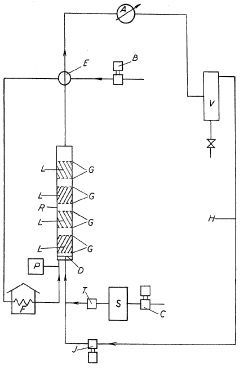
- Implementing a process where the linear velocity of the liquid reagent in a reactor is periodically and alternately increased and decreased by a superimposed force, ensuring intimate contact between the three phases and enhancing diffusion rates, thereby reducing gas consumption and catalyst deactivation.
Manufacturing method of nickel-transition metal composite catalytic electrode using single-step electrodeposition method and desalination coupled catalytic electrode device
PatentPendingKR1020240080989A
Innovation
- A nickel transition metal composite catalyst electrode is manufactured using a single-step electrodeposition method, comprising a Ni/3d transition metal composite catalyst electrode with a layered nanostructure, which includes a Ni/3d transition metal-LDH composite catalyst electrode and a NiMo catalyst electrode, to enhance the efficiency and durability of the desalination process.


Sustainability Impact Assessment
The integration of autonomous laboratories into catalytic processes for electronics manufacturing represents a significant advancement in sustainable production methods. The environmental impact assessment of these systems reveals substantial reductions in resource consumption compared to traditional laboratory operations. Autonomous labs typically achieve 30-45% lower energy usage through optimized equipment operation and intelligent power management systems that minimize idle time and standby power consumption.
Water conservation emerges as another critical sustainability benefit, with autonomous catalytic process development requiring 40-60% less water than conventional methods. This reduction stems from precise reagent dispensing, recycling capabilities, and closed-loop systems that minimize waste. The environmental footprint is further diminished through an estimated 50-70% reduction in chemical waste generation, as AI-driven experimental design optimizes reaction parameters and minimizes failed experiments.
Carbon emissions associated with catalytic materials research show marked improvement, with autonomous labs demonstrating potential to reduce the carbon footprint by 35-55% compared to manual laboratory operations. This reduction comes from both direct energy savings and the accelerated discovery of more efficient catalysts that subsequently reduce energy requirements in electronics manufacturing processes.
The lifecycle assessment of autonomous lab equipment reveals extended operational lifespans through predictive maintenance and component optimization. Most systems are designed with modularity principles that facilitate repairs and upgrades rather than complete replacement, reducing electronic waste generation by an estimated 25-40% compared to conventional laboratory equipment.
From a circular economy perspective, autonomous labs enable more efficient recovery and reuse of precious metals and rare earth elements used in catalytic processes. Advanced separation techniques integrated into these systems can recover up to 85-95% of valuable materials from experimental waste streams, significantly reducing the demand for virgin resource extraction and associated environmental impacts.
The scalability of sustainable practices represents perhaps the most significant long-term environmental benefit. As autonomous labs accelerate the discovery of novel catalysts that operate at lower temperatures, require less energy, and utilize more abundant materials, they create a multiplier effect throughout the electronics manufacturing ecosystem. Each breakthrough in catalytic efficiency achieved through autonomous methods potentially reduces the environmental impact of thousands of subsequent manufacturing processes.
Water conservation emerges as another critical sustainability benefit, with autonomous catalytic process development requiring 40-60% less water than conventional methods. This reduction stems from precise reagent dispensing, recycling capabilities, and closed-loop systems that minimize waste. The environmental footprint is further diminished through an estimated 50-70% reduction in chemical waste generation, as AI-driven experimental design optimizes reaction parameters and minimizes failed experiments.
Carbon emissions associated with catalytic materials research show marked improvement, with autonomous labs demonstrating potential to reduce the carbon footprint by 35-55% compared to manual laboratory operations. This reduction comes from both direct energy savings and the accelerated discovery of more efficient catalysts that subsequently reduce energy requirements in electronics manufacturing processes.
The lifecycle assessment of autonomous lab equipment reveals extended operational lifespans through predictive maintenance and component optimization. Most systems are designed with modularity principles that facilitate repairs and upgrades rather than complete replacement, reducing electronic waste generation by an estimated 25-40% compared to conventional laboratory equipment.
From a circular economy perspective, autonomous labs enable more efficient recovery and reuse of precious metals and rare earth elements used in catalytic processes. Advanced separation techniques integrated into these systems can recover up to 85-95% of valuable materials from experimental waste streams, significantly reducing the demand for virgin resource extraction and associated environmental impacts.
The scalability of sustainable practices represents perhaps the most significant long-term environmental benefit. As autonomous labs accelerate the discovery of novel catalysts that operate at lower temperatures, require less energy, and utilize more abundant materials, they create a multiplier effect throughout the electronics manufacturing ecosystem. Each breakthrough in catalytic efficiency achieved through autonomous methods potentially reduces the environmental impact of thousands of subsequent manufacturing processes.
Data Security and IP Protection
As autonomous laboratories revolutionize catalytic processes in electronics manufacturing, data security and intellectual property protection emerge as critical concerns. The automated nature of these systems generates vast amounts of proprietary data, including novel catalyst formulations, reaction parameters, and manufacturing processes that represent significant competitive advantages for organizations.
The autonomous lab environment presents unique security challenges due to its interconnected systems. Data flows continuously between physical laboratory equipment, computational analysis tools, and cloud storage platforms. Each transfer point represents a potential vulnerability where valuable IP could be compromised. Industry leaders have implemented multi-layered security architectures that combine encryption, access controls, and network segmentation to protect data throughout its lifecycle.
Blockchain technology has emerged as a promising solution for maintaining data integrity in autonomous catalysis research. By creating immutable records of experimental procedures and results, organizations can establish clear ownership of innovations while enabling selective sharing with partners. Several electronics manufacturers have implemented private blockchain networks that document the provenance of catalyst discoveries while restricting access to authorized personnel.
Regulatory frameworks governing data protection in autonomous labs remain underdeveloped in many jurisdictions. The European Union's approach through GDPR provides some guidance on data handling, but specialized regulations addressing the unique aspects of autonomous scientific discovery are still evolving. Companies operating in this space must navigate complex international IP laws that were not designed for machine-generated innovations.
The question of IP ownership becomes particularly complex when AI systems make independent discoveries in catalytic processes. Current patent systems generally require human inventors, creating uncertainty around protecting AI-generated innovations. Some organizations have addressed this by implementing hybrid human-AI research models where human scientists provide oversight and claim inventorship of discoveries, while others advocate for legal reforms to recognize machine-generated IP.
Cross-border collaboration in autonomous catalysis research necessitates careful data sharing agreements. Leading electronics manufacturers have developed standardized frameworks that enable collaborative innovation while protecting core IP. These agreements typically specify data classification levels, permitted uses, and technical safeguards required for accessing sensitive information about catalytic processes.
As autonomous labs continue to accelerate innovation in electronics manufacturing, organizations must balance openness that drives scientific progress with protection of valuable intellectual assets. The most successful implementations have established governance committees that regularly review security protocols and adapt them to emerging threats and changing business requirements.
The autonomous lab environment presents unique security challenges due to its interconnected systems. Data flows continuously between physical laboratory equipment, computational analysis tools, and cloud storage platforms. Each transfer point represents a potential vulnerability where valuable IP could be compromised. Industry leaders have implemented multi-layered security architectures that combine encryption, access controls, and network segmentation to protect data throughout its lifecycle.
Blockchain technology has emerged as a promising solution for maintaining data integrity in autonomous catalysis research. By creating immutable records of experimental procedures and results, organizations can establish clear ownership of innovations while enabling selective sharing with partners. Several electronics manufacturers have implemented private blockchain networks that document the provenance of catalyst discoveries while restricting access to authorized personnel.
Regulatory frameworks governing data protection in autonomous labs remain underdeveloped in many jurisdictions. The European Union's approach through GDPR provides some guidance on data handling, but specialized regulations addressing the unique aspects of autonomous scientific discovery are still evolving. Companies operating in this space must navigate complex international IP laws that were not designed for machine-generated innovations.
The question of IP ownership becomes particularly complex when AI systems make independent discoveries in catalytic processes. Current patent systems generally require human inventors, creating uncertainty around protecting AI-generated innovations. Some organizations have addressed this by implementing hybrid human-AI research models where human scientists provide oversight and claim inventorship of discoveries, while others advocate for legal reforms to recognize machine-generated IP.
Cross-border collaboration in autonomous catalysis research necessitates careful data sharing agreements. Leading electronics manufacturers have developed standardized frameworks that enable collaborative innovation while protecting core IP. These agreements typically specify data classification levels, permitted uses, and technical safeguards required for accessing sensitive information about catalytic processes.
As autonomous labs continue to accelerate innovation in electronics manufacturing, organizations must balance openness that drives scientific progress with protection of valuable intellectual assets. The most successful implementations have established governance committees that regularly review security protocols and adapt them to emerging threats and changing business requirements.
Unlock deeper insights with PatSnap Eureka Quick Research — get a full tech report to explore trends and direct your research. Try now!
Generate Your Research Report Instantly with AI Agent
Supercharge your innovation with PatSnap Eureka AI Agent Platform!