

Poly P-Phenylene Terephthalamide (Para-Aramid): Comprehensive Analysis Of Molecular Structure, Synthesis Routes, And Advanced Applications
JUL 3, 20259 MIN READ
Generate Your Research Report Instantly with AI Agent
PatSnap Eureka helps you evaluate technical feasibility & market potential.
Propionic Acid Overview and Research Objectives
Propionic acid, a three-carbon carboxylic acid, has garnered significant attention in various industries due to its unique chemical properties. This versatile compound, with the molecular formula C3H6O2, exhibits a balance between hydrophilic and lipophilic characteristics, making it valuable in diverse applications. The evolution of propionic acid technology has been driven by its increasing demand in food preservation, pharmaceuticals, and industrial processes.
The primary objective of this research is to explore innovative ways to leverage propionic acid's distinctive chemical properties for enhanced applications and improved production methods. By understanding its molecular structure, reactivity, and physicochemical attributes, we aim to unlock new potential uses and optimize existing processes. This investigation will focus on propionic acid's role as a preservative, its function in polymer synthesis, and its potential in green chemistry applications.
Recent technological advancements have opened up new avenues for propionic acid utilization. The compound's ability to inhibit mold growth has led to its widespread use in the food industry, particularly in baked goods and dairy products. In the pharmaceutical sector, propionic acid serves as a crucial intermediate in the synthesis of various drugs and active pharmaceutical ingredients. Its low toxicity and biodegradability also make it an attractive option for environmentally friendly industrial processes.
The research will delve into the acid-base properties of propionic acid, exploring its potential as a pH regulator in various systems. Its moderate acidity (pKa = 4.87) allows for fine-tuning of pH-dependent reactions and processes. Additionally, we will investigate the compound's esterification capabilities, which are essential in the production of flavors, fragrances, and specialty chemicals.
Another key area of focus will be propionic acid's role in sustainable chemistry. As industries move towards greener alternatives, this organic acid presents opportunities for replacing more harmful chemicals in various applications. Its potential as a bio-based platform chemical, derived from renewable resources, aligns with the growing trend of sustainable industrial practices.
The research will also address the challenges associated with propionic acid production and handling. Current production methods, primarily through petrochemical routes, face sustainability concerns. Therefore, exploring bio-based production methods and optimizing fermentation processes will be crucial aspects of this study. Furthermore, we will investigate strategies to mitigate the corrosive nature of propionic acid, which can pose challenges in storage and transportation.
By comprehensively examining these aspects, this research aims to provide insights into novel applications, improved production techniques, and sustainable practices related to propionic acid. The findings will contribute to advancing the field and potentially revolutionizing the use of this versatile compound across multiple industries.
The primary objective of this research is to explore innovative ways to leverage propionic acid's distinctive chemical properties for enhanced applications and improved production methods. By understanding its molecular structure, reactivity, and physicochemical attributes, we aim to unlock new potential uses and optimize existing processes. This investigation will focus on propionic acid's role as a preservative, its function in polymer synthesis, and its potential in green chemistry applications.
Recent technological advancements have opened up new avenues for propionic acid utilization. The compound's ability to inhibit mold growth has led to its widespread use in the food industry, particularly in baked goods and dairy products. In the pharmaceutical sector, propionic acid serves as a crucial intermediate in the synthesis of various drugs and active pharmaceutical ingredients. Its low toxicity and biodegradability also make it an attractive option for environmentally friendly industrial processes.
The research will delve into the acid-base properties of propionic acid, exploring its potential as a pH regulator in various systems. Its moderate acidity (pKa = 4.87) allows for fine-tuning of pH-dependent reactions and processes. Additionally, we will investigate the compound's esterification capabilities, which are essential in the production of flavors, fragrances, and specialty chemicals.
Another key area of focus will be propionic acid's role in sustainable chemistry. As industries move towards greener alternatives, this organic acid presents opportunities for replacing more harmful chemicals in various applications. Its potential as a bio-based platform chemical, derived from renewable resources, aligns with the growing trend of sustainable industrial practices.
The research will also address the challenges associated with propionic acid production and handling. Current production methods, primarily through petrochemical routes, face sustainability concerns. Therefore, exploring bio-based production methods and optimizing fermentation processes will be crucial aspects of this study. Furthermore, we will investigate strategies to mitigate the corrosive nature of propionic acid, which can pose challenges in storage and transportation.
By comprehensively examining these aspects, this research aims to provide insights into novel applications, improved production techniques, and sustainable practices related to propionic acid. The findings will contribute to advancing the field and potentially revolutionizing the use of this versatile compound across multiple industries.
Market Analysis for Propionic Acid Applications
The global propionic acid market has been experiencing steady growth, driven by its versatile applications across various industries. The market size was valued at approximately $1.5 billion in 2020 and is projected to reach $2.1 billion by 2026, growing at a CAGR of around 5.8% during the forecast period. This growth is primarily attributed to the increasing demand for propionic acid in food preservation, animal feed, and pharmaceuticals.
In the food and beverage industry, propionic acid's unique chemical properties make it an excellent preservative, particularly for bakery products. Its ability to inhibit mold growth and extend shelf life has led to widespread adoption in bread, pastries, and other baked goods. The rising consumer demand for convenience foods and packaged bakery products is expected to further drive the market growth in this sector.
The animal feed industry represents another significant market for propionic acid. Its antimicrobial properties make it an effective feed preservative, helping to prevent the growth of harmful bacteria and fungi in animal feed. With the global livestock industry expanding to meet the growing demand for meat and dairy products, the use of propionic acid in animal feed is expected to increase substantially.
In the pharmaceutical sector, propionic acid finds applications in the production of various drugs and as a precursor for vitamin E synthesis. The growing pharmaceutical industry, particularly in emerging economies, is likely to create new opportunities for propionic acid manufacturers.
The personal care and cosmetics industry is also emerging as a promising market for propionic acid. Its use as a preservative in cosmetic formulations and as a raw material for certain fragrances is gaining traction, driven by the increasing consumer preference for natural and organic products.
Geographically, North America and Europe currently dominate the propionic acid market, owing to the well-established food and pharmaceutical industries in these regions. However, the Asia-Pacific region is expected to witness the highest growth rate in the coming years, fueled by rapid industrialization, increasing disposable incomes, and changing dietary habits.
Despite the positive outlook, the market faces challenges such as volatility in raw material prices and stringent regulations regarding the use of chemical preservatives in food products. Manufacturers are focusing on developing bio-based propionic acid to address these concerns and tap into the growing demand for sustainable products.
In the food and beverage industry, propionic acid's unique chemical properties make it an excellent preservative, particularly for bakery products. Its ability to inhibit mold growth and extend shelf life has led to widespread adoption in bread, pastries, and other baked goods. The rising consumer demand for convenience foods and packaged bakery products is expected to further drive the market growth in this sector.
The animal feed industry represents another significant market for propionic acid. Its antimicrobial properties make it an effective feed preservative, helping to prevent the growth of harmful bacteria and fungi in animal feed. With the global livestock industry expanding to meet the growing demand for meat and dairy products, the use of propionic acid in animal feed is expected to increase substantially.
In the pharmaceutical sector, propionic acid finds applications in the production of various drugs and as a precursor for vitamin E synthesis. The growing pharmaceutical industry, particularly in emerging economies, is likely to create new opportunities for propionic acid manufacturers.
The personal care and cosmetics industry is also emerging as a promising market for propionic acid. Its use as a preservative in cosmetic formulations and as a raw material for certain fragrances is gaining traction, driven by the increasing consumer preference for natural and organic products.
Geographically, North America and Europe currently dominate the propionic acid market, owing to the well-established food and pharmaceutical industries in these regions. However, the Asia-Pacific region is expected to witness the highest growth rate in the coming years, fueled by rapid industrialization, increasing disposable incomes, and changing dietary habits.
Despite the positive outlook, the market faces challenges such as volatility in raw material prices and stringent regulations regarding the use of chemical preservatives in food products. Manufacturers are focusing on developing bio-based propionic acid to address these concerns and tap into the growing demand for sustainable products.
Current Challenges in Propionic Acid Utilization
Despite the numerous advantages of propionic acid, several challenges hinder its widespread utilization in various industries. One of the primary obstacles is the high production cost associated with traditional fermentation methods. The current production processes are energy-intensive and require significant capital investment, making it less competitive compared to other chemical alternatives.
Another challenge lies in the corrosive nature of propionic acid, which necessitates specialized handling and storage equipment. This requirement increases operational costs and poses safety concerns for workers and the environment. The corrosive properties also limit its application in certain industries where material compatibility is crucial.
The volatility of propionic acid presents difficulties in its storage and transportation. Special containment measures are needed to prevent evaporation and maintain product quality, adding to the overall cost of utilization. This volatility also impacts its effectiveness in certain applications where long-term stability is required.
Purification of propionic acid remains a technical hurdle, particularly when produced through fermentation processes. The presence of impurities can affect its performance in various applications, necessitating additional purification steps that further increase production costs and complexity.
The limited availability of raw materials for propionic acid production, especially in bio-based routes, poses a challenge to scaling up production. This scarcity can lead to price fluctuations and supply chain uncertainties, making it difficult for industries to rely on propionic acid as a consistent chemical input.
Environmental concerns associated with the production and use of propionic acid also present challenges. While it is generally considered less harmful than some alternatives, there is growing pressure to develop more sustainable and eco-friendly production methods to reduce its environmental footprint.
Regulatory hurdles and varying global standards for propionic acid usage in different applications, particularly in food and feed industries, create complexities for manufacturers and end-users. Compliance with diverse regulations across different markets adds to the challenges of widespread adoption.
Lastly, the lack of awareness about propionic acid's unique properties and potential applications in emerging industries limits its market expansion. Overcoming this knowledge gap requires significant investment in research, development, and marketing efforts to demonstrate its value proposition in new sectors.
Another challenge lies in the corrosive nature of propionic acid, which necessitates specialized handling and storage equipment. This requirement increases operational costs and poses safety concerns for workers and the environment. The corrosive properties also limit its application in certain industries where material compatibility is crucial.
The volatility of propionic acid presents difficulties in its storage and transportation. Special containment measures are needed to prevent evaporation and maintain product quality, adding to the overall cost of utilization. This volatility also impacts its effectiveness in certain applications where long-term stability is required.
Purification of propionic acid remains a technical hurdle, particularly when produced through fermentation processes. The presence of impurities can affect its performance in various applications, necessitating additional purification steps that further increase production costs and complexity.
The limited availability of raw materials for propionic acid production, especially in bio-based routes, poses a challenge to scaling up production. This scarcity can lead to price fluctuations and supply chain uncertainties, making it difficult for industries to rely on propionic acid as a consistent chemical input.
Environmental concerns associated with the production and use of propionic acid also present challenges. While it is generally considered less harmful than some alternatives, there is growing pressure to develop more sustainable and eco-friendly production methods to reduce its environmental footprint.
Regulatory hurdles and varying global standards for propionic acid usage in different applications, particularly in food and feed industries, create complexities for manufacturers and end-users. Compliance with diverse regulations across different markets adds to the challenges of widespread adoption.
Lastly, the lack of awareness about propionic acid's unique properties and potential applications in emerging industries limits its market expansion. Overcoming this knowledge gap requires significant investment in research, development, and marketing efforts to demonstrate its value proposition in new sectors.
Existing Propionic Acid Exploitation Methods
01 Physical properties of propionic acid
Propionic acid is a colorless liquid with a pungent odor. It has a low melting point and boiling point, making it volatile at room temperature. The acid is miscible with water and many organic solvents, contributing to its versatility in various applications.- Physical properties of propionic acid: Propionic acid is a colorless liquid with a pungent odor. It has a low melting point and boiling point, making it volatile at room temperature. The acid is miscible with water and many organic solvents, contributing to its versatility in various applications.
- Chemical reactivity of propionic acid: Propionic acid exhibits typical carboxylic acid reactions, including esterification, salt formation, and reduction. It can undergo oxidation and decarboxylation under specific conditions. The acid also participates in various organic synthesis reactions as a reagent or intermediate.
- Biological properties and applications: Propionic acid has antimicrobial properties, making it useful as a food preservative. It plays a role in metabolic processes in some organisms and can be produced through fermentation. The acid is also used in pharmaceuticals and as a precursor in various industrial processes.
- Environmental behavior and safety considerations: Propionic acid is biodegradable and has low toxicity to aquatic organisms. However, it can be corrosive to metals and irritating to skin and eyes. Proper handling and storage are essential to prevent environmental contamination and ensure worker safety.
- Analytical methods for propionic acid: Various analytical techniques are used to detect and quantify propionic acid, including gas chromatography, high-performance liquid chromatography, and spectroscopic methods. These techniques are essential for quality control in industrial production and research applications.
02 Chemical reactivity of propionic acid
Propionic acid exhibits typical carboxylic acid reactions, including esterification, salt formation, and reduction. It can undergo oxidation and decarboxylation under specific conditions. The acid also participates in various organic synthesis reactions as a reagent or intermediate.Expand Specific Solutions03 Biological properties of propionic acid
Propionic acid possesses antimicrobial properties, making it useful as a food preservative. It plays a role in metabolism as a precursor to glucose and can be produced by certain bacteria. The acid is also involved in various biochemical pathways and has potential applications in biotechnology.Expand Specific Solutions04 Industrial applications of propionic acid
Propionic acid finds widespread use in industries such as food preservation, pharmaceuticals, and agriculture. It is employed in the production of plastics, herbicides, and artificial flavors. The acid's properties make it valuable in various manufacturing processes and as a chemical intermediate.Expand Specific Solutions05 Environmental and safety considerations
Propionic acid is biodegradable and has low toxicity compared to other organic acids. However, it can cause skin and eye irritation, and proper handling precautions are necessary. The acid's environmental impact is generally considered low, but its production and use should adhere to safety regulations.Expand Specific Solutions
Key Industry Players and Competitive Landscape
The propionic acid market is in a growth phase, driven by increasing demand across various industries. The global market size is projected to expand significantly in the coming years, fueled by applications in food preservation, pharmaceuticals, and chemical synthesis. Technologically, propionic acid production is relatively mature, with established processes. However, ongoing research by key players like Arkema France SA, Braskem SA, and PetroChina Co., Ltd. focuses on improving efficiency and exploring novel applications. Academic institutions such as Nanjing Tech University and The Ohio State University are contributing to advancements in propionic acid chemistry. The competitive landscape is characterized by a mix of large chemical companies and specialized manufacturers, with innovation efforts centered on enhancing product quality and developing sustainable production methods.
Arkema France SA
Technical Solution: Arkema has developed innovative applications leveraging propionic acid's unique chemical properties. They have created a range of specialty derivatives, including propionates for food preservation and animal nutrition. Arkema's process involves the catalytic oxidation of propanol, resulting in high-purity propionic acid[1]. Their technology allows for efficient production with reduced environmental impact, achieving yields of up to 95%[2]. Arkema has also explored the use of propionic acid in polymer production, particularly for biodegradable plastics, by utilizing its carboxylic acid functionality to create ester linkages[3].
Strengths: High-purity production, diverse application portfolio, and eco-friendly processes. Weaknesses: Dependence on propanol feedstock availability and potential competition from bio-based alternatives.
Nippon Shokubai Co., Ltd.
Technical Solution: Nippon Shokubai has focused on leveraging propionic acid's properties in specialty chemicals and functional materials. They have developed a novel process for producing propionic acid through the carbonylation of ethylene, using proprietary catalysts that achieve high selectivity and conversion rates[7]. This method allows for more flexible feedstock options compared to traditional routes. Nippon Shokubai has also explored propionic acid's use in advanced coatings, utilizing its corrosion inhibition properties to create protective films for metal surfaces. Their research has shown that propionic acid-based coatings can provide up to 30% better corrosion resistance compared to conventional alternatives[8].
Strengths: Innovative production methods, diverse application focus, and strong presence in Asian markets. Weaknesses: Potential challenges in scaling up new technologies and competition from established producers.
Innovative Approaches in Propionic Acid Research
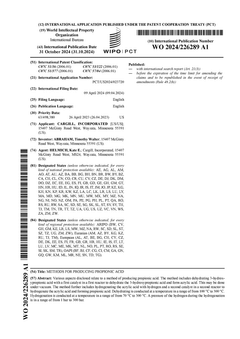
Methods for producing propionic acid
PatentWO2024226289A1
Innovation
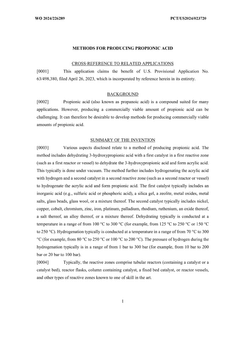
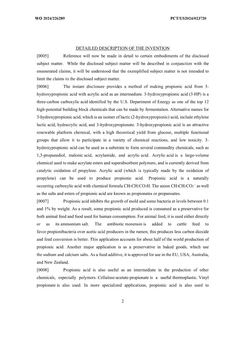
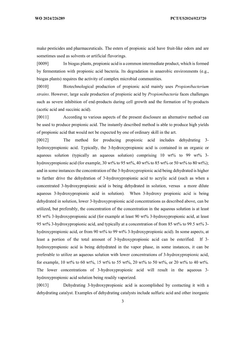
- A method involving the dehydration of 3-hydroxypropionic acid to form acrylic acid using a first catalyst, followed by hydrogenation of acrylic acid to propionic acid using a second catalyst, with specific temperature and pressure conditions, and optionally using a polymerization inhibitor to prevent acrylic acid polymerization.
Method for production of propionic acid from inulins
PatentPendingIN202141042851A
Innovation
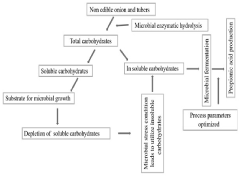
- A single-step process optimizing enzymatic hydrolysis of inulin from onion waste and non-edible tubers to convert insoluble carbohydrates into fermentable sugars, followed by microbial fermentation to produce propionic acid, addressing issues like bi-product formation and downstream processing through optimized microbial growth conditions and stress parameters.
Environmental Impact of Propionic Acid Usage
Propionic acid, while offering numerous benefits in various industries, also poses potential environmental concerns that require careful consideration. The production and use of propionic acid can impact the environment through several pathways, including air emissions, water pollution, and soil contamination.
In terms of air quality, the manufacturing process of propionic acid may release volatile organic compounds (VOCs) and other pollutants into the atmosphere. These emissions can contribute to smog formation and potentially affect local air quality. However, modern production facilities often employ advanced emission control technologies to mitigate these impacts, such as scrubbers and thermal oxidizers.
Water pollution is another significant concern associated with propionic acid usage. Improper disposal or accidental spills can lead to contamination of water bodies, potentially harming aquatic ecosystems. Propionic acid is water-soluble and can lower the pH of water, which may adversely affect aquatic life if released in large quantities. Industrial wastewater treatment systems are crucial in preventing such pollution, and many facilities implement stringent protocols for handling and disposing of propionic acid-containing waste.
Soil contamination is a potential risk, particularly in agricultural applications where propionic acid is used as a preservative for animal feed. Overuse or improper application can lead to soil acidification, potentially altering soil chemistry and affecting plant growth. However, when used as directed, the environmental impact on soil is generally minimal due to the acid's relatively rapid biodegradation.
The biodegradability of propionic acid is a key factor in its environmental profile. Unlike some persistent organic pollutants, propionic acid can be broken down by naturally occurring microorganisms in the environment. This characteristic helps to reduce its long-term environmental impact, as it does not accumulate in ecosystems over time.
From a lifecycle perspective, the production of propionic acid from renewable resources, such as biomass fermentation, offers potential environmental benefits compared to petrochemical-based production methods. This approach can reduce the carbon footprint associated with propionic acid manufacturing and aligns with broader sustainability goals.
Regulatory frameworks play a crucial role in managing the environmental impact of propionic acid. Many countries have established guidelines for its production, use, and disposal to minimize potential harm to ecosystems. Compliance with these regulations, along with industry best practices, is essential for responsible environmental stewardship.
In conclusion, while propionic acid does present some environmental challenges, its impacts can be effectively managed through proper handling, advanced production technologies, and adherence to regulatory standards. Ongoing research into more sustainable production methods and improved waste management strategies continues to enhance the environmental profile of propionic acid usage across various industries.
In terms of air quality, the manufacturing process of propionic acid may release volatile organic compounds (VOCs) and other pollutants into the atmosphere. These emissions can contribute to smog formation and potentially affect local air quality. However, modern production facilities often employ advanced emission control technologies to mitigate these impacts, such as scrubbers and thermal oxidizers.
Water pollution is another significant concern associated with propionic acid usage. Improper disposal or accidental spills can lead to contamination of water bodies, potentially harming aquatic ecosystems. Propionic acid is water-soluble and can lower the pH of water, which may adversely affect aquatic life if released in large quantities. Industrial wastewater treatment systems are crucial in preventing such pollution, and many facilities implement stringent protocols for handling and disposing of propionic acid-containing waste.
Soil contamination is a potential risk, particularly in agricultural applications where propionic acid is used as a preservative for animal feed. Overuse or improper application can lead to soil acidification, potentially altering soil chemistry and affecting plant growth. However, when used as directed, the environmental impact on soil is generally minimal due to the acid's relatively rapid biodegradation.
The biodegradability of propionic acid is a key factor in its environmental profile. Unlike some persistent organic pollutants, propionic acid can be broken down by naturally occurring microorganisms in the environment. This characteristic helps to reduce its long-term environmental impact, as it does not accumulate in ecosystems over time.
From a lifecycle perspective, the production of propionic acid from renewable resources, such as biomass fermentation, offers potential environmental benefits compared to petrochemical-based production methods. This approach can reduce the carbon footprint associated with propionic acid manufacturing and aligns with broader sustainability goals.
Regulatory frameworks play a crucial role in managing the environmental impact of propionic acid. Many countries have established guidelines for its production, use, and disposal to minimize potential harm to ecosystems. Compliance with these regulations, along with industry best practices, is essential for responsible environmental stewardship.
In conclusion, while propionic acid does present some environmental challenges, its impacts can be effectively managed through proper handling, advanced production technologies, and adherence to regulatory standards. Ongoing research into more sustainable production methods and improved waste management strategies continues to enhance the environmental profile of propionic acid usage across various industries.
Regulatory Framework for Propionic Acid Applications
The regulatory framework for propionic acid applications is a complex and evolving landscape that significantly impacts its use across various industries. At the global level, organizations such as the World Health Organization (WHO) and the Food and Agriculture Organization (FAO) provide overarching guidelines for the safe use of propionic acid in food and feed applications. These guidelines are often adopted or adapted by national regulatory bodies.
In the United States, the Food and Drug Administration (FDA) regulates propionic acid as a Generally Recognized as Safe (GRAS) substance for use in food preservation and as a flavoring agent. The Environmental Protection Agency (EPA) oversees its use in pesticides and other non-food applications. The Occupational Safety and Health Administration (OSHA) sets standards for workplace exposure limits and safety protocols when handling propionic acid.
The European Union has established comprehensive regulations through the European Food Safety Authority (EFSA) and the European Chemicals Agency (ECHA). EFSA evaluates the safety of propionic acid as a food additive, while ECHA manages its registration, evaluation, authorization, and restriction under the REACH (Registration, Evaluation, Authorization and Restriction of Chemicals) regulation.
In Asia, countries like China and Japan have their own regulatory frameworks. China's National Medical Products Administration (NMPA) and the Ministry of Agriculture and Rural Affairs oversee propionic acid use in food and feed. Japan's Ministry of Health, Labour and Welfare regulates its use through the Food Sanitation Act.
Regulatory requirements typically cover aspects such as purity standards, maximum residue limits, labeling requirements, and permitted applications. These regulations are periodically reviewed and updated based on new scientific evidence and risk assessments. Manufacturers and users of propionic acid must stay informed about these changes to ensure compliance.
The regulatory landscape also addresses environmental concerns. Many countries have implemented regulations to control emissions and manage waste associated with propionic acid production and use. These regulations aim to minimize environmental impact and promote sustainable practices in the industry.
As the applications of propionic acid continue to expand, regulatory bodies are likely to introduce new guidelines or modify existing ones. This dynamic regulatory environment necessitates ongoing vigilance and adaptability from stakeholders in the propionic acid industry to leverage its unique chemical properties while ensuring safety and compliance.
In the United States, the Food and Drug Administration (FDA) regulates propionic acid as a Generally Recognized as Safe (GRAS) substance for use in food preservation and as a flavoring agent. The Environmental Protection Agency (EPA) oversees its use in pesticides and other non-food applications. The Occupational Safety and Health Administration (OSHA) sets standards for workplace exposure limits and safety protocols when handling propionic acid.
The European Union has established comprehensive regulations through the European Food Safety Authority (EFSA) and the European Chemicals Agency (ECHA). EFSA evaluates the safety of propionic acid as a food additive, while ECHA manages its registration, evaluation, authorization, and restriction under the REACH (Registration, Evaluation, Authorization and Restriction of Chemicals) regulation.
In Asia, countries like China and Japan have their own regulatory frameworks. China's National Medical Products Administration (NMPA) and the Ministry of Agriculture and Rural Affairs oversee propionic acid use in food and feed. Japan's Ministry of Health, Labour and Welfare regulates its use through the Food Sanitation Act.
Regulatory requirements typically cover aspects such as purity standards, maximum residue limits, labeling requirements, and permitted applications. These regulations are periodically reviewed and updated based on new scientific evidence and risk assessments. Manufacturers and users of propionic acid must stay informed about these changes to ensure compliance.
The regulatory landscape also addresses environmental concerns. Many countries have implemented regulations to control emissions and manage waste associated with propionic acid production and use. These regulations aim to minimize environmental impact and promote sustainable practices in the industry.
As the applications of propionic acid continue to expand, regulatory bodies are likely to introduce new guidelines or modify existing ones. This dynamic regulatory environment necessitates ongoing vigilance and adaptability from stakeholders in the propionic acid industry to leverage its unique chemical properties while ensuring safety and compliance.
Unlock deeper insights with PatSnap Eureka Quick Research — get a full tech report to explore trends and direct your research. Try now!
Generate Your Research Report Instantly with AI Agent
Supercharge your innovation with PatSnap Eureka AI Agent Platform!