

How to Optimize Propionic Acid for Material Innovation?
JUL 3, 20259 MIN READ
Generate Your Research Report Instantly with AI Agent
PatSnap Eureka helps you evaluate technical feasibility & market potential.
Propionic Acid Overview and Innovation Goals
Propionic acid, a three-carbon carboxylic acid, has been a staple in various industries for decades. Its versatile properties and wide-ranging applications have made it an essential compound in fields such as food preservation, pharmaceuticals, and agriculture. As we delve into the technological landscape of propionic acid, it becomes evident that its potential for material innovation is far from exhausted.
The evolution of propionic acid technology has been marked by continuous improvements in production methods and an expanding array of applications. Initially derived from petrochemical sources, recent advancements have focused on developing bio-based production routes, aligning with the global shift towards sustainability. This transition not only addresses environmental concerns but also opens up new avenues for material innovation.
In the context of material science, propionic acid serves as a crucial building block for various polymers and composites. Its ability to form esters and salts with unique properties has led to its incorporation in advanced materials with enhanced durability, flexibility, and chemical resistance. The ongoing research in this area aims to exploit these characteristics further, pushing the boundaries of material performance and functionality.
The primary goal of optimizing propionic acid for material innovation is to enhance its efficacy as a precursor and additive in next-generation materials. This involves improving its production efficiency, increasing its purity, and modifying its molecular structure to achieve desired properties in end products. Researchers are exploring novel catalysts and reaction pathways to synthesize propionic acid derivatives with tailored functionalities, potentially revolutionizing industries such as packaging, coatings, and smart materials.
Another critical objective is to expand the application scope of propionic acid in biodegradable and biocompatible materials. With growing environmental concerns, there is a pressing need for sustainable alternatives to conventional plastics and synthetic fibers. Propionic acid, with its natural occurrence and relatively simple structure, presents an attractive option for developing eco-friendly materials that maintain high performance standards.
The pursuit of these innovation goals is driven by both market demands and technological advancements. As industries seek more sustainable and efficient solutions, the optimization of propionic acid becomes a focal point for research and development efforts. The convergence of biotechnology, materials science, and chemical engineering is expected to yield breakthrough innovations in this field, potentially transforming multiple sectors and contributing to a more sustainable future.
The evolution of propionic acid technology has been marked by continuous improvements in production methods and an expanding array of applications. Initially derived from petrochemical sources, recent advancements have focused on developing bio-based production routes, aligning with the global shift towards sustainability. This transition not only addresses environmental concerns but also opens up new avenues for material innovation.
In the context of material science, propionic acid serves as a crucial building block for various polymers and composites. Its ability to form esters and salts with unique properties has led to its incorporation in advanced materials with enhanced durability, flexibility, and chemical resistance. The ongoing research in this area aims to exploit these characteristics further, pushing the boundaries of material performance and functionality.
The primary goal of optimizing propionic acid for material innovation is to enhance its efficacy as a precursor and additive in next-generation materials. This involves improving its production efficiency, increasing its purity, and modifying its molecular structure to achieve desired properties in end products. Researchers are exploring novel catalysts and reaction pathways to synthesize propionic acid derivatives with tailored functionalities, potentially revolutionizing industries such as packaging, coatings, and smart materials.
Another critical objective is to expand the application scope of propionic acid in biodegradable and biocompatible materials. With growing environmental concerns, there is a pressing need for sustainable alternatives to conventional plastics and synthetic fibers. Propionic acid, with its natural occurrence and relatively simple structure, presents an attractive option for developing eco-friendly materials that maintain high performance standards.
The pursuit of these innovation goals is driven by both market demands and technological advancements. As industries seek more sustainable and efficient solutions, the optimization of propionic acid becomes a focal point for research and development efforts. The convergence of biotechnology, materials science, and chemical engineering is expected to yield breakthrough innovations in this field, potentially transforming multiple sectors and contributing to a more sustainable future.
Market Analysis for Propionic Acid-Based Materials
The market for propionic acid-based materials has been experiencing significant growth in recent years, driven by increasing demand across various industries. The global propionic acid market size was valued at approximately $1.5 billion in 2020 and is projected to reach $2.1 billion by 2027, growing at a CAGR of around 5.2% during the forecast period.
One of the key factors driving market growth is the rising demand for propionic acid as a food preservative in the food and beverage industry. With consumers increasingly seeking products with extended shelf life and natural preservatives, propionic acid has become a preferred choice due to its effectiveness in inhibiting mold growth and bacterial proliferation.
The pharmaceutical industry is another major contributor to the market expansion of propionic acid-based materials. Propionic acid and its derivatives are widely used in the production of various medications, including anti-inflammatory drugs and antifungal agents. The growing healthcare sector and increasing investments in pharmaceutical research and development are expected to further boost the demand for propionic acid in this segment.
In the agriculture sector, propionic acid-based materials are gaining traction as effective grain preservatives and animal feed additives. The increasing focus on improving livestock health and productivity has led to a higher adoption of propionic acid-based feed additives, driving market growth in this segment.
The plastics and polymers industry is also emerging as a significant consumer of propionic acid-based materials. Propionic acid derivatives are used in the production of cellulose acetate propionate (CAP), a biodegradable polymer with applications in packaging, textiles, and other consumer goods. The growing emphasis on sustainable and eco-friendly materials is expected to drive the demand for propionic acid in this sector.
Geographically, North America and Europe currently dominate the propionic acid market, owing to the presence of major manufacturers and end-users in these regions. However, the Asia-Pacific region is anticipated to witness the highest growth rate in the coming years, driven by rapid industrialization, increasing disposable income, and growing demand for processed food products in countries like China and India.
Despite the positive market outlook, challenges such as fluctuating raw material prices and stringent regulations regarding the use of chemical preservatives in food products may hinder market growth to some extent. However, ongoing research and development efforts aimed at optimizing propionic acid production processes and expanding its applications are expected to create new opportunities for market expansion in the near future.
One of the key factors driving market growth is the rising demand for propionic acid as a food preservative in the food and beverage industry. With consumers increasingly seeking products with extended shelf life and natural preservatives, propionic acid has become a preferred choice due to its effectiveness in inhibiting mold growth and bacterial proliferation.
The pharmaceutical industry is another major contributor to the market expansion of propionic acid-based materials. Propionic acid and its derivatives are widely used in the production of various medications, including anti-inflammatory drugs and antifungal agents. The growing healthcare sector and increasing investments in pharmaceutical research and development are expected to further boost the demand for propionic acid in this segment.
In the agriculture sector, propionic acid-based materials are gaining traction as effective grain preservatives and animal feed additives. The increasing focus on improving livestock health and productivity has led to a higher adoption of propionic acid-based feed additives, driving market growth in this segment.
The plastics and polymers industry is also emerging as a significant consumer of propionic acid-based materials. Propionic acid derivatives are used in the production of cellulose acetate propionate (CAP), a biodegradable polymer with applications in packaging, textiles, and other consumer goods. The growing emphasis on sustainable and eco-friendly materials is expected to drive the demand for propionic acid in this sector.
Geographically, North America and Europe currently dominate the propionic acid market, owing to the presence of major manufacturers and end-users in these regions. However, the Asia-Pacific region is anticipated to witness the highest growth rate in the coming years, driven by rapid industrialization, increasing disposable income, and growing demand for processed food products in countries like China and India.
Despite the positive market outlook, challenges such as fluctuating raw material prices and stringent regulations regarding the use of chemical preservatives in food products may hinder market growth to some extent. However, ongoing research and development efforts aimed at optimizing propionic acid production processes and expanding its applications are expected to create new opportunities for market expansion in the near future.
Current Challenges in Propionic Acid Optimization
The optimization of propionic acid for material innovation faces several significant challenges that hinder its widespread adoption and full potential realization. One of the primary obstacles is the high production cost associated with traditional fermentation methods. The current processes require substantial energy inputs and expensive raw materials, making it difficult to compete with petroleum-based alternatives on a cost basis.
Another major challenge lies in the purification and separation of propionic acid from fermentation broths. The presence of impurities and by-products necessitates complex downstream processing, which not only increases production costs but also impacts the overall yield and quality of the final product. This issue is particularly critical for high-purity applications in material science.
The limited substrate utilization efficiency in microbial fermentation processes presents a significant hurdle. Many of the current microbial strains used for propionic acid production are unable to fully convert available carbon sources, resulting in suboptimal yields and increased waste. This inefficiency not only affects the economic viability of the process but also raises sustainability concerns.
Environmental factors pose additional challenges in the optimization of propionic acid production. The sensitivity of microbial cultures to pH fluctuations, temperature changes, and oxygen levels requires precise control systems, which can be difficult to maintain at industrial scales. These sensitivities often lead to inconsistent product quality and reduced productivity.
The development of novel materials using propionic acid is also hampered by limitations in its chemical properties. While propionic acid offers unique characteristics, its relatively low reactivity compared to some other organic acids can restrict its application in certain material innovations. Overcoming these inherent chemical limitations requires advanced catalytic processes or chemical modifications, which are still in early stages of research.
Scaling up laboratory successes to industrial production levels remains a significant challenge. Many promising optimization techniques that work well in controlled laboratory environments face difficulties when implemented at larger scales. Issues such as heat and mass transfer limitations, microbial contamination risks, and equipment design constraints often emerge during scale-up attempts.
Regulatory hurdles and safety concerns also present challenges in the optimization and application of propionic acid in material innovation. As new production methods and applications are developed, they must navigate complex regulatory landscapes, particularly in sectors such as food packaging, biomedical materials, and consumer products. Ensuring compliance while maintaining innovation momentum can be a delicate balancing act.
Another major challenge lies in the purification and separation of propionic acid from fermentation broths. The presence of impurities and by-products necessitates complex downstream processing, which not only increases production costs but also impacts the overall yield and quality of the final product. This issue is particularly critical for high-purity applications in material science.
The limited substrate utilization efficiency in microbial fermentation processes presents a significant hurdle. Many of the current microbial strains used for propionic acid production are unable to fully convert available carbon sources, resulting in suboptimal yields and increased waste. This inefficiency not only affects the economic viability of the process but also raises sustainability concerns.
Environmental factors pose additional challenges in the optimization of propionic acid production. The sensitivity of microbial cultures to pH fluctuations, temperature changes, and oxygen levels requires precise control systems, which can be difficult to maintain at industrial scales. These sensitivities often lead to inconsistent product quality and reduced productivity.
The development of novel materials using propionic acid is also hampered by limitations in its chemical properties. While propionic acid offers unique characteristics, its relatively low reactivity compared to some other organic acids can restrict its application in certain material innovations. Overcoming these inherent chemical limitations requires advanced catalytic processes or chemical modifications, which are still in early stages of research.
Scaling up laboratory successes to industrial production levels remains a significant challenge. Many promising optimization techniques that work well in controlled laboratory environments face difficulties when implemented at larger scales. Issues such as heat and mass transfer limitations, microbial contamination risks, and equipment design constraints often emerge during scale-up attempts.
Regulatory hurdles and safety concerns also present challenges in the optimization and application of propionic acid in material innovation. As new production methods and applications are developed, they must navigate complex regulatory landscapes, particularly in sectors such as food packaging, biomedical materials, and consumer products. Ensuring compliance while maintaining innovation momentum can be a delicate balancing act.
Existing Optimization Techniques for Propionic Acid
01 Production methods of propionic acid
Various methods are employed for the production of propionic acid, including fermentation processes, chemical synthesis, and catalytic reactions. These methods often involve the use of specific microorganisms, catalysts, or chemical precursors to efficiently produce propionic acid on an industrial scale.- Production methods of propionic acid: Various methods are employed for the production of propionic acid, including fermentation processes, chemical synthesis, and catalytic reactions. These methods often involve the use of specific microorganisms, catalysts, or chemical precursors to efficiently produce propionic acid on an industrial scale.
- Applications of propionic acid in food preservation: Propionic acid and its salts are widely used as food preservatives due to their antimicrobial properties. They are effective in inhibiting the growth of mold and certain bacteria, thereby extending the shelf life of various food products, particularly baked goods and dairy products.
- Use of propionic acid in pharmaceutical formulations: Propionic acid and its derivatives find applications in the pharmaceutical industry. They are used in the formulation of various medications, including topical treatments for skin conditions and as intermediates in the synthesis of certain drugs.
- Industrial applications of propionic acid: Propionic acid has diverse industrial applications beyond food and pharmaceuticals. It is used in the production of plastics, herbicides, and as a chemical intermediate in various manufacturing processes. Its versatility makes it a valuable compound in multiple industries.
- Environmental and safety considerations in propionic acid handling: The handling and storage of propionic acid require specific safety measures due to its corrosive nature and potential environmental impact. Proper containment, waste management, and worker protection protocols are essential in facilities that produce or use propionic acid to ensure safety and environmental compliance.
02 Applications of propionic acid in food preservation
Propionic acid and its salts are widely used as food preservatives due to their antimicrobial properties. They are effective in preventing mold growth and extending the shelf life of various food products, particularly in baked goods, dairy products, and animal feed.Expand Specific Solutions03 Use of propionic acid in pharmaceutical and cosmetic industries
Propionic acid finds applications in the pharmaceutical and cosmetic industries. It is used as a precursor in the synthesis of certain drugs and as a pH adjuster in various formulations. In cosmetics, it may be used as a preservative or in the production of other cosmetic ingredients.Expand Specific Solutions04 Environmental and industrial applications of propionic acid
Propionic acid has various environmental and industrial applications. It is used in the production of cellulose acetate propionate, a biodegradable plastic. Additionally, it finds use in herbicides, solvents, and as a chemical intermediate in the production of other compounds.Expand Specific Solutions05 Purification and recovery methods for propionic acid
Various techniques are employed for the purification and recovery of propionic acid from reaction mixtures or fermentation broths. These methods may include distillation, extraction, crystallization, or membrane-based separation processes to obtain high-purity propionic acid for commercial use.Expand Specific Solutions
Key Players in Propionic Acid Industry
The optimization of propionic acid for material innovation is in a growth phase, with increasing market demand driven by its versatile applications in various industries. The global market size for propionic acid is expanding, fueled by its use in food preservation, pharmaceuticals, and polymer production. Technologically, the field is advancing rapidly, with companies like Nippon Shokubai, Arkema France, and Dow Global Technologies leading research efforts. These firms are focusing on improving production efficiency, exploring novel synthesis routes, and developing new applications. Universities such as Ohio State and Campinas are contributing to fundamental research, while industrial players like Evonik Operations and PetroChina are scaling up production and commercialization efforts.
Arkema France SA
Technical Solution: Arkema has developed an innovative process for producing bio-based propionic acid through fermentation of glycerol, a by-product of biodiesel production[1]. This method utilizes proprietary bacterial strains and advanced fermentation techniques to achieve high yields and purity. The company has also implemented a continuous flow reactor system that allows for better control of reaction conditions, resulting in improved product quality and reduced energy consumption[2]. Additionally, Arkema has explored the use of heterogeneous catalysts for the direct oxidation of propanol to propionic acid, which offers potential advantages in terms of selectivity and catalyst recovery[3].
Strengths: Sustainable bio-based production, improved process efficiency, and potential for cost reduction. Weaknesses: Dependence on glycerol availability, potential scalability challenges for fermentation processes.
Dow Global Technologies LLC
Technical Solution: Dow has developed a novel approach to propionic acid production using a gas-phase oxidation process. This method employs a multi-stage reactor system with optimized catalyst formulations to achieve high selectivity and yield[4]. The process incorporates advanced heat recovery systems and utilizes low-grade waste heat, significantly improving energy efficiency. Dow has also implemented in-line product purification techniques, including membrane separation and reactive distillation, to enhance product quality and reduce downstream processing costs[5]. Furthermore, the company has explored the use of renewable feedstocks, such as bio-propanol, to create a more sustainable production route[6].
Strengths: High efficiency, improved product quality, and potential for integration with existing chemical processes. Weaknesses: High capital investment for new production facilities, potential challenges in catalyst longevity and regeneration.
Innovative Approaches in Propionic Acid Research
Method for Improving Acid tolerance of Propionibacterium acdipropionici
PatentInactiveUS20140178952A1
Innovation
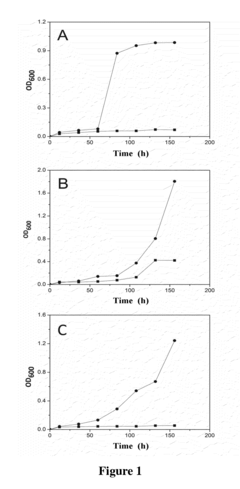
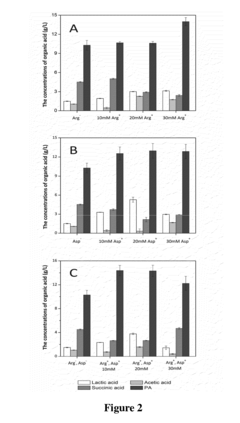
- Adding arginine and/or aspartic acid to the culture medium during the cultivation of Propionibacterium acdipropionici to enhance acid tolerance and propionic acid productivity.
Improved propionibacterium strains for the production of propionic acid
PatentWO2017055932A2
Innovation
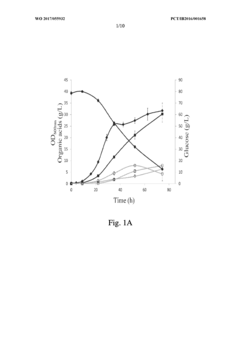
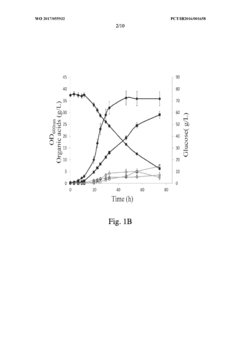
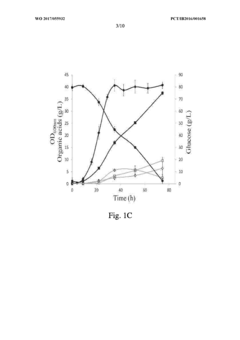
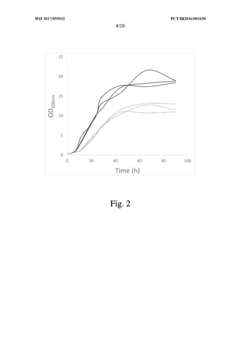
- Genome shuffling between selected Propionibacterium strains, such as P. acidipropionici ATCC 4875 and P. acidipropionici ATCC 55737, to generate novel strains with enhanced growth rates and propionic acid production, utilizing genetic material exchange to create strains with improved metabolic pathways and regulatory mechanisms.
Environmental Impact of Propionic Acid Production
The production of propionic acid has significant environmental implications that must be carefully considered in the context of material innovation. Traditional manufacturing processes for propionic acid, primarily based on petrochemical routes, have been associated with substantial carbon emissions and energy consumption. These processes often rely on fossil fuel-derived feedstocks, contributing to greenhouse gas emissions and resource depletion. Moreover, the use of catalysts and solvents in conventional production methods can lead to the generation of hazardous waste streams, posing potential risks to ecosystems and human health if not properly managed.
However, recent advancements in biotechnological approaches for propionic acid production offer promising alternatives with reduced environmental footprints. Fermentation-based processes utilizing renewable biomass feedstocks have shown potential to significantly lower carbon emissions compared to petrochemical routes. These bio-based production methods can utilize agricultural residues, food waste, and other sustainable carbon sources, promoting circular economy principles and reducing dependence on fossil resources.
Water consumption and wastewater generation are also critical environmental factors in propionic acid production. Traditional processes often require substantial amounts of water for cooling and separation steps, leading to high water footprints. Additionally, the resulting wastewater may contain organic contaminants and require extensive treatment before discharge. Innovative water management strategies, such as closed-loop systems and advanced membrane technologies, are being explored to minimize water usage and improve wastewater treatment efficiency in propionic acid production facilities.
The environmental impact of propionic acid extends beyond its production to its applications in material innovation. As a precursor for various polymers and materials, the lifecycle assessment of propionic acid-derived products must be considered. The potential for biodegradability and recyclability of these materials can significantly influence their overall environmental sustainability. Furthermore, the use of propionic acid as a preservative in food and feed applications can indirectly contribute to reducing food waste, which has substantial environmental benefits in terms of resource conservation and greenhouse gas emissions reduction.
Energy efficiency in propionic acid production processes remains a key area for environmental optimization. The implementation of heat integration techniques, energy-efficient separation processes, and the use of renewable energy sources in production facilities can substantially reduce the overall energy footprint. Additionally, the development of novel catalysts and process intensification strategies aims to improve reaction yields and selectivity, potentially leading to reduced energy requirements and waste generation per unit of propionic acid produced.
However, recent advancements in biotechnological approaches for propionic acid production offer promising alternatives with reduced environmental footprints. Fermentation-based processes utilizing renewable biomass feedstocks have shown potential to significantly lower carbon emissions compared to petrochemical routes. These bio-based production methods can utilize agricultural residues, food waste, and other sustainable carbon sources, promoting circular economy principles and reducing dependence on fossil resources.
Water consumption and wastewater generation are also critical environmental factors in propionic acid production. Traditional processes often require substantial amounts of water for cooling and separation steps, leading to high water footprints. Additionally, the resulting wastewater may contain organic contaminants and require extensive treatment before discharge. Innovative water management strategies, such as closed-loop systems and advanced membrane technologies, are being explored to minimize water usage and improve wastewater treatment efficiency in propionic acid production facilities.
The environmental impact of propionic acid extends beyond its production to its applications in material innovation. As a precursor for various polymers and materials, the lifecycle assessment of propionic acid-derived products must be considered. The potential for biodegradability and recyclability of these materials can significantly influence their overall environmental sustainability. Furthermore, the use of propionic acid as a preservative in food and feed applications can indirectly contribute to reducing food waste, which has substantial environmental benefits in terms of resource conservation and greenhouse gas emissions reduction.
Energy efficiency in propionic acid production processes remains a key area for environmental optimization. The implementation of heat integration techniques, energy-efficient separation processes, and the use of renewable energy sources in production facilities can substantially reduce the overall energy footprint. Additionally, the development of novel catalysts and process intensification strategies aims to improve reaction yields and selectivity, potentially leading to reduced energy requirements and waste generation per unit of propionic acid produced.
Regulatory Framework for Propionic Acid Use
The regulatory framework for propionic acid use is a critical aspect of its application in material innovation. Governments and international organizations have established comprehensive guidelines to ensure the safe and responsible utilization of this chemical compound across various industries.
In the United States, the Food and Drug Administration (FDA) regulates propionic acid as a food additive under the Federal Food, Drug, and Cosmetic Act. It is classified as Generally Recognized as Safe (GRAS) when used as a preservative in food products. The Environmental Protection Agency (EPA) also oversees its use in pesticides and antimicrobial applications, requiring registration under the Federal Insecticide, Fungicide, and Rodenticide Act (FIFRA).
The European Union has implemented stringent regulations through the Registration, Evaluation, Authorization, and Restriction of Chemicals (REACH) program. Manufacturers and importers of propionic acid must register with the European Chemicals Agency (ECHA) and provide detailed safety information. The EU has also set specific limits for propionic acid in food products through Regulation (EC) No 1333/2008 on food additives.
In Asia, countries like China and Japan have their own regulatory frameworks. China's National Medical Products Administration (NMPA) oversees the use of propionic acid in pharmaceuticals and cosmetics, while the Ministry of Agriculture and Rural Affairs regulates its application in feed additives. Japan's Ministry of Health, Labour and Welfare has established guidelines for propionic acid use in food preservation and as a raw material in various industries.
Globally, the United Nations' Globally Harmonized System of Classification and Labelling of Chemicals (GHS) provides a standardized approach to communicating chemical hazards. This system ensures consistent labeling and safety data sheets for propionic acid across international borders, facilitating safe handling and transport.
For material innovation, researchers and manufacturers must navigate these regulatory landscapes to ensure compliance. This includes adhering to exposure limits set by occupational safety organizations, such as the Occupational Safety and Health Administration (OSHA) in the US, which has established Permissible Exposure Limits (PELs) for propionic acid in workplace environments.
As the applications of propionic acid in material science expand, regulatory bodies are likely to adapt their frameworks to address new uses and potential risks. Innovators must stay informed about these evolving regulations to ensure their developments remain compliant and marketable across different regions.
In the United States, the Food and Drug Administration (FDA) regulates propionic acid as a food additive under the Federal Food, Drug, and Cosmetic Act. It is classified as Generally Recognized as Safe (GRAS) when used as a preservative in food products. The Environmental Protection Agency (EPA) also oversees its use in pesticides and antimicrobial applications, requiring registration under the Federal Insecticide, Fungicide, and Rodenticide Act (FIFRA).
The European Union has implemented stringent regulations through the Registration, Evaluation, Authorization, and Restriction of Chemicals (REACH) program. Manufacturers and importers of propionic acid must register with the European Chemicals Agency (ECHA) and provide detailed safety information. The EU has also set specific limits for propionic acid in food products through Regulation (EC) No 1333/2008 on food additives.
In Asia, countries like China and Japan have their own regulatory frameworks. China's National Medical Products Administration (NMPA) oversees the use of propionic acid in pharmaceuticals and cosmetics, while the Ministry of Agriculture and Rural Affairs regulates its application in feed additives. Japan's Ministry of Health, Labour and Welfare has established guidelines for propionic acid use in food preservation and as a raw material in various industries.
Globally, the United Nations' Globally Harmonized System of Classification and Labelling of Chemicals (GHS) provides a standardized approach to communicating chemical hazards. This system ensures consistent labeling and safety data sheets for propionic acid across international borders, facilitating safe handling and transport.
For material innovation, researchers and manufacturers must navigate these regulatory landscapes to ensure compliance. This includes adhering to exposure limits set by occupational safety organizations, such as the Occupational Safety and Health Administration (OSHA) in the US, which has established Permissible Exposure Limits (PELs) for propionic acid in workplace environments.
As the applications of propionic acid in material science expand, regulatory bodies are likely to adapt their frameworks to address new uses and potential risks. Innovators must stay informed about these evolving regulations to ensure their developments remain compliant and marketable across different regions.
Unlock deeper insights with PatSnap Eureka Quick Research — get a full tech report to explore trends and direct your research. Try now!
Generate Your Research Report Instantly with AI Agent
Supercharge your innovation with PatSnap Eureka AI Agent Platform!