

Poly Ether Ether Ketone (PEEK): Comprehensive Analysis Of High Performance Polymer Properties, Synthesis, And Advanced Applications
JUL 3, 20259 MIN READ
Generate Your Research Report Instantly with AI Agent
PatSnap Eureka helps you evaluate technical feasibility & market potential.
Propionic Acid Industry Evolution and Objectives
Propionic acid has been a key industrial chemical for decades, with its origins tracing back to the early 20th century. Initially produced as a byproduct of petroleum refining, the industry has evolved significantly, driven by increasing demand across various sectors. The evolution of the propionic acid industry has been marked by technological advancements in production methods, shifting from petrochemical-based processes to more sustainable bio-based alternatives.
In the 1960s and 1970s, the industry saw a surge in demand due to the growing use of propionic acid as a food preservative and animal feed additive. This period also witnessed the development of more efficient production techniques, including the oxo process and the Reppe process, which improved yields and reduced production costs. As environmental concerns gained prominence in the 1980s and 1990s, the industry began exploring greener production methods, leading to the emergence of bio-based propionic acid production using renewable resources.
The 21st century has brought about a new era for the propionic acid industry, characterized by a focus on sustainability and circular economy principles. The industry is now at a crossroads, with the potential to reshape itself through innovative technologies and market strategies. The primary objectives for shaping the future of the propionic acid industry revolve around three key areas: sustainability, efficiency, and diversification.
Sustainability has become a central objective, with efforts directed towards developing and scaling up bio-based production methods. This includes the use of renewable feedstocks such as glycerol, glucose, and agricultural waste. The industry aims to reduce its carbon footprint and align with global sustainability goals, potentially opening up new market opportunities and improving public perception.
Efficiency improvements are crucial for maintaining competitiveness in the global market. The industry is focusing on optimizing production processes, reducing energy consumption, and minimizing waste generation. Advanced process control systems, catalysts, and separation technologies are being explored to enhance overall efficiency and reduce production costs.
Diversification of applications is another key objective, as the industry seeks to expand its market reach. While traditional uses in food preservation and animal feed remain important, new applications in pharmaceuticals, cosmetics, and biodegradable plastics are being actively developed. The industry aims to position propionic acid as a versatile platform chemical, capable of meeting the evolving needs of various sectors.
As the propionic acid industry looks to the future, it faces the challenge of balancing these objectives while navigating an increasingly complex global market. The industry's evolution and objectives are closely tied to broader trends in sustainability, technological innovation, and changing consumer preferences, setting the stage for a transformative period in the coming years.
In the 1960s and 1970s, the industry saw a surge in demand due to the growing use of propionic acid as a food preservative and animal feed additive. This period also witnessed the development of more efficient production techniques, including the oxo process and the Reppe process, which improved yields and reduced production costs. As environmental concerns gained prominence in the 1980s and 1990s, the industry began exploring greener production methods, leading to the emergence of bio-based propionic acid production using renewable resources.
The 21st century has brought about a new era for the propionic acid industry, characterized by a focus on sustainability and circular economy principles. The industry is now at a crossroads, with the potential to reshape itself through innovative technologies and market strategies. The primary objectives for shaping the future of the propionic acid industry revolve around three key areas: sustainability, efficiency, and diversification.
Sustainability has become a central objective, with efforts directed towards developing and scaling up bio-based production methods. This includes the use of renewable feedstocks such as glycerol, glucose, and agricultural waste. The industry aims to reduce its carbon footprint and align with global sustainability goals, potentially opening up new market opportunities and improving public perception.
Efficiency improvements are crucial for maintaining competitiveness in the global market. The industry is focusing on optimizing production processes, reducing energy consumption, and minimizing waste generation. Advanced process control systems, catalysts, and separation technologies are being explored to enhance overall efficiency and reduce production costs.
Diversification of applications is another key objective, as the industry seeks to expand its market reach. While traditional uses in food preservation and animal feed remain important, new applications in pharmaceuticals, cosmetics, and biodegradable plastics are being actively developed. The industry aims to position propionic acid as a versatile platform chemical, capable of meeting the evolving needs of various sectors.
As the propionic acid industry looks to the future, it faces the challenge of balancing these objectives while navigating an increasingly complex global market. The industry's evolution and objectives are closely tied to broader trends in sustainability, technological innovation, and changing consumer preferences, setting the stage for a transformative period in the coming years.
Market Demand Analysis for Propionic Acid
The global propionic acid market has been experiencing steady growth, driven by increasing demand across various industries. The food and feed preservation sector remains the largest consumer of propionic acid, accounting for a significant portion of the market share. This is primarily due to the compound's effectiveness as a mold inhibitor and preservative in animal feed and bakery products.
In the food industry, the rising consumer awareness regarding food safety and the need for extended shelf life of packaged foods have been key factors propelling the demand for propionic acid. The compound's ability to prevent mold growth and bacterial contamination makes it an essential ingredient in many food preservation applications.
The pharmaceutical industry has also emerged as a promising market for propionic acid. Its use as a precursor in the synthesis of various drugs and as a preservative in pharmaceutical formulations has contributed to the growing demand in this sector. Additionally, the personal care and cosmetics industry has shown increased interest in propionic acid due to its antimicrobial properties and potential applications in skincare products.
In the agricultural sector, the demand for propionic acid has been driven by its use in crop protection products and as a preservative for grain storage. As global food production continues to increase to meet the needs of a growing population, the demand for effective preservation solutions is expected to rise, further boosting the propionic acid market.
The chemical industry represents another significant market for propionic acid, where it is used as an intermediate in the production of various chemicals, including cellulose acetate propionate and herbicides. The growing demand for these end products has indirectly contributed to the expansion of the propionic acid market.
Geographically, Asia-Pacific has emerged as the fastest-growing market for propionic acid, driven by rapid industrialization, increasing food production, and rising disposable incomes in countries like China and India. North America and Europe continue to be significant markets, with established food and feed industries driving steady demand.
Looking ahead, the global propionic acid market is projected to continue its growth trajectory. Factors such as increasing meat consumption, growing demand for processed foods, and the expansion of the pharmaceutical and personal care industries in emerging economies are expected to drive market growth. However, challenges such as volatility in raw material prices and the availability of substitutes may impact market dynamics in the coming years.
In the food industry, the rising consumer awareness regarding food safety and the need for extended shelf life of packaged foods have been key factors propelling the demand for propionic acid. The compound's ability to prevent mold growth and bacterial contamination makes it an essential ingredient in many food preservation applications.
The pharmaceutical industry has also emerged as a promising market for propionic acid. Its use as a precursor in the synthesis of various drugs and as a preservative in pharmaceutical formulations has contributed to the growing demand in this sector. Additionally, the personal care and cosmetics industry has shown increased interest in propionic acid due to its antimicrobial properties and potential applications in skincare products.
In the agricultural sector, the demand for propionic acid has been driven by its use in crop protection products and as a preservative for grain storage. As global food production continues to increase to meet the needs of a growing population, the demand for effective preservation solutions is expected to rise, further boosting the propionic acid market.
The chemical industry represents another significant market for propionic acid, where it is used as an intermediate in the production of various chemicals, including cellulose acetate propionate and herbicides. The growing demand for these end products has indirectly contributed to the expansion of the propionic acid market.
Geographically, Asia-Pacific has emerged as the fastest-growing market for propionic acid, driven by rapid industrialization, increasing food production, and rising disposable incomes in countries like China and India. North America and Europe continue to be significant markets, with established food and feed industries driving steady demand.
Looking ahead, the global propionic acid market is projected to continue its growth trajectory. Factors such as increasing meat consumption, growing demand for processed foods, and the expansion of the pharmaceutical and personal care industries in emerging economies are expected to drive market growth. However, challenges such as volatility in raw material prices and the availability of substitutes may impact market dynamics in the coming years.
Current Challenges in Propionic Acid Production
The propionic acid industry currently faces several significant challenges that hinder its growth and efficiency. One of the primary issues is the high production cost, which is largely attributed to the expensive raw materials and energy-intensive processes. Traditional production methods, such as the petrochemical route, rely heavily on fossil fuel-derived feedstocks, making the industry vulnerable to fluctuating oil prices and environmental concerns.
Another major challenge is the limited yield and productivity of current production processes. The biological fermentation route, while more environmentally friendly, often suffers from low conversion rates and slow production speeds. This inefficiency translates to higher operational costs and reduced competitiveness in the global market.
Environmental sustainability is an increasingly pressing concern for the propionic acid industry. The production processes, particularly those based on petrochemical routes, generate significant amounts of greenhouse gas emissions and waste products. This not only contributes to environmental degradation but also poses regulatory risks as governments worldwide implement stricter environmental policies.
Product purity and quality control present ongoing challenges. Contamination issues and the presence of byproducts can affect the final product's quality, necessitating additional purification steps that further increase production costs. Maintaining consistent product quality across different batches and production scales remains a critical challenge for manufacturers.
The industry also grapples with market volatility and demand fluctuations. Propionic acid's diverse applications across various sectors, including food preservation, pharmaceuticals, and agriculture, make it susceptible to changes in multiple markets. Balancing production capacity with varying demand patterns requires sophisticated forecasting and inventory management strategies.
Technological limitations in process control and monitoring systems pose another significant challenge. Many production facilities lack advanced real-time monitoring capabilities, making it difficult to optimize processes and respond quickly to production issues. This technological gap hampers efforts to improve efficiency and reduce operational costs.
Lastly, the industry faces increasing competition from alternative products and substitutes. As consumers and industries seek more sustainable and cost-effective solutions, the propionic acid industry must innovate to maintain its market position. Developing new applications and improving existing ones is crucial for long-term growth and sustainability in the face of evolving market demands and technological advancements.
Another major challenge is the limited yield and productivity of current production processes. The biological fermentation route, while more environmentally friendly, often suffers from low conversion rates and slow production speeds. This inefficiency translates to higher operational costs and reduced competitiveness in the global market.
Environmental sustainability is an increasingly pressing concern for the propionic acid industry. The production processes, particularly those based on petrochemical routes, generate significant amounts of greenhouse gas emissions and waste products. This not only contributes to environmental degradation but also poses regulatory risks as governments worldwide implement stricter environmental policies.
Product purity and quality control present ongoing challenges. Contamination issues and the presence of byproducts can affect the final product's quality, necessitating additional purification steps that further increase production costs. Maintaining consistent product quality across different batches and production scales remains a critical challenge for manufacturers.
The industry also grapples with market volatility and demand fluctuations. Propionic acid's diverse applications across various sectors, including food preservation, pharmaceuticals, and agriculture, make it susceptible to changes in multiple markets. Balancing production capacity with varying demand patterns requires sophisticated forecasting and inventory management strategies.
Technological limitations in process control and monitoring systems pose another significant challenge. Many production facilities lack advanced real-time monitoring capabilities, making it difficult to optimize processes and respond quickly to production issues. This technological gap hampers efforts to improve efficiency and reduce operational costs.
Lastly, the industry faces increasing competition from alternative products and substitutes. As consumers and industries seek more sustainable and cost-effective solutions, the propionic acid industry must innovate to maintain its market position. Developing new applications and improving existing ones is crucial for long-term growth and sustainability in the face of evolving market demands and technological advancements.
Existing Production Methods and Efficiency
01 Production methods of propionic acid
Various methods are employed for the production of propionic acid, including fermentation processes, chemical synthesis, and catalytic reactions. These methods often involve the use of specific microorganisms, catalysts, or chemical precursors to efficiently produce propionic acid on an industrial scale.- Production methods of propionic acid: Various methods for producing propionic acid are described, including fermentation processes, chemical synthesis, and catalytic reactions. These methods aim to improve yield, efficiency, and purity of propionic acid production for industrial applications.
- Applications of propionic acid in food preservation: Propionic acid and its salts are widely used as food preservatives due to their antimicrobial properties. They are effective against molds and some bacteria, extending the shelf life of various food products, particularly in bakery goods and dairy products.
- Use of propionic acid in pharmaceutical formulations: Propionic acid and its derivatives are utilized in pharmaceutical formulations for various purposes, including as active ingredients, excipients, or pH adjusters. They may be incorporated into topical, oral, or injectable medications for different therapeutic applications.
- Industrial applications of propionic acid: Propionic acid finds diverse industrial applications beyond food and pharmaceuticals. It is used in the production of plastics, herbicides, and as a chemical intermediate in the synthesis of other compounds. Its properties make it valuable in various manufacturing processes.
- Environmental and safety considerations of propionic acid: Research and development efforts focus on improving the environmental impact and safety aspects of propionic acid production and use. This includes developing greener production methods, assessing toxicological profiles, and implementing proper handling and storage procedures to ensure worker safety and environmental protection.
02 Applications of propionic acid in food preservation
Propionic acid is widely used as a food preservative due to its antimicrobial properties. It is effective in preventing mold growth and extending the shelf life of various food products, particularly in baked goods, dairy products, and animal feed.Expand Specific Solutions03 Use of propionic acid in pharmaceutical formulations
Propionic acid and its derivatives find applications in the pharmaceutical industry. They are used in the formulation of various medications, including topical treatments and oral drugs, due to their antimicrobial properties and ability to enhance drug absorption.Expand Specific Solutions04 Industrial applications of propionic acid
Propionic acid has diverse industrial applications beyond food and pharmaceuticals. It is used in the production of plastics, herbicides, and as a chemical intermediate in the synthesis of other compounds. Its versatility makes it valuable in various manufacturing processes.Expand Specific Solutions05 Environmental and safety considerations in propionic acid handling
The handling and storage of propionic acid require specific safety measures due to its corrosive nature and potential environmental impact. Proper containment, neutralization techniques, and waste management practices are essential to ensure safe use and minimize environmental risks associated with propionic acid.Expand Specific Solutions
Key Players in Propionic Acid Manufacturing
The propionic acid industry is in a growth phase, driven by increasing demand in various sectors such as food preservation, pharmaceuticals, and agriculture. The global market size is projected to expand significantly in the coming years, with a compound annual growth rate expected to be in the high single digits. Technologically, the field is advancing rapidly, with major players like Evonik Operations GmbH, PetroChina Co., Ltd., and China Petroleum & Chemical Corp. investing heavily in research and development. These companies are focusing on improving production efficiency, exploring bio-based alternatives, and developing novel applications. Universities such as the University of Campinas and The Ohio State University are contributing to technological advancements through collaborative research projects with industry partners, further accelerating innovation in the sector.
Evonik Operations GmbH
Technical Solution: Evonik has developed a bio-based production process for propionic acid using renewable resources. Their approach involves fermenting sugars derived from biomass using specialized bacteria. The process incorporates advanced fermentation techniques and downstream processing to achieve high yields and purity. Evonik's method reduces reliance on fossil-based feedstocks, potentially lowering the carbon footprint of propionic acid production[1]. The company has also invested in process optimization, including continuous fermentation systems and efficient separation technologies, to enhance productivity and reduce operational costs[2].
Strengths: Sustainable production from renewable resources, reduced carbon footprint, potential for cost-effectiveness. Weaknesses: May face challenges in scaling up production, potential higher initial investment compared to traditional methods.
China Petroleum & Chemical Corp.
Technical Solution: China Petroleum & Chemical Corp. (Sinopec) has focused on improving traditional petrochemical-based propionic acid production. They have implemented advanced catalytic oxidation processes, utilizing novel metal catalysts to enhance selectivity and yield. Sinopec's approach includes optimizing reaction conditions and developing more efficient separation techniques to increase overall process efficiency. The company has also explored the integration of propionic acid production with existing petrochemical streams, potentially creating synergies in their production facilities[3]. Additionally, Sinopec has invested in research on process intensification, aiming to reduce energy consumption and improve the sustainability of their propionic acid production[4].
Strengths: Established infrastructure, potential for integration with existing processes, economies of scale. Weaknesses: Continued reliance on fossil-based feedstocks, potential environmental concerns.
Innovative Approaches in Propionic Acid Research
FERMENTATIVE PROCESS AND INTEGRATED SYSTEM FOR THE PRODUCTION OF ORGANIC ACIDS
PatentPendingBR102016031051A2
Innovation
- A continuous fermentation process using Propionibacterium acidipropionici bacteria coupled with a perstration system employing a hollow fiber membrane and tri-n-octylamine for selective acid extraction, allowing for continuous production and separation of propionic and acetic acids without pH control interruptions.
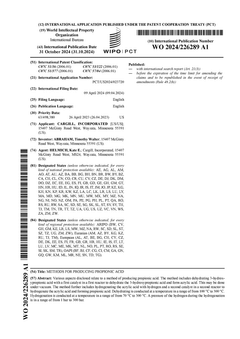
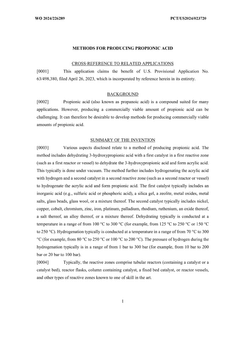
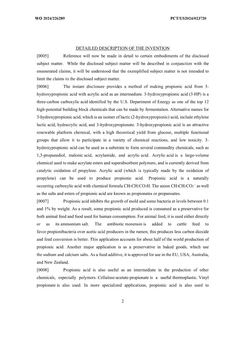
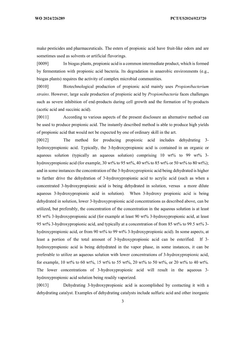
Methods for producing propionic acid
PatentWO2024226289A1
Innovation
- A method involving the dehydration of 3-hydroxypropionic acid to form acrylic acid using a first catalyst, followed by hydrogenation of acrylic acid to propionic acid using a second catalyst, with specific temperature and pressure conditions, and optionally using a polymerization inhibitor to prevent acrylic acid polymerization.
Environmental Impact and Sustainability Considerations
The propionic acid industry's future development must prioritize environmental sustainability and minimize ecological impacts. As production scales up to meet growing demand, implementing cleaner manufacturing processes becomes crucial. Advanced fermentation techniques using renewable feedstocks can significantly reduce carbon emissions compared to traditional petrochemical routes. Optimizing energy efficiency in production facilities through heat integration and waste heat recovery systems further lowers the environmental footprint.
Water management is another key consideration. Closed-loop water recycling systems and advanced wastewater treatment technologies can minimize freshwater consumption and prevent harmful effluents from entering ecosystems. Additionally, exploring bio-based alternatives to fossil fuel-derived propionate precursors could lead to more sustainable feedstock options.
Life cycle assessments of propionic acid production reveal opportunities for improvement across the value chain. Sustainable packaging solutions and efficient logistics can reduce transportation-related emissions. Encouraging the use of propionic acid in environmentally friendly applications, such as green solvents or biodegradable plastics, aligns the industry with circular economy principles.
Regulatory compliance and voluntary sustainability initiatives will shape future industry practices. Adhering to stringent environmental standards and participating in carbon trading schemes can drive innovation in cleaner technologies. Collaboration with academic institutions and environmental organizations can accelerate the development of eco-friendly production methods and applications.
Biodegradability and end-of-life considerations for propionic acid-based products are increasingly important. Research into improving the biodegradability of propionic acid derivatives and developing efficient recycling processes for end products can minimize long-term environmental impacts.
As the industry evolves, transparency in sustainability reporting and setting ambitious environmental targets will be crucial. Implementing comprehensive environmental management systems and regularly assessing ecological impacts will help companies identify areas for improvement and demonstrate commitment to sustainability.
By prioritizing these environmental and sustainability considerations, the propionic acid industry can position itself as a responsible and forward-thinking sector, aligning with global efforts to combat climate change and preserve natural resources. This approach not only mitigates risks associated with environmental regulations but also opens up new market opportunities for eco-friendly products and processes.
Water management is another key consideration. Closed-loop water recycling systems and advanced wastewater treatment technologies can minimize freshwater consumption and prevent harmful effluents from entering ecosystems. Additionally, exploring bio-based alternatives to fossil fuel-derived propionate precursors could lead to more sustainable feedstock options.
Life cycle assessments of propionic acid production reveal opportunities for improvement across the value chain. Sustainable packaging solutions and efficient logistics can reduce transportation-related emissions. Encouraging the use of propionic acid in environmentally friendly applications, such as green solvents or biodegradable plastics, aligns the industry with circular economy principles.
Regulatory compliance and voluntary sustainability initiatives will shape future industry practices. Adhering to stringent environmental standards and participating in carbon trading schemes can drive innovation in cleaner technologies. Collaboration with academic institutions and environmental organizations can accelerate the development of eco-friendly production methods and applications.
Biodegradability and end-of-life considerations for propionic acid-based products are increasingly important. Research into improving the biodegradability of propionic acid derivatives and developing efficient recycling processes for end products can minimize long-term environmental impacts.
As the industry evolves, transparency in sustainability reporting and setting ambitious environmental targets will be crucial. Implementing comprehensive environmental management systems and regularly assessing ecological impacts will help companies identify areas for improvement and demonstrate commitment to sustainability.
By prioritizing these environmental and sustainability considerations, the propionic acid industry can position itself as a responsible and forward-thinking sector, aligning with global efforts to combat climate change and preserve natural resources. This approach not only mitigates risks associated with environmental regulations but also opens up new market opportunities for eco-friendly products and processes.
Regulatory Framework for Propionic Acid Industry
The regulatory framework for the propionic acid industry plays a crucial role in shaping its future development and ensuring safe, sustainable practices. Globally, regulations governing propionic acid production, distribution, and use vary, but generally focus on environmental protection, worker safety, and product quality standards.
In the United States, the Environmental Protection Agency (EPA) regulates propionic acid under the Toxic Substances Control Act (TSCA). Manufacturers must comply with reporting requirements and adhere to guidelines for handling, storage, and disposal. The Occupational Safety and Health Administration (OSHA) sets workplace exposure limits and safety protocols for employees working with propionic acid.
The European Union's REACH (Registration, Evaluation, Authorization, and Restriction of Chemicals) regulation impacts propionic acid producers and importers. Companies must register their substances with the European Chemicals Agency (ECHA) and provide comprehensive safety data. The Classification, Labeling, and Packaging (CLP) regulation ensures proper hazard communication throughout the supply chain.
In Asia, countries like China and India are developing more stringent regulatory frameworks for chemical industries, including propionic acid. China's Measures for Environmental Management of New Chemical Substances and India's Chemical (Management and Safety) Rules are examples of evolving regulations that impact the industry.
Food safety regulations also significantly influence the propionic acid market, as it is widely used as a preservative. The U.S. Food and Drug Administration (FDA) and the European Food Safety Authority (EFSA) have established guidelines for its use in food products. Compliance with these regulations is essential for manufacturers targeting the food industry.
As sustainability becomes increasingly important, regulatory bodies are likely to introduce more stringent environmental standards. This may include requirements for reducing carbon emissions, improving energy efficiency, and promoting circular economy practices in propionic acid production.
Future regulatory trends may focus on encouraging the development of bio-based propionic acid production methods. Incentives for using renewable feedstocks and implementing green chemistry principles could shape the industry's direction. Additionally, regulations promoting the use of propionic acid as an environmentally friendly alternative to more harmful chemicals in various applications may drive market growth.
To shape the future of the propionic acid industry, companies must proactively engage with regulatory bodies, participate in industry associations, and invest in research and development to meet evolving standards. Staying ahead of regulatory changes and adopting best practices will be crucial for maintaining competitiveness and ensuring long-term sustainability in the global market.
In the United States, the Environmental Protection Agency (EPA) regulates propionic acid under the Toxic Substances Control Act (TSCA). Manufacturers must comply with reporting requirements and adhere to guidelines for handling, storage, and disposal. The Occupational Safety and Health Administration (OSHA) sets workplace exposure limits and safety protocols for employees working with propionic acid.
The European Union's REACH (Registration, Evaluation, Authorization, and Restriction of Chemicals) regulation impacts propionic acid producers and importers. Companies must register their substances with the European Chemicals Agency (ECHA) and provide comprehensive safety data. The Classification, Labeling, and Packaging (CLP) regulation ensures proper hazard communication throughout the supply chain.
In Asia, countries like China and India are developing more stringent regulatory frameworks for chemical industries, including propionic acid. China's Measures for Environmental Management of New Chemical Substances and India's Chemical (Management and Safety) Rules are examples of evolving regulations that impact the industry.
Food safety regulations also significantly influence the propionic acid market, as it is widely used as a preservative. The U.S. Food and Drug Administration (FDA) and the European Food Safety Authority (EFSA) have established guidelines for its use in food products. Compliance with these regulations is essential for manufacturers targeting the food industry.
As sustainability becomes increasingly important, regulatory bodies are likely to introduce more stringent environmental standards. This may include requirements for reducing carbon emissions, improving energy efficiency, and promoting circular economy practices in propionic acid production.
Future regulatory trends may focus on encouraging the development of bio-based propionic acid production methods. Incentives for using renewable feedstocks and implementing green chemistry principles could shape the industry's direction. Additionally, regulations promoting the use of propionic acid as an environmentally friendly alternative to more harmful chemicals in various applications may drive market growth.
To shape the future of the propionic acid industry, companies must proactively engage with regulatory bodies, participate in industry associations, and invest in research and development to meet evolving standards. Staying ahead of regulatory changes and adopting best practices will be crucial for maintaining competitiveness and ensuring long-term sustainability in the global market.
Unlock deeper insights with PatSnap Eureka Quick Research — get a full tech report to explore trends and direct your research. Try now!
Generate Your Research Report Instantly with AI Agent
Supercharge your innovation with PatSnap Eureka AI Agent Platform!