Key Techniques for Ferrofluid Application in Bioengineering Exploration
JUL 9, 20259 MIN READ
Generate Your Research Report Instantly with AI Agent
PatSnap Eureka helps you evaluate technical feasibility & market potential.
Ferrofluid Bioengineering Background and Objectives
Ferrofluids, a unique class of magnetic nanomaterials, have emerged as a promising frontier in bioengineering applications. These colloidal suspensions of magnetic nanoparticles in a carrier fluid exhibit remarkable responsiveness to external magnetic fields, making them ideal candidates for various biomedical interventions. The development of ferrofluids dates back to the 1960s, initially conceived for NASA space missions. However, their potential in bioengineering has only recently begun to be fully explored and realized.
The evolution of ferrofluid technology has been driven by advancements in nanotechnology, materials science, and biomedical engineering. Early applications were primarily industrial, but the last two decades have witnessed a significant shift towards biomedical uses. This transition has been facilitated by improvements in synthesis methods, allowing for the production of biocompatible ferrofluids with enhanced stability and functionality.
Current research in ferrofluid bioengineering focuses on several key areas, including targeted drug delivery, hyperthermia treatment for cancer, magnetic resonance imaging (MRI) contrast enhancement, and tissue engineering. The unique properties of ferrofluids, such as their ability to be manipulated by external magnetic fields and their superparamagnetic behavior, open up new possibilities for non-invasive and highly targeted therapeutic interventions.
The primary objective of ferrofluid application in bioengineering is to develop novel, more effective, and less invasive medical treatments and diagnostic tools. Researchers aim to harness the magnetic properties of ferrofluids to create smart materials that can respond to biological stimuli or external magnetic fields in predetermined ways. This could lead to breakthroughs in personalized medicine, where treatments can be tailored to individual patients with unprecedented precision.
Another crucial goal is to overcome the current limitations of ferrofluids in biological systems, such as potential toxicity, long-term stability in physiological conditions, and controlled biodegradation. Addressing these challenges requires interdisciplinary collaboration between materials scientists, bioengineers, and medical professionals to ensure the safe and effective translation of ferrofluid technology from laboratory to clinical applications.
As the field progresses, there is a growing emphasis on developing multifunctional ferrofluids that can simultaneously perform diagnostic and therapeutic functions, a concept known as theranostics. This approach holds the promise of revolutionizing disease management by combining real-time imaging with targeted treatment delivery, potentially improving patient outcomes while reducing healthcare costs.
The evolution of ferrofluid technology has been driven by advancements in nanotechnology, materials science, and biomedical engineering. Early applications were primarily industrial, but the last two decades have witnessed a significant shift towards biomedical uses. This transition has been facilitated by improvements in synthesis methods, allowing for the production of biocompatible ferrofluids with enhanced stability and functionality.
Current research in ferrofluid bioengineering focuses on several key areas, including targeted drug delivery, hyperthermia treatment for cancer, magnetic resonance imaging (MRI) contrast enhancement, and tissue engineering. The unique properties of ferrofluids, such as their ability to be manipulated by external magnetic fields and their superparamagnetic behavior, open up new possibilities for non-invasive and highly targeted therapeutic interventions.
The primary objective of ferrofluid application in bioengineering is to develop novel, more effective, and less invasive medical treatments and diagnostic tools. Researchers aim to harness the magnetic properties of ferrofluids to create smart materials that can respond to biological stimuli or external magnetic fields in predetermined ways. This could lead to breakthroughs in personalized medicine, where treatments can be tailored to individual patients with unprecedented precision.
Another crucial goal is to overcome the current limitations of ferrofluids in biological systems, such as potential toxicity, long-term stability in physiological conditions, and controlled biodegradation. Addressing these challenges requires interdisciplinary collaboration between materials scientists, bioengineers, and medical professionals to ensure the safe and effective translation of ferrofluid technology from laboratory to clinical applications.
As the field progresses, there is a growing emphasis on developing multifunctional ferrofluids that can simultaneously perform diagnostic and therapeutic functions, a concept known as theranostics. This approach holds the promise of revolutionizing disease management by combining real-time imaging with targeted treatment delivery, potentially improving patient outcomes while reducing healthcare costs.
Biomedical Market Demand for Ferrofluid Applications
The biomedical market for ferrofluid applications has been experiencing significant growth in recent years, driven by advancements in nanotechnology and increasing demand for targeted drug delivery systems. Ferrofluids, which are colloidal suspensions of magnetic nanoparticles, have shown remarkable potential in various biomedical applications, including magnetic resonance imaging (MRI) contrast enhancement, hyperthermia treatment for cancer, and biosensors.
In the field of medical imaging, ferrofluids have emerged as a promising alternative to traditional contrast agents. The global market for MRI contrast agents is projected to reach $2.3 billion by 2025, with ferrofluid-based agents expected to capture a growing share due to their superior imaging capabilities and reduced side effects. This trend is particularly evident in oncology, where precise tumor visualization is crucial for accurate diagnosis and treatment planning.
The use of ferrofluids in targeted drug delivery systems represents another area of significant market potential. The global drug delivery market is forecasted to exceed $1.5 trillion by 2026, with a substantial portion attributed to advanced delivery technologies. Ferrofluid-based systems offer the advantage of precise control over drug release and localization, potentially improving treatment efficacy while minimizing side effects.
In the realm of cancer treatment, magnetic hyperthermia using ferrofluids has gained traction as a complementary therapy. The global cancer therapeutics market, valued at $98.9 billion in 2020, is expected to grow at a CAGR of 7.2% from 2021 to 2028. Ferrofluid-based hyperthermia treatments are poised to capture a portion of this market, particularly for difficult-to-treat cancers where conventional therapies have shown limited success.
Biosensors represent another promising application area for ferrofluids in the biomedical sector. The global biosensors market is anticipated to reach $36.7 billion by 2026, growing at a CAGR of 8.3%. Ferrofluid-based biosensors offer enhanced sensitivity and specificity for detecting various biomarkers, making them valuable tools in early disease diagnosis and personalized medicine.
The increasing focus on personalized medicine and point-of-care diagnostics is expected to further drive the demand for ferrofluid applications in the biomedical field. As healthcare systems worldwide shift towards more precise and patient-centric approaches, the unique properties of ferrofluids align well with these evolving needs, promising continued market growth and innovation in the coming years.
In the field of medical imaging, ferrofluids have emerged as a promising alternative to traditional contrast agents. The global market for MRI contrast agents is projected to reach $2.3 billion by 2025, with ferrofluid-based agents expected to capture a growing share due to their superior imaging capabilities and reduced side effects. This trend is particularly evident in oncology, where precise tumor visualization is crucial for accurate diagnosis and treatment planning.
The use of ferrofluids in targeted drug delivery systems represents another area of significant market potential. The global drug delivery market is forecasted to exceed $1.5 trillion by 2026, with a substantial portion attributed to advanced delivery technologies. Ferrofluid-based systems offer the advantage of precise control over drug release and localization, potentially improving treatment efficacy while minimizing side effects.
In the realm of cancer treatment, magnetic hyperthermia using ferrofluids has gained traction as a complementary therapy. The global cancer therapeutics market, valued at $98.9 billion in 2020, is expected to grow at a CAGR of 7.2% from 2021 to 2028. Ferrofluid-based hyperthermia treatments are poised to capture a portion of this market, particularly for difficult-to-treat cancers where conventional therapies have shown limited success.
Biosensors represent another promising application area for ferrofluids in the biomedical sector. The global biosensors market is anticipated to reach $36.7 billion by 2026, growing at a CAGR of 8.3%. Ferrofluid-based biosensors offer enhanced sensitivity and specificity for detecting various biomarkers, making them valuable tools in early disease diagnosis and personalized medicine.
The increasing focus on personalized medicine and point-of-care diagnostics is expected to further drive the demand for ferrofluid applications in the biomedical field. As healthcare systems worldwide shift towards more precise and patient-centric approaches, the unique properties of ferrofluids align well with these evolving needs, promising continued market growth and innovation in the coming years.
Current Challenges in Ferrofluid Bioengineering
The application of ferrofluids in bioengineering has shown great promise, yet several significant challenges persist in realizing their full potential. One of the primary obstacles is the biocompatibility of ferrofluids. While efforts have been made to develop biocompatible ferrofluids, ensuring long-term stability and safety within biological systems remains a complex issue. The potential toxicity of nanoparticles and their coatings, as well as their interaction with living tissues, requires extensive research and rigorous testing.
Another major challenge lies in the precise control and manipulation of ferrofluids within biological environments. The complex and dynamic nature of living systems makes it difficult to maintain consistent magnetic responsiveness and fluid behavior. Factors such as pH, temperature, and the presence of biomolecules can significantly affect the properties of ferrofluids, potentially altering their performance in biomedical applications.
The scalability of ferrofluid production for bioengineering applications presents another hurdle. Current synthesis methods often struggle to produce large quantities of ferrofluids with consistent quality and properties. This limitation hampers the transition from laboratory-scale experiments to clinical trials and eventual commercial applications.
Furthermore, the long-term stability of ferrofluids in biological systems is a critical concern. Over time, ferrofluids may degrade or lose their magnetic properties, potentially compromising their effectiveness in applications such as drug delivery or tissue engineering. Developing strategies to maintain the stability and functionality of ferrofluids over extended periods is essential for their successful implementation in bioengineering.
The integration of ferrofluids with existing biomedical technologies and procedures also poses significant challenges. Compatibility issues with imaging techniques, drug delivery systems, and surgical instruments need to be addressed to ensure seamless incorporation of ferrofluid-based solutions into current medical practices.
Additionally, the regulatory landscape for ferrofluid applications in bioengineering remains complex and evolving. Navigating the approval processes for novel ferrofluid-based therapies or diagnostic tools requires extensive safety data and clinical evidence, which can be time-consuming and costly to obtain.
Lastly, there is a need for standardization in ferrofluid characterization and testing methodologies specific to bioengineering applications. The lack of universally accepted protocols makes it challenging to compare results across different studies and hinders the development of reliable benchmarks for ferrofluid performance in biological systems.
Another major challenge lies in the precise control and manipulation of ferrofluids within biological environments. The complex and dynamic nature of living systems makes it difficult to maintain consistent magnetic responsiveness and fluid behavior. Factors such as pH, temperature, and the presence of biomolecules can significantly affect the properties of ferrofluids, potentially altering their performance in biomedical applications.
The scalability of ferrofluid production for bioengineering applications presents another hurdle. Current synthesis methods often struggle to produce large quantities of ferrofluids with consistent quality and properties. This limitation hampers the transition from laboratory-scale experiments to clinical trials and eventual commercial applications.
Furthermore, the long-term stability of ferrofluids in biological systems is a critical concern. Over time, ferrofluids may degrade or lose their magnetic properties, potentially compromising their effectiveness in applications such as drug delivery or tissue engineering. Developing strategies to maintain the stability and functionality of ferrofluids over extended periods is essential for their successful implementation in bioengineering.
The integration of ferrofluids with existing biomedical technologies and procedures also poses significant challenges. Compatibility issues with imaging techniques, drug delivery systems, and surgical instruments need to be addressed to ensure seamless incorporation of ferrofluid-based solutions into current medical practices.
Additionally, the regulatory landscape for ferrofluid applications in bioengineering remains complex and evolving. Navigating the approval processes for novel ferrofluid-based therapies or diagnostic tools requires extensive safety data and clinical evidence, which can be time-consuming and costly to obtain.
Lastly, there is a need for standardization in ferrofluid characterization and testing methodologies specific to bioengineering applications. The lack of universally accepted protocols makes it challenging to compare results across different studies and hinders the development of reliable benchmarks for ferrofluid performance in biological systems.
Existing Ferrofluid Biomedical Applications
01 Composition and preparation of ferrofluids
Ferrofluids are colloidal suspensions of magnetic nanoparticles in a carrier fluid. They are typically composed of magnetite or other ferromagnetic materials coated with surfactants to prevent agglomeration. The preparation process involves careful control of particle size and distribution to maintain stability and magnetic properties.- Composition and preparation of ferrofluids: Ferrofluids are colloidal suspensions of magnetic nanoparticles in a carrier fluid. They typically consist of magnetite or other ferromagnetic materials coated with surfactants to prevent agglomeration. The preparation process involves careful control of particle size, surfactant selection, and carrier fluid properties to achieve stable and responsive ferrofluids.
- Applications in sealing and lubrication: Ferrofluids are widely used in sealing and lubrication applications, particularly in rotating shaft seals and bearings. Their unique properties allow them to form liquid seals that can be controlled by magnetic fields, providing effective containment of gases or liquids while reducing friction and wear in mechanical systems.
- Thermal management and heat transfer: Ferrofluids exhibit enhanced heat transfer properties due to their magnetic nature. They are used in cooling systems for electronic devices, transformers, and other heat-generating equipment. Magnetic fields can be applied to direct the flow of ferrofluids, allowing for precise control of heat dissipation and thermal management in various applications.
- Damping and vibration control: The viscoelastic properties of ferrofluids make them suitable for damping applications. They can be used in shock absorbers, vibration isolators, and inertial dampers. By applying magnetic fields, the damping characteristics of ferrofluids can be dynamically adjusted, providing adaptive vibration control in various mechanical and structural systems.
- Sensing and measurement applications: Ferrofluids are employed in various sensing and measurement devices. Their magnetic properties allow for the detection of small changes in magnetic fields, enabling applications in accelerometers, inclinometers, and position sensors. They are also used in magnetic resonance imaging (MRI) contrast agents and in devices for measuring fluid properties such as viscosity and density.
02 Applications in sealing and lubrication
Ferrofluids are widely used in sealing and lubrication systems, particularly in rotating shaft seals. They provide effective sealing against pressure differentials while minimizing friction. These applications leverage the fluid's ability to be held in place by magnetic fields, creating dynamic seals that adapt to various operating conditions.Expand Specific Solutions03 Thermal management and heat transfer
Ferrofluids exhibit enhanced heat transfer properties due to their magnetic nature. They are used in cooling systems for electronic devices and in thermal management applications. The ability to control the fluid's movement using magnetic fields allows for targeted cooling and improved heat dissipation in various systems.Expand Specific Solutions04 Damping and vibration control
The unique properties of ferrofluids make them effective in damping and vibration control applications. They can be used in shock absorbers, vibration isolators, and inertial dampers. The fluid's response to magnetic fields allows for adaptive damping characteristics, improving the performance of various mechanical systems.Expand Specific Solutions05 Sensing and measurement applications
Ferrofluids are employed in various sensing and measurement devices. They are used in accelerometers, inclinometers, and pressure sensors. The fluid's response to magnetic fields and its ability to change shape or position under different conditions make it suitable for detecting and measuring various physical parameters.Expand Specific Solutions
Key Players in Ferrofluid Bioengineering Research
The field of ferrofluid application in bioengineering is in a nascent stage, with significant potential for growth. The market size is expanding as researchers explore diverse applications in drug delivery, magnetic hyperthermia, and biosensors. While the technology is still evolving, several key players are driving innovation. Universities like Yale, MIT, and Arizona State are at the forefront of research, collaborating with industry partners. Companies such as Western Digital and TDK Corp are leveraging their expertise in magnetic materials to develop biomedical applications. Research institutions like CNRS and Fred Hutchinson Cancer Research Center are also contributing to advancements. The technology's maturity varies across applications, with some areas nearing commercialization while others remain in early experimental stages.
Yale University
Technical Solution: Yale University has made significant advancements in ferrofluid applications for bioengineering exploration. Their research focuses on developing ferrofluid-based magnetic tweezers for single-molecule manipulation and force spectroscopy[13]. This technique allows for precise control and measurement of forces at the molecular level, enabling studies of DNA mechanics and protein-protein interactions. Yale researchers have also explored the use of ferrofluids in creating magnetically actuated soft robots for biomedical applications, such as minimally invasive surgery and drug delivery[14]. Additionally, they have investigated ferrofluid-based magnetic separation techniques for isolating rare cells and exosomes from biological samples, with potential applications in cancer diagnostics and liquid biopsy[15].
Strengths: Expertise in single-molecule biophysics, innovative approaches to soft robotics, advanced techniques for rare cell isolation. Weaknesses: Potential challenges in translating complex ferrofluid-based systems to clinical applications, need for further optimization of biocompatibility for in vivo use.
The Regents of the University of California
Technical Solution: The University of California system has made significant contributions to ferrofluid applications in bioengineering. They have developed novel ferrofluid-based magnetic separation techniques for isolating rare cells and biomolecules[4]. Their approach uses functionalized magnetic nanoparticles in ferrofluids to capture specific targets with high efficiency. UC researchers have also explored the use of ferrofluids in tissue engineering, creating magnetically responsive scaffolds that can be manipulated externally to guide tissue growth[5]. Furthermore, they have investigated ferrofluid-based hyperthermia treatments for cancer therapy, where magnetic nanoparticles generate localized heat under an alternating magnetic field[6].
Strengths: Diverse range of biomedical applications, strong focus on translational research, innovative approaches to cell separation and tissue engineering. Weaknesses: Potential regulatory hurdles for clinical translation, need for long-term safety studies of ferrofluid-based therapies.
Core Innovations in Ferrofluid Bioengineering
Microfluidic processing of target species in ferrofluids
PatentInactiveAU2019202374A1
Innovation
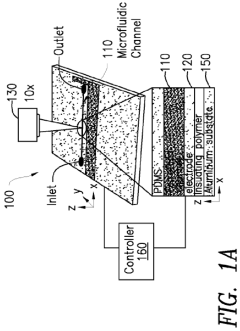
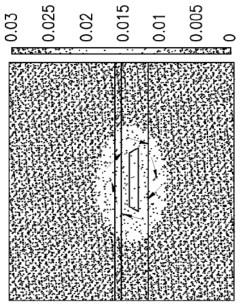
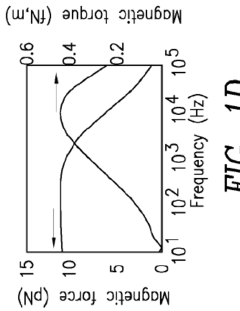
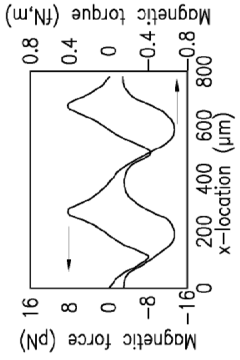
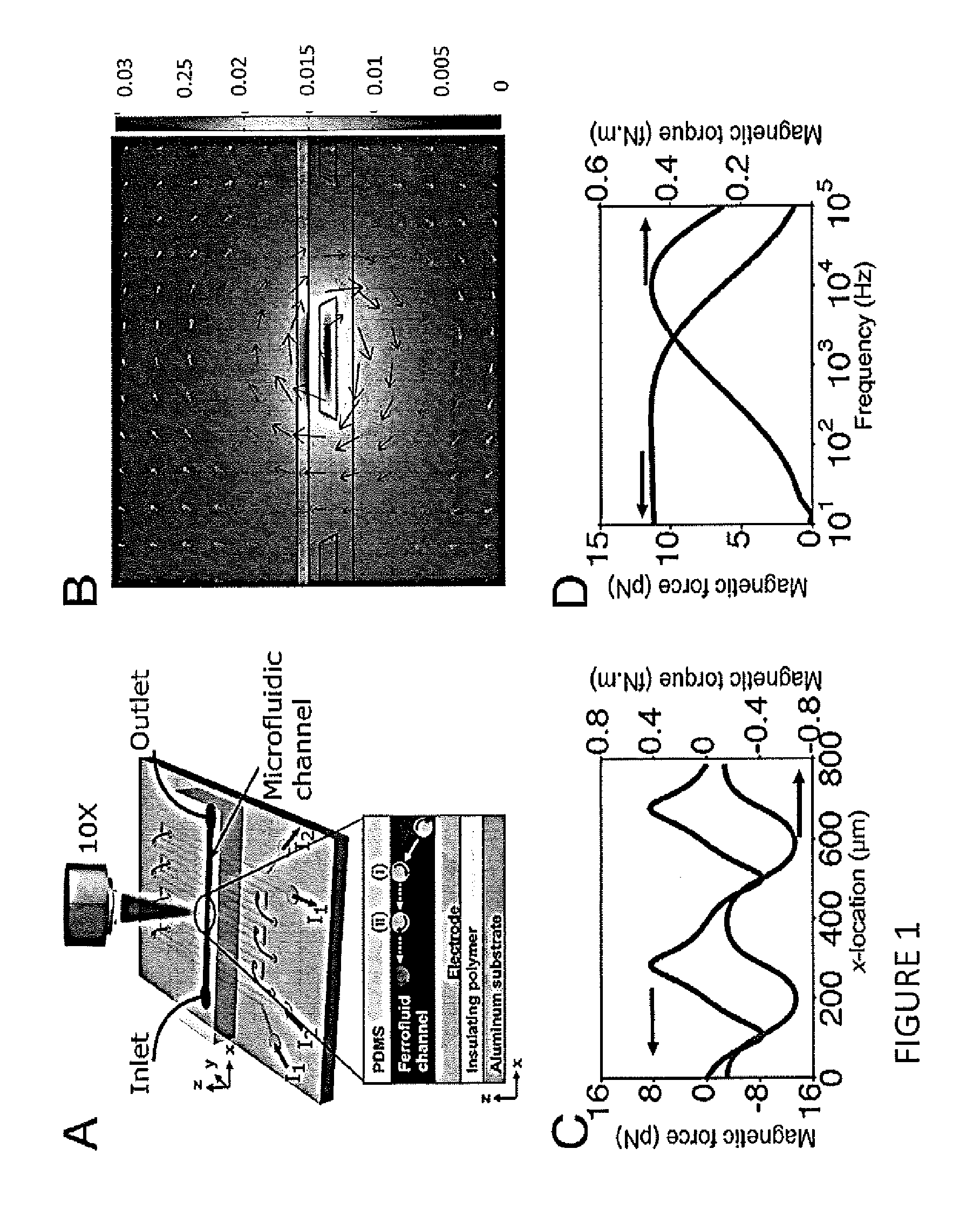
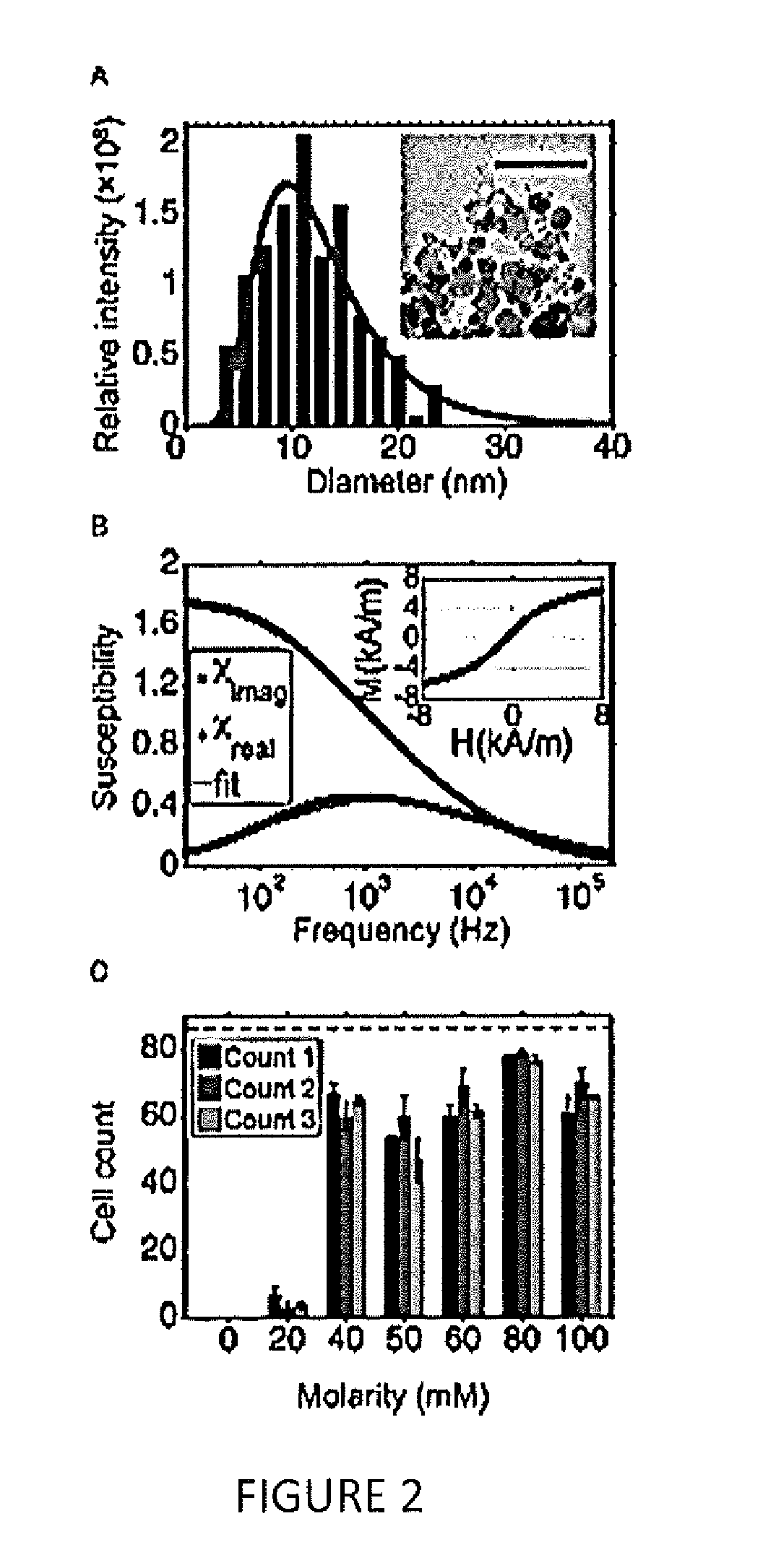
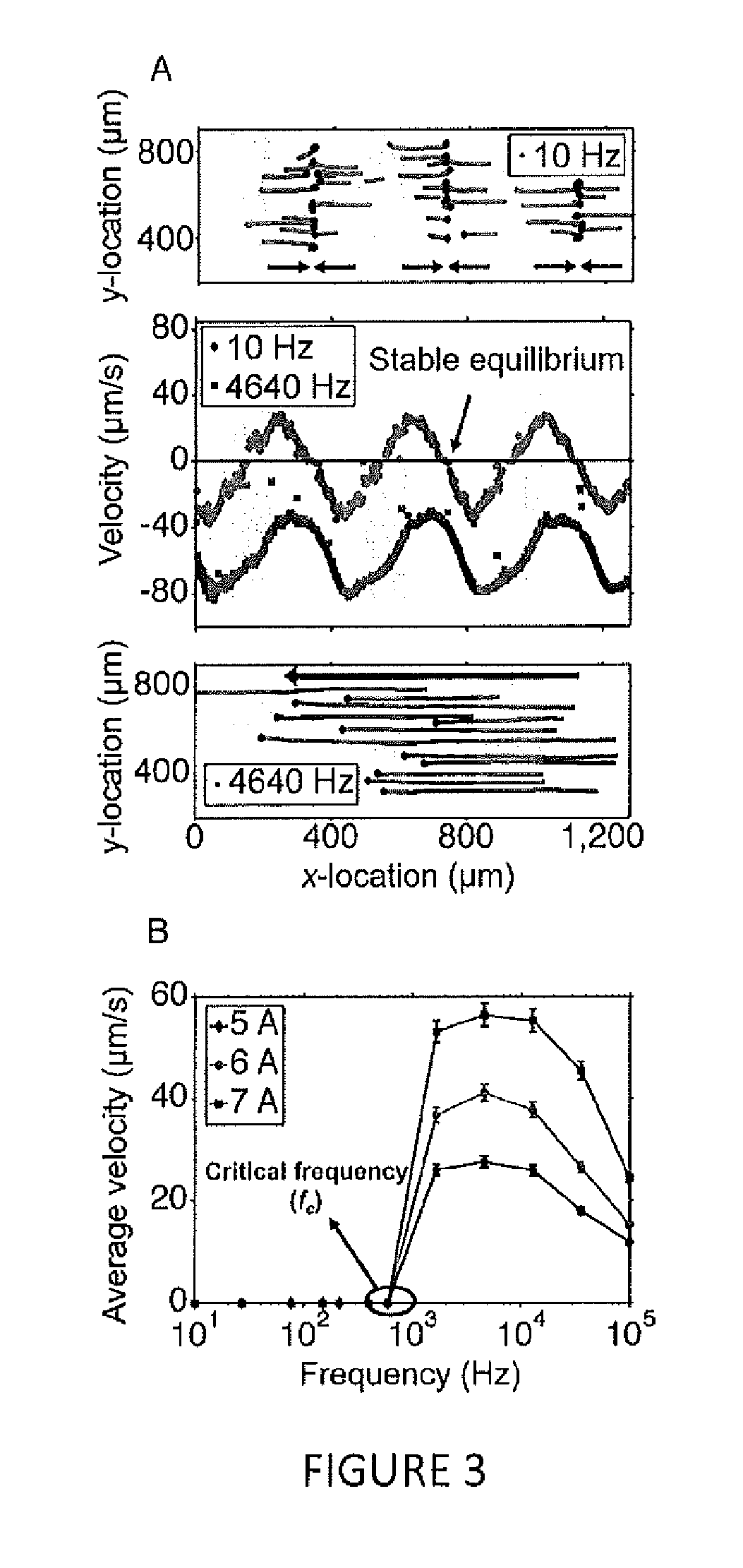
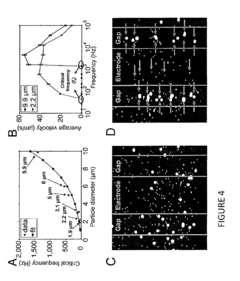
- A microfluidic device and system using biocompatible ferrofluids with a microfluidic channel and electrodes to generate a magnetic field pattern, allowing for the separation of target species based on size, shape, and elasticity, with controllable current amplitudes, frequencies, and phases, enabling efficient and rapid separation of cells.
Label-free cellular manipulation and sorting via biocompatible ferrofluids
PatentActiveUS20120237997A1
Innovation
- A microfluidic platform using biocompatible ferrofluids with a microfluidic channel and electrodes that generate a magnetic field pattern, allowing for the controlled manipulation and separation of microparticles and live cells based on size, shape, and elasticity, with high efficiency and rapid separation capabilities.
Biosafety and Biocompatibility Considerations
The application of ferrofluids in bioengineering exploration necessitates careful consideration of biosafety and biocompatibility. These aspects are crucial for ensuring the safe and effective use of ferrofluids in biological systems, particularly in medical applications such as drug delivery, magnetic hyperthermia, and diagnostic imaging.
Biosafety concerns primarily focus on the potential toxicity of ferrofluids to living organisms. The nanoparticles in ferrofluids, typically composed of iron oxide, may interact with cellular components and biological processes in ways that could be harmful. Studies have shown that the size, shape, and surface properties of these nanoparticles significantly influence their biological interactions. Smaller particles, for instance, may more easily penetrate cell membranes and potentially disrupt cellular functions.
To address biosafety issues, researchers have developed various strategies to minimize the toxic effects of ferrofluids. One approach involves coating the nanoparticles with biocompatible materials such as polymers, silica, or gold. These coatings can reduce the direct interaction between the iron oxide core and biological tissues, thereby mitigating potential adverse effects. Additionally, surface functionalization techniques can be employed to enhance the stability of ferrofluids in physiological environments and prevent agglomeration, which could otherwise lead to undesired biological responses.
Biocompatibility, on the other hand, refers to the ability of ferrofluids to function within biological systems without eliciting adverse immune responses or causing long-term detrimental effects. This aspect is particularly critical for applications involving prolonged exposure or implantation. Researchers have explored various methods to improve the biocompatibility of ferrofluids, including the use of biomimetic coatings that mimic natural cellular components.
The evaluation of biocompatibility involves comprehensive in vitro and in vivo studies. In vitro assessments typically include cytotoxicity tests, cell viability assays, and studies on cellular uptake and intracellular distribution of ferrofluid nanoparticles. In vivo studies focus on the biodistribution, pharmacokinetics, and long-term effects of ferrofluids in animal models. These studies help researchers understand how ferrofluids interact with complex biological systems and identify potential risks associated with their use.
Regulatory considerations play a crucial role in the development and application of ferrofluids for bioengineering purposes. Regulatory bodies such as the FDA and EMA have established guidelines for the evaluation of nanomaterials in medical applications. Compliance with these regulations is essential for the translation of ferrofluid-based technologies from laboratory research to clinical applications.
As the field of ferrofluid applications in bioengineering continues to advance, ongoing research is focused on developing novel formulations with enhanced biosafety and biocompatibility profiles. This includes the exploration of biodegradable ferrofluids that can be safely eliminated from the body after serving their intended purpose, as well as the development of more sophisticated surface modification techniques to improve the biological performance of these materials.
Biosafety concerns primarily focus on the potential toxicity of ferrofluids to living organisms. The nanoparticles in ferrofluids, typically composed of iron oxide, may interact with cellular components and biological processes in ways that could be harmful. Studies have shown that the size, shape, and surface properties of these nanoparticles significantly influence their biological interactions. Smaller particles, for instance, may more easily penetrate cell membranes and potentially disrupt cellular functions.
To address biosafety issues, researchers have developed various strategies to minimize the toxic effects of ferrofluids. One approach involves coating the nanoparticles with biocompatible materials such as polymers, silica, or gold. These coatings can reduce the direct interaction between the iron oxide core and biological tissues, thereby mitigating potential adverse effects. Additionally, surface functionalization techniques can be employed to enhance the stability of ferrofluids in physiological environments and prevent agglomeration, which could otherwise lead to undesired biological responses.
Biocompatibility, on the other hand, refers to the ability of ferrofluids to function within biological systems without eliciting adverse immune responses or causing long-term detrimental effects. This aspect is particularly critical for applications involving prolonged exposure or implantation. Researchers have explored various methods to improve the biocompatibility of ferrofluids, including the use of biomimetic coatings that mimic natural cellular components.
The evaluation of biocompatibility involves comprehensive in vitro and in vivo studies. In vitro assessments typically include cytotoxicity tests, cell viability assays, and studies on cellular uptake and intracellular distribution of ferrofluid nanoparticles. In vivo studies focus on the biodistribution, pharmacokinetics, and long-term effects of ferrofluids in animal models. These studies help researchers understand how ferrofluids interact with complex biological systems and identify potential risks associated with their use.
Regulatory considerations play a crucial role in the development and application of ferrofluids for bioengineering purposes. Regulatory bodies such as the FDA and EMA have established guidelines for the evaluation of nanomaterials in medical applications. Compliance with these regulations is essential for the translation of ferrofluid-based technologies from laboratory research to clinical applications.
As the field of ferrofluid applications in bioengineering continues to advance, ongoing research is focused on developing novel formulations with enhanced biosafety and biocompatibility profiles. This includes the exploration of biodegradable ferrofluids that can be safely eliminated from the body after serving their intended purpose, as well as the development of more sophisticated surface modification techniques to improve the biological performance of these materials.
Regulatory Framework for Ferrofluid Medical Devices
The regulatory framework for ferrofluid medical devices is a critical aspect of their development and application in bioengineering. As these innovative devices continue to emerge, regulatory bodies worldwide are adapting their guidelines to ensure safety and efficacy. The U.S. Food and Drug Administration (FDA) has taken a leading role in establishing regulatory pathways for ferrofluid-based medical devices, classifying them based on their intended use and risk profile.
For devices utilizing ferrofluids in diagnostic applications, such as contrast agents for magnetic resonance imaging (MRI), the FDA typically requires premarket approval (PMA) or 510(k) clearance. The regulatory process involves extensive preclinical and clinical testing to demonstrate safety and effectiveness. Manufacturers must provide comprehensive data on the ferrofluid composition, stability, and potential biological interactions.
In therapeutic applications, such as targeted drug delivery or hyperthermia treatment, ferrofluid-based devices often fall under Class III medical devices, requiring the most stringent regulatory oversight. The PMA process for these devices includes rigorous clinical trials and long-term follow-up studies to assess both short-term and long-term safety profiles.
The European Medicines Agency (EMA) has also developed specific guidelines for nanomedicine products, which encompass ferrofluid-based devices. These guidelines emphasize the need for detailed characterization of the nanoparticles used in ferrofluids, including their size distribution, surface properties, and potential for aggregation or degradation in biological systems.
Regulatory bodies are particularly concerned with the potential long-term effects of ferrofluids in the body. As a result, manufacturers are required to conduct extensive biodistribution and toxicity studies, focusing on the fate of the magnetic nanoparticles after administration. This includes evaluating their potential accumulation in organs and tissues, as well as any immunological responses they may trigger.
Quality control and manufacturing standards for ferrofluid medical devices are stringent, with regulatory agencies mandating Good Manufacturing Practices (GMP) compliance. This ensures consistency in production and minimizes batch-to-batch variations that could affect device performance or patient safety.
As the field of ferrofluid applications in bioengineering continues to evolve, regulatory frameworks are expected to adapt accordingly. Ongoing dialogue between researchers, industry stakeholders, and regulatory agencies is crucial to develop appropriate guidelines that balance innovation with patient safety. This collaborative approach will be essential in shaping the future regulatory landscape for ferrofluid-based medical devices and their integration into clinical practice.
For devices utilizing ferrofluids in diagnostic applications, such as contrast agents for magnetic resonance imaging (MRI), the FDA typically requires premarket approval (PMA) or 510(k) clearance. The regulatory process involves extensive preclinical and clinical testing to demonstrate safety and effectiveness. Manufacturers must provide comprehensive data on the ferrofluid composition, stability, and potential biological interactions.
In therapeutic applications, such as targeted drug delivery or hyperthermia treatment, ferrofluid-based devices often fall under Class III medical devices, requiring the most stringent regulatory oversight. The PMA process for these devices includes rigorous clinical trials and long-term follow-up studies to assess both short-term and long-term safety profiles.
The European Medicines Agency (EMA) has also developed specific guidelines for nanomedicine products, which encompass ferrofluid-based devices. These guidelines emphasize the need for detailed characterization of the nanoparticles used in ferrofluids, including their size distribution, surface properties, and potential for aggregation or degradation in biological systems.
Regulatory bodies are particularly concerned with the potential long-term effects of ferrofluids in the body. As a result, manufacturers are required to conduct extensive biodistribution and toxicity studies, focusing on the fate of the magnetic nanoparticles after administration. This includes evaluating their potential accumulation in organs and tissues, as well as any immunological responses they may trigger.
Quality control and manufacturing standards for ferrofluid medical devices are stringent, with regulatory agencies mandating Good Manufacturing Practices (GMP) compliance. This ensures consistency in production and minimizes batch-to-batch variations that could affect device performance or patient safety.
As the field of ferrofluid applications in bioengineering continues to evolve, regulatory frameworks are expected to adapt accordingly. Ongoing dialogue between researchers, industry stakeholders, and regulatory agencies is crucial to develop appropriate guidelines that balance innovation with patient safety. This collaborative approach will be essential in shaping the future regulatory landscape for ferrofluid-based medical devices and their integration into clinical practice.
Unlock deeper insights with PatSnap Eureka Quick Research — get a full tech report to explore trends and direct your research. Try now!
Generate Your Research Report Instantly with AI Agent
Supercharge your innovation with PatSnap Eureka AI Agent Platform!