Mechanistic Insight into Sulphanilic Acid-Driven Organic Reactions
JUL 21, 20259 MIN READ
Generate Your Research Report Instantly with AI Agent
Patsnap Eureka helps you evaluate technical feasibility & market potential.
Sulphanilic Acid Reaction Mechanisms and Objectives
Sulphanilic acid, a versatile aromatic compound, has been a subject of intense research in organic chemistry due to its unique reactivity and wide-ranging applications. The study of sulphanilic acid-driven organic reactions has evolved significantly over the past decades, revealing intricate mechanisms and opening new avenues for synthetic methodologies.
The primary objective of investigating sulphanilic acid reaction mechanisms is to gain a comprehensive understanding of the fundamental processes that govern its reactivity. This knowledge is crucial for developing more efficient and selective synthetic routes, as well as for expanding the scope of sulphanilic acid-based transformations in organic synthesis.
One of the key areas of focus is the exploration of sulphanilic acid's dual functionality. The presence of both an amino group and a sulfonic acid moiety on the benzene ring imparts distinct reactivity patterns, allowing for a diverse range of transformations. Researchers aim to elucidate how these functional groups interact with various reagents and catalysts, and how they influence the reaction pathways and product distributions.
Another important aspect of the mechanistic studies is the investigation of the electronic and steric effects of sulphanilic acid in different reaction environments. Understanding these factors is essential for predicting and controlling reaction outcomes, as well as for designing new synthetic strategies that leverage the unique properties of sulphanilic acid.
The role of sulphanilic acid as a directing group in organic transformations has also garnered significant attention. Researchers are working to uncover the mechanisms by which sulphanilic acid can guide regioselective functionalization of aromatic systems, potentially leading to the development of novel synthetic methodologies for complex molecule synthesis.
Furthermore, the study of sulphanilic acid reaction mechanisms extends to its behavior in various catalytic systems. Elucidating the interactions between sulphanilic acid and different catalysts, including transition metals and organocatalysts, is crucial for optimizing reaction conditions and developing more efficient catalytic processes.
The ultimate goal of these mechanistic investigations is to establish a comprehensive framework for predicting and controlling sulphanilic acid-driven organic reactions. This knowledge will not only advance our fundamental understanding of organic reactivity but also pave the way for innovative applications in fields such as pharmaceuticals, materials science, and industrial chemistry.
The primary objective of investigating sulphanilic acid reaction mechanisms is to gain a comprehensive understanding of the fundamental processes that govern its reactivity. This knowledge is crucial for developing more efficient and selective synthetic routes, as well as for expanding the scope of sulphanilic acid-based transformations in organic synthesis.
One of the key areas of focus is the exploration of sulphanilic acid's dual functionality. The presence of both an amino group and a sulfonic acid moiety on the benzene ring imparts distinct reactivity patterns, allowing for a diverse range of transformations. Researchers aim to elucidate how these functional groups interact with various reagents and catalysts, and how they influence the reaction pathways and product distributions.
Another important aspect of the mechanistic studies is the investigation of the electronic and steric effects of sulphanilic acid in different reaction environments. Understanding these factors is essential for predicting and controlling reaction outcomes, as well as for designing new synthetic strategies that leverage the unique properties of sulphanilic acid.
The role of sulphanilic acid as a directing group in organic transformations has also garnered significant attention. Researchers are working to uncover the mechanisms by which sulphanilic acid can guide regioselective functionalization of aromatic systems, potentially leading to the development of novel synthetic methodologies for complex molecule synthesis.
Furthermore, the study of sulphanilic acid reaction mechanisms extends to its behavior in various catalytic systems. Elucidating the interactions between sulphanilic acid and different catalysts, including transition metals and organocatalysts, is crucial for optimizing reaction conditions and developing more efficient catalytic processes.
The ultimate goal of these mechanistic investigations is to establish a comprehensive framework for predicting and controlling sulphanilic acid-driven organic reactions. This knowledge will not only advance our fundamental understanding of organic reactivity but also pave the way for innovative applications in fields such as pharmaceuticals, materials science, and industrial chemistry.
Industrial Applications and Market Demand
Sulphanilic acid-driven organic reactions have garnered significant attention in various industrial sectors due to their versatility and potential for sustainable chemical processes. The market demand for these reactions is primarily driven by the growing emphasis on green chemistry and the need for more efficient synthetic routes in pharmaceutical and agrochemical industries.
In the pharmaceutical sector, sulphanilic acid-driven reactions offer promising applications in the synthesis of active pharmaceutical ingredients (APIs) and drug intermediates. The ability to perform these reactions under mild conditions and with high selectivity makes them particularly attractive for the production of complex drug molecules. This aligns with the industry's push towards more environmentally friendly and cost-effective manufacturing processes.
The agrochemical industry also shows increasing interest in sulphanilic acid-driven reactions for the development of new pesticides and herbicides. These reactions provide a pathway to create novel compounds with enhanced efficacy and reduced environmental impact, addressing the growing demand for sustainable agricultural solutions.
In the dye and pigment industry, sulphanilic acid-based reactions play a crucial role in the production of azo dyes, which constitute a significant portion of the global dye market. The demand for these dyes continues to grow, particularly in the textile and printing industries, driving further research into sulphanilic acid-driven processes for more efficient and eco-friendly dye synthesis.
The polymer industry is another sector where sulphanilic acid-driven reactions are gaining traction. These reactions offer new routes for the synthesis of specialty polymers with unique properties, catering to the demand for advanced materials in electronics, automotive, and aerospace applications.
Environmental remediation is an emerging application area for sulphanilic acid-driven reactions. Research indicates potential uses in the degradation of organic pollutants and the development of more effective water treatment processes, addressing the global need for improved environmental protection technologies.
The market demand for sulphanilic acid-driven reactions is further bolstered by the increasing focus on circular economy principles. Industries are seeking ways to valorize waste streams and by-products, and these reactions offer potential solutions for converting industrial waste into valuable chemicals and materials.
As regulations on chemical processes become more stringent worldwide, the demand for cleaner and more sustainable reaction methodologies is expected to grow. This regulatory landscape is likely to drive further investment in research and development of sulphanilic acid-driven reactions across multiple industries.
In the pharmaceutical sector, sulphanilic acid-driven reactions offer promising applications in the synthesis of active pharmaceutical ingredients (APIs) and drug intermediates. The ability to perform these reactions under mild conditions and with high selectivity makes them particularly attractive for the production of complex drug molecules. This aligns with the industry's push towards more environmentally friendly and cost-effective manufacturing processes.
The agrochemical industry also shows increasing interest in sulphanilic acid-driven reactions for the development of new pesticides and herbicides. These reactions provide a pathway to create novel compounds with enhanced efficacy and reduced environmental impact, addressing the growing demand for sustainable agricultural solutions.
In the dye and pigment industry, sulphanilic acid-based reactions play a crucial role in the production of azo dyes, which constitute a significant portion of the global dye market. The demand for these dyes continues to grow, particularly in the textile and printing industries, driving further research into sulphanilic acid-driven processes for more efficient and eco-friendly dye synthesis.
The polymer industry is another sector where sulphanilic acid-driven reactions are gaining traction. These reactions offer new routes for the synthesis of specialty polymers with unique properties, catering to the demand for advanced materials in electronics, automotive, and aerospace applications.
Environmental remediation is an emerging application area for sulphanilic acid-driven reactions. Research indicates potential uses in the degradation of organic pollutants and the development of more effective water treatment processes, addressing the global need for improved environmental protection technologies.
The market demand for sulphanilic acid-driven reactions is further bolstered by the increasing focus on circular economy principles. Industries are seeking ways to valorize waste streams and by-products, and these reactions offer potential solutions for converting industrial waste into valuable chemicals and materials.
As regulations on chemical processes become more stringent worldwide, the demand for cleaner and more sustainable reaction methodologies is expected to grow. This regulatory landscape is likely to drive further investment in research and development of sulphanilic acid-driven reactions across multiple industries.
Current Challenges in Sulphanilic Acid Reactions
Despite the widespread use of sulphanilic acid in organic reactions, several challenges persist in fully understanding and optimizing these processes. One of the primary obstacles is the complexity of reaction mechanisms involving sulphanilic acid. The presence of both amino and sulfonic acid groups on the benzene ring creates multiple reactive sites, leading to potential side reactions and difficulty in controlling selectivity.
The pH-dependent behavior of sulphanilic acid further complicates reaction control. At different pH levels, the molecule can exist in various protonation states, each with distinct reactivity profiles. This variability makes it challenging to predict and consistently reproduce reaction outcomes across different conditions.
Another significant challenge lies in the limited solubility of sulphanilic acid in many organic solvents. This restriction often necessitates the use of aqueous or mixed solvent systems, which can introduce additional complexities in reaction kinetics and product isolation. The need for specialized solvent systems also limits the applicability of traditional organic synthesis techniques and may require the development of new methodologies.
The formation of stable intermediates during sulphanilic acid-driven reactions poses another hurdle. These intermediates can be difficult to isolate and characterize, hindering a comprehensive understanding of reaction pathways. Advanced spectroscopic and analytical techniques are often required to elucidate these transient species, adding to the complexity of mechanistic studies.
Environmental concerns associated with sulphanilic acid reactions present additional challenges. The potential for generating sulfur-containing byproducts and the use of strong acids or bases in some processes raise issues of waste management and sustainability. Developing greener alternatives and more environmentally friendly reaction conditions remains an ongoing challenge in this field.
The scalability of sulphanilic acid reactions from laboratory to industrial scale is another area of concern. Factors such as heat transfer, mixing efficiency, and reaction time can significantly impact product yield and purity when scaling up. Overcoming these engineering challenges is crucial for the practical application of sulphanilic acid chemistry in large-scale production.
Lastly, the development of novel catalytic systems for sulphanilic acid reactions remains an active area of research. While some progress has been made in using transition metal catalysts and organocatalysts, there is still a need for more efficient, selective, and sustainable catalytic methods. The design of catalysts that can effectively activate sulphanilic acid while controlling its reactivity is a complex task that requires interdisciplinary approaches.
The pH-dependent behavior of sulphanilic acid further complicates reaction control. At different pH levels, the molecule can exist in various protonation states, each with distinct reactivity profiles. This variability makes it challenging to predict and consistently reproduce reaction outcomes across different conditions.
Another significant challenge lies in the limited solubility of sulphanilic acid in many organic solvents. This restriction often necessitates the use of aqueous or mixed solvent systems, which can introduce additional complexities in reaction kinetics and product isolation. The need for specialized solvent systems also limits the applicability of traditional organic synthesis techniques and may require the development of new methodologies.
The formation of stable intermediates during sulphanilic acid-driven reactions poses another hurdle. These intermediates can be difficult to isolate and characterize, hindering a comprehensive understanding of reaction pathways. Advanced spectroscopic and analytical techniques are often required to elucidate these transient species, adding to the complexity of mechanistic studies.
Environmental concerns associated with sulphanilic acid reactions present additional challenges. The potential for generating sulfur-containing byproducts and the use of strong acids or bases in some processes raise issues of waste management and sustainability. Developing greener alternatives and more environmentally friendly reaction conditions remains an ongoing challenge in this field.
The scalability of sulphanilic acid reactions from laboratory to industrial scale is another area of concern. Factors such as heat transfer, mixing efficiency, and reaction time can significantly impact product yield and purity when scaling up. Overcoming these engineering challenges is crucial for the practical application of sulphanilic acid chemistry in large-scale production.
Lastly, the development of novel catalytic systems for sulphanilic acid reactions remains an active area of research. While some progress has been made in using transition metal catalysts and organocatalysts, there is still a need for more efficient, selective, and sustainable catalytic methods. The design of catalysts that can effectively activate sulphanilic acid while controlling its reactivity is a complex task that requires interdisciplinary approaches.
Existing Mechanistic Models for Sulphanilic Acid Reactions
01 Synthesis and production methods of sulphanilic acid
Various methods for synthesizing and producing sulphanilic acid are described, including optimization of reaction conditions, purification techniques, and industrial-scale production processes. These methods aim to improve yield, purity, and efficiency in the manufacturing of sulphanilic acid.- Synthesis and reaction mechanisms of sulphanilic acid: This category focuses on the synthesis methods and reaction mechanisms involved in producing sulphanilic acid. It includes insights into the chemical processes, reaction conditions, and intermediates formed during the production of sulphanilic acid. Understanding these mechanisms is crucial for optimizing the synthesis process and improving yield.
- Applications of sulphanilic acid in various industries: Sulphanilic acid finds applications in diverse industries, including dye manufacturing, pharmaceuticals, and polymer production. This point explores the various uses of sulphanilic acid and its derivatives, highlighting its importance as a versatile chemical intermediate. The mechanistic insights into its reactions in different applications are also discussed.
- Analytical methods for studying sulphanilic acid reactions: This category covers the analytical techniques and methodologies used to study the reactions involving sulphanilic acid. It includes spectroscopic methods, chromatography, and computational approaches that provide mechanistic insights into the behavior of sulphanilic acid in various chemical transformations.
- Environmental and safety considerations in sulphanilic acid production: This point addresses the environmental impact and safety aspects of sulphanilic acid production and use. It includes mechanistic insights into the degradation of sulphanilic acid in the environment, as well as strategies for minimizing waste and improving the sustainability of its production processes.
- Computational modeling of sulphanilic acid reactions: Computational methods are increasingly used to gain mechanistic insights into sulphanilic acid reactions. This category explores the use of molecular modeling, quantum chemical calculations, and machine learning approaches to predict and understand the reaction pathways and electronic properties of sulphanilic acid and its derivatives.
02 Reaction mechanisms and intermediates in sulphanilic acid formation
Detailed insights into the reaction mechanisms involved in the formation of sulphanilic acid are provided. This includes the identification and characterization of key intermediates, understanding of rate-determining steps, and elucidation of the overall reaction pathway.Expand Specific Solutions03 Analytical techniques for sulphanilic acid characterization
Various analytical methods and techniques are described for the characterization and quality control of sulphanilic acid. These may include spectroscopic methods, chromatography, and other advanced analytical tools to determine purity, structure, and properties of sulphanilic acid.Expand Specific Solutions04 Applications and derivatives of sulphanilic acid
Exploration of various applications of sulphanilic acid in different industries, including its use as a precursor for dyes, pharmaceuticals, and other chemical products. Additionally, the synthesis and properties of sulphanilic acid derivatives are discussed.Expand Specific Solutions05 Computational studies and modeling of sulphanilic acid reactions
Computational approaches, including molecular modeling and simulation techniques, are employed to gain deeper insights into the behavior and reactivity of sulphanilic acid. These studies help in predicting reaction outcomes, understanding electronic properties, and optimizing reaction conditions.Expand Specific Solutions
Key Players in Sulphanilic Acid Research
The field of mechanistic insight into sulphanilic acid-driven organic reactions is in a relatively early stage of development, with significant potential for growth. The market size is expanding as researchers explore novel applications in pharmaceuticals, materials science, and chemical synthesis. While the technology is not yet fully mature, several key players are driving innovation. Companies like Dow Global Technologies, Evonik Operations, and BASF Corp. are leveraging their extensive R&D capabilities to advance the understanding of these reactions. Academic institutions such as Sichuan University and Tokyo Institute of Technology are also contributing valuable research. The competitive landscape is characterized by a mix of established chemical companies and specialized research institutions, indicating a growing interest in this promising area of organic chemistry.
Sichuan University
Technical Solution: Sichuan University has made significant contributions to understanding sulphanilic acid-driven organic reactions through their innovative research approach. They have developed a series of novel catalytic systems incorporating sulphanilic acid as a key component, enabling efficient and selective transformations[2]. Their research team has successfully applied these systems to various organic synthesis processes, including C-C bond formation and functionalization of aromatic compounds. They have also explored the synergistic effects of sulphanilic acid with metal catalysts, uncovering new reaction pathways and expanding the scope of possible transformations[4]. Furthermore, they have conducted detailed mechanistic studies using advanced analytical techniques such as kinetic isotope effect experiments and electrospray ionization mass spectrometry (ESI-MS) to elucidate reaction intermediates and transition states[6].
Strengths: Innovative catalytic systems, broad application in organic synthesis, and comprehensive mechanistic studies. Weaknesses: Potential challenges in optimizing reaction conditions for diverse substrates and scaling up processes for industrial use.
The Scripps Research Institute
Technical Solution: The Scripps Research Institute has developed innovative approaches to mechanistic insight into sulphanilic acid-driven organic reactions. They employ advanced spectroscopic techniques, including in situ NMR and IR spectroscopy, to monitor reaction progress and identify key intermediates[1]. Their research focuses on elucidating the role of sulphanilic acid as both a reactant and catalyst in various organic transformations. They have successfully mapped out reaction pathways for sulphanilic acid-mediated coupling reactions, identifying crucial transition states and energy barriers[3]. Additionally, they utilize computational chemistry methods, such as density functional theory (DFT) calculations, to support and predict experimental findings, providing a comprehensive understanding of reaction mechanisms[5].
Strengths: Cutting-edge spectroscopic techniques, combined experimental and computational approach, and expertise in mechanistic studies. Weaknesses: Potential limitations in scaling up reactions for industrial applications, and focus primarily on fundamental research rather than immediate practical applications.
Innovative Approaches in Sulphanilic Acid Reaction Studies
In situ screening to optimize variables in organic reactions
PatentInactiveUS6974665B2
Innovation
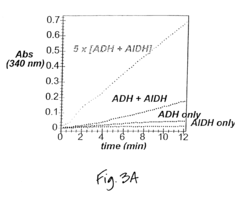
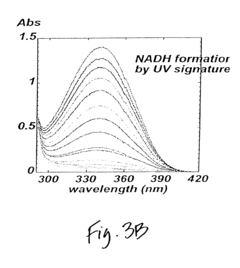
- A biphasic process involving an organic solvent layer and an adjacent aqueous solvent layer, where products or byproducts diffuse to induce spectroscopic changes, allowing for continuous monitoring of reaction rates and enantiomeric ratios without altering the substrate, using enzymatic reactions and spectroscopic detection.


Environmental Impact of Sulphanilic Acid Reactions
The environmental impact of sulphanilic acid reactions is a critical consideration in the broader context of organic synthesis and industrial processes. Sulphanilic acid, a widely used intermediate in various chemical industries, plays a significant role in the production of dyes, pharmaceuticals, and other organic compounds. However, its utilization in organic reactions raises important environmental concerns that warrant careful examination.
One of the primary environmental issues associated with sulphanilic acid reactions is the potential for water pollution. The compound's high solubility in water means that any unreacted sulphanilic acid or its byproducts can easily enter aquatic ecosystems if not properly managed. This can lead to alterations in water pH, affecting aquatic life and potentially disrupting local ecosystems. Furthermore, the presence of sulphanilic acid in water bodies can contribute to the formation of harmful sulfonated aromatic compounds, which are known to be persistent environmental pollutants.
Air pollution is another significant concern in sulphanilic acid-driven reactions. The production and use of sulphanilic acid often involve the release of sulfur dioxide and other sulfur-containing compounds into the atmosphere. These emissions can contribute to acid rain formation, which has far-reaching consequences for both terrestrial and aquatic ecosystems, as well as human-made structures.
The disposal of waste products from sulphanilic acid reactions also presents environmental challenges. Many of the byproducts and unreacted materials can be toxic and require specialized treatment before disposal. Improper handling or disposal can lead to soil contamination, potentially affecting agricultural land and groundwater sources.
From a sustainability perspective, the production of sulphanilic acid itself raises concerns. The traditional synthesis methods often rely on non-renewable petrochemical feedstocks and energy-intensive processes, contributing to resource depletion and greenhouse gas emissions. This has led to increased research into more sustainable production methods, including bio-based approaches and green chemistry techniques.
Despite these environmental challenges, it is important to note that sulphanilic acid reactions also offer potential environmental benefits when used in certain applications. For instance, sulphanilic acid derivatives play a crucial role in the development of more efficient and environmentally friendly dyes, reducing the overall environmental footprint of the textile industry. Additionally, some sulphanilic acid compounds are used in water treatment processes, helping to remove contaminants and improve water quality.
One of the primary environmental issues associated with sulphanilic acid reactions is the potential for water pollution. The compound's high solubility in water means that any unreacted sulphanilic acid or its byproducts can easily enter aquatic ecosystems if not properly managed. This can lead to alterations in water pH, affecting aquatic life and potentially disrupting local ecosystems. Furthermore, the presence of sulphanilic acid in water bodies can contribute to the formation of harmful sulfonated aromatic compounds, which are known to be persistent environmental pollutants.
Air pollution is another significant concern in sulphanilic acid-driven reactions. The production and use of sulphanilic acid often involve the release of sulfur dioxide and other sulfur-containing compounds into the atmosphere. These emissions can contribute to acid rain formation, which has far-reaching consequences for both terrestrial and aquatic ecosystems, as well as human-made structures.
The disposal of waste products from sulphanilic acid reactions also presents environmental challenges. Many of the byproducts and unreacted materials can be toxic and require specialized treatment before disposal. Improper handling or disposal can lead to soil contamination, potentially affecting agricultural land and groundwater sources.
From a sustainability perspective, the production of sulphanilic acid itself raises concerns. The traditional synthesis methods often rely on non-renewable petrochemical feedstocks and energy-intensive processes, contributing to resource depletion and greenhouse gas emissions. This has led to increased research into more sustainable production methods, including bio-based approaches and green chemistry techniques.
Despite these environmental challenges, it is important to note that sulphanilic acid reactions also offer potential environmental benefits when used in certain applications. For instance, sulphanilic acid derivatives play a crucial role in the development of more efficient and environmentally friendly dyes, reducing the overall environmental footprint of the textile industry. Additionally, some sulphanilic acid compounds are used in water treatment processes, helping to remove contaminants and improve water quality.
Computational Methods in Mechanistic Studies
Computational methods have become indispensable tools in unraveling the mechanistic intricacies of organic reactions, particularly in the context of sulphanilic acid-driven processes. These methods offer a powerful means to explore reaction pathways, transition states, and energetics at the molecular level, providing invaluable insights that complement experimental observations.
Density Functional Theory (DFT) calculations stand out as a cornerstone in computational studies of sulphanilic acid reactions. DFT methods, such as B3LYP and M06-2X, have been extensively employed to optimize molecular geometries, calculate reaction energies, and elucidate electronic structures. These calculations help researchers predict reaction feasibility, identify key intermediates, and understand the role of substituents in modulating reactivity.
Molecular dynamics simulations offer another crucial approach in mechanistic studies. By simulating the time-dependent behavior of molecular systems, researchers can investigate the dynamic aspects of sulphanilic acid reactions, including solvent effects, conformational changes, and reaction kinetics. These simulations provide a more realistic representation of the reaction environment, accounting for factors that static calculations may overlook.
Transition state theory calculations play a vital role in elucidating reaction mechanisms. By locating and characterizing transition states along reaction coordinates, researchers can identify rate-determining steps and predict activation energies. This information is crucial for understanding the kinetics and selectivity of sulphanilic acid-driven reactions, guiding efforts to optimize reaction conditions and design more efficient synthetic routes.
Ab initio molecular orbital calculations, including high-level methods like CCSD(T), serve as benchmarks for assessing the accuracy of more computationally efficient methods. These calculations provide highly accurate energetics and electronic properties, albeit at a higher computational cost. They are particularly valuable for validating results obtained from DFT and other approximate methods.
Machine learning approaches are increasingly being integrated into mechanistic studies of organic reactions. By leveraging large datasets of computed or experimental reaction outcomes, machine learning models can predict reaction pathways, identify trends in reactivity, and even suggest novel reaction conditions. This data-driven approach complements traditional computational methods, offering new avenues for exploring the vast chemical space of sulphanilic acid reactions.
Quantum chemical topology methods, such as the Quantum Theory of Atoms in Molecules (QTAIM), provide a rigorous framework for analyzing electronic structure and bonding in sulphanilic acid systems. These methods offer valuable insights into the nature of chemical bonds, charge transfer processes, and non-covalent interactions that play crucial roles in reaction mechanisms.
Density Functional Theory (DFT) calculations stand out as a cornerstone in computational studies of sulphanilic acid reactions. DFT methods, such as B3LYP and M06-2X, have been extensively employed to optimize molecular geometries, calculate reaction energies, and elucidate electronic structures. These calculations help researchers predict reaction feasibility, identify key intermediates, and understand the role of substituents in modulating reactivity.
Molecular dynamics simulations offer another crucial approach in mechanistic studies. By simulating the time-dependent behavior of molecular systems, researchers can investigate the dynamic aspects of sulphanilic acid reactions, including solvent effects, conformational changes, and reaction kinetics. These simulations provide a more realistic representation of the reaction environment, accounting for factors that static calculations may overlook.
Transition state theory calculations play a vital role in elucidating reaction mechanisms. By locating and characterizing transition states along reaction coordinates, researchers can identify rate-determining steps and predict activation energies. This information is crucial for understanding the kinetics and selectivity of sulphanilic acid-driven reactions, guiding efforts to optimize reaction conditions and design more efficient synthetic routes.
Ab initio molecular orbital calculations, including high-level methods like CCSD(T), serve as benchmarks for assessing the accuracy of more computationally efficient methods. These calculations provide highly accurate energetics and electronic properties, albeit at a higher computational cost. They are particularly valuable for validating results obtained from DFT and other approximate methods.
Machine learning approaches are increasingly being integrated into mechanistic studies of organic reactions. By leveraging large datasets of computed or experimental reaction outcomes, machine learning models can predict reaction pathways, identify trends in reactivity, and even suggest novel reaction conditions. This data-driven approach complements traditional computational methods, offering new avenues for exploring the vast chemical space of sulphanilic acid reactions.
Quantum chemical topology methods, such as the Quantum Theory of Atoms in Molecules (QTAIM), provide a rigorous framework for analyzing electronic structure and bonding in sulphanilic acid systems. These methods offer valuable insights into the nature of chemical bonds, charge transfer processes, and non-covalent interactions that play crucial roles in reaction mechanisms.
Unlock deeper insights with Patsnap Eureka Quick Research — get a full tech report to explore trends and direct your research. Try now!
Generate Your Research Report Instantly with AI Agent
Supercharge your innovation with Patsnap Eureka AI Agent Platform!