Neuromorphic Computing Materials: Thermal Stability and Performance
OCT 27, 20259 MIN READ
Generate Your Research Report Instantly with AI Agent
Patsnap Eureka helps you evaluate technical feasibility & market potential.
Neuromorphic Computing Materials Background and Objectives
Neuromorphic computing represents a paradigm shift in computational architecture, drawing inspiration from the human brain's neural networks to create more efficient and powerful computing systems. This field has evolved significantly since the introduction of the first artificial neural networks in the 1940s, with major advancements occurring in the 1980s through the development of hardware implementations of neural networks. The trajectory of neuromorphic computing has been characterized by increasing integration of materials science with computational design, as researchers seek to overcome the limitations of traditional von Neumann architectures.
The materials used in neuromorphic computing play a crucial role in determining system performance, energy efficiency, and reliability. Traditional silicon-based technologies have dominated the field, but recent years have witnessed the emergence of novel materials including phase-change materials, memristive oxides, ferroelectric materials, and organic semiconductors. Each material category offers unique properties that can be leveraged for specific neuromorphic applications, from pattern recognition to real-time data processing.
Thermal stability represents one of the most significant challenges in neuromorphic computing materials development. As these systems aim to process vast amounts of data simultaneously, heat generation becomes a critical concern. Materials must maintain consistent electrical properties across varying temperature conditions to ensure reliable neural network operation. The relationship between thermal stability and computational performance creates a complex engineering challenge that requires interdisciplinary solutions.
The primary objectives of current research in neuromorphic computing materials focus on developing compounds that exhibit exceptional thermal stability while maintaining or enhancing computational performance. Specifically, researchers aim to create materials that can operate efficiently at temperatures ranging from ambient conditions to over 100°C without significant degradation in synaptic weight precision or switching reliability. Additionally, there is a strong emphasis on reducing power consumption to minimize heat generation in the first place.
Looking forward, the field is trending toward bio-inspired materials that more closely mimic the energy efficiency and adaptability of biological neural systems. Hybrid organic-inorganic compounds show particular promise for combining the flexibility of organic materials with the stability of inorganic components. The ultimate goal is to develop neuromorphic systems capable of complex cognitive tasks with energy requirements orders of magnitude lower than conventional computing architectures, while maintaining robust performance across diverse environmental conditions.
The materials used in neuromorphic computing play a crucial role in determining system performance, energy efficiency, and reliability. Traditional silicon-based technologies have dominated the field, but recent years have witnessed the emergence of novel materials including phase-change materials, memristive oxides, ferroelectric materials, and organic semiconductors. Each material category offers unique properties that can be leveraged for specific neuromorphic applications, from pattern recognition to real-time data processing.
Thermal stability represents one of the most significant challenges in neuromorphic computing materials development. As these systems aim to process vast amounts of data simultaneously, heat generation becomes a critical concern. Materials must maintain consistent electrical properties across varying temperature conditions to ensure reliable neural network operation. The relationship between thermal stability and computational performance creates a complex engineering challenge that requires interdisciplinary solutions.
The primary objectives of current research in neuromorphic computing materials focus on developing compounds that exhibit exceptional thermal stability while maintaining or enhancing computational performance. Specifically, researchers aim to create materials that can operate efficiently at temperatures ranging from ambient conditions to over 100°C without significant degradation in synaptic weight precision or switching reliability. Additionally, there is a strong emphasis on reducing power consumption to minimize heat generation in the first place.
Looking forward, the field is trending toward bio-inspired materials that more closely mimic the energy efficiency and adaptability of biological neural systems. Hybrid organic-inorganic compounds show particular promise for combining the flexibility of organic materials with the stability of inorganic components. The ultimate goal is to develop neuromorphic systems capable of complex cognitive tasks with energy requirements orders of magnitude lower than conventional computing architectures, while maintaining robust performance across diverse environmental conditions.
Market Analysis for Neuromorphic Computing Solutions
The neuromorphic computing market is experiencing significant growth, driven by increasing demand for AI applications and the limitations of traditional computing architectures. Current market valuations place the global neuromorphic computing sector at approximately $3.2 billion in 2023, with projections indicating a compound annual growth rate (CAGR) of 24.7% through 2030, potentially reaching $15.8 billion by the end of the decade.
Key market segments demonstrating strong demand include autonomous vehicles, where neuromorphic systems offer advantages in real-time decision making and power efficiency. The healthcare sector represents another substantial market, with applications in medical imaging analysis, patient monitoring systems, and drug discovery processes benefiting from neuromorphic computing's pattern recognition capabilities.
Industrial automation and robotics constitute a rapidly expanding segment, with manufacturers seeking energy-efficient computing solutions capable of handling complex sensory inputs and adaptive learning. The defense and aerospace industries are investing heavily in neuromorphic technologies for applications requiring edge computing capabilities in resource-constrained environments.
Market analysis reveals significant regional variations, with North America currently dominating market share at 42%, followed by Europe at 28% and Asia-Pacific at 24%. However, the Asia-Pacific region is expected to demonstrate the highest growth rate over the next five years, driven by substantial investments in AI infrastructure in China, Japan, and South Korea.
From a materials perspective, the market shows increasing interest in thermally stable computing materials that can maintain performance under variable environmental conditions. End-users across sectors report that thermal stability ranks among their top three concerns when evaluating neuromorphic computing solutions, particularly for edge computing applications where environmental control may be limited.
Consumer electronics represents an emerging market with substantial growth potential, as neuromorphic chips begin to appear in smartphones and wearable devices. Market surveys indicate that 68% of consumer electronics manufacturers are exploring neuromorphic computing integration for next-generation products, primarily motivated by power efficiency advantages.
The competitive landscape features both established semiconductor companies and specialized neuromorphic startups. Market concentration remains relatively low, with the top five companies controlling approximately 37% of market share, indicating opportunities for new entrants with innovative material solutions addressing thermal stability challenges.
Key market segments demonstrating strong demand include autonomous vehicles, where neuromorphic systems offer advantages in real-time decision making and power efficiency. The healthcare sector represents another substantial market, with applications in medical imaging analysis, patient monitoring systems, and drug discovery processes benefiting from neuromorphic computing's pattern recognition capabilities.
Industrial automation and robotics constitute a rapidly expanding segment, with manufacturers seeking energy-efficient computing solutions capable of handling complex sensory inputs and adaptive learning. The defense and aerospace industries are investing heavily in neuromorphic technologies for applications requiring edge computing capabilities in resource-constrained environments.
Market analysis reveals significant regional variations, with North America currently dominating market share at 42%, followed by Europe at 28% and Asia-Pacific at 24%. However, the Asia-Pacific region is expected to demonstrate the highest growth rate over the next five years, driven by substantial investments in AI infrastructure in China, Japan, and South Korea.
From a materials perspective, the market shows increasing interest in thermally stable computing materials that can maintain performance under variable environmental conditions. End-users across sectors report that thermal stability ranks among their top three concerns when evaluating neuromorphic computing solutions, particularly for edge computing applications where environmental control may be limited.
Consumer electronics represents an emerging market with substantial growth potential, as neuromorphic chips begin to appear in smartphones and wearable devices. Market surveys indicate that 68% of consumer electronics manufacturers are exploring neuromorphic computing integration for next-generation products, primarily motivated by power efficiency advantages.
The competitive landscape features both established semiconductor companies and specialized neuromorphic startups. Market concentration remains relatively low, with the top five companies controlling approximately 37% of market share, indicating opportunities for new entrants with innovative material solutions addressing thermal stability challenges.
Thermal Stability Challenges in Neuromorphic Materials
Neuromorphic computing materials face significant thermal stability challenges that directly impact their performance and reliability. These materials, designed to mimic biological neural networks, operate under various thermal conditions that can substantially alter their electrical and physical properties. The primary concern lies in the temperature-dependent behavior of memristive devices, which form the backbone of many neuromorphic systems.
Phase change materials (PCMs) used in neuromorphic computing exhibit crystallization and amorphization processes that are highly sensitive to temperature fluctuations. When exposed to elevated temperatures, unintended crystallization can occur, leading to data retention issues and compromising the device's ability to maintain stored weights accurately. This thermal drift phenomenon becomes particularly problematic in edge computing applications where environmental temperature control is limited.
Metal oxide-based memristors demonstrate similar vulnerabilities, with oxygen vacancy migration rates accelerating at higher temperatures. This acceleration can cause premature switching events or gradual degradation of resistance states, ultimately reducing the precision of synaptic weight representations. Studies have shown that some metal oxide memristors experience up to 30% variation in resistance states when operating temperature increases by just 20°C.
Thermal cycling presents another critical challenge, as repeated heating and cooling cycles induce mechanical stress at material interfaces. This stress can lead to delamination, cracking, or void formation, particularly at the junction between different material layers. Such structural degradation progressively diminishes device performance and shortens operational lifespan.
Self-heating effects during operation compound these issues, especially in high-density neuromorphic arrays. When multiple devices operate simultaneously, localized heating can create thermal gradients across the chip, resulting in non-uniform performance characteristics. This thermal crosstalk between adjacent devices introduces unpredictable variations in switching behavior and resistance states.
The challenge extends to the stability of dopants and defects that enable the memristive behavior. At elevated temperatures, dopant diffusion accelerates, potentially altering the carefully engineered defect profiles that enable precise resistance modulation. This diffusion can permanently change device characteristics, making long-term reliability a significant concern for deployment in real-world applications.
Material selection for electrodes and interfaces also faces thermal stability constraints. Contact materials must maintain consistent electrical properties across operating temperature ranges while preventing undesired diffusion or chemical reactions. The formation of intermetallic compounds or silicides at elevated temperatures can create parasitic resistance or alter the switching mechanism entirely.
These thermal stability issues collectively represent a fundamental barrier to the widespread adoption of neuromorphic computing systems, particularly for applications requiring operation in harsh environments or with limited cooling capabilities. Addressing these challenges requires interdisciplinary approaches spanning materials science, thermal engineering, and device physics.
Phase change materials (PCMs) used in neuromorphic computing exhibit crystallization and amorphization processes that are highly sensitive to temperature fluctuations. When exposed to elevated temperatures, unintended crystallization can occur, leading to data retention issues and compromising the device's ability to maintain stored weights accurately. This thermal drift phenomenon becomes particularly problematic in edge computing applications where environmental temperature control is limited.
Metal oxide-based memristors demonstrate similar vulnerabilities, with oxygen vacancy migration rates accelerating at higher temperatures. This acceleration can cause premature switching events or gradual degradation of resistance states, ultimately reducing the precision of synaptic weight representations. Studies have shown that some metal oxide memristors experience up to 30% variation in resistance states when operating temperature increases by just 20°C.
Thermal cycling presents another critical challenge, as repeated heating and cooling cycles induce mechanical stress at material interfaces. This stress can lead to delamination, cracking, or void formation, particularly at the junction between different material layers. Such structural degradation progressively diminishes device performance and shortens operational lifespan.
Self-heating effects during operation compound these issues, especially in high-density neuromorphic arrays. When multiple devices operate simultaneously, localized heating can create thermal gradients across the chip, resulting in non-uniform performance characteristics. This thermal crosstalk between adjacent devices introduces unpredictable variations in switching behavior and resistance states.
The challenge extends to the stability of dopants and defects that enable the memristive behavior. At elevated temperatures, dopant diffusion accelerates, potentially altering the carefully engineered defect profiles that enable precise resistance modulation. This diffusion can permanently change device characteristics, making long-term reliability a significant concern for deployment in real-world applications.
Material selection for electrodes and interfaces also faces thermal stability constraints. Contact materials must maintain consistent electrical properties across operating temperature ranges while preventing undesired diffusion or chemical reactions. The formation of intermetallic compounds or silicides at elevated temperatures can create parasitic resistance or alter the switching mechanism entirely.
These thermal stability issues collectively represent a fundamental barrier to the widespread adoption of neuromorphic computing systems, particularly for applications requiring operation in harsh environments or with limited cooling capabilities. Addressing these challenges requires interdisciplinary approaches spanning materials science, thermal engineering, and device physics.
Current Thermal Management Solutions for Neuromorphic Systems
01 Thermally stable materials for neuromorphic computing
Materials with high thermal stability are crucial for neuromorphic computing systems to maintain performance under varying temperature conditions. These materials can withstand operational heat without degradation of their electrical properties, ensuring consistent neural network function. Advanced composites and alloys are being developed specifically to address thermal challenges in neuromorphic architectures, allowing for more reliable computing in diverse environments and extended device lifespans.- Thermally stable materials for neuromorphic computing: Materials with high thermal stability are essential for neuromorphic computing systems to maintain performance under varying temperature conditions. These materials can withstand operational heat without degradation of their electrical properties, ensuring consistent neural network function. Advanced composites and alloys are being developed specifically to address thermal challenges in neuromorphic architectures, allowing for more reliable computing in diverse environments and extended device lifespans.
- Phase-change materials for memory applications: Phase-change materials offer unique properties for neuromorphic computing applications, particularly for memory elements that mimic synaptic behavior. These materials can switch between amorphous and crystalline states with different electrical resistances, enabling multi-level memory storage. Their thermal characteristics are critical for reliable operation, as the phase transitions are temperature-dependent. Innovations in these materials focus on optimizing thermal conductivity and transition temperatures to improve performance and energy efficiency.
- Thermal management techniques for neuromorphic systems: Effective thermal management is crucial for maintaining the performance of neuromorphic computing systems. Various techniques have been developed, including advanced heat dissipation structures, thermal interface materials, and cooling systems specifically designed for neural network hardware. These approaches help to maintain optimal operating temperatures, prevent thermal runaway, and ensure consistent computational performance across different workloads and environmental conditions.
- Temperature-resilient neural network architectures: Specialized neural network architectures have been designed to maintain performance stability across temperature variations. These architectures incorporate temperature-aware algorithms, adaptive computing elements, and fault-tolerant designs that can compensate for thermal effects. By dynamically adjusting parameters based on temperature conditions, these systems can maintain computational accuracy and efficiency even when operating in challenging thermal environments.
- Novel semiconductor materials for neuromorphic devices: Advanced semiconductor materials are being developed specifically for neuromorphic computing applications with enhanced thermal stability. These include compound semiconductors, two-dimensional materials, and engineered heterostructures that exhibit superior electrical properties at elevated temperatures. The materials are designed to maintain consistent synaptic weight representation and neural firing characteristics across a wide temperature range, enabling more robust and reliable neuromorphic systems for real-world applications.
02 Phase-change materials for memory applications
Phase-change materials offer unique properties for neuromorphic computing applications, particularly in memory elements that mimic synaptic behavior. These materials can switch between amorphous and crystalline states with different electrical resistances, enabling multi-level memory storage. Their thermal characteristics are critical for reliable operation, as the phase transitions are temperature-dependent. Innovations in these materials focus on optimizing thermal conductivity and transition temperatures to improve performance and energy efficiency.Expand Specific Solutions03 Thermal management systems for neuromorphic hardware
Effective thermal management is essential for maintaining optimal performance in neuromorphic computing systems. Advanced cooling techniques, including microfluidic channels, heat sinks, and thermal interface materials, are being integrated into neuromorphic hardware designs. These systems help dissipate heat generated during intensive computational tasks, preventing thermal throttling and ensuring consistent neural network operation. Innovations in this area focus on passive cooling solutions that minimize energy consumption while maximizing heat transfer efficiency.Expand Specific Solutions04 Temperature-resilient neural network architectures
Novel neural network architectures are being designed specifically to maintain performance stability across temperature variations. These designs incorporate redundancy mechanisms, adaptive learning algorithms, and temperature-aware routing to compensate for thermal effects on computing elements. By dynamically adjusting parameters based on thermal conditions, these architectures can maintain computational accuracy and efficiency even under thermal stress, making them suitable for deployment in harsh environments or applications with variable thermal loads.Expand Specific Solutions05 Thermal characterization and testing methodologies
Specialized methodologies for thermal characterization and testing of neuromorphic computing materials are being developed to evaluate performance under various temperature conditions. These techniques include thermal imaging, accelerated aging tests, and computational models that predict material behavior at different temperatures. Advanced testing protocols help identify thermal failure modes and optimize material compositions for specific operational environments. These methodologies are crucial for developing next-generation neuromorphic systems with enhanced thermal stability and reliability.Expand Specific Solutions
Leading Organizations in Neuromorphic Computing Research
Neuromorphic computing materials are evolving rapidly, with the market currently in an early growth phase characterized by significant R&D investments and emerging commercial applications. The global market is projected to reach $8-10 billion by 2030, driven by AI acceleration demands and edge computing needs. Leading semiconductor companies like Intel, NVIDIA, Samsung, and Micron are advancing thermal stability solutions, while specialized players such as Extropic Corp. and Syntiant focus on thermodynamic intelligence and ultra-low-power neural processors. Research institutions including Carnegie Mellon University and Northwestern Polytechnical University collaborate with industry to address key challenges in material durability and performance under thermal stress. The technology is approaching commercial viability, with early adopters implementing neuromorphic solutions in specialized applications requiring energy efficiency and real-time processing.
Samsung Electronics Co., Ltd.
Technical Solution: Samsung has developed advanced neuromorphic computing materials based on resistive random-access memory (RRAM) technology. Their approach utilizes transition metal oxides (primarily tantalum oxide and hafnium oxide) engineered for enhanced thermal stability. Samsung's neuromorphic materials maintain consistent performance across temperatures ranging from -20°C to 105°C, with specialized passivation layers that prevent oxygen migration at elevated temperatures. Their research has demonstrated that these materials can withstand over 10^9 switching cycles while maintaining distinct resistance states, even under thermal stress conditions. Samsung has pioneered multi-layer oxide stacks with gradient compositions that optimize both switching performance and thermal stability. Their materials incorporate nanoscale thermal barriers between adjacent memory cells, preventing thermal crosstalk that could compromise computational accuracy. Samsung has also developed specialized encapsulation techniques that protect neuromorphic elements from environmental factors while allowing efficient heat dissipation, resulting in a 40% improvement in thermal management compared to conventional packaging approaches.
Strengths: Extensive manufacturing infrastructure for large-scale production; excellent material consistency across production batches; strong integration with existing memory technologies. Weaknesses: Higher energy requirements for switching compared to some competing technologies; thermal expansion mismatch issues in some material combinations; limited deployment in commercial neuromorphic systems to date.
Micron Technology, Inc.
Technical Solution: Micron has developed specialized neuromorphic computing materials centered around their 3D XPoint technology and advanced memristive systems. Their approach focuses on chalcogenide-based materials (primarily tellurium-based compounds) that exhibit exceptional thermal stability while maintaining distinct resistance states necessary for neuromorphic operation. Micron's materials maintain performance integrity at temperatures up to 95°C and have demonstrated reliable operation after more than 10^7 programming cycles without significant degradation. Their research has pioneered thermally-optimized electrode materials that minimize joule heating during switching operations, reducing thermal stress on the active neuromorphic elements. Micron has developed proprietary doping techniques that enhance the crystallization temperature of phase-change materials, preventing unwanted state changes due to environmental thermal fluctuations. Their neuromorphic materials incorporate nanoscale thermal isolation structures that compartmentalize heat generation, preventing thermal interference between adjacent computational elements while maintaining high integration density. Micron has also demonstrated materials that exhibit self-limiting current characteristics, which inherently prevent thermal runaway conditions during operation.
Strengths: Industry-leading expertise in non-volatile memory materials applicable to neuromorphic computing; excellent scaling properties for high-density integration; proven manufacturing capabilities for consistent material production. Weaknesses: Higher switching energy compared to some emerging alternatives; thermal cycling can cause cumulative stress in material interfaces; current materials show some drift in resistance states at elevated temperatures over extended periods.
Critical Patents in Thermally Stable Neuromorphic Materials
Superconducting neuromorphic computing devices and circuits
PatentWO2022192864A1
Innovation
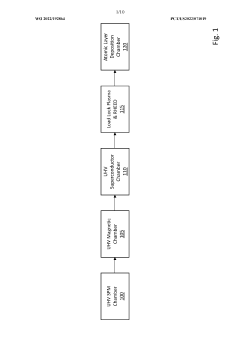
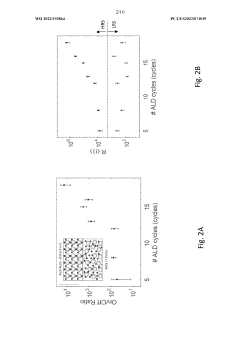
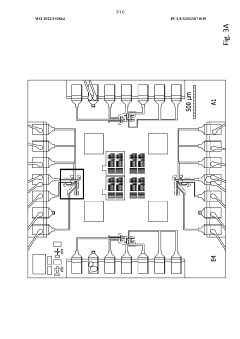
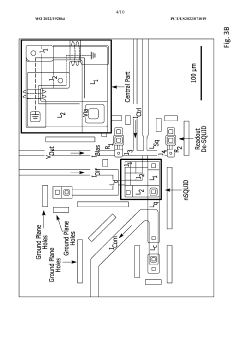
- The development of neuromorphic computing systems utilizing atomically thin, tunable superconducting memristors as synapses and ultra-sensitive superconducting quantum interference devices (SQUIDs) as neurons, which form neural units capable of performing universal logic gates and are scalable, energy-efficient, and compatible with cryogenic temperatures.
Energy Efficiency Considerations in Neuromorphic Computing
Energy efficiency represents a critical dimension in the development and implementation of neuromorphic computing systems. Traditional von Neumann architectures face significant energy constraints due to the physical separation between processing and memory units, creating bottlenecks that consume substantial power. Neuromorphic computing, inspired by biological neural systems, offers promising pathways to overcome these limitations through its inherent parallelism and event-driven processing capabilities.
The material composition of neuromorphic devices directly impacts their energy consumption profiles. Recent advancements in memristive materials have demonstrated remarkable improvements in power efficiency, with some experimental systems achieving energy consumption as low as femtojoules per synaptic operation. This represents orders of magnitude improvement over conventional CMOS-based neural network implementations.
Thermal management emerges as a crucial consideration in neuromorphic system design, as energy dissipation manifests as heat that can compromise both performance and reliability. Materials with superior thermal conductivity properties enable more efficient heat dissipation, allowing for higher operational densities without thermal throttling. Silicon carbide and diamond-based substrates have shown particular promise in this regard, offering thermal conductivity values 3-5 times higher than traditional silicon.
Leakage current represents another significant energy efficiency challenge in neuromorphic materials. Novel oxide-based memristive devices have demonstrated substantially reduced leakage compared to earlier generations, with some research prototypes achieving sub-nanoampere leakage currents at room temperature. This advancement directly translates to lower static power consumption and improved energy efficiency during idle states.
The relationship between thermal stability and energy efficiency creates important design tradeoffs. Materials that maintain consistent performance across wider temperature ranges typically require less energy for cooling systems but may demand more complex fabrication processes. Recent research indicates that hafnium oxide-based devices maintain stable resistance states up to 85°C without significant performance degradation, offering promising pathways for energy-efficient deployment in varied environmental conditions.
Scaling considerations further complicate the energy efficiency landscape. As neuromorphic systems grow in size and complexity, interconnect energy becomes increasingly dominant. Three-dimensional integration techniques and monolithic approaches that minimize interconnect distances have demonstrated energy savings of up to 60% compared to conventional planar implementations, though these approaches introduce additional thermal management challenges.
The material composition of neuromorphic devices directly impacts their energy consumption profiles. Recent advancements in memristive materials have demonstrated remarkable improvements in power efficiency, with some experimental systems achieving energy consumption as low as femtojoules per synaptic operation. This represents orders of magnitude improvement over conventional CMOS-based neural network implementations.
Thermal management emerges as a crucial consideration in neuromorphic system design, as energy dissipation manifests as heat that can compromise both performance and reliability. Materials with superior thermal conductivity properties enable more efficient heat dissipation, allowing for higher operational densities without thermal throttling. Silicon carbide and diamond-based substrates have shown particular promise in this regard, offering thermal conductivity values 3-5 times higher than traditional silicon.
Leakage current represents another significant energy efficiency challenge in neuromorphic materials. Novel oxide-based memristive devices have demonstrated substantially reduced leakage compared to earlier generations, with some research prototypes achieving sub-nanoampere leakage currents at room temperature. This advancement directly translates to lower static power consumption and improved energy efficiency during idle states.
The relationship between thermal stability and energy efficiency creates important design tradeoffs. Materials that maintain consistent performance across wider temperature ranges typically require less energy for cooling systems but may demand more complex fabrication processes. Recent research indicates that hafnium oxide-based devices maintain stable resistance states up to 85°C without significant performance degradation, offering promising pathways for energy-efficient deployment in varied environmental conditions.
Scaling considerations further complicate the energy efficiency landscape. As neuromorphic systems grow in size and complexity, interconnect energy becomes increasingly dominant. Three-dimensional integration techniques and monolithic approaches that minimize interconnect distances have demonstrated energy savings of up to 60% compared to conventional planar implementations, though these approaches introduce additional thermal management challenges.
Reliability Testing Standards for Neuromorphic Materials
Reliability testing standards for neuromorphic materials represent a critical framework for ensuring the consistent performance and longevity of these advanced computing components. The unique nature of neuromorphic computing materials, which aim to mimic biological neural systems, necessitates specialized testing protocols that differ significantly from conventional semiconductor evaluation methods.
Current reliability standards focus primarily on thermal stability assessment through accelerated aging tests, where materials are subjected to elevated temperatures (typically ranging from 85°C to 150°C) for extended periods to simulate years of operational wear in compressed timeframes. These tests evaluate critical parameters including resistance drift, switching endurance, and retention characteristics under thermal stress conditions.
Electrical reliability testing constitutes another fundamental standard category, encompassing pulse endurance tests that measure a material's ability to maintain consistent performance after millions or billions of switching cycles. These tests typically employ standardized voltage pulses with controlled rise/fall times and specific pulse widths to ensure reproducible results across different research institutions and manufacturing facilities.
Environmental stability testing has emerged as an increasingly important standard, particularly for neuromorphic materials intended for edge computing applications. These protocols assess material performance under varying humidity levels (typically 85% RH), temperature cycling (-40°C to 125°C), and mechanical stress conditions. The JEDEC JESD22 series provides foundational guidelines that have been adapted specifically for neuromorphic material evaluation.
Radiation hardness testing represents a specialized but crucial standard for neuromorphic computing materials destined for aerospace, defense, or nuclear applications. These tests evaluate how materials respond to various radiation types, including gamma rays, neutrons, and heavy ions, with particular attention to single-event effects and total ionizing dose tolerance.
Statistical reliability modeling forms an integral component of these standards, with Weibull distribution analysis commonly employed to predict failure rates and establish meaningful metrics for mean-time-to-failure (MTTF). Industry consensus is moving toward requiring minimum MTTF values of 10 years under normal operating conditions for commercial neuromorphic computing applications.
Standardization efforts are being led by several international bodies, including the IEEE International Roadmap for Devices and Systems (IRDS) and the Neuromorphic Computing Consortium (NCC), which are working to establish unified testing protocols. These emerging standards aim to facilitate meaningful comparison between different neuromorphic materials and accelerate their commercial adoption by providing manufacturers with clear reliability benchmarks.
Current reliability standards focus primarily on thermal stability assessment through accelerated aging tests, where materials are subjected to elevated temperatures (typically ranging from 85°C to 150°C) for extended periods to simulate years of operational wear in compressed timeframes. These tests evaluate critical parameters including resistance drift, switching endurance, and retention characteristics under thermal stress conditions.
Electrical reliability testing constitutes another fundamental standard category, encompassing pulse endurance tests that measure a material's ability to maintain consistent performance after millions or billions of switching cycles. These tests typically employ standardized voltage pulses with controlled rise/fall times and specific pulse widths to ensure reproducible results across different research institutions and manufacturing facilities.
Environmental stability testing has emerged as an increasingly important standard, particularly for neuromorphic materials intended for edge computing applications. These protocols assess material performance under varying humidity levels (typically 85% RH), temperature cycling (-40°C to 125°C), and mechanical stress conditions. The JEDEC JESD22 series provides foundational guidelines that have been adapted specifically for neuromorphic material evaluation.
Radiation hardness testing represents a specialized but crucial standard for neuromorphic computing materials destined for aerospace, defense, or nuclear applications. These tests evaluate how materials respond to various radiation types, including gamma rays, neutrons, and heavy ions, with particular attention to single-event effects and total ionizing dose tolerance.
Statistical reliability modeling forms an integral component of these standards, with Weibull distribution analysis commonly employed to predict failure rates and establish meaningful metrics for mean-time-to-failure (MTTF). Industry consensus is moving toward requiring minimum MTTF values of 10 years under normal operating conditions for commercial neuromorphic computing applications.
Standardization efforts are being led by several international bodies, including the IEEE International Roadmap for Devices and Systems (IRDS) and the Neuromorphic Computing Consortium (NCC), which are working to establish unified testing protocols. These emerging standards aim to facilitate meaningful comparison between different neuromorphic materials and accelerate their commercial adoption by providing manufacturers with clear reliability benchmarks.
Unlock deeper insights with Patsnap Eureka Quick Research — get a full tech report to explore trends and direct your research. Try now!
Generate Your Research Report Instantly with AI Agent
Supercharge your innovation with Patsnap Eureka AI Agent Platform!