

Oleoresin vs Plasticizers: Cost-Performance Analysis
SEP 10, 20259 MIN READ
Generate Your Research Report Instantly with AI Agent
PatSnap Eureka helps you evaluate technical feasibility & market potential.
Oleoresin and Plasticizer Technology Evolution
The evolution of oleoresin and plasticizer technologies represents a fascinating journey through industrial chemistry and materials science. Beginning in the early 20th century, natural oleoresins extracted from pine trees were among the first commercially viable materials used for enhancing flexibility in various products. These natural compounds, primarily composed of resin acids and terpenes, provided the foundation for understanding how molecular structures influence material properties.
The 1930s marked a significant turning point with the development of synthetic plasticizers, particularly phthalates, which offered more consistent performance and lower production costs compared to natural alternatives. This innovation catalyzed rapid growth in the plastics industry, enabling the mass production of flexible PVC and other polymer products that transformed consumer goods manufacturing.
By the 1950s-1960s, the technology bifurcated along distinct paths. Oleoresins became increasingly specialized for food applications, flavoring, and pharmaceutical uses, leveraging their natural origins and biocompatibility. Meanwhile, synthetic plasticizers evolved toward greater technical sophistication with the introduction of adipates, trimellitates, and other specialized compounds designed for specific performance characteristics.
The 1970s-1980s witnessed growing environmental and health concerns regarding certain plasticizers, particularly phthalates, prompting research into alternative technologies. This period saw renewed interest in modified natural oleoresins as potential replacements for synthetic options in certain applications, though technical limitations prevented widespread substitution.
The 1990s through early 2000s brought significant advances in extraction technologies for oleoresins, including supercritical CO2 processes that improved purity and consistency while reducing solvent usage. Concurrently, the plasticizer industry developed new non-phthalate alternatives responding to regulatory pressures and consumer demand for safer materials.
Most recently (2010s-present), both technologies have experienced convergent evolution driven by sustainability imperatives. Bio-based plasticizers derived from vegetable oils represent a hybrid approach, combining the renewable aspects of natural oleoresins with the performance consistency of engineered molecules. Advanced analytical techniques have enabled more precise understanding of structure-property relationships, allowing for more targeted development of both natural and synthetic options.
The cost-performance relationship between these technologies has shifted dramatically over time. While synthetic plasticizers initially offered significant economic advantages through economies of scale and performance consistency, rising environmental compliance costs and consumer preference for natural ingredients have narrowed this gap in certain applications, creating new competitive dynamics in the marketplace.
The 1930s marked a significant turning point with the development of synthetic plasticizers, particularly phthalates, which offered more consistent performance and lower production costs compared to natural alternatives. This innovation catalyzed rapid growth in the plastics industry, enabling the mass production of flexible PVC and other polymer products that transformed consumer goods manufacturing.
By the 1950s-1960s, the technology bifurcated along distinct paths. Oleoresins became increasingly specialized for food applications, flavoring, and pharmaceutical uses, leveraging their natural origins and biocompatibility. Meanwhile, synthetic plasticizers evolved toward greater technical sophistication with the introduction of adipates, trimellitates, and other specialized compounds designed for specific performance characteristics.
The 1970s-1980s witnessed growing environmental and health concerns regarding certain plasticizers, particularly phthalates, prompting research into alternative technologies. This period saw renewed interest in modified natural oleoresins as potential replacements for synthetic options in certain applications, though technical limitations prevented widespread substitution.
The 1990s through early 2000s brought significant advances in extraction technologies for oleoresins, including supercritical CO2 processes that improved purity and consistency while reducing solvent usage. Concurrently, the plasticizer industry developed new non-phthalate alternatives responding to regulatory pressures and consumer demand for safer materials.
Most recently (2010s-present), both technologies have experienced convergent evolution driven by sustainability imperatives. Bio-based plasticizers derived from vegetable oils represent a hybrid approach, combining the renewable aspects of natural oleoresins with the performance consistency of engineered molecules. Advanced analytical techniques have enabled more precise understanding of structure-property relationships, allowing for more targeted development of both natural and synthetic options.
The cost-performance relationship between these technologies has shifted dramatically over time. While synthetic plasticizers initially offered significant economic advantages through economies of scale and performance consistency, rising environmental compliance costs and consumer preference for natural ingredients have narrowed this gap in certain applications, creating new competitive dynamics in the marketplace.
Market Demand Analysis for Polymer Additives
The global polymer additives market has witnessed substantial growth in recent years, driven by increasing demand across various end-use industries including packaging, construction, automotive, and consumer goods. The market for plasticizers, which currently dominates the polymer additives segment, was valued at approximately $15.8 billion in 2022 and is projected to grow at a CAGR of 5.7% through 2030. This growth trajectory reflects the essential role these additives play in enhancing polymer performance characteristics.
Within this landscape, there is a notable shift in consumer preferences toward sustainable and bio-based alternatives, creating significant market opportunities for oleoresins as potential replacements for traditional phthalate-based plasticizers. Market research indicates that approximately 67% of consumers express preference for products containing natural ingredients, while 58% are willing to pay premium prices for environmentally friendly alternatives.
The regulatory environment has become increasingly stringent regarding traditional plasticizers, particularly phthalates, due to health and environmental concerns. The European Union's REACH regulations, California's Proposition 65, and similar regulatory frameworks worldwide have restricted the use of certain phthalates in consumer products, creating market pressure for safer alternatives like oleoresins.
Industry analysis reveals that packaging applications currently represent the largest market segment for polymer additives at 34% of total demand, followed by construction (27%), automotive (18%), and consumer goods (12%). The flexible PVC market, where plasticizers are extensively used, continues to expand at 4.2% annually, presenting substantial opportunities for alternative solutions.
Cost sensitivity varies significantly across application segments. While automotive and medical applications prioritize performance over cost, the packaging industry operates on thinner margins and demonstrates higher price sensitivity. This segmentation is crucial when evaluating the market potential for oleoresins versus traditional plasticizers.
Regional market dynamics show Asia-Pacific leading global demand with 42% market share, followed by North America (24%) and Europe (22%). Developing economies in Asia and Latin America are experiencing the fastest growth rates, driven by rapid industrialization and increasing consumer goods production.
The market is also witnessing a trend toward customized additive solutions tailored to specific application requirements. This presents opportunities for oleoresin-based formulations that can be engineered to deliver targeted performance characteristics while maintaining their sustainability advantages over conventional plasticizers.
Within this landscape, there is a notable shift in consumer preferences toward sustainable and bio-based alternatives, creating significant market opportunities for oleoresins as potential replacements for traditional phthalate-based plasticizers. Market research indicates that approximately 67% of consumers express preference for products containing natural ingredients, while 58% are willing to pay premium prices for environmentally friendly alternatives.
The regulatory environment has become increasingly stringent regarding traditional plasticizers, particularly phthalates, due to health and environmental concerns. The European Union's REACH regulations, California's Proposition 65, and similar regulatory frameworks worldwide have restricted the use of certain phthalates in consumer products, creating market pressure for safer alternatives like oleoresins.
Industry analysis reveals that packaging applications currently represent the largest market segment for polymer additives at 34% of total demand, followed by construction (27%), automotive (18%), and consumer goods (12%). The flexible PVC market, where plasticizers are extensively used, continues to expand at 4.2% annually, presenting substantial opportunities for alternative solutions.
Cost sensitivity varies significantly across application segments. While automotive and medical applications prioritize performance over cost, the packaging industry operates on thinner margins and demonstrates higher price sensitivity. This segmentation is crucial when evaluating the market potential for oleoresins versus traditional plasticizers.
Regional market dynamics show Asia-Pacific leading global demand with 42% market share, followed by North America (24%) and Europe (22%). Developing economies in Asia and Latin America are experiencing the fastest growth rates, driven by rapid industrialization and increasing consumer goods production.
The market is also witnessing a trend toward customized additive solutions tailored to specific application requirements. This presents opportunities for oleoresin-based formulations that can be engineered to deliver targeted performance characteristics while maintaining their sustainability advantages over conventional plasticizers.
Technical Challenges in Oleoresin and Plasticizer Applications
The oleoresin and plasticizer industries face significant technical challenges that impact their cost-performance ratios. One primary challenge is the inconsistent quality of natural oleoresins, which varies based on geographical origin, harvesting conditions, and extraction methods. This variability creates difficulties in standardizing production processes and ensuring consistent end-product performance, requiring extensive quality control measures that increase operational costs.
Extraction efficiency represents another major technical hurdle. Traditional extraction methods for oleoresins typically yield only 5-15% of raw material weight, resulting in substantial waste and higher production costs. While advanced techniques like supercritical CO2 extraction can improve yields to 18-25%, they require significant capital investment and specialized expertise, creating barriers to widespread adoption.
Compatibility issues between oleoresins and various substrate materials present ongoing challenges. Natural oleoresins often demonstrate limited miscibility with synthetic polymers and may require additional processing or compatibilizers to achieve desired performance characteristics. This compatibility challenge increases formulation complexity and production costs while potentially compromising performance attributes.
For synthetic plasticizers, regulatory pressures constitute a growing technical challenge. Phthalates, once industry standards, face increasing restrictions due to health concerns, forcing manufacturers to develop alternative formulations. These alternatives often deliver suboptimal performance characteristics, particularly in flexibility, durability, and temperature resistance, while typically commanding premium prices of 15-30% above traditional options.
Processing stability presents challenges for both material categories. Oleoresins may degrade during high-temperature processing, losing valuable volatile compounds and potentially changing color or performance characteristics. Similarly, some next-generation plasticizers demonstrate reduced thermal stability compared to traditional options, limiting processing windows and potentially requiring equipment modifications.
Migration resistance remains problematic, particularly for plasticizers in food-contact applications. While oleoresins generally exhibit better migration resistance due to their higher molecular weight components, they may impart unwanted odors or flavors. Synthetic plasticizers must be carefully engineered to minimize migration while maintaining flexibility, often requiring complex molecular designs that increase production costs.
Weathering and aging performance create additional technical challenges, as both material types can degrade under UV exposure and oxidative conditions. Developing cost-effective stabilization systems that maintain performance throughout product lifecycles without compromising other properties represents an ongoing industry challenge requiring significant R&D investment.
Extraction efficiency represents another major technical hurdle. Traditional extraction methods for oleoresins typically yield only 5-15% of raw material weight, resulting in substantial waste and higher production costs. While advanced techniques like supercritical CO2 extraction can improve yields to 18-25%, they require significant capital investment and specialized expertise, creating barriers to widespread adoption.
Compatibility issues between oleoresins and various substrate materials present ongoing challenges. Natural oleoresins often demonstrate limited miscibility with synthetic polymers and may require additional processing or compatibilizers to achieve desired performance characteristics. This compatibility challenge increases formulation complexity and production costs while potentially compromising performance attributes.
For synthetic plasticizers, regulatory pressures constitute a growing technical challenge. Phthalates, once industry standards, face increasing restrictions due to health concerns, forcing manufacturers to develop alternative formulations. These alternatives often deliver suboptimal performance characteristics, particularly in flexibility, durability, and temperature resistance, while typically commanding premium prices of 15-30% above traditional options.
Processing stability presents challenges for both material categories. Oleoresins may degrade during high-temperature processing, losing valuable volatile compounds and potentially changing color or performance characteristics. Similarly, some next-generation plasticizers demonstrate reduced thermal stability compared to traditional options, limiting processing windows and potentially requiring equipment modifications.
Migration resistance remains problematic, particularly for plasticizers in food-contact applications. While oleoresins generally exhibit better migration resistance due to their higher molecular weight components, they may impart unwanted odors or flavors. Synthetic plasticizers must be carefully engineered to minimize migration while maintaining flexibility, often requiring complex molecular designs that increase production costs.
Weathering and aging performance create additional technical challenges, as both material types can degrade under UV exposure and oxidative conditions. Developing cost-effective stabilization systems that maintain performance throughout product lifecycles without compromising other properties represents an ongoing industry challenge requiring significant R&D investment.
Current Cost-Performance Solutions in Polymer Modification
01 Natural oleoresins as cost-effective plasticizers
Natural oleoresins extracted from plants can serve as eco-friendly and cost-effective alternatives to traditional plasticizers. These oleoresins contain essential oils and resinous compounds that provide flexibility and durability to polymeric materials. The natural origin of these plasticizers makes them suitable for applications where sustainability and reduced environmental impact are priorities, while still maintaining competitive performance characteristics compared to synthetic alternatives.- Natural oleoresin compositions and cost-effective formulations: Natural oleoresins can be formulated into cost-effective compositions for various applications. These formulations often involve specific extraction and processing methods to maintain the beneficial properties of the oleoresins while optimizing production costs. The compositions may include stabilizers to extend shelf life and enhance performance, creating economical alternatives to synthetic compounds while maintaining desired functional properties.
- Plasticizer selection for optimal cost-performance ratio: The selection of appropriate plasticizers significantly impacts the cost-performance ratio of polymer formulations. Different types of plasticizers, including phthalates, adipates, and bio-based alternatives, offer varying levels of compatibility, efficiency, and cost. Optimizing the plasticizer concentration and type can lead to improved mechanical properties, processing characteristics, and overall product performance while maintaining cost effectiveness.
- Oleoresin-plasticizer compatibility and performance enhancement: The compatibility between oleoresins and plasticizers plays a crucial role in determining the overall performance of composite materials. Proper selection of compatible components can enhance flexibility, durability, and processing characteristics. Research indicates that certain oleoresin-plasticizer combinations exhibit synergistic effects, improving material properties while potentially reducing the required amount of more expensive components, thereby optimizing cost-performance metrics.
- Cost modeling and performance evaluation methods: Advanced cost modeling and performance evaluation methods are essential for optimizing oleoresin and plasticizer formulations. These approaches involve computational techniques, statistical analysis, and experimental design to predict and assess the cost-performance relationship of various formulations. By implementing these methods, manufacturers can identify optimal formulation parameters that balance material costs with desired performance characteristics, leading to more economical and effective products.
- Sustainable and eco-friendly oleoresin-plasticizer systems: The development of sustainable and eco-friendly oleoresin-plasticizer systems addresses both environmental concerns and cost-performance considerations. Bio-based oleoresins and non-toxic plasticizers derived from renewable resources offer alternatives to petroleum-based products. These sustainable systems can provide comparable or superior performance characteristics while potentially reducing long-term costs associated with environmental regulations, waste management, and consumer preferences for green products.
02 Optimization of oleoresin-plasticizer formulations for cost efficiency
Formulations combining oleoresins with synthetic plasticizers can be optimized to achieve the best cost-performance ratio. By carefully adjusting the proportions of different components, manufacturers can reduce overall material costs while maintaining or even enhancing the desired physical properties. These optimized formulations often involve synergistic effects between the natural oleoresins and synthetic plasticizers, allowing for reduced quantities of more expensive components.Expand Specific Solutions03 Performance evaluation methods for oleoresin-based plasticizers
Various analytical and computational methods have been developed to evaluate the cost-performance ratio of oleoresin-based plasticizers. These methods include mechanical testing, thermal analysis, and computational modeling to predict performance characteristics. By employing these evaluation techniques, manufacturers can make data-driven decisions about formulation adjustments to optimize both cost and performance parameters, ensuring that oleoresin-based plasticizers meet industry standards while remaining economically viable.Expand Specific Solutions04 Application-specific oleoresin and plasticizer combinations
Different applications require specific combinations of oleoresins and plasticizers to achieve optimal cost-performance ratios. For example, food packaging may require food-safe oleoresins with specific migration properties, while construction materials might prioritize weather resistance and durability. By tailoring the oleoresin-plasticizer combination to the specific application requirements, manufacturers can optimize both performance and cost-effectiveness, avoiding over-engineering that would increase costs unnecessarily.Expand Specific Solutions05 Innovative processing techniques for enhanced cost-performance
Novel processing techniques can significantly improve the cost-performance ratio of oleoresin-plasticizer systems. These techniques include improved extraction methods for oleoresins, novel blending processes, and advanced encapsulation technologies. By implementing these innovative processing approaches, manufacturers can enhance the compatibility between oleoresins and base polymers, improve the stability of the formulations, and extend product lifespans, all of which contribute to better overall cost-performance metrics.Expand Specific Solutions
Key Industry Players and Competitive Landscape
The oleoresin versus plasticizers market is currently in a growth phase, with increasing demand driven by sustainability concerns and performance requirements across multiple industries. The global market size is estimated to exceed $15 billion, with oleoresins gaining traction as bio-based alternatives to traditional plasticizers. Technologically, companies like ExxonMobil Chemical Patents and Eastman Chemical lead in synthetic plasticizer innovation, while CNOOC and Zhejiang Jiaao Enprotech are advancing environmentally friendly alternatives. LG Chem and Kaneka Corporation are developing hybrid solutions that balance cost and performance. The competitive landscape shows a clear trend toward eco-friendly formulations with major players investing in R&D to optimize the cost-performance ratio while meeting increasingly stringent regulatory requirements.
ExxonMobil Chemical Patents, Inc.
Technical Solution: ExxonMobil has developed proprietary technologies for both synthetic plasticizers and oleoresin alternatives, focusing on their Jayflex™ plasticizers which offer improved performance characteristics compared to traditional phthalates. Their research has demonstrated that their specialty esters provide superior low-temperature flexibility while maintaining thermal stability at processing temperatures. ExxonMobil's cost-performance analysis shows their plasticizers can reduce migration by up to 30% compared to general-purpose plasticizers while extending product lifespan. Their comparative studies between oleoresins and synthetic plasticizers have established that their engineered solutions provide more consistent performance across varying environmental conditions, with controlled volatility profiles that result in more predictable aging characteristics in final products.
Strengths: Superior R&D capabilities and extensive testing facilities allow for highly optimized formulations; global supply chain ensures consistent pricing and availability. Weaknesses: Higher initial cost compared to commodity alternatives; synthetic solutions may face increasing regulatory scrutiny despite improved environmental profiles.
Adeka Corp.
Technical Solution: Adeka Corporation has developed a hybrid approach combining modified oleoresins with synthetic plasticizer technologies to create cost-effective solutions for various applications. Their ADK STAB PL series incorporates naturally derived components with synthetic modifiers to enhance performance while maintaining competitive pricing. Adeka's research demonstrates their hybrid plasticizers can reduce material costs by approximately 20% compared to pure synthetic alternatives while providing improved biodegradability. Their proprietary processing technology allows for precise control of molecular weight distribution, resulting in optimized migration resistance and compatibility with various polymer systems. Adeka's comparative analysis between traditional oleoresins and their hybrid solutions shows improved thermal stability during processing, with decomposition temperatures increased by up to 30°C, while maintaining the beneficial aspects of natural materials including reduced environmental impact and improved consumer perception.
Strengths: Innovative hybrid technology bridges the gap between natural and synthetic solutions; excellent compatibility with a wide range of polymer systems. Weaknesses: Performance in extreme temperature conditions may not match fully synthetic alternatives; batch-to-batch consistency can be challenging due to natural material variability.
Critical Patents and Innovations in Additive Chemistry
Oil based polyols or diacids esterified with OXO-acids or OXO-alcohols for producing plasticizers
PatentWO2011005822A1
Innovation
- The development of oxo-diesters and oxo-diacids esterified with oxo-acids or oxo-alcohols, produced through processes involving hydroformylation, hydrogenation, and oxidation of di-olefins, such as cyclohexane and dicyclopentadiene, to create suitable plasticizers for various polymer resins.


Polyketone Plasticizers
PatentInactiveUS20080242895A1
Innovation
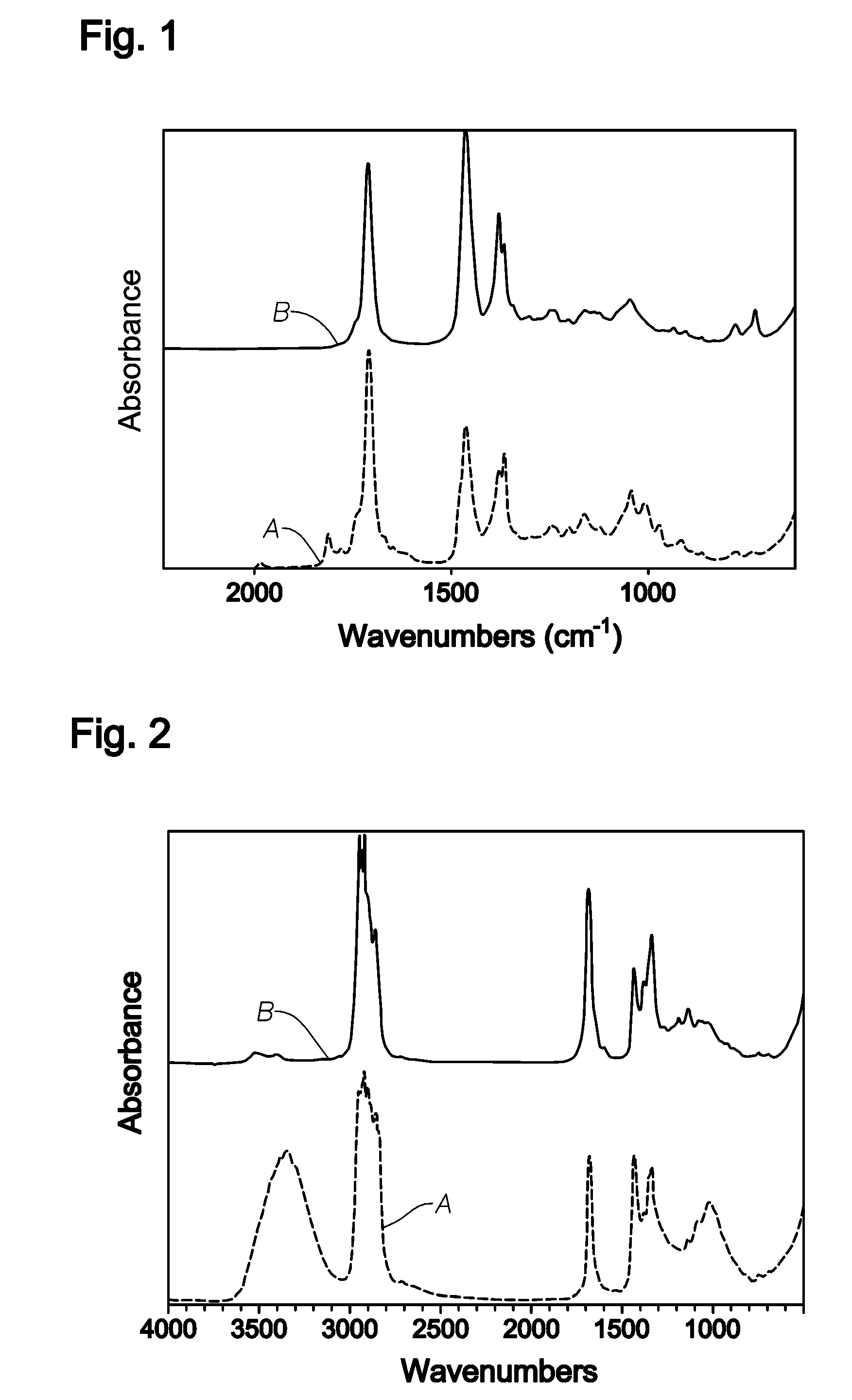
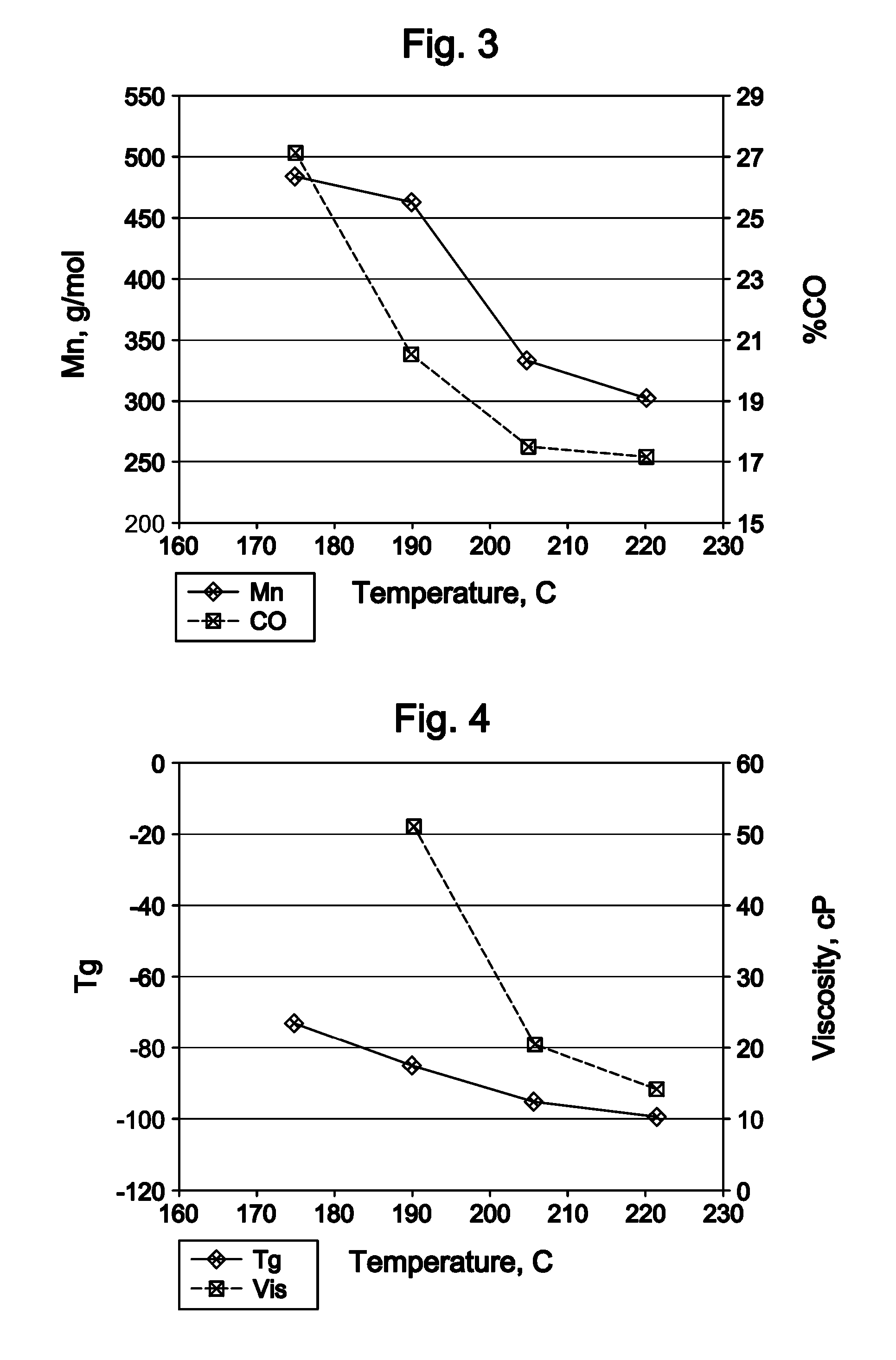
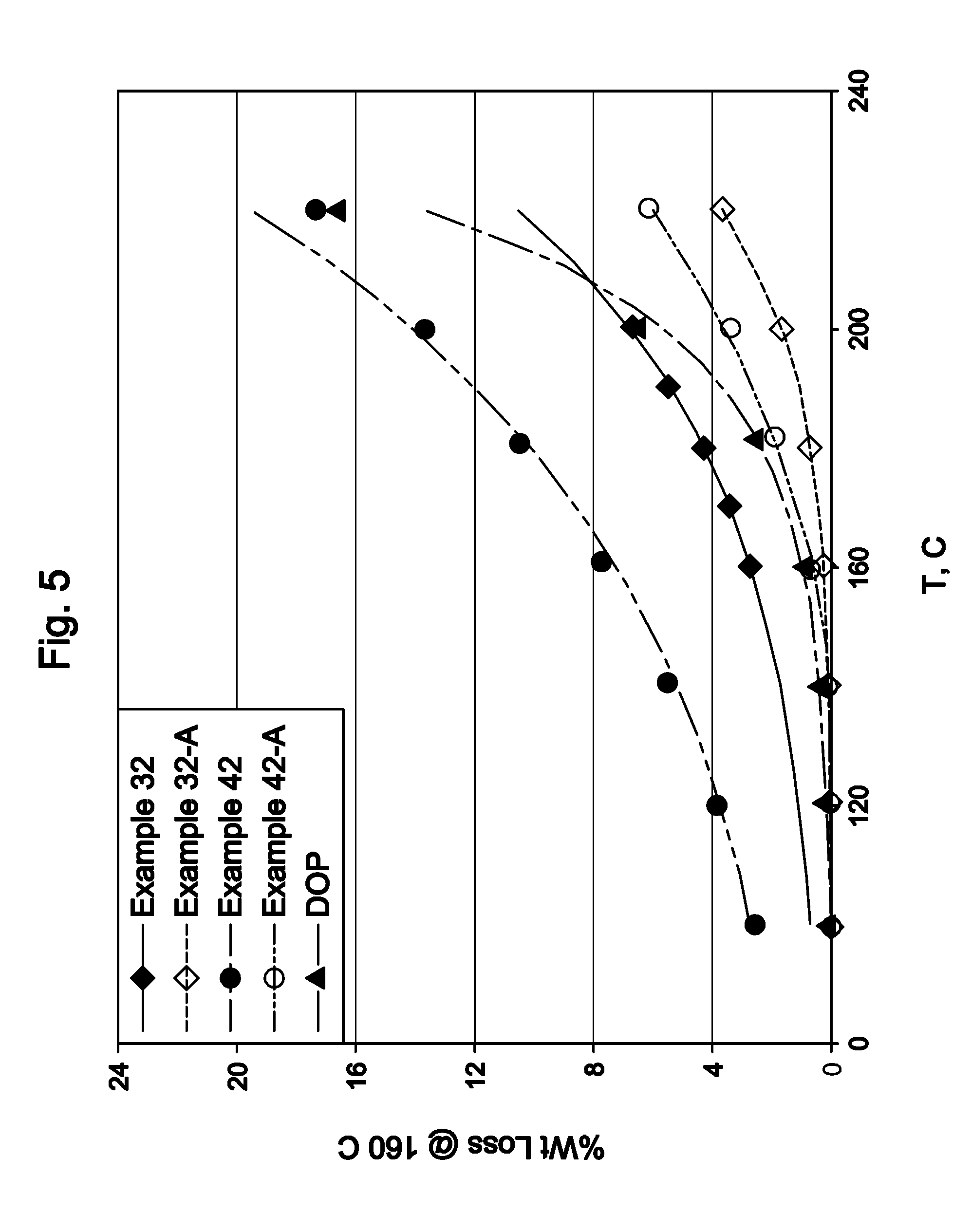
- Development of novel polyketone oligomers, specifically ethylene-butene-carbon monoxide oligomers, which are produced through free radical polymerization and can be at least partially hydrogenated to enhance their properties as plasticizers, including reduced olefinic content, improved stability, and lower volatility, addressing issues like color and exudation.

Environmental Impact and Regulatory Compliance
The environmental impact of oleoresins versus plasticizers represents a critical consideration in today's increasingly eco-conscious regulatory landscape. Traditional plasticizers, particularly phthalates, have faced mounting scrutiny due to their persistence in the environment and potential toxicity. Studies have documented their bioaccumulation in aquatic ecosystems, with detectable levels found in marine organisms across various trophic levels, raising significant ecological concerns.
Oleoresins, derived from natural plant sources, generally demonstrate superior biodegradability profiles compared to synthetic plasticizers. Research indicates that most oleoresins can degrade by 60-90% within 28 days under standard environmental conditions, whereas conventional plasticizers may persist for decades. This fundamental difference has significant implications for waste management strategies and end-of-life product considerations.
Regulatory frameworks worldwide have responded to these environmental disparities with increasingly stringent controls. The European Union's REACH regulation has placed several phthalate plasticizers on the Substances of Very High Concern (SVHC) list, with some variants facing outright restrictions. Similarly, California's Proposition 65 requires warning labels for products containing certain plasticizers, creating market access challenges for manufacturers using these compounds.
Compliance costs associated with synthetic plasticizers continue to rise as regulatory requirements evolve. Companies must invest in extensive toxicological testing, environmental impact assessments, and alternative substance evaluations. These compliance expenditures can add 15-30% to the total cost of plasticizer implementation, significantly altering the cost-performance equation when compared to oleoresins.
Carbon footprint analyses reveal that oleoresin production typically generates 40-60% lower greenhouse gas emissions compared to synthetic plasticizer manufacturing. This differential stems primarily from reduced energy requirements and the renewable nature of oleoresin feedstocks. As carbon pricing mechanisms expand globally, this environmental advantage may translate into tangible economic benefits.
Water pollution mitigation represents another critical environmental consideration. Plasticizer manufacturing processes often generate wastewater containing recalcitrant organic compounds requiring specialized treatment. Conversely, oleoresin production generally produces effluents with higher biodegradability, though extraction solvents may present their own environmental challenges if not properly managed.
The circular economy potential differs markedly between these material categories. Oleoresins, being bio-based, align more naturally with circular economy principles and can potentially contribute to closed-loop systems. Synthetic plasticizers, while technically recyclable in some applications, often complicate recycling processes and may limit the recyclability of the materials they modify.
Oleoresins, derived from natural plant sources, generally demonstrate superior biodegradability profiles compared to synthetic plasticizers. Research indicates that most oleoresins can degrade by 60-90% within 28 days under standard environmental conditions, whereas conventional plasticizers may persist for decades. This fundamental difference has significant implications for waste management strategies and end-of-life product considerations.
Regulatory frameworks worldwide have responded to these environmental disparities with increasingly stringent controls. The European Union's REACH regulation has placed several phthalate plasticizers on the Substances of Very High Concern (SVHC) list, with some variants facing outright restrictions. Similarly, California's Proposition 65 requires warning labels for products containing certain plasticizers, creating market access challenges for manufacturers using these compounds.
Compliance costs associated with synthetic plasticizers continue to rise as regulatory requirements evolve. Companies must invest in extensive toxicological testing, environmental impact assessments, and alternative substance evaluations. These compliance expenditures can add 15-30% to the total cost of plasticizer implementation, significantly altering the cost-performance equation when compared to oleoresins.
Carbon footprint analyses reveal that oleoresin production typically generates 40-60% lower greenhouse gas emissions compared to synthetic plasticizer manufacturing. This differential stems primarily from reduced energy requirements and the renewable nature of oleoresin feedstocks. As carbon pricing mechanisms expand globally, this environmental advantage may translate into tangible economic benefits.
Water pollution mitigation represents another critical environmental consideration. Plasticizer manufacturing processes often generate wastewater containing recalcitrant organic compounds requiring specialized treatment. Conversely, oleoresin production generally produces effluents with higher biodegradability, though extraction solvents may present their own environmental challenges if not properly managed.
The circular economy potential differs markedly between these material categories. Oleoresins, being bio-based, align more naturally with circular economy principles and can potentially contribute to closed-loop systems. Synthetic plasticizers, while technically recyclable in some applications, often complicate recycling processes and may limit the recyclability of the materials they modify.
Supply Chain Considerations and Raw Material Availability
The supply chain for both oleoresins and plasticizers presents distinct challenges and opportunities that significantly impact their cost-performance profiles. Oleoresins, being natural products derived primarily from plants such as pine trees, are subject to agricultural variability including seasonal fluctuations, climate conditions, and regional availability. The extraction process for oleoresins typically involves tapping trees or steam distillation, which requires specialized labor and equipment, creating potential bottlenecks in production scaling.
Global oleoresin supply chains are concentrated in specific geographic regions, with major production centers in China, Brazil, Indonesia, and parts of Southern Europe. This geographic concentration increases vulnerability to regional disruptions such as natural disasters, political instability, or trade restrictions. Furthermore, the quality and chemical composition of oleoresins can vary significantly between batches, necessitating additional quality control measures that add complexity to the supply chain.
In contrast, plasticizers benefit from a more industrialized and standardized production process. Most common plasticizers, particularly phthalates and adipates, are petroleum derivatives, making their supply chains closely tied to the petrochemical industry. This integration with established petrochemical infrastructure provides plasticizers with greater supply stability and more predictable pricing models, albeit with exposure to oil price volatility.
Raw material availability for plasticizers is generally more consistent, with production facilities distributed across major industrial regions globally. The manufacturing process allows for greater quality control and consistency between batches, reducing variability in performance characteristics. However, increasing regulatory scrutiny on certain plasticizer compounds, particularly those with potential health concerns, has begun to impact availability and drive reformulation efforts.
Transportation and storage considerations also differ significantly between these materials. Oleoresins often require specialized handling due to their viscosity, potential for oxidation, and temperature sensitivity. Plasticizers typically have more straightforward logistics requirements, though some varieties may face restrictions due to hazardous material classifications.
Recent global supply chain disruptions have highlighted vulnerabilities in both categories. For oleoresins, climate change impacts on source plant populations and increasing demand for natural products have created pressure points. For plasticizers, regulatory changes and consumer preferences shifting away from certain synthetic compounds have necessitated supply chain adaptations and alternative sourcing strategies.
Companies evaluating these materials must consider not only current availability and pricing but also long-term supply security, sustainability credentials, and potential regulatory changes that could affect material access or compliance requirements in their target markets.
Global oleoresin supply chains are concentrated in specific geographic regions, with major production centers in China, Brazil, Indonesia, and parts of Southern Europe. This geographic concentration increases vulnerability to regional disruptions such as natural disasters, political instability, or trade restrictions. Furthermore, the quality and chemical composition of oleoresins can vary significantly between batches, necessitating additional quality control measures that add complexity to the supply chain.
In contrast, plasticizers benefit from a more industrialized and standardized production process. Most common plasticizers, particularly phthalates and adipates, are petroleum derivatives, making their supply chains closely tied to the petrochemical industry. This integration with established petrochemical infrastructure provides plasticizers with greater supply stability and more predictable pricing models, albeit with exposure to oil price volatility.
Raw material availability for plasticizers is generally more consistent, with production facilities distributed across major industrial regions globally. The manufacturing process allows for greater quality control and consistency between batches, reducing variability in performance characteristics. However, increasing regulatory scrutiny on certain plasticizer compounds, particularly those with potential health concerns, has begun to impact availability and drive reformulation efforts.
Transportation and storage considerations also differ significantly between these materials. Oleoresins often require specialized handling due to their viscosity, potential for oxidation, and temperature sensitivity. Plasticizers typically have more straightforward logistics requirements, though some varieties may face restrictions due to hazardous material classifications.
Recent global supply chain disruptions have highlighted vulnerabilities in both categories. For oleoresins, climate change impacts on source plant populations and increasing demand for natural products have created pressure points. For plasticizers, regulatory changes and consumer preferences shifting away from certain synthetic compounds have necessitated supply chain adaptations and alternative sourcing strategies.
Companies evaluating these materials must consider not only current availability and pricing but also long-term supply security, sustainability credentials, and potential regulatory changes that could affect material access or compliance requirements in their target markets.
Unlock deeper insights with PatSnap Eureka Quick Research — get a full tech report to explore trends and direct your research. Try now!
Generate Your Research Report Instantly with AI Agent
Supercharge your innovation with PatSnap Eureka AI Agent Platform!