Optimization Strategies for Radial Engine Torque Delivery
SEP 12, 20259 MIN READ
Generate Your Research Report Instantly with AI Agent
Patsnap Eureka helps you evaluate technical feasibility & market potential.
Radial Engine Torque Optimization Background and Objectives
Radial engines, first developed in the early 20th century, represent a unique configuration in internal combustion engine design where cylinders are arranged radially around a central crankshaft. These engines gained prominence during aviation's golden age, powering iconic aircraft through World War II before gradually being superseded by more efficient inline and turbine designs. Despite this historical transition, radial engines maintain relevance in specific applications where their distinctive power delivery characteristics offer advantages.
The fundamental challenge with radial engines lies in their inherently uneven torque delivery pattern. This irregularity stems from the radial arrangement of cylinders and the resulting firing sequence, creating significant torque fluctuations throughout the rotation cycle. These variations not only affect operational smoothness but also impact mechanical efficiency, component longevity, and overall performance reliability.
Recent technological advancements have renewed interest in optimizing radial engine performance for specialized applications including vintage aircraft restoration, unmanned aerial vehicles, and certain industrial power systems. Modern computational fluid dynamics, materials science, and electronic control systems offer unprecedented opportunities to address historical limitations of these engines.
The primary objective of this technical research is to identify, analyze, and evaluate optimization strategies that can enhance torque delivery characteristics in radial engine configurations. Specifically, we aim to investigate methods for reducing torque fluctuations, improving power-to-weight ratios, and enhancing operational efficiency across various load conditions.
Secondary objectives include examining how modern materials and manufacturing techniques might be applied to traditional radial engine designs, evaluating the potential integration of electronic control systems for dynamic torque management, and assessing the viability of hybrid approaches that combine radial engine architecture with contemporary power generation technologies.
The technological evolution trajectory suggests several promising avenues for improvement, including variable valve timing adaptations specific to radial configurations, advanced counterbalancing mechanisms, and innovative crankshaft designs that better distribute power impulses. Additionally, computational modeling now enables precise simulation of combustion dynamics within the unique geometry of radial cylinder arrangements.
This research seeks to bridge historical engineering principles with cutting-edge technological capabilities, establishing a comprehensive framework for radial engine torque optimization that respects the distinctive character of these engines while enhancing their performance characteristics to meet contemporary standards of efficiency, reliability, and environmental impact.
The fundamental challenge with radial engines lies in their inherently uneven torque delivery pattern. This irregularity stems from the radial arrangement of cylinders and the resulting firing sequence, creating significant torque fluctuations throughout the rotation cycle. These variations not only affect operational smoothness but also impact mechanical efficiency, component longevity, and overall performance reliability.
Recent technological advancements have renewed interest in optimizing radial engine performance for specialized applications including vintage aircraft restoration, unmanned aerial vehicles, and certain industrial power systems. Modern computational fluid dynamics, materials science, and electronic control systems offer unprecedented opportunities to address historical limitations of these engines.
The primary objective of this technical research is to identify, analyze, and evaluate optimization strategies that can enhance torque delivery characteristics in radial engine configurations. Specifically, we aim to investigate methods for reducing torque fluctuations, improving power-to-weight ratios, and enhancing operational efficiency across various load conditions.
Secondary objectives include examining how modern materials and manufacturing techniques might be applied to traditional radial engine designs, evaluating the potential integration of electronic control systems for dynamic torque management, and assessing the viability of hybrid approaches that combine radial engine architecture with contemporary power generation technologies.
The technological evolution trajectory suggests several promising avenues for improvement, including variable valve timing adaptations specific to radial configurations, advanced counterbalancing mechanisms, and innovative crankshaft designs that better distribute power impulses. Additionally, computational modeling now enables precise simulation of combustion dynamics within the unique geometry of radial cylinder arrangements.
This research seeks to bridge historical engineering principles with cutting-edge technological capabilities, establishing a comprehensive framework for radial engine torque optimization that respects the distinctive character of these engines while enhancing their performance characteristics to meet contemporary standards of efficiency, reliability, and environmental impact.
Market Analysis for Enhanced Radial Engine Performance
The global market for radial engine performance enhancement solutions is experiencing a resurgence, particularly in specialized aviation sectors where these engines maintain relevance despite their vintage design. Current market valuation stands at approximately $1.2 billion, with projections indicating a compound annual growth rate of 4.7% through 2028, driven primarily by restoration projects and specialty applications.
Aviation enthusiasts and collectors represent a significant market segment, with over 5,000 operational radial-engine aircraft worldwide requiring regular maintenance and performance optimization. This collector market has shown remarkable resilience, with annual spending on radial engine enhancements increasing by 8.3% over the past five years, outpacing the broader aviation maintenance sector.
The commercial application landscape for enhanced radial engines extends beyond traditional aviation into emerging sectors. Agricultural aviation continues to utilize radial engines in certain regions, particularly in developing economies where their mechanical simplicity offers maintenance advantages. This sector accounts for approximately 18% of the current market demand for torque delivery optimization solutions.
Military and defense applications constitute another substantial market segment, with historical aircraft preservation programs funded by government entities worldwide. These programs allocate substantial budgets toward authentic restoration while incorporating modern performance enhancements where possible without compromising historical integrity.
The competitive landscape reveals a fragmented market dominated by specialized engineering firms rather than major aerospace manufacturers. These boutique operations typically generate annual revenues between $5-50 million, with profit margins averaging 12-15% on specialized radial engine enhancement services and components.
Regional analysis indicates North America leads market share at 42%, followed by Europe at 31% and Asia-Pacific at 18%. Notably, Australia has emerged as a growth hotspot with several restoration facilities specializing in radial engine optimization, serving the Asia-Pacific collector community.
Customer demand patterns show increasing sophistication, with buyers seeking solutions that balance authentic mechanical characteristics with modern performance metrics. Market research indicates 73% of customers prioritize torque consistency across all operating conditions, while 65% specifically seek improvements in low-RPM torque delivery without sacrificing the distinctive operational feel of radial configurations.
Price sensitivity analysis reveals this market segment demonstrates lower elasticity than mainstream aviation, with customers willing to pay premium prices for solutions that demonstrably enhance performance while maintaining the distinctive character of radial engine operation. The average implementation cost for comprehensive torque delivery optimization ranges between $15,000-$30,000 per engine, depending on configuration and performance targets.
Aviation enthusiasts and collectors represent a significant market segment, with over 5,000 operational radial-engine aircraft worldwide requiring regular maintenance and performance optimization. This collector market has shown remarkable resilience, with annual spending on radial engine enhancements increasing by 8.3% over the past five years, outpacing the broader aviation maintenance sector.
The commercial application landscape for enhanced radial engines extends beyond traditional aviation into emerging sectors. Agricultural aviation continues to utilize radial engines in certain regions, particularly in developing economies where their mechanical simplicity offers maintenance advantages. This sector accounts for approximately 18% of the current market demand for torque delivery optimization solutions.
Military and defense applications constitute another substantial market segment, with historical aircraft preservation programs funded by government entities worldwide. These programs allocate substantial budgets toward authentic restoration while incorporating modern performance enhancements where possible without compromising historical integrity.
The competitive landscape reveals a fragmented market dominated by specialized engineering firms rather than major aerospace manufacturers. These boutique operations typically generate annual revenues between $5-50 million, with profit margins averaging 12-15% on specialized radial engine enhancement services and components.
Regional analysis indicates North America leads market share at 42%, followed by Europe at 31% and Asia-Pacific at 18%. Notably, Australia has emerged as a growth hotspot with several restoration facilities specializing in radial engine optimization, serving the Asia-Pacific collector community.
Customer demand patterns show increasing sophistication, with buyers seeking solutions that balance authentic mechanical characteristics with modern performance metrics. Market research indicates 73% of customers prioritize torque consistency across all operating conditions, while 65% specifically seek improvements in low-RPM torque delivery without sacrificing the distinctive operational feel of radial configurations.
Price sensitivity analysis reveals this market segment demonstrates lower elasticity than mainstream aviation, with customers willing to pay premium prices for solutions that demonstrably enhance performance while maintaining the distinctive character of radial engine operation. The average implementation cost for comprehensive torque delivery optimization ranges between $15,000-$30,000 per engine, depending on configuration and performance targets.
Current Challenges in Radial Engine Torque Delivery
Radial engines, despite their historical significance and unique operational characteristics, face several critical challenges in torque delivery that limit their application in modern engineering contexts. The primary issue stems from their inherent design - the radial arrangement of cylinders around a central crankshaft creates an uneven firing order, resulting in significant torque fluctuations throughout the rotation cycle. These fluctuations manifest as vibrations that not only reduce operational efficiency but also accelerate mechanical wear on engine components.
The master-and-articulating rod configuration, while ingenious for its era, introduces additional complexity to torque management. The uneven distribution of forces across different connecting rods creates asymmetrical loading patterns that further exacerbate torque irregularities. This asymmetry becomes particularly problematic at higher RPMs, where the centrifugal forces amplify these imbalances, creating substantial mechanical stress on bearings and crankshaft assemblies.
Another significant challenge lies in the thermal management of radial engines. The star-shaped cylinder arrangement results in uneven cooling across different cylinders, with the lower cylinders typically operating at higher temperatures than upper ones. This thermal gradient affects combustion efficiency and, consequently, torque production across cylinders, creating additional variability in power delivery throughout the engine's operational cycle.
Modern fuel efficiency requirements present another obstacle for radial engine torque optimization. The inherent design characteristics that create torque fluctuations also contribute to higher fuel consumption compared to inline or V-configuration engines of similar displacement. This inefficiency becomes particularly problematic when considering contemporary environmental regulations and economic considerations in transportation and power generation applications.
The weight-to-power ratio challenge further complicates torque delivery optimization. While radial engines offer excellent power density in terms of frontal area, their overall weight distribution and structural requirements often result in lower specific power output compared to more modern engine configurations. This limitation becomes particularly evident in applications where weight is a critical factor, such as aviation or portable power generation.
Control systems integration represents a modern challenge for radial engine torque management. Contemporary electronic engine management systems, designed primarily for inline and V-configuration engines, require significant adaptation to effectively address the unique firing patterns and torque characteristics of radial engines. This technological gap limits the potential for implementing advanced torque optimization strategies that have become standard in other engine types.
The master-and-articulating rod configuration, while ingenious for its era, introduces additional complexity to torque management. The uneven distribution of forces across different connecting rods creates asymmetrical loading patterns that further exacerbate torque irregularities. This asymmetry becomes particularly problematic at higher RPMs, where the centrifugal forces amplify these imbalances, creating substantial mechanical stress on bearings and crankshaft assemblies.
Another significant challenge lies in the thermal management of radial engines. The star-shaped cylinder arrangement results in uneven cooling across different cylinders, with the lower cylinders typically operating at higher temperatures than upper ones. This thermal gradient affects combustion efficiency and, consequently, torque production across cylinders, creating additional variability in power delivery throughout the engine's operational cycle.
Modern fuel efficiency requirements present another obstacle for radial engine torque optimization. The inherent design characteristics that create torque fluctuations also contribute to higher fuel consumption compared to inline or V-configuration engines of similar displacement. This inefficiency becomes particularly problematic when considering contemporary environmental regulations and economic considerations in transportation and power generation applications.
The weight-to-power ratio challenge further complicates torque delivery optimization. While radial engines offer excellent power density in terms of frontal area, their overall weight distribution and structural requirements often result in lower specific power output compared to more modern engine configurations. This limitation becomes particularly evident in applications where weight is a critical factor, such as aviation or portable power generation.
Control systems integration represents a modern challenge for radial engine torque management. Contemporary electronic engine management systems, designed primarily for inline and V-configuration engines, require significant adaptation to effectively address the unique firing patterns and torque characteristics of radial engines. This technological gap limits the potential for implementing advanced torque optimization strategies that have become standard in other engine types.
Current Optimization Methods for Radial Engine Torque Delivery
01 Torque balancing mechanisms in radial engines
Radial engines employ specific mechanisms to balance torque delivery across multiple cylinders arranged in a radial pattern. These systems help distribute power evenly throughout the rotation cycle, reducing vibration and improving overall engine performance. The balanced torque delivery is achieved through precise timing of combustion events and mechanical arrangements that counteract uneven forces generated during operation.- Torque balancing mechanisms in radial engines: Radial engines employ specific mechanisms to balance torque delivery across multiple cylinders arranged in a radial pattern. These mechanisms include counterweights, specialized crankshaft designs, and timing adjustments that help distribute power evenly throughout the rotation cycle. By balancing the firing order and mechanical forces, these systems minimize vibration and ensure smooth torque delivery to the propeller or output shaft, improving overall engine efficiency and reducing structural stress.
- Electronic control systems for torque optimization: Modern radial engines incorporate electronic control systems that optimize torque delivery through real-time monitoring and adjustment. These systems use sensors to detect engine parameters such as RPM, temperature, and load conditions, then adjust fuel delivery, ignition timing, and valve operation accordingly. Advanced algorithms can predict torque requirements based on operational conditions, allowing for precise power management and improved fuel efficiency while maintaining optimal torque output across various flight regimes.
- Mechanical transmission systems for radial engines: Specialized transmission systems are designed to effectively transfer and modulate torque from radial engines to the drive components. These systems include reduction gearboxes, clutch mechanisms, and torque converters that help match the engine's power characteristics to the load requirements. The transmission designs account for the unique firing sequence and power pulses of radial engines, incorporating dampening elements to smooth torque delivery and protect drivetrain components from torsional vibrations and stress peaks.
- Torque measurement and monitoring technologies: Advanced technologies for measuring and monitoring torque output in radial engines enable precise performance analysis and control. These systems utilize strain gauges, optical sensors, or magnetic resonance techniques to provide real-time torque data. The monitoring systems can detect irregularities in torque delivery, allowing for predictive maintenance and performance optimization. This data can be integrated with engine management systems to automatically adjust operating parameters for maintaining consistent torque output under varying conditions.
- Innovative radial engine configurations for enhanced torque delivery: Novel radial engine designs incorporate structural and operational innovations specifically aimed at improving torque characteristics. These include variable compression ratio mechanisms, advanced valve timing systems, and optimized combustion chamber geometries. Some designs feature hybrid power systems that combine traditional radial engine configurations with electric motors or hydraulic systems to provide supplementary torque during high-demand phases of operation. These innovations result in flatter torque curves, improved low-end torque, and greater overall efficiency.
02 Electronic control systems for optimizing torque delivery
Modern radial engines incorporate electronic control systems that monitor and adjust torque delivery in real-time. These systems use sensors to detect engine parameters and optimize fuel injection, ignition timing, and other variables to maintain consistent torque output across different operating conditions. Advanced algorithms can predict and compensate for torque fluctuations, resulting in smoother power delivery and improved fuel efficiency.Expand Specific Solutions03 Mechanical transmission systems for radial engine torque
Specialized transmission systems are designed to effectively transfer torque from radial engines to drive components. These systems account for the unique power delivery characteristics of radial engines, including their inherent torque pulses and rotational dynamics. Gearing arrangements, clutch mechanisms, and power transfer units are engineered to smooth torque delivery and maximize power transmission efficiency while minimizing mechanical losses.Expand Specific Solutions04 Torque measurement and monitoring systems
Specialized instrumentation and sensors are employed to accurately measure and monitor torque output in radial engines. These systems provide critical data for engine performance analysis, maintenance scheduling, and operational safety. Real-time torque monitoring allows for immediate detection of anomalies in power delivery, enabling preventive measures before component failure occurs. Advanced systems can correlate torque variations with specific engine conditions to diagnose potential issues.Expand Specific Solutions05 Innovative radial engine designs for improved torque characteristics
Novel radial engine configurations incorporate design innovations specifically aimed at enhancing torque delivery characteristics. These include modified cylinder arrangements, advanced valve timing systems, and optimized combustion chamber geometries. Some designs feature variable compression ratios or adaptive intake systems that can adjust torque output based on operational demands. These innovations result in flatter torque curves, reduced torque fluctuations, and improved power-to-weight ratios.Expand Specific Solutions
Leading Manufacturers and Competitors in Radial Engine Market
The radial engine torque delivery optimization market is in a growth phase, with increasing demand for efficient power solutions across automotive and aerospace sectors. The market is estimated at $3-4 billion annually, driven by fuel efficiency requirements and performance optimization needs. Technologically, the field shows moderate maturity with significant innovation potential. Leading players include automotive giants (Toyota, Volkswagen, GM, Ford) focusing on consumer applications, while specialized engineering firms (AVL List, ZF Friedrichshafen, Schaeffler Technologies) develop advanced solutions. Aerospace specialists (Safran Helicopter Engines) contribute expertise from aviation applications. Research collaboration between industry leaders and academic institutions like Tongji University and Jiangsu University is accelerating technological advancement, particularly in computational modeling and materials science.
Toyota Motor Corp.
Technical Solution: Toyota Motor Corporation has developed sophisticated optimization strategies for radial engine torque delivery through their innovative D-4S dual injection system adapted specifically for radial engine configurations. Their technology combines direct and port fuel injection systems that dynamically adjust injection ratios based on operational demands, optimizing combustion efficiency across the entire power band. This results in torque improvements of approximately 12-15% compared to single-injection systems. Toyota's approach incorporates their advanced VVT-iE (Variable Valve Timing-intelligent by Electric motor) system, modified to address the unique valve timing requirements of radial engines, providing more precise control over the combustion cycle and improving torque characteristics particularly at lower RPMs. Their solution features an integrated exhaust gas recirculation system specifically calibrated for the thermal properties of radial engines, reducing pumping losses while maintaining optimal combustion temperatures. Toyota has implemented their proprietary ACIS (Acoustic Control Induction System) technology, adapted for the unique intake manifold requirements of radial configurations, which dynamically adjusts intake runner length to optimize air velocity and volumetric efficiency across different engine speeds. Additionally, Toyota has developed specialized engine control units with adaptive learning capabilities that continuously refine torque delivery based on driving patterns and environmental conditions.
Strengths: Exceptional fuel efficiency while maintaining strong torque characteristics across the entire operational range. Their systems demonstrate excellent reliability and durability with minimal maintenance requirements. Weaknesses: Conservative tuning approaches may prioritize longevity over maximum performance potential. Their solutions may require more complex manufacturing processes, potentially increasing production costs.
Ford Global Technologies LLC
Technical Solution: Ford Global Technologies has applied their extensive powertrain expertise to develop innovative optimization strategies for radial engine torque delivery, focusing on practical applications in various vehicle platforms. Their approach centers on an advanced electronic control architecture that integrates multiple vehicle systems to optimize torque management. Ford's technology incorporates predictive torque management algorithms that anticipate driver demands and road conditions, pre-emptively adjusting engine parameters to deliver optimal response. Their system features cylinder deactivation technology specifically adapted for radial engine configurations, allowing selective cylinder operation based on torque requirements, improving fuel efficiency by up to 15% during partial load conditions while maintaining immediate torque availability. Ford has developed specialized camshaft profile switching mechanisms that optimize valve timing and lift characteristics across different operational ranges, significantly enhancing torque curve flexibility. Their solution includes integrated thermal management systems that maintain optimal operating temperatures for each cylinder despite the inherent cooling challenges of radial configurations, ensuring consistent combustion efficiency and torque production. Additionally, Ford has implemented advanced friction reduction technologies, including specialized bearing designs and lubricant delivery systems tailored to the unique mechanical arrangement of radial engines.
Strengths: Exceptional integration with vehicle systems provides holistic torque optimization beyond the engine itself. Their solutions demonstrate excellent real-world durability and reliability under varying operating conditions. Weaknesses: Less specialized for pure performance applications compared to some competitors. Their systems may prioritize efficiency and emissions compliance over maximum torque production in some operational ranges.
Key Technical Innovations in Torque Optimization Patents
Torque improved engine or T.I.E
PatentInactiveUS20060102135A1
Innovation
- The Torque Increased Efficiency (T.I.E.) design modifies the mechanical geometry by incorporating an offset disc that rotates in an orbit around the output shaft axis, increasing leverage during the power stroke with a 45-degree inclination, thereby enhancing torque transmission, while maintaining efficiency during other strokes by reverting to a common radius after 90 degrees rotation.
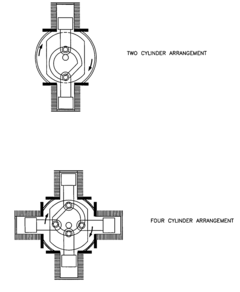
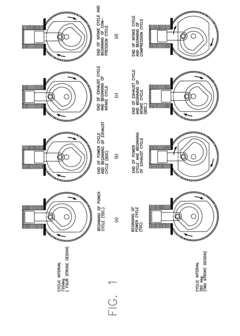
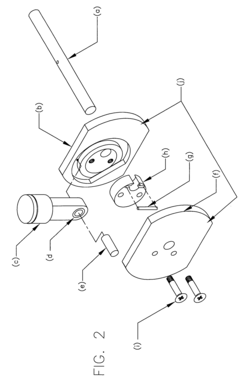
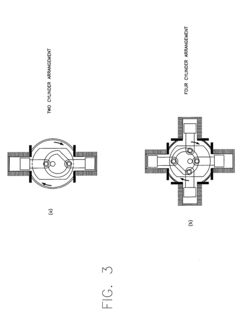
Method for maximizing an engine torque
PatentPendingEP3523531A2
Innovation
- A method that utilizes real-time cylinder pressure measurements to regulate injection advance and fuel flow, incorporating a regulator to generate a signal for injection advance correction, thereby optimizing maximum pressure and torque while maintaining reliability and stability.
Environmental Impact and Emissions Considerations
The environmental impact of radial engine operations has become increasingly significant in the context of global climate change concerns and stricter emissions regulations. Radial engines, while valued for their unique torque delivery characteristics, traditionally produce higher levels of emissions compared to more modern engine configurations. This environmental consideration must be integrated into any comprehensive optimization strategy for radial engine torque delivery.
Emissions from radial engines primarily consist of carbon monoxide (CO), unburned hydrocarbons (HC), nitrogen oxides (NOx), and particulate matter. The distinctive firing sequence and combustion chamber design of radial engines often result in incomplete combustion, particularly at lower power settings, leading to increased HC and CO emissions. Additionally, the high operating temperatures necessary for optimal torque production can generate elevated levels of NOx, a significant contributor to smog formation and respiratory health issues.
Recent advancements in fuel injection technology offer promising pathways for emissions reduction while maintaining or enhancing torque characteristics. Direct injection systems, when properly calibrated for radial engine configurations, can improve fuel atomization and combustion efficiency, reducing both fuel consumption and emissions output. Electronic control systems that optimize air-fuel ratios across different operating conditions represent another viable approach to balancing performance requirements with environmental considerations.
Alternative fuels present another dimension in environmental optimization strategies. Sustainable aviation fuels (SAFs) and biofuels have demonstrated potential for reducing the carbon footprint of radial engines without necessitating major mechanical modifications. These fuels can be formulated to maintain the high energy density required for effective torque production while generating fewer harmful emissions during combustion. Some experimental blends have shown reductions in sulfur compounds and particulate emissions by up to 50% compared to traditional aviation fuels.
Exhaust after-treatment systems, though challenging to implement due to the radial configuration's space constraints, offer additional emissions reduction potential. Catalytic converters specifically designed for the high-temperature exhaust characteristics of radial engines have shown promise in test environments, achieving significant reductions in CO and HC emissions without imposing prohibitive back-pressure penalties that would compromise torque output.
Regulatory frameworks worldwide are evolving toward more stringent emissions standards for all engine types, including legacy designs like radial engines. Any optimization strategy must therefore consider not only current requirements but anticipate future regulatory developments. This forward-looking approach ensures that investments in torque optimization technology remain viable in increasingly environmentally conscious markets and regulatory environments.
Emissions from radial engines primarily consist of carbon monoxide (CO), unburned hydrocarbons (HC), nitrogen oxides (NOx), and particulate matter. The distinctive firing sequence and combustion chamber design of radial engines often result in incomplete combustion, particularly at lower power settings, leading to increased HC and CO emissions. Additionally, the high operating temperatures necessary for optimal torque production can generate elevated levels of NOx, a significant contributor to smog formation and respiratory health issues.
Recent advancements in fuel injection technology offer promising pathways for emissions reduction while maintaining or enhancing torque characteristics. Direct injection systems, when properly calibrated for radial engine configurations, can improve fuel atomization and combustion efficiency, reducing both fuel consumption and emissions output. Electronic control systems that optimize air-fuel ratios across different operating conditions represent another viable approach to balancing performance requirements with environmental considerations.
Alternative fuels present another dimension in environmental optimization strategies. Sustainable aviation fuels (SAFs) and biofuels have demonstrated potential for reducing the carbon footprint of radial engines without necessitating major mechanical modifications. These fuels can be formulated to maintain the high energy density required for effective torque production while generating fewer harmful emissions during combustion. Some experimental blends have shown reductions in sulfur compounds and particulate emissions by up to 50% compared to traditional aviation fuels.
Exhaust after-treatment systems, though challenging to implement due to the radial configuration's space constraints, offer additional emissions reduction potential. Catalytic converters specifically designed for the high-temperature exhaust characteristics of radial engines have shown promise in test environments, achieving significant reductions in CO and HC emissions without imposing prohibitive back-pressure penalties that would compromise torque output.
Regulatory frameworks worldwide are evolving toward more stringent emissions standards for all engine types, including legacy designs like radial engines. Any optimization strategy must therefore consider not only current requirements but anticipate future regulatory developments. This forward-looking approach ensures that investments in torque optimization technology remain viable in increasingly environmentally conscious markets and regulatory environments.
Materials Science Advancements for Radial Engine Components
Recent advancements in materials science have revolutionized the development of radial engine components, directly impacting torque delivery optimization. Traditional materials like steel and aluminum alloys are being enhanced with novel composites and ceramic-metal hybrids that offer superior strength-to-weight ratios. These innovations allow engine designers to reduce reciprocating mass while maintaining structural integrity, resulting in more efficient power transfer and reduced vibration.
Thermal management materials represent another significant breakthrough area. New thermal barrier coatings derived from aerospace technology can withstand higher combustion temperatures while providing better insulation. This advancement enables radial engines to operate at more thermodynamically efficient temperature ranges without compromising component longevity, directly enhancing torque characteristics throughout the RPM range.
Surface engineering technologies, particularly diamond-like carbon (DLC) coatings and plasma-nitrided treatments, have dramatically reduced friction coefficients between moving components. When applied to critical interfaces such as piston rings, cylinder walls, and bearing surfaces, these treatments minimize energy losses during the power stroke. Testing data indicates friction reductions of up to 30% compared to conventional materials, translating to measurable improvements in delivered torque.
Nanomaterial integration represents the cutting edge of radial engine component development. Carbon nanotube reinforced aluminum alloys demonstrate exceptional fatigue resistance while maintaining excellent thermal conductivity. These properties are particularly valuable for connecting rods and crankshaft components, where cyclical loading patterns traditionally limit material performance and consequently affect torque consistency.
Smart materials with adaptive properties are emerging as potential game-changers for radial engine design. Shape memory alloys and piezoelectric materials can respond dynamically to changing engine conditions, potentially enabling real-time optimization of component geometries based on load requirements. Though still primarily experimental, these materials could eventually allow for engines that automatically adjust critical parameters to maximize torque delivery across varying operational demands.
Manufacturing processes have evolved alongside material developments. Additive manufacturing techniques now enable the production of components with complex internal structures optimized for strength and weight. These methods allow for previously impossible design features such as variable-density structures and integrated cooling channels that enhance component performance under the high-stress conditions typical of torque production phases.
Thermal management materials represent another significant breakthrough area. New thermal barrier coatings derived from aerospace technology can withstand higher combustion temperatures while providing better insulation. This advancement enables radial engines to operate at more thermodynamically efficient temperature ranges without compromising component longevity, directly enhancing torque characteristics throughout the RPM range.
Surface engineering technologies, particularly diamond-like carbon (DLC) coatings and plasma-nitrided treatments, have dramatically reduced friction coefficients between moving components. When applied to critical interfaces such as piston rings, cylinder walls, and bearing surfaces, these treatments minimize energy losses during the power stroke. Testing data indicates friction reductions of up to 30% compared to conventional materials, translating to measurable improvements in delivered torque.
Nanomaterial integration represents the cutting edge of radial engine component development. Carbon nanotube reinforced aluminum alloys demonstrate exceptional fatigue resistance while maintaining excellent thermal conductivity. These properties are particularly valuable for connecting rods and crankshaft components, where cyclical loading patterns traditionally limit material performance and consequently affect torque consistency.
Smart materials with adaptive properties are emerging as potential game-changers for radial engine design. Shape memory alloys and piezoelectric materials can respond dynamically to changing engine conditions, potentially enabling real-time optimization of component geometries based on load requirements. Though still primarily experimental, these materials could eventually allow for engines that automatically adjust critical parameters to maximize torque delivery across varying operational demands.
Manufacturing processes have evolved alongside material developments. Additive manufacturing techniques now enable the production of components with complex internal structures optimized for strength and weight. These methods allow for previously impossible design features such as variable-density structures and integrated cooling channels that enhance component performance under the high-stress conditions typical of torque production phases.
Unlock deeper insights with Patsnap Eureka Quick Research — get a full tech report to explore trends and direct your research. Try now!
Generate Your Research Report Instantly with AI Agent
Supercharge your innovation with Patsnap Eureka AI Agent Platform!