P–N Junction Pressure Test: Impact on Functionality
SEP 5, 202510 MIN READ
Generate Your Research Report Instantly with AI Agent
PatSnap Eureka helps you evaluate technical feasibility & market potential.
P-N Junction Pressure Testing Background and Objectives
P-N junction technology has evolved significantly since its discovery in the early 20th century, becoming a fundamental component in modern semiconductor devices. The pressure sensitivity of P-N junctions has been recognized since the 1950s when researchers first observed changes in electrical characteristics under mechanical stress. This phenomenon, initially considered a limitation, has evolved into an area of focused research with applications spanning multiple industries.
The evolution of P-N junction pressure testing has paralleled advancements in semiconductor manufacturing techniques. Early testing methodologies were rudimentary, often yielding inconsistent results due to limitations in measurement precision and environmental control. The introduction of microelectromechanical systems (MEMS) in the 1980s revolutionized testing capabilities, enabling more precise application of pressure and measurement of electrical responses.
Recent technological developments have further refined pressure testing techniques, incorporating advanced materials science principles and nanoscale measurement capabilities. The integration of computational modeling has enhanced our understanding of pressure-induced effects on carrier mobility, depletion region characteristics, and overall junction performance.
The primary objective of P-N junction pressure testing is to comprehensively understand how mechanical stress affects semiconductor functionality across various operational parameters. This includes quantifying changes in forward and reverse bias characteristics, breakdown voltage alterations, and modifications to carrier generation and recombination rates under different pressure conditions.
Secondary objectives include establishing standardized testing protocols that ensure reproducibility across different manufacturing environments and developing predictive models that can anticipate performance changes under various pressure scenarios. These models are increasingly important as semiconductor devices continue to miniaturize, making them more susceptible to mechanical stress effects.
From an industry perspective, pressure testing aims to enhance device reliability in applications where mechanical stress is unavoidable, such as automotive electronics, aerospace systems, and wearable technologies. Understanding pressure-induced effects enables engineers to design compensation mechanisms or leverage these effects for novel sensing applications.
The long-term technological goal is to develop semiconductor devices with predictable and controllable responses to pressure, potentially enabling new classes of pressure-sensitive electronics. This includes pressure-tunable diodes, stress-compensated integrated circuits, and advanced pressure sensors with enhanced sensitivity and range.
As we look toward future developments, the convergence of materials science, quantum mechanics, and advanced manufacturing techniques promises to further refine our understanding of P-N junction behavior under pressure, potentially unlocking new functionalities and applications in emerging technology sectors.
The evolution of P-N junction pressure testing has paralleled advancements in semiconductor manufacturing techniques. Early testing methodologies were rudimentary, often yielding inconsistent results due to limitations in measurement precision and environmental control. The introduction of microelectromechanical systems (MEMS) in the 1980s revolutionized testing capabilities, enabling more precise application of pressure and measurement of electrical responses.
Recent technological developments have further refined pressure testing techniques, incorporating advanced materials science principles and nanoscale measurement capabilities. The integration of computational modeling has enhanced our understanding of pressure-induced effects on carrier mobility, depletion region characteristics, and overall junction performance.
The primary objective of P-N junction pressure testing is to comprehensively understand how mechanical stress affects semiconductor functionality across various operational parameters. This includes quantifying changes in forward and reverse bias characteristics, breakdown voltage alterations, and modifications to carrier generation and recombination rates under different pressure conditions.
Secondary objectives include establishing standardized testing protocols that ensure reproducibility across different manufacturing environments and developing predictive models that can anticipate performance changes under various pressure scenarios. These models are increasingly important as semiconductor devices continue to miniaturize, making them more susceptible to mechanical stress effects.
From an industry perspective, pressure testing aims to enhance device reliability in applications where mechanical stress is unavoidable, such as automotive electronics, aerospace systems, and wearable technologies. Understanding pressure-induced effects enables engineers to design compensation mechanisms or leverage these effects for novel sensing applications.
The long-term technological goal is to develop semiconductor devices with predictable and controllable responses to pressure, potentially enabling new classes of pressure-sensitive electronics. This includes pressure-tunable diodes, stress-compensated integrated circuits, and advanced pressure sensors with enhanced sensitivity and range.
As we look toward future developments, the convergence of materials science, quantum mechanics, and advanced manufacturing techniques promises to further refine our understanding of P-N junction behavior under pressure, potentially unlocking new functionalities and applications in emerging technology sectors.
Market Demand Analysis for Pressure-Resistant Semiconductor Devices
The global market for pressure-resistant semiconductor devices has been experiencing robust growth, driven by increasing demands across multiple industries. The automotive sector represents one of the largest markets, with pressure sensors being critical components in engine management systems, tire pressure monitoring, and advanced driver assistance systems (ADAS). According to industry reports, the automotive pressure sensor market alone is projected to grow at a compound annual growth rate of 8.2% through 2028, highlighting the sustained demand for reliable semiconductor devices that can withstand varying pressure conditions.
The aerospace and defense sectors also contribute significantly to market demand, requiring high-performance semiconductor components capable of functioning under extreme pressure variations at different altitudes. These applications demand exceptional reliability and precision, as failure could lead to catastrophic consequences. The stringent requirements in these sectors have pushed manufacturers to develop increasingly sophisticated pressure-resistant P-N junction technologies.
Consumer electronics represents another rapidly expanding market segment. The integration of pressure sensors in smartphones, wearables, and smart home devices has created new opportunities for pressure-resistant semiconductor technologies. The miniaturization trend in consumer electronics has further intensified the need for compact yet durable pressure-sensing components that maintain functionality under various environmental conditions.
Industrial automation and manufacturing sectors are increasingly adopting pressure-sensitive semiconductor devices for process control, equipment monitoring, and predictive maintenance applications. The Industrial Internet of Things (IIoT) revolution has accelerated this trend, with connected pressure sensors becoming integral to smart factory implementations worldwide. This sector values long-term reliability under continuous operation, often in harsh industrial environments.
The medical device industry represents a premium market segment with stringent requirements for pressure-resistant semiconductors. Applications range from blood pressure monitoring devices to sophisticated implantable medical devices that must function reliably within the human body. The aging global population and increasing prevalence of chronic diseases are driving sustained growth in this sector.
Emerging applications in environmental monitoring, smart agriculture, and infrastructure health monitoring are creating new market opportunities. These applications often involve deployment in challenging environments where devices must withstand significant pressure variations while maintaining functionality over extended periods without maintenance.
Market analysis indicates that customers across all segments are increasingly prioritizing reliability under pressure variations, energy efficiency, and miniaturization. This has created a competitive landscape where manufacturers must continuously innovate to improve the pressure resistance of P-N junctions while maintaining other critical performance parameters. The growing emphasis on sustainability has also led to increased demand for semiconductor devices that can operate efficiently under varying pressure conditions, thereby reducing overall energy consumption in end applications.
The aerospace and defense sectors also contribute significantly to market demand, requiring high-performance semiconductor components capable of functioning under extreme pressure variations at different altitudes. These applications demand exceptional reliability and precision, as failure could lead to catastrophic consequences. The stringent requirements in these sectors have pushed manufacturers to develop increasingly sophisticated pressure-resistant P-N junction technologies.
Consumer electronics represents another rapidly expanding market segment. The integration of pressure sensors in smartphones, wearables, and smart home devices has created new opportunities for pressure-resistant semiconductor technologies. The miniaturization trend in consumer electronics has further intensified the need for compact yet durable pressure-sensing components that maintain functionality under various environmental conditions.
Industrial automation and manufacturing sectors are increasingly adopting pressure-sensitive semiconductor devices for process control, equipment monitoring, and predictive maintenance applications. The Industrial Internet of Things (IIoT) revolution has accelerated this trend, with connected pressure sensors becoming integral to smart factory implementations worldwide. This sector values long-term reliability under continuous operation, often in harsh industrial environments.
The medical device industry represents a premium market segment with stringent requirements for pressure-resistant semiconductors. Applications range from blood pressure monitoring devices to sophisticated implantable medical devices that must function reliably within the human body. The aging global population and increasing prevalence of chronic diseases are driving sustained growth in this sector.
Emerging applications in environmental monitoring, smart agriculture, and infrastructure health monitoring are creating new market opportunities. These applications often involve deployment in challenging environments where devices must withstand significant pressure variations while maintaining functionality over extended periods without maintenance.
Market analysis indicates that customers across all segments are increasingly prioritizing reliability under pressure variations, energy efficiency, and miniaturization. This has created a competitive landscape where manufacturers must continuously innovate to improve the pressure resistance of P-N junctions while maintaining other critical performance parameters. The growing emphasis on sustainability has also led to increased demand for semiconductor devices that can operate efficiently under varying pressure conditions, thereby reducing overall energy consumption in end applications.
Current Challenges in P-N Junction Pressure Testing
P-N junction pressure testing faces significant technical challenges that impede accurate measurement and reliable performance evaluation. The primary obstacle lies in the non-uniform pressure distribution across junction interfaces, which creates inconsistent test results and complicates data interpretation. This variability makes it difficult to establish standardized testing protocols that can be universally applied across different semiconductor device types and manufacturing processes.
Measurement precision presents another critical challenge. Current pressure sensing technologies often lack the spatial resolution needed to detect localized pressure variations at the microscopic level of P-N junctions. This limitation becomes increasingly problematic as semiconductor devices continue to shrink in size, with some modern junctions measuring only nanometers in width. The inability to precisely measure pressure at this scale introduces significant uncertainty into test results.
Environmental factors further complicate testing procedures. Temperature fluctuations during testing can cause thermal expansion or contraction of materials, altering pressure readings and potentially masking the true effects of mechanical stress on junction functionality. Similarly, humidity and atmospheric conditions can influence test outcomes, particularly for unpackaged semiconductor components or those with exposed junction areas.
The dynamic nature of pressure effects poses additional challenges. Transient pressure changes may trigger different responses compared to static pressure, yet most current testing methodologies focus primarily on static pressure conditions. This gap in testing capability leaves potential failure modes undetected, especially in applications where devices experience rapid pressure fluctuations during operation.
Correlation between test results and real-world performance remains problematic. Laboratory pressure tests often fail to accurately simulate the complex mechanical stresses experienced by P-N junctions in actual deployment environments. This disconnect makes it difficult to translate test data into meaningful predictions about device reliability and longevity under real operating conditions.
Testing equipment calibration and maintenance introduce further complications. Ensuring consistent pressure application across multiple test cycles requires sophisticated calibration procedures that are time-consuming and prone to drift over time. The high cost of precision testing equipment also limits widespread adoption of comprehensive pressure testing protocols, particularly among smaller semiconductor manufacturers.
Finally, there is a significant knowledge gap regarding the fundamental mechanisms by which pressure affects P-N junction functionality at the quantum mechanical level. Without this theoretical foundation, it remains challenging to develop truly predictive models that can anticipate how different pressure profiles will impact various junction types and configurations. This limitation forces engineers to rely heavily on empirical testing rather than simulation-based approaches, increasing development time and costs.
Measurement precision presents another critical challenge. Current pressure sensing technologies often lack the spatial resolution needed to detect localized pressure variations at the microscopic level of P-N junctions. This limitation becomes increasingly problematic as semiconductor devices continue to shrink in size, with some modern junctions measuring only nanometers in width. The inability to precisely measure pressure at this scale introduces significant uncertainty into test results.
Environmental factors further complicate testing procedures. Temperature fluctuations during testing can cause thermal expansion or contraction of materials, altering pressure readings and potentially masking the true effects of mechanical stress on junction functionality. Similarly, humidity and atmospheric conditions can influence test outcomes, particularly for unpackaged semiconductor components or those with exposed junction areas.
The dynamic nature of pressure effects poses additional challenges. Transient pressure changes may trigger different responses compared to static pressure, yet most current testing methodologies focus primarily on static pressure conditions. This gap in testing capability leaves potential failure modes undetected, especially in applications where devices experience rapid pressure fluctuations during operation.
Correlation between test results and real-world performance remains problematic. Laboratory pressure tests often fail to accurately simulate the complex mechanical stresses experienced by P-N junctions in actual deployment environments. This disconnect makes it difficult to translate test data into meaningful predictions about device reliability and longevity under real operating conditions.
Testing equipment calibration and maintenance introduce further complications. Ensuring consistent pressure application across multiple test cycles requires sophisticated calibration procedures that are time-consuming and prone to drift over time. The high cost of precision testing equipment also limits widespread adoption of comprehensive pressure testing protocols, particularly among smaller semiconductor manufacturers.
Finally, there is a significant knowledge gap regarding the fundamental mechanisms by which pressure affects P-N junction functionality at the quantum mechanical level. Without this theoretical foundation, it remains challenging to develop truly predictive models that can anticipate how different pressure profiles will impact various junction types and configurations. This limitation forces engineers to rely heavily on empirical testing rather than simulation-based approaches, increasing development time and costs.
Current Methodologies for P-N Junction Pressure Assessment
01 Basic P-N Junction Operation Principles
P-N junctions form the fundamental building blocks of semiconductor devices, created by joining p-type and n-type semiconductor materials. When these materials meet, a depletion region forms at the junction due to carrier diffusion. Under forward bias, current flows easily as the depletion region narrows, while reverse bias widens the depletion region, restricting current flow. This basic functionality enables the junction to act as a rectifier, allowing current to flow predominantly in one direction.- Basic P-N Junction Operation Principles: P-N junctions form the fundamental building blocks of semiconductor devices, created by joining p-type and n-type semiconductor materials. At the junction interface, electrons from the n-side diffuse to the p-side while holes move in the opposite direction, creating a depletion region with an internal electric field. This junction exhibits rectifying behavior, allowing current to flow easily in one direction (forward bias) while blocking it in the reverse direction, which is essential for diodes, transistors, and other semiconductor devices.
- P-N Junction Applications in Power Electronics: P-N junctions are extensively utilized in power electronic applications, including power converters, inverters, and voltage regulators. These junctions enable efficient power management through controlled switching and rectification capabilities. In high-power applications, specialized junction designs with enhanced thermal characteristics and breakdown voltage ratings are implemented to handle large current flows while maintaining reliability under varying operating conditions.
- P-N Junction Integration in Computing Systems: P-N junctions play a crucial role in modern computing architectures, serving as key components in memory cells, logic gates, and processing units. The junction functionality enables signal processing, data storage, and computational operations through controlled charge movement. Advanced junction designs are implemented to enhance processing speed, reduce power consumption, and improve system reliability in various computing environments, from embedded systems to high-performance computing platforms.
- P-N Junction in Optoelectronic Devices: P-N junctions are fundamental to optoelectronic applications, enabling the conversion between electrical and optical signals. When forward-biased, electrons and holes recombine at the junction to emit photons, forming the basis for light-emitting diodes (LEDs) and laser diodes. Conversely, when illuminated, these junctions generate electron-hole pairs that can be separated by the built-in electric field to produce electrical current, which is the operating principle of photodiodes and solar cells.
- Advanced P-N Junction Fabrication Techniques: Modern semiconductor manufacturing employs sophisticated techniques to create high-performance P-N junctions with precisely controlled characteristics. These methods include epitaxial growth, ion implantation, and diffusion processes that enable the formation of junctions with specific doping profiles and dimensions. Advanced fabrication approaches focus on creating ultra-thin junctions, reducing parasitic capacitances, and enhancing carrier mobility to improve device performance in terms of switching speed, power efficiency, and reliability.
02 P-N Junction Applications in Electronic Devices
P-N junctions are utilized in various electronic devices including diodes, transistors, and integrated circuits. In these applications, the junction's ability to control current flow enables signal amplification, switching operations, and logic functions. The junction behavior can be modified through doping concentration and material selection to achieve specific electrical characteristics required for different applications, from simple rectification to complex signal processing.Expand Specific Solutions03 P-N Junction in Photovoltaic and Optoelectronic Applications
In photovoltaic cells and optoelectronic devices, P-N junctions convert light energy into electrical energy or vice versa. When photons with sufficient energy strike the junction, they create electron-hole pairs that are separated by the built-in electric field, generating a photocurrent. This principle is fundamental to solar cells, photodiodes, and light-emitting diodes. The junction's bandgap determines the wavelength sensitivity in photodetectors or emission wavelength in light-emitting applications.Expand Specific Solutions04 Temperature and Environmental Effects on P-N Junction Performance
P-N junction functionality is significantly affected by temperature and environmental conditions. Increasing temperature typically increases intrinsic carrier concentration, affecting leakage current and threshold voltage. Environmental factors such as radiation exposure can create defects in the crystal structure, altering junction characteristics. Understanding these effects is crucial for designing semiconductor devices that maintain reliable operation across varying conditions, particularly in automotive, aerospace, and industrial applications.Expand Specific Solutions05 Advanced P-N Junction Structures and Fabrication Techniques
Modern semiconductor technology employs advanced P-N junction structures and fabrication techniques to enhance device performance. These include heterojunctions (using different semiconductor materials), graded junctions (with varying doping profiles), and multiple junction structures. Fabrication methods such as epitaxial growth, ion implantation, and diffusion processes enable precise control over junction properties. These advanced structures and techniques allow for optimization of electrical characteristics, improved efficiency, and miniaturization of semiconductor devices.Expand Specific Solutions
Key Industry Players in Semiconductor Pressure Testing
The P-N junction pressure test technology landscape is currently in a growth phase, with increasing market demand driven by semiconductor quality control requirements. The market is expanding as pressure testing becomes essential for ensuring device reliability in automotive, consumer electronics, and power systems. Leading players like KLA Corp. and Renesas Electronics have developed mature testing solutions, while research institutions including Zhejiang University and Institute of Microelectronics of Chinese Academy of Sciences are advancing fundamental understanding of pressure effects on junction functionality. SMIC-Beijing and Shanghai Huali Microelectronics represent emerging competitors developing localized solutions. The technology shows varying maturity levels across applications, with automotive-grade testing (supported by DENSO and Toyota Tsusho) being more advanced than emerging applications in power electronics (pursued by State Grid companies).
KLA Corp.
Technical Solution: KLA Corporation has developed advanced metrology and inspection systems specifically designed for P-N junction pressure testing. Their technology utilizes non-destructive optical and electrical measurement techniques to evaluate junction integrity under various pressure conditions. KLA's systems employ high-precision stress sensors combined with specialized software algorithms that can detect nanoscale deformations in semiconductor materials. Their approach includes controlled application of mechanical stress while simultaneously monitoring electrical characteristics such as leakage current, breakdown voltage, and carrier mobility changes. This allows for comprehensive analysis of how pressure affects junction functionality across different device architectures and manufacturing processes.
Strengths: Industry-leading precision in non-destructive testing; comprehensive data analytics capabilities; integrated solutions that combine physical and electrical measurements. Weaknesses: High equipment costs; requires specialized operator training; testing throughput may be limited for high-volume manufacturing environments.
SMIC-Beijing
Technical Solution: SMIC-Beijing has developed an integrated P-N junction pressure testing methodology as part of their advanced semiconductor manufacturing processes. Their approach focuses on high-throughput testing that can be implemented directly within production lines. SMIC's technology utilizes automated pressure application systems combined with rapid electrical parameter measurement to evaluate junction functionality under stress. Their testing platforms incorporate machine learning algorithms that can identify subtle patterns in pressure-response data, enabling early detection of potential reliability issues. SMIC has also developed specialized probe card designs that can apply localized pressure while simultaneously measuring electrical characteristics across multiple test points. This technology has been particularly valuable for optimizing manufacturing processes for mobile and consumer electronics applications where mechanical durability is increasingly important.
Strengths: Seamless integration with high-volume manufacturing processes; good balance between testing speed and accuracy; cost-effective implementation for mass production. Weaknesses: Less comprehensive than dedicated research-grade systems; limited customization options; primarily optimized for standard silicon-based semiconductors.
Critical Patents and Research on Pressure Effects in Semiconductors
P-n junction structure
PatentInactiveUS6727524B2
Innovation
- A p-n junction diode structure is created by fusion bonding p-type and n-type semiconductor materials with predetermined crystallographic axes oriented differently, allowing for controlled changes in the number of charge carriers and band gap edges under stress, enhancing avalanche or tunnel effects.


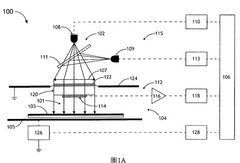
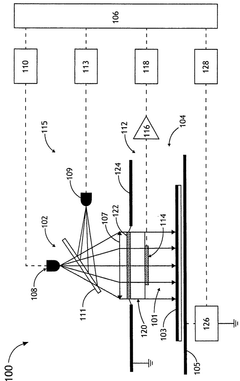
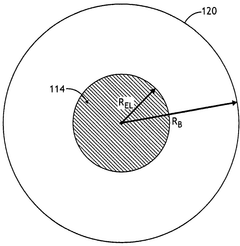
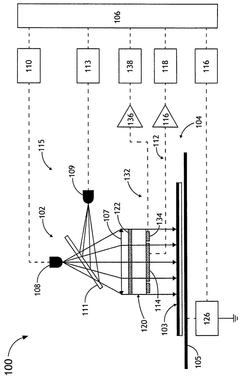
Method and apparatus for non-contact measurement of forward voltage, saturation current density, ideality factor and i-v curves in p-n junctions
PatentActiveTW201517194A
Innovation
- Non-contact measurement method for p-n junction electrical characteristics using modulated or pulsed light to establish steady-state junction photovoltage conditions.
- Multi-intensity illumination technique that enables determination of forward voltage, saturation current density, ideality factor, and I-V curves without physical contact with the p-n junction.
- Correlation methodology between measured photovoltage at different light intensities and the photocurrent density to extract complete electrical response characteristics.
Reliability Standards and Certification Requirements
The reliability of P-N junction devices under mechanical stress conditions is governed by stringent standards and certification requirements across various industries. IEC 60749-37 specifically addresses semiconductor device mechanical stress testing, requiring P-N junctions to maintain electrical characteristics under specified pressure conditions. This standard mandates that junction functionality must remain within ±5% of baseline parameters after pressure application, with recovery time not exceeding predetermined thresholds.
JEDEC standards JESD22-B113 and JESD22-A104 complement these requirements by establishing testing protocols for mechanical shock and temperature cycling, which are critical for evaluating P-N junction resilience. These standards specify precise pressure application methods, duration parameters, and measurement techniques to ensure consistency across testing environments.
For automotive applications, AEC-Q101 certification imposes additional requirements, including pressure testing at temperature extremes (-40°C to 150°C) while maintaining junction functionality. This certification is mandatory for semiconductor components in modern vehicles, where P-N junctions experience significant thermal and mechanical stress cycles throughout their operational lifetime.
Military and aerospace applications follow MIL-STD-750 Method 1080, which requires P-N junctions to withstand pressure variations equivalent to altitude changes from sea level to 80,000 feet without performance degradation. This standard implements more rigorous testing protocols than commercial equivalents, reflecting the critical nature of these applications.
The telecommunications industry adheres to Telcordia GR-468-CORE standards, which specify that P-N junctions must maintain functionality under mechanical stress equivalent to 2500G shock events. These requirements ensure device reliability in infrastructure deployments where maintenance access may be limited.
Certification processes typically involve third-party validation through accredited testing laboratories. Documentation requirements include detailed pressure-response curves, statistical analysis of failure modes, and accelerated life testing results. Manufacturers must demonstrate compliance through comprehensive test reports that include raw data, testing methodologies, and statistical analysis of results.
Recent updates to ISO/IEC 17025 have introduced more stringent requirements for testing laboratory accreditation, particularly regarding measurement uncertainty in pressure application during P-N junction testing. This reflects the growing recognition of mechanical stress as a critical factor in semiconductor reliability assessment and the need for standardized evaluation methodologies across the global supply chain.
JEDEC standards JESD22-B113 and JESD22-A104 complement these requirements by establishing testing protocols for mechanical shock and temperature cycling, which are critical for evaluating P-N junction resilience. These standards specify precise pressure application methods, duration parameters, and measurement techniques to ensure consistency across testing environments.
For automotive applications, AEC-Q101 certification imposes additional requirements, including pressure testing at temperature extremes (-40°C to 150°C) while maintaining junction functionality. This certification is mandatory for semiconductor components in modern vehicles, where P-N junctions experience significant thermal and mechanical stress cycles throughout their operational lifetime.
Military and aerospace applications follow MIL-STD-750 Method 1080, which requires P-N junctions to withstand pressure variations equivalent to altitude changes from sea level to 80,000 feet without performance degradation. This standard implements more rigorous testing protocols than commercial equivalents, reflecting the critical nature of these applications.
The telecommunications industry adheres to Telcordia GR-468-CORE standards, which specify that P-N junctions must maintain functionality under mechanical stress equivalent to 2500G shock events. These requirements ensure device reliability in infrastructure deployments where maintenance access may be limited.
Certification processes typically involve third-party validation through accredited testing laboratories. Documentation requirements include detailed pressure-response curves, statistical analysis of failure modes, and accelerated life testing results. Manufacturers must demonstrate compliance through comprehensive test reports that include raw data, testing methodologies, and statistical analysis of results.
Recent updates to ISO/IEC 17025 have introduced more stringent requirements for testing laboratory accreditation, particularly regarding measurement uncertainty in pressure application during P-N junction testing. This reflects the growing recognition of mechanical stress as a critical factor in semiconductor reliability assessment and the need for standardized evaluation methodologies across the global supply chain.
Environmental Factors Affecting P-N Junction Pressure Performance
The environmental conditions surrounding P-N junction devices significantly influence their pressure performance characteristics. Temperature variations represent one of the most critical environmental factors, as thermal expansion and contraction directly affect the mechanical stress distribution across the junction interface. At elevated temperatures, semiconductor materials expand at different rates, potentially creating misalignment stresses that alter the pressure response profile. Conversely, extremely low temperatures can induce brittleness in junction materials, making them more susceptible to pressure-induced fractures and performance degradation.
Humidity levels constitute another crucial environmental consideration, particularly for non-hermetically sealed semiconductor components. Moisture penetration can lead to oxidation at the junction interface, compromising the integrity of the pressure sensing mechanism. Studies have demonstrated that relative humidity exceeding 85% can accelerate corrosion processes at the junction boundaries, resulting in drift of pressure measurement parameters and reduced long-term stability.
Electromagnetic interference (EMI) presents a significant challenge for pressure testing accuracy in P-N junction devices. External electromagnetic fields can induce parasitic currents that distort pressure readings, particularly in high-sensitivity applications. Industrial environments with heavy machinery or wireless communication infrastructure often require specialized EMI shielding protocols during pressure performance evaluation to maintain measurement fidelity.
Atmospheric pressure variations must also be accounted for when assessing P-N junction pressure performance, especially for devices intended for aerospace or altitude-variable applications. Barometric pressure fluctuations can create baseline shifts in calibration parameters, necessitating compensation algorithms for accurate pressure response characterization across diverse operating environments.
Mechanical vibration and shock represent environmental factors that can dramatically impact pressure test results. Vibration frequencies matching the resonant characteristics of the junction structure may amplify stress effects, while sudden mechanical shocks can induce transient pressure anomalies that compromise measurement accuracy. Testing protocols typically incorporate vibration isolation systems to mitigate these effects.
Chemical exposure constitutes a less obvious but equally important environmental consideration. Airborne contaminants, particularly corrosive gases like hydrogen sulfide or chlorine, can gradually deteriorate junction materials, altering their pressure-electrical response relationship. Clean room testing environments are often required for high-precision pressure characterization to eliminate these chemical interference variables.
Radiation exposure, particularly relevant in aerospace and nuclear applications, can fundamentally alter the semiconductor properties of P-N junctions through displacement damage and ionization effects. This environmental factor necessitates specialized radiation-hardened testing methodologies to accurately assess pressure performance in radiation-intensive environments.
Humidity levels constitute another crucial environmental consideration, particularly for non-hermetically sealed semiconductor components. Moisture penetration can lead to oxidation at the junction interface, compromising the integrity of the pressure sensing mechanism. Studies have demonstrated that relative humidity exceeding 85% can accelerate corrosion processes at the junction boundaries, resulting in drift of pressure measurement parameters and reduced long-term stability.
Electromagnetic interference (EMI) presents a significant challenge for pressure testing accuracy in P-N junction devices. External electromagnetic fields can induce parasitic currents that distort pressure readings, particularly in high-sensitivity applications. Industrial environments with heavy machinery or wireless communication infrastructure often require specialized EMI shielding protocols during pressure performance evaluation to maintain measurement fidelity.
Atmospheric pressure variations must also be accounted for when assessing P-N junction pressure performance, especially for devices intended for aerospace or altitude-variable applications. Barometric pressure fluctuations can create baseline shifts in calibration parameters, necessitating compensation algorithms for accurate pressure response characterization across diverse operating environments.
Mechanical vibration and shock represent environmental factors that can dramatically impact pressure test results. Vibration frequencies matching the resonant characteristics of the junction structure may amplify stress effects, while sudden mechanical shocks can induce transient pressure anomalies that compromise measurement accuracy. Testing protocols typically incorporate vibration isolation systems to mitigate these effects.
Chemical exposure constitutes a less obvious but equally important environmental consideration. Airborne contaminants, particularly corrosive gases like hydrogen sulfide or chlorine, can gradually deteriorate junction materials, altering their pressure-electrical response relationship. Clean room testing environments are often required for high-precision pressure characterization to eliminate these chemical interference variables.
Radiation exposure, particularly relevant in aerospace and nuclear applications, can fundamentally alter the semiconductor properties of P-N junctions through displacement damage and ionization effects. This environmental factor necessitates specialized radiation-hardened testing methodologies to accurately assess pressure performance in radiation-intensive environments.
Unlock deeper insights with PatSnap Eureka Quick Research — get a full tech report to explore trends and direct your research. Try now!
Generate Your Research Report Instantly with AI Agent
Supercharge your innovation with PatSnap Eureka AI Agent Platform!