Perchloric Acid's Influence on Computational Chemistry Simulations
AUG 4, 20259 MIN READ
Generate Your Research Report Instantly with AI Agent
Patsnap Eureka helps you evaluate technical feasibility & market potential.
Perchloric Acid in Computational Chemistry: Background and Objectives
Perchloric acid (HClO4) has emerged as a significant compound in the field of computational chemistry, playing a crucial role in various simulations and theoretical studies. The exploration of perchloric acid's influence on computational chemistry simulations has gained momentum in recent years, driven by its unique properties and widespread applications in both experimental and theoretical chemistry.
The development of computational chemistry has been closely intertwined with advancements in quantum mechanics and computer technology. As computational power has increased, so too has the ability to model complex chemical systems with greater accuracy. Perchloric acid, with its strong oxidizing properties and unique molecular structure, presents an intriguing subject for computational studies.
The evolution of computational methods for studying perchloric acid has followed the general trends in computational chemistry. Early studies relied on simple molecular mechanics and semi-empirical methods, which provided limited insights into the behavior of perchloric acid in chemical systems. As ab initio methods became more accessible, researchers began to explore the electronic structure and reactivity of perchloric acid with greater precision.
The advent of density functional theory (DFT) marked a significant milestone in the computational study of perchloric acid. DFT methods offered a balance between accuracy and computational efficiency, allowing for more extensive investigations of perchloric acid's behavior in various chemical environments. This led to improved understanding of its role in solution chemistry, surface interactions, and atmospheric processes.
Recent years have seen a surge in interest in perchloric acid's influence on computational chemistry simulations, driven by its importance in diverse fields such as energetic materials, electrochemistry, and atmospheric science. The goal of current research is to develop more accurate and efficient computational models that can predict the behavior of perchloric acid in complex chemical systems.
The objectives of studying perchloric acid's influence on computational chemistry simulations are multifaceted. Researchers aim to improve the accuracy of existing computational methods in describing the electronic structure and reactivity of perchloric acid. This includes developing better force fields for molecular dynamics simulations and refining quantum chemical methods to account for the strong oxidizing nature of perchloric acid.
Another key objective is to enhance our understanding of perchloric acid's role in various chemical processes. This involves simulating its behavior in different phases, including gas, liquid, and solid states, as well as its interactions with other molecules and surfaces. Such simulations can provide valuable insights into reaction mechanisms, solvation effects, and surface chemistry involving perchloric acid.
The development of computational chemistry has been closely intertwined with advancements in quantum mechanics and computer technology. As computational power has increased, so too has the ability to model complex chemical systems with greater accuracy. Perchloric acid, with its strong oxidizing properties and unique molecular structure, presents an intriguing subject for computational studies.
The evolution of computational methods for studying perchloric acid has followed the general trends in computational chemistry. Early studies relied on simple molecular mechanics and semi-empirical methods, which provided limited insights into the behavior of perchloric acid in chemical systems. As ab initio methods became more accessible, researchers began to explore the electronic structure and reactivity of perchloric acid with greater precision.
The advent of density functional theory (DFT) marked a significant milestone in the computational study of perchloric acid. DFT methods offered a balance between accuracy and computational efficiency, allowing for more extensive investigations of perchloric acid's behavior in various chemical environments. This led to improved understanding of its role in solution chemistry, surface interactions, and atmospheric processes.
Recent years have seen a surge in interest in perchloric acid's influence on computational chemistry simulations, driven by its importance in diverse fields such as energetic materials, electrochemistry, and atmospheric science. The goal of current research is to develop more accurate and efficient computational models that can predict the behavior of perchloric acid in complex chemical systems.
The objectives of studying perchloric acid's influence on computational chemistry simulations are multifaceted. Researchers aim to improve the accuracy of existing computational methods in describing the electronic structure and reactivity of perchloric acid. This includes developing better force fields for molecular dynamics simulations and refining quantum chemical methods to account for the strong oxidizing nature of perchloric acid.
Another key objective is to enhance our understanding of perchloric acid's role in various chemical processes. This involves simulating its behavior in different phases, including gas, liquid, and solid states, as well as its interactions with other molecules and surfaces. Such simulations can provide valuable insights into reaction mechanisms, solvation effects, and surface chemistry involving perchloric acid.
Market Demand for Accurate Perchloric Acid Simulations
The market demand for accurate perchloric acid simulations in computational chemistry has been steadily growing, driven by the increasing complexity of chemical research and the need for more precise predictive models. Perchloric acid, a strong oxidizing agent with unique properties, plays a crucial role in various industrial and research applications, making accurate simulations essential for advancing scientific understanding and technological innovation.
In the pharmaceutical industry, there is a significant demand for improved perchloric acid simulations to enhance drug discovery processes. Accurate modeling of perchloric acid interactions with potential drug molecules can help researchers predict drug efficacy and safety more reliably, potentially reducing the time and cost associated with drug development. This demand is further amplified by the growing trend towards personalized medicine, which requires more sophisticated computational tools to analyze complex molecular interactions.
The semiconductor industry also presents a substantial market for precise perchloric acid simulations. As chip manufacturers continue to push the boundaries of miniaturization and performance, the need for ultra-pure chemicals in the etching process becomes critical. Accurate simulations of perchloric acid behavior can help optimize etching processes, improve yield rates, and contribute to the development of next-generation semiconductor technologies.
Environmental science and remediation sectors have shown increasing interest in advanced perchloric acid simulations. With growing concerns about perchlorate contamination in soil and groundwater, there is a pressing need for better models to predict the behavior and fate of perchloric acid in various environmental conditions. This demand is driven by regulatory pressures and the need for more effective cleanup strategies.
In the field of materials science, the market for accurate perchloric acid simulations is expanding as researchers explore novel materials with unique properties. Simulations that can accurately predict the interactions between perchloric acid and various materials are valuable for developing new catalysts, energy storage solutions, and advanced materials for extreme environments.
The aerospace and defense industries also contribute to the market demand for precise perchloric acid simulations. These sectors require detailed understanding of perchloric acid behavior in propellants and high-energy materials, driving the need for sophisticated computational models that can predict performance and safety characteristics under extreme conditions.
As computational power continues to increase and machine learning techniques advance, there is a growing market opportunity for integrating these technologies with perchloric acid simulations. This convergence is expected to open new avenues for research and development across multiple industries, further driving the demand for accurate and efficient simulation tools.
In the pharmaceutical industry, there is a significant demand for improved perchloric acid simulations to enhance drug discovery processes. Accurate modeling of perchloric acid interactions with potential drug molecules can help researchers predict drug efficacy and safety more reliably, potentially reducing the time and cost associated with drug development. This demand is further amplified by the growing trend towards personalized medicine, which requires more sophisticated computational tools to analyze complex molecular interactions.
The semiconductor industry also presents a substantial market for precise perchloric acid simulations. As chip manufacturers continue to push the boundaries of miniaturization and performance, the need for ultra-pure chemicals in the etching process becomes critical. Accurate simulations of perchloric acid behavior can help optimize etching processes, improve yield rates, and contribute to the development of next-generation semiconductor technologies.
Environmental science and remediation sectors have shown increasing interest in advanced perchloric acid simulations. With growing concerns about perchlorate contamination in soil and groundwater, there is a pressing need for better models to predict the behavior and fate of perchloric acid in various environmental conditions. This demand is driven by regulatory pressures and the need for more effective cleanup strategies.
In the field of materials science, the market for accurate perchloric acid simulations is expanding as researchers explore novel materials with unique properties. Simulations that can accurately predict the interactions between perchloric acid and various materials are valuable for developing new catalysts, energy storage solutions, and advanced materials for extreme environments.
The aerospace and defense industries also contribute to the market demand for precise perchloric acid simulations. These sectors require detailed understanding of perchloric acid behavior in propellants and high-energy materials, driving the need for sophisticated computational models that can predict performance and safety characteristics under extreme conditions.
As computational power continues to increase and machine learning techniques advance, there is a growing market opportunity for integrating these technologies with perchloric acid simulations. This convergence is expected to open new avenues for research and development across multiple industries, further driving the demand for accurate and efficient simulation tools.
Current Challenges in Modeling Perchloric Acid
Modeling perchloric acid in computational chemistry simulations presents several significant challenges that researchers and scientists are currently grappling with. One of the primary difficulties lies in accurately representing the complex electronic structure of perchloric acid. The highly oxidizing nature of this compound, coupled with its strong acidity, makes it particularly challenging to model using standard computational methods.
The presence of multiple oxygen atoms bonded to the central chlorine atom creates a unique electronic environment that is not easily captured by conventional force fields or quantum mechanical approaches. This complexity is further exacerbated by the acid's ability to form strong hydrogen bonds and its propensity for dissociation in aqueous environments. As a result, accurately describing the interactions between perchloric acid molecules and their surroundings remains a significant hurdle.
Another major challenge is the accurate representation of perchloric acid's behavior in different phases and under various conditions. The acid's properties can change dramatically depending on its concentration, temperature, and the presence of other molecules or ions. This variability makes it difficult to develop a single, comprehensive model that can accurately predict its behavior across a wide range of scenarios.
The dynamic nature of perchloric acid in solution poses additional modeling challenges. The acid undergoes rapid proton exchange and can form various complexes with water molecules and other species present in the system. Capturing these fast-paced processes and their effects on the overall system behavior requires sophisticated simulation techniques and significant computational resources.
Furthermore, the strong oxidizing properties of perchloric acid can lead to unexpected chemical reactions during simulations, particularly when interacting with other molecules or surfaces. Accounting for these potential reactions and their impact on the system's evolution adds another layer of complexity to the modeling process.
The multiscale nature of perchloric acid's interactions also presents a significant challenge. While quantum mechanical methods are necessary to accurately describe the electronic structure and reactivity of the acid, they are computationally expensive and limited to small systems. Bridging the gap between atomistic-level descriptions and macroscopic properties requires the development of novel multiscale modeling approaches that can efficiently capture the essential physics across different length and time scales.
Lastly, the lack of comprehensive experimental data on perchloric acid's behavior under various conditions hinders the validation and refinement of computational models. This scarcity of reliable reference data makes it difficult to assess the accuracy of simulations and improve existing modeling techniques.
The presence of multiple oxygen atoms bonded to the central chlorine atom creates a unique electronic environment that is not easily captured by conventional force fields or quantum mechanical approaches. This complexity is further exacerbated by the acid's ability to form strong hydrogen bonds and its propensity for dissociation in aqueous environments. As a result, accurately describing the interactions between perchloric acid molecules and their surroundings remains a significant hurdle.
Another major challenge is the accurate representation of perchloric acid's behavior in different phases and under various conditions. The acid's properties can change dramatically depending on its concentration, temperature, and the presence of other molecules or ions. This variability makes it difficult to develop a single, comprehensive model that can accurately predict its behavior across a wide range of scenarios.
The dynamic nature of perchloric acid in solution poses additional modeling challenges. The acid undergoes rapid proton exchange and can form various complexes with water molecules and other species present in the system. Capturing these fast-paced processes and their effects on the overall system behavior requires sophisticated simulation techniques and significant computational resources.
Furthermore, the strong oxidizing properties of perchloric acid can lead to unexpected chemical reactions during simulations, particularly when interacting with other molecules or surfaces. Accounting for these potential reactions and their impact on the system's evolution adds another layer of complexity to the modeling process.
The multiscale nature of perchloric acid's interactions also presents a significant challenge. While quantum mechanical methods are necessary to accurately describe the electronic structure and reactivity of the acid, they are computationally expensive and limited to small systems. Bridging the gap between atomistic-level descriptions and macroscopic properties requires the development of novel multiscale modeling approaches that can efficiently capture the essential physics across different length and time scales.
Lastly, the lack of comprehensive experimental data on perchloric acid's behavior under various conditions hinders the validation and refinement of computational models. This scarcity of reliable reference data makes it difficult to assess the accuracy of simulations and improve existing modeling techniques.
Existing Approaches for Simulating Perchloric Acid
01 Perchloric acid in chemical analysis and synthesis
Perchloric acid is widely used in various chemical analysis and synthesis processes due to its strong oxidizing properties. It is particularly useful in the digestion of samples for elemental analysis, as well as in organic synthesis reactions where a strong acid catalyst is required.- Influence on chemical reactions and synthesis: Perchloric acid plays a significant role in various chemical reactions and synthesis processes. It acts as a strong oxidizing agent and can catalyze certain reactions. Its influence extends to organic synthesis, inorganic compound formation, and electrochemical processes. The acid's unique properties make it valuable in specialized chemical applications.
- Impact on material properties and treatment: Perchloric acid influences the properties of various materials and is used in material treatment processes. It can affect surface characteristics, corrosion resistance, and material composition. The acid is employed in etching, cleaning, and surface modification of metals, semiconductors, and other materials. Its use can lead to improved material performance in specific applications.
- Environmental and safety considerations: The use of perchloric acid has significant environmental and safety implications. It is highly corrosive and can be explosive when combined with certain organic compounds. Proper handling, storage, and disposal procedures are crucial to prevent accidents and environmental contamination. Safety measures and specialized equipment are necessary when working with this acid in industrial or laboratory settings.
- Analytical applications and instrumentation: Perchloric acid is widely used in analytical chemistry and influences various analytical techniques. It is employed in sample preparation, digestion processes, and as a component in mobile phases for chromatography. The acid's properties affect the sensitivity and accuracy of analytical methods. Specialized instruments and procedures have been developed to harness its benefits in chemical analysis.
- Industrial applications and process optimization: Perchloric acid influences numerous industrial processes and applications. It is used in the production of specialty chemicals, pharmaceuticals, and electronic components. The acid's properties can affect reaction kinetics, yield, and product purity. Optimizing the use of perchloric acid in industrial settings involves considering factors such as concentration, temperature, and reaction conditions to achieve desired outcomes.
02 Safety measures and handling of perchloric acid
Due to its highly reactive nature, special safety measures are necessary when handling perchloric acid. This includes the use of specialized fume hoods, protective equipment, and storage facilities designed to prevent accidents and minimize risks associated with its use in laboratory and industrial settings.Expand Specific Solutions03 Perchloric acid in electrochemistry and battery technology
Perchloric acid plays a significant role in electrochemistry and battery technology. It is used as an electrolyte in certain types of batteries and fuel cells, and is also employed in electroplating processes due to its ability to form stable complexes with various metals.Expand Specific Solutions04 Environmental impact and waste management of perchloric acid
The use of perchloric acid can have significant environmental impacts if not properly managed. Specialized waste treatment and disposal methods are required to neutralize and safely dispose of perchloric acid waste, preventing contamination of soil and water resources.Expand Specific Solutions05 Applications of perchloric acid in material science
Perchloric acid finds applications in various areas of material science, including the preparation of certain types of nanoparticles, surface treatment of metals, and as a component in specialized etching solutions used in the semiconductor industry.Expand Specific Solutions
Key Players in Computational Chemistry Software and Research
The competitive landscape for perchloric acid's influence on computational chemistry simulations is in a nascent stage, with the market size still relatively small but growing. The technology is at an early maturity level, with research institutions and specialized software companies leading development. Key players like The MathWorks, Microsoft, and IBM are leveraging their expertise in scientific computing and simulation to explore applications. Universities such as Dalian University of Technology and Zhejiang University are contributing fundamental research. Emerging startups like Extrality and Rebellions are developing novel AI-accelerated approaches. As the field advances, we can expect increased collaboration between academia, established tech firms, and innovative startups to drive progress in computational chemistry simulations incorporating perchloric acid effects.
The MathWorks, Inc.
Technical Solution: The MathWorks has developed specialized toolboxes within MATLAB for simulating the influence of perchloric acid in computational chemistry. Their approach combines numerical methods, statistical analysis, and machine learning techniques to model complex chemical systems. The MATLAB-based solution offers a user-friendly interface for researchers to set up simulations, analyze results, and visualize the effects of perchloric acid on molecular structures and reactions. The toolboxes include advanced algorithms for quantum mechanical calculations, molecular dynamics simulations, and cheminformatics, allowing for comprehensive analysis of perchloric acid's impact across various chemical scenarios [5]. Additionally, The MathWorks' solution integrates with external chemistry databases and can leverage parallel computing capabilities for faster processing of large-scale simulations [6].
Strengths: User-friendly interface and integration with MATLAB ecosystem. Comprehensive toolset for various simulation types. Weaknesses: May require significant computational resources for complex simulations.
Microsoft Technology Licensing LLC
Technical Solution: Microsoft has developed a cloud-based computational chemistry platform that can simulate the effects of perchloric acid on various chemical systems. Their approach leverages the Azure Quantum service, which combines classical and quantum computing resources for enhanced simulation capabilities [3]. Microsoft's platform utilizes molecular dynamics simulations and ab initio methods to model perchloric acid interactions at the atomic level. The system employs machine learning algorithms to predict and analyze the acid's influence on reaction rates, equilibrium constants, and molecular structures. Additionally, Microsoft's solution integrates with popular chemistry software packages, allowing researchers to seamlessly incorporate perchloric acid simulations into their existing workflows [4].
Strengths: Cloud-based platform offers scalability and accessibility. Integration with existing software enhances usability. Weaknesses: Dependence on cloud infrastructure may raise data security concerns for some users.
Innovative Algorithms for Perchloric Acid Modeling
Method for quantifying perchloric acid
PatentInactiveJP2022146894A
Innovation
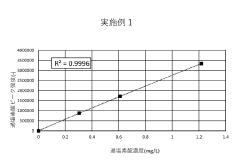
- A method involving a transfer step with an alkaline aqueous solution to separate perchloric acid from tertiary amine in the organic phase to the aqueous phase, followed by reversed-phase high-performance liquid chromatography using an ion pair agent for quantification.
Preparation of formylated or acetylated fatty compounds and corresponding hydroxylated compounds, including isomers thereof
PatentInactiveGB755731A
Innovation
- A process involving the reaction of fatty compounds with formic or acetic acid in the presence of a strong mineral acid catalyst, specifically perchloric acid, which accelerates the reaction while minimizing polymerization and side reactions, allowing for high-yield production of acyloxy compounds that can be easily converted to hydroxylated derivatives.
Environmental Impact of Perchloric Acid Research
The environmental impact of perchloric acid research in computational chemistry simulations is a critical aspect that demands careful consideration. Perchloric acid, a strong oxidizing agent, poses significant environmental risks if not properly managed during research activities.
One of the primary concerns is the potential for perchlorate contamination in water sources. Perchlorate ions are highly soluble and mobile in aqueous environments, making them difficult to remove once released. This contamination can have far-reaching effects on ecosystems and human health, as perchlorate is known to interfere with thyroid function in various organisms.
The production and disposal of perchloric acid in research settings also contribute to environmental concerns. The manufacturing process of perchloric acid involves energy-intensive steps and may result in the release of harmful byproducts. Improper disposal of perchloric acid waste can lead to soil contamination and potential groundwater pollution, further exacerbating environmental risks.
In computational chemistry simulations, the use of perchloric acid models may indirectly impact the environment through increased energy consumption. High-performance computing facilities required for complex simulations consume significant amounts of electricity, contributing to carbon emissions if not powered by renewable energy sources.
However, it is important to note that computational chemistry simulations involving perchloric acid can also have positive environmental implications. By enabling more accurate predictions of chemical reactions and properties, these simulations can reduce the need for physical experiments, potentially decreasing the overall use and disposal of hazardous chemicals in laboratories.
Researchers are increasingly focusing on developing greener alternatives to perchloric acid in both experimental and computational chemistry. This includes exploring less hazardous oxidizing agents and refining simulation models to reduce reliance on perchloric acid representations.
To mitigate the environmental impact of perchloric acid research, institutions are implementing strict protocols for handling, storage, and disposal. Advanced treatment technologies are being developed to remove perchlorate from wastewater and contaminated sites, helping to address legacy pollution issues.
Furthermore, the integration of environmental impact assessments into research proposals involving perchloric acid is becoming more common. This practice encourages scientists to consider and minimize potential environmental risks from the outset of their studies, promoting more sustainable research practices in computational chemistry and related fields.
One of the primary concerns is the potential for perchlorate contamination in water sources. Perchlorate ions are highly soluble and mobile in aqueous environments, making them difficult to remove once released. This contamination can have far-reaching effects on ecosystems and human health, as perchlorate is known to interfere with thyroid function in various organisms.
The production and disposal of perchloric acid in research settings also contribute to environmental concerns. The manufacturing process of perchloric acid involves energy-intensive steps and may result in the release of harmful byproducts. Improper disposal of perchloric acid waste can lead to soil contamination and potential groundwater pollution, further exacerbating environmental risks.
In computational chemistry simulations, the use of perchloric acid models may indirectly impact the environment through increased energy consumption. High-performance computing facilities required for complex simulations consume significant amounts of electricity, contributing to carbon emissions if not powered by renewable energy sources.
However, it is important to note that computational chemistry simulations involving perchloric acid can also have positive environmental implications. By enabling more accurate predictions of chemical reactions and properties, these simulations can reduce the need for physical experiments, potentially decreasing the overall use and disposal of hazardous chemicals in laboratories.
Researchers are increasingly focusing on developing greener alternatives to perchloric acid in both experimental and computational chemistry. This includes exploring less hazardous oxidizing agents and refining simulation models to reduce reliance on perchloric acid representations.
To mitigate the environmental impact of perchloric acid research, institutions are implementing strict protocols for handling, storage, and disposal. Advanced treatment technologies are being developed to remove perchlorate from wastewater and contaminated sites, helping to address legacy pollution issues.
Furthermore, the integration of environmental impact assessments into research proposals involving perchloric acid is becoming more common. This practice encourages scientists to consider and minimize potential environmental risks from the outset of their studies, promoting more sustainable research practices in computational chemistry and related fields.
Benchmarking and Validation of Perchloric Acid Models
Benchmarking and validation of perchloric acid models are crucial steps in ensuring the accuracy and reliability of computational chemistry simulations involving this compound. The process typically begins with the selection of appropriate quantum mechanical methods and basis sets that can accurately represent the electronic structure of perchloric acid and its interactions with other molecules.
One common approach is to compare the results of different computational methods against high-level ab initio calculations or experimental data. This may involve calculating various properties such as bond lengths, bond angles, vibrational frequencies, and thermodynamic parameters. The performance of different density functional theory (DFT) functionals, such as B3LYP, M06-2X, or ωB97X-D, can be evaluated to determine which ones provide the most accurate results for perchloric acid systems.
The choice of basis set is also critical in these simulations. Researchers often test a range of basis sets, from smaller ones like 6-31G(d) to more extensive ones like aug-cc-pVTZ, to find the optimal balance between accuracy and computational cost. The inclusion of diffuse functions is particularly important for accurately modeling the highly electronegative chlorine atom and the oxygen atoms in perchloric acid.
Solvation effects play a significant role in the behavior of perchloric acid, so benchmarking often includes comparisons of different solvation models. Implicit solvation models like PCM (Polarizable Continuum Model) or SMD (Solvation Model based on Density) are commonly used, but their performance may vary depending on the specific properties being studied.
Validation of perchloric acid models also involves comparing computed results with experimental data. This can include spectroscopic measurements (IR, Raman, NMR), X-ray crystallography data for solid-state structures, and thermodynamic data such as heat capacities and enthalpies of formation. The ability of a model to accurately predict pKa values and dissociation behavior in solution is particularly important for perchloric acid, given its strong acidic nature.
Molecular dynamics simulations present another avenue for benchmarking and validation. These simulations can provide insights into the dynamic behavior of perchloric acid in different environments, such as its interactions with water molecules or its role in proton transfer processes. The choice of force field parameters for these simulations is critical and often requires careful optimization and validation against experimental or high-level quantum mechanical data.
One common approach is to compare the results of different computational methods against high-level ab initio calculations or experimental data. This may involve calculating various properties such as bond lengths, bond angles, vibrational frequencies, and thermodynamic parameters. The performance of different density functional theory (DFT) functionals, such as B3LYP, M06-2X, or ωB97X-D, can be evaluated to determine which ones provide the most accurate results for perchloric acid systems.
The choice of basis set is also critical in these simulations. Researchers often test a range of basis sets, from smaller ones like 6-31G(d) to more extensive ones like aug-cc-pVTZ, to find the optimal balance between accuracy and computational cost. The inclusion of diffuse functions is particularly important for accurately modeling the highly electronegative chlorine atom and the oxygen atoms in perchloric acid.
Solvation effects play a significant role in the behavior of perchloric acid, so benchmarking often includes comparisons of different solvation models. Implicit solvation models like PCM (Polarizable Continuum Model) or SMD (Solvation Model based on Density) are commonly used, but their performance may vary depending on the specific properties being studied.
Validation of perchloric acid models also involves comparing computed results with experimental data. This can include spectroscopic measurements (IR, Raman, NMR), X-ray crystallography data for solid-state structures, and thermodynamic data such as heat capacities and enthalpies of formation. The ability of a model to accurately predict pKa values and dissociation behavior in solution is particularly important for perchloric acid, given its strong acidic nature.
Molecular dynamics simulations present another avenue for benchmarking and validation. These simulations can provide insights into the dynamic behavior of perchloric acid in different environments, such as its interactions with water molecules or its role in proton transfer processes. The choice of force field parameters for these simulations is critical and often requires careful optimization and validation against experimental or high-level quantum mechanical data.
Unlock deeper insights with Patsnap Eureka Quick Research — get a full tech report to explore trends and direct your research. Try now!
Generate Your Research Report Instantly with AI Agent
Supercharge your innovation with Patsnap Eureka AI Agent Platform!