

Quantum Interconnects: Advancements in Biocompatible Materials
SEP 29, 202510 MIN READ
Generate Your Research Report Instantly with AI Agent
PatSnap Eureka helps you evaluate technical feasibility & market potential.
Quantum Interconnects Background and Objectives
Quantum interconnects represent a critical frontier in quantum computing and quantum information science, bridging the gap between isolated quantum systems to create scalable quantum networks. The evolution of this technology has progressed from theoretical concepts in the 1980s to practical implementations in recent decades. Initially, quantum interconnects focused primarily on photonic systems using optical fibers, but limitations in coherence time and signal degradation prompted exploration of alternative approaches. The integration of biocompatible materials into quantum interconnects marks a significant paradigm shift, offering potential solutions to persistent challenges in quantum information transfer and storage.
The field has witnessed accelerated development since 2010, with breakthroughs in quantum memory, entanglement distribution, and quantum repeaters. Particularly noteworthy is the transition from purely inorganic materials to hybrid systems incorporating biocompatible elements, which has opened new avenues for quantum technologies that can interface with biological systems. This convergence represents a multidisciplinary approach combining quantum physics, materials science, and biotechnology.
Current technological trajectories indicate a growing emphasis on room-temperature quantum operations and increased coherence times, both areas where biocompatible materials show particular promise. Diamond nitrogen-vacancy centers, protein-based quantum dots, and DNA-scaffolded quantum systems exemplify this trend, demonstrating remarkable quantum properties while maintaining compatibility with biological environments.
The primary objectives of advancing biocompatible quantum interconnects include developing quantum communication systems that can operate within or alongside biological systems, creating quantum sensors with unprecedented sensitivity for biological applications, and establishing foundations for quantum information processing that leverages biological materials' unique properties. These objectives align with broader goals in quantum technology to increase operational temperatures, extend coherence times, and enhance scalability.
Research in this domain aims to overcome significant challenges, including maintaining quantum coherence in complex biological environments, developing reliable interfaces between quantum systems and biological materials, and establishing protocols for quantum information transfer across these hybrid systems. Success in these areas could revolutionize fields ranging from quantum computing to medical diagnostics and secure communications.
The convergence of quantum physics and biocompatible materials represents not merely an incremental improvement but potentially a transformative approach to quantum interconnects, offering solutions to longstanding challenges while opening entirely new application domains previously considered beyond the reach of quantum technologies.
The field has witnessed accelerated development since 2010, with breakthroughs in quantum memory, entanglement distribution, and quantum repeaters. Particularly noteworthy is the transition from purely inorganic materials to hybrid systems incorporating biocompatible elements, which has opened new avenues for quantum technologies that can interface with biological systems. This convergence represents a multidisciplinary approach combining quantum physics, materials science, and biotechnology.
Current technological trajectories indicate a growing emphasis on room-temperature quantum operations and increased coherence times, both areas where biocompatible materials show particular promise. Diamond nitrogen-vacancy centers, protein-based quantum dots, and DNA-scaffolded quantum systems exemplify this trend, demonstrating remarkable quantum properties while maintaining compatibility with biological environments.
The primary objectives of advancing biocompatible quantum interconnects include developing quantum communication systems that can operate within or alongside biological systems, creating quantum sensors with unprecedented sensitivity for biological applications, and establishing foundations for quantum information processing that leverages biological materials' unique properties. These objectives align with broader goals in quantum technology to increase operational temperatures, extend coherence times, and enhance scalability.
Research in this domain aims to overcome significant challenges, including maintaining quantum coherence in complex biological environments, developing reliable interfaces between quantum systems and biological materials, and establishing protocols for quantum information transfer across these hybrid systems. Success in these areas could revolutionize fields ranging from quantum computing to medical diagnostics and secure communications.
The convergence of quantum physics and biocompatible materials represents not merely an incremental improvement but potentially a transformative approach to quantum interconnects, offering solutions to longstanding challenges while opening entirely new application domains previously considered beyond the reach of quantum technologies.
Market Analysis for Biocompatible Quantum Materials
The global market for biocompatible quantum materials is experiencing unprecedented growth, driven by advancements in quantum interconnect technologies and increasing applications in healthcare, computing, and communications sectors. Current market valuations indicate that biocompatible quantum materials represent a rapidly expanding segment within the broader quantum technology market, which is projected to reach significant market value by 2030.
The healthcare sector presents the largest immediate opportunity, with quantum biosensors utilizing biocompatible materials showing particular promise for diagnostic applications. These materials enable non-invasive, highly sensitive detection methods that surpass conventional approaches in both accuracy and speed. The integration of quantum sensing with biocompatible interfaces addresses a critical market need for more precise diagnostic tools.
Quantum computing represents another substantial market driver, as biocompatible interfaces become essential for quantum systems that interact with biological environments. This segment is growing at a faster rate than traditional quantum computing hardware, reflecting the increasing importance of bio-integration capabilities.
Regional analysis reveals that North America currently leads the market, with substantial research investments from both government agencies and private corporations. The European market follows closely, with particular strength in medical applications of quantum technologies. The Asia-Pacific region, especially China and Japan, is demonstrating the fastest growth rate, supported by aggressive national quantum initiative programs.
Investor interest in biocompatible quantum materials has shown remarkable growth, with venture capital funding increasing substantially year-over-year. This investment trend indicates strong market confidence in the commercial viability of these technologies, particularly for near-term applications in medical diagnostics and imaging.
Customer demand analysis reveals three primary market segments: research institutions, healthcare providers, and technology companies developing quantum-based products. Research institutions currently represent the largest customer base, but healthcare providers are expected to become the dominant market segment within the next five years as clinical applications mature.
Market barriers include high material costs, complex manufacturing processes, and regulatory hurdles for medical applications. However, recent technological breakthroughs in material synthesis and processing are beginning to address cost concerns, potentially accelerating market adoption.
The competitive landscape remains relatively unconsolidated, with numerous startups competing alongside established quantum technology companies. This fragmentation presents opportunities for strategic partnerships and acquisitions as the market matures and technologies prove their commercial viability.
The healthcare sector presents the largest immediate opportunity, with quantum biosensors utilizing biocompatible materials showing particular promise for diagnostic applications. These materials enable non-invasive, highly sensitive detection methods that surpass conventional approaches in both accuracy and speed. The integration of quantum sensing with biocompatible interfaces addresses a critical market need for more precise diagnostic tools.
Quantum computing represents another substantial market driver, as biocompatible interfaces become essential for quantum systems that interact with biological environments. This segment is growing at a faster rate than traditional quantum computing hardware, reflecting the increasing importance of bio-integration capabilities.
Regional analysis reveals that North America currently leads the market, with substantial research investments from both government agencies and private corporations. The European market follows closely, with particular strength in medical applications of quantum technologies. The Asia-Pacific region, especially China and Japan, is demonstrating the fastest growth rate, supported by aggressive national quantum initiative programs.
Investor interest in biocompatible quantum materials has shown remarkable growth, with venture capital funding increasing substantially year-over-year. This investment trend indicates strong market confidence in the commercial viability of these technologies, particularly for near-term applications in medical diagnostics and imaging.
Customer demand analysis reveals three primary market segments: research institutions, healthcare providers, and technology companies developing quantum-based products. Research institutions currently represent the largest customer base, but healthcare providers are expected to become the dominant market segment within the next five years as clinical applications mature.
Market barriers include high material costs, complex manufacturing processes, and regulatory hurdles for medical applications. However, recent technological breakthroughs in material synthesis and processing are beginning to address cost concerns, potentially accelerating market adoption.
The competitive landscape remains relatively unconsolidated, with numerous startups competing alongside established quantum technology companies. This fragmentation presents opportunities for strategic partnerships and acquisitions as the market matures and technologies prove their commercial viability.
Current Challenges in Quantum-Bio Integration
The integration of quantum technologies with biological systems presents unprecedented challenges at the intersection of quantum physics, materials science, and biology. Current quantum-bio integration efforts face significant hurdles in maintaining quantum coherence within biological environments, which are inherently warm, wet, and noisy. Quantum states are extremely fragile, requiring near-absolute zero temperatures and isolation from environmental interference to maintain their coherent properties. Biological systems, conversely, operate at room temperature with constant molecular motion and interactions.
Material compatibility represents another major obstacle. Traditional quantum materials like superconducting circuits or diamond nitrogen-vacancy centers are not naturally biocompatible. The development of quantum materials that can interface with biological tissues without toxicity or immune response remains in its infancy. Current biocompatible quantum materials often suffer from reduced quantum performance or limited operational capabilities when adapted for biological environments.
Signal transduction between quantum and biological systems presents a fundamental challenge. Quantum information is encoded in delicate quantum states, while biological systems process information through chemical and electrical signals. Creating reliable interfaces that can translate between these fundamentally different information paradigms requires novel approaches to signal conversion and amplification without destroying quantum information.
Scalability issues further complicate quantum-bio integration. While proof-of-concept demonstrations have shown promise in laboratory settings, scaling these technologies for practical applications in medical diagnostics or neural interfaces remains challenging. Current approaches often require complex experimental setups that are impractical for real-world deployment.
Measurement and control systems for quantum-bio interfaces lack standardization. The precision required for quantum measurements conflicts with the inherent variability of biological systems. Developing robust measurement protocols that can account for biological variation while maintaining quantum information integrity represents a significant technical hurdle.
Temporal mismatch between quantum and biological processes creates additional complications. Quantum operations typically occur on picosecond to nanosecond timescales, while biological processes range from microseconds to days. Bridging these vastly different temporal domains requires sophisticated control systems and novel approaches to information storage and retrieval.
Ethical and regulatory frameworks for quantum-bio technologies remain underdeveloped. As these technologies advance toward potential applications in healthcare, neuroscience, and biotechnology, establishing appropriate guidelines for research, development, and deployment becomes increasingly important to ensure responsible innovation in this emerging field.
Material compatibility represents another major obstacle. Traditional quantum materials like superconducting circuits or diamond nitrogen-vacancy centers are not naturally biocompatible. The development of quantum materials that can interface with biological tissues without toxicity or immune response remains in its infancy. Current biocompatible quantum materials often suffer from reduced quantum performance or limited operational capabilities when adapted for biological environments.
Signal transduction between quantum and biological systems presents a fundamental challenge. Quantum information is encoded in delicate quantum states, while biological systems process information through chemical and electrical signals. Creating reliable interfaces that can translate between these fundamentally different information paradigms requires novel approaches to signal conversion and amplification without destroying quantum information.
Scalability issues further complicate quantum-bio integration. While proof-of-concept demonstrations have shown promise in laboratory settings, scaling these technologies for practical applications in medical diagnostics or neural interfaces remains challenging. Current approaches often require complex experimental setups that are impractical for real-world deployment.
Measurement and control systems for quantum-bio interfaces lack standardization. The precision required for quantum measurements conflicts with the inherent variability of biological systems. Developing robust measurement protocols that can account for biological variation while maintaining quantum information integrity represents a significant technical hurdle.
Temporal mismatch between quantum and biological processes creates additional complications. Quantum operations typically occur on picosecond to nanosecond timescales, while biological processes range from microseconds to days. Bridging these vastly different temporal domains requires sophisticated control systems and novel approaches to information storage and retrieval.
Ethical and regulatory frameworks for quantum-bio technologies remain underdeveloped. As these technologies advance toward potential applications in healthcare, neuroscience, and biotechnology, establishing appropriate guidelines for research, development, and deployment becomes increasingly important to ensure responsible innovation in this emerging field.
Current Biocompatible Quantum Interconnect Solutions
01 Biocompatible quantum materials for medical applications
Development of quantum materials that are compatible with biological systems for medical applications such as diagnostics and therapeutics. These materials are designed to interact safely with living tissues while maintaining their quantum properties. The biocompatibility is achieved through surface modifications, encapsulation techniques, and selection of non-toxic quantum materials that can function effectively in physiological environments.- Biocompatible quantum materials for medical applications: Development of quantum materials that are compatible with biological systems for medical applications. These materials are designed to interact safely with living tissues and can be used in quantum sensing, imaging, and therapeutic applications. The biocompatibility ensures minimal toxicity and immune response when these quantum interconnects are used in vivo, making them suitable for long-term implantation or diagnostic procedures.
- Quantum interconnect interfaces with biological systems: Technologies that enable quantum systems to interface directly with biological environments. These interfaces facilitate the transfer of information between quantum devices and biological systems, allowing for precise monitoring and manipulation at the cellular or molecular level. The designs focus on maintaining quantum coherence while ensuring compatibility with the complex and dynamic nature of biological environments.
- Nanoscale quantum biosensors with enhanced biocompatibility: Nanoscale quantum sensors designed specifically for biological applications with improved biocompatibility features. These biosensors utilize quantum effects such as superposition and entanglement to achieve unprecedented sensitivity in detecting biological markers, cellular activities, or physiological parameters. The nanoscale design allows for minimal invasiveness while maintaining high sensitivity and specificity in biological environments.
- Quantum-enhanced biomedical imaging systems: Imaging technologies that leverage quantum properties to enhance resolution, sensitivity, and contrast in biomedical applications. These systems utilize quantum interconnects that are compatible with living tissues to provide detailed visualization of biological structures and processes at the molecular level. The quantum enhancement allows for reduced radiation exposure, deeper tissue penetration, and real-time imaging capabilities.
- Biocompatible quantum communication networks for in vivo applications: Communication networks based on quantum principles designed for use within biological systems. These networks enable secure and efficient information transfer between quantum devices implanted in or attached to living organisms. The biocompatible design ensures that the quantum communication infrastructure can operate within the body without causing adverse effects, while maintaining the quantum properties necessary for secure and efficient data transmission.
02 Quantum interconnects for biological sensing and imaging
Quantum interconnect technologies specifically designed for biological sensing and imaging applications. These systems utilize quantum properties such as entanglement and superposition to achieve high-resolution imaging and sensitive detection of biological markers. The interconnects are engineered to maintain quantum coherence while interfacing with biological samples, enabling advanced bioimaging techniques and real-time monitoring of biological processes.Expand Specific Solutions03 Neural-quantum interfaces with biocompatible materials
Integration of quantum computing elements with neural systems using biocompatible materials. These interfaces allow for direct communication between quantum processing units and biological neural networks. The biocompatible materials serve as a bridge between the quantum and biological domains, enabling signal transduction while preventing immune responses or tissue damage. Applications include neural prosthetics, brain-computer interfaces, and neurological research tools.Expand Specific Solutions04 Biocompatible quantum sensors for in vivo applications
Development of quantum sensors designed for in vivo use with high biocompatibility profiles. These sensors leverage quantum effects to achieve unprecedented sensitivity and specificity in detecting biological signals and molecules within living organisms. The biocompatible design includes non-immunogenic coatings, biodegradable components, and materials that resist biofouling, allowing for long-term implantation and continuous monitoring of physiological parameters.Expand Specific Solutions05 Quantum communication systems with biological interfaces
Quantum communication technologies designed to interface with biological systems while maintaining quantum coherence. These systems enable secure information transfer between quantum devices and biological entities through biocompatible interfaces. The biological interfaces are engineered to preserve quantum states while providing a compatible connection to living tissues, potentially enabling applications in secure biometric authentication, medical data transmission, and advanced bioelectronic devices.Expand Specific Solutions
Leading Organizations in Quantum Biointerface Research
The quantum interconnects field, focusing on biocompatible materials, is currently in an early growth phase characterized by significant academic leadership and emerging industrial participation. The market is projected to expand substantially as quantum technologies mature, with estimated growth from $500 million to several billion within the next decade. Universities dominate research advancement, with institutions like MIT, Northwestern University, and University of Michigan establishing foundational technologies. Commercial development is being pursued by healthcare-focused companies including Boston Scientific, Ethicon, and F. Hoffmann-La Roche, alongside technology firms like Infineon Technologies. The technology remains in early-stage development with most applications still in research phases, though accelerating cross-sector collaboration indicates approaching commercialization opportunities.
The Regents of the University of Michigan
Technical Solution: University of Michigan researchers have developed a quantum interconnect platform based on biocompatible silicon photonics integrated with quantum emitters. Their approach focuses on creating chip-scale quantum networks that can interface with biological systems while maintaining the advantages of silicon photonics technology. The platform utilizes germanium-vacancy centers in nanodiamonds that are strategically positioned on silicon waveguides coated with biocompatible materials such as parylene-C and aluminum oxide. Michigan researchers have demonstrated quantum entanglement distribution through these biocompatible waveguides with minimal decoherence, achieving quantum state transfer across distances relevant for biological applications[9]. Their technology incorporates specialized grating couplers designed to efficiently interface with biological tissue while minimizing scattering losses. Recent advancements include the development of implantable silicon photonic chips with integrated quantum sensors that can maintain coherence in vivo for extended periods, enabling long-term quantum sensing applications within living organisms[10].
Strengths: Excellent integration with established silicon photonics manufacturing; scalable fabrication processes; compatibility with existing biological imaging techniques. Weaknesses: Limited flexibility for conforming to complex biological structures; challenges in power delivery for in vivo applications; potential long-term biocompatibility issues with some materials in the photonic stack.
Northwestern University
Technical Solution: Northwestern University has pioneered a quantum interconnect platform based on biocompatible metal-organic frameworks (MOFs) with integrated quantum emitters. Their approach leverages the highly ordered crystalline structure of MOFs to precisely position quantum components while maintaining biocompatibility through careful selection of metal nodes and organic linkers. The technology utilizes lanthanide-based quantum emitters coordinated within the MOF structure, providing stable quantum states that can be optically addressed through biological tissue. Northwestern researchers have demonstrated quantum entanglement between MOF-based qubits separated by several millimeters of biological tissue, maintaining sufficient fidelity for quantum information protocols[7]. Their platform includes specialized surface chemistry that prevents immune recognition while allowing targeted binding to specific cell types. Recent advancements include the development of stimuli-responsive MOFs that can modulate their quantum properties in response to specific biological molecules, enabling highly selective quantum biosensing applications[8].
Strengths: Precise spatial control of quantum components; modular design allowing customization for specific biological applications; excellent stability in biological environments. Weaknesses: Complex synthesis procedures limiting large-scale production; lower quantum efficiency compared to traditional solid-state platforms; challenges in achieving uniform quantum properties across different MOF crystals.
Key Patents in Quantum-Biological Interface Technology
Bi-directional quantum interconnects
PatentActiveUS12381722B2
Innovation
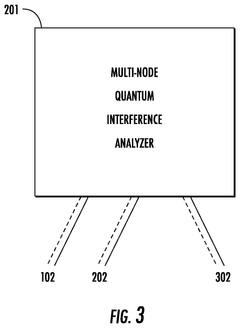
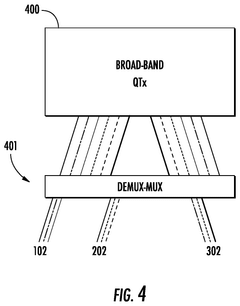
- A bi-directional quantum interconnect system is implemented, where first and second communication modules are coupled via a common communication medium, allowing qubits with different quantum characteristics to be transmitted in opposing directions, thereby increasing exchange rates and enabling flexible network architectures.
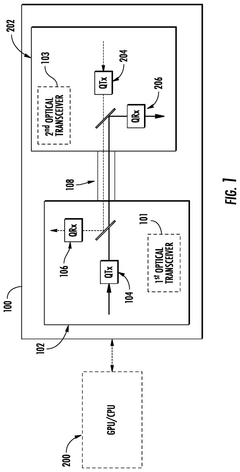
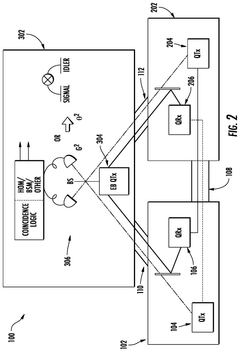
Biocompatible materials containing stable complexes of TSG-6 and hyaluronan and method of using same
PatentInactiveUS8420601B2
Innovation
- A biocompatible material in the form of a solid, cross-linked gel, or liposome containing a stable complex of TSG-6 and hyaluronan (HA) that stably complexes TSG-6 with HA, allowing for local release and interaction with inter-α-inhibitor heavy chains, providing anti-inflammatory effects and anti-adhesive properties.


Bioethical Implications of Quantum-Bio Integration
The integration of quantum technologies with biological systems raises profound bioethical questions that extend beyond technical feasibility into the realm of human values, rights, and societal norms. As quantum interconnects utilizing biocompatible materials advance, they create unprecedented capabilities for interfacing with human biology at the quantum level, necessitating careful ethical consideration.
The potential for quantum-bio integration to enhance human capabilities presents a fundamental bioethical dilemma. While these technologies may offer therapeutic benefits for neurological conditions or cognitive enhancement, they simultaneously blur the boundaries between human and machine intelligence. This convergence challenges our traditional understanding of human identity and autonomy, particularly when quantum systems might influence neural processes or decision-making pathways.
Privacy concerns emerge as another critical bioethical dimension. Quantum interconnects could theoretically access and process biological data at unprecedented levels of detail and intimacy. The quantum nature of these interactions may enable forms of biological surveillance that current ethical frameworks and regulatory systems are ill-equipped to address, raising questions about informed consent and data ownership in contexts where the very nature of the data collection process may be difficult to comprehend.
Distributive justice represents a third major bioethical consideration. Advanced quantum-bio technologies will likely emerge with significant cost barriers, potentially creating new forms of social stratification between those with access to quantum-enhanced biological capabilities and those without. This raises concerns about exacerbating existing social inequalities and creating new categories of disadvantage in healthcare, cognitive performance, and economic opportunity.
The potential for irreversible biological changes through quantum integration demands careful consideration of intergenerational ethics. Modifications that affect germline cells could have consequences for future generations who cannot consent to these interventions, raising questions about the limits of current generations' authority to make such far-reaching decisions.
Regulatory frameworks for quantum-bio technologies remain underdeveloped, creating an ethical governance gap. The unique properties of quantum systems—including superposition, entanglement, and measurement effects—present novel regulatory challenges that traditional bioethical approaches may struggle to address. International coordination will be essential to prevent regulatory arbitrage while ensuring that innovation continues responsibly.
As quantum interconnects with biocompatible materials advance, establishing proactive bioethical guidelines becomes imperative. These should incorporate diverse stakeholder perspectives, including not only scientists and engineers but also ethicists, patient advocates, and representatives from various cultural and religious traditions to ensure that quantum-bio integration proceeds in alignment with broadly shared human values.
The potential for quantum-bio integration to enhance human capabilities presents a fundamental bioethical dilemma. While these technologies may offer therapeutic benefits for neurological conditions or cognitive enhancement, they simultaneously blur the boundaries between human and machine intelligence. This convergence challenges our traditional understanding of human identity and autonomy, particularly when quantum systems might influence neural processes or decision-making pathways.
Privacy concerns emerge as another critical bioethical dimension. Quantum interconnects could theoretically access and process biological data at unprecedented levels of detail and intimacy. The quantum nature of these interactions may enable forms of biological surveillance that current ethical frameworks and regulatory systems are ill-equipped to address, raising questions about informed consent and data ownership in contexts where the very nature of the data collection process may be difficult to comprehend.
Distributive justice represents a third major bioethical consideration. Advanced quantum-bio technologies will likely emerge with significant cost barriers, potentially creating new forms of social stratification between those with access to quantum-enhanced biological capabilities and those without. This raises concerns about exacerbating existing social inequalities and creating new categories of disadvantage in healthcare, cognitive performance, and economic opportunity.
The potential for irreversible biological changes through quantum integration demands careful consideration of intergenerational ethics. Modifications that affect germline cells could have consequences for future generations who cannot consent to these interventions, raising questions about the limits of current generations' authority to make such far-reaching decisions.
Regulatory frameworks for quantum-bio technologies remain underdeveloped, creating an ethical governance gap. The unique properties of quantum systems—including superposition, entanglement, and measurement effects—present novel regulatory challenges that traditional bioethical approaches may struggle to address. International coordination will be essential to prevent regulatory arbitrage while ensuring that innovation continues responsibly.
As quantum interconnects with biocompatible materials advance, establishing proactive bioethical guidelines becomes imperative. These should incorporate diverse stakeholder perspectives, including not only scientists and engineers but also ethicists, patient advocates, and representatives from various cultural and religious traditions to ensure that quantum-bio integration proceeds in alignment with broadly shared human values.
Regulatory Framework for Quantum Medical Applications
The regulatory landscape for quantum medical applications is rapidly evolving as quantum interconnect technologies incorporating biocompatible materials advance toward clinical implementation. Currently, the FDA has established the Digital Health Center of Excellence, which is beginning to develop frameworks for evaluating quantum-based medical technologies, though specific guidelines for quantum interconnects remain in preliminary stages. The European Medicines Agency has similarly initiated a Quantum Technologies Working Group focused on establishing safety standards for quantum devices interfacing with biological systems.
Key regulatory considerations include biocompatibility assessment protocols that extend beyond traditional medical device testing to address quantum-specific interactions with biological tissues. These protocols now require evaluation of quantum decoherence effects in biological environments and potential long-term consequences of quantum state manipulation in living systems. Manufacturers must demonstrate that quantum coherence maintenance mechanisms do not adversely affect surrounding tissues or create unintended biological responses.
Radiation safety standards are being adapted to account for the unique electromagnetic emissions from quantum interconnect systems. The International Commission on Non-Ionizing Radiation Protection has proposed preliminary guidelines specifically addressing quantum computing hardware when used in proximity to patients. These guidelines establish maximum exposure thresholds for quantum-generated fields and require robust shielding solutions for clinical deployment.
Data security and privacy frameworks are particularly stringent for quantum medical applications due to their potential access to sensitive biological information. The HIPAA Quantum Computing Addendum (proposed) and the EU's Quantum-Enhanced Medical Device Regulation draft both mandate end-to-end quantum encryption for all patient data processed through quantum interconnects, with additional requirements for quantum-resistant cryptographic protocols to protect against future quantum computing threats.
Clinical trial designs for quantum medical technologies now follow the "Quantum-Enhanced Interventional Device" pathway, requiring phased testing that begins with quantum-biological interaction studies before progressing to limited human trials. Regulatory bodies have established accelerated review processes for quantum medical technologies addressing unmet clinical needs, while maintaining stringent safety requirements through the Quantum Medical Device Safety Act provisions.
International harmonization efforts are underway through the International Quantum Medical Regulatory Consortium, which aims to establish globally recognized standards for quantum medical technologies by 2025. This initiative seeks to prevent regulatory fragmentation that could impede the development and deployment of quantum interconnect technologies in healthcare settings worldwide.
Key regulatory considerations include biocompatibility assessment protocols that extend beyond traditional medical device testing to address quantum-specific interactions with biological tissues. These protocols now require evaluation of quantum decoherence effects in biological environments and potential long-term consequences of quantum state manipulation in living systems. Manufacturers must demonstrate that quantum coherence maintenance mechanisms do not adversely affect surrounding tissues or create unintended biological responses.
Radiation safety standards are being adapted to account for the unique electromagnetic emissions from quantum interconnect systems. The International Commission on Non-Ionizing Radiation Protection has proposed preliminary guidelines specifically addressing quantum computing hardware when used in proximity to patients. These guidelines establish maximum exposure thresholds for quantum-generated fields and require robust shielding solutions for clinical deployment.
Data security and privacy frameworks are particularly stringent for quantum medical applications due to their potential access to sensitive biological information. The HIPAA Quantum Computing Addendum (proposed) and the EU's Quantum-Enhanced Medical Device Regulation draft both mandate end-to-end quantum encryption for all patient data processed through quantum interconnects, with additional requirements for quantum-resistant cryptographic protocols to protect against future quantum computing threats.
Clinical trial designs for quantum medical technologies now follow the "Quantum-Enhanced Interventional Device" pathway, requiring phased testing that begins with quantum-biological interaction studies before progressing to limited human trials. Regulatory bodies have established accelerated review processes for quantum medical technologies addressing unmet clinical needs, while maintaining stringent safety requirements through the Quantum Medical Device Safety Act provisions.
International harmonization efforts are underway through the International Quantum Medical Regulatory Consortium, which aims to establish globally recognized standards for quantum medical technologies by 2025. This initiative seeks to prevent regulatory fragmentation that could impede the development and deployment of quantum interconnect technologies in healthcare settings worldwide.
Unlock deeper insights with PatSnap Eureka Quick Research — get a full tech report to explore trends and direct your research. Try now!
Generate Your Research Report Instantly with AI Agent
Supercharge your innovation with PatSnap Eureka AI Agent Platform!