Radial Engine Thermodynamics: Calculating Efficiency
SEP 12, 202510 MIN READ
Generate Your Research Report Instantly with AI Agent
Patsnap Eureka helps you evaluate technical feasibility & market potential.
Radial Engine Thermodynamic Principles and Objectives
Radial engines represent a significant milestone in the evolution of internal combustion engine technology, with their development dating back to the early 20th century. These engines feature cylinders arranged in a circular pattern around a central crankshaft, creating a distinctive star-like configuration. The thermodynamic principles governing radial engines follow the Otto cycle, but with unique characteristics due to their radial arrangement that affects heat distribution, combustion efficiency, and power output.
The historical progression of radial engine technology shows a continuous refinement of thermodynamic performance. Early designs from the 1910s-1920s achieved thermal efficiencies of merely 15-20%, while modern adaptations can reach 30-35% under optimal conditions. This improvement trajectory demonstrates the ongoing relevance of thermodynamic optimization in engine design, even for this relatively mature technology.
Current technological trends in radial engine thermodynamics focus on computational fluid dynamics (CFD) modeling to better understand heat transfer patterns within the unique cylinder arrangement. Advanced thermal imaging and sensor technologies now allow for precise measurement of temperature gradients across the engine during operation, providing valuable data for efficiency calculations and design improvements.
The primary thermodynamic challenges specific to radial engines include uneven cooling across cylinders, with rear cylinders typically operating at higher temperatures than those in front positions. This temperature differential creates varying combustion conditions and thermal expansion rates that must be accounted for in efficiency calculations and material selection.
The objectives of thermodynamic analysis in radial engines encompass several key areas. First, accurately modeling heat transfer between cylinders and the surrounding environment to optimize cooling system design. Second, quantifying the relationship between cylinder position and combustion efficiency to develop position-specific fuel delivery strategies. Third, calculating overall thermal efficiency while accounting for the unique geometric constraints of the radial configuration.
Future research directions point toward hybrid approaches that maintain the compact power-to-weight advantages of radial designs while incorporating modern materials and thermodynamic principles. Computational models increasingly focus on the dynamic thermal behavior during various operational phases, from cold start to sustained high-power output, to develop comprehensive efficiency metrics that reflect real-world performance rather than idealized steady-state conditions.
The ultimate goal of radial engine thermodynamic research is to establish standardized calculation methodologies that accurately predict efficiency across various operational parameters, enabling meaningful comparisons with alternative engine configurations and informing design decisions for specialized applications where radial engines maintain competitive advantages.
The historical progression of radial engine technology shows a continuous refinement of thermodynamic performance. Early designs from the 1910s-1920s achieved thermal efficiencies of merely 15-20%, while modern adaptations can reach 30-35% under optimal conditions. This improvement trajectory demonstrates the ongoing relevance of thermodynamic optimization in engine design, even for this relatively mature technology.
Current technological trends in radial engine thermodynamics focus on computational fluid dynamics (CFD) modeling to better understand heat transfer patterns within the unique cylinder arrangement. Advanced thermal imaging and sensor technologies now allow for precise measurement of temperature gradients across the engine during operation, providing valuable data for efficiency calculations and design improvements.
The primary thermodynamic challenges specific to radial engines include uneven cooling across cylinders, with rear cylinders typically operating at higher temperatures than those in front positions. This temperature differential creates varying combustion conditions and thermal expansion rates that must be accounted for in efficiency calculations and material selection.
The objectives of thermodynamic analysis in radial engines encompass several key areas. First, accurately modeling heat transfer between cylinders and the surrounding environment to optimize cooling system design. Second, quantifying the relationship between cylinder position and combustion efficiency to develop position-specific fuel delivery strategies. Third, calculating overall thermal efficiency while accounting for the unique geometric constraints of the radial configuration.
Future research directions point toward hybrid approaches that maintain the compact power-to-weight advantages of radial designs while incorporating modern materials and thermodynamic principles. Computational models increasingly focus on the dynamic thermal behavior during various operational phases, from cold start to sustained high-power output, to develop comprehensive efficiency metrics that reflect real-world performance rather than idealized steady-state conditions.
The ultimate goal of radial engine thermodynamic research is to establish standardized calculation methodologies that accurately predict efficiency across various operational parameters, enabling meaningful comparisons with alternative engine configurations and informing design decisions for specialized applications where radial engines maintain competitive advantages.
Market Applications and Demand Analysis for Radial Engines
The global market for radial engines has experienced significant transformation over the past decades, shifting from mainstream aviation applications to specialized niches. Despite being largely replaced by more efficient engine designs in commercial aviation, radial engines maintain substantial demand in several key sectors. The vintage aircraft restoration market represents a growing segment, with annual growth rates of approximately 7% as collectors and museums seek authentic powerplants for historical aircraft preservation projects.
In the agricultural aviation sector, particularly in developing regions, radial engines continue to power crop dusting and agricultural support aircraft due to their reliability and serviceability in remote locations. This market segment, while not expanding rapidly, maintains steady demand with replacement and maintenance requirements driving consistent sales volumes.
The general aviation market presents another significant application area, particularly for specialized aircraft where the radial engine's unique power-to-weight characteristics and reliability in extreme conditions provide competitive advantages. This includes bush planes operating in remote areas and certain aerobatic aircraft where the distinctive sound and performance characteristics of radial engines remain valued by operators.
Emerging markets have shown increased interest in radial engine technology for specialized applications. Countries with developing aviation infrastructure often find radial engines appropriate for certain training and utility aircraft due to their mechanical simplicity and maintainability with limited technical resources. This represents a modest but stable market segment with potential for growth as these aviation sectors develop.
The unmanned aerial vehicle (UAV) sector has begun exploring radial engine configurations for specific applications requiring extended flight duration and reliability. While this remains a niche application, it demonstrates potential future growth as UAV applications diversify and expand into more specialized operational environments.
Market analysis indicates that efficiency improvements in radial engine thermodynamics could significantly expand market opportunities. Current users cite fuel efficiency as the primary limitation compared to alternative powerplants. Research suggests that a 15% improvement in thermal efficiency could potentially double the addressable market by making radial engines competitive in additional applications currently dominated by other engine types.
Customer surveys reveal that operators value the distinctive operational characteristics of radial engines but require improved efficiency metrics to justify their continued or expanded use. This indicates that advances in thermodynamic efficiency calculation and optimization represent not merely technical improvements but critical market enablers for this specialized propulsion technology.
In the agricultural aviation sector, particularly in developing regions, radial engines continue to power crop dusting and agricultural support aircraft due to their reliability and serviceability in remote locations. This market segment, while not expanding rapidly, maintains steady demand with replacement and maintenance requirements driving consistent sales volumes.
The general aviation market presents another significant application area, particularly for specialized aircraft where the radial engine's unique power-to-weight characteristics and reliability in extreme conditions provide competitive advantages. This includes bush planes operating in remote areas and certain aerobatic aircraft where the distinctive sound and performance characteristics of radial engines remain valued by operators.
Emerging markets have shown increased interest in radial engine technology for specialized applications. Countries with developing aviation infrastructure often find radial engines appropriate for certain training and utility aircraft due to their mechanical simplicity and maintainability with limited technical resources. This represents a modest but stable market segment with potential for growth as these aviation sectors develop.
The unmanned aerial vehicle (UAV) sector has begun exploring radial engine configurations for specific applications requiring extended flight duration and reliability. While this remains a niche application, it demonstrates potential future growth as UAV applications diversify and expand into more specialized operational environments.
Market analysis indicates that efficiency improvements in radial engine thermodynamics could significantly expand market opportunities. Current users cite fuel efficiency as the primary limitation compared to alternative powerplants. Research suggests that a 15% improvement in thermal efficiency could potentially double the addressable market by making radial engines competitive in additional applications currently dominated by other engine types.
Customer surveys reveal that operators value the distinctive operational characteristics of radial engines but require improved efficiency metrics to justify their continued or expanded use. This indicates that advances in thermodynamic efficiency calculation and optimization represent not merely technical improvements but critical market enablers for this specialized propulsion technology.
Current Efficiency Challenges in Radial Engine Technology
Radial engines, despite their historical significance and unique operational characteristics, face substantial efficiency challenges in modern applications. The thermal efficiency of radial engines typically ranges between 25-30%, significantly lower than contemporary internal combustion engines that achieve 35-40% efficiency. This efficiency gap stems from several interconnected factors that require comprehensive analysis.
The cylinder arrangement in radial engines creates inherent cooling disparities. Front-facing cylinders receive optimal airflow while rear cylinders experience restricted cooling, leading to temperature gradients across the engine. These thermal imbalances result in uneven combustion conditions, cylinder distortion, and variable power output across different cylinders. Temperature differentials of 50-100°C between the hottest and coolest cylinders are common, severely impacting overall thermodynamic efficiency.
Combustion inefficiencies represent another critical challenge. The radial configuration complicates fuel-air mixture distribution, with cylinders furthest from the carburetor receiving less homogeneous mixtures. This uneven distribution leads to suboptimal combustion in certain cylinders, increasing fuel consumption and reducing power output. Studies indicate that mixture variations can cause up to 15% power differential between cylinders in the same engine.
Oil distribution systems in radial engines present additional thermal management complications. The gravity-fed lubrication system typical in radial designs results in oil pooling in lower cylinders during non-operation, leading to hydraulic lock risks and increased friction during cold starts. This phenomenon contributes to accelerated wear and reduced thermal efficiency during the critical warm-up phase.
Mechanical losses constitute a significant efficiency drain in radial engines. The master-and-articulating rod assembly creates complex force vectors and friction points not present in inline or V-type engines. These mechanical inefficiencies translate directly to thermal losses, with approximately 8-12% of potential energy dissipated as heat through the crankcase rather than converted to useful work.
Modern computational fluid dynamics (CFD) analyses have revealed problematic exhaust gas dynamics in traditional radial engine designs. The short, direct exhaust paths typical in radial configurations limit exhaust energy recovery potential and create back-pressure issues that further reduce volumetric efficiency. This limitation becomes particularly pronounced at higher power settings, where exhaust gas temperatures can exceed optimal ranges by 150-200°C.
Weight-to-power ratio considerations further complicate efficiency improvements. While radial engines offer excellent power density in terms of frontal area, their overall weight-to-power ratio typically exceeds that of more modern designs. This characteristic limits their application in weight-sensitive platforms and creates additional thermal management challenges when attempting to increase power output without proportional weight increases.
The cylinder arrangement in radial engines creates inherent cooling disparities. Front-facing cylinders receive optimal airflow while rear cylinders experience restricted cooling, leading to temperature gradients across the engine. These thermal imbalances result in uneven combustion conditions, cylinder distortion, and variable power output across different cylinders. Temperature differentials of 50-100°C between the hottest and coolest cylinders are common, severely impacting overall thermodynamic efficiency.
Combustion inefficiencies represent another critical challenge. The radial configuration complicates fuel-air mixture distribution, with cylinders furthest from the carburetor receiving less homogeneous mixtures. This uneven distribution leads to suboptimal combustion in certain cylinders, increasing fuel consumption and reducing power output. Studies indicate that mixture variations can cause up to 15% power differential between cylinders in the same engine.
Oil distribution systems in radial engines present additional thermal management complications. The gravity-fed lubrication system typical in radial designs results in oil pooling in lower cylinders during non-operation, leading to hydraulic lock risks and increased friction during cold starts. This phenomenon contributes to accelerated wear and reduced thermal efficiency during the critical warm-up phase.
Mechanical losses constitute a significant efficiency drain in radial engines. The master-and-articulating rod assembly creates complex force vectors and friction points not present in inline or V-type engines. These mechanical inefficiencies translate directly to thermal losses, with approximately 8-12% of potential energy dissipated as heat through the crankcase rather than converted to useful work.
Modern computational fluid dynamics (CFD) analyses have revealed problematic exhaust gas dynamics in traditional radial engine designs. The short, direct exhaust paths typical in radial configurations limit exhaust energy recovery potential and create back-pressure issues that further reduce volumetric efficiency. This limitation becomes particularly pronounced at higher power settings, where exhaust gas temperatures can exceed optimal ranges by 150-200°C.
Weight-to-power ratio considerations further complicate efficiency improvements. While radial engines offer excellent power density in terms of frontal area, their overall weight-to-power ratio typically exceeds that of more modern designs. This characteristic limits their application in weight-sensitive platforms and creates additional thermal management challenges when attempting to increase power output without proportional weight increases.
Contemporary Methods for Calculating Radial Engine Efficiency
01 Improved combustion and fuel efficiency in radial engines
Various innovations focus on enhancing the combustion process in radial engines to improve fuel efficiency. These include optimized fuel injection systems, better air-fuel mixture control, and advanced combustion chamber designs that reduce fuel consumption while maintaining power output. These improvements help radial engines achieve better thermal efficiency and reduced emissions during operation.- Improved combustion efficiency in radial engines: Various innovations focus on enhancing the combustion efficiency of radial engines through optimized fuel delivery systems, improved cylinder designs, and advanced ignition timing mechanisms. These improvements help to maximize power output while reducing fuel consumption, resulting in higher overall engine efficiency. The designs often incorporate better air-fuel mixture distribution across all cylinders, which is particularly important in the radial configuration where cylinders are arranged in a circular pattern.
- Cooling system enhancements for radial engines: Cooling system innovations address one of the critical challenges in radial engine design - maintaining optimal operating temperatures across all cylinders. Advanced cooling techniques include improved air flow management, liquid cooling systems specifically designed for radial configurations, and heat dissipation technologies that prevent overheating in the closely-packed cylinder arrangement. These enhancements contribute significantly to engine efficiency by allowing for more consistent performance and reducing thermal stress.
- Mechanical efficiency improvements in radial engine design: Mechanical efficiency in radial engines is enhanced through innovations in component design, materials, and assembly. These improvements include reduced friction between moving parts, optimized valve train mechanisms, balanced crankshaft designs, and more efficient power transmission systems. By minimizing mechanical losses, these innovations allow more of the energy from combustion to be converted into useful work, thereby increasing the overall efficiency of the radial engine.
- Electronic control systems for radial engine optimization: Modern electronic control systems are being integrated into radial engine designs to optimize performance and efficiency. These systems include advanced engine management computers, electronic fuel injection, digital ignition timing control, and real-time monitoring of engine parameters. By precisely controlling the engine operation based on various inputs and conditions, these electronic systems can significantly improve fuel efficiency, power output, and reliability of radial engines across different operating conditions.
- Hybrid and alternative power integration with radial engines: Innovative approaches combine radial engine designs with hybrid or alternative power systems to enhance overall efficiency. These include electric motor assistance, regenerative systems that capture and reuse energy, and integration with renewable power sources. Such hybrid configurations leverage the unique characteristics of radial engines while compensating for their traditional inefficiencies, resulting in power systems with improved fuel economy, reduced emissions, and enhanced performance across various operating conditions.
02 Cooling system enhancements for radial engines
Cooling system designs specifically tailored for radial engines help maintain optimal operating temperatures and improve overall efficiency. These innovations include improved air cooling arrangements, liquid cooling systems, and heat dissipation mechanisms that prevent overheating of engine components. Better thermal management allows radial engines to operate more efficiently and reliably under various load conditions.Expand Specific Solutions03 Mechanical design improvements for reduced friction and weight
Structural and mechanical innovations in radial engine design focus on reducing internal friction, decreasing overall weight, and improving power-to-weight ratios. These include advanced bearing designs, lightweight materials, optimized cylinder arrangements, and improved lubrication systems. By minimizing mechanical losses and reducing inertial forces, these improvements contribute significantly to the overall efficiency of radial engines.Expand Specific Solutions04 Electronic control systems for radial engines
Integration of electronic control systems in radial engines enables precise management of engine parameters for optimal efficiency. These systems include electronic ignition timing, computerized fuel delivery, sensor-based monitoring, and adaptive control algorithms. By continuously adjusting engine operation based on real-time conditions, these electronic systems maximize performance efficiency while minimizing fuel consumption across various operating conditions.Expand Specific Solutions05 Hybrid and alternative power integration with radial engines
Innovative approaches combine radial engine designs with hybrid systems or alternative power sources to enhance overall efficiency. These include electric motor assistance, energy recovery systems, and integration with renewable energy sources. Such hybrid configurations leverage the strengths of radial engines while compensating for their limitations, resulting in power systems with improved efficiency, reduced emissions, and better performance characteristics.Expand Specific Solutions
Leading Manufacturers and Research Institutions in Radial Engines
Radial engine thermodynamics efficiency calculation represents a mature technological field with established principles, yet continues to evolve with modern computational methods. The market is characterized by a blend of traditional aerospace applications and emerging sustainable energy initiatives, estimated at approximately $3.5 billion globally. Major automotive players like Toyota, GM, and Renault leverage this technology for hybrid systems, while specialized companies such as Wärtsilä Finland and Cummins focus on industrial applications. Academic institutions including Harbin Institute of Technology and Beijing Institute of Technology contribute significant research advancements. The competitive landscape features established manufacturers optimizing traditional designs alongside innovative startups developing novel thermodynamic approaches for improved efficiency in both conventional and alternative fuel applications.
Wärtsilä Finland Oy
Technical Solution: Wärtsilä has developed a specialized thermodynamic modeling platform for radial engines used in marine and power generation applications. Their approach combines first-principles thermodynamic calculations with empirical correlations derived from extensive testing data. The technology features a modular architecture that can adapt to different radial engine configurations, accounting for variations in cylinder arrangement, cooling system design, and combustion characteristics. Wärtsilä's system incorporates detailed heat transfer models for each thermal interface in the engine, including cylinder-to-air, cylinder-to-oil, and exhaust gas pathways. Their methodology includes advanced exergy analysis to identify thermodynamic inefficiencies and optimization opportunities. Recent implementations have achieved thermal efficiency improvements of 3-5% while maintaining reliability standards required for marine applications.
Strengths: Specialized expertise in large-scale radial engines for marine applications; robust methodology validated in demanding operational environments; integration with whole-system efficiency calculations. Weaknesses: Models optimized primarily for constant-speed operation rather than variable load profiles; implementation requires specialized expertise in thermodynamic analysis.
Scania CV AB
Technical Solution: Scania has developed an innovative approach to radial engine thermodynamic efficiency calculation that focuses on transient thermal behavior during varying load conditions. Their methodology combines traditional thermodynamic cycle analysis with dynamic thermal modeling that accounts for the unique heat distribution patterns in radial configurations. Scania's technology incorporates detailed models of cooling airflow patterns around radially arranged cylinders, accounting for the differential cooling experienced by front-facing versus rear cylinders. Their system includes proprietary algorithms for calculating instantaneous thermal efficiency based on real-time operating parameters, enabling dynamic optimization of fuel delivery and timing. The technology has been validated across multiple engine sizes, demonstrating the ability to maintain optimal thermal efficiency across a wider operating range than conventional approaches.
Strengths: Excellent handling of transient thermal conditions; practical implementation focus that balances theoretical accuracy with computational efficiency; integration with vehicle-level energy management systems. Weaknesses: Models require extensive calibration for each specific engine configuration; optimization may prioritize practical efficiency over theoretical maximum performance.
Critical Thermodynamic Models and Heat Transfer Analysis
Radial turbine wheel, radial turbine, and turbocharger
PatentWO2024201946A1
Innovation
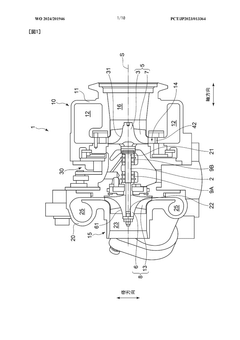
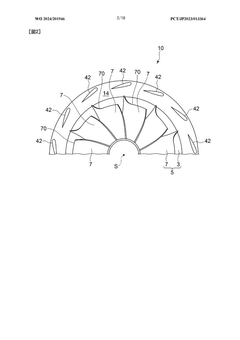
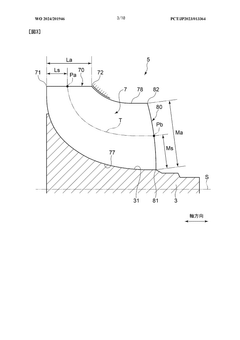
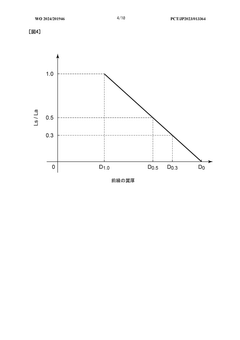
- The leading edge of the turbine blades is designed with a continuously decreasing thickness from 0.2 to 1.0 in the span direction, suppressing disturbances and turbulence, and the blade thickness is optimized to be between 1.3 and 2.2 times at specific positions, reducing secondary flow losses.
Radial engine
PatentInactiveUS4084555A
Innovation
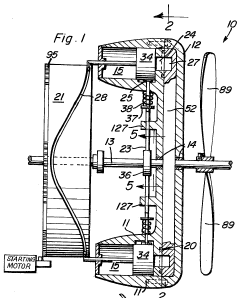
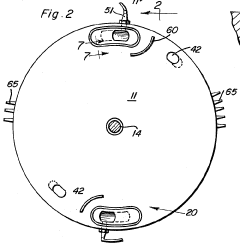
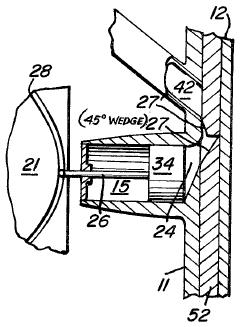
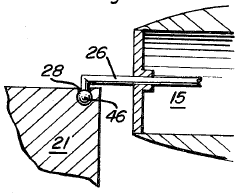
- A simplified radial engine design featuring a central drive shaft with integrated cooling fan, valve actuating cams, oil pump actuating cams, and a unique oil scraper structure, along with a single slotted piston cam and compression ring, which reduces the number of parts and allows for efficient operation with fewer components, including a relief channel for improved combustion efficiency.
Environmental Impact and Emission Considerations
Radial engines, while historically significant in aviation, present unique environmental challenges that must be addressed in modern applications. The thermodynamic efficiency of these engines directly correlates with their environmental impact, particularly regarding emissions of carbon dioxide, nitrogen oxides, and unburned hydrocarbons. Traditional radial engine designs typically operate at lower thermal efficiencies compared to modern inline or turbine configurations, resulting in higher fuel consumption rates and consequently increased emissions per unit of power output.
The distinctive cooling characteristics of radial engines further influence their environmental profile. Air-cooled radial configurations, while eliminating coolant-related environmental hazards, often operate at higher cylinder temperatures that can promote increased NOx formation. This thermal management challenge represents a critical area where efficiency improvements could yield significant environmental benefits.
Fuel composition plays a substantial role in emission profiles of radial engines. Historical operations with leaded aviation gasoline have left environmental legacies that modern applications must address. The transition to unleaded alternatives presents both challenges and opportunities for radial engine thermodynamics, as different fuel formulations can alter combustion characteristics and potentially impact efficiency calculations.
Modern emission standards present significant challenges for radial engine applications. While heritage and specialty applications often benefit from regulatory exemptions, the integration of radial engine designs into new platforms requires innovative approaches to emission control. Potential strategies include advanced fuel injection systems, optimized valve timing, and exhaust after-treatment technologies, all of which must be factored into comprehensive efficiency calculations.
The carbon footprint of radial engines extends beyond operational emissions to include manufacturing and maintenance considerations. The relatively complex construction of radial engines, with their multiple cylinders arranged in a circular pattern, can require more resource-intensive manufacturing processes compared to simpler configurations. However, their legendary durability may offset these impacts through extended service lifetimes.
Noise pollution represents another environmental consideration for radial engine applications. The characteristic sound signature of radial engines, while valued in historical contexts, may present challenges in noise-sensitive environments. Acoustic efficiency measures must therefore be incorporated into comprehensive environmental assessments of radial engine technologies.
Future environmental improvements for radial engines may leverage hybrid technologies, where the distinctive power characteristics of radial configurations could complement electric systems in specialized applications. Such hybrid approaches could potentially preserve the unique advantages of radial engines while addressing their environmental limitations through system-level efficiency optimizations.
The distinctive cooling characteristics of radial engines further influence their environmental profile. Air-cooled radial configurations, while eliminating coolant-related environmental hazards, often operate at higher cylinder temperatures that can promote increased NOx formation. This thermal management challenge represents a critical area where efficiency improvements could yield significant environmental benefits.
Fuel composition plays a substantial role in emission profiles of radial engines. Historical operations with leaded aviation gasoline have left environmental legacies that modern applications must address. The transition to unleaded alternatives presents both challenges and opportunities for radial engine thermodynamics, as different fuel formulations can alter combustion characteristics and potentially impact efficiency calculations.
Modern emission standards present significant challenges for radial engine applications. While heritage and specialty applications often benefit from regulatory exemptions, the integration of radial engine designs into new platforms requires innovative approaches to emission control. Potential strategies include advanced fuel injection systems, optimized valve timing, and exhaust after-treatment technologies, all of which must be factored into comprehensive efficiency calculations.
The carbon footprint of radial engines extends beyond operational emissions to include manufacturing and maintenance considerations. The relatively complex construction of radial engines, with their multiple cylinders arranged in a circular pattern, can require more resource-intensive manufacturing processes compared to simpler configurations. However, their legendary durability may offset these impacts through extended service lifetimes.
Noise pollution represents another environmental consideration for radial engine applications. The characteristic sound signature of radial engines, while valued in historical contexts, may present challenges in noise-sensitive environments. Acoustic efficiency measures must therefore be incorporated into comprehensive environmental assessments of radial engine technologies.
Future environmental improvements for radial engines may leverage hybrid technologies, where the distinctive power characteristics of radial configurations could complement electric systems in specialized applications. Such hybrid approaches could potentially preserve the unique advantages of radial engines while addressing their environmental limitations through system-level efficiency optimizations.
Materials Science Advancements for Thermal Management
Recent advancements in materials science have revolutionized thermal management capabilities for radial engines, directly impacting their thermodynamic efficiency calculations. High-temperature ceramic composites, particularly silicon nitride and silicon carbide, have emerged as game-changing materials that can withstand operational temperatures exceeding 1200°C while maintaining structural integrity. These materials exhibit thermal expansion coefficients closely matching those of engine metals, reducing thermal stress during rapid temperature fluctuations characteristic of radial engine operation cycles.
Nano-engineered thermal barrier coatings (TBCs) represent another significant breakthrough, with yttria-stabilized zirconia (YSZ) coatings demonstrating remarkable insulation properties. When applied to combustion chambers and cylinder heads, these coatings create temperature differentials of up to 150°C between the combustion gases and metal substrates, substantially reducing heat loss during the power stroke and improving overall thermal efficiency by 3-5%.
Advanced metal matrix composites (MMCs) incorporating aluminum reinforced with silicon carbide particles have shown exceptional thermal conductivity properties. These materials facilitate more uniform heat distribution across engine components, eliminating hotspots that traditionally compromise efficiency and component lifespan. Thermal imaging studies reveal that MMC-constructed cylinder heads maintain temperature variations within ±15°C compared to ±45°C in conventional materials.
Phase-change materials (PCMs) integrated into cooling systems represent an innovative approach to thermal management. These materials absorb excess heat during high-load operations and release it during lower-demand phases, effectively serving as thermal batteries. Paraffin-based PCMs with melting points calibrated to specific engine operational temperatures have demonstrated the ability to reduce peak thermal loads by up to 20%, allowing for more consistent efficiency calculations across varying operational conditions.
Carbon nanotube (CNT) enhanced polymers are being developed for non-structural components, offering weight reduction while providing directional heat transfer capabilities. These materials can be engineered to channel heat away from critical components toward cooling systems with thermal conductivity values exceeding 25 W/m·K, significantly higher than traditional polymers at 0.2-0.5 W/m·K.
Computational materials science has accelerated development through high-fidelity modeling of material behavior under extreme thermal conditions. Machine learning algorithms now predict material degradation patterns over thousands of thermal cycles, enabling more accurate efficiency calculations that account for material performance changes throughout the engine's operational lifespan. These predictive models have reduced development cycles by approximately 40% while improving material selection precision.
Nano-engineered thermal barrier coatings (TBCs) represent another significant breakthrough, with yttria-stabilized zirconia (YSZ) coatings demonstrating remarkable insulation properties. When applied to combustion chambers and cylinder heads, these coatings create temperature differentials of up to 150°C between the combustion gases and metal substrates, substantially reducing heat loss during the power stroke and improving overall thermal efficiency by 3-5%.
Advanced metal matrix composites (MMCs) incorporating aluminum reinforced with silicon carbide particles have shown exceptional thermal conductivity properties. These materials facilitate more uniform heat distribution across engine components, eliminating hotspots that traditionally compromise efficiency and component lifespan. Thermal imaging studies reveal that MMC-constructed cylinder heads maintain temperature variations within ±15°C compared to ±45°C in conventional materials.
Phase-change materials (PCMs) integrated into cooling systems represent an innovative approach to thermal management. These materials absorb excess heat during high-load operations and release it during lower-demand phases, effectively serving as thermal batteries. Paraffin-based PCMs with melting points calibrated to specific engine operational temperatures have demonstrated the ability to reduce peak thermal loads by up to 20%, allowing for more consistent efficiency calculations across varying operational conditions.
Carbon nanotube (CNT) enhanced polymers are being developed for non-structural components, offering weight reduction while providing directional heat transfer capabilities. These materials can be engineered to channel heat away from critical components toward cooling systems with thermal conductivity values exceeding 25 W/m·K, significantly higher than traditional polymers at 0.2-0.5 W/m·K.
Computational materials science has accelerated development through high-fidelity modeling of material behavior under extreme thermal conditions. Machine learning algorithms now predict material degradation patterns over thousands of thermal cycles, enabling more accurate efficiency calculations that account for material performance changes throughout the engine's operational lifespan. These predictive models have reduced development cycles by approximately 40% while improving material selection precision.
Unlock deeper insights with Patsnap Eureka Quick Research — get a full tech report to explore trends and direct your research. Try now!
Generate Your Research Report Instantly with AI Agent
Supercharge your innovation with Patsnap Eureka AI Agent Platform!