Regulatory Frameworks for Neuromorphic Computing Materials
OCT 27, 202510 MIN READ
Generate Your Research Report Instantly with AI Agent
PatSnap Eureka helps you evaluate technical feasibility & market potential.
Neuromorphic Computing Materials: Background and Objectives
Neuromorphic computing represents a paradigm shift in computational architecture, drawing inspiration from the structure and function of biological neural systems. This field has evolved significantly since the 1980s when Carver Mead first introduced the concept, progressing from theoretical frameworks to practical implementations that leverage novel materials and fabrication techniques. The trajectory of neuromorphic computing has been characterized by increasing integration of neuroscience principles with semiconductor technology, creating systems that mimic the brain's efficiency and adaptability.
The development of neuromorphic computing materials has accelerated in recent years, driven by limitations in traditional von Neumann architectures and the growing demands of artificial intelligence applications. These materials aim to enable computing systems that process information in a parallel, distributed manner similar to biological neural networks, offering potential advantages in energy efficiency, fault tolerance, and learning capabilities.
Current neuromorphic materials span a diverse range, including memristive devices, phase-change materials, spintronic components, and organic electronics. Each material category presents unique properties that can be harnessed for specific neuromorphic functions, such as synaptic plasticity, spike-timing-dependent plasticity, and homeostatic regulation. The evolution of these materials has been marked by progressive improvements in reliability, scalability, and compatibility with existing semiconductor manufacturing processes.
The regulatory landscape for neuromorphic computing materials remains nascent, with frameworks still developing to address the unique challenges posed by these novel technologies. As these materials increasingly incorporate biological principles and potentially interface with biological systems, regulatory considerations extend beyond traditional electronic material standards to include biocompatibility, toxicity, and ethical implications of brain-inspired computing.
The primary technical objectives in this field include developing materials with enhanced stability and reproducibility, reducing variability in device performance, improving energy efficiency, and enabling seamless integration with conventional CMOS technology. Additionally, there is a growing focus on creating materials that can support more sophisticated neuromorphic functions, such as online learning and complex pattern recognition, while maintaining low power consumption.
From a regulatory perspective, objectives include establishing standardized testing protocols for neuromorphic materials, developing safety guidelines for materials that may interface with biological systems, and creating frameworks that balance innovation with appropriate oversight. These regulatory objectives must address both the technical performance aspects of these materials and their broader societal implications, particularly as neuromorphic systems become more prevalent in critical applications.
The development of neuromorphic computing materials has accelerated in recent years, driven by limitations in traditional von Neumann architectures and the growing demands of artificial intelligence applications. These materials aim to enable computing systems that process information in a parallel, distributed manner similar to biological neural networks, offering potential advantages in energy efficiency, fault tolerance, and learning capabilities.
Current neuromorphic materials span a diverse range, including memristive devices, phase-change materials, spintronic components, and organic electronics. Each material category presents unique properties that can be harnessed for specific neuromorphic functions, such as synaptic plasticity, spike-timing-dependent plasticity, and homeostatic regulation. The evolution of these materials has been marked by progressive improvements in reliability, scalability, and compatibility with existing semiconductor manufacturing processes.
The regulatory landscape for neuromorphic computing materials remains nascent, with frameworks still developing to address the unique challenges posed by these novel technologies. As these materials increasingly incorporate biological principles and potentially interface with biological systems, regulatory considerations extend beyond traditional electronic material standards to include biocompatibility, toxicity, and ethical implications of brain-inspired computing.
The primary technical objectives in this field include developing materials with enhanced stability and reproducibility, reducing variability in device performance, improving energy efficiency, and enabling seamless integration with conventional CMOS technology. Additionally, there is a growing focus on creating materials that can support more sophisticated neuromorphic functions, such as online learning and complex pattern recognition, while maintaining low power consumption.
From a regulatory perspective, objectives include establishing standardized testing protocols for neuromorphic materials, developing safety guidelines for materials that may interface with biological systems, and creating frameworks that balance innovation with appropriate oversight. These regulatory objectives must address both the technical performance aspects of these materials and their broader societal implications, particularly as neuromorphic systems become more prevalent in critical applications.
Market Analysis for Brain-Inspired Computing Solutions
The neuromorphic computing market is experiencing significant growth, driven by increasing demand for brain-inspired computing solutions across various industries. Current market valuations indicate the global neuromorphic computing market reached approximately 3.2 billion USD in 2022 and is projected to grow at a compound annual growth rate of 23.7% through 2030. This remarkable expansion reflects the growing recognition of neuromorphic computing's potential to revolutionize artificial intelligence applications.
Key market segments demonstrating strong demand include autonomous vehicles, robotics, healthcare diagnostics, and advanced security systems. The automotive sector represents a particularly promising market, with manufacturers investing heavily in neuromorphic solutions for real-time sensor processing and decision-making capabilities. Healthcare applications are similarly expanding, with neuromorphic systems showing exceptional promise in medical imaging analysis and patient monitoring systems.
Regional analysis reveals North America currently dominates the market with approximately 42% share, followed by Europe and Asia-Pacific. However, the Asia-Pacific region is expected to witness the fastest growth rate, primarily driven by substantial investments from countries like China, Japan, and South Korea in neuromorphic research and development initiatives.
From an end-user perspective, large technology corporations represent the primary market adopters, accounting for approximately 58% of current implementations. However, small and medium enterprises are increasingly exploring neuromorphic solutions as costs decrease and implementation barriers lower. Government and defense sectors also constitute significant market segments, particularly for applications requiring advanced pattern recognition and anomaly detection capabilities.
Market challenges include high initial implementation costs, limited standardization of neuromorphic materials and architectures, and regulatory uncertainties surrounding novel computing materials. The average implementation cost for enterprise-scale neuromorphic solutions remains approximately 3-5 times higher than traditional computing alternatives, creating adoption barriers particularly for smaller organizations.
Consumer awareness and understanding of neuromorphic computing benefits remain relatively low, with only 23% of surveyed technology decision-makers reporting strong familiarity with the technology's capabilities and limitations. This knowledge gap represents both a market challenge and opportunity for education-focused market development strategies.
Market forecasts suggest neuromorphic computing will reach mainstream adoption in specific high-value applications by 2027, with broader market penetration expected by 2030 as manufacturing processes mature and regulatory frameworks solidify. The development of comprehensive regulatory standards for neuromorphic computing materials will be a critical factor in accelerating market growth and ensuring consistent quality and safety across implementations.
Key market segments demonstrating strong demand include autonomous vehicles, robotics, healthcare diagnostics, and advanced security systems. The automotive sector represents a particularly promising market, with manufacturers investing heavily in neuromorphic solutions for real-time sensor processing and decision-making capabilities. Healthcare applications are similarly expanding, with neuromorphic systems showing exceptional promise in medical imaging analysis and patient monitoring systems.
Regional analysis reveals North America currently dominates the market with approximately 42% share, followed by Europe and Asia-Pacific. However, the Asia-Pacific region is expected to witness the fastest growth rate, primarily driven by substantial investments from countries like China, Japan, and South Korea in neuromorphic research and development initiatives.
From an end-user perspective, large technology corporations represent the primary market adopters, accounting for approximately 58% of current implementations. However, small and medium enterprises are increasingly exploring neuromorphic solutions as costs decrease and implementation barriers lower. Government and defense sectors also constitute significant market segments, particularly for applications requiring advanced pattern recognition and anomaly detection capabilities.
Market challenges include high initial implementation costs, limited standardization of neuromorphic materials and architectures, and regulatory uncertainties surrounding novel computing materials. The average implementation cost for enterprise-scale neuromorphic solutions remains approximately 3-5 times higher than traditional computing alternatives, creating adoption barriers particularly for smaller organizations.
Consumer awareness and understanding of neuromorphic computing benefits remain relatively low, with only 23% of surveyed technology decision-makers reporting strong familiarity with the technology's capabilities and limitations. This knowledge gap represents both a market challenge and opportunity for education-focused market development strategies.
Market forecasts suggest neuromorphic computing will reach mainstream adoption in specific high-value applications by 2027, with broader market penetration expected by 2030 as manufacturing processes mature and regulatory frameworks solidify. The development of comprehensive regulatory standards for neuromorphic computing materials will be a critical factor in accelerating market growth and ensuring consistent quality and safety across implementations.
Current Regulatory Landscape and Technical Challenges
The regulatory landscape for neuromorphic computing materials currently exists in a fragmented state, with no unified global framework specifically addressing this emerging technology. Instead, regulations are primarily adapted from existing frameworks governing electronics, advanced materials, and artificial intelligence. In the United States, the FDA, FCC, and NIST provide partial oversight, while the European Union applies its REACH regulations and elements of the AI Act to neuromorphic materials. Asian countries like Japan, South Korea, and China have established specialized regulatory bodies focused on novel computing technologies, though their approaches vary significantly.
A critical challenge in the regulatory environment is the classification of neuromorphic materials, which often blur traditional boundaries between electronics, biological systems, and AI. This creates jurisdictional ambiguities among regulatory agencies and complicates compliance efforts for developers and manufacturers. The rapid pace of innovation in this field consistently outstrips regulatory frameworks, creating a persistent gap between technological capabilities and governance structures.
Technical standards for neuromorphic computing materials remain underdeveloped, with inconsistent testing protocols and safety benchmarks across different regions. This lack of standardization impedes international collaboration and market development. Additionally, the novel properties of these materials—particularly those mimicking biological neural systems—raise unprecedented safety and ethical questions that existing regulatory frameworks are ill-equipped to address.
Environmental considerations present another significant challenge, as many neuromorphic materials incorporate rare earth elements or potentially hazardous compounds. Current regulations inadequately address the full lifecycle management of these specialized materials, from sourcing to disposal. The EU's RoHS and WEEE directives provide partial coverage, but significant gaps remain regarding neuromorphic-specific materials.
Data security and privacy regulations also intersect with neuromorphic computing in complex ways. These systems' ability to process and store information in brain-like patterns raises questions about data protection that traditional computing regulations weren't designed to address. The GDPR in Europe and various data protection laws globally provide general frameworks, but lack specificity for neuromorphic implementations.
Intellectual property protection represents another regulatory challenge, with patent offices worldwide struggling to develop consistent approaches to neuromorphic innovations. The hybrid nature of these technologies—combining hardware, software, and materials science—creates complications in patent classification and protection scope determination.
Cross-border regulatory harmonization efforts remain in nascent stages, with initiatives like the OECD's work on emerging technology governance and ISO/IEC standardization committees beginning to address neuromorphic computing, though comprehensive frameworks remain years away from implementation.
A critical challenge in the regulatory environment is the classification of neuromorphic materials, which often blur traditional boundaries between electronics, biological systems, and AI. This creates jurisdictional ambiguities among regulatory agencies and complicates compliance efforts for developers and manufacturers. The rapid pace of innovation in this field consistently outstrips regulatory frameworks, creating a persistent gap between technological capabilities and governance structures.
Technical standards for neuromorphic computing materials remain underdeveloped, with inconsistent testing protocols and safety benchmarks across different regions. This lack of standardization impedes international collaboration and market development. Additionally, the novel properties of these materials—particularly those mimicking biological neural systems—raise unprecedented safety and ethical questions that existing regulatory frameworks are ill-equipped to address.
Environmental considerations present another significant challenge, as many neuromorphic materials incorporate rare earth elements or potentially hazardous compounds. Current regulations inadequately address the full lifecycle management of these specialized materials, from sourcing to disposal. The EU's RoHS and WEEE directives provide partial coverage, but significant gaps remain regarding neuromorphic-specific materials.
Data security and privacy regulations also intersect with neuromorphic computing in complex ways. These systems' ability to process and store information in brain-like patterns raises questions about data protection that traditional computing regulations weren't designed to address. The GDPR in Europe and various data protection laws globally provide general frameworks, but lack specificity for neuromorphic implementations.
Intellectual property protection represents another regulatory challenge, with patent offices worldwide struggling to develop consistent approaches to neuromorphic innovations. The hybrid nature of these technologies—combining hardware, software, and materials science—creates complications in patent classification and protection scope determination.
Cross-border regulatory harmonization efforts remain in nascent stages, with initiatives like the OECD's work on emerging technology governance and ISO/IEC standardization committees beginning to address neuromorphic computing, though comprehensive frameworks remain years away from implementation.
Current Regulatory Compliance Strategies
01 Phase-change materials for neuromorphic computing
Phase-change materials exhibit properties that make them suitable for neuromorphic computing applications. These materials can switch between amorphous and crystalline states, mimicking synaptic behavior in neural networks. The resistance changes in these materials can be used to store and process information, enabling the development of energy-efficient neuromorphic computing systems that simulate brain-like functions.- Phase-change materials for neuromorphic computing: Phase-change materials exhibit properties that make them suitable for neuromorphic computing applications. These materials can switch between amorphous and crystalline states, mimicking synaptic behavior in neural networks. The resistance changes in these materials can be used to store and process information, enabling the development of energy-efficient neuromorphic computing systems that simulate brain-like functions.
- Memristive materials and devices: Memristive materials are fundamental to neuromorphic computing as they can maintain a state of internal resistance based on the history of applied voltage and current. These materials enable the creation of artificial synapses and neurons that can process and store information simultaneously, similar to biological neural systems. Memristive devices offer advantages in terms of power efficiency, scalability, and the ability to implement learning algorithms directly in hardware.
- 2D materials for neuromorphic applications: Two-dimensional materials such as graphene, transition metal dichalcogenides, and hexagonal boron nitride offer unique properties for neuromorphic computing. Their atomic-scale thickness, tunable electronic properties, and compatibility with existing fabrication technologies make them promising candidates for building neuromorphic devices. These materials can be engineered to exhibit synaptic behaviors and can be integrated into flexible and transparent neuromorphic systems.
- Ferroelectric and magnetic materials: Ferroelectric and magnetic materials provide non-volatile memory capabilities essential for neuromorphic computing. These materials can maintain their polarization or magnetization state without continuous power, enabling persistent memory functions. Their ability to switch states with low energy consumption and exhibit gradual resistance changes makes them suitable for implementing synaptic weight adjustments in artificial neural networks.
- Organic and biomimetic materials: Organic and biomimetic materials offer a path toward more sustainable and biocompatible neuromorphic computing systems. These materials can be engineered to mimic biological neural processes and can be integrated with living tissues for brain-machine interfaces. Their flexibility, biocompatibility, and potential for self-assembly make them attractive for developing neuromorphic devices that more closely resemble biological neural systems in both form and function.
02 Memristive materials and devices
Memristive materials are fundamental to neuromorphic computing as they can maintain memory states based on past electrical inputs. These materials exhibit variable resistance states that can be modulated by electrical stimuli, similar to biological synapses. Memristive devices constructed from these materials enable efficient implementation of artificial neural networks, with applications in pattern recognition, learning algorithms, and brain-inspired computing architectures.Expand Specific Solutions03 2D materials for neuromorphic applications
Two-dimensional materials such as graphene, transition metal dichalcogenides, and hexagonal boron nitride offer unique properties for neuromorphic computing. Their atomic-scale thickness, tunable electronic properties, and mechanical flexibility make them promising candidates for building energy-efficient neuromorphic devices. These materials can be engineered to exhibit synaptic behaviors and integrated into flexible, scalable neuromorphic systems.Expand Specific Solutions04 Ferroelectric and magnetic materials
Ferroelectric and magnetic materials provide non-volatile memory capabilities essential for neuromorphic computing. These materials can maintain polarization or magnetization states without continuous power, enabling persistent memory functions. Their ability to switch between multiple stable states makes them suitable for implementing synaptic weights in artificial neural networks, contributing to energy-efficient neuromorphic architectures with brain-like information processing capabilities.Expand Specific Solutions05 Organic and biomimetic materials
Organic and biomimetic materials offer biocompatibility and flexibility advantages for neuromorphic computing. These materials can be engineered to mimic biological neural processes through their electrochemical properties. Polymer-based memristive devices, protein-based memory elements, and other biomimetic structures enable the development of neuromorphic systems that more closely resemble biological neural networks in both function and form, potentially leading to more efficient and adaptable computing paradigms.Expand Specific Solutions
Key Industry Players and Research Institutions
The regulatory landscape for neuromorphic computing materials is evolving within an emerging market that shows significant growth potential. Currently in its early development stage, this field is experiencing rapid technological advancement with market projections indicating substantial expansion as applications in AI and edge computing gain traction. IBM leads the technological development with significant research contributions from their global research centers, while Samsung Electronics and SK hynix are advancing memory-centric neuromorphic solutions. Academic institutions like Tsinghua University, Peking University, and Arizona State University are driving fundamental research, often in collaboration with industry partners. Syntiant and Cambricon are emerging as specialized players focusing on edge AI applications. The regulatory framework remains fragmented globally, with different approaches between the US, EU, and Asian markets regarding materials safety, data privacy, and intellectual property protection.
International Business Machines Corp.
Technical Solution: IBM has pioneered regulatory frameworks for neuromorphic computing materials through its TrueNorth and subsequent Brain-inspired Computing architectures. Their approach focuses on developing comprehensive guidelines for the use of phase-change memory (PCM) materials and other novel substrates in neuromorphic systems. IBM's regulatory framework addresses critical aspects including material safety standards, environmental impact assessments for rare earth elements used in neuromorphic chips, and lifecycle management protocols for these specialized computing materials. The company has established a multi-tiered compliance structure that accounts for international variations in materials regulation while maintaining consistent performance standards across global markets. IBM collaborates with standards bodies like IEEE and ISO to develop industry-wide specifications for neuromorphic materials, ensuring interoperability and safety across implementations. Their framework includes specific provisions for the characterization and qualification of memristive materials, addressing concerns about long-term reliability and potential environmental impacts of these emerging technologies.
Strengths: IBM's regulatory framework benefits from decades of semiconductor industry experience and established relationships with global regulatory bodies. Their approach integrates hardware and software considerations, creating a holistic regulatory model. Weaknesses: The framework may be overly complex for smaller market entrants and potentially slows innovation cycles due to comprehensive compliance requirements.
Samsung Electronics Co., Ltd.
Technical Solution: Samsung has developed a distinctive regulatory framework for neuromorphic computing materials centered around their Advanced Institute of Technology's neuromorphic chip initiatives. Their approach emphasizes scalable compliance protocols for mass-market neuromorphic devices, particularly focusing on consumer electronics applications. Samsung's framework addresses the unique challenges of integrating novel materials like metal-oxide memristors and spintronic components into commercial products that must meet diverse international regulatory requirements. The company has established a three-tier regulatory structure that begins with materials characterization standards, progresses through manufacturing process controls, and culminates in end-product certification protocols. Samsung actively participates in international standards development for neuromorphic materials through organizations like the International Electrotechnical Commission (IEC) and has pioneered testing methodologies for reliability assessment of these novel computing substrates. Their framework includes specific provisions for thermal management regulations, electromagnetic compatibility standards, and environmental compliance for neuromorphic materials in consumer-facing applications.
Strengths: Samsung's framework excels in addressing mass-market deployment challenges and integrates well with existing consumer electronics regulatory structures. Their approach emphasizes practical implementation pathways for bringing neuromorphic computing to mainstream products. Weaknesses: The framework is heavily oriented toward consumer applications and may not adequately address specialized research or industrial applications of neuromorphic computing materials.
Critical Patents and Research in Neuromorphic Materials
Superconducting neuromorphic core
PatentWO2020154128A1
Innovation
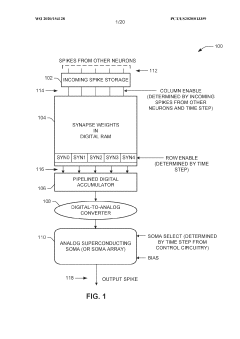
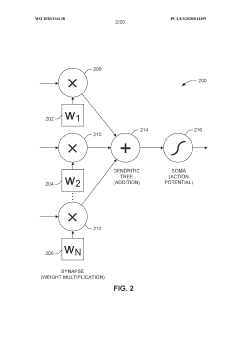
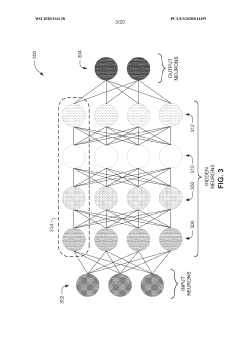
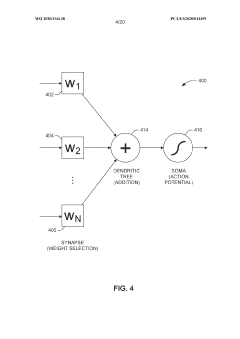
- A superconducting neuromorphic core is developed, incorporating a digital memory array for synapse weight storage, a digital accumulator, and analog soma circuitry to simulate multiple neurons, enabling efficient and scalable neural network operations with improved biological fidelity.
Environmental and Safety Considerations for Novel Materials
The development of neuromorphic computing materials introduces novel compounds and manufacturing processes that require careful environmental and safety assessment. These materials often contain rare earth elements, heavy metals, and specialized compounds that may pose unique environmental challenges during production, use, and disposal phases.
Current regulatory frameworks for these materials vary significantly across regions, creating a complex compliance landscape for developers and manufacturers. In the United States, the Environmental Protection Agency (EPA) and Occupational Safety and Health Administration (OSHA) have begun developing preliminary guidelines for handling neuromorphic materials, particularly those containing memristive elements with potentially toxic metal oxides.
The European Union has taken a more proactive approach through its REACH (Registration, Evaluation, Authorization and Restriction of Chemicals) regulation, which now includes specific provisions for novel computing materials. These regulations require comprehensive safety data sheets and life-cycle assessments before market approval, creating higher barriers to entry but potentially safer products.
Toxicity profiles of neuromorphic materials present particular concerns, as many contain nanoscale components with poorly understood biological interactions. Recent studies have identified potential bioaccumulation risks with certain phase-change materials used in neuromorphic systems, highlighting the need for standardized testing protocols specific to these novel compounds.
Manufacturing processes for these advanced materials often require specialized solvents and etching compounds that present their own environmental challenges. Waste stream management has emerged as a critical concern, with several leading manufacturers implementing closed-loop recycling systems to capture and reuse rare elements and reduce environmental impact.
End-of-life considerations represent another significant regulatory challenge. Unlike conventional electronic waste, neuromorphic computing materials may require specialized recycling processes to safely recover valuable components while preventing environmental contamination. The lack of established recycling infrastructure for these materials creates potential for improper disposal and environmental harm.
Industry self-regulation has begun to emerge through initiatives like the Neuromorphic Materials Stewardship Council, which promotes best practices for environmental management across the supply chain. However, these voluntary measures lack enforcement mechanisms and global reach, highlighting the need for more comprehensive regulatory frameworks.
As the field advances, regulatory bodies must balance innovation promotion with appropriate safeguards. Developing harmonized international standards for safety assessment and environmental impact will be crucial to enable responsible development while protecting human health and ecosystems from potential harm associated with these revolutionary computing materials.
Current regulatory frameworks for these materials vary significantly across regions, creating a complex compliance landscape for developers and manufacturers. In the United States, the Environmental Protection Agency (EPA) and Occupational Safety and Health Administration (OSHA) have begun developing preliminary guidelines for handling neuromorphic materials, particularly those containing memristive elements with potentially toxic metal oxides.
The European Union has taken a more proactive approach through its REACH (Registration, Evaluation, Authorization and Restriction of Chemicals) regulation, which now includes specific provisions for novel computing materials. These regulations require comprehensive safety data sheets and life-cycle assessments before market approval, creating higher barriers to entry but potentially safer products.
Toxicity profiles of neuromorphic materials present particular concerns, as many contain nanoscale components with poorly understood biological interactions. Recent studies have identified potential bioaccumulation risks with certain phase-change materials used in neuromorphic systems, highlighting the need for standardized testing protocols specific to these novel compounds.
Manufacturing processes for these advanced materials often require specialized solvents and etching compounds that present their own environmental challenges. Waste stream management has emerged as a critical concern, with several leading manufacturers implementing closed-loop recycling systems to capture and reuse rare elements and reduce environmental impact.
End-of-life considerations represent another significant regulatory challenge. Unlike conventional electronic waste, neuromorphic computing materials may require specialized recycling processes to safely recover valuable components while preventing environmental contamination. The lack of established recycling infrastructure for these materials creates potential for improper disposal and environmental harm.
Industry self-regulation has begun to emerge through initiatives like the Neuromorphic Materials Stewardship Council, which promotes best practices for environmental management across the supply chain. However, these voluntary measures lack enforcement mechanisms and global reach, highlighting the need for more comprehensive regulatory frameworks.
As the field advances, regulatory bodies must balance innovation promotion with appropriate safeguards. Developing harmonized international standards for safety assessment and environmental impact will be crucial to enable responsible development while protecting human health and ecosystems from potential harm associated with these revolutionary computing materials.
Cross-Border Regulatory Harmonization Opportunities
The global nature of neuromorphic computing development necessitates coordinated regulatory approaches across national boundaries. Current regulatory frameworks for neuromorphic computing materials vary significantly between regions, creating barriers to innovation and market access. The European Union's approach emphasizes safety and ethical considerations through its AI Act, which includes provisions for novel computing architectures. Meanwhile, the United States adopts a more market-driven approach with lighter regulatory oversight, primarily focusing on export controls for sensitive technologies.
These divergent approaches create compliance challenges for multinational corporations and research institutions working with neuromorphic materials. Companies must navigate complex regulatory landscapes, often requiring separate compliance strategies for each market, which increases costs and delays innovation cycles.
Significant opportunities exist for cross-border regulatory harmonization. International standards organizations like IEEE and ISO could play pivotal roles in developing unified technical standards for neuromorphic computing materials. These standards would address safety protocols, performance metrics, and interoperability requirements, creating a common technical language across jurisdictions.
Bilateral and multilateral agreements between major technology hubs represent another promising avenue. The EU-US Trade and Technology Council has already initiated discussions on emerging technology governance, providing a foundation for specific neuromorphic computing materials agreements. Similar frameworks could be established between other key players such as Japan, South Korea, and China.
Regulatory sandboxes with cross-border recognition offer practical mechanisms for harmonization. These controlled testing environments would allow developers to test neuromorphic computing applications under multiple regulatory frameworks simultaneously, identifying conflicts and compatibility issues early in development cycles.
Data sharing agreements specifically designed for neuromorphic research could facilitate collaborative innovation while maintaining appropriate safeguards. These agreements would enable researchers to share critical performance and safety data across borders, accelerating the development of regulatory best practices.
The establishment of an international neuromorphic computing governance forum would provide a dedicated platform for ongoing regulatory dialogue. This forum could bring together regulators, industry representatives, and academic experts to continuously refine approaches to neuromorphic materials regulation as the technology evolves, ensuring that regulatory frameworks remain adaptive to technological advancements while maintaining necessary protections.
These divergent approaches create compliance challenges for multinational corporations and research institutions working with neuromorphic materials. Companies must navigate complex regulatory landscapes, often requiring separate compliance strategies for each market, which increases costs and delays innovation cycles.
Significant opportunities exist for cross-border regulatory harmonization. International standards organizations like IEEE and ISO could play pivotal roles in developing unified technical standards for neuromorphic computing materials. These standards would address safety protocols, performance metrics, and interoperability requirements, creating a common technical language across jurisdictions.
Bilateral and multilateral agreements between major technology hubs represent another promising avenue. The EU-US Trade and Technology Council has already initiated discussions on emerging technology governance, providing a foundation for specific neuromorphic computing materials agreements. Similar frameworks could be established between other key players such as Japan, South Korea, and China.
Regulatory sandboxes with cross-border recognition offer practical mechanisms for harmonization. These controlled testing environments would allow developers to test neuromorphic computing applications under multiple regulatory frameworks simultaneously, identifying conflicts and compatibility issues early in development cycles.
Data sharing agreements specifically designed for neuromorphic research could facilitate collaborative innovation while maintaining appropriate safeguards. These agreements would enable researchers to share critical performance and safety data across borders, accelerating the development of regulatory best practices.
The establishment of an international neuromorphic computing governance forum would provide a dedicated platform for ongoing regulatory dialogue. This forum could bring together regulators, industry representatives, and academic experts to continuously refine approaches to neuromorphic materials regulation as the technology evolves, ensuring that regulatory frameworks remain adaptive to technological advancements while maintaining necessary protections.
Unlock deeper insights with PatSnap Eureka Quick Research — get a full tech report to explore trends and direct your research. Try now!
Generate Your Research Report Instantly with AI Agent
Supercharge your innovation with PatSnap Eureka AI Agent Platform!