Research on Application Domains of Neuromorphic Computing Materials
OCT 27, 202510 MIN READ
Generate Your Research Report Instantly with AI Agent
Patsnap Eureka helps you evaluate technical feasibility & market potential.
Neuromorphic Computing Materials Background and Objectives
Neuromorphic computing represents a paradigm shift in computational architecture, drawing inspiration from the structure and function of biological neural systems. This field has evolved significantly since the 1980s when Carver Mead first introduced the concept, aiming to mimic the brain's efficiency in processing information. The trajectory of neuromorphic computing has been characterized by progressive advancements in both hardware implementations and theoretical frameworks, with recent years witnessing accelerated development due to the convergence of nanotechnology, materials science, and artificial intelligence research.
The evolution of neuromorphic computing materials has been driven by the fundamental limitations of traditional von Neumann architectures, particularly in terms of energy efficiency and processing speed for cognitive tasks. Conventional computing systems face the "von Neumann bottleneck," where the separation between memory and processing units creates significant data transfer overhead. Neuromorphic materials aim to overcome this limitation by enabling in-memory computing and parallel processing capabilities that more closely resemble biological neural networks.
Current neuromorphic materials span a diverse range, including memristive devices, phase-change materials, spintronic components, and organic electronics. Each material category offers unique advantages in terms of energy consumption, switching speed, integration density, and compatibility with existing semiconductor fabrication processes. The field is witnessing a convergence of top-down approaches from semiconductor industry and bottom-up approaches from materials science, creating new opportunities for innovation.
The primary technical objectives in neuromorphic computing materials research include developing materials with reliable and reproducible synaptic-like behavior, achieving ultra-low power operation comparable to biological systems, enhancing scalability for large-scale neural networks, and ensuring long-term stability under various operating conditions. Additionally, there is a growing emphasis on materials that can support both supervised and unsupervised learning paradigms, as well as spike-timing-dependent plasticity (STDP) for more biologically realistic computing.
Looking forward, the field is trending toward multi-functional materials that can simultaneously implement multiple neural functions, bio-compatible interfaces for direct brain-computer integration, and reconfigurable architectures that can adapt to different computational tasks. The ultimate goal remains creating computing systems that approach the human brain's remarkable energy efficiency of approximately 20 watts while performing complex cognitive tasks that currently require orders of magnitude more power in conventional systems.
The interdisciplinary nature of neuromorphic computing materials research necessitates collaboration across physics, chemistry, materials science, electrical engineering, and neuroscience, highlighting the field's position at the frontier of both fundamental science and applied technology development.
The evolution of neuromorphic computing materials has been driven by the fundamental limitations of traditional von Neumann architectures, particularly in terms of energy efficiency and processing speed for cognitive tasks. Conventional computing systems face the "von Neumann bottleneck," where the separation between memory and processing units creates significant data transfer overhead. Neuromorphic materials aim to overcome this limitation by enabling in-memory computing and parallel processing capabilities that more closely resemble biological neural networks.
Current neuromorphic materials span a diverse range, including memristive devices, phase-change materials, spintronic components, and organic electronics. Each material category offers unique advantages in terms of energy consumption, switching speed, integration density, and compatibility with existing semiconductor fabrication processes. The field is witnessing a convergence of top-down approaches from semiconductor industry and bottom-up approaches from materials science, creating new opportunities for innovation.
The primary technical objectives in neuromorphic computing materials research include developing materials with reliable and reproducible synaptic-like behavior, achieving ultra-low power operation comparable to biological systems, enhancing scalability for large-scale neural networks, and ensuring long-term stability under various operating conditions. Additionally, there is a growing emphasis on materials that can support both supervised and unsupervised learning paradigms, as well as spike-timing-dependent plasticity (STDP) for more biologically realistic computing.
Looking forward, the field is trending toward multi-functional materials that can simultaneously implement multiple neural functions, bio-compatible interfaces for direct brain-computer integration, and reconfigurable architectures that can adapt to different computational tasks. The ultimate goal remains creating computing systems that approach the human brain's remarkable energy efficiency of approximately 20 watts while performing complex cognitive tasks that currently require orders of magnitude more power in conventional systems.
The interdisciplinary nature of neuromorphic computing materials research necessitates collaboration across physics, chemistry, materials science, electrical engineering, and neuroscience, highlighting the field's position at the frontier of both fundamental science and applied technology development.
Market Analysis for Neuromorphic Computing Applications
The neuromorphic computing market is experiencing significant growth, driven by increasing demand for artificial intelligence applications and the limitations of traditional computing architectures. Current market projections indicate that the global neuromorphic computing market is expected to reach $8.9 billion by 2025, growing at a compound annual growth rate (CAGR) of 49.1% from 2020 to 2025. This remarkable growth trajectory is fueled by the technology's potential to revolutionize multiple industries through energy-efficient, brain-inspired computing solutions.
Healthcare represents one of the most promising application domains for neuromorphic computing materials. The technology's ability to process complex, unstructured medical data in real-time makes it ideal for applications such as disease diagnosis, patient monitoring, and drug discovery. Neuromorphic systems can analyze medical imaging data with higher accuracy and lower power consumption than traditional computing systems, potentially transforming diagnostic procedures and treatment planning.
In the automotive sector, neuromorphic computing is gaining traction for advanced driver-assistance systems (ADAS) and autonomous vehicles. These applications require real-time processing of sensor data from cameras, lidar, and radar systems to make split-second decisions. Neuromorphic chips can process this sensory information with significantly lower latency and power consumption compared to conventional processors, making them ideal for edge computing in vehicles.
The robotics industry represents another substantial market opportunity for neuromorphic computing materials. Brain-inspired computing architectures enable robots to learn from their environment, adapt to new situations, and make decisions with human-like reasoning. This capability is particularly valuable for collaborative robots working alongside humans in manufacturing environments, service robots in retail and hospitality, and exploration robots operating in extreme conditions.
Edge computing applications are driving demand for neuromorphic solutions due to their energy efficiency and real-time processing capabilities. As IoT devices proliferate, the need for local processing of sensor data without constant cloud connectivity becomes increasingly important. Neuromorphic chips can perform complex AI tasks with minimal power consumption, extending battery life and enabling new applications in smart cities, industrial IoT, and consumer electronics.
Military and aerospace applications represent a high-value segment for neuromorphic computing, with requirements for autonomous systems that can operate in communication-denied environments. These applications include unmanned aerial vehicles, surveillance systems, and threat detection platforms that benefit from the technology's ability to process sensory data efficiently while consuming minimal power.
Consumer electronics manufacturers are also exploring neuromorphic computing for next-generation smartphones, wearables, and smart home devices. The technology enables advanced features such as real-time language translation, gesture recognition, and personalized AI assistants while minimizing battery drain, creating significant market potential in this high-volume sector.
Healthcare represents one of the most promising application domains for neuromorphic computing materials. The technology's ability to process complex, unstructured medical data in real-time makes it ideal for applications such as disease diagnosis, patient monitoring, and drug discovery. Neuromorphic systems can analyze medical imaging data with higher accuracy and lower power consumption than traditional computing systems, potentially transforming diagnostic procedures and treatment planning.
In the automotive sector, neuromorphic computing is gaining traction for advanced driver-assistance systems (ADAS) and autonomous vehicles. These applications require real-time processing of sensor data from cameras, lidar, and radar systems to make split-second decisions. Neuromorphic chips can process this sensory information with significantly lower latency and power consumption compared to conventional processors, making them ideal for edge computing in vehicles.
The robotics industry represents another substantial market opportunity for neuromorphic computing materials. Brain-inspired computing architectures enable robots to learn from their environment, adapt to new situations, and make decisions with human-like reasoning. This capability is particularly valuable for collaborative robots working alongside humans in manufacturing environments, service robots in retail and hospitality, and exploration robots operating in extreme conditions.
Edge computing applications are driving demand for neuromorphic solutions due to their energy efficiency and real-time processing capabilities. As IoT devices proliferate, the need for local processing of sensor data without constant cloud connectivity becomes increasingly important. Neuromorphic chips can perform complex AI tasks with minimal power consumption, extending battery life and enabling new applications in smart cities, industrial IoT, and consumer electronics.
Military and aerospace applications represent a high-value segment for neuromorphic computing, with requirements for autonomous systems that can operate in communication-denied environments. These applications include unmanned aerial vehicles, surveillance systems, and threat detection platforms that benefit from the technology's ability to process sensory data efficiently while consuming minimal power.
Consumer electronics manufacturers are also exploring neuromorphic computing for next-generation smartphones, wearables, and smart home devices. The technology enables advanced features such as real-time language translation, gesture recognition, and personalized AI assistants while minimizing battery drain, creating significant market potential in this high-volume sector.
Current Status and Technical Challenges in Neuromorphic Materials
Neuromorphic computing materials have witnessed significant advancements globally, with research institutions and technology companies making substantial progress in developing novel materials for brain-inspired computing systems. Currently, the field is dominated by several material categories including phase-change materials, memristive materials, spintronic materials, and organic electronic materials, each offering unique advantages for neuromorphic applications.
The development of memristive materials has reached a relatively mature stage, with titanium oxide, hafnium oxide, and tantalum oxide demonstrating reliable resistive switching behaviors suitable for synaptic functions. These materials can achieve switching speeds in nanoseconds and retention times exceeding 10 years. However, they still face challenges in terms of cycle-to-cycle variability and device-to-device uniformity, which impacts their reliability in large-scale neuromorphic systems.
Phase-change materials, particularly chalcogenide compounds like Ge₂Sb₂Te₅, have shown promising multi-level storage capabilities essential for mimicking synaptic weight changes. Recent research has improved their energy efficiency by reducing the programming current by orders of magnitude, yet thermal stability and power consumption during operation remain significant hurdles.
Spintronic materials represent an emerging direction with magnetic tunnel junctions and domain wall devices showing potential for ultra-low power consumption. These materials can operate at speeds comparable to biological neurons while consuming minimal energy. However, manufacturing complexity and integration challenges with conventional CMOS technology have limited their widespread adoption.
A major technical challenge across all neuromorphic materials is scalability. While individual devices show promising characteristics, scaling them to networks with millions or billions of artificial neurons and synapses introduces significant fabrication and integration challenges. Current lithographic techniques struggle to maintain device uniformity at nanoscale dimensions required for high-density neuromorphic systems.
Energy efficiency presents another critical challenge. Despite improvements, most current materials still consume orders of magnitude more energy per operation than biological neurons. This gap must be narrowed for practical applications, especially in edge computing and mobile devices where power constraints are stringent.
The geographical distribution of neuromorphic materials research shows concentration in North America, Europe, and East Asia. The United States leads in fundamental research through institutions like Stanford, MIT, and IBM Research. Europe has strong programs through initiatives like the Human Brain Project, while East Asian countries, particularly South Korea, Japan, and China, have made significant investments in manufacturing technologies for neuromorphic hardware.
Standardization remains an unresolved challenge, with no universally accepted benchmarks for comparing different neuromorphic materials and architectures. This hampers progress as researchers use diverse metrics to evaluate performance, making direct comparisons difficult.
The development of memristive materials has reached a relatively mature stage, with titanium oxide, hafnium oxide, and tantalum oxide demonstrating reliable resistive switching behaviors suitable for synaptic functions. These materials can achieve switching speeds in nanoseconds and retention times exceeding 10 years. However, they still face challenges in terms of cycle-to-cycle variability and device-to-device uniformity, which impacts their reliability in large-scale neuromorphic systems.
Phase-change materials, particularly chalcogenide compounds like Ge₂Sb₂Te₅, have shown promising multi-level storage capabilities essential for mimicking synaptic weight changes. Recent research has improved their energy efficiency by reducing the programming current by orders of magnitude, yet thermal stability and power consumption during operation remain significant hurdles.
Spintronic materials represent an emerging direction with magnetic tunnel junctions and domain wall devices showing potential for ultra-low power consumption. These materials can operate at speeds comparable to biological neurons while consuming minimal energy. However, manufacturing complexity and integration challenges with conventional CMOS technology have limited their widespread adoption.
A major technical challenge across all neuromorphic materials is scalability. While individual devices show promising characteristics, scaling them to networks with millions or billions of artificial neurons and synapses introduces significant fabrication and integration challenges. Current lithographic techniques struggle to maintain device uniformity at nanoscale dimensions required for high-density neuromorphic systems.
Energy efficiency presents another critical challenge. Despite improvements, most current materials still consume orders of magnitude more energy per operation than biological neurons. This gap must be narrowed for practical applications, especially in edge computing and mobile devices where power constraints are stringent.
The geographical distribution of neuromorphic materials research shows concentration in North America, Europe, and East Asia. The United States leads in fundamental research through institutions like Stanford, MIT, and IBM Research. Europe has strong programs through initiatives like the Human Brain Project, while East Asian countries, particularly South Korea, Japan, and China, have made significant investments in manufacturing technologies for neuromorphic hardware.
Standardization remains an unresolved challenge, with no universally accepted benchmarks for comparing different neuromorphic materials and architectures. This hampers progress as researchers use diverse metrics to evaluate performance, making direct comparisons difficult.
Current Neuromorphic Material Implementation Approaches
01 Memristive materials for neuromorphic computing
Memristive materials are key components in neuromorphic computing systems, mimicking the behavior of biological synapses. These materials can change their resistance based on the history of applied voltage or current, enabling them to store and process information simultaneously. Various metal oxides and phase-change materials are used to create memristive devices that can perform synaptic functions like potentiation, depression, and spike-timing-dependent plasticity, which are essential for neuromorphic computing applications.- Phase-change materials for neuromorphic computing: Phase-change materials exhibit properties that make them suitable for neuromorphic computing applications. These materials can switch between amorphous and crystalline states, mimicking the behavior of biological synapses. The resistance changes in these materials can be used to store and process information, enabling the development of energy-efficient neuromorphic computing systems that can perform complex cognitive tasks with lower power consumption compared to traditional computing architectures.
- Memristive materials and devices: Memristive materials and devices are fundamental components in neuromorphic computing systems. These materials can retain memory of past electrical signals, allowing them to mimic the behavior of biological neurons and synapses. By incorporating memristive materials into neuromorphic architectures, researchers can develop computing systems that process information in a manner similar to the human brain, enabling efficient pattern recognition, learning, and adaptation capabilities.
- 2D materials for neuromorphic applications: Two-dimensional materials offer unique properties for neuromorphic computing applications. Their atomically thin structure provides excellent electronic properties and scalability. These materials can be engineered to exhibit synaptic behaviors, including spike-timing-dependent plasticity and long-term potentiation/depression. The integration of 2D materials into neuromorphic systems enables the development of ultra-thin, flexible, and energy-efficient computing devices that can perform brain-like information processing.
- Oxide-based neuromorphic materials: Metal oxides and oxide-based materials are promising candidates for neuromorphic computing applications. These materials can exhibit resistive switching behavior, making them suitable for implementing artificial synapses and neurons. Oxide-based neuromorphic devices can be fabricated using conventional semiconductor processes, facilitating their integration with existing technologies. The tunable electronic properties of these materials allow for the development of adaptive and self-learning neuromorphic systems.
- Organic and polymer materials for neuromorphic systems: Organic and polymer materials offer unique advantages for neuromorphic computing applications, including flexibility, biocompatibility, and low-cost fabrication. These materials can be engineered to exhibit synaptic behaviors through various mechanisms such as ion migration and charge trapping. The integration of organic and polymer materials into neuromorphic systems enables the development of bio-inspired computing devices that can interface with biological systems, opening new possibilities for brain-machine interfaces and bioelectronic applications.
02 Phase-change materials for neuromorphic devices
Phase-change materials (PCMs) offer unique properties for neuromorphic computing applications. These materials can rapidly switch between amorphous and crystalline states, exhibiting different electrical resistances. This property allows PCMs to mimic synaptic behavior in artificial neural networks. The reversible phase transitions enable multi-level resistance states, which can represent synaptic weights in neuromorphic systems. PCMs provide advantages such as non-volatility, high endurance, and fast switching speeds, making them suitable for energy-efficient neuromorphic computing architectures.Expand Specific Solutions03 2D materials for neuromorphic computing
Two-dimensional (2D) materials, such as graphene, transition metal dichalcogenides, and hexagonal boron nitride, are emerging as promising candidates for neuromorphic computing applications. These atomically thin materials exhibit unique electronic properties that can be leveraged to create artificial synapses and neurons. Their high carrier mobility, tunable bandgap, and mechanical flexibility make them suitable for building energy-efficient and scalable neuromorphic systems. 2D materials can be integrated into various device architectures to implement synaptic functions and neural network operations.Expand Specific Solutions04 Ferroelectric materials for neuromorphic applications
Ferroelectric materials exhibit spontaneous electric polarization that can be reversed by applying an external electric field, making them suitable for neuromorphic computing applications. These materials can store information in their polarization states, enabling non-volatile memory functions. Ferroelectric tunnel junctions and ferroelectric field-effect transistors can mimic synaptic behavior, including analog weight modulation and spike-timing-dependent plasticity. The low power consumption and high endurance of ferroelectric devices make them promising candidates for energy-efficient neuromorphic computing systems.Expand Specific Solutions05 Organic and biomimetic materials for neuromorphic systems
Organic and biomimetic materials offer unique advantages for neuromorphic computing, including biocompatibility, flexibility, and low power consumption. These materials can form artificial synapses and neurons that closely mimic biological neural systems. Organic semiconductors, conducting polymers, and protein-based materials can be used to create devices with synaptic plasticity and learning capabilities. Biomimetic approaches incorporate principles from biological neural systems to design more efficient and adaptable neuromorphic computing architectures, potentially enabling direct interfaces between electronic systems and biological neural networks.Expand Specific Solutions
Leading Organizations in Neuromorphic Computing Research
Neuromorphic computing materials are currently in an early growth phase, with the market expanding rapidly due to increasing demand for AI applications requiring energy-efficient processing. The global market is projected to reach significant scale by 2030, driven by applications in edge computing, IoT, and autonomous systems. Leading technology corporations like IBM, Intel, and Samsung are making substantial investments in this field, with IBM's TrueNorth and Intel's Loihi neuromorphic chips representing significant technological milestones. Academic institutions including Tsinghua University, Peking University, and University of Freiburg are collaborating with industry players such as Syntiant and Fujitsu to advance material science innovations. The technology is approaching commercial viability, with specialized startups like Lingxi Technology emerging alongside established players, indicating a maturing ecosystem with diverse competitive dynamics.
International Business Machines Corp.
Technical Solution: IBM has pioneered neuromorphic computing through its TrueNorth and subsequent Brain-inspired Computing architectures. Their neuromorphic materials research focuses on phase-change memory (PCM) and resistive RAM technologies that mimic synaptic behavior. IBM's neuromorphic chips integrate millions of artificial neurons and synapses on a single chip, consuming significantly less power than conventional processors. Their approach combines specialized hardware materials with software frameworks to create cognitive computing systems that process sensory data in real-time. IBM has demonstrated neuromorphic applications in object recognition, natural language processing, and anomaly detection with 100x energy efficiency improvements compared to traditional computing architectures. Their materials innovation includes the development of analog memory devices that can store multiple bits per cell, enabling more efficient neural network implementations.
Strengths: Industry-leading research infrastructure and extensive patent portfolio in neuromorphic materials; proven scalability of their neuromorphic designs to commercial applications. Weaknesses: High manufacturing costs for specialized neuromorphic materials; challenges in standardizing their proprietary neuromorphic architecture for wider industry adoption.
Samsung Electronics Co., Ltd.
Technical Solution: Samsung has developed advanced neuromorphic computing materials focusing on resistive random-access memory (RRAM) and magnetoresistive RAM (MRAM) technologies. Their approach integrates these memory technologies directly with processing elements to create brain-inspired computing architectures. Samsung's neuromorphic materials research emphasizes ultra-low power consumption and high-density integration, achieving power efficiency improvements of up to 1000x compared to conventional computing systems for specific AI workloads. Their neuromorphic chips incorporate specialized materials that can maintain state without continuous power, similar to biological neurons. Samsung has demonstrated applications in edge computing, IoT devices, and mobile platforms where energy constraints are critical. Their recent innovations include 3D-stacked neuromorphic chips that combine memory and processing layers using advanced through-silicon via (TSV) technology, enabling more complex neural network implementations while maintaining energy efficiency.
Strengths: Vertical integration capabilities from materials research to device manufacturing; strong position in mobile and edge computing markets for deploying neuromorphic solutions. Weaknesses: Less established research history in neuromorphic computing compared to some competitors; challenges in scaling specialized materials production.
Key Patents and Innovations in Neuromorphic Materials
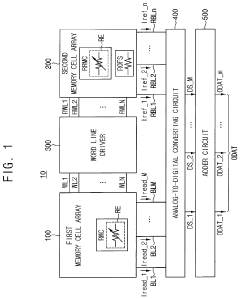
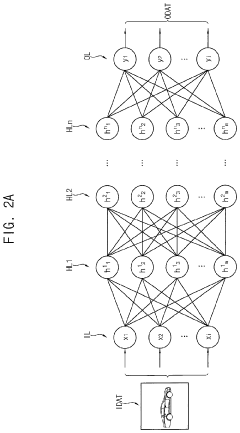
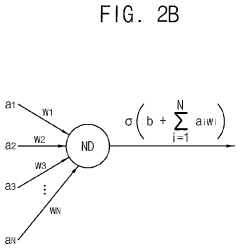
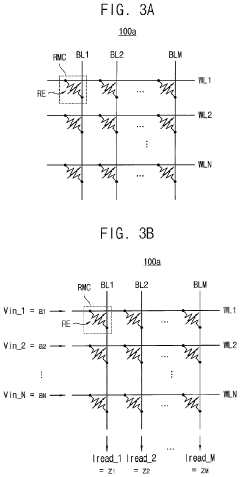
Neuromorphic computing device and method of designing the same
PatentActiveUS11881260B2
Innovation
- Incorporating a second memory cell array with offset resistors connected in parallel, using the same resistive material as the first memory cell array, to convert read currents into digital signals, thereby mitigating temperature and time dependency, and ensuring consistent resistance across offset resistors for enhanced sensing performance.
Energy Efficiency Considerations in Neuromorphic Computing
Energy efficiency represents a critical consideration in the development and deployment of neuromorphic computing systems. Traditional von Neumann architectures face significant energy constraints due to the physical separation between processing and memory units, creating a bottleneck that consumes substantial power. Neuromorphic computing offers a promising alternative by mimicking the brain's energy-efficient information processing mechanisms, potentially reducing power consumption by several orders of magnitude.
The fundamental energy advantage of neuromorphic systems stems from their event-driven processing nature. Unlike conventional computers that operate continuously regardless of computational demand, neuromorphic systems activate only when processing information, similar to biological neurons that fire only when necessary. This approach eliminates idle power consumption, particularly beneficial for applications requiring continuous operation with intermittent processing needs.
Material selection plays a pivotal role in determining the energy profile of neuromorphic systems. Emerging materials such as phase-change memory (PCM), resistive random-access memory (RRAM), and magnetic RAM (MRAM) demonstrate significantly lower energy requirements for synaptic operations compared to CMOS-based implementations. For instance, PCM-based synapses can operate at femtojoule levels per synaptic event, approaching the energy efficiency of biological synapses.
The co-location of memory and processing in neuromorphic architectures substantially reduces energy consumption associated with data movement. In conventional systems, transferring data between memory and processing units can consume more energy than the computation itself. Neuromorphic designs eliminate this overhead by integrating memory and computation, enabling in-memory processing that drastically reduces power requirements.
Scaling considerations present both challenges and opportunities for energy efficiency. As neuromorphic systems grow in size and complexity, interconnect energy becomes increasingly dominant. Novel 3D integration techniques and photonic interconnects offer potential solutions by reducing transmission distances and leveraging light's energy-efficient propagation properties for signal transmission between neuromorphic components.
Temperature management represents another critical energy consideration. Neuromorphic materials exhibit varying temperature dependencies that affect both performance and power consumption. Developing materials with stable properties across operational temperature ranges remains essential for maintaining energy efficiency in real-world deployment scenarios.
The ultimate energy benchmark for neuromorphic computing is the human brain, which operates at approximately 20 watts while performing complex cognitive tasks. While current neuromorphic implementations remain orders of magnitude less efficient, continued advances in materials science and architectural design continue to narrow this gap, promising ultra-low-power computing solutions for next-generation intelligent systems.
The fundamental energy advantage of neuromorphic systems stems from their event-driven processing nature. Unlike conventional computers that operate continuously regardless of computational demand, neuromorphic systems activate only when processing information, similar to biological neurons that fire only when necessary. This approach eliminates idle power consumption, particularly beneficial for applications requiring continuous operation with intermittent processing needs.
Material selection plays a pivotal role in determining the energy profile of neuromorphic systems. Emerging materials such as phase-change memory (PCM), resistive random-access memory (RRAM), and magnetic RAM (MRAM) demonstrate significantly lower energy requirements for synaptic operations compared to CMOS-based implementations. For instance, PCM-based synapses can operate at femtojoule levels per synaptic event, approaching the energy efficiency of biological synapses.
The co-location of memory and processing in neuromorphic architectures substantially reduces energy consumption associated with data movement. In conventional systems, transferring data between memory and processing units can consume more energy than the computation itself. Neuromorphic designs eliminate this overhead by integrating memory and computation, enabling in-memory processing that drastically reduces power requirements.
Scaling considerations present both challenges and opportunities for energy efficiency. As neuromorphic systems grow in size and complexity, interconnect energy becomes increasingly dominant. Novel 3D integration techniques and photonic interconnects offer potential solutions by reducing transmission distances and leveraging light's energy-efficient propagation properties for signal transmission between neuromorphic components.
Temperature management represents another critical energy consideration. Neuromorphic materials exhibit varying temperature dependencies that affect both performance and power consumption. Developing materials with stable properties across operational temperature ranges remains essential for maintaining energy efficiency in real-world deployment scenarios.
The ultimate energy benchmark for neuromorphic computing is the human brain, which operates at approximately 20 watts while performing complex cognitive tasks. While current neuromorphic implementations remain orders of magnitude less efficient, continued advances in materials science and architectural design continue to narrow this gap, promising ultra-low-power computing solutions for next-generation intelligent systems.
Integration Strategies with Conventional Computing Systems
The integration of neuromorphic computing materials with conventional computing systems represents a critical frontier in advancing computational capabilities. Current integration approaches primarily follow three architectural paradigms: co-processor models, hybrid computing frameworks, and heterogeneous system architectures. In the co-processor model, neuromorphic components handle specific workloads like pattern recognition or sensory processing, while conventional processors manage general-purpose computing tasks. This approach leverages the strengths of both paradigms while minimizing disruption to existing software ecosystems.
Hybrid computing frameworks enable seamless data exchange between neuromorphic and conventional components through specialized middleware and APIs. Intel's Loihi neuromorphic research chip exemplifies this approach, featuring interfaces that allow integration with x86 processors. Similarly, IBM's TrueNorth architecture incorporates communication protocols designed specifically for integration with traditional computing infrastructure, facilitating efficient data transfer between these fundamentally different computational paradigms.
Memory hierarchy optimization presents another crucial integration challenge. Neuromorphic systems typically employ distributed memory models that contrast sharply with the von Neumann architecture's centralized memory approach. Advanced memory management techniques, including specialized cache hierarchies and novel memory mapping strategies, are being developed to bridge this architectural divide. These innovations aim to minimize latency during cross-system data transfers while maintaining computational efficiency.
Power management represents a significant integration consideration, as neuromorphic materials often offer superior energy efficiency for specific workloads. Sophisticated power distribution systems that dynamically allocate energy resources based on computational demands are emerging as promising solutions. These systems can shift processing tasks between conventional and neuromorphic components to optimize overall system efficiency, potentially reducing energy consumption by 60-80% for suitable applications.
Programming models and development tools for integrated systems remain underdeveloped, creating barriers to widespread adoption. Current approaches include domain-specific languages like IBM's Corelet and SpiNNaker's PyNN, which abstract the complexity of neuromorphic hardware. However, the industry increasingly recognizes the need for unified programming frameworks that seamlessly span both computational paradigms, allowing developers to leverage neuromorphic capabilities without specialized expertise in neural computing principles.
Hybrid computing frameworks enable seamless data exchange between neuromorphic and conventional components through specialized middleware and APIs. Intel's Loihi neuromorphic research chip exemplifies this approach, featuring interfaces that allow integration with x86 processors. Similarly, IBM's TrueNorth architecture incorporates communication protocols designed specifically for integration with traditional computing infrastructure, facilitating efficient data transfer between these fundamentally different computational paradigms.
Memory hierarchy optimization presents another crucial integration challenge. Neuromorphic systems typically employ distributed memory models that contrast sharply with the von Neumann architecture's centralized memory approach. Advanced memory management techniques, including specialized cache hierarchies and novel memory mapping strategies, are being developed to bridge this architectural divide. These innovations aim to minimize latency during cross-system data transfers while maintaining computational efficiency.
Power management represents a significant integration consideration, as neuromorphic materials often offer superior energy efficiency for specific workloads. Sophisticated power distribution systems that dynamically allocate energy resources based on computational demands are emerging as promising solutions. These systems can shift processing tasks between conventional and neuromorphic components to optimize overall system efficiency, potentially reducing energy consumption by 60-80% for suitable applications.
Programming models and development tools for integrated systems remain underdeveloped, creating barriers to widespread adoption. Current approaches include domain-specific languages like IBM's Corelet and SpiNNaker's PyNN, which abstract the complexity of neuromorphic hardware. However, the industry increasingly recognizes the need for unified programming frameworks that seamlessly span both computational paradigms, allowing developers to leverage neuromorphic capabilities without specialized expertise in neural computing principles.
Unlock deeper insights with Patsnap Eureka Quick Research — get a full tech report to explore trends and direct your research. Try now!
Generate Your Research Report Instantly with AI Agent
Supercharge your innovation with Patsnap Eureka AI Agent Platform!