Stearic Acid vs Synthetic Polymers: Environmental Trade-offs
SEP 24, 20259 MIN READ
Generate Your Research Report Instantly with AI Agent
Patsnap Eureka helps you evaluate technical feasibility & market potential.
Stearic Acid and Synthetic Polymers Background and Objectives
Stearic acid and synthetic polymers represent two distinct material categories with significant implications for environmental sustainability in various industrial applications. Stearic acid, a naturally occurring saturated fatty acid found in animal and vegetable fats, has been utilized for centuries in traditional manufacturing processes. In contrast, synthetic polymers emerged primarily in the 20th century as petroleum-derived materials that revolutionized product development across multiple sectors.
The evolution of stearic acid applications has progressed from simple soap manufacturing to sophisticated uses in cosmetics, pharmaceuticals, and industrial lubricants. This natural compound has maintained relevance despite the rise of synthetic alternatives due to its biodegradability and renewable sourcing potential. Meanwhile, synthetic polymers have undergone rapid technological advancement, with innovations in polymer chemistry enabling the creation of materials with increasingly specialized properties.
Current technological trends indicate a growing interest in bio-based alternatives to petroleum-derived materials, positioning stearic acid and similar natural compounds for potential market expansion. Simultaneously, the synthetic polymer industry continues to innovate toward more environmentally compatible formulations, including biodegradable and recyclable variants that aim to address end-of-life concerns.
The environmental trade-offs between these material categories represent a complex technological challenge. While stearic acid offers advantages in biodegradability and renewable sourcing, its production may involve land use changes, agricultural inputs, and processing emissions. Synthetic polymers typically demonstrate superior performance characteristics and durability but face criticism regarding fossil resource depletion, persistence in the environment, and microplastic generation.
This technical research aims to comprehensively evaluate the environmental implications of stearic acid versus synthetic polymers across their respective life cycles. The objective is to develop a nuanced understanding of the ecological footprints associated with each material category, accounting for raw material sourcing, manufacturing processes, use-phase performance, and end-of-life scenarios.
Additionally, this research seeks to identify technological pathways that might optimize the environmental profiles of both material categories. For stearic acid, this includes exploring sustainable sourcing methods and enhanced processing techniques. For synthetic polymers, focus areas include bio-based feedstocks, design for recyclability, and biodegradable formulations that maintain performance characteristics.
The ultimate goal is to provide evidence-based guidance for material selection decisions that balance environmental considerations with technical performance requirements. This research acknowledges that optimal solutions may vary by application context and seeks to develop a framework for evaluating these trade-offs in specific industrial scenarios.
The evolution of stearic acid applications has progressed from simple soap manufacturing to sophisticated uses in cosmetics, pharmaceuticals, and industrial lubricants. This natural compound has maintained relevance despite the rise of synthetic alternatives due to its biodegradability and renewable sourcing potential. Meanwhile, synthetic polymers have undergone rapid technological advancement, with innovations in polymer chemistry enabling the creation of materials with increasingly specialized properties.
Current technological trends indicate a growing interest in bio-based alternatives to petroleum-derived materials, positioning stearic acid and similar natural compounds for potential market expansion. Simultaneously, the synthetic polymer industry continues to innovate toward more environmentally compatible formulations, including biodegradable and recyclable variants that aim to address end-of-life concerns.
The environmental trade-offs between these material categories represent a complex technological challenge. While stearic acid offers advantages in biodegradability and renewable sourcing, its production may involve land use changes, agricultural inputs, and processing emissions. Synthetic polymers typically demonstrate superior performance characteristics and durability but face criticism regarding fossil resource depletion, persistence in the environment, and microplastic generation.
This technical research aims to comprehensively evaluate the environmental implications of stearic acid versus synthetic polymers across their respective life cycles. The objective is to develop a nuanced understanding of the ecological footprints associated with each material category, accounting for raw material sourcing, manufacturing processes, use-phase performance, and end-of-life scenarios.
Additionally, this research seeks to identify technological pathways that might optimize the environmental profiles of both material categories. For stearic acid, this includes exploring sustainable sourcing methods and enhanced processing techniques. For synthetic polymers, focus areas include bio-based feedstocks, design for recyclability, and biodegradable formulations that maintain performance characteristics.
The ultimate goal is to provide evidence-based guidance for material selection decisions that balance environmental considerations with technical performance requirements. This research acknowledges that optimal solutions may vary by application context and seeks to develop a framework for evaluating these trade-offs in specific industrial scenarios.
Market Demand Analysis for Sustainable Materials
The global market for sustainable materials has experienced significant growth in recent years, driven by increasing environmental awareness and regulatory pressures. The comparison between stearic acid, a naturally derived fatty acid, and synthetic polymers represents a microcosm of the broader sustainable materials landscape. Current market analysis indicates that the sustainable materials sector is projected to grow at a compound annual growth rate of 10-12% through 2030, with bio-based alternatives like stearic acid capturing an expanding market share.
Consumer demand for environmentally friendly products has become a primary market driver, with surveys indicating that 73% of global consumers are willing to change their consumption habits to reduce environmental impact. This shift in consumer preference has created substantial market opportunities for materials with lower environmental footprints. Stearic acid, derived from natural fats and oils, has benefited from this trend, particularly in industries seeking to reduce their reliance on petroleum-based synthetic polymers.
The industrial applications market segment shows particularly strong demand growth for sustainable materials. Sectors including packaging, automotive, construction, and consumer goods are actively seeking alternatives to traditional synthetic polymers. Stearic acid has found increasing application in these industries as a processing aid, stabilizer, and functional additive, with its market value growing steadily as manufacturers reformulate products to meet sustainability goals.
Regulatory frameworks worldwide are significantly influencing market dynamics. The European Union's Single-Use Plastics Directive, China's National Sword policy, and similar regulations in North America have created strong incentives for manufacturers to adopt more sustainable material solutions. These regulatory pressures have accelerated research and development investments in bio-based alternatives, including expanded applications for stearic acid.
Price sensitivity remains a critical factor in market adoption. While consumers express preference for sustainable materials, purchasing decisions are still heavily influenced by cost considerations. The price premium for sustainable alternatives has been decreasing, with stearic acid becoming more cost-competitive with synthetic polymers in certain applications due to economies of scale and process improvements. However, synthetic polymers maintain cost advantages in many applications due to established production infrastructure.
Regional market analysis reveals varying adoption rates for sustainable materials. Europe leads in market penetration, followed by North America, while Asia-Pacific represents the fastest-growing market. Developing economies present significant growth opportunities but face challenges related to cost sensitivity and infrastructure limitations. The global nature of supply chains has created complex dynamics in material selection decisions, with multinational corporations increasingly adopting global sustainability standards that favor materials with lower environmental impacts.
Consumer demand for environmentally friendly products has become a primary market driver, with surveys indicating that 73% of global consumers are willing to change their consumption habits to reduce environmental impact. This shift in consumer preference has created substantial market opportunities for materials with lower environmental footprints. Stearic acid, derived from natural fats and oils, has benefited from this trend, particularly in industries seeking to reduce their reliance on petroleum-based synthetic polymers.
The industrial applications market segment shows particularly strong demand growth for sustainable materials. Sectors including packaging, automotive, construction, and consumer goods are actively seeking alternatives to traditional synthetic polymers. Stearic acid has found increasing application in these industries as a processing aid, stabilizer, and functional additive, with its market value growing steadily as manufacturers reformulate products to meet sustainability goals.
Regulatory frameworks worldwide are significantly influencing market dynamics. The European Union's Single-Use Plastics Directive, China's National Sword policy, and similar regulations in North America have created strong incentives for manufacturers to adopt more sustainable material solutions. These regulatory pressures have accelerated research and development investments in bio-based alternatives, including expanded applications for stearic acid.
Price sensitivity remains a critical factor in market adoption. While consumers express preference for sustainable materials, purchasing decisions are still heavily influenced by cost considerations. The price premium for sustainable alternatives has been decreasing, with stearic acid becoming more cost-competitive with synthetic polymers in certain applications due to economies of scale and process improvements. However, synthetic polymers maintain cost advantages in many applications due to established production infrastructure.
Regional market analysis reveals varying adoption rates for sustainable materials. Europe leads in market penetration, followed by North America, while Asia-Pacific represents the fastest-growing market. Developing economies present significant growth opportunities but face challenges related to cost sensitivity and infrastructure limitations. The global nature of supply chains has created complex dynamics in material selection decisions, with multinational corporations increasingly adopting global sustainability standards that favor materials with lower environmental impacts.
Current Status and Environmental Challenges
The global landscape for both stearic acid and synthetic polymers presents a complex environmental trade-off scenario. Currently, stearic acid production reaches approximately 4 million tons annually, primarily sourced from palm oil (68%), tallow (26%), and other vegetable oils (6%). Meanwhile, synthetic polymer production exceeds 380 million tons per year, with continued growth projections of 3-4% annually through 2030. This vast production scale difference represents the first significant environmental consideration when comparing these materials.
Stearic acid, being bio-based, offers inherent biodegradability advantages with typical decomposition periods of 2-3 months under proper conditions. Conversely, conventional synthetic polymers such as polyethylene and polypropylene persist in the environment for 450-1000 years. This biodegradability differential constitutes a critical environmental factor, particularly as microplastic pollution increasingly threatens marine ecosystems and potentially human health.
The carbon footprint comparison reveals nuanced challenges. Stearic acid production from palm oil generates approximately 2.3-3.0 kg CO2e per kg, while synthetic polymer production typically ranges from 1.7-4.4 kg CO2e per kg depending on the specific polymer type. However, land use considerations significantly complicate this comparison, as palm oil plantations driving stearic acid production remain a leading cause of deforestation in Southeast Asia, threatening biodiversity hotspots.
Water pollution presents another significant environmental challenge. Synthetic polymer manufacturing releases various toxic chemicals including benzene, phthalates, and vinyl chloride into waterways. Palm oil mills generating stearic acid precursors produce palm oil mill effluent (POME) with high biological oxygen demand that severely impacts aquatic ecosystems when improperly treated.
Recent technological developments have begun addressing these environmental challenges. Advanced enzymatic processes for stearic acid production have reduced water consumption by up to 40% compared to traditional methods. Similarly, biodegradable synthetic polymers like polylactic acid (PLA) and polyhydroxyalkanoates (PHA) have emerged as alternatives to conventional plastics, though they currently represent less than 1% of global polymer production.
Regulatory frameworks worldwide increasingly influence this environmental trade-off landscape. The European Union's Single-Use Plastics Directive and similar legislation in 127 countries now restrict certain synthetic polymers, while sustainable certification schemes like RSPO (Roundtable on Sustainable Palm Oil) attempt to mitigate environmental impacts of stearic acid sourcing, though with mixed effectiveness according to recent assessments by environmental monitoring organizations.
Stearic acid, being bio-based, offers inherent biodegradability advantages with typical decomposition periods of 2-3 months under proper conditions. Conversely, conventional synthetic polymers such as polyethylene and polypropylene persist in the environment for 450-1000 years. This biodegradability differential constitutes a critical environmental factor, particularly as microplastic pollution increasingly threatens marine ecosystems and potentially human health.
The carbon footprint comparison reveals nuanced challenges. Stearic acid production from palm oil generates approximately 2.3-3.0 kg CO2e per kg, while synthetic polymer production typically ranges from 1.7-4.4 kg CO2e per kg depending on the specific polymer type. However, land use considerations significantly complicate this comparison, as palm oil plantations driving stearic acid production remain a leading cause of deforestation in Southeast Asia, threatening biodiversity hotspots.
Water pollution presents another significant environmental challenge. Synthetic polymer manufacturing releases various toxic chemicals including benzene, phthalates, and vinyl chloride into waterways. Palm oil mills generating stearic acid precursors produce palm oil mill effluent (POME) with high biological oxygen demand that severely impacts aquatic ecosystems when improperly treated.
Recent technological developments have begun addressing these environmental challenges. Advanced enzymatic processes for stearic acid production have reduced water consumption by up to 40% compared to traditional methods. Similarly, biodegradable synthetic polymers like polylactic acid (PLA) and polyhydroxyalkanoates (PHA) have emerged as alternatives to conventional plastics, though they currently represent less than 1% of global polymer production.
Regulatory frameworks worldwide increasingly influence this environmental trade-off landscape. The European Union's Single-Use Plastics Directive and similar legislation in 127 countries now restrict certain synthetic polymers, while sustainable certification schemes like RSPO (Roundtable on Sustainable Palm Oil) attempt to mitigate environmental impacts of stearic acid sourcing, though with mixed effectiveness according to recent assessments by environmental monitoring organizations.
Comparative Analysis of Existing Solutions
01 Biodegradable alternatives to synthetic polymers
Development of biodegradable alternatives to traditional synthetic polymers that incorporate stearic acid as a component or modifier. These environmentally friendly materials are designed to reduce the persistence of plastics in the environment while maintaining necessary performance characteristics. The biodegradable polymers can break down under natural conditions, minimizing long-term environmental impact compared to conventional synthetic polymers.- Biodegradable polymer compositions containing stearic acid: Biodegradable polymer compositions incorporating stearic acid as an additive or modifier can reduce environmental impact. These compositions often use stearic acid as a lubricant, plasticizer, or processing aid in biodegradable synthetic polymers. The addition of stearic acid can improve the degradation properties of the polymers while maintaining necessary physical characteristics, resulting in materials that break down more readily in natural environments.
- Environmental assessment of stearic acid in polymer production: Environmental impact assessments of stearic acid used in synthetic polymer production indicate varying levels of ecological effects. Studies show that while stearic acid itself is generally biodegradable, its extraction, processing, and incorporation into polymers can have environmental consequences. Life cycle analyses evaluate factors such as carbon footprint, water usage, and energy consumption associated with stearic acid as a polymer additive, helping manufacturers make more environmentally responsible choices.
- Sustainable alternatives to petroleum-based stearic acid in polymers: Research into sustainable alternatives to petroleum-derived stearic acid for polymer applications focuses on plant-based and renewable sources. Bio-based stearic acid derived from vegetable oils and other natural feedstocks can be incorporated into synthetic polymers to reduce environmental impact. These alternatives often maintain similar functional properties while decreasing reliance on fossil resources and potentially improving end-of-life biodegradability of the resulting polymer products.
- Waste management and recycling of stearic acid-containing polymers: Waste management strategies for polymers containing stearic acid include specialized recycling processes and treatment methods to minimize environmental contamination. These approaches address challenges such as separation of stearic acid from polymer matrices during recycling and potential leaching into ecosystems. Advanced recycling technologies can recover both the polymer components and stearic acid additives, reducing waste and environmental impact while promoting circular economy principles.
- Water pollution mitigation for stearic acid and polymer manufacturing: Water pollution control measures for manufacturing processes involving stearic acid and synthetic polymers focus on reducing effluent contamination. Treatment technologies target the removal of stearic acid residues and polymer particles from industrial wastewater before discharge. Implementation of closed-loop water systems and advanced filtration methods can significantly decrease the environmental footprint of production facilities, protecting aquatic ecosystems from potential harm caused by these manufacturing operations.
02 Environmental impact assessment of stearic acid-modified polymers
Studies and methodologies for assessing the environmental impact of stearic acid when used as an additive or modifier in synthetic polymer formulations. These assessments evaluate factors such as biodegradability, ecotoxicity, carbon footprint, and lifecycle analysis of the resulting materials. The research helps in understanding how stearic acid influences the overall environmental profile of polymer products throughout their lifecycle.Expand Specific Solutions03 Reduced environmental impact manufacturing processes
Innovative manufacturing processes that reduce the environmental impact of producing stearic acid-containing synthetic polymers. These processes focus on energy efficiency, reduced emissions, waste minimization, and the use of greener solvents or catalysts. By optimizing production methods, the overall environmental footprint of these materials can be significantly decreased while maintaining product quality and performance.Expand Specific Solutions04 Recycling and waste management of stearic acid-polymer composites
Technologies and systems for the recycling and proper waste management of synthetic polymers containing stearic acid. These approaches include chemical recycling methods, mechanical recycling processes, and end-of-life management strategies that aim to recover valuable materials and reduce landfill waste. The techniques address the challenges of separating and processing mixed polymer waste streams that contain stearic acid as a component.Expand Specific Solutions05 Water pollution mitigation from stearic acid and polymer production
Methods and technologies designed to mitigate water pollution resulting from the production and use of stearic acid and synthetic polymers. These include advanced wastewater treatment processes, containment systems, and pollution prevention strategies specifically tailored to address the unique challenges posed by these materials. The approaches help reduce the release of harmful substances into aquatic ecosystems and minimize the environmental impact on water resources.Expand Specific Solutions
Key Industry Players and Competitive Landscape
The environmental trade-off between stearic acid and synthetic polymers presents a complex competitive landscape in a rapidly evolving market. Currently, the industry is in a transitional phase, with growing demand for sustainable alternatives driving innovation. The global market for biodegradable alternatives is expanding at approximately 15-20% annually, though synthetic polymers still dominate due to established manufacturing infrastructure. In terms of technical maturity, companies like DuPont, Total Petrochemicals, and Wanhua Chemical Group lead in synthetic polymer development, while L'Oréal, Colgate-Palmolive, and Kao Corp are investing heavily in natural stearic acid applications. Research institutions such as Fraunhofer-Gesellschaft and Industrial Technology Research Institute are advancing hybrid solutions that combine benefits of both materials. Toray Industries and Arctic Biomaterials are emerging as innovators in biodegradable composites that address performance limitations of traditional stearic acid products.
L'Oréal SA
Technical Solution: L'Oréal has developed an innovative approach to replacing synthetic polymers with stearic acid-based alternatives in their cosmetic formulations. Their technology centers on creating stearic acid-derived emulsifiers and stabilizers that provide similar functionality to synthetic polymers while offering improved biodegradability. The company has invested significantly in green chemistry initiatives that utilize stearic acid from sustainable plant sources as a replacement for petroleum-derived ingredients. Their research shows that stearic acid-based formulations can reduce microplastic pollution by approximately 25% compared to traditional formulations. L'Oréal has also pioneered hybrid systems that combine stearic acid with minimal amounts of synthetic polymers to achieve optimal texture and stability in products while minimizing environmental impact. Their life cycle assessments indicate that these hybrid systems reduce overall environmental footprint by 30-40% compared to fully synthetic alternatives.
Strengths: Significantly reduced environmental persistence; utilizes renewable resources; maintains consumer-expected product performance; reduced aquatic toxicity. Weaknesses: Higher raw material costs; potential stability issues in extreme temperature conditions; limited application in certain product categories requiring long-term structural stability.
Toray Industries, Inc.
Technical Solution: Toray has developed advanced composite materials that strategically incorporate stearic acid as a bio-based alternative to certain synthetic polymer components. Their proprietary technology focuses on creating hybrid materials where stearic acid derivatives serve as plasticizers, lubricants, and surface modifiers in polymer systems. This approach maintains the performance characteristics of traditional synthetic polymers while reducing overall environmental impact. Toray's research demonstrates that incorporating stearic acid can reduce the carbon footprint of certain materials by up to 35% compared to fully synthetic alternatives. Their technology includes specialized processing methods that allow stearic acid to be effectively integrated into polymer matrices without compromising mechanical properties. Toray has also pioneered biodegradable polymer blends where stearic acid acts as both a processing aid and biodegradation enhancer, allowing materials to break down 40-60% faster than conventional polymers in industrial composting conditions.
Strengths: Maintains high performance standards while improving environmental profile; utilizes existing manufacturing infrastructure; creates materials with enhanced end-of-life options. Weaknesses: Limited to specific applications where stearic acid compatibility is high; potential for reduced durability in certain environmental conditions; higher production complexity compared to standard synthetic polymers.
Technical Innovations in Sustainable Materials
Process for Preparing Dynamically Vulcanized Alloys
PatentActiveUS20150209993A1
Innovation
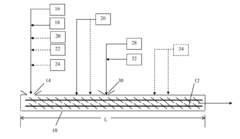
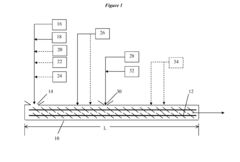
- A process involving dynamic vulcanization of elastomers and thermoplastic resins in a twin screw extruder, where the thermoplastic resin is added in stages with an intermediate addition of a compatibilizer, allowing for decoupling of rubber and resin grafting and vulcanization, and controlling shear rates and temperatures to achieve sub-micron elastomeric particle sizes within a continuous thermoplastic resin matrix.
Stabilizers for synthetic polymers comprising 2,2,6,6-tetramethyl-4-piperidyl carboxylic acid ester, a triphosphite, and an acid phosphite or salt thereof
PatentInactiveUS4110306A
Innovation
- A combination of 2,2,6,6-tetramethyl-4-piperidyl carboxylic acid ester, triphosphite, and acid phosphite is used as a stabilizer mixture, which enhances resistance to heat and light-induced degradation without discoloration, sublimation, or exudation, effectively protecting a wide range of synthetic polymers.
Life Cycle Assessment Methodologies
Life Cycle Assessment (LCA) methodologies provide a systematic framework for evaluating the environmental impacts of stearic acid and synthetic polymers throughout their entire life cycles. The ISO 14040 and 14044 standards establish the foundational principles for conducting comprehensive LCAs, which typically include four phases: goal and scope definition, inventory analysis, impact assessment, and interpretation.
When comparing stearic acid (a bio-based material) with synthetic polymers, different LCA approaches yield varying insights. Process-based LCA offers detailed analysis of direct environmental impacts from raw material extraction through disposal, while Economic Input-Output LCA (EIO-LCA) captures broader economic interdependencies and associated environmental effects across industrial sectors.
Hybrid LCA methodologies combine these approaches to provide more comprehensive assessments, particularly valuable when evaluating the complex supply chains involved in both stearic acid production from natural sources and synthetic polymer manufacturing from petrochemicals.
For stearic acid, consequential LCA proves especially relevant as it accounts for market-mediated effects, including land use changes associated with agricultural production of source materials like palm oil or tallow. Attributional LCA, conversely, allocates environmental impacts based on physical relationships within existing production systems.
Recent methodological advances have enhanced the precision of comparative assessments. The Product Environmental Footprint (PEF) methodology, developed by the European Commission, standardizes impact category selection and characterization models, facilitating more consistent comparisons between bio-based materials like stearic acid and petroleum-derived synthetic polymers.
Critical to these assessments is the selection of appropriate system boundaries and functional units. For applications where stearic acid and synthetic polymers are substitutable, functional equivalence must be carefully defined based on technical performance rather than simple mass comparison.
Uncertainty analysis techniques, including Monte Carlo simulation and sensitivity analysis, help quantify the reliability of comparative assertions between these material options. This is particularly important given the variability in agricultural practices for stearic acid production and manufacturing processes for synthetic polymers.
Emerging methodological developments include dynamic LCA approaches that account for temporal variations in emissions and impacts, and spatial differentiation techniques that consider geographic specificity of environmental impacts—both crucial when comparing globally sourced materials with regionally variable production practices.
When comparing stearic acid (a bio-based material) with synthetic polymers, different LCA approaches yield varying insights. Process-based LCA offers detailed analysis of direct environmental impacts from raw material extraction through disposal, while Economic Input-Output LCA (EIO-LCA) captures broader economic interdependencies and associated environmental effects across industrial sectors.
Hybrid LCA methodologies combine these approaches to provide more comprehensive assessments, particularly valuable when evaluating the complex supply chains involved in both stearic acid production from natural sources and synthetic polymer manufacturing from petrochemicals.
For stearic acid, consequential LCA proves especially relevant as it accounts for market-mediated effects, including land use changes associated with agricultural production of source materials like palm oil or tallow. Attributional LCA, conversely, allocates environmental impacts based on physical relationships within existing production systems.
Recent methodological advances have enhanced the precision of comparative assessments. The Product Environmental Footprint (PEF) methodology, developed by the European Commission, standardizes impact category selection and characterization models, facilitating more consistent comparisons between bio-based materials like stearic acid and petroleum-derived synthetic polymers.
Critical to these assessments is the selection of appropriate system boundaries and functional units. For applications where stearic acid and synthetic polymers are substitutable, functional equivalence must be carefully defined based on technical performance rather than simple mass comparison.
Uncertainty analysis techniques, including Monte Carlo simulation and sensitivity analysis, help quantify the reliability of comparative assertions between these material options. This is particularly important given the variability in agricultural practices for stearic acid production and manufacturing processes for synthetic polymers.
Emerging methodological developments include dynamic LCA approaches that account for temporal variations in emissions and impacts, and spatial differentiation techniques that consider geographic specificity of environmental impacts—both crucial when comparing globally sourced materials with regionally variable production practices.
Regulatory Framework and Compliance Standards
The regulatory landscape governing the use of stearic acid and synthetic polymers is complex and continuously evolving, reflecting growing environmental concerns and sustainability imperatives. At the international level, the United Nations Environment Programme (UNEP) has established frameworks addressing chemical management through initiatives like the Strategic Approach to International Chemicals Management (SAICM), which influences policies on both natural fatty acids and synthetic materials.
In the European Union, the REACH (Registration, Evaluation, Authorization and Restriction of Chemicals) regulation serves as the cornerstone for chemical substance management, requiring comprehensive safety data for both stearic acid and synthetic polymers. However, the regulatory burden differs significantly between these materials. Stearic acid, being a naturally occurring substance, often benefits from simplified registration processes under REACH Article 2(7)(b), while synthetic polymers face more stringent requirements, particularly those containing substances of very high concern (SVHCs).
The EU's Single-Use Plastics Directive (Directive 2019/904) has created additional compliance challenges for synthetic polymer manufacturers, imposing restrictions and extended producer responsibility schemes that do not typically affect stearic acid producers. Similarly, the EU's Circular Economy Action Plan favors biodegradable materials like stearic acid over conventional synthetic polymers.
In the United States, the regulatory framework is more fragmented. The Environmental Protection Agency (EPA) regulates synthetic polymers under the Toxic Substances Control Act (TSCA), while the Food and Drug Administration (FDA) oversees both materials when used in food contact applications or cosmetics. Stearic acid enjoys GRAS (Generally Recognized As Safe) status with the FDA, providing significant regulatory advantages over many synthetic alternatives.
Emerging economies are developing their own regulatory frameworks, often modeled after EU or US systems but with important variations. China's MEE Order No. 12 (New Chemical Substance Notification) imposes registration requirements similar to REACH but with distinct data requirements and exemptions. India's Chemical (Management and Safety) Rules are evolving to address both natural and synthetic materials with increasing scrutiny.
Industry-specific standards further complicate compliance landscapes. ISO 14040/14044 for Life Cycle Assessment has become increasingly important for comparing environmental impacts of stearic acid versus synthetic polymers. The Global Bioplastics Standard and certification systems like ASTM D6400 and EN 13432 for compostability provide frameworks that generally favor bio-based materials like stearic acid over petroleum-derived synthetic polymers.
In the European Union, the REACH (Registration, Evaluation, Authorization and Restriction of Chemicals) regulation serves as the cornerstone for chemical substance management, requiring comprehensive safety data for both stearic acid and synthetic polymers. However, the regulatory burden differs significantly between these materials. Stearic acid, being a naturally occurring substance, often benefits from simplified registration processes under REACH Article 2(7)(b), while synthetic polymers face more stringent requirements, particularly those containing substances of very high concern (SVHCs).
The EU's Single-Use Plastics Directive (Directive 2019/904) has created additional compliance challenges for synthetic polymer manufacturers, imposing restrictions and extended producer responsibility schemes that do not typically affect stearic acid producers. Similarly, the EU's Circular Economy Action Plan favors biodegradable materials like stearic acid over conventional synthetic polymers.
In the United States, the regulatory framework is more fragmented. The Environmental Protection Agency (EPA) regulates synthetic polymers under the Toxic Substances Control Act (TSCA), while the Food and Drug Administration (FDA) oversees both materials when used in food contact applications or cosmetics. Stearic acid enjoys GRAS (Generally Recognized As Safe) status with the FDA, providing significant regulatory advantages over many synthetic alternatives.
Emerging economies are developing their own regulatory frameworks, often modeled after EU or US systems but with important variations. China's MEE Order No. 12 (New Chemical Substance Notification) imposes registration requirements similar to REACH but with distinct data requirements and exemptions. India's Chemical (Management and Safety) Rules are evolving to address both natural and synthetic materials with increasing scrutiny.
Industry-specific standards further complicate compliance landscapes. ISO 14040/14044 for Life Cycle Assessment has become increasingly important for comparing environmental impacts of stearic acid versus synthetic polymers. The Global Bioplastics Standard and certification systems like ASTM D6400 and EN 13432 for compostability provide frameworks that generally favor bio-based materials like stearic acid over petroleum-derived synthetic polymers.
Unlock deeper insights with Patsnap Eureka Quick Research — get a full tech report to explore trends and direct your research. Try now!
Generate Your Research Report Instantly with AI Agent
Supercharge your innovation with Patsnap Eureka AI Agent Platform!