

Variable Valve Timing (VVTi) in Enhancing 2JZ Engine Efficiency
AUG 5, 20259 MIN READ
Generate Your Research Report Instantly with AI Agent
PatSnap Eureka helps you evaluate technical feasibility & market potential.
VVTi Technology Evolution and Objectives
Variable Valve Timing (VVTi) technology has undergone significant evolution since its inception, revolutionizing engine efficiency and performance. The development of VVTi can be traced back to the late 1980s when automotive manufacturers began exploring ways to optimize engine operation across various driving conditions. The primary objective of VVTi has consistently been to enhance engine efficiency, improve fuel economy, and reduce emissions while maintaining or improving performance.
The early stages of VVTi technology focused on simple mechanisms that could adjust valve timing between two fixed positions. As the technology progressed, more sophisticated systems emerged, allowing for continuous and precise control of valve timing. This evolution was driven by the increasing demands for better fuel efficiency and stricter emission regulations worldwide.
In the context of the 2JZ engine, which gained fame for its robust design and high-performance capabilities, the integration of VVTi technology marked a significant milestone. The 2JZ-GE engine, equipped with VVTi, demonstrated Toyota's commitment to balancing performance with efficiency. The primary goals for implementing VVTi in the 2JZ engine included optimizing power output across a broader RPM range, improving low-end torque, and enhancing fuel economy.
The technological objectives for VVTi in the 2JZ engine extended beyond mere performance gains. Engineers aimed to create a system that could adapt to various driving conditions, from city driving to high-speed highway cruising. This adaptability was crucial in meeting increasingly stringent emission standards while maintaining the engine's renowned performance characteristics.
As VVTi technology continued to evolve, the objectives expanded to include more precise control over the combustion process. This led to the development of dual VVTi systems, which could independently control both intake and exhaust valve timing. The enhanced control allowed for even greater optimization of the engine's breathing, further improving efficiency and reducing emissions.
The ongoing evolution of VVTi technology in engines like the 2JZ has paved the way for more advanced variable valve control systems. Current objectives in the field include the integration of VVTi with other engine technologies, such as direct injection and turbocharging, to create highly efficient and powerful powertrains. Additionally, there is a growing focus on using VVTi to enable advanced combustion strategies, such as Atkinson cycle operation, which can further enhance fuel efficiency in hybrid powertrains.
Looking forward, the objectives for VVTi technology continue to align with the automotive industry's push towards electrification and stricter emission norms. Research is ongoing to develop even more responsive and efficient VVTi systems that can work in harmony with hybrid and mild-hybrid powertrains, further extending the life and relevance of internal combustion engines in an increasingly electrified automotive landscape.
The early stages of VVTi technology focused on simple mechanisms that could adjust valve timing between two fixed positions. As the technology progressed, more sophisticated systems emerged, allowing for continuous and precise control of valve timing. This evolution was driven by the increasing demands for better fuel efficiency and stricter emission regulations worldwide.
In the context of the 2JZ engine, which gained fame for its robust design and high-performance capabilities, the integration of VVTi technology marked a significant milestone. The 2JZ-GE engine, equipped with VVTi, demonstrated Toyota's commitment to balancing performance with efficiency. The primary goals for implementing VVTi in the 2JZ engine included optimizing power output across a broader RPM range, improving low-end torque, and enhancing fuel economy.
The technological objectives for VVTi in the 2JZ engine extended beyond mere performance gains. Engineers aimed to create a system that could adapt to various driving conditions, from city driving to high-speed highway cruising. This adaptability was crucial in meeting increasingly stringent emission standards while maintaining the engine's renowned performance characteristics.
As VVTi technology continued to evolve, the objectives expanded to include more precise control over the combustion process. This led to the development of dual VVTi systems, which could independently control both intake and exhaust valve timing. The enhanced control allowed for even greater optimization of the engine's breathing, further improving efficiency and reducing emissions.
The ongoing evolution of VVTi technology in engines like the 2JZ has paved the way for more advanced variable valve control systems. Current objectives in the field include the integration of VVTi with other engine technologies, such as direct injection and turbocharging, to create highly efficient and powerful powertrains. Additionally, there is a growing focus on using VVTi to enable advanced combustion strategies, such as Atkinson cycle operation, which can further enhance fuel efficiency in hybrid powertrains.
Looking forward, the objectives for VVTi technology continue to align with the automotive industry's push towards electrification and stricter emission norms. Research is ongoing to develop even more responsive and efficient VVTi systems that can work in harmony with hybrid and mild-hybrid powertrains, further extending the life and relevance of internal combustion engines in an increasingly electrified automotive landscape.
Market Demand for Efficient 2JZ Engines
The market demand for efficient 2JZ engines has been steadily growing, driven by a combination of factors including environmental regulations, consumer preferences, and technological advancements. The 2JZ engine, originally developed by Toyota, has gained a legendary status among automotive enthusiasts for its robustness and tuning potential. However, in recent years, there has been an increasing focus on improving its efficiency without compromising performance.
Environmental concerns and stricter emissions standards worldwide have created a significant push for more fuel-efficient engines. This has led to a growing demand for technologies that can enhance the efficiency of existing popular engines like the 2JZ. Variable Valve Timing (VVTi) has emerged as a key technology in this pursuit, offering the potential to optimize engine performance across different operating conditions.
The automotive aftermarket industry has shown particular interest in VVTi solutions for the 2JZ engine. Tuning shops and performance enthusiasts are constantly seeking ways to extract more power and efficiency from this iconic powerplant. The demand for VVTi upgrades is not limited to just high-performance applications; it extends to daily drivers looking for improved fuel economy and reduced emissions.
In the racing and motorsports sector, there is a notable demand for VVTi-enhanced 2JZ engines. Competitive racing teams are exploring ways to gain an edge while adhering to increasingly stringent regulations. The ability to fine-tune valve timing can provide crucial advantages in terms of power delivery and fuel efficiency during races.
The classic car restoration market has also shown interest in VVTi technology for 2JZ engines. Owners of vintage vehicles powered by 2JZ engines are looking for ways to modernize their powertrains while maintaining the classic appeal. This niche market segment values solutions that can improve efficiency and drivability without altering the engine's fundamental character.
Commercial applications, such as in marine engines and industrial power generators, represent another growing market for efficient 2JZ engines. These sectors prioritize reliability and efficiency, making VVTi an attractive option for optimizing engine performance in demanding conditions.
The global nature of the automotive industry has contributed to the widespread demand for VVTi technology in 2JZ engines. Markets in North America, Europe, and Asia have all shown significant interest, with each region having its unique drivers based on local regulations and consumer preferences.
As the automotive industry continues its transition towards electrification, there remains a strong market for advanced internal combustion engine technologies. This transition period has created a unique opportunity for technologies like VVTi to bridge the gap between traditional engines and future powertrains, further driving the demand for efficient 2JZ engines.
Environmental concerns and stricter emissions standards worldwide have created a significant push for more fuel-efficient engines. This has led to a growing demand for technologies that can enhance the efficiency of existing popular engines like the 2JZ. Variable Valve Timing (VVTi) has emerged as a key technology in this pursuit, offering the potential to optimize engine performance across different operating conditions.
The automotive aftermarket industry has shown particular interest in VVTi solutions for the 2JZ engine. Tuning shops and performance enthusiasts are constantly seeking ways to extract more power and efficiency from this iconic powerplant. The demand for VVTi upgrades is not limited to just high-performance applications; it extends to daily drivers looking for improved fuel economy and reduced emissions.
In the racing and motorsports sector, there is a notable demand for VVTi-enhanced 2JZ engines. Competitive racing teams are exploring ways to gain an edge while adhering to increasingly stringent regulations. The ability to fine-tune valve timing can provide crucial advantages in terms of power delivery and fuel efficiency during races.
The classic car restoration market has also shown interest in VVTi technology for 2JZ engines. Owners of vintage vehicles powered by 2JZ engines are looking for ways to modernize their powertrains while maintaining the classic appeal. This niche market segment values solutions that can improve efficiency and drivability without altering the engine's fundamental character.
Commercial applications, such as in marine engines and industrial power generators, represent another growing market for efficient 2JZ engines. These sectors prioritize reliability and efficiency, making VVTi an attractive option for optimizing engine performance in demanding conditions.
The global nature of the automotive industry has contributed to the widespread demand for VVTi technology in 2JZ engines. Markets in North America, Europe, and Asia have all shown significant interest, with each region having its unique drivers based on local regulations and consumer preferences.
As the automotive industry continues its transition towards electrification, there remains a strong market for advanced internal combustion engine technologies. This transition period has created a unique opportunity for technologies like VVTi to bridge the gap between traditional engines and future powertrains, further driving the demand for efficient 2JZ engines.
VVTi Implementation Challenges in 2JZ
The implementation of Variable Valve Timing (VVTi) in the 2JZ engine presents several significant challenges that require careful consideration and innovative solutions. One of the primary obstacles is the integration of the VVTi system into the existing 2JZ engine architecture without compromising its renowned reliability and performance characteristics. The 2JZ engine, known for its robust design and high-performance capabilities, requires a VVTi system that can withstand the high stresses and temperatures associated with its operation.
Another major challenge lies in the development of a control system that can accurately and rapidly adjust valve timing across the engine's wide operating range. The 2JZ engine's versatility, from low-end torque to high-rpm power delivery, demands a sophisticated VVTi control algorithm capable of optimizing valve timing for various driving conditions and load requirements. This necessitates advanced sensors and actuators that can operate with precision in the harsh engine environment.
The packaging constraints within the 2JZ engine bay pose additional difficulties for VVTi implementation. Engineers must design a compact VVTi system that fits within the limited space available, while also ensuring adequate oil flow for hydraulic actuation and proper heat management. This challenge is compounded by the need to maintain compatibility with existing engine components and accessories.
Durability and longevity of the VVTi components in the high-performance 2JZ engine environment represent another significant hurdle. The system must be engineered to withstand prolonged exposure to high temperatures, vibrations, and mechanical stresses without degradation in performance or reliability. This requires careful material selection and extensive testing to ensure the VVTi system can match the legendary durability of the 2JZ engine.
Calibration and tuning of the VVTi system for optimal performance across the 2JZ engine's operating range present complex challenges. Engineers must develop sophisticated mapping and control strategies that balance fuel efficiency, emissions reduction, and power output. This process involves extensive dynamometer testing and real-world validation to achieve the desired performance characteristics while maintaining compliance with emissions regulations.
The integration of VVTi technology with the 2JZ engine's existing fuel injection and ignition systems adds another layer of complexity. Ensuring seamless communication and coordination between these systems is crucial for achieving the full benefits of variable valve timing. This may require upgrades to the engine management system and careful optimization of the overall powertrain control strategy.
Lastly, the cost-effectiveness of implementing VVTi in the 2JZ engine poses a significant challenge, particularly for aftermarket applications. Developing a system that provides tangible performance and efficiency benefits while remaining economically viable for engine builders and enthusiasts requires innovative engineering solutions and careful component selection.
Another major challenge lies in the development of a control system that can accurately and rapidly adjust valve timing across the engine's wide operating range. The 2JZ engine's versatility, from low-end torque to high-rpm power delivery, demands a sophisticated VVTi control algorithm capable of optimizing valve timing for various driving conditions and load requirements. This necessitates advanced sensors and actuators that can operate with precision in the harsh engine environment.
The packaging constraints within the 2JZ engine bay pose additional difficulties for VVTi implementation. Engineers must design a compact VVTi system that fits within the limited space available, while also ensuring adequate oil flow for hydraulic actuation and proper heat management. This challenge is compounded by the need to maintain compatibility with existing engine components and accessories.
Durability and longevity of the VVTi components in the high-performance 2JZ engine environment represent another significant hurdle. The system must be engineered to withstand prolonged exposure to high temperatures, vibrations, and mechanical stresses without degradation in performance or reliability. This requires careful material selection and extensive testing to ensure the VVTi system can match the legendary durability of the 2JZ engine.
Calibration and tuning of the VVTi system for optimal performance across the 2JZ engine's operating range present complex challenges. Engineers must develop sophisticated mapping and control strategies that balance fuel efficiency, emissions reduction, and power output. This process involves extensive dynamometer testing and real-world validation to achieve the desired performance characteristics while maintaining compliance with emissions regulations.
The integration of VVTi technology with the 2JZ engine's existing fuel injection and ignition systems adds another layer of complexity. Ensuring seamless communication and coordination between these systems is crucial for achieving the full benefits of variable valve timing. This may require upgrades to the engine management system and careful optimization of the overall powertrain control strategy.
Lastly, the cost-effectiveness of implementing VVTi in the 2JZ engine poses a significant challenge, particularly for aftermarket applications. Developing a system that provides tangible performance and efficiency benefits while remaining economically viable for engine builders and enthusiasts requires innovative engineering solutions and careful component selection.
Current VVTi Solutions for 2JZ
01 VVTi system optimization
Optimization of Variable Valve Timing intelligent (VVTi) systems to improve engine efficiency. This includes adjusting valve timing based on engine load and speed, enhancing combustion efficiency, and reducing fuel consumption. Advanced control algorithms and sensors are used to precisely control valve operations, resulting in improved engine performance and reduced emissions.- VVTi system optimization: Optimization of Variable Valve Timing intelligent (VVTi) systems involves improving the control algorithms and mechanisms to enhance engine performance and efficiency. This includes refining the timing of valve opening and closing based on various engine parameters, such as speed, load, and temperature. Advanced control strategies can lead to better fuel economy, reduced emissions, and improved overall engine efficiency.
- Integration with other engine technologies: Combining VVTi with other advanced engine technologies can significantly enhance overall efficiency. This may include integration with direct injection systems, turbocharging, or cylinder deactivation. The synergy between these technologies allows for more precise control of the combustion process, leading to optimized performance across various operating conditions.
- Hydraulic VVTi system improvements: Enhancements to hydraulic VVTi systems focus on reducing response time and improving accuracy in valve timing adjustments. This may involve redesigning hydraulic circuits, optimizing oil flow, or developing more responsive actuators. These improvements can lead to faster and more precise control of valve timing, resulting in better engine performance and efficiency.
- Electric VVTi systems: Development of electric VVTi systems offers potential advantages over traditional hydraulic systems. Electric actuators can provide faster response times and more precise control of valve timing. This technology can lead to improved fuel efficiency, reduced emissions, and enhanced engine performance across a wider range of operating conditions.
- VVTi efficiency monitoring and diagnostics: Implementing advanced monitoring and diagnostic systems for VVTi can help maintain optimal efficiency over time. This includes developing sensors and algorithms to detect performance degradation, valve timing errors, or system malfunctions. Early detection of issues can prevent efficiency losses and ensure the VVTi system continues to operate at peak performance throughout the engine's lifecycle.
02 Integration with engine management systems
Integration of VVTi with comprehensive engine management systems for better coordination and efficiency. This involves synchronizing VVTi operations with other engine components such as fuel injection and ignition timing. The integrated approach allows for more precise control over engine parameters, leading to optimized performance across various operating conditions.Expand Specific Solutions03 Advanced VVTi actuators
Development of advanced VVTi actuators for faster and more precise valve control. These actuators utilize improved hydraulic or electric systems to achieve quicker response times and finer adjustments. The enhanced actuators contribute to better engine breathing, increased power output, and improved fuel efficiency across a wider range of engine speeds.Expand Specific Solutions04 VVTi for emissions reduction
Utilization of VVTi technology to reduce engine emissions. By optimizing valve timing, the system can improve exhaust gas recirculation (EGR) and reduce pumping losses. This leads to lower NOx emissions and improved overall engine efficiency, helping manufacturers meet stringent emission standards while maintaining performance.Expand Specific Solutions05 VVTi in hybrid and alternative fuel engines
Application of VVTi technology in hybrid and alternative fuel engines to enhance efficiency and performance. The system is adapted to work with different combustion characteristics of alternative fuels and in conjunction with electric powertrains in hybrid vehicles. This adaptation allows for optimized engine operation in various driving modes and fuel types, contributing to improved overall vehicle efficiency.Expand Specific Solutions
Key Players in VVTi Technology
The Variable Valve Timing (VVTi) technology for enhancing 2JZ engine efficiency is in a mature stage of development, with significant market penetration and a well-established competitive landscape. Major players like Toyota, BorgWarner, and Hyundai have been at the forefront of VVTi innovation, driving continuous improvements in engine performance and fuel efficiency. The market size for VVTi systems has grown substantially, reflecting the automotive industry's focus on emissions reduction and fuel economy. Companies such as Delphi Technology and GM Global Technology Operations have also made notable contributions, further intensifying competition and accelerating technological advancements in this field.
Toyota Motor Corp.
Technical Solution: Toyota, the pioneer of VVTi technology, has continuously improved its Variable Valve Timing with intelligence (VVTi) system for the 2JZ engine. Their latest iteration employs a dual VVTi system that independently controls both intake and exhaust valve timing[1]. This advanced system utilizes oil pressure to adjust the camshaft timing, allowing for optimal valve operation across all engine speeds. Toyota's VVTi technology in the 2JZ engine incorporates a computer-controlled, variable intake valve timing system that can advance or retard the intake camshaft timing relative to the exhaust camshaft[2]. This results in improved volumetric efficiency, reduced emissions, and enhanced fuel economy across a broader range of engine speeds and loads[3].
Strengths: Proven reliability, seamless integration with existing 2JZ architecture, and significant improvements in both performance and efficiency. Weaknesses: Complexity of the system may lead to higher maintenance costs, and the technology is mature, potentially limiting further substantial gains.
Hyundai Motor Co., Ltd.
Technical Solution: Hyundai has developed its own Continuously Variable Valve Duration (CVVD) technology, which can be applied to enhance 2JZ engine efficiency. Unlike traditional VVT systems that only adjust valve timing, CVVD also controls the duration of valve opening and closing[4]. This system uses a multilink mechanism to vary the cam lobe position, allowing for precise control over valve duration. In the context of the 2JZ engine, CVVD could potentially increase fuel efficiency by up to 5% and performance by up to 4%[5]. The system can also switch between different combustion cycles, such as the Atkinson cycle for efficiency and the Otto cycle for performance, depending on driving conditions[6].
Strengths: Offers more precise control over engine breathing, potentially higher efficiency gains than traditional VVTi. Weaknesses: More complex mechanism may increase production costs and potential points of failure.
Core VVTi Patents for 2JZ Efficiency
Engine variable camshaft timing phaser with planetary gear set
PatentActiveUS20180320564A1
Innovation
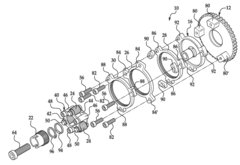
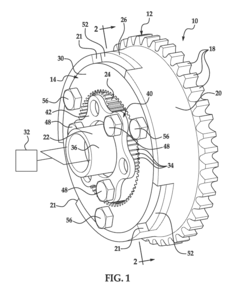
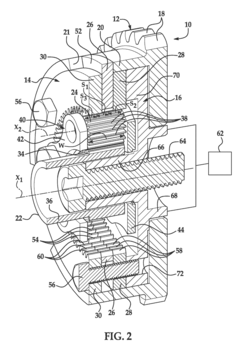
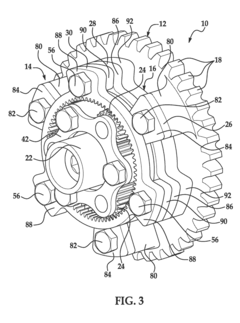
- A VCT phaser design featuring a planetary gear set with three ring gears that balance loads across planet gears, preventing misalignment by transmitting substantially balanced loads across axial sections, which allows for the omission of a carrier assembly and reduces gear size and weight.
Rotor for variable valve timing system and VVT system comprising the rotor
PatentWO2013164272A1
Innovation
- A rotor body made of fibrous reinforced polymeric material with a metallic central part and dynamic sealing elements, which allows for efficient torque transfer and sealing, reducing mechanical loads and maintaining accuracy over a wide temperature range.
Emissions Regulations Impact
The impact of emissions regulations on Variable Valve Timing (VVTi) technology in the 2JZ engine has been significant, driving innovation and efficiency improvements. As global environmental concerns have intensified, governments worldwide have implemented increasingly stringent emissions standards for vehicles. These regulations have forced automotive manufacturers to develop and refine technologies that can reduce harmful emissions while maintaining or improving engine performance.
VVTi technology has emerged as a crucial tool in meeting these regulatory challenges. By allowing precise control over valve timing, VVTi enables engines to optimize combustion processes across different operating conditions. This adaptability is particularly beneficial in reducing emissions of nitrogen oxides (NOx), carbon monoxide (CO), and unburned hydrocarbons (HC).
In the context of the 2JZ engine, the implementation of VVTi has been instrumental in extending its lifespan and relevance in an era of tightening emissions controls. The technology allows the engine to adjust its valve timing to achieve a more complete combustion process, resulting in lower emissions without sacrificing the power output that the 2JZ is renowned for.
Emissions regulations have also pushed for improvements in fuel efficiency, an area where VVTi excels. By optimizing valve timing for different engine speeds and loads, VVTi helps reduce fuel consumption, which in turn lowers CO2 emissions. This dual benefit of improved efficiency and reduced emissions has made VVTi an essential feature for meeting increasingly strict corporate average fuel economy (CAFE) standards.
The evolution of emissions regulations has necessitated continuous refinement of VVTi systems. Early implementations focused primarily on intake valve timing, but as standards became more demanding, dual VVTi systems controlling both intake and exhaust valves became more prevalent. This progression has allowed for even finer control over the combustion process, further reducing emissions and improving efficiency.
Moreover, the push for cleaner engines has led to the integration of VVTi with other advanced technologies. For instance, combining VVTi with direct fuel injection and turbocharging has enabled engines like the 2JZ to maintain high performance while meeting modern emissions standards. This synergy of technologies demonstrates how emissions regulations have not only driven the development of VVTi but also fostered a holistic approach to engine design and optimization.
As emissions regulations continue to evolve, particularly with the increasing focus on reducing greenhouse gas emissions, VVTi technology is likely to play an even more critical role. Future iterations may see even more precise control over valve events, potentially including the ability to deactivate cylinders or implement more radical valve timing strategies to further reduce emissions and improve efficiency.
VVTi technology has emerged as a crucial tool in meeting these regulatory challenges. By allowing precise control over valve timing, VVTi enables engines to optimize combustion processes across different operating conditions. This adaptability is particularly beneficial in reducing emissions of nitrogen oxides (NOx), carbon monoxide (CO), and unburned hydrocarbons (HC).
In the context of the 2JZ engine, the implementation of VVTi has been instrumental in extending its lifespan and relevance in an era of tightening emissions controls. The technology allows the engine to adjust its valve timing to achieve a more complete combustion process, resulting in lower emissions without sacrificing the power output that the 2JZ is renowned for.
Emissions regulations have also pushed for improvements in fuel efficiency, an area where VVTi excels. By optimizing valve timing for different engine speeds and loads, VVTi helps reduce fuel consumption, which in turn lowers CO2 emissions. This dual benefit of improved efficiency and reduced emissions has made VVTi an essential feature for meeting increasingly strict corporate average fuel economy (CAFE) standards.
The evolution of emissions regulations has necessitated continuous refinement of VVTi systems. Early implementations focused primarily on intake valve timing, but as standards became more demanding, dual VVTi systems controlling both intake and exhaust valves became more prevalent. This progression has allowed for even finer control over the combustion process, further reducing emissions and improving efficiency.
Moreover, the push for cleaner engines has led to the integration of VVTi with other advanced technologies. For instance, combining VVTi with direct fuel injection and turbocharging has enabled engines like the 2JZ to maintain high performance while meeting modern emissions standards. This synergy of technologies demonstrates how emissions regulations have not only driven the development of VVTi but also fostered a holistic approach to engine design and optimization.
As emissions regulations continue to evolve, particularly with the increasing focus on reducing greenhouse gas emissions, VVTi technology is likely to play an even more critical role. Future iterations may see even more precise control over valve events, potentially including the ability to deactivate cylinders or implement more radical valve timing strategies to further reduce emissions and improve efficiency.
Cost-Benefit Analysis of VVTi
The implementation of Variable Valve Timing (VVTi) in the 2JZ engine presents a compelling case for cost-benefit analysis. This advanced technology offers significant improvements in engine efficiency, performance, and emissions control, but it also comes with associated costs that must be carefully evaluated.
From a benefits perspective, VVTi technology enhances the 2JZ engine's overall efficiency by optimizing valve timing across different engine speeds and load conditions. This results in improved fuel economy, which can lead to substantial cost savings for vehicle owners over the lifetime of the engine. Studies have shown that VVTi can improve fuel efficiency by up to 5-10% in typical driving conditions.
Performance gains are another key benefit of VVTi implementation. The system allows for increased power output at high engine speeds while maintaining low-end torque, resulting in a more responsive and versatile engine. This improvement in performance can translate to enhanced market appeal and potentially higher sales volumes for vehicles equipped with VVTi-enabled 2JZ engines.
Emissions reduction is a critical advantage of VVTi technology. By optimizing combustion efficiency, VVTi helps reduce harmful exhaust emissions, particularly NOx and CO2. This not only contributes to environmental sustainability but also helps manufacturers meet increasingly stringent emissions regulations, potentially avoiding costly fines and penalties.
On the cost side, the initial investment for implementing VVTi in the 2JZ engine is significant. This includes research and development expenses, tooling costs for manufacturing, and additional components required for the VVTi system. The complexity of the VVTi system also increases production costs per unit compared to non-VVTi engines.
Maintenance costs should also be considered. While VVTi systems are generally reliable, they introduce additional complexity to the engine, potentially leading to higher maintenance and repair costs over the engine's lifetime. However, these costs may be offset by the improved durability and longevity of the engine due to more efficient operation.
When evaluating the long-term financial impact, it's essential to consider the potential for economies of scale. As production volumes increase and manufacturing processes are optimized, the per-unit cost of implementing VVTi is likely to decrease, improving the overall cost-benefit ratio.
In conclusion, the cost-benefit analysis of implementing VVTi in the 2JZ engine reveals a favorable outlook. The technology's benefits in terms of efficiency, performance, and emissions control outweigh the initial investment and potential maintenance costs. As environmental regulations become more stringent and fuel efficiency remains a key consumer concern, the value proposition of VVTi technology in the 2JZ engine becomes increasingly compelling for both manufacturers and end-users.
From a benefits perspective, VVTi technology enhances the 2JZ engine's overall efficiency by optimizing valve timing across different engine speeds and load conditions. This results in improved fuel economy, which can lead to substantial cost savings for vehicle owners over the lifetime of the engine. Studies have shown that VVTi can improve fuel efficiency by up to 5-10% in typical driving conditions.
Performance gains are another key benefit of VVTi implementation. The system allows for increased power output at high engine speeds while maintaining low-end torque, resulting in a more responsive and versatile engine. This improvement in performance can translate to enhanced market appeal and potentially higher sales volumes for vehicles equipped with VVTi-enabled 2JZ engines.
Emissions reduction is a critical advantage of VVTi technology. By optimizing combustion efficiency, VVTi helps reduce harmful exhaust emissions, particularly NOx and CO2. This not only contributes to environmental sustainability but also helps manufacturers meet increasingly stringent emissions regulations, potentially avoiding costly fines and penalties.
On the cost side, the initial investment for implementing VVTi in the 2JZ engine is significant. This includes research and development expenses, tooling costs for manufacturing, and additional components required for the VVTi system. The complexity of the VVTi system also increases production costs per unit compared to non-VVTi engines.
Maintenance costs should also be considered. While VVTi systems are generally reliable, they introduce additional complexity to the engine, potentially leading to higher maintenance and repair costs over the engine's lifetime. However, these costs may be offset by the improved durability and longevity of the engine due to more efficient operation.
When evaluating the long-term financial impact, it's essential to consider the potential for economies of scale. As production volumes increase and manufacturing processes are optimized, the per-unit cost of implementing VVTi is likely to decrease, improving the overall cost-benefit ratio.
In conclusion, the cost-benefit analysis of implementing VVTi in the 2JZ engine reveals a favorable outlook. The technology's benefits in terms of efficiency, performance, and emissions control outweigh the initial investment and potential maintenance costs. As environmental regulations become more stringent and fuel efficiency remains a key consumer concern, the value proposition of VVTi technology in the 2JZ engine becomes increasingly compelling for both manufacturers and end-users.
Unlock deeper insights with PatSnap Eureka Quick Research — get a full tech report to explore trends and direct your research. Try now!
Generate Your Research Report Instantly with AI Agent
Supercharge your innovation with PatSnap Eureka AI Agent Platform!