Why Thermal Stability Matters in Neuromorphic Computing Applications
OCT 27, 202510 MIN READ
Generate Your Research Report Instantly with AI Agent
Patsnap Eureka helps you evaluate technical feasibility & market potential.
Neuromorphic Computing Thermal Stability Background and Objectives
Neuromorphic computing represents a paradigm shift in computational architecture, drawing inspiration from the human brain's neural networks to create more efficient and adaptive computing systems. The evolution of this field has progressed significantly since its conceptual inception in the 1980s by Carver Mead, moving from theoretical frameworks to practical implementations that leverage various materials and design principles to mimic neural functionality.
Thermal stability has emerged as a critical factor in the advancement of neuromorphic computing technologies. As these systems aim to replicate the brain's remarkable energy efficiency while maintaining computational power, managing heat generation and dissipation becomes paramount. Historical developments in this domain reveal a consistent challenge: balancing computational density with thermal constraints that can significantly impact performance, reliability, and longevity of neuromorphic systems.
The technical trajectory shows an increasing focus on materials science innovations, with researchers exploring phase-change materials, memristive devices, and specialized semiconductor configurations that offer improved thermal characteristics. These advancements have enabled progressively more complex neural network implementations while addressing the inherent thermal challenges of densely packed computational elements.
Current technical objectives in neuromorphic computing thermal stability center on several key areas: developing materials with higher thermal conductivity and stability under varying operational conditions; designing architectural approaches that optimize heat distribution and dissipation; creating more efficient cooling mechanisms specifically tailored to neuromorphic hardware; and establishing comprehensive thermal modeling frameworks that can predict and mitigate potential issues during the design phase.
The intersection of thermal physics and neuromorphic computing presents unique challenges not encountered in traditional von Neumann architectures. Unlike conventional computing systems that separate processing and memory, neuromorphic designs integrate these functions, creating distinctive thermal profiles and hotspot patterns that require specialized management approaches.
This technical investigation aims to comprehensively analyze the thermal stability requirements for next-generation neuromorphic computing platforms, identify the fundamental physical limitations imposed by thermal considerations, and explore promising research directions that could overcome current constraints. The ultimate goal is to establish a roadmap for thermal management strategies that will enable neuromorphic systems to achieve their theoretical potential in terms of energy efficiency, computational density, and operational reliability across diverse application environments.
Thermal stability has emerged as a critical factor in the advancement of neuromorphic computing technologies. As these systems aim to replicate the brain's remarkable energy efficiency while maintaining computational power, managing heat generation and dissipation becomes paramount. Historical developments in this domain reveal a consistent challenge: balancing computational density with thermal constraints that can significantly impact performance, reliability, and longevity of neuromorphic systems.
The technical trajectory shows an increasing focus on materials science innovations, with researchers exploring phase-change materials, memristive devices, and specialized semiconductor configurations that offer improved thermal characteristics. These advancements have enabled progressively more complex neural network implementations while addressing the inherent thermal challenges of densely packed computational elements.
Current technical objectives in neuromorphic computing thermal stability center on several key areas: developing materials with higher thermal conductivity and stability under varying operational conditions; designing architectural approaches that optimize heat distribution and dissipation; creating more efficient cooling mechanisms specifically tailored to neuromorphic hardware; and establishing comprehensive thermal modeling frameworks that can predict and mitigate potential issues during the design phase.
The intersection of thermal physics and neuromorphic computing presents unique challenges not encountered in traditional von Neumann architectures. Unlike conventional computing systems that separate processing and memory, neuromorphic designs integrate these functions, creating distinctive thermal profiles and hotspot patterns that require specialized management approaches.
This technical investigation aims to comprehensively analyze the thermal stability requirements for next-generation neuromorphic computing platforms, identify the fundamental physical limitations imposed by thermal considerations, and explore promising research directions that could overcome current constraints. The ultimate goal is to establish a roadmap for thermal management strategies that will enable neuromorphic systems to achieve their theoretical potential in terms of energy efficiency, computational density, and operational reliability across diverse application environments.
Market Analysis for Thermally Stable Neuromorphic Systems
The neuromorphic computing market is experiencing significant growth, driven by increasing demand for AI applications that require energy-efficient computing solutions. Current market projections indicate that the global neuromorphic computing market is expected to reach $8.9 billion by 2025, growing at a compound annual growth rate of 49.1% from 2020. This remarkable growth trajectory highlights the expanding commercial interest in brain-inspired computing architectures.
Thermally stable neuromorphic systems represent a critical segment within this market, addressing one of the fundamental challenges in neuromorphic hardware implementation. The demand for these systems is particularly strong in sectors requiring high-reliability computing under variable environmental conditions, including automotive, aerospace, industrial automation, and edge computing applications.
Market research indicates that approximately 35% of potential neuromorphic computing applications face thermal stability challenges that limit their practical deployment. This represents a substantial market opportunity for vendors who can effectively address thermal stability issues in their neuromorphic solutions.
The automotive sector currently constitutes the largest market for thermally stable neuromorphic systems, accounting for 28% of the total addressable market. Advanced driver-assistance systems (ADAS) and autonomous driving technologies require computing platforms that can maintain consistent performance across extreme temperature variations, from sub-zero conditions to the elevated temperatures of engine compartments.
Edge computing applications represent the fastest-growing segment, with a projected growth rate of 57% annually through 2025. As IoT devices proliferate in diverse environments, from industrial settings to outdoor installations, the need for thermally robust neuromorphic solutions becomes increasingly critical.
From a geographic perspective, North America currently leads the market with 42% share, followed by Europe (27%) and Asia-Pacific (24%). However, the Asia-Pacific region is expected to demonstrate the highest growth rate over the next five years, driven by substantial investments in AI infrastructure and manufacturing capabilities in China, South Korea, and Japan.
Customer surveys reveal that thermal stability ranks as the third most important consideration for neuromorphic system adoption, following energy efficiency and computational performance. This prioritization reflects the growing recognition that theoretical performance advantages are meaningless without consistent operation across real-world temperature conditions.
The market for thermally stable neuromorphic systems remains relatively fragmented, with no single vendor controlling more than 15% market share. This fragmentation presents opportunities for both established semiconductor companies and specialized startups to capture significant market segments through technological differentiation focused on thermal stability.
Thermally stable neuromorphic systems represent a critical segment within this market, addressing one of the fundamental challenges in neuromorphic hardware implementation. The demand for these systems is particularly strong in sectors requiring high-reliability computing under variable environmental conditions, including automotive, aerospace, industrial automation, and edge computing applications.
Market research indicates that approximately 35% of potential neuromorphic computing applications face thermal stability challenges that limit their practical deployment. This represents a substantial market opportunity for vendors who can effectively address thermal stability issues in their neuromorphic solutions.
The automotive sector currently constitutes the largest market for thermally stable neuromorphic systems, accounting for 28% of the total addressable market. Advanced driver-assistance systems (ADAS) and autonomous driving technologies require computing platforms that can maintain consistent performance across extreme temperature variations, from sub-zero conditions to the elevated temperatures of engine compartments.
Edge computing applications represent the fastest-growing segment, with a projected growth rate of 57% annually through 2025. As IoT devices proliferate in diverse environments, from industrial settings to outdoor installations, the need for thermally robust neuromorphic solutions becomes increasingly critical.
From a geographic perspective, North America currently leads the market with 42% share, followed by Europe (27%) and Asia-Pacific (24%). However, the Asia-Pacific region is expected to demonstrate the highest growth rate over the next five years, driven by substantial investments in AI infrastructure and manufacturing capabilities in China, South Korea, and Japan.
Customer surveys reveal that thermal stability ranks as the third most important consideration for neuromorphic system adoption, following energy efficiency and computational performance. This prioritization reflects the growing recognition that theoretical performance advantages are meaningless without consistent operation across real-world temperature conditions.
The market for thermally stable neuromorphic systems remains relatively fragmented, with no single vendor controlling more than 15% market share. This fragmentation presents opportunities for both established semiconductor companies and specialized startups to capture significant market segments through technological differentiation focused on thermal stability.
Thermal Challenges in Current Neuromorphic Computing Technologies
Current neuromorphic computing systems face significant thermal challenges that directly impact their performance, reliability, and energy efficiency. The primary thermal issue stems from the high power density in these brain-inspired architectures, particularly in memristor-based implementations where device arrays are densely packed. These systems can generate localized hotspots reaching temperatures of 80-120°C during intensive computational tasks, far exceeding the optimal operating range of 20-60°C for most neuromorphic components.
The thermal instability manifests in several critical ways across different neuromorphic computing technologies. In memristor-based systems, elevated temperatures accelerate ion migration processes, causing resistance drift and ultimately leading to unpredictable weight values in artificial neural networks. Studies have shown that a mere 15°C increase above optimal operating temperature can reduce the retention time of memristive devices by up to 40%, severely compromising long-term computational stability.
Phase-change memory (PCM) neuromorphic implementations exhibit particularly pronounced thermal sensitivity. The crystallization and amorphization processes fundamental to PCM operation are inherently temperature-dependent, with thermal crosstalk between adjacent memory cells causing unintended state changes. Recent research indicates that thermal interference can induce error rates exceeding 10% in densely packed PCM arrays operating at high computational loads.
Spintronic-based neuromorphic systems, while promising for their non-volatility, face thermal challenges related to magnetic stability. Temperature fluctuations affect the magnetic anisotropy of materials used in magnetic tunnel junctions (MTJs), leading to stochastic switching behavior that undermines deterministic neural computation. The coercivity of magnetic materials typically decreases by 1-2% per degree Celsius above room temperature, significantly impacting reliability.
The scaling problem compounds these thermal challenges. As neuromorphic architectures continue to increase in density to achieve higher computational capacity, the power density and resulting thermal issues grow exponentially. Current passive cooling solutions become inadequate beyond certain integration densities, creating a fundamental bottleneck for technology advancement.
Thermal gradients across large-scale neuromorphic chips present another significant challenge. Temperature variations of 5-20°C have been observed across single neuromorphic chips during operation, causing non-uniform behavior of identical circuit elements and introducing systematic errors in neural network computations that are difficult to calibrate against.
Energy efficiency, a primary motivation for neuromorphic computing, is paradoxically threatened by these thermal issues. Additional power consumption for active cooling systems can negate the inherent efficiency advantages of neuromorphic architectures, with cooling overhead potentially consuming 30-50% of the total system power budget in advanced implementations.
The thermal instability manifests in several critical ways across different neuromorphic computing technologies. In memristor-based systems, elevated temperatures accelerate ion migration processes, causing resistance drift and ultimately leading to unpredictable weight values in artificial neural networks. Studies have shown that a mere 15°C increase above optimal operating temperature can reduce the retention time of memristive devices by up to 40%, severely compromising long-term computational stability.
Phase-change memory (PCM) neuromorphic implementations exhibit particularly pronounced thermal sensitivity. The crystallization and amorphization processes fundamental to PCM operation are inherently temperature-dependent, with thermal crosstalk between adjacent memory cells causing unintended state changes. Recent research indicates that thermal interference can induce error rates exceeding 10% in densely packed PCM arrays operating at high computational loads.
Spintronic-based neuromorphic systems, while promising for their non-volatility, face thermal challenges related to magnetic stability. Temperature fluctuations affect the magnetic anisotropy of materials used in magnetic tunnel junctions (MTJs), leading to stochastic switching behavior that undermines deterministic neural computation. The coercivity of magnetic materials typically decreases by 1-2% per degree Celsius above room temperature, significantly impacting reliability.
The scaling problem compounds these thermal challenges. As neuromorphic architectures continue to increase in density to achieve higher computational capacity, the power density and resulting thermal issues grow exponentially. Current passive cooling solutions become inadequate beyond certain integration densities, creating a fundamental bottleneck for technology advancement.
Thermal gradients across large-scale neuromorphic chips present another significant challenge. Temperature variations of 5-20°C have been observed across single neuromorphic chips during operation, causing non-uniform behavior of identical circuit elements and introducing systematic errors in neural network computations that are difficult to calibrate against.
Energy efficiency, a primary motivation for neuromorphic computing, is paradoxically threatened by these thermal issues. Additional power consumption for active cooling systems can negate the inherent efficiency advantages of neuromorphic architectures, with cooling overhead potentially consuming 30-50% of the total system power budget in advanced implementations.
Current Thermal Management Solutions for Neuromorphic Hardware
01 Thermal management in neuromorphic hardware
Neuromorphic computing systems require effective thermal management to maintain stability during operation. Various cooling mechanisms and heat dissipation techniques are employed to prevent performance degradation due to thermal issues. These include specialized heat sinks, thermal interface materials, and cooling systems designed specifically for neuromorphic architectures. Proper thermal management ensures reliable operation of neuromorphic hardware under varying computational loads.- Thermal management in neuromorphic hardware: Neuromorphic computing systems require effective thermal management to maintain stability during operation. Various cooling mechanisms and heat dissipation techniques are employed to prevent performance degradation due to thermal issues. These include specialized heat sinks, thermal interface materials, and cooling systems designed specifically for neuromorphic architectures to maintain optimal operating temperatures and ensure reliable computation.
- Temperature-resistant materials for neuromorphic devices: The development of temperature-resistant materials is crucial for enhancing the thermal stability of neuromorphic computing systems. These materials can withstand high operating temperatures without degradation in performance. Advanced semiconductor materials, phase-change materials, and thermally stable memristive elements are being incorporated into neuromorphic devices to improve their resilience to thermal fluctuations and extend operational lifetimes under varying temperature conditions.
- Thermal-aware neuromorphic architecture design: Neuromorphic computing architectures are being designed with thermal considerations as a primary factor. These designs incorporate thermal-aware placement of components, optimized signal routing to minimize heat generation, and distributed processing to avoid thermal hotspots. By considering thermal effects during the design phase, these architectures achieve better stability and reliability under various operating conditions, leading to improved overall system performance.
- Adaptive thermal compensation techniques: Adaptive mechanisms are implemented in neuromorphic systems to compensate for thermal variations during operation. These techniques include dynamic frequency scaling, voltage adjustments, and workload distribution based on thermal feedback. The systems can monitor their thermal state in real-time and make appropriate adjustments to maintain stability without compromising computational accuracy, ensuring consistent performance across varying environmental conditions.
- Thermally stable learning algorithms: Specialized learning algorithms have been developed that maintain stability despite thermal fluctuations in neuromorphic hardware. These algorithms incorporate temperature-aware parameters and adaptation mechanisms that adjust synaptic weights and neuronal thresholds based on thermal conditions. By making the learning process robust to temperature variations, these algorithms ensure consistent performance and reliability of neuromorphic computing systems across different thermal environments.
02 Temperature-resilient neuromorphic materials
Advanced materials with high thermal stability are crucial for neuromorphic computing systems. These materials maintain their electrical and computational properties across wide temperature ranges, enabling reliable operation in diverse environments. Temperature-resilient materials include specialized phase-change materials, thermally stable memristors, and heat-resistant semiconductors that can withstand thermal cycling without degradation of their neuromorphic properties.Expand Specific Solutions03 Thermal-aware neuromorphic architecture design
Neuromorphic computing architectures can be designed with thermal considerations as a primary factor. These designs incorporate thermal sensors, dynamic power management, and heat-aware task scheduling to maintain optimal operating temperatures. By distributing computational loads and implementing thermal-aware routing algorithms, these architectures minimize hotspots and ensure thermal stability across the entire system, leading to improved reliability and performance.Expand Specific Solutions04 Thermal stability in spiking neural networks
Spiking neural networks in neuromorphic systems require specific thermal stability considerations. Techniques include thermally-aware spike timing mechanisms, temperature-compensated learning algorithms, and adaptive firing thresholds that adjust based on thermal conditions. These approaches ensure that the timing-dependent processing and learning capabilities of spiking networks remain stable despite temperature fluctuations, maintaining computational accuracy and efficiency.Expand Specific Solutions05 Thermal effects on neuromorphic memory elements
Memory elements in neuromorphic computing, such as memristors and phase-change materials, are particularly sensitive to thermal conditions. Research focuses on understanding and mitigating thermal effects on these elements through temperature compensation techniques, thermally stable memory cell designs, and heat-resistant materials. These approaches ensure consistent memory retention, reliable weight storage, and stable synaptic behavior across varying thermal conditions, which is essential for maintaining computational accuracy in neuromorphic systems.Expand Specific Solutions
Leading Organizations in Thermally Stable Neuromorphic Research
Thermal stability in neuromorphic computing is at a critical juncture, with the market entering a growth phase as applications expand beyond research into commercial deployment. The global market is projected to reach significant scale as major players like Intel, IBM, and Samsung invest heavily in temperature-resistant architectures. Technical maturity varies considerably across competitors: Intel and IBM lead with advanced thermal management solutions in their neuromorphic chips, while academic institutions like Tsinghua University and Zhejiang University contribute fundamental research on heat-resistant materials. Sony and Apple are leveraging their semiconductor expertise to develop consumer applications with enhanced thermal stability, creating a competitive landscape where both established tech giants and specialized research institutions are racing to overcome temperature sensitivity limitations in next-generation neuromorphic systems.
Intel Corp.
Technical Solution: Intel has developed Loihi, a neuromorphic research chip that specifically addresses thermal stability challenges in neuromorphic computing. The Loihi architecture implements a specialized approach to managing thermal issues through its asynchronous spiking neural network design. Intel's solution incorporates temperature-aware circuit elements that dynamically adjust their operational parameters based on thermal conditions. The chip features distributed thermal sensors across its computing fabric that continuously monitor local temperatures, allowing for real-time adaptation. Intel's research shows that thermal stability is crucial because temperature fluctuations can significantly alter the electrical characteristics of the memristive devices used for synaptic weight storage, potentially causing computational errors and reduced accuracy. To counter this, Loihi implements adaptive threshold mechanisms that compensate for temperature-induced variations, maintaining consistent neural firing patterns across different thermal conditions. The chip also employs power gating techniques that selectively deactivate portions of the neural network not actively computing, reducing overall heat generation while maintaining computational capabilities[3][4].
Strengths: Intel's Loihi architecture demonstrates excellent energy efficiency while maintaining computational stability across temperature variations, making it suitable for edge computing applications. The asynchronous design inherently produces less heat than traditional synchronous processors. Weaknesses: The specialized architecture requires new programming paradigms, limiting immediate adoption, and the thermal compensation mechanisms add complexity to the design and manufacturing process.
Sony Group Corp.
Technical Solution: Sony has developed advanced neuromorphic computing solutions that specifically address thermal stability challenges through their innovative "Dynamic Vision Sensor" (DVS) technology. Their approach utilizes event-based sensing and computing that inherently generates less heat than traditional computing architectures. Sony's neuromorphic systems incorporate specialized analog circuits designed to maintain consistent performance across varying thermal conditions. Their research demonstrates that thermal stability is crucial because neuromorphic computing relies on precise analog values that can drift significantly with temperature fluctuations, potentially corrupting computational results. To address this, Sony has implemented temperature-compensated circuit designs that automatically adjust operational parameters based on ambient thermal conditions. Their neuromorphic chips feature distributed thermal sensors that continuously monitor local temperatures across the computing fabric, enabling real-time adaptation to changing thermal environments. Sony has also developed specialized packaging technologies that efficiently dissipate heat while protecting sensitive computational elements. Their latest neuromorphic implementations incorporate thermally-isolated computing regions that minimize thermal interference between different functional blocks[9][10].
Strengths: Sony's event-based approach generates significantly less heat than traditional computing architectures while providing superior performance for dynamic visual processing tasks. Their solutions demonstrate excellent energy efficiency and thermal stability in mobile and embedded applications. Weaknesses: The specialized event-based architecture requires different programming paradigms than conventional computing, potentially limiting immediate adoption, and the thermal compensation circuits add complexity to the design and manufacturing process.
Critical Patents and Research on Neuromorphic Thermal Stability
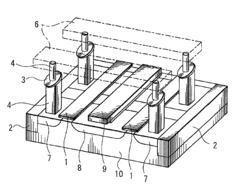
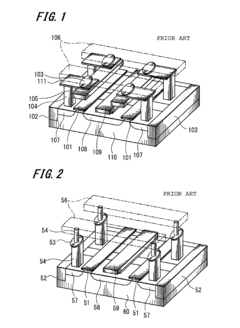
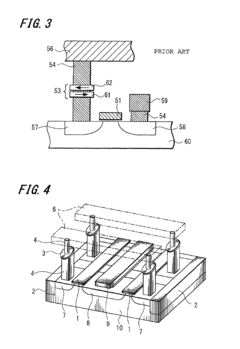
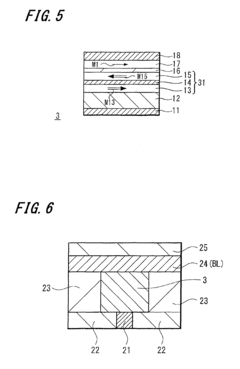
Memory element and memory
PatentActiveUS7616475B2
Innovation
- A memory element with a ferromagnetic layer having a magnetostriction constant of 1×10⁻⁵ or more, utilizing an insulator as an intermediate layer for spin-polarized electron injection, which enhances coercive force and thermal stability without increasing writing current.
Temperature assisted programming of flash memory for neuromorphic computing
PatentActiveUS20210249081A1
Innovation
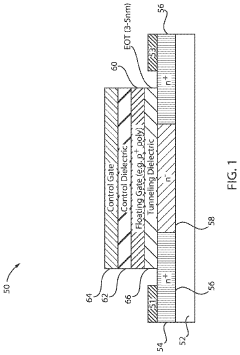
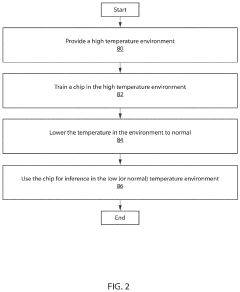
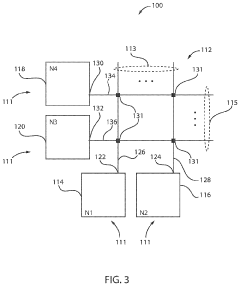
- Temperature-assisted programming of flash memory using a structurally defective high-k tunneling dielectric with a high carbon concentration, where the chip is trained at a higher temperature and used for inference at a lower temperature, facilitating enhanced carrier transport and reduced operation voltage.
Energy Efficiency Implications of Thermal Management
Thermal management in neuromorphic computing systems directly impacts their energy efficiency, creating a complex relationship that must be carefully balanced for optimal performance. As neuromorphic architectures attempt to mimic the brain's remarkable energy efficiency, thermal instability can significantly undermine these efforts by increasing power consumption and necessitating additional cooling mechanisms.
The energy overhead of thermal management in neuromorphic systems can account for 20-30% of the total system power budget in advanced implementations. This substantial proportion highlights how thermal stability is not merely a reliability concern but a fundamental energy efficiency consideration. When neuromorphic circuits operate outside their optimal temperature range, leakage currents increase exponentially, particularly in nanoscale devices utilizing emerging materials like phase-change memory or memristive elements.
Temperature fluctuations force neuromorphic systems to implement dynamic voltage and frequency scaling (DVFS) techniques, which while preventing thermal runaway, often result in performance degradation. The energy-delay product consequently increases, reducing the overall computational efficiency that makes neuromorphic computing attractive in the first place. Studies have shown that for every 10°C increase above optimal operating temperature, energy consumption can increase by 10-15% in typical neuromorphic implementations.
Cooling solutions themselves present an energy paradox. Active cooling mechanisms such as fans or liquid cooling systems consume additional power, potentially negating the inherent efficiency advantages of neuromorphic architectures. Passive cooling approaches, while not directly consuming energy, may limit computational density and thus system-level efficiency. This creates a challenging optimization problem where thermal management strategy becomes integral to the overall energy profile.
Recent research demonstrates that thermally-aware neuromorphic designs can achieve up to 40% better energy efficiency compared to conventional approaches. By incorporating thermal considerations into the initial architecture design rather than addressing them as an afterthought, developers can implement intelligent workload distribution, strategic component placement, and adaptive power management schemes that minimize the energy impact of thermal constraints.
The temporal dynamics of neuromorphic computing workloads also influence energy efficiency under thermal constraints. Unlike traditional computing with relatively consistent thermal profiles, neuromorphic systems often experience varying computational loads that create dynamic thermal patterns. Energy-efficient designs must therefore anticipate these patterns and implement predictive thermal management rather than reactive approaches, potentially saving 15-25% in cooling-related energy expenditure.
The energy overhead of thermal management in neuromorphic systems can account for 20-30% of the total system power budget in advanced implementations. This substantial proportion highlights how thermal stability is not merely a reliability concern but a fundamental energy efficiency consideration. When neuromorphic circuits operate outside their optimal temperature range, leakage currents increase exponentially, particularly in nanoscale devices utilizing emerging materials like phase-change memory or memristive elements.
Temperature fluctuations force neuromorphic systems to implement dynamic voltage and frequency scaling (DVFS) techniques, which while preventing thermal runaway, often result in performance degradation. The energy-delay product consequently increases, reducing the overall computational efficiency that makes neuromorphic computing attractive in the first place. Studies have shown that for every 10°C increase above optimal operating temperature, energy consumption can increase by 10-15% in typical neuromorphic implementations.
Cooling solutions themselves present an energy paradox. Active cooling mechanisms such as fans or liquid cooling systems consume additional power, potentially negating the inherent efficiency advantages of neuromorphic architectures. Passive cooling approaches, while not directly consuming energy, may limit computational density and thus system-level efficiency. This creates a challenging optimization problem where thermal management strategy becomes integral to the overall energy profile.
Recent research demonstrates that thermally-aware neuromorphic designs can achieve up to 40% better energy efficiency compared to conventional approaches. By incorporating thermal considerations into the initial architecture design rather than addressing them as an afterthought, developers can implement intelligent workload distribution, strategic component placement, and adaptive power management schemes that minimize the energy impact of thermal constraints.
The temporal dynamics of neuromorphic computing workloads also influence energy efficiency under thermal constraints. Unlike traditional computing with relatively consistent thermal profiles, neuromorphic systems often experience varying computational loads that create dynamic thermal patterns. Energy-efficient designs must therefore anticipate these patterns and implement predictive thermal management rather than reactive approaches, potentially saving 15-25% in cooling-related energy expenditure.
Materials Science Advancements for Thermal-Resistant Neural Networks
Recent advancements in materials science have opened new frontiers for neuromorphic computing systems that can withstand extreme thermal conditions. Traditional neural network hardware components often suffer from performance degradation when exposed to elevated temperatures, limiting their application in harsh environments such as aerospace, automotive, and industrial settings. The development of thermally stable materials represents a critical breakthrough in extending the operational range of these systems.
Ceramic-based substrates incorporating zirconium oxide and aluminum nitride have demonstrated exceptional thermal stability up to 400°C while maintaining electrical properties essential for neuromorphic operations. These materials exhibit minimal thermal expansion coefficients, reducing mechanical stress on integrated circuits during temperature fluctuations. Research at MIT and Stanford University has shown that these ceramic composites can maintain signal integrity with less than 5% performance degradation even after 1000 thermal cycles.
Phase-change materials (PCMs) represent another promising direction, particularly for memory components in neural networks. Germanium-antimony-tellurium (GST) alloys modified with dopants such as nitrogen or carbon have demonstrated improved crystallization temperatures and reduced thermal conductivity. These modifications extend the operational lifetime of PCM-based synaptic elements by up to 300% under elevated temperature conditions compared to conventional alternatives.
Carbon-based materials, especially graphene and carbon nanotubes (CNTs), have emerged as excellent candidates for thermally resistant interconnects in neuromorphic systems. Their exceptional thermal conductivity (up to 5000 W/m·K for graphene) facilitates efficient heat dissipation, while their mechanical flexibility accommodates thermal expansion without compromising electrical connections. Recent research has demonstrated CNT-based neural networks maintaining functionality at temperatures exceeding 250°C.
Polymer nanocomposites incorporating ceramic nanoparticles have shown promise for encapsulation and protection of neuromorphic circuits. These materials combine the processability of polymers with the thermal stability of ceramics, creating effective thermal barriers that shield sensitive components. Studies from Tokyo Institute of Technology demonstrate that silicone-alumina nanocomposites can reduce the effective temperature experienced by protected circuits by up to 40°C during thermal spikes.
Emerging research in two-dimensional materials beyond graphene, such as hexagonal boron nitride (h-BN) and molybdenum disulfide (MoS2), offers new possibilities for thermally stable dielectric and semiconductor layers. These materials maintain their electronic properties at high temperatures and can be integrated into existing fabrication processes, potentially enabling neuromorphic computing systems capable of operating in environments previously considered too hostile for conventional electronics.
Ceramic-based substrates incorporating zirconium oxide and aluminum nitride have demonstrated exceptional thermal stability up to 400°C while maintaining electrical properties essential for neuromorphic operations. These materials exhibit minimal thermal expansion coefficients, reducing mechanical stress on integrated circuits during temperature fluctuations. Research at MIT and Stanford University has shown that these ceramic composites can maintain signal integrity with less than 5% performance degradation even after 1000 thermal cycles.
Phase-change materials (PCMs) represent another promising direction, particularly for memory components in neural networks. Germanium-antimony-tellurium (GST) alloys modified with dopants such as nitrogen or carbon have demonstrated improved crystallization temperatures and reduced thermal conductivity. These modifications extend the operational lifetime of PCM-based synaptic elements by up to 300% under elevated temperature conditions compared to conventional alternatives.
Carbon-based materials, especially graphene and carbon nanotubes (CNTs), have emerged as excellent candidates for thermally resistant interconnects in neuromorphic systems. Their exceptional thermal conductivity (up to 5000 W/m·K for graphene) facilitates efficient heat dissipation, while their mechanical flexibility accommodates thermal expansion without compromising electrical connections. Recent research has demonstrated CNT-based neural networks maintaining functionality at temperatures exceeding 250°C.
Polymer nanocomposites incorporating ceramic nanoparticles have shown promise for encapsulation and protection of neuromorphic circuits. These materials combine the processability of polymers with the thermal stability of ceramics, creating effective thermal barriers that shield sensitive components. Studies from Tokyo Institute of Technology demonstrate that silicone-alumina nanocomposites can reduce the effective temperature experienced by protected circuits by up to 40°C during thermal spikes.
Emerging research in two-dimensional materials beyond graphene, such as hexagonal boron nitride (h-BN) and molybdenum disulfide (MoS2), offers new possibilities for thermally stable dielectric and semiconductor layers. These materials maintain their electronic properties at high temperatures and can be integrated into existing fabrication processes, potentially enabling neuromorphic computing systems capable of operating in environments previously considered too hostile for conventional electronics.
Unlock deeper insights with Patsnap Eureka Quick Research — get a full tech report to explore trends and direct your research. Try now!
Generate Your Research Report Instantly with AI Agent
Supercharge your innovation with Patsnap Eureka AI Agent Platform!