
Method for recognizing a fuel type in a diesel engine
A diesel engine and fuel type technology, applied in engine control, combustion engine, machine/engine, etc., can solve problems such as not being able to obtain optimal combustion, increasing pollution emissions, etc.
- Summary
- Abstract
- Description
- Claims
- Application Information
AI Technical Summary
Problems solved by technology
Method used
Image

Examples
Embodiment Construction
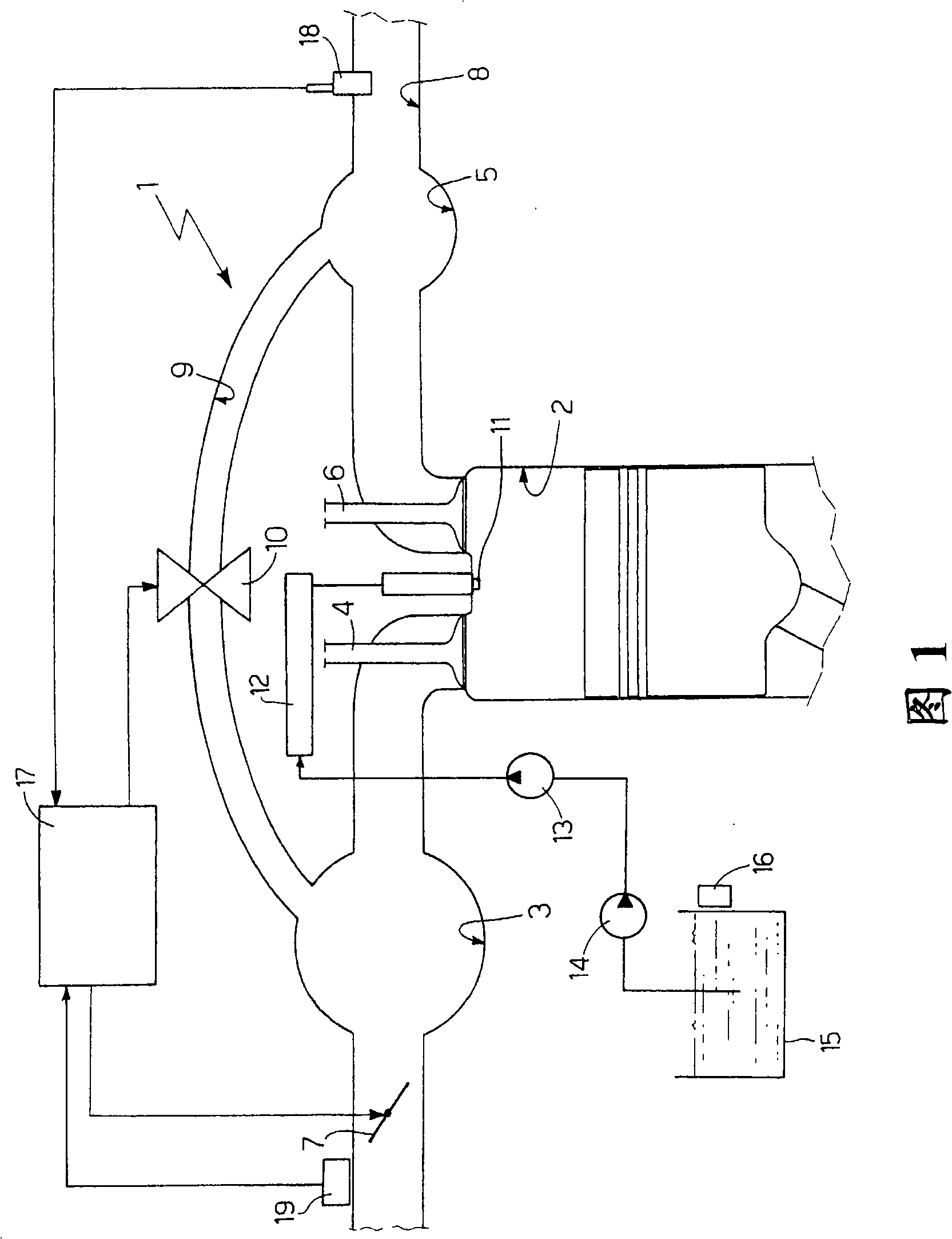
[0015] In the figures, reference numeral 1 generally designates an internal combustion engine of the diesel engine type, ie an engine in which the mixture in it is ignited by compression rather than by spark. The engine 1 is provided with a plurality of cylinders 2 (only one of which is shown in the drawings), each cylinder being connected to the intake manifold 3 through at least one intake valve 4 and connected to the exhaust manifold through at least one exhaust valve 6. Tube 5. The intake manifold 3 receives cool air (ie, air from the external environment) through a throttle valve 7 that is adjustable between a closed position and a fully open position. Leading from the exhaust manifold 5 is an exhaust pipe 8 terminated with a muffler (known and not shown) to release gases produced by combustion into the atmosphere. Furthermore, a recirculation pipe 9 connecting the exhaust manifold 5 to the intake manifold 3 leads from the exhaust manifold 5 and is regulated by a recircu...
PUM
 Login to View More
 Abstract
Description
Claims
Application Information
 Login to View More