
A Trace Clustering Method for Radar Target Trace Cohesion
A radar target and dot-track condensation technology, applied to instruments, character and pattern recognition, computer components, etc., can solve the problem of indistinguishable target adhesion
- Summary
- Abstract
- Description
- Claims
- Application Information
AI Technical Summary
Problems solved by technology
Method used
Image

Examples
Embodiment
[0049] Such as Figure 5 As shown, this embodiment takes a detection video of R×W size as an example for processing. In addition to target traces and empty points, there may also be useless isolated points. During processing, the detection video A(i, j) is read in direction by direction and distance by distance, and it is positioned as a test point. The specific implementation steps are:
[0050] For the read-in test point A(i, j), first judge whether it is a trace or an empty point.
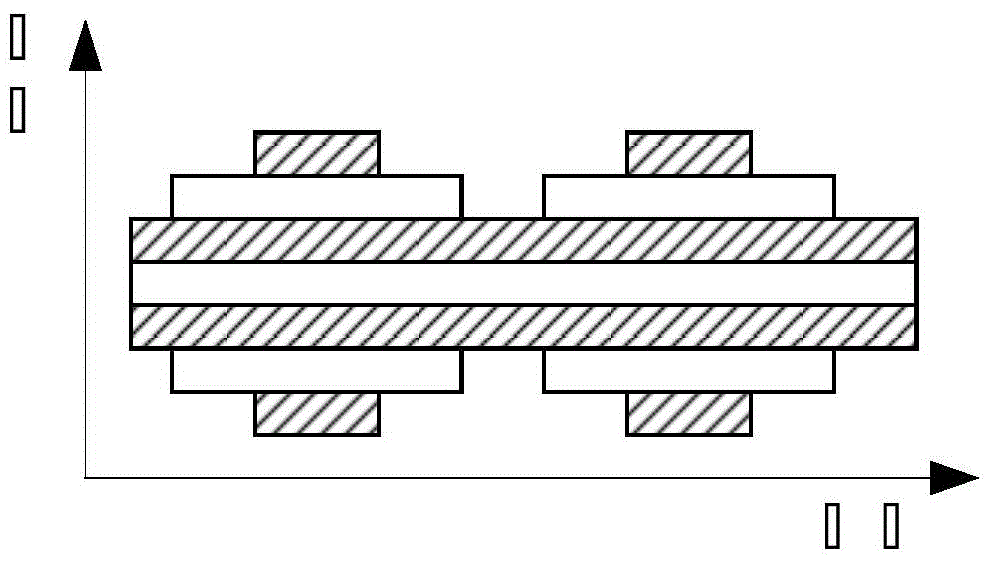
[0051] If the current test point A(i,j) is an empty point, it may be a break caused by detection, such as Image 6As shown, the empty box is an empty dot, and the backslash box is a dot. If not, the same target may be treated as two targets. To deal with this situation: search A(i,j-1), A(i,j-2)...A(i,j-L) point by point along the current orientation i to see if there are dot traces. If there is no point trace, A(i, j) is not a target break due to detection, but a continuous empty point, an...
PUM
 Login to View More
 Abstract
Description
Claims
Application Information
 Login to View More