

Low complexity linear iteraction multiple users detecting device and method
A technology of multi-user detection and linear iteration, which is applied in the field of linear iterative multi-user detection devices and multi-user detection devices in direct sequence code division multiple access systems, can solve the difficulty of solving the inverse of the correlation matrix R and the difficulty of computational complexity Acceptance, Difficulty, etc.
- Summary
- Abstract
- Description
- Claims
- Application Information
AI Technical Summary
Problems solved by technology
Method used
Image

Examples
Embodiment Construction
[0070] The technical solution of the present invention will be further described through specific implementation below.
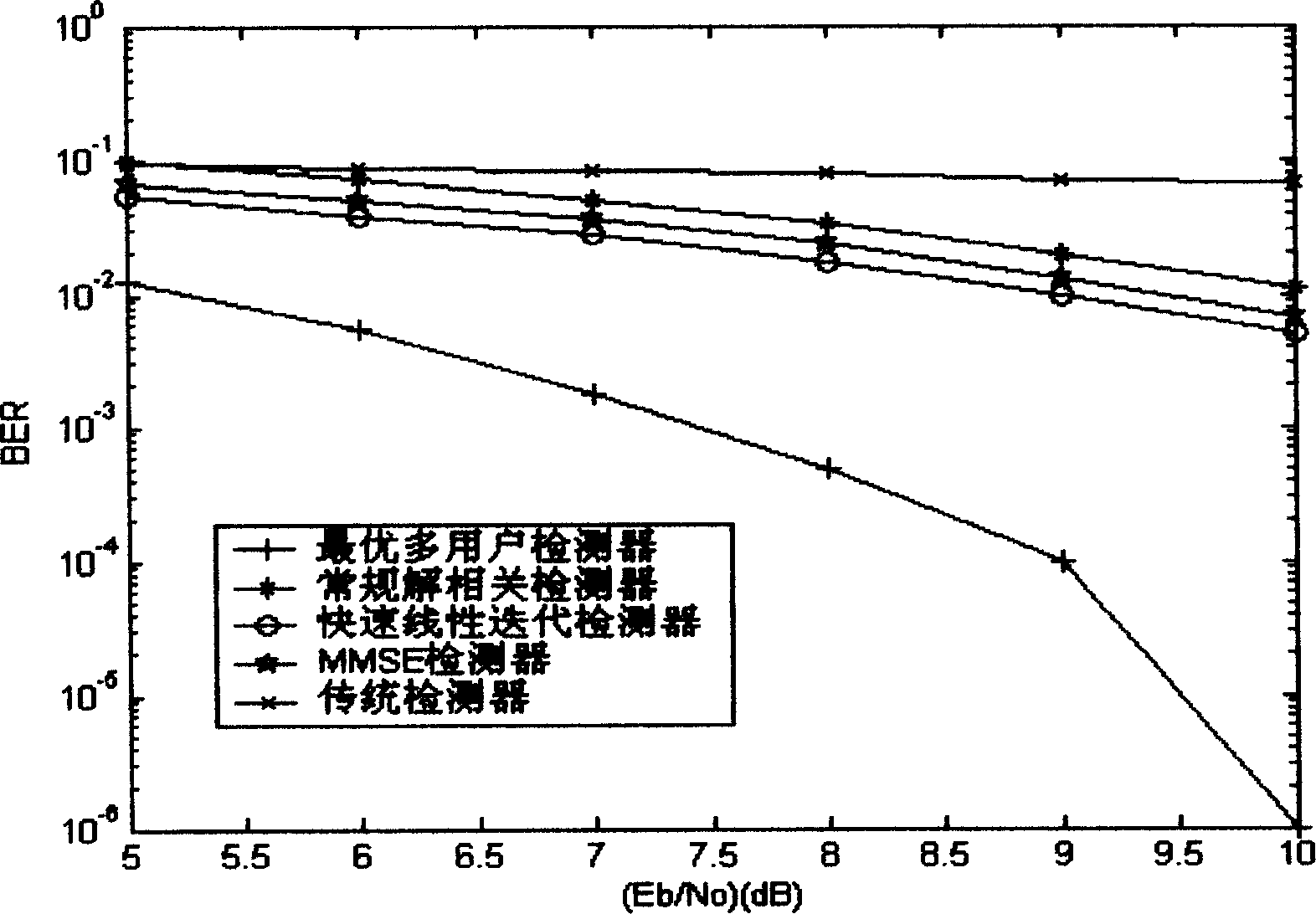
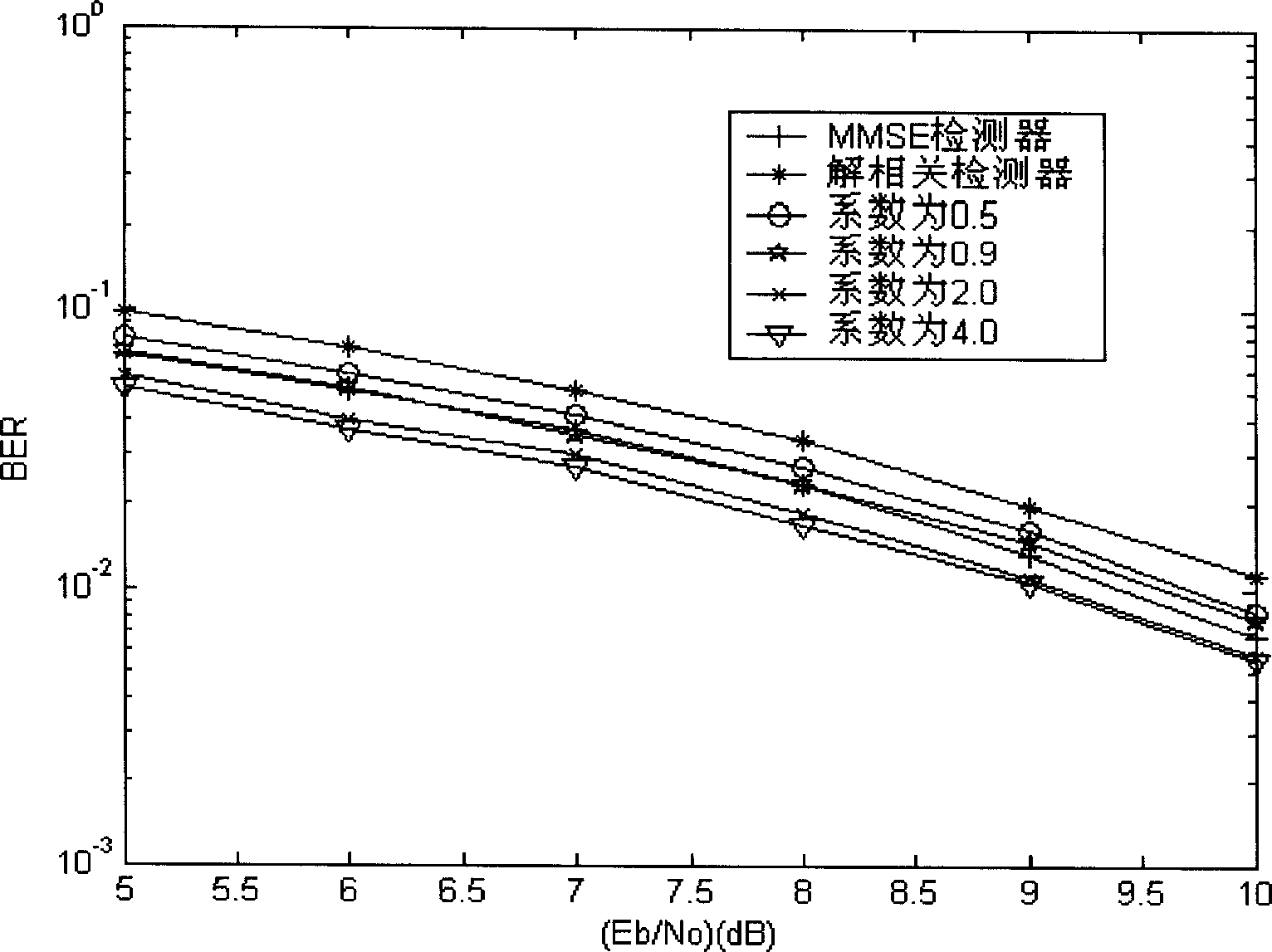
[0071] Using Matlab simulation software to simulate, the simulation system is a synchronous / asynchronous DS-CDMA system, AWGN channel, BPSK modulation, carrier phase is 0, and a pseudo-random sequence with a length of 10 is used to spread spectrum. The analysis is carried out from three aspects of bit error rate, anti-"near and far" effect and computational complexity. Assume that user 1 is the expected user and the number of users is 10.
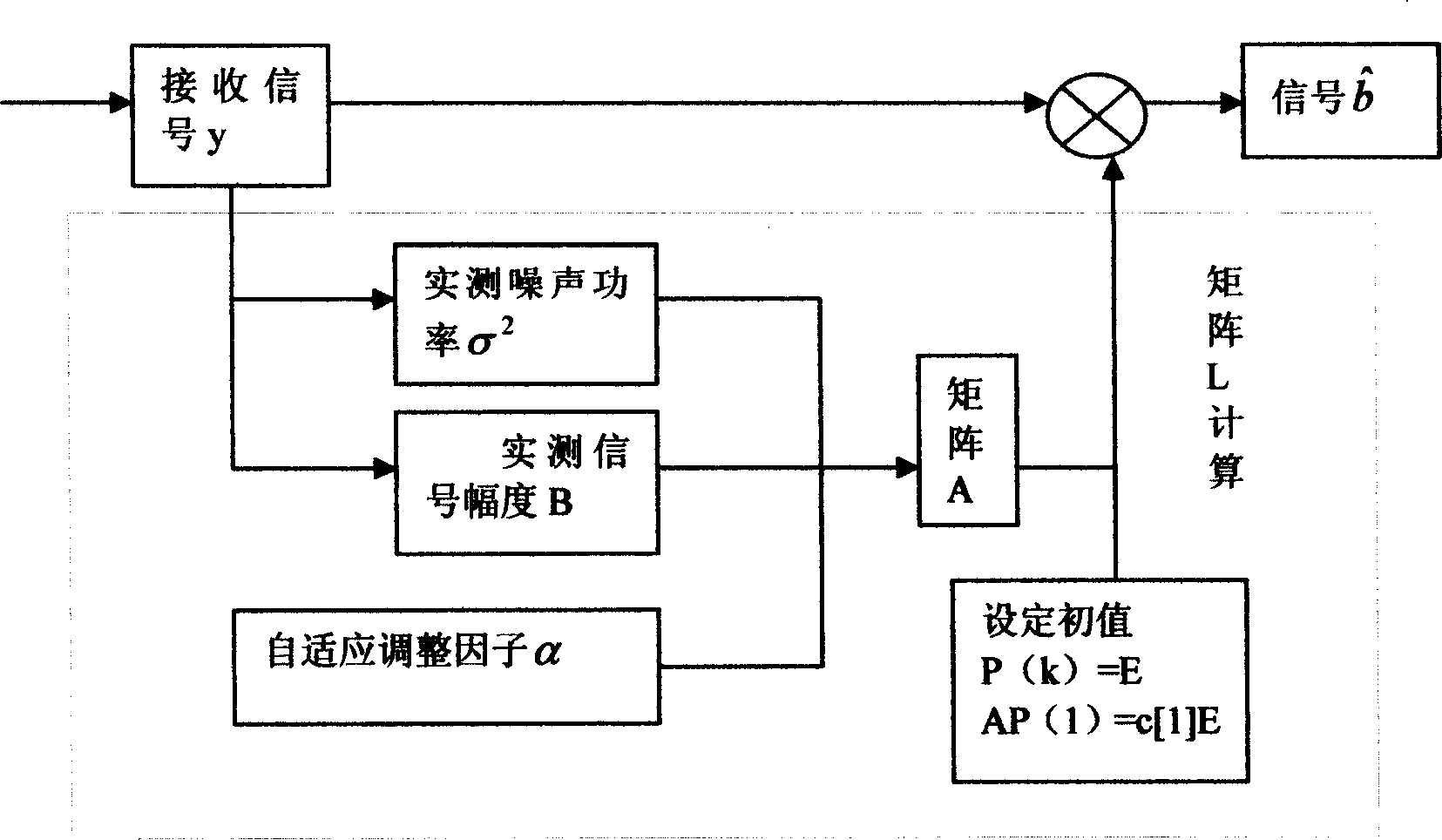
[0072] Step 1: At the receiving end, a vector of 10 matched filter bank outputs is available:
[0073] y=RBb+N
[0074] Among them, R=S·S H , the size of the correlation matrix R is 10×10, which represents the correlation value between two codewords.
[0075] Step 2: For the MMSE multi-user detector, select the adaptive adjustment factor α, the measured noise power σ 2 and signal amplit...
PUM
 Login to View More
 Abstract
Description
Claims
Application Information
 Login to View More