
Telodendrimer nanodiscs without apolipoprotein
a technology of telodendrimer and nanodiscs, which is applied in the field of telodendrimer nanodiscs without apolipoprotein, can solve the problems of severe and irreversible, amb-induced nephrotoxicity is dose limit, and protein-containing nanodiscs suffer from drawbacks
- Summary
- Abstract
- Description
- Claims
- Application Information
AI Technical Summary
Benefits of technology
Problems solved by technology
Method used
Image

Examples
example 1
Preparation and Characterization of Drug Loaded Hybrid-ND
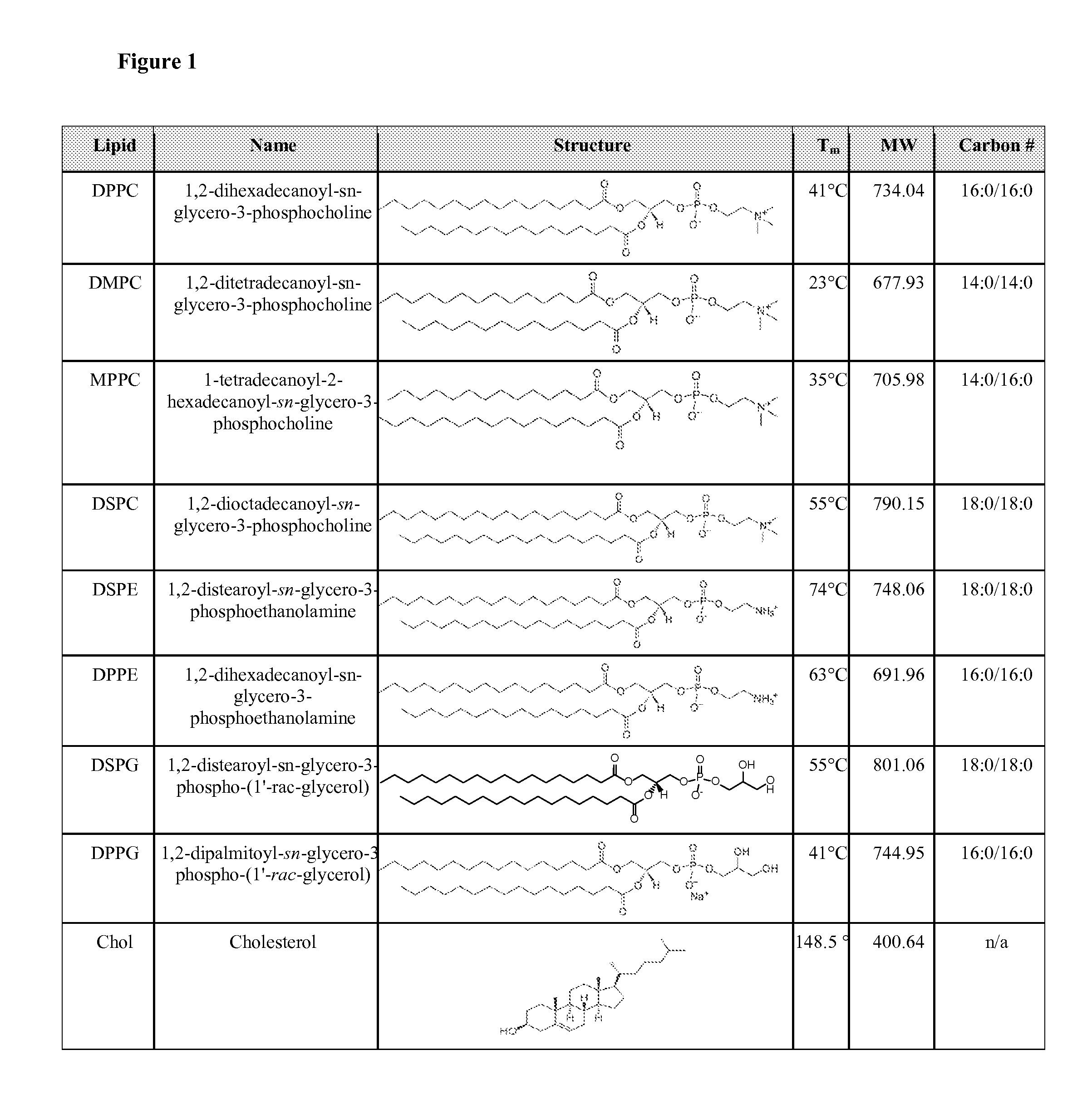
[0101]Materials. Monomethyl-terminated poly(ethylene glycol) monoamine (MeO-PEG-NH2, MW=5 kDa or 2 kDa) was purchased from Rapp Polymere (Tübingen, Germany). (Fmoc)lysine(Fmoc)OH was purchased from NeoMPS INC (San Diego, Calif., USA). Cholic acid was purchased from Sigma-Aldrich (St Louis, Mo.). 1,2-dipalmitoyl-sn-glycero-3-phosphocholine (DPPC), 1,2-ditetradecanoyl-sn-glycero-3-phosphocholine (DMPC), 1-tetradecanoyl-2-hexadecanoyl-sn-glycero-3-phosphocholine (MPPC), 1,2-dioctadecanoyl-sn-glycero-3-phosphocholine (DSPC), 1,2-distearoyl-sn-glycero-3-phosphoethanolamine (DSPE), 1,2-dihexadecanoyl-sn-glycero-3-phosphoethanolamine (DPPE), 1,2-distearoyl-sn-glycero-3-phospho-(1′-rac-glycerol) (DSPG), 1,2-dipalmitoyl-sn-glycero-3-phospho-(1′-rac-glycerol) (DPPG), 1-tetradecanoyl-2-hexadecanoyl-sn-glycero-3-phosphoglycerol (MPPG) and cholesterol were purchased from Avanti Polar Lipids, Inc. (Alabaster, Ala.). Amphotericin B was purch...
PUM
| Property | Measurement | Unit |
|---|---|---|
| Diameter | aaaaa | aaaaa |
| Ratio | aaaaa | aaaaa |
| Ratio | aaaaa | aaaaa |
Abstract
Description
Claims
Application Information
 Login to View More