
Process for preparing cellulose long-chain fatty acid ester
A long-chain fatty acid ester, cellulose technology, applied in the application field of ultrasound and microwave, can solve the problems of high price of long-chain acid chloride, difficult to popularize, large process, etc., and achieve strong reaction performance and interaction performance, and fast reaction speed. , the effect of high yield
Patent Information
- Authority / Receiving Office
- CN · China
- Patent Type
- Patents(China)
- Current Assignee / Owner
- Publication Date
- 2009-08-05
- Estimated Expiration
- Not applicable · inactive patent
Smart Images
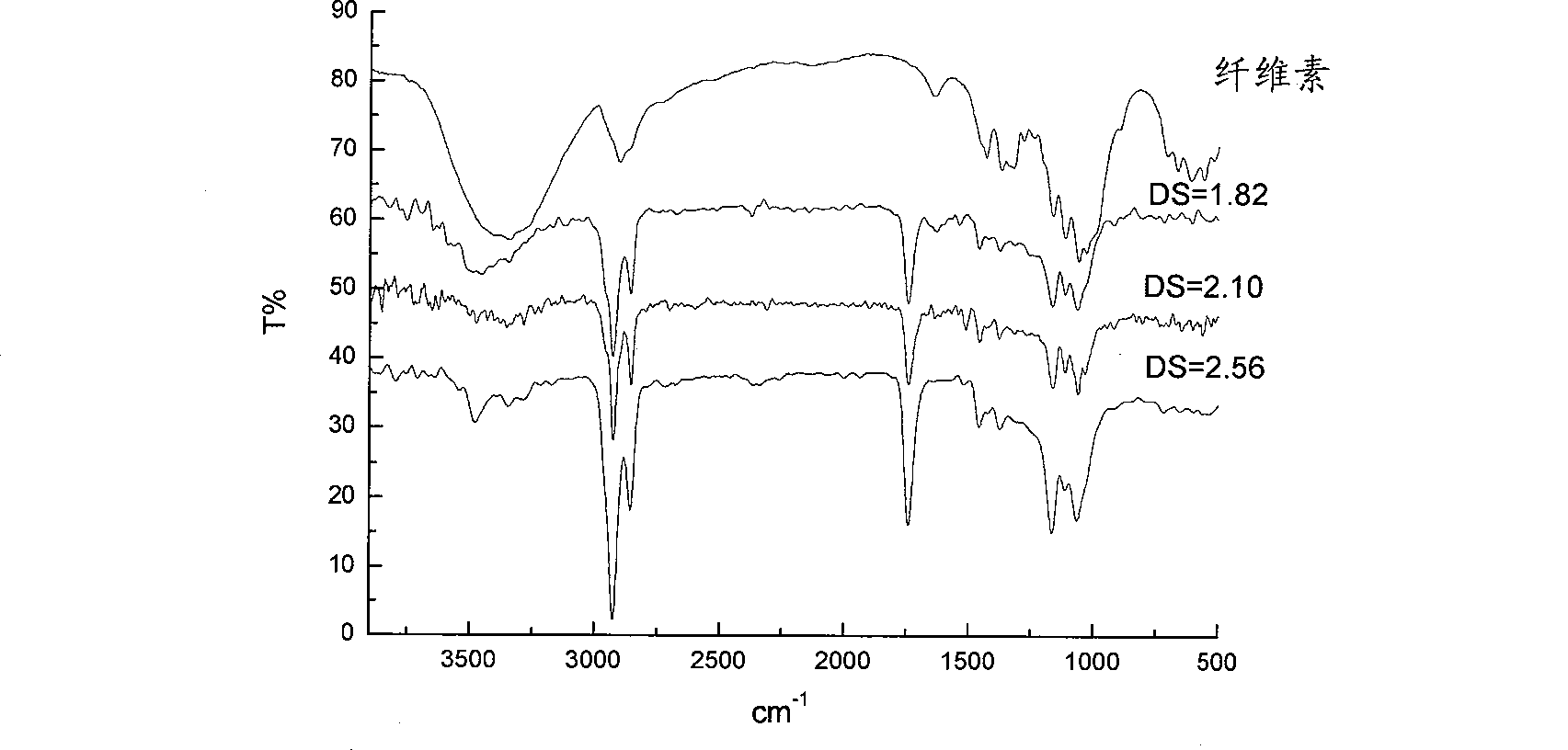
Figure 1 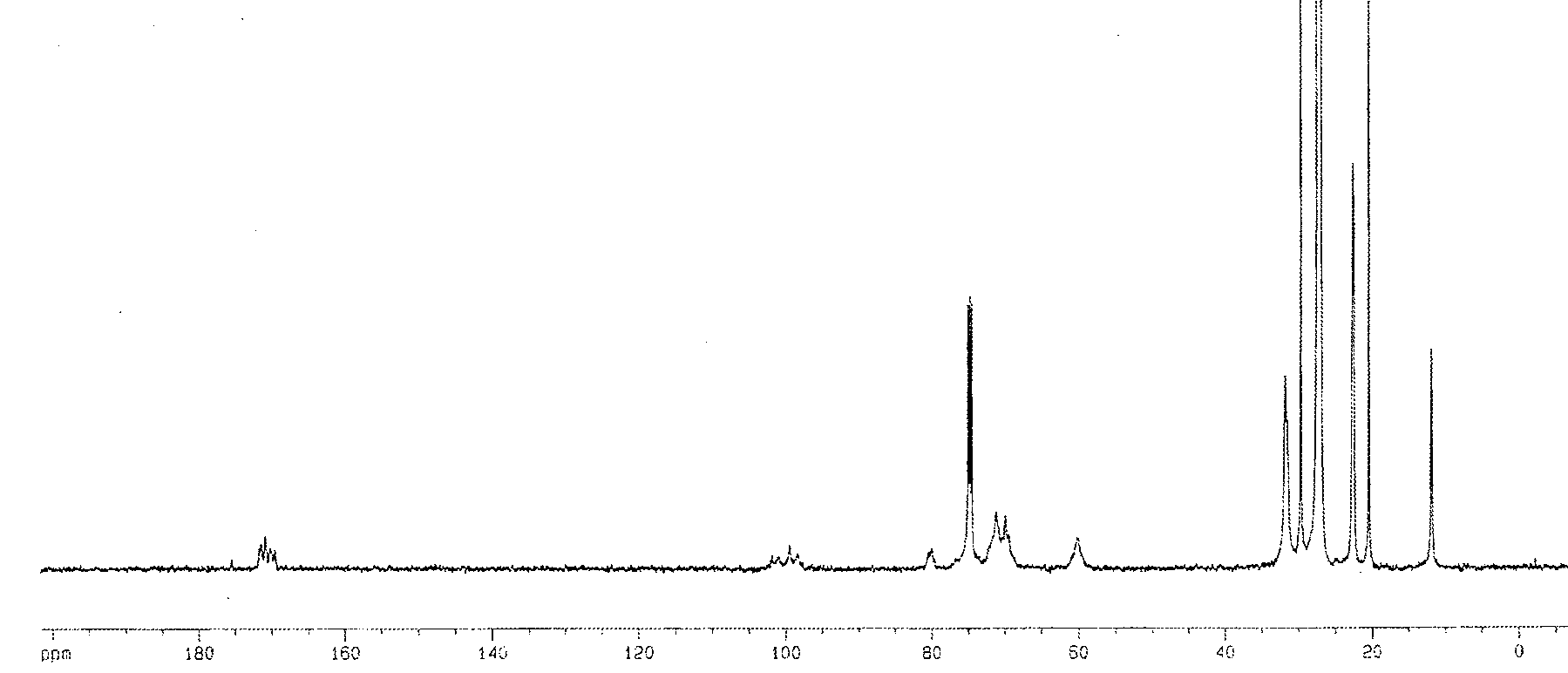
Figure 2 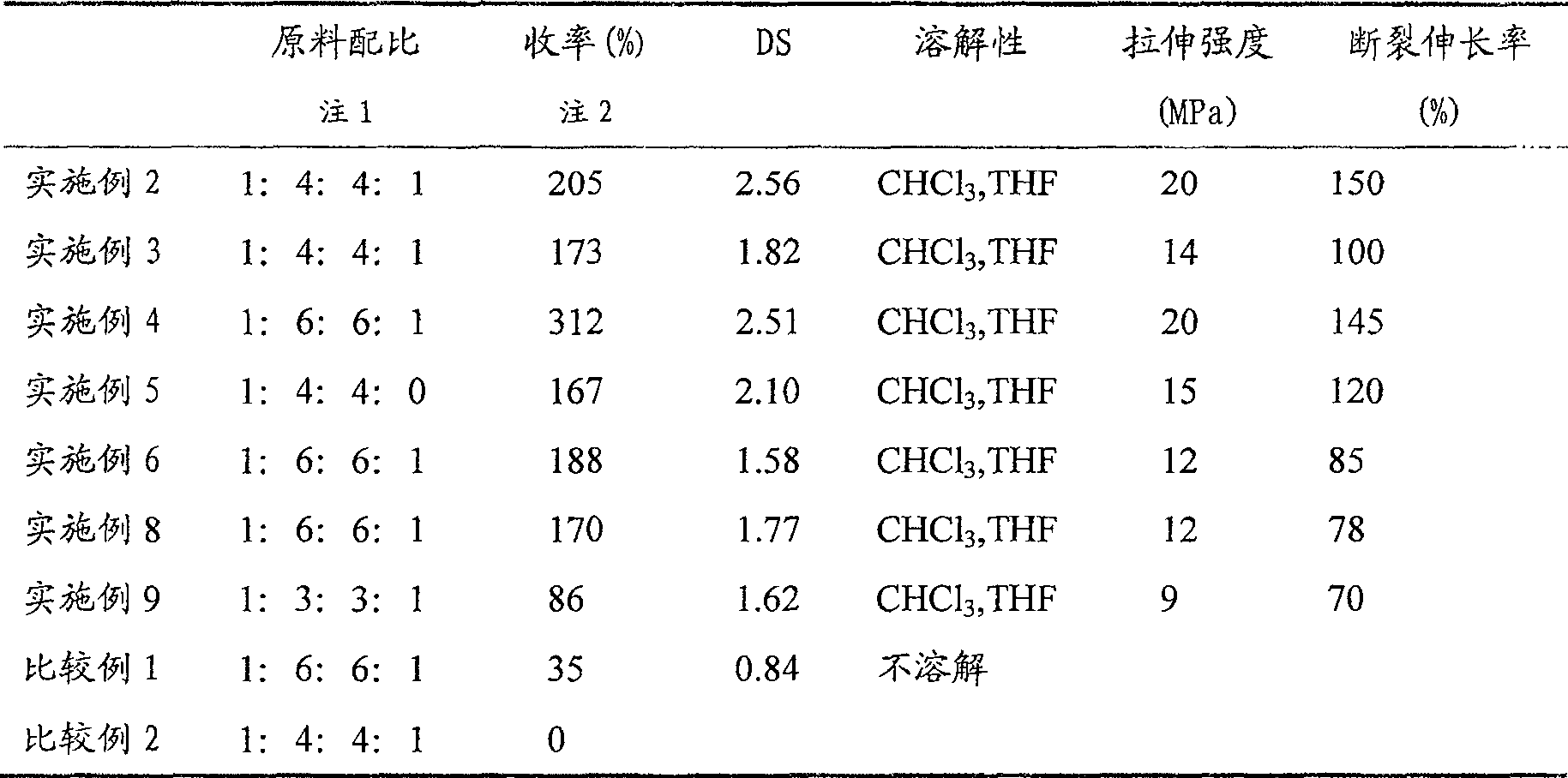
Figure 3
Abstract
Description
technical field
[0001] The invention relates to a preparation method of cellulose long-chain fatty acid ester, in particular to the application of ultrasound and microwave in the preparation process. Background technique
[0002] Cellulose is the most abundant natural polymer on the earth. It contains about 10-25% in herbaceous plants, 40-53% in wood, 60-85% in bast fibers such as flax, and up to 90% in cotton. %, cellulose is also the basic component of plant cells. The carbon constituting cellulose in natural organisms accounts for about 40%, and the cellulose produced through photosynthesis reaches more than 100 billion tons every year. It can be said that cellulose is an inexhaustible renewable organic resource in nature. . Because cellulose is cheap, degradable, and does not pollute the environment, all countries in the world attach great importance to the research and development of cellulose. However, the structural characteristics of the linear polymer formed by t...
Examples
Embodiment 1
[0024] A preparation method for obtaining the above-mentioned cellulose long-chain fatty acid ester, which utilizes long-chain fatty acids and is synthesized by microwave-assisted technology, and is realized through the following steps:
[0025] a Add 2%-4% microcrystalline cellulose and 6%-9% lithium chloride into dimethylacetamide, and ultrasonicate for 5-13 minutes with a power of 400w-800w and a frequency of 20-25KHz , stirring at a speed of 250-500 / min at room temperature for 2-5 hours to obtain a colorless, transparent cellulose ion solution A;
[0026] b Add cellulose, long-chain fatty acids, and co-reactants in solution A at a molar ratio of 1:2:2 to 1:6:6, and then irradiate in a microwave reactor for 60 seconds to 90 seconds with a power of 300w~400w, the frequency is 2450MHz, stirring under the protection of nitrogen at the same time, the stirring speed is 700-1500 / min, the reaction solution system is stirred by microwave for 1-3 hours, then precipitated and washed ...
Embodiment 2
[0029] Weigh 2g of microcrystalline cellulose and 8g of lithium chloride into a 150ml beaker filled with 100ml of dimethylacetamide, set the ultrasonic power at 600w and the frequency of 20KHz for 7 minutes, and then transfer it into a 250ml three-port Stir in the flask for 2 hours to obtain a transparent cellulose ion solution, add 9.46g toluene-sulfonyl chloride, 9.93g lauric acid, 1.52g p-methylaminopyridine was irradiated for 90 seconds under the conditions of microwave power 320w and frequency 2450MHz, then stirred for 3 hours, then precipitated with distilled water, filtered and washed, and then washed with NaHCO 3 The solution is washed, and the obtained cellulose laurate is vacuum-dried at 50°C for 12 hours. See the attached table for the results of the product properties.
Embodiment 3
[0031] Weigh 2g of microcrystalline cellulose and 8g of lithium chloride into a 150ml beaker filled with 100ml of dimethylacetamide, set the ultrasonic power at 400w and the frequency of 25KHz for 13 minutes, and then transfer it into a 250ml three-port Stir in the flask for 4.5 hours to obtain a transparent cellulose ion solution. Add 9.46g toluene-sulfonyl chloride, 9.93g lauric acid, and 1.52g p-toluene to this solution in a molar ratio of 1:4:4:1 to cellulose. Aminopyridine was irradiated at a microwave power of 300w for 86 seconds, followed by stirring for another 3 hours, then precipitated with distilled water, filtered and washed, followed by NaHCO 3 After washing with the solution, the obtained cellulose laurate can be vacuum-dried at 50°C for 12 hours, and the properties of the product are shown in the attached table.