
Preparation method of non-shell preserved egg and product thereof
A technology for preserved eggs and egg liquid is applied to the field of shellless preserved eggs and their preparation, which can solve the problems of being unsuitable for large-scale industrial production, difficult to control and check product quality, easily affected by environmental conditions, and the like, so as to shorten the pickling cycle. , The effect of convenient production and low cost
Patent Information
- Authority / Receiving Office
- CN · China
- Patent Type
- Patents(China)
- Current Assignee / Owner
- Publication Date
- 2012-07-04
- Estimated Expiration
- Not applicable · inactive patent
Smart Images
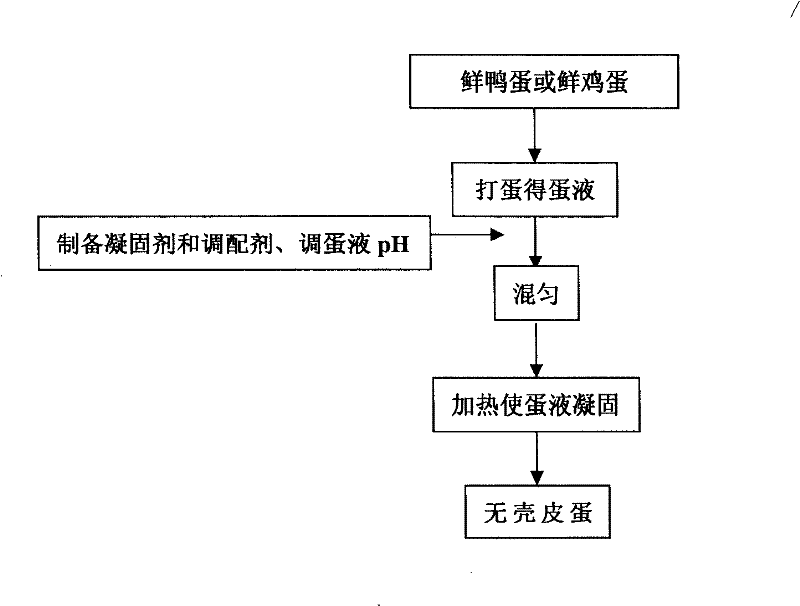
Figure 1 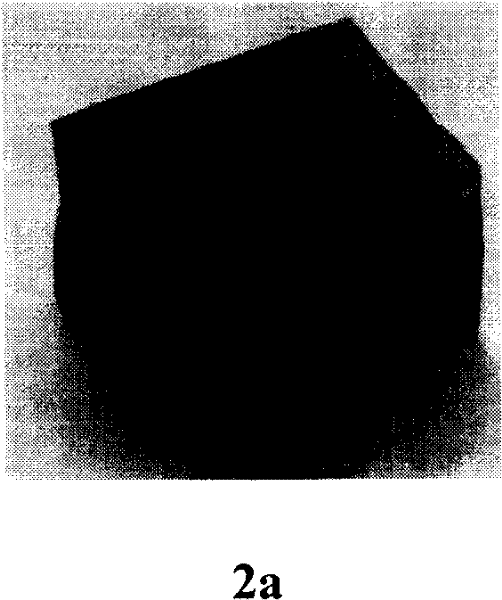
Figure 2 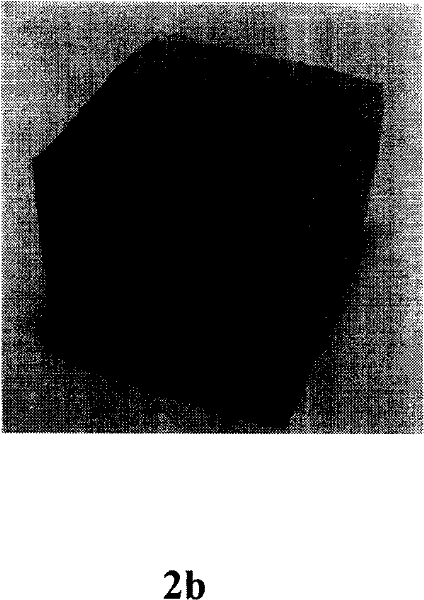
Figure 3
Abstract
Description
technical field
[0001] The invention belongs to the technical field of egg processing, and in particular relates to a shellless preserved egg with traditional preserved egg flavor and a preparation method thereof. Background technique
[0002] Preserved eggs are traditional poultry egg products in my country, but most of the manufacturers in my country use traditional formulas and processing methods for processing. However, the traditional mud-packing and soaking methods process preserved egg auxiliary materials and feed liquid waste more, and the production cost is high, the benefit is low, the required pickling time is longer, and the shell needs to be peeled before eating, and the sanitation and convenience are poor. Research on the rapid pickling process of shellless preserved eggs with traditional preserved egg flavor is of great significance for the industrial production of traditional poultry egg products.
[0003] The traditional pickling methods of preserved eggs m...
Examples
Embodiment 1
[0048] Embodiment 1 has the preparation technology of the shellless preserved egg of preserved egg flavor
[0049] Experimental materials: fresh duck eggs, purchased from Zhongbai Supermarket of Huazhong Agricultural University.
[0050] The tea powder is the green tea tea powder (remaining crushed tea leaves after processing the tea leaves, with low cost) for general commercial sale.
[0051] Sodium carbonate (edible alkali), ferrous sulfate, sodium chloride (salt) are food-grade commercially available products.
[0052] Concrete preparation steps are as follows:
[0053] (1) Put the fresh duck eggs into the egg beater after shelling, and beat the eggs for 3 minutes under the condition of controlling the rotation speed (see Table 1), so that the egg white and egg yolk of the duck eggs are fully mixed, and the egg liquid is uniform;
[0054] (2) Take 2g tea powder, put it into 1000ml boiling water, make it boil in boiling water at 100°C for 10 minutes, then filter the tea po...
Embodiment 2
[0066] The influence of embodiment 2 different coagulants on product quality
[0067] According to the basic operation steps and formula of No. 5 product in Example 1, in this embodiment, the applicant compared the influence of different coagulant formulas on product quality. Wherein the consumption of sodium carbonate is 0.9%, 1.0%, 1.1% (with respect to the massfraction of raw egg liquid), the consumption of ferrous sulfate is respectively 10mg / kg fresh duck egg liquid, 15mg / kg fresh duck egg liquid, 20mg / kg fresh duck egg liquid. The quick-cured shellless preserved egg products were obtained under different conditions. The result analysis is shown in No. 7-15 products in Table 3.
[0068] The amount of sodium carbonate mainly affects the flavor of the product. The addition of sodium carbonate can also promote the solidification of the product. However, if it is added too much, the alkalinity of the product will be too high and produce bitterness. It should be controlled ...
Embodiment 3
[0069] Example 3 Utilize different raw material egg liquid to prepare shell-free preserved eggs
[0070] In this embodiment, the applicant respectively utilizes two kinds of raw eggs, chicken eggs and duck eggs, to make shellless preserved egg products. According to the basic operating steps and formula of No. 5 product among the embodiment 1, other conditions are constant. The test results are shown in Table 2 for No. 16 and No. 14 products. The results showed that the shellless preserved eggs made from eggs had a faint spicy flavor, the color of the product was dark brown, the elasticity was small, the entrance was soft and slippery, and it had the fragrance of eggs. It was a kind of egg product with good flavor and easy to eat. Compared with the shellless preserved eggs made of duck egg liquid, the traditional preserved eggs have a lighter flavor and less aftertaste, but the taste is delicate and soft.
[0071] The influence (n=3, average value) of different coagulant of ...