
Preparation method for grafting maleic anhydride onto plasma activated carbon nano tube
A plasma and carbon nanotube technology, applied in the field of carbon materials, can solve the problems of short polymerization chain length, low reaction efficiency, long reaction time, etc., and achieve the effects of improving reaction speed and degree, uniform surface coating, and convenient handling
Patent Information
- Authority / Receiving Office
- CN · China
- Patent Type
- Patents(China)
- Current Assignee / Owner
- Publication Date
- 2011-11-09
- Estimated Expiration
- Not applicable · inactive patent
Smart Images
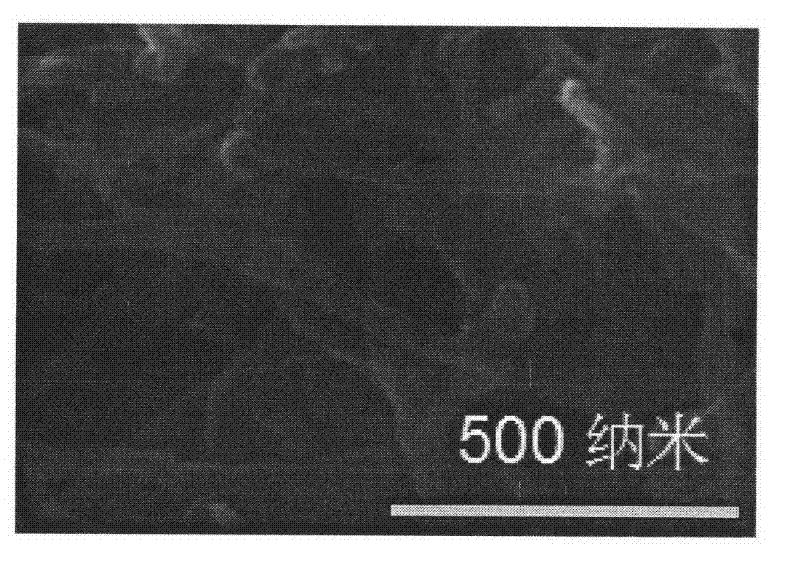
Figure 1 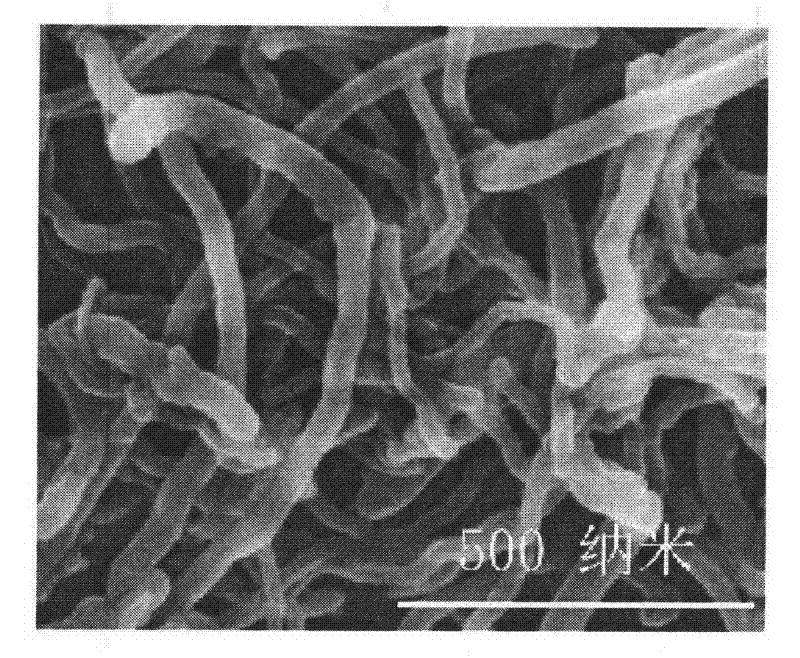
Figure 2 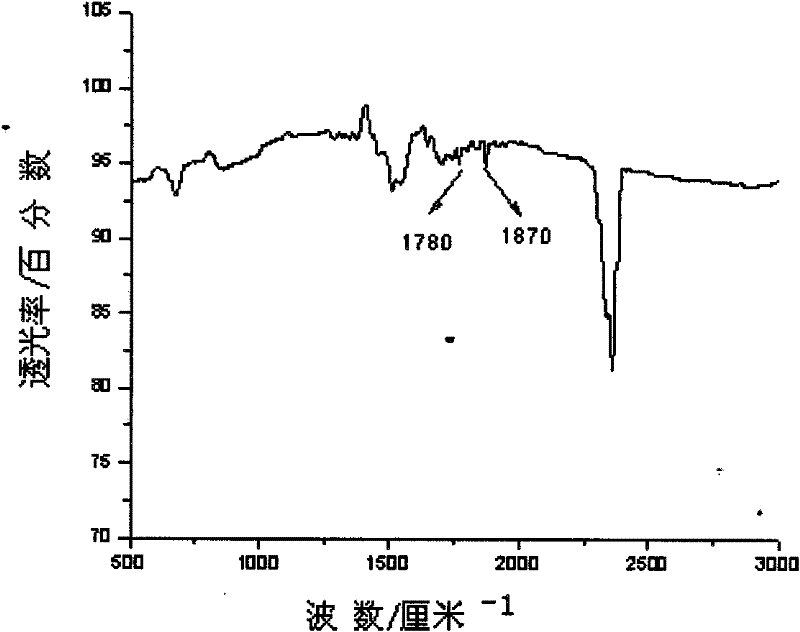
Figure 3
Abstract
Description
technical field
[0001] The invention belongs to the technical field of carbon materials, and in particular relates to a method for preparing maleic anhydride grafted on plasma-activated carbon nanotubes. Background technique
[0002] Carbon nanotubes have high stability, high strength, high toughness, low density and good electrical conductivity and heat transfer performance, so they are widely used to improve the performance of various polymer materials. The special axial Young's modulus, aspect ratio and specific surface area of carbon nanotubes make them excellent reinforcements for polymer materials. However, carbon nanotubes also have some problems due to their large length-diameter ratio and large specific surface area, that is, they are prone to self-winding and agglomeration. And the interfacial effect of carbon nanotubes in the polymer matrix leads to poor compatibility and dispersion in polymers. In practical applications, carbon nanotubes cannot fully exert the...
Examples
Embodiment 1
[0033] Weigh 0.2g of carbon nanotubes, place them in the plasma reaction chamber, and evacuate to 1.0×10 -4 After Pa, pass high-purity argon gas for 15 minutes (air pressure is 13.3Pa, gas flow rate is 20ml / min); discharge treatment at a power of 60W for 10 minutes, and pass oxygen for 20 minutes (air pressure is 13.3Pa, gas flow rate is 20ml / min), take out carbon nanotubes;
[0034] Dissolve 6.8g of maleic anhydride in 100ml of xylene at 60°C to obtain a maleic anhydride xylene solution, then add the above-mentioned treated carbon nanotubes into it and sonicate for 10min, under nitrogen protection, at 110°C, microwave The power is 300W, after reacting for 40min, filter while hot, and wash with xylene, acetone, ethanol, distilled water for 4 times, and then vacuum dry at 80°C for 8h to complete the functionalization of carbon nanotubes. . To obtain the product of maleic anhydride grafted on plasma-activated carbon nanotubes.
[0035] figure 1 It is a scanning electron micro...
Embodiment 2
[0041] In the step (2) of embodiment 1, maleic anhydride amount is 4.0g, and other conditions and steps are identical with embodiment 1, and the grafting rate of gained product is 8.2%.
Embodiment 3
[0043] In the step (3) of embodiment 1, microwave power is 200W, and other conditions and steps are identical with embodiment 1, and the graft rate of gained product is 9.8%.