
Bone nail for the heel and osteosynthesis suite
A bone nail and heel technology, which is applied in the field of osteosynthesis kits, can solve the problems of small curvature radius and inability to consider the application of the heel area
Patent Information
- Authority / Receiving Office
- CN · China
- Patent Type
- Patents(China)
- Current Assignee / Owner
- Publication Date
- 2014-08-06
- Estimated Expiration
- Not applicable · inactive patent
Smart Images
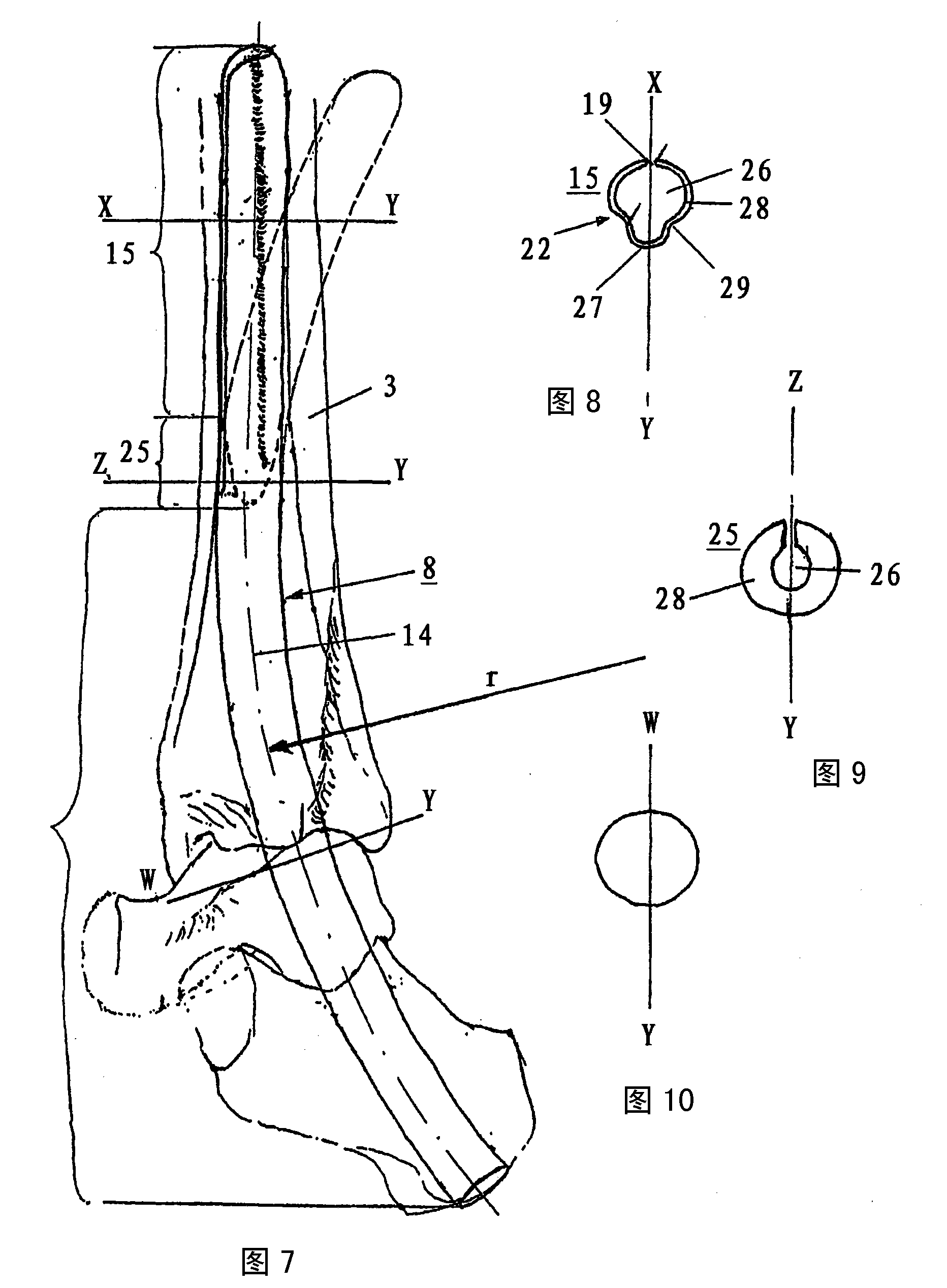
Figure 1 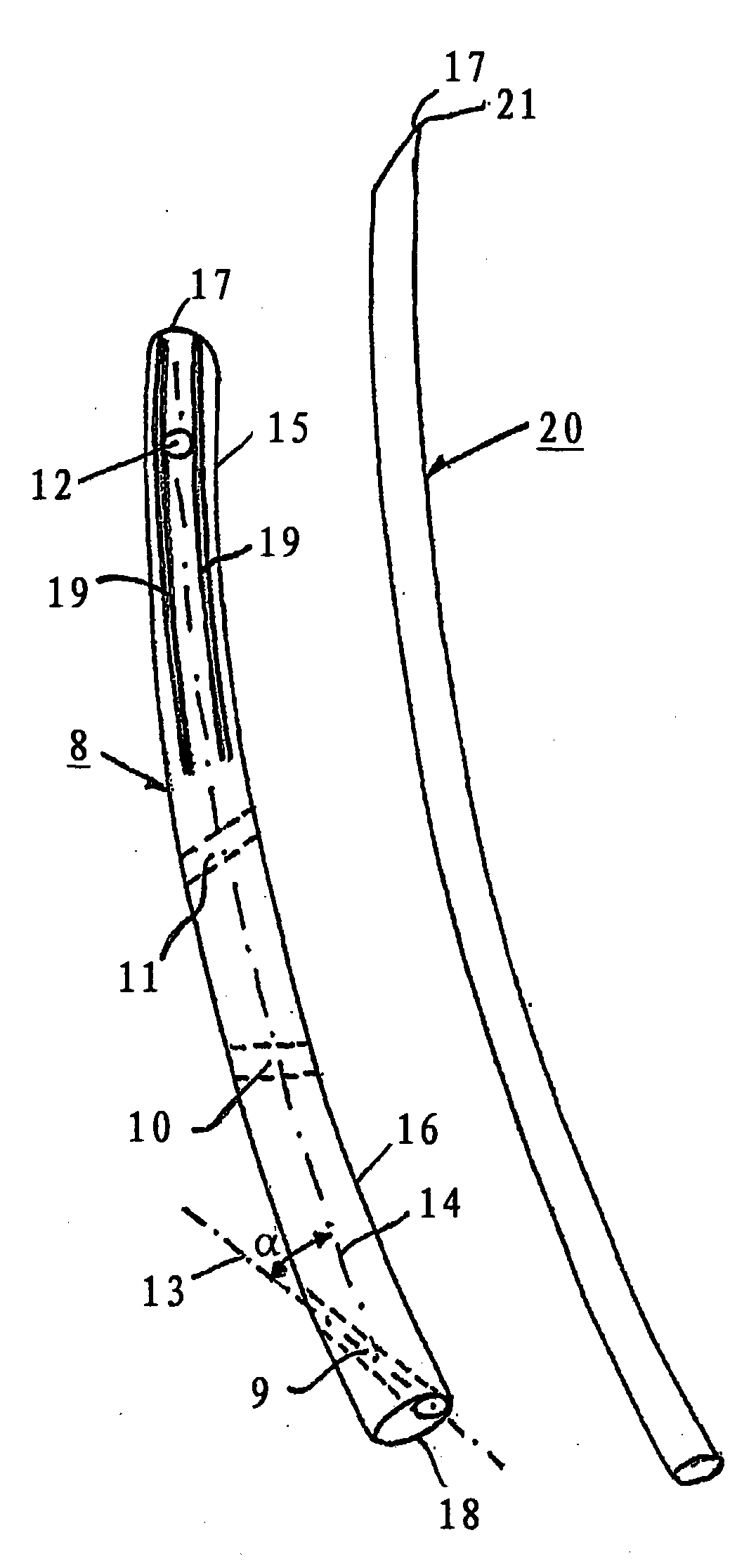
Figure 2 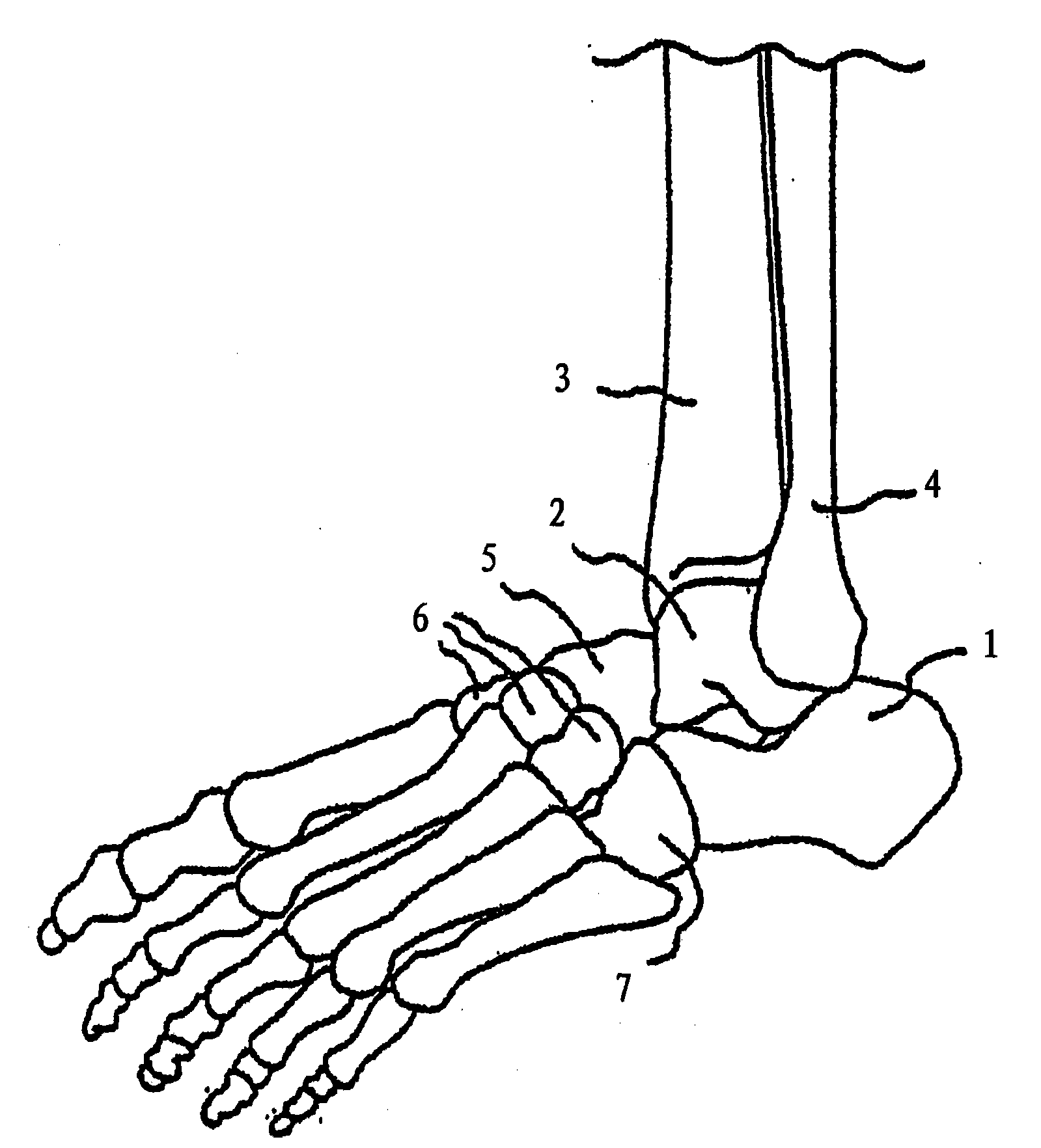
Figure 3
Abstract
Description
technical field
[0001] The present invention relates to a bone nail for the heel and an osteosynthesis kit. Background technique
[0002] Bending intramedullary nails in partial regions have long been known. As an example, so-called ENDER nails can be cited here. However, these known nails are designed elastically and flexibly for their intended use, so that they already bend when subjected to small loads. Due to the flexibility of said known nails, it does not matter that the middle part is straight and has no bends. Said known ENDER nails are also distinguished by their relative length and slenderness. In the case of ENDER, the ratio between the diameter of the nail and the length of the nail is in the range of 1:60 to 1:110. Its use in the heel area is ruled out for this reason.
[0003] Partially curved tibial nails are also known, but the radius of curvature of these known nails is relatively small, ie in the range of 100 and 120 mm, so the use of such nails in the...
Examples
Embodiment Construction
[0058] figure 1 The lower leg is shown in a position rotated approximately 45° medially. The figure shows the bone which is important for the application of the bone screw according to the invention. This is primarily the calcaneus 1, the talus 2 and the tibia 3. The fibula 4, navicular 5, cuneiform 6 and cuboid 7, also shown, are drawn for completeness purposes only.
[0059] exist figure 2 The bone screw according to the invention, which is formed as an implant 8 , is shown in the middle, which is implanted through the calcaneus 1 and the talus 2 to the lower part of the tibia 3 . like image 3 As shown, the implant 8 is continuously curved in a plane with a radius of curvature R of typically 190 mm. The bend is over the entire length L of the implant 8 I Extended above, this length is typically 140mm. its diameter D 1 Usually 11mm. Length L of implant 8 I and diameter D 1 The ratio between L I / D 1 Usually 12.7.
[0060] The implant 8 comprises a plurality of...