
Catalytic conversion method for production of propylene and high-octane-value gasoline by crude oil
A high-octane gasoline and crude oil technology, applied in catalytic cracking, cracking, petroleum industry, etc., can solve the problems of underutilization of gasoline latent content, low propylene yield, increased dry gas yield, etc.
Patent Information
- Authority / Receiving Office
- CN · China
- Current Assignee / Owner
- Publication Date
- 2011-07-27
Smart Images
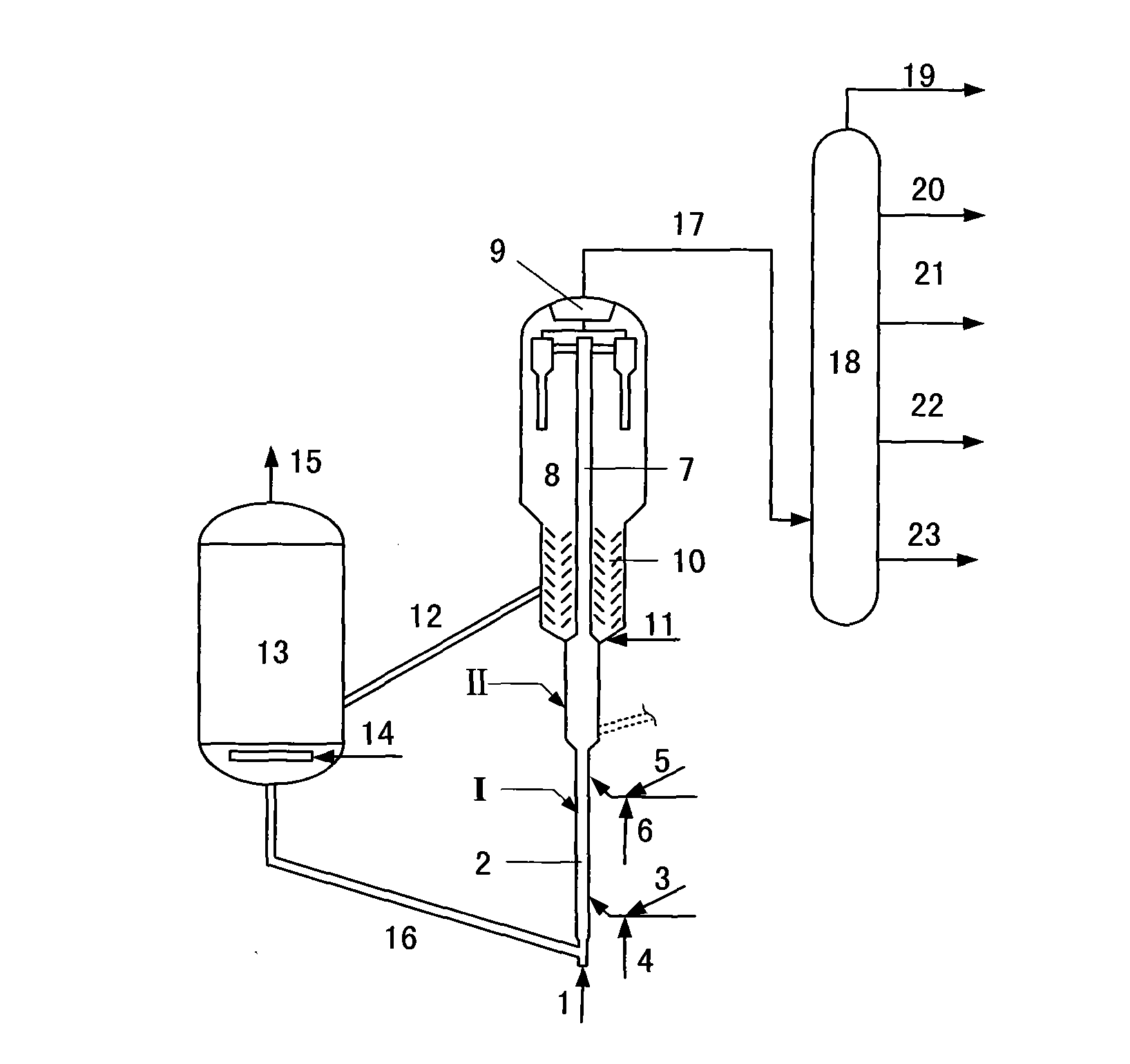
Figure 1 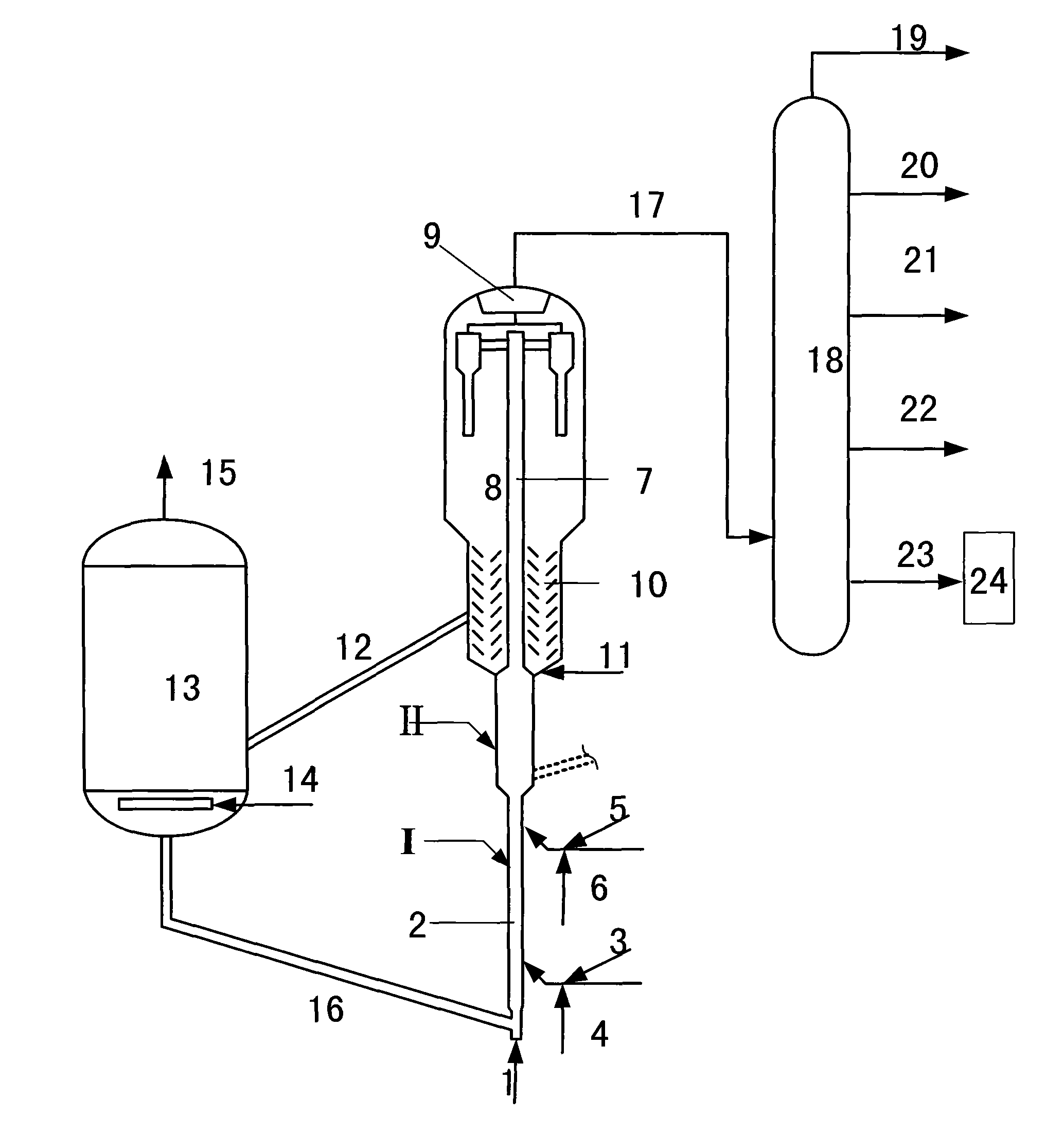
Figure 2 
Figure 3
Abstract
Description
technical field
[0001] The invention relates to a method for catalytic conversion of crude oil, in particular to a method for converting heavy crude oil into propylene and high-octane gasoline while greatly reducing dry gas and coke yields so as to realize efficient utilization of petroleum resources. Background technique
[0002] Propylene and other low-carbon olefins are important organic chemical raw materials, and propylene is a synthetic monomer for products such as polypropylene and acrylonitrile. With the rapid growth of demand for derivatives such as polypropylene, the demand for propylene is also increasing year by year. The demand in the world propylene market has increased from 15.2 million tons 20 years ago to 51.2 million tons in 2000, with an average annual growth rate of 6.3%.
[0003] The methods for producing propylene are mainly steam cracking and catalytic cracking (FCC), wherein steam cracking uses naphtha and other light oils as raw materials to produce...
Examples
Embodiment 1
[0086] This example follows the attached image 3 The process of the test is carried out, with MPCO-2 as the catalyst, the feed oil A is directly used as the refractory feed oil of catalytic cracking, and the test is carried out on a medium-sized device with a riser reactor. The refractory feed oil A enters the bottom of the reaction zone I. Reaction temperature 630℃, weight hourly space velocity 240h -1 , the weight ratio of catalytic cracking catalyst to refractory feedstock oil is 30, and the weight ratio of water vapor to refractory feedstock oil is 0.20 to carry out cracking reaction; the oil gas of refractory feedstock oil A after the cracking reaction enters the reaction with other easily crackable feedstock Zone II, reactant flow oil gas at a reaction temperature of 530°C and a weight hourly space velocity of 30h -1 , the weight ratio of catalytic cracking catalyst to easily cracked raw oil is 28, and the weight ratio of water vapor to easily cracked raw oil is 0.15 t...
Embodiment 2
[0092] This example follows the attached Figure 4 The test is carried out according to the process, using MPCO-2 as the catalyst, and the raw material oil B is directly used as the refractory raw material oil for catalytic cracking. The test is carried out on a medium-sized device with a riser reactor. The easy-to-crackable raw material oil enters the middle and upper part of the reaction zone I, and the difficult The cracked raw oil enters the bottom of reaction zone I, where the difficult-to-crack raw oil is heated at a reaction temperature of 680°C and a weight hourly space velocity of 180h -1 , the weight ratio of catalytic cracking catalyst to difficult-to-crack raw oil is 90, and the weight ratio of water vapor to difficult-to-crack raw oil is 0.20 to carry out the cracking reaction; Hourly space velocity 60h -1 , the weight ratio of the catalytic cracking catalyst to the easy-to-crack raw oil is 10, and the weight ratio of water vapor to the easy-to-crack raw oil is 0...