
Preparation method of oxygen-stabilized yttrium fluoride film
A yttrium fluoride, stable technology, applied in the field of preparation of yttrium fluoride thin film, can solve the problems of optical constant distortion, thin film easy to fall off, poor optical performance, etc., and achieve the effect of improving distortion, good optical performance and low refractive index
Patent Information
- Authority / Receiving Office
- CN · China
- Patent Type
- Patents(China)
- Current Assignee / Owner
- Publication Date
- 2013-02-20
- Estimated Expiration
- Not applicable · inactive patent
Smart Images
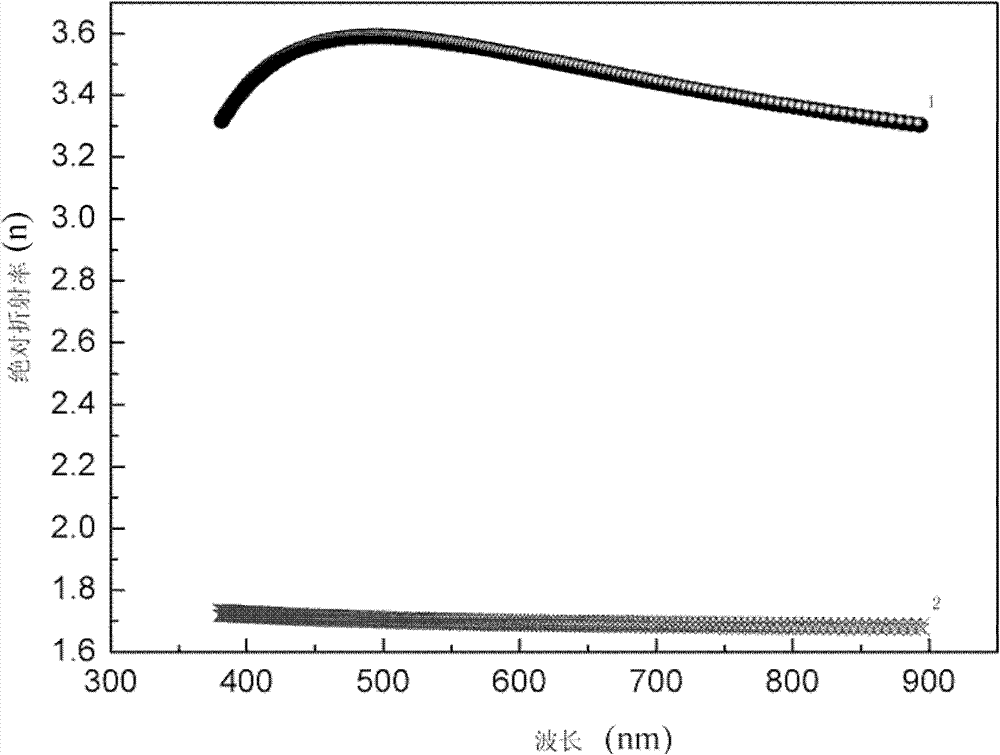
Figure 1 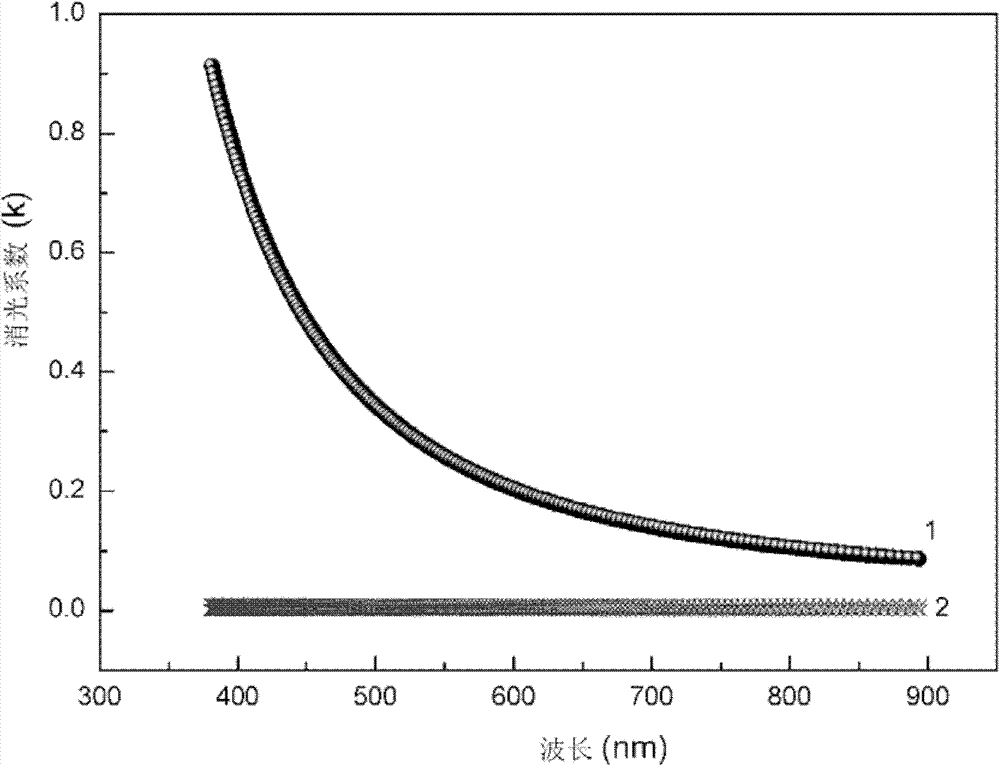
Figure 2
Abstract
Description
technical field
[0001] The invention relates to a preparation method of yttrium fluoride thin film. Background technique
[0002] Yttrium fluoride film has a lower refractive index (refractive index is about 1.4), a wider transmission band (0.35 ~ 12μm), and has a higher The hardness makes Yttrium Fluoride thin films widely used in the design of AR coatings on various substrates. The commonly used methods for preparing yttrium fluoride thin films are thermal evaporation deposition method, ion and electron beam assisted evaporation deposition method, chemical method and so on. Magnetron sputtering technology is a low-temperature and high-speed film deposition technology, which is widely used in industrial production and scientific research. However, when using yttrium fluoride target material to prepare yttrium fluoride film by magnetron sputtering technology, it is easy to make anion fluoride ion Loss, increased absorption, refractive index distortion, functional failure, ...
Examples
specific Embodiment approach 1
[0008] Specific Embodiment 1: The preparation method of the oxygen-stabilized yttrium fluoride thin film in this embodiment is realized according to the following steps: 1. The ZnS substrate is ultrasonically cleaned with acetone for 15 to 30 minutes, cleaned with alcohol for 15 to 30 minutes, and then cleaned with deionized water for 30 minutes , and then place the ZnS substrate on the rotating heating table in the magnetron sputtering vacuum chamber, and evacuate the vacuum chamber to a vacuum degree of 1.0×10 through the vacuum acquisition system. -4 ~9.9×10 -4 Pa, then heated to 25-1000°C and kept warm for 30-120min; 2. Introduce Ar gas into the vacuum chamber until the pressure in the vacuum chamber is 3-5Pa, and perform backsplash cleaning on the surface of the ZnS substrate for 10-20min; 3. After splash cleaning, apply sputtering power to start the ignition, the sputtering power is 60-500 watts, pre-sputtering for 20-50 minutes, and then turn on O 2 Flow agent switch, ...
specific Embodiment approach 2
[0010] Embodiment 2: The difference between this embodiment and Embodiment 1 is that in step 1, the ZnS substrate is ultrasonically cleaned with acetone for 15 minutes, and cleaned with alcohol for 15 minutes. Other steps and parameters are the same as those in Embodiment 1.
specific Embodiment approach 3
[0011] Embodiment 3: The difference between this embodiment and Embodiment 1 is that in step 1, the ZnS substrate is ultrasonically cleaned with acetone for 30 minutes, and cleaned with alcohol for 30 minutes. Other steps and parameters are the same as those in Embodiment 1.